
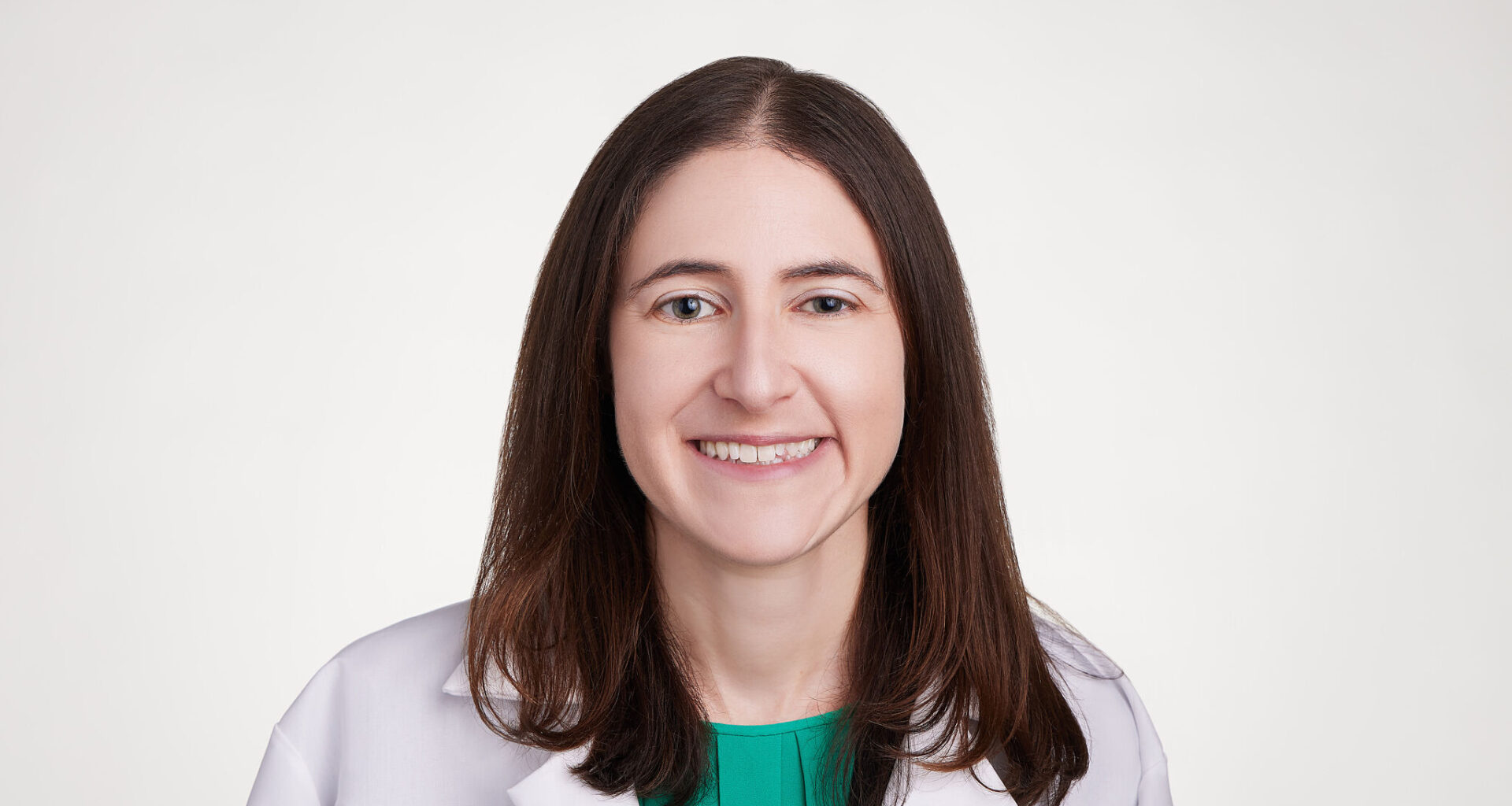
Dr. Madeline Renny, an assistant professor of emergency medicine and pediatrics at Mount Sinai, is researching how to better connect young cannabis users to treatment after emergency department visits. “Kids less than 18 have fewer resources for substance use than adults,” she said, “and very few youth with substance use disorders are linked to care.”
Provided by Dr. Madeline Renny
Dr. June Chin, chief medical officer of the Office of Cannabis Management, said the state is launching a youth education campaign and working with Governor Hochul on a Center of Excellence for cannabis care. “We need to make sure that clinicians understand cannabis in the context of patient care and public health,” she said.
Provided by Dr. June Chin
ALBANY — The number of people receiving treatment for cannabis use in New York has fallen by roughly 50% over the past eight years, even as cannabis-related emergency department visits across the state have more than doubled since 2016.

The decline, driven partly by changes in the criminal justice system and shifting perceptions of risk, has left the state with a widening gap: more young people are showing up in emergency rooms with symptoms tied to high-potency marijuana, but fewer are being connected to the care they need afterward.
Article continues below this ad
“Kids less than 18 have fewer resources for substance use than adults, and very few youth with substance use disorders are linked to care,” said Dr. Madeline Renny, an assistant professor at Mount Sinai. “We know that.”
The treatment shortage is not unique to New York. But in a state that legalized recreational use in 2021 and has since opened roughly 600 licensed dispensaries, the consequences of that gap are becoming harder to ignore. Yet the system built to help them has not kept pace.
Job isn’t finished
Marcus, a 25-year-old from Long Island, knows what that gap looks like from the inside.
Article continues below this ad
Make the Times Union a Preferred Source on Google to see more of our journalism when you search.
Add Preferred Source
He started using delta-8 THC in February 2022, during his final semester at the University of Pittsburgh. A fraternity brother who worked at a delta-8 store offered him a sample. Marcus had never used marijuana before. He had mild anxiety and ADHD, and the edible made him feel like “nothing else mattered.”
He switched to vape pens. Each hit lasted only 15 to 30 minutes, roughly half the duration of regular THC, which meant Marcus kept hitting the pen to stay high. By summer, he was taking 60 to 90 hits a day.
“I would do anything to get that high,” Marcus said.
Article continues below this ad
He vaped in airport bathrooms before flights. He vaped in Amtrak restrooms on the train from Washington, D.C., back to Long Island. He bought delta-8 from stores in New York that sold it under the counter even after the state moved to restrict it.
“It’s like a mouse trying to find cheese,” he said. “It will sniff the cheese in any way possible.”
He tried quitting three times on his own and failed. Then came a psychosis episode: grandiose delusions that sent his mother racing to find him a rehab bed in Suffolk County. At the time, cannabis-induced psychosis was not a term the clinical team used.
After rehab, Marcus relapsed 12 more times. He tried Narcotics Anonymous on Long Island but did not feel he belonged in that setting. The nearest Marijuana Anonymous meeting was roughly an hour away, in Long Island City. He could not get there.
Article continues below this ad
“It’s easy if you’re in a city,” he said. “If you’re in a suburb, it’s hard.”
System not built for cannabis
Marcus’s experience reflects a broader pattern that officials and clinicians across New York described in interviews: a treatment infrastructure that was not designed for cannabis addiction.
Dr. Chinazo Cunningham, commissioner of the state Office of Addiction Services and Supports, said the 50% decline in cannabis-related treatment admissions has multiple causes. Fewer people are entering treatment through the criminal justice system, she said, after changes in enforcement and sentencing.
Article continues below this ad
“Maybe people don’t think that cannabis can cause a problem, or they don’t think that they have a problem, they don’t think that they need treatment,” Cunningham said.
Dr. Molly Boyd-Smith, an emergency medicine physician and toxicologist at Albany Medical Center, said there are simply not enough treatment resources for cannabis, especially for younger patients.
“The patients who end up getting kind of the more intensive services are the patients who are addicted to cocaine or heroin or fentanyl,” Boyd-Smith said. “Those are the patients that there’s money being put into services for.”
Renny, from Mount Sinai, said the emergency department represents a critical missed opportunity. Patients walk in during a moment of crisis, she said, and then walk out with no clear path to treatment.
Article continues below this ad
“The emergency department visit is really an opportunity for us to reach patients that might not seek primary care, or they may not have a connection to health care,” Renny said.
She is currently conducting a study to develop and test an emergency department intervention for youth with high-risk substance use, focused on connecting them to ongoing care.
For opioid overdoses, that linkage infrastructure already exists: patients receive medication, counseling referrals and follow-up contacts. Renny said similar programs could be developed for cannabis.
‘Not well trained’
Dr. Matthew Holm, a pediatrician and addiction medicine specialist who treats patients in the Bronx, said most pediatricians are poorly prepared to address substance use of any kind.
Article continues below this ad
“You have a bunch of pediatricians that have poor education regarding substance use in general, about all drugs, that are not well trained, and so thus they’re not well equipped.” Holm said. “I think we need to be focused and grounded in things like harm reduction, in community engagement and community knowledge. There are heroes here that are doing this work under the radar.”
Cunningham, commissioner of OASAS and a physician, said she received one hour of training on addiction in four years of medical school. Her agency does not have the authority to mandate what is taught in medical schools or residency programs, or to tell pediatricians how to practice in their offices.
Dr. Gregory Bunt, a psychiatrist in Rockland County, said cannabis use disorder “is treatable, but it’s not treatable with a quick and easy solution.”
“Once you get addicted to a substance, it’s not so easy to just discontinue,” Bunt said.
Article continues below this ad
Withdrawal symptoms, which can include insomnia, anxiety and agitation, are common and can be managed with medication, Bunt said. But relapse is a persistent risk.
“Relapse is a risk, and they need to know what steps they need to take to prevent relapse,” he said.
Marcus learned that the hard way. After leaving rehab, he relapsed 12 times over several months. Each time, the cycle was the same: he bought a disposable vape pen, took one hit, threw it away, and then came back days later for another.
“One hit, threw it away in the trash,” he said. “Three weeks later, same thing. Two weeks later. One week later.”
Article continues below this ad
Meetings on a map
What finally worked for Marcus was Marijuana Anonymous, a 12-step program modeled on Alcoholics Anonymous. But he did not find it in New York, where there are many locations that host meetings near New York City, but only a few across upstate New York.
He found Marijuana Anonymous after moving to Washington, D.C., where meetings were a 25-minute train ride away. The first time he walked in, he was high. He told the group he was scared and wanted to quit. They clapped and hugged him.
Cunningham said her state agency funds treatment and prevention providers across the state, including in rural counties.
Article continues below this ad
OASAS is planning a statewide survey to understand young people’s perceptions of cannabis, their attitudes, and their usage patterns.
“We have to make sure that we have the data so that can be used to guide our work,” Cunningham said. The effort is especially urgent, she added, because the federal government has been cutting expenditures in national surveys, including ones tracking substance use among young people.
Dr. June Chin, chief medical officer at the state Office of Cannabis Management, said the agency has met with officials from more than two dozen school districts since last July, to discuss what educators are seeing and how to talk to students and families about cannabis.
“Young people today are growing up in a world where cannabis is legal and widely accessible,” Chin said. “I think that we should focus on upstream.”
Article continues below this ad
The agency is also working with Gov. Kathy Hochul on a Center of Excellence for cannabis care and health equity aimed at preparing clinicians for a world where cannabis is part of patient care.
Five more years
Marcus will mark three years of sobriety in late July. He lives in the Washington, D.C., area now, works as a political campaign manager, and plays in four dodgeball leagues to stay busy.
“You think I want to go to meetings every single day?” he said. “I love them, don’t get me wrong, but it takes a lot of time and effort.”
Article continues below this ad
He recently pulled up the Marijuana Anonymous website and looked at the meeting map. There are now two meetings on Long Island that did not exist in 2022, one in Salisbury and one near Levittown.
One of the groups meets on Tuesday evenings. The other meets in Hicksville at 9:15 a.m. on Saturdays.
“I’m not a morning person,” he said.
Article continues below this ad
His sobriety has not erased his worry. He read that people who heavily use marijuana can develop schizophrenia within eight to 10 years after they stop. He is three years in.
“I’ll call you back in five years,” he said, “and I’ll tell you if I get schizophrenia or not.”