
NACHIKATSUURA, Wakayama Prefecture—Whereas temple lodging known as “shukubo” once served weary travelers, a temple here has resurrected the traditional practice to raise vital funds from supporters around the world.
The former Hokoji temple has launched the project for “co-ownership” and to repurpose the temple building for lodging as a preservation measure in a depopulated town.
Located about 10 kilometers south of Nachi Falls, a UNESCO World Heritage site, the former temple stands in a mountain village. Founded in the Edo Period (1603-1867), it has long been part of the local landscape.
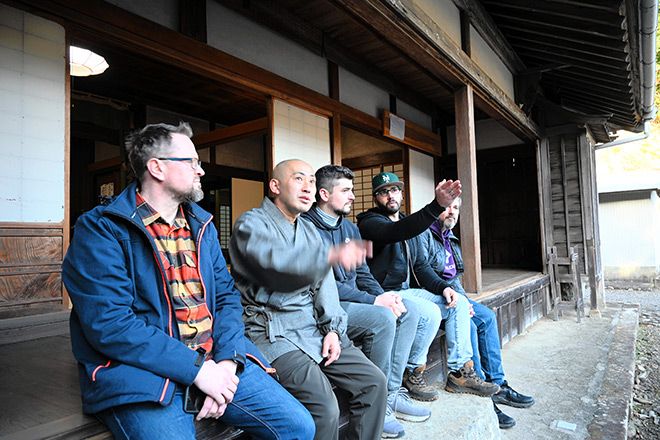
In February, Julio Barros, a 34-year-old information technology engineer originally from Portugal who lives in Britain, visited the site.
“It’s very beautiful. You can really tell how much it has been cherished by the community,” he said.
He had come to see the property in which he had invested.
Guiding them was Tomi Nishiyama, 45, the head priest of another temple entrusted with managing the former temple site.
He explained the temple’s origins, the structure of its buildings and its relationship with the local community in English.
The former Hokoji temple once had several dozen parishioner households.
However, due to a sharp population decline, that number has fallen to around 20, and the religious corporation was eventually dissolved.
Locals still cherish the temple site, but the high cost of repairs has become a serious challenge.
Nishiyama had considered raising funds through crowdfunding, but found it difficult to collect the large sums required for restoring a cultural property.
That led Nishiyama to participate in a different initiative: PlanetDAO. The project brings together investors from around the world as co-owners, with the aim of preserving and utilizing cultural heritage sites.
The project works as follows.
First, a company is established to own the buildings of the former Hokoji temple, and shares are issued.
Through social media and other means, supporters from around the world who agree with the idea of preserving and utilizing cultural heritage are invited to invest. The minimum investment is set at 400,000 yen ($2,506).
So far, a total of 26.9 million yen has been raised from 52 investors, including Barros, with 75 percent of them based overseas.
“Many of our investors have a strong interest in Japanese history and culture,” said Tamaki Nishimura, 29, founder and CEO of the startup Planet Labs, which is driving the project.
Barros has studied in Japan. He speaks Japanese fluently, and his hobby is bonsai.
Nishimura launched the startup to help preserve cultural assets that have become difficult to maintain due to depopulation, by gaining support from overseas fans of Japan.
A defining feature of PlanetDAO is its structure of “shared ownership,” in which local residents jointly own the property alongside shareholders.
In the case of the former Hokoji temple, one-third of all shares will be allocated free of charge to Nishiyama, representing the local community.
“This allows the local community to participate in important decision-making, and prevents outside investors from selling the property off on their own,” says Nishimura.
Ordinary investors can also attend regular meetings in addition to shareholder assemblies and voice their opinions, allowing everyone involved to participate in the management on an equal footing.
The goal of the current project is to preserve the former Hokoji temple for future generations while repurposing the building as a shukubo lodging.
The area around Nachikatsuura has many tourist destinations, including the Kumano Kodo pilgrimage routes, and attracts a large number of visitors. However, there are not enough facilities to accommodate all the travelers.
To cover the maintenance costs of his own temple, Daitaiji, Nishiyama already operates a shukubo, and he thought he could take advantage of this experience to revitalize the former Hokoji temple.
Investors will receive dividends if the business generates a profit.
Still, Barros said that making money isn’t the goal.
“We don’t want to lose a temple that has been cherished for so long,” he said. “We investors want to support it by sharing our ideas and working together.”