
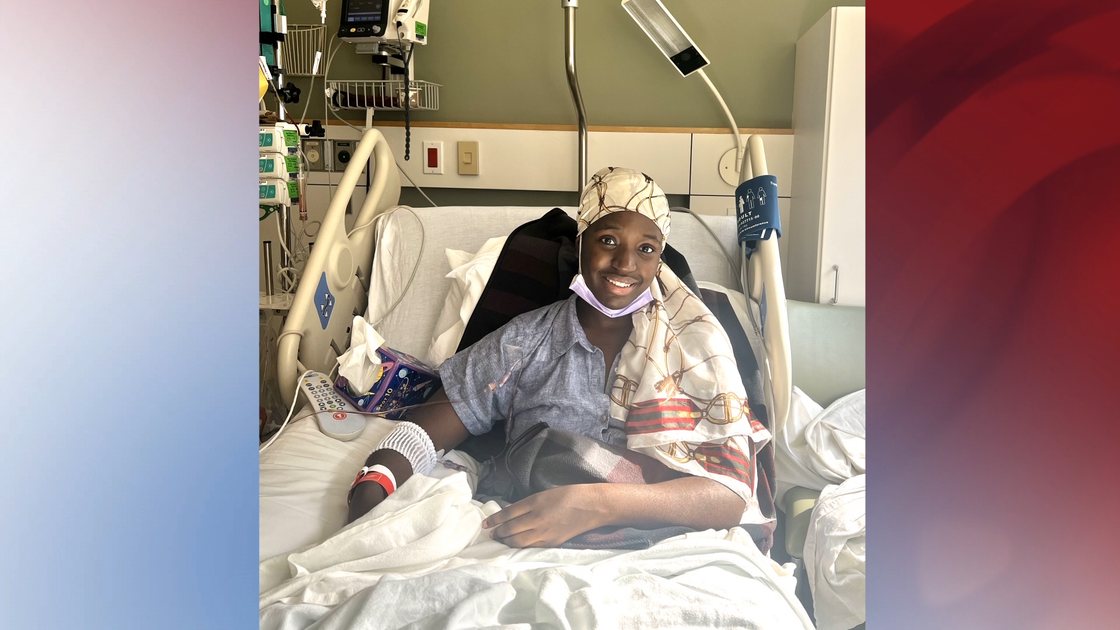
Carrie Everett, who was crowned Miss North Carolina in 2024, died of an uncommon form of stomach cancer on Easter Sunday. She was 22 years old.
Everett was diagnosed with signet-ring cell carcinoma in July 2025 after scans found masses in her abdomen. In March, family members posted on a GoFundMe page that Everett’s chemotherapy treatments weren’t working and shared plans to move her out of state for treatment.
Dr. Ashwin Somasundaram, a UNC Health oncologist and assistant professor of medicine and GI medical oncology at the University of North Carolina, said signet ring features can be a sign of a more advanced cancer.
“It usually is a sign that a cancer is more aggressive and that patients tend to do worse,” he explained.
More young people diagnosed with cancer
A WRAL Documentary, Diagnosis: Young, The New Face of Cancer in NC, looked at the increase in cancer diagnoses among young people. Doctors and researchers at UNC and Duke told WRAL News that they’re seeing cancers that are not only appearing earlier, but acting more aggressively.
Signet-ring cell carcinoma is a highly aggressive cancer, and is most commonly diagnosed in people around the age of 40, with low survival rates.
“If it’s metastic, we’re talking about a five-year survival that’s far less than 5%, usually, say less than 1%,” Somasunadarm said. “So we largely talk about it as an incurable disease.”
According to the American Cancer Society, the average age of people diagnosed with stomach cancer is 68 years old, with six out of 10 people diganosed each year are 65 or older. Somasundaram said that while Everett’s diagnosis is rare, it is becoming more and more frequent in younger people.
“It is quite rare to see patients this young getting stomach cancer. Unfortunately, a lot of the cancers related to the gut are becoming more frequent in our younger patients, but it is still very rare,” Somasundaram said.
According to the American Cancer Society’s 2026 Facts and Figures report, only 1.5% of new cancer diagnoses in the U.S. this year will be stomach cancer.
When should I see a doctor?
Somasundaram said things to consider that may help people catch it early is looking at family medical history and seeing if relatives had stomach or colon cancer, as well as breast cancer or pancreatic cancer, at a young age.
“There are certain mutations that they were born with that they could have passed down that increase the likelihood of developing that cancer also at a young age for all of the first degree relatives,” Somasundaram said. “So it’s important for those patients to get screened earlier.”
Other GI symptoms that should be discussed with a healthcare provider include:
IndigestionAbdominal & joint painNausea & vomitingDiarrhea & bloody stoolFatigue
“Most of the time it is not going to be cancer. Most of the time it will be something else. But it is important that at that point when you start getting these symptoms, to have it looked at and rule out anything more serious,” Somasundaram said.
While Somasundaram said the specific form of cancer is dangerous, early detection has made it possible to catch it early and more treatements are coming out to make the disease more manageable.
“Current treatments and current regimens that are coming out are sort of pushing that back a little bit, so it’s giving us a little bit of hope.” he said. ” If you are able to identify stomach cancer early, you still have a good chance of curing it, and certainly we have cured people with stomach cancer when we have found it before.”
However, Somasundaram added that there are more options for people to catch cancer early, there is more work to be done by doctors and researchers to finding better methods to catch it.
“We do not have good guidance and screening technology or guidelines right now,” he said. “And identifying which patient population should be screened outside of those with a very clear family history, it still is a bit tricky to find out which patients are going to be the highest risk to screen, and so we still have a lot of work to do to try to be able to identify those patients.”
More on young cancer diagnosis: