
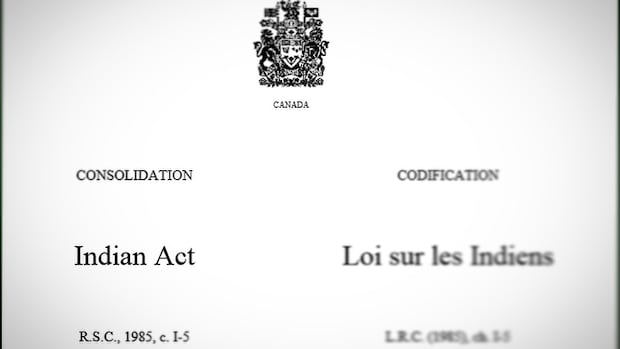
For the last 150 years, the Indian Act has governed the lives of First Nations people.
“It means control of our people, control of my community, of my nation,” said Jean-Guy Whiteduck, chief of Kitigan Zibi Anishinabeg, about 130 kilometres north of Ottawa.
“The Indian Act has done that. It was designed to assimilate us and terminate any special rights we have on our traditional land.”
The Indian Act came into effect on April 12, 1876. With a “one-size-fits-all” approach and a goal of assimilation, it came to control almost every aspect of First Nations people’s lives, dictating things like how communities were governed and even who could be considered an “Indian.”
The Indian Act has had many amendments but it remains the overarching legal document for First Nations in Canada — a problematic piece of legislation argued by many to be racist and sexist.
How it came to be
In 1876, Canada was in the process of signing the numbered treaties with First Nations across the Prairies to open up the land for settlement and industry.
“The Indian Act, the creation of reserves, assimilation policy, was really designed to take away their rights to make way for the railroad and forestry and mining and everything else that would happen with it,” Bob Joseph, author of 21 Things You May Not Know About the Indian Act, told CBC Radio’s The House host Catherine Cullen.
LISTEN | CBC’s The House does a deep dive into the Indian Act:
The House48:36150 years later, why does Canada still have the Indian Act?
As the Indian Act reaches 150 years, The House does a deep dive into the history of the discriminatory legislation and what First Nations advocates are pushing Ottawa to change. Plus, host Catherine Cullen speaks to a B.C. chief councillor whose First Nation negotiated their way out of the Indian Act about why he believes their current treaty is a model for the future.
“You couldn’t leave the reserve, you couldn’t go to a pool hall, you couldn’t drink in a public place.”
If someone got a post-secondary education, they would lose their status.
Along with restricting First Nations people to reserves, the Indian Act outlawed cultural ceremonies like the Potlatch and Sundance, traditional clothing and dancing, and imposed elected band councils to replace traditional systems of governance.
Janice Makokis, an assistant professor at the University of Windsor’s Faculty of Law, said what was outlawed were sophisticated legal and governance structures that Indigenous peoples had practiced for generations.
It usurped the matrilineal systems of many First Nations communities, and had larger implications for women’s identities.
“The first versions of the Indian Act from the 1800s literally said that women could not be Indian unless they were married to an Indian man,” Makokis said.
First Nations women who married non-Indigenous men lost their Indian status, where non-Indigenous women who married First Nations men gained Indian status.
Amendments in 1985 ended that but created what is referred to as the “second-generation cut-off,” where if someone has only one parent with Indian status, they cannot pass status on to their children.
“The process of the control, the impacts of that on governance, membership, leadership still remains to this day,” Makokis said.
Beyond the Indian Act
Several nations have moved beyond the Indian Act’s constraints, negotiating self-government over their territories.
In 2011, t̓uk̓ʷaaʔatḥ (Toquaht Nation), Huu-ay-aht First Nation, Ka:’yu:’k’t’h’/Che:k’tles7et’h First Nation, Uchucklesaht Tribe, and Yuułuʔiłʔatḥ (Ucluelet First Nation) on Vancouver Island together negotiated the Maa-nulth Treaty with the federal government.
“When you are a self-governing First Nation, you can make decisions that create the economy, that create the revenue sources, that create the institutions that will help carry you into the future in ways that aren’t always possible under the Indian Act,” John Jack, chief councillor for the Huu-ay-aaht First Nations, told Cullen.
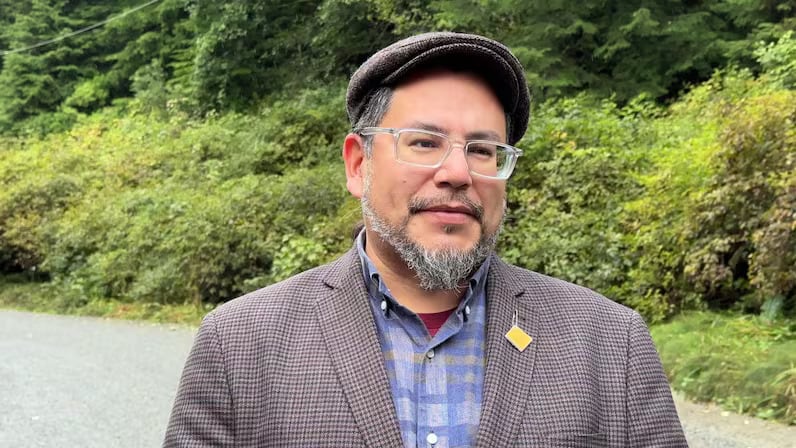 Huu-ay-aht First Nations Chief Coun. John Jack says a modern treaty, which was negotiated with the federal government 15 years ago, is one way to move beyond the Indian Act. (Kathryn Marlow/CBC)
“We have a whole set of tools, not just to make decisions for our people, but also to help build a community and use the stability that we can create in the now to help build and enable a future.”
April 1 marked 15 years of the Maa-nulth Treaty, with members of the Uchuklesaht Tribe, from elders to infants, gathering in the community to celebrate what they call their “Independence Day.”
Jack believes a modern treaty is a way to move beyond the Indian Act, creating “so much potential and all of the tools that are necessary to really make people’s lives better.”
In 1969, the Pierre Trudeau Liberal government presented the Statement of the Government of Canada on Indian Policy, also known as the White Paper, to Parliament. The paper proposed abolishing the Indian Act and ending Indian status.
First Nations leaders were outraged by the paper’s push toward assimilation, emphasizing the importance of treaties and the distinct rights of First Nations people.
Most experts agree getting rid of the Indian Act altogether can’t be done unilaterally.
“When we talk about repealing or replacing it, it has to be done with First Nations input,” Makokis said.
“If we’re talking about replacing anything, there needs to be a restoration and rebuilding of the original laws, governance structures and the treaties and the treaty relationship that existed, and was the intent of what the nation-to-nation relationship was supposed to be.”
Assembly of First Nations National Chief Cindy Woodhouse Nepinak said it’s important to recognize there is no “one-size-fits-all approach.”
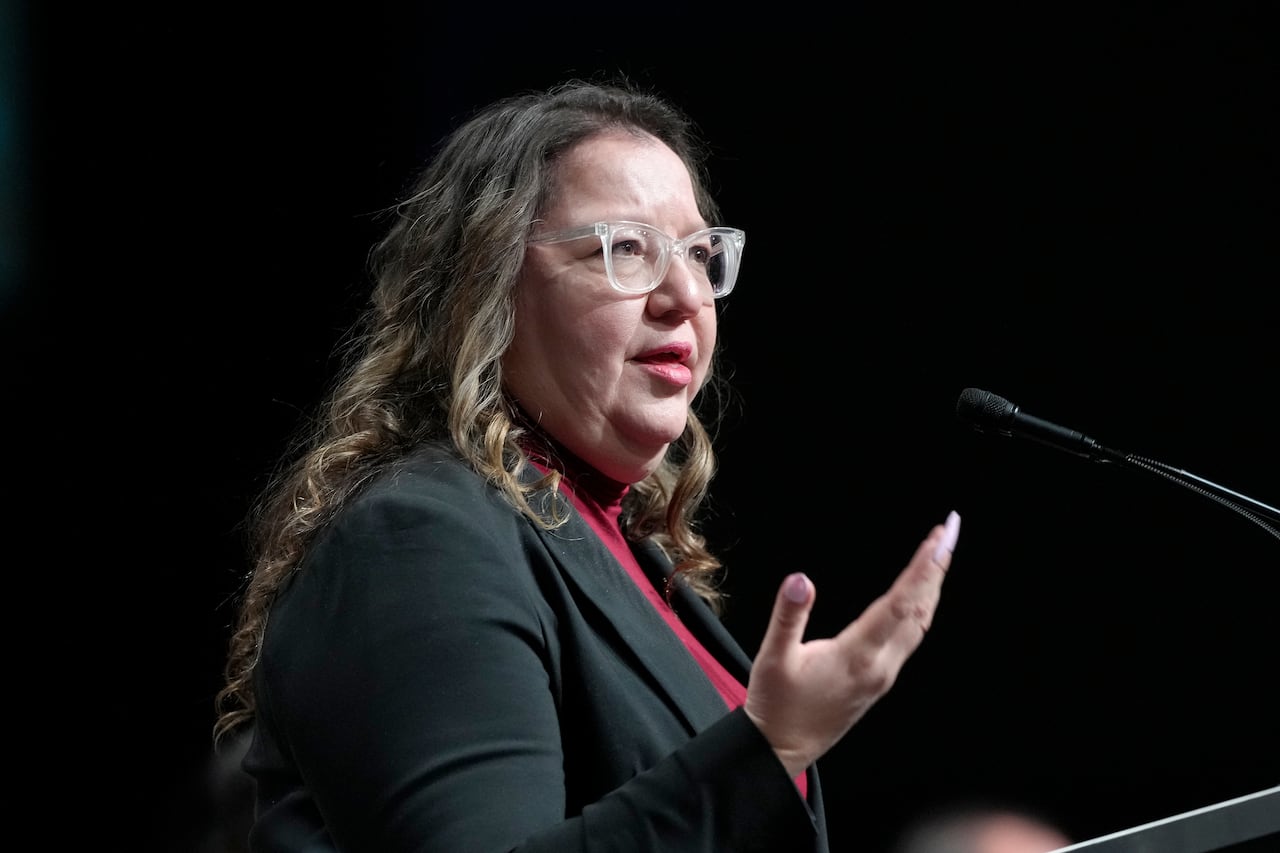 AFN National Chief Cindy Woodhouse Nepinak speaks at the Special Chiefs Assembly, in Ottawa, Tuesday, Dec. 2, 2025. (Adrian Wyld/The Canadian Press)
“All those issues need to be worked on directly with that group, with that First Nations group, wherever that may be in this country,” she told Cullen.
“Their languages may be different, their cultures may be different, but they will know the path forward if you just ask them instead of trying to shove down a paternalistic system on our people.”