
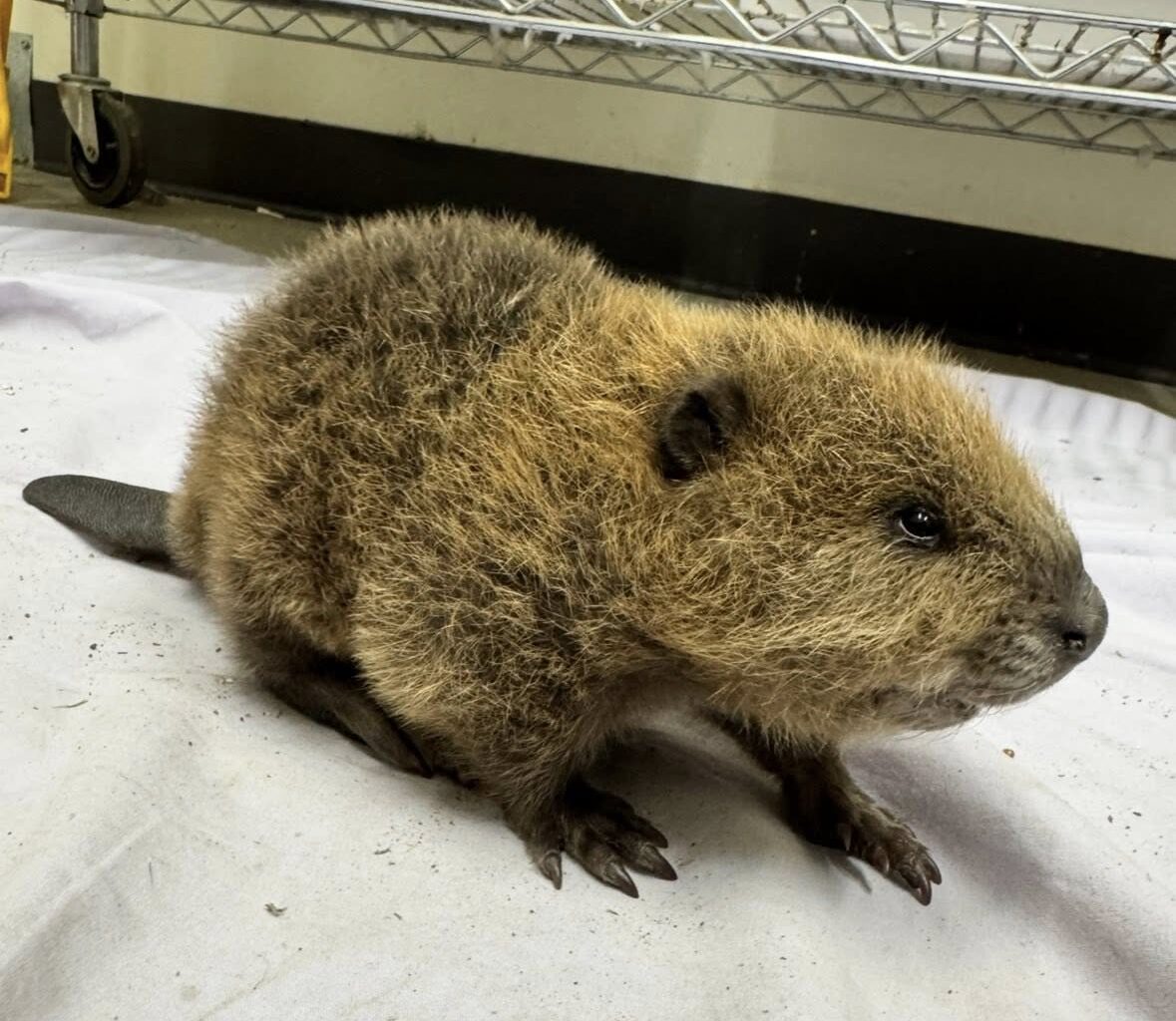
The Austin Wildlife Rescue put it best: “Hot dam … we got a baby beaver.”
The rescue revealed its new “branch manager in the making” last Friday after Austin Animal Services officers responded to reports of a lone beaver kit strolling along a sidewalk. When the officers’ search for its family came up short, they took the baby Buc-ee and brought it to Austin Wildlife Rescue.
“A baby beaver is a true rarity for us, so this fuzzball is an extra special surprise this week,” the rescue said.
The rescue said the beaver, a girl, arrived weak and cold. Staff believe it may have been washed from its den during recent rainstorms.
After some initial “beaver tantrums,” staff members were able to bottle-feed the animal. Jules Maron, The rescue’s executive director, said the beaver initially struggled to learn how to drink from a bottle and spent about a day resisting feedings but has since been “chugging it down like there’s no tomorrow.”
“I have to say this is the most adorable baby animal I’ve ever seen in my life. And I’ve seen a lot of baby animals,” Maron said. “She’s absolutely precious. “
The rescue now plans to transfer the young beaver to another rehabilitation facility in North Texas that has a large water feature and is better set up for long-term beaver care, Maron said. She said the goal is to place the animal where it can develop the skills it will need in the wild, including eventually practicing dam-building.
Because beavers stay closely tied to their family units for years, rehabilitation is a long process. Maron said young beavers typically need about two to three years before they are ready for release, when they naturally begin leaving the family den to find territory of their own. At that point, the goal is to release them near a large body of water — ideally a river with tributaries — so they have room to spread out, establish a colony and use the dam-building skills they developed in care.
Maron also said beaver rehabilitation is unusual because, unlike many other wild animals, young beavers need close care from just one or two people so they can feel secure without becoming too used to humans.
“Beavers are basically the opposite of everything you can think of from a rehabilitation standpoint,” she said.
Maron also expressed gratitude for the community members who called in after spotting the animal, helping get the beaver to rescuers quickly.