
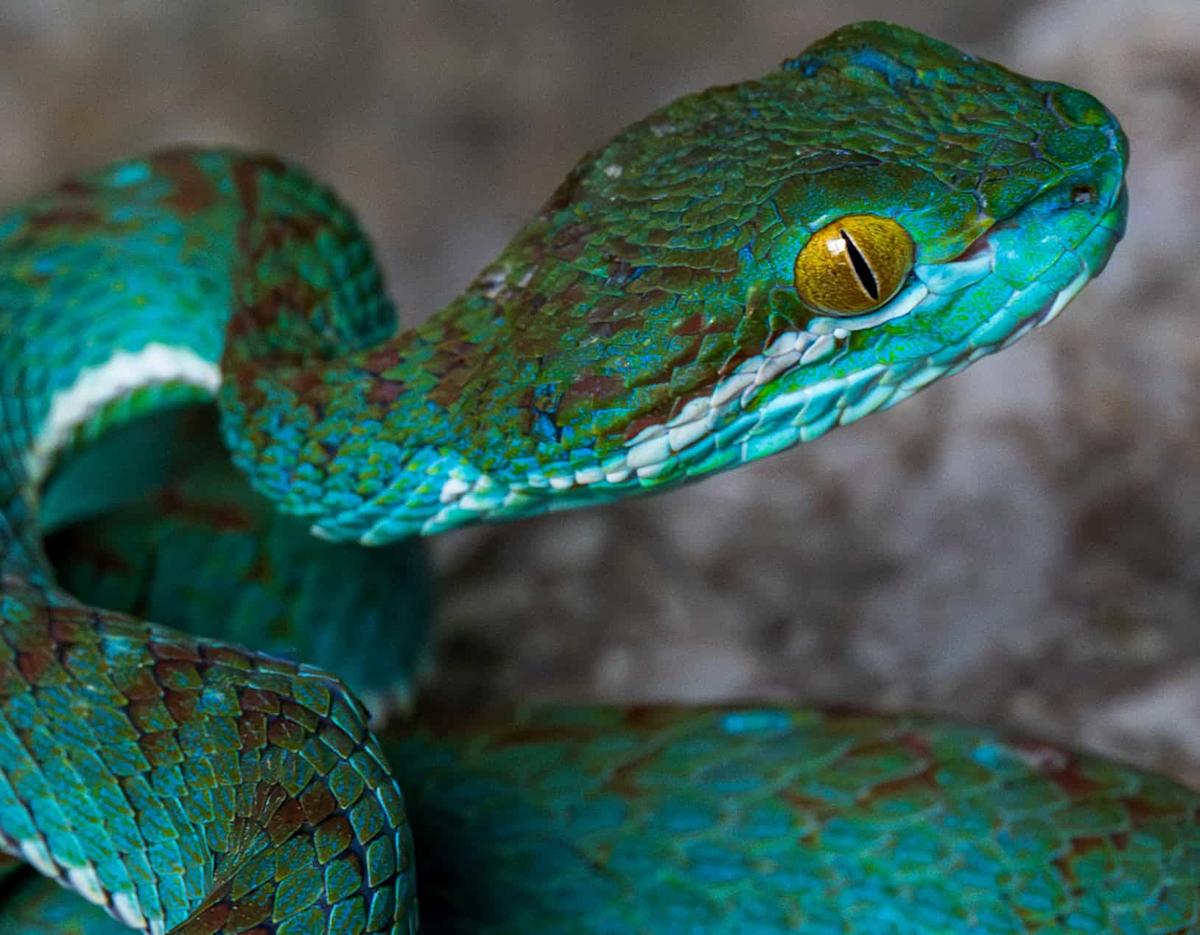
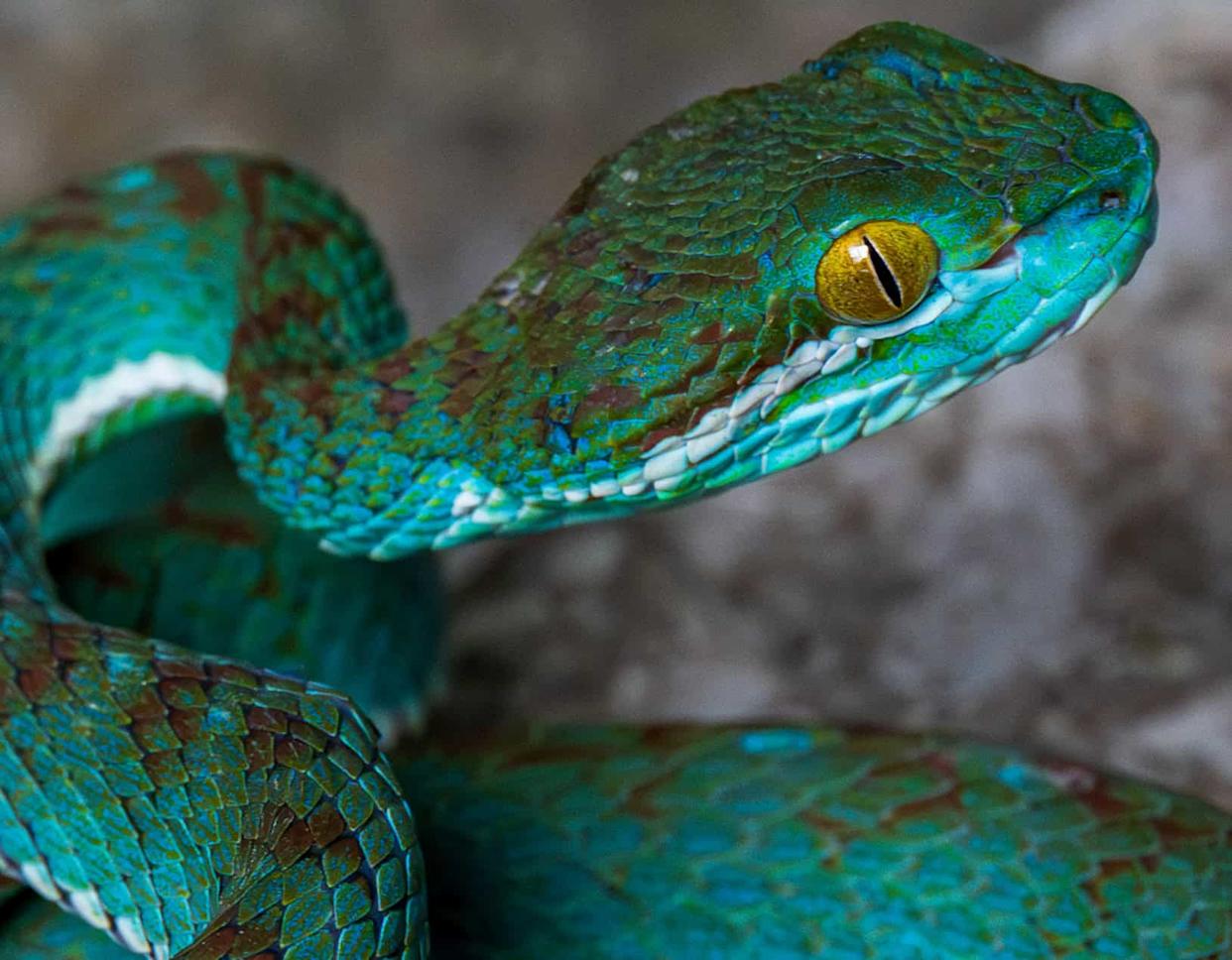
A spectacular new species of pit viper (from the Trimeresurus genus) was collected during a survey of Phnom Prampi in Battambang and is currently being described. Recognised by their triangular heads, these highly venomous snakes track down their warm-blooded prey using the heat-sensitive pits behind their nostrils.© © Phyroum Chourn / Fauna & Flora
Quick Take
A multi-year expedition in Cambodia’s Battambang province uncovered a hidden “treasure trove” of biodiversity, including several species completely new to science.
From a fluorescent-turquoise pit viper to sand-grain-sized snails, the discoveries highlight both the richness and fragility of these cave ecosystems.
Rapid limestone quarrying and habitat disruption mean many of these species could vanish before they are fully studied or even named.
Deep in Cambodia’s northwestern Battambang province, a wealth of biodiversity has been quietly waiting in the shadows. Between November 2023 and July 2025, researchers from Fauna & Flora and Cambodia’s Ministry of Environment trekked through dense scrub, climbed isolated limestone hills, and explored cave systems that had never been studied by scientists. Inside, they discovered a hidden “treasure trove” of wildlife, including species science had not documented before.
The team surveyed 64 caves scattered across 10 limestone hills. These rugged formations, known as karsts, make up roughly nine percent of Cambodia’s total land area. Separated by wide stretches of farmland, these jagged rock towers function like biological islands, cut off from one another for millennia. Species here evolve in narrow, highly specialized niches, resulting in creatures found nowhere else on Earth.
So far, the expedition has identified at least 11 new species, with more still under study. From a striking fluorescent-turquoise pit viper to cave-dwelling geckos, these discoveries underscore the biological importance of Cambodia’s karst landscapes. However, these fragile ecosystems are already under threat, and scientists are now in a race against time to understand and protect what’s been hidden here for so long.
Turquoise Pit Vipers and Rock Climbing Geckos
Amid the many newly discovered species is a spectacularly blue species of venomous pit viper. It is undergoing formal scientific description, but is currently in the Trimeresurus genus. Researchers believe the snake’s vivid turquoise coloring is an adaptation to its moss-covered limestone environment.
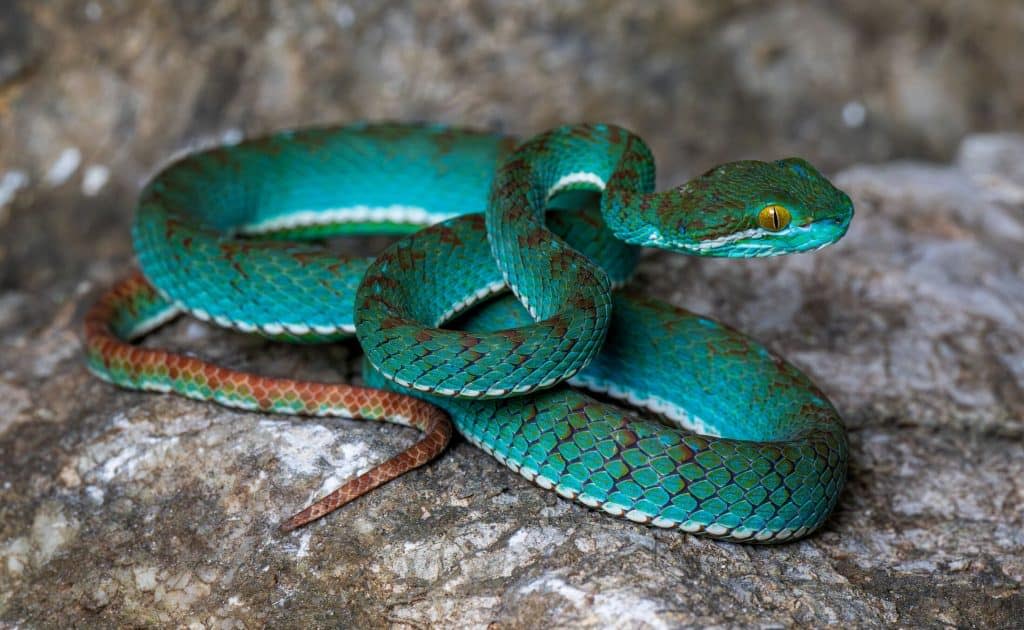
Pit vipers use their heat-sensitive “pit” organs to detect prey.
©© Phyroum Chourn / Fauna & Flora – Original / License
(© Phyroum Chourn / Fauna & Flora)
Researchers also identified several notable gecko species during the study. The Kamping Poi bent-toed gecko (Cyrtodactylus kampingpoiensis) was found in four separate populations, each isolated on its own hill. Because these groups are isolated on separate hills, researchers believe they may be evolving into distinct new species.
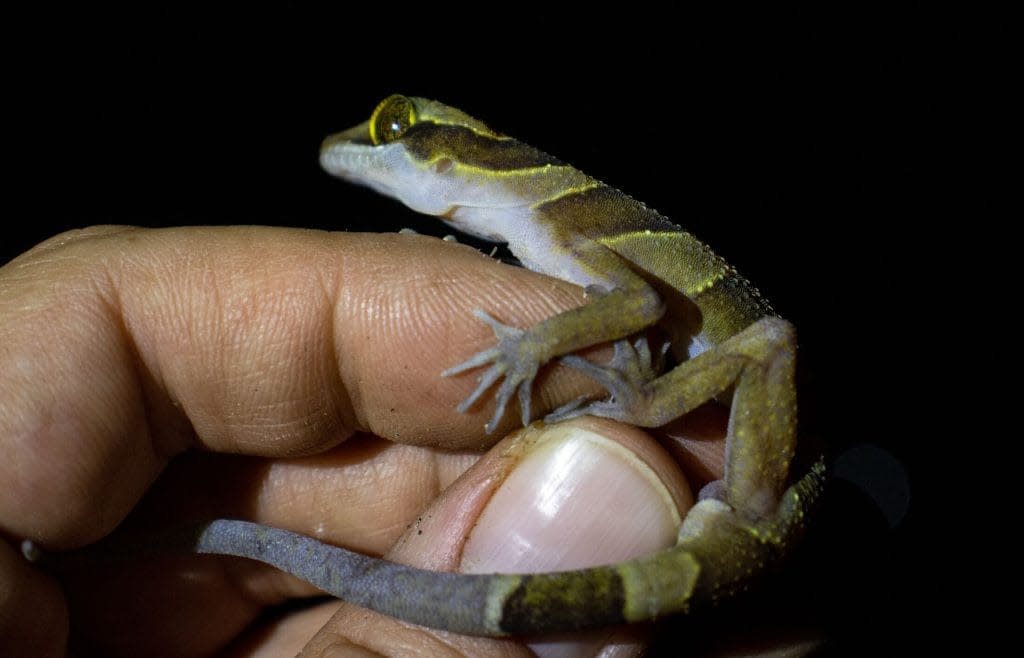
Equipped with elongated toes and prehensile-like tails, Kamping Poi bent-toed geckos are elite climbers on jagged surfaces.
©© Phyroum Chourn / Fauna & Flora – Original / License
(© Phyroum Chourn / Fauna & Flora)
The Battambang leaf-toed gecko, or “night wanderer” (Dixonius noctivagus), has oversized, light-sensitive eyes that help it hunt in low light conditions. Its skin patterns provide near-perfect camouflage, allowing it to disappear against the cave walls.
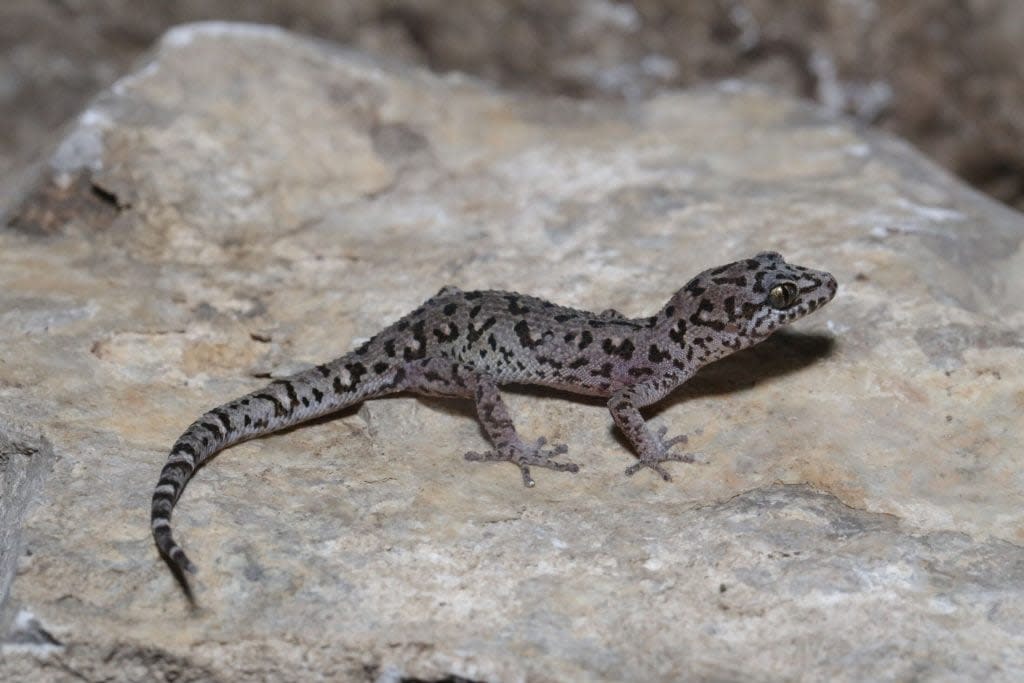
The Battambang leaf-toed gecko’s body is covered in tiny leopard-like spots.
©© Hun Seiha / Fauna & Flora – Original / License
(© Hun Seiha / Fauna & Flora)
The Hemiphyllodactylus khpoh is easily recognized by its long orange tail. Its name comes from Phnom Khpoh, the specific karst hill where it was discovered. A new species in the Gehyra genus was also found in several different karst areas.
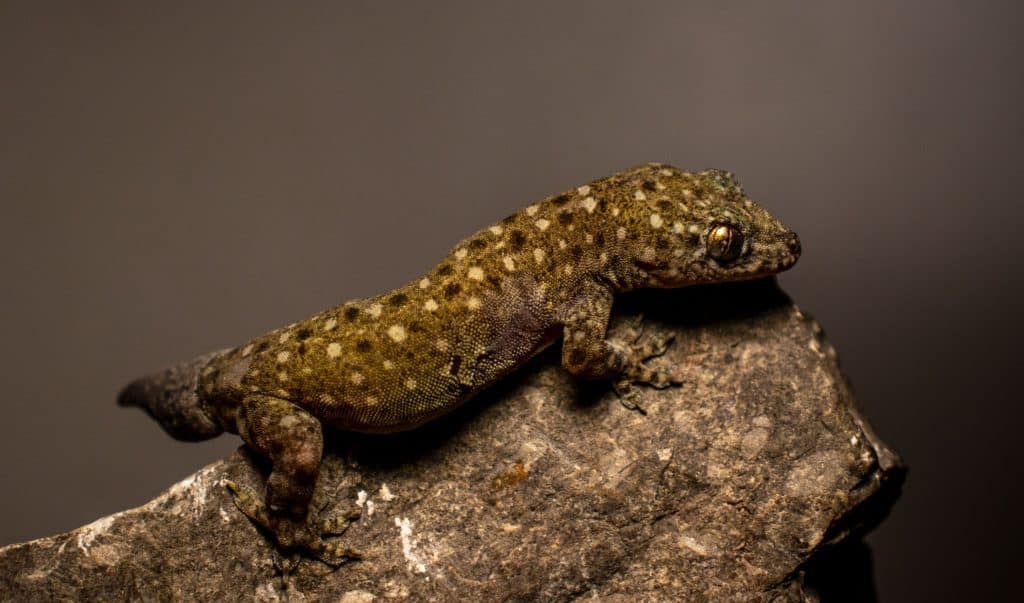
Geckos in the Gehyra genus use chirps and clicks to communicate.
©© Hun Seiha / Fauna & Flora – Original / License
(© Hun Seiha / Fauna & Flora)
The Shiva tokay gecko (Gekko shiva), first described from Thailand in February 2025, was recorded for the first time in Cambodia during this study.
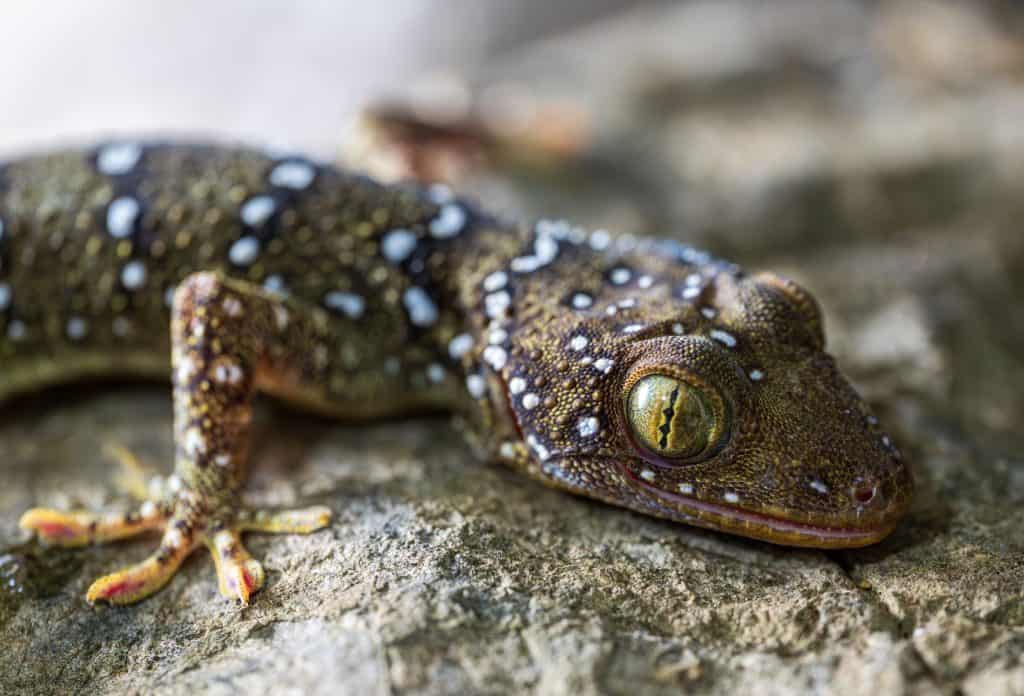
The Shiva tokay gecko was first described in February 2025.
©© Phyroum Chourn / Fauna & Flora – Original / License
(© Phyroum Chourn / Fauna & Flora)The Tiny and the Toxic
Some of the most incredible finds were also the smallest. Clostophis udayaditinus and Chamalycaeus aduncus are two new micro-snail species, each no larger than a single grain of sand.
Researchers also discovered some brightly colored millipedes like Orthomorpha efefai and Orthomorpha battambangiensis. In the humid darkness of the caves, these bright colors likely serve as a warning. They signal to predators that the millipedes are toxic.
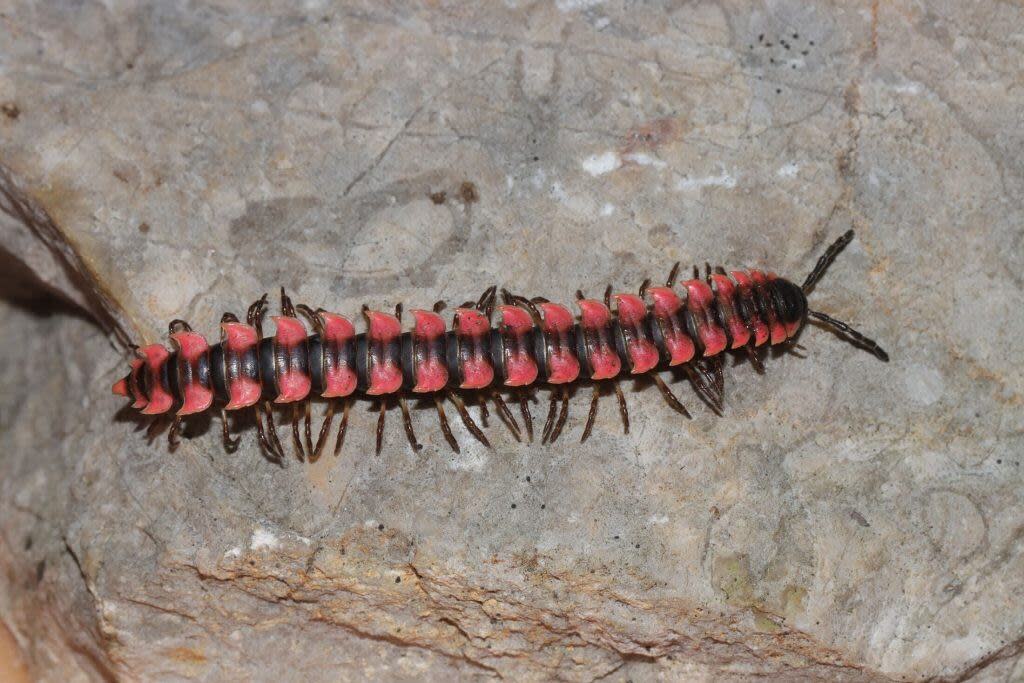
These millipedes are cave-dwelling specialists.
©© Somsak Panha / Fauna & Flora Copyright – Original / License
(© Somsak Panha / Fauna & Flora Copyright)An Evolutionary “Island Laboratory”
Far from being giant barren rocks, these limestone hills or karsts function as isolated evolutionary systems. Over millions of years, water has dissolved and carved through the soft, soluble limestone of these karst landscapes, leaving behind countless caves and sinkholes. Because these karst hills are separated from one another, they produce site-endemic species — creatures found on one specific hill and nowhere else on Earth.
In these isolated caves, life has adapted to extreme conditions: total darkness, high humidity, and limited food. Many of these food webs rely primarily on guano, meaning they depend on bat droppings and organic debris for nutrients.
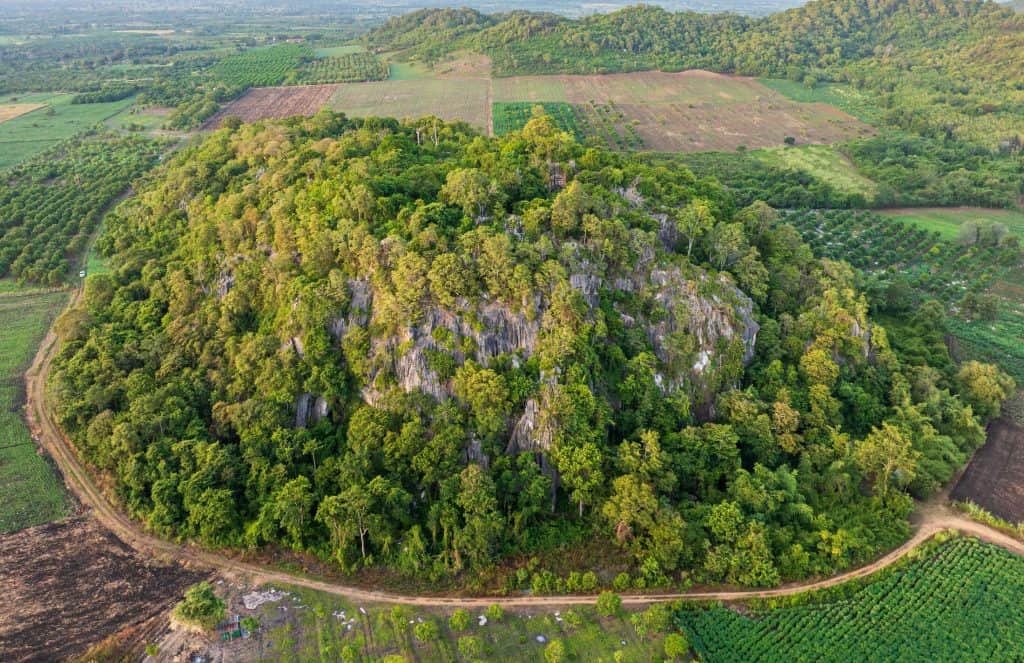
Many of these karst “islands” are completely surrounded by agricultural land.
©© Phyroum Chourn / Fauna & Flora – Original / License
(© Phyroum Chourn / Fauna & Flora)
While the newly discovered creatures are unique, camera traps have shown that these hills also provide a vital refuge for larger, threatened animals. Indochinese silvered langurs, Sunda pangolins, long-tailed and northern pig-tailed macaques, ornate flying snakes, reticulated pythons, and green peafowl were all documented in the area as well. And yet, researchers have barely scratched the surface. Cambodia contains roughly 7,722 square miles (20,000 square kilometers) of karst terrain, and scientists have only explored a tiny fraction of it.
Indigenous Knowledge and Local Collaboration
These limestone hills are more than just a biological treasure; they are a cornerstone of local culture. For generations, people have used these caves as Buddhist shrines and quiet spaces for meditation. The landscape serves both as a spiritual sanctuary and a vital ecological refuge. Locals have also practiced sustainable bat guano harvesting for generations—a tradition that depends on keeping the cave ecosystems healthy and undisturbed.

Phnom Chakrey cave is used as a place of worship in Battambang province.
©© Phyroum Chourn / Fauna & Flora – Original / License
(© Phyroum Chourn / Fauna & Flora)
The local community played a crucial role in the multi-year research project. By sharing their deep knowledge of the land, local community members guided researchers to hidden cave systems that would have otherwise remained undiscovered. Researchers are only beginning to understand the sheer scale of biodiversity in this region.
A Landscape Under Siege
Despite their ecological and cultural value, these limestone hills are facing an immediate crisis. Because limestone is the essential ingredient for cement, these hills are frequent targets for extraction. Limestone extraction can completely destroy an entire karst system — and the unique species that live there — in just a few weeks.
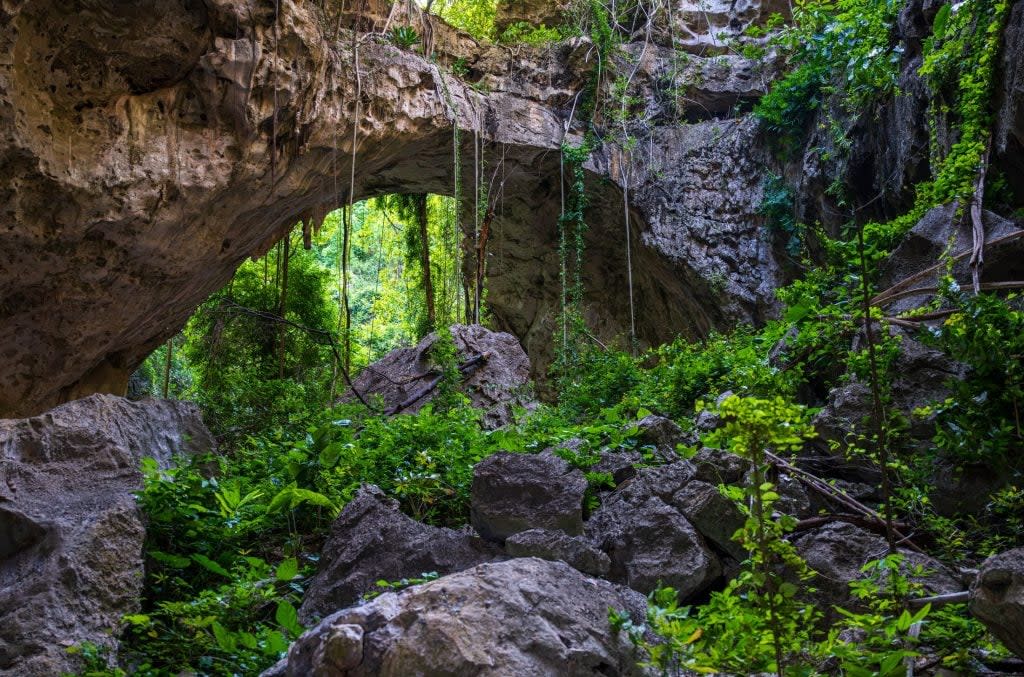
The Phnom Laang Spean Cave reaches 42.6 feet deep with more than 10,763 square feet of floor space.
©© Phyroum Chourn / Fauna & Flora – Original / License
(© Phyroum Chourn / Fauna & Flora)
Additionally, expanding agriculture and spreading fires are eating away at the habitats surrounding the hills. Poachers put both newly discovered species and well-known endangered animals like the Sunda pangolin at risk. Unregulated tourism and heavy foot traffic can also easily damage these fragile cave environments.
Conservationists warn that we are in a race against time. Many of these hills could vanish before scientists even have a chance to document the life hidden inside them. Dr. Lee Grismer of La Sierra University explained in this press release, “If we are truly going to conserve the biodiversity of this planet, we need to understand what is there. We can’t protect something if we don’t know it exists.”
A Race Against Time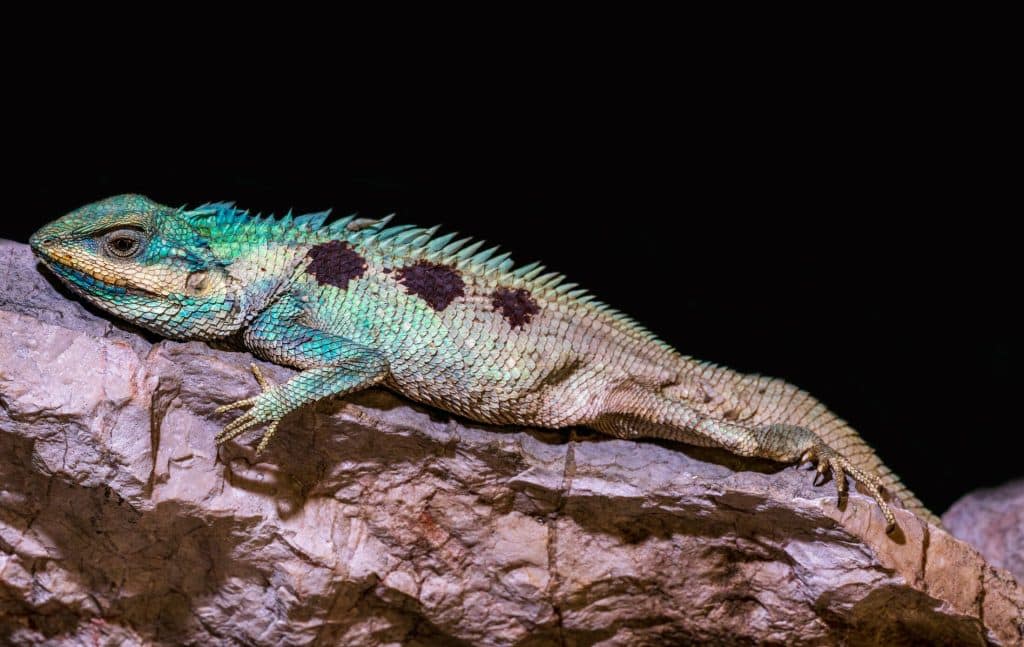
Karst areas are some of the world’s most diverse habitats.
©© Phyroum Chourn / Fauna & Flora – Original / License
(© Phyroum Chourn / Fauna & Flora)
Researchers are now working with the Cambodian government to secure Natural Heritage Site status for these landscapes. The goal is to change how these hills are viewed: moving away from seeing them as mere industrial resources and recognizing them as irreplaceable centers of biodiversity.
Protecting these “island laboratories” is a complex challenge that requires balancing economic development with environmental preservation. However, without immediate action, unique species found nowhere else on Earth — from the vibrant turquoise pit viper to micro-snails — could disappear before they are even formally described.
As the study makes clear, we are only beginning to understand what lies within Cambodia’s limestone caves. However, whether these discoveries mark the start of a conservation success story — or a record of what was lost — depends entirely on what happens next.
The post Meet Cambodia’s Newest (and Bluest) Pit Viper appeared first on A-Z Animals.