
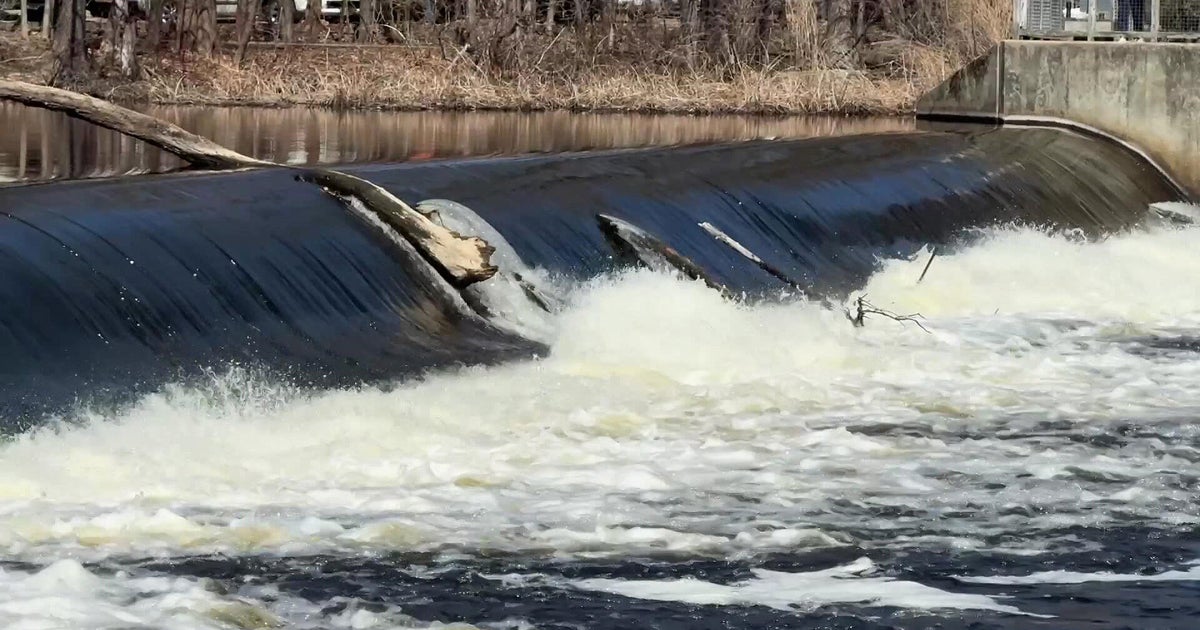
It has taken decades of work to distance the Charles River in Massachusetts from its “dirty water” reputation, but the next phase of its cleanup could involve restoring it to a free-flowing state.
“You remove the dams, get that free-flowing state of river, you can have those ecosystem conditions to support a healthy thriving area,” said Lisa Kumpf, river restoration director for the Charles River Watershed Association (CRWA).
“Defunct” dams across Massachusetts
CRWA is among groups advocating for the removal of dozens of “defunct” dams across Massachusetts, just a portion of the state’s roughly 3,000 registered dams.
“80% of those is a hell of a lot of dams that are no longer serving a purpose and posing a flood risk as well as disrupting our ecosystems,” Kumpf explained.
While some dams serve critical purposes, protection from flooding and supplying drinking water, along the 80-mile-long Charles River, Kumpf says nearly 20 dams are simply relics of the region’s industrial past.
“Over time they fell into disrepair, property ownership changed, but they’re still there and they still do pose a hazard,” Kumpf said.
Kumpf says recently the dams have been exacerbating environmental concerns, worsening fish passage, harmful algae blooms and impairing water quality.
Natick dam scheduled for removal
Efforts to remove dams from the river are already underway. One dam in South Natick is scheduled for removal this summer, after the Select Board in the town voted for the aging dam’s removal and river restoration in 2022.

Dam on the Charles River in Natick, Massachusetts that is scheduled to be removed.
CBS Boston
The Watertown dam, the first built in the Charles River before the American Revolution, includes a 180-foot-long weir that was last renovated more than 60 years ago. Advocates say while the structure isn’t failing like the one in Natick, it no longer serves a purpose.
“The real driver for dam removal in that location is to restore the aquatic ecosystem,” Kumpf said, explaining it’s a critical movement area for fish, mainly herring.
The Charles River Watershed Association is asking the state, which owns the Watertown dam, to fund its removal. The Department of Conservation and Recreation is currently studying potential future actions.
Kumpf said the benefits of dam removal would include reduced flood risk, improved fishing and recreation, and a more sustainable watershed in the years ahead.
“We are the Bay State, and we absolutely have the potential, and I believe the responsibility to restore that abundance that really used to be here,” she said. Adding the cost to remove the dams, pales to the cost of ongoing maintenance or potential critical repairs to fix dams that no longer have a critical function.
DCR is expected to release the findings from the analysis of alternatives for the Watertown dam in the coming weeks.
More from CBS News