
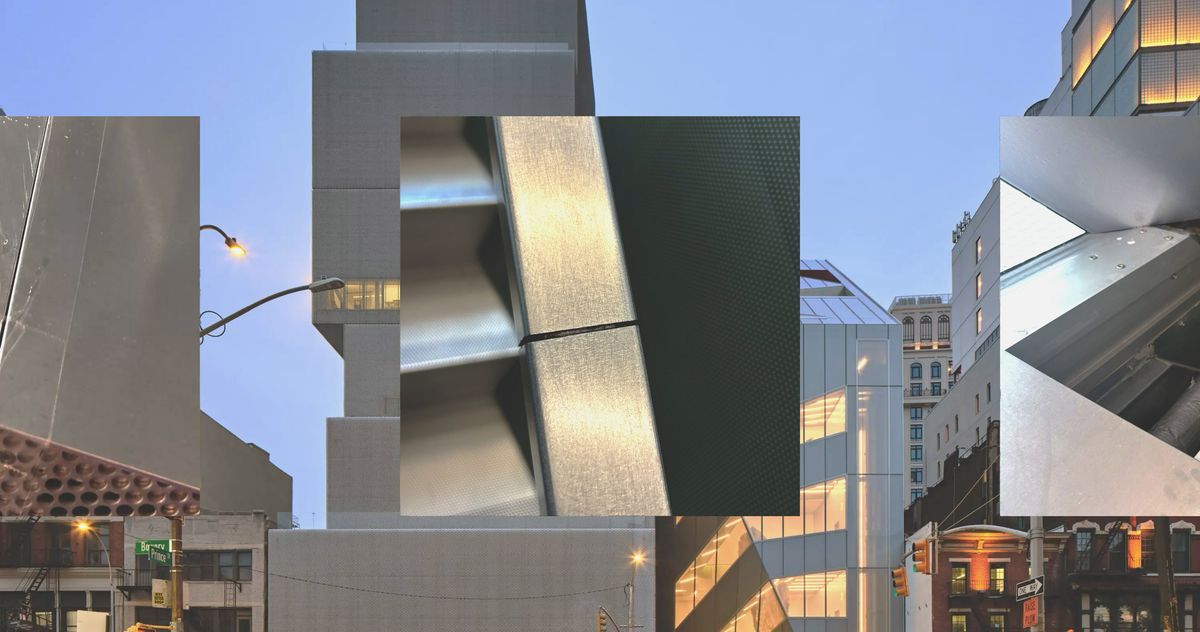
The New Museum has a packing-tape problem. In late March, its $82 million, shardlike addition, designed by Shohei Shigematsu and Rem Koolhaas of the Office for Metropolitan Architecture, finally opened to the public. Many critics, including our own, praised the new building. (“A shot of rejuvenating playfulness” and “brilliantly subtle,” with familiar OMA flourishes like its triangular rooftop cutouts.) Others saw a rush job. “It is sleek, slick, glossy, try-hard, angular, studiously aloof, and photogenic (but only if you don’t look too closely),” Christopher Hawthorne wrote in his Punch List newsletter, noting strips of packing tape on the sleek metal staircase and “workers’ fingerprints and Pollockian splatters of black paint captured for what may be eternity beneath sheets of glass.” Architects piled on too. “If your grand staircase is the most public face of the building, then why is it covered in clear packing tape on opening night?” one said.
Maybe scrutiny was to be expected. The expansion along the Bowery was OMA’s first major public commission in the city, and the firm’s reputation precedes it. Then there were the delays: It was supposed to debut in 2022, but the pandemic meant construction only began that year. And for fairly mysterious reasons, last year’s planned reopening was pushed back. The price tag likely didn’t help either. But is a little stray tape or a clumsily set banister panel really that big a deal? According to at least one museum director I talked to, it is a bit of egg on the face for the New Museum. Had it been their institution, says this director, who has overseen multimillion-dollar renovations in New York and elsewhere, they would have been “a much more proactive client” to ensure everything at least looked right by the opening. “In my experience, you don’t open with apologies that this isn’t done yet,” this director tells me. “If we had to wait for the manufacturer of something, you still dressed it so that it was unnoticeable.” (The New Museum did, in fact, open with apologies. “If you see some blue tape around, that’s because that’s what exhibitions are made of,” artistic director Massimiliano Gioni apparently told attendees at the press preview. “We were working very late. I hope you can’t really tell. If you do tell, please forgive us.”)
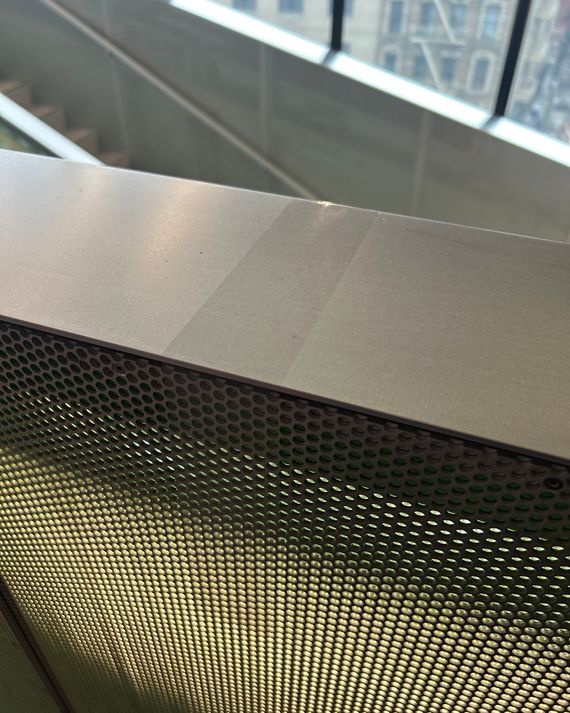
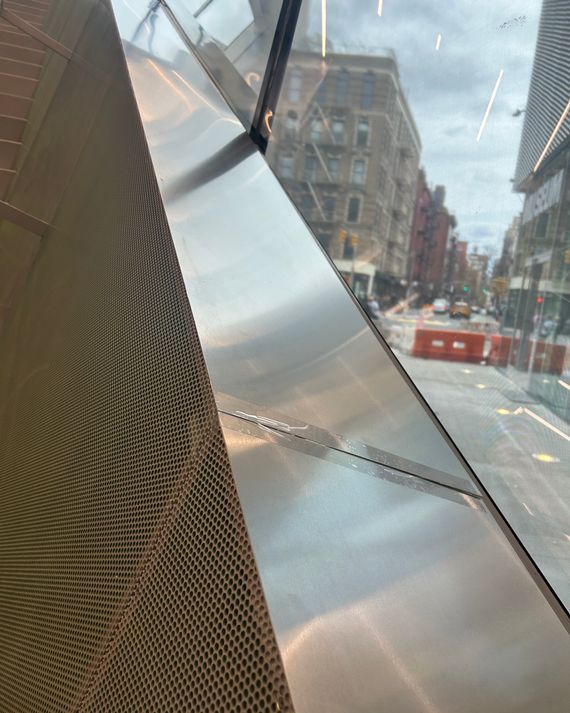
From left: Photo: Sukjong HongPhoto: Sukjong Hong
From top: Photo: Sukjong HongPhoto: Sukjong Hong
When I started talking to people on the project, multiple subcontractors pointed fingers at Sciame Construction, the firm hired to build OMA’s vision. “Sciame has carved out this niche in general contracting that they are the art contractor,” one construction worker tells me. The problem, this person says, was that the company was juggling too many projects alongside the New Museum — among them, a major renovation for the Frick and building a completely new Studio Museum in Harlem. As this subcontractor put it, “They put the B-team on the New Museum and sent the A-team to the Studio Museum.” (Per Sciame, the firm “routinely completes numerous best-in-class projects across many building sectors concurrently, including many NYC cultural projects.”)
Sciame’s scheduling and management issues also led to job delays and a chaotic worksite, according to at least three subcontractors I spoke with. There was a March 21 deadline, and people were racing to finish. “The carpentry trade would put up walls and then you’d have to take down the wall or try to work around it,” one of these workers tells me. “Pretty much all these trades were in each other’s way.” In the days leading up to the opening, another worker says, “they were still doing pretty heavy work adjacent to or on top of finished surfaces,” and adds that they saw freshly poured concrete floors damaged by dropped tools and heavy equipment that had been dragged across the space: “Everybody was like, ‘This is one of the worst jobs I’ve ever been on.’” (Per Sciame, “NYC construction sites can be characterized by some as ‘organized chaos.’” But, the firm adds, “As with all our projects, the building will be fully turned over with all finishes in place as designed and envisioned by the design professionals.”)
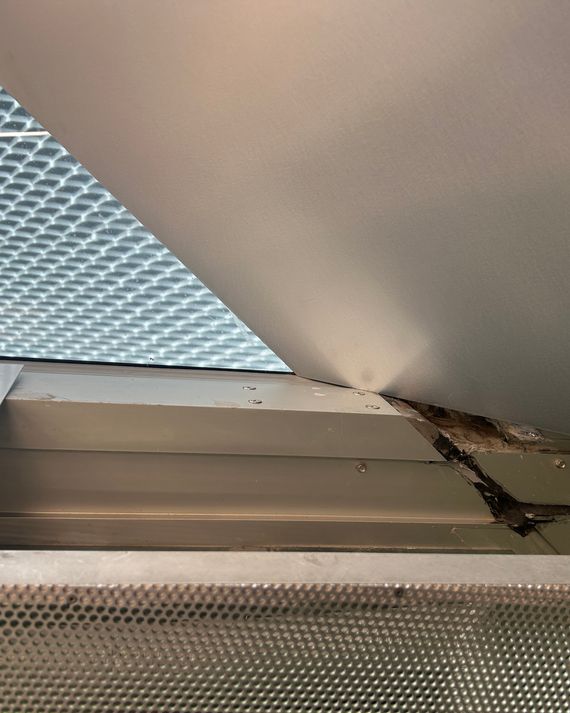
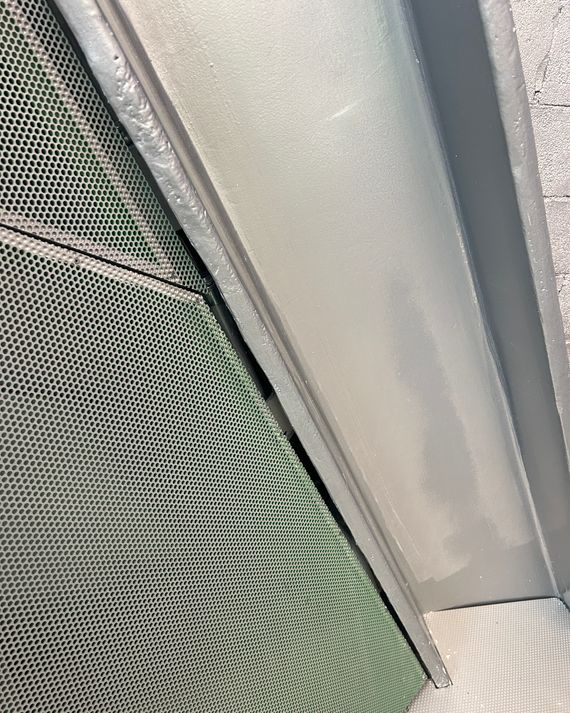
From left: Photo: Sukjong HongPhoto: Sukjong Hong
From top: Photo: Sukjong HongPhoto: Sukjong Hong
This same worker also tells me Sciame failed to communicate the profile of the job — or, notably, OMA’s profile — and the fact that this would likely be one of the most heavily watched openings in the city. “It didn’t feel like that, the way they were running the job and rushing things,” this person says. (Sciame calls this claim “wholly inaccurate” and says, “The significance of the New Museum expansion was never in question at all levels of the project and across the Sciame organization.”) But there were other issues beyond Sciame’s control, per these tradesmen — the typical red tape that comes with building in the city.
Other people who worked on the project say the New Museum expansion was pretty standard — hectic, maybe, but nothing out of the ordinary. “This rolled out as much as any job would roll out,” a different subcontractor says. “Every job, at the end, there’s a rush.” And most projects have what’s called a punch list to address cosmetic or other lingering issues after opening. (To that end, Sciame tells me, “As with any project of this scale, punch-list work continues through final completion, and as always, we fully stand behind our work.”) An architect who wasn’t involved in the New Museum expansion didn’t seem all that concerned about any of the issues people have called out either. “In my work, major red flags would be accessibility, ADA compliance, leaks in the roof or envelope,” this architect says. “None of these rise.”
Could this mini-mess have been avoided by further delaying the opening? Maybe. “This never would have happened if they allowed more time and had a more thorough punch list,” says the worker who claims to have seen concrete floors being damaged. But that’s a hard call to make on a project that’s already behind schedule, says the museum director: “You do have to balance between the imperative of opening and the imperative of achieving the full, final execution of all detailing — and it’s not easy to do the latter.” (Sciame says, “Some conditions observed during press previews reflected work in progress and were not representative of the completed building. Those items have since been addressed.”) In this case, the New Museum’s ultimate calculation might have been accepting one form of bad press over another: Delay yet again and get the art world talking, or open with some rough edges and … get the art world talking.
As for the museum’s visitors — they might not have noticed anything askew. When I went last week, the place was busy an hour before closing with dozens of people wandering through the galleries and atrium. Rather than looking down at misaligned seams in the staircase, they were looking up at Klára Hosnedlová’s peltlike hanging installation. Or at least most of them were. “Kind of a poor finish,” I heard one woman say about a gap in the floor.
Sign Up for the Curbed Newsletter
A daily mix of stories about cities, city life, and our always evolving neighborhoods and skylines.
Vox Media, LLC Terms and Privacy Notice
Related