
Moneywise and Yahoo Finance LLC may earn commission or revenue through links in the content below.
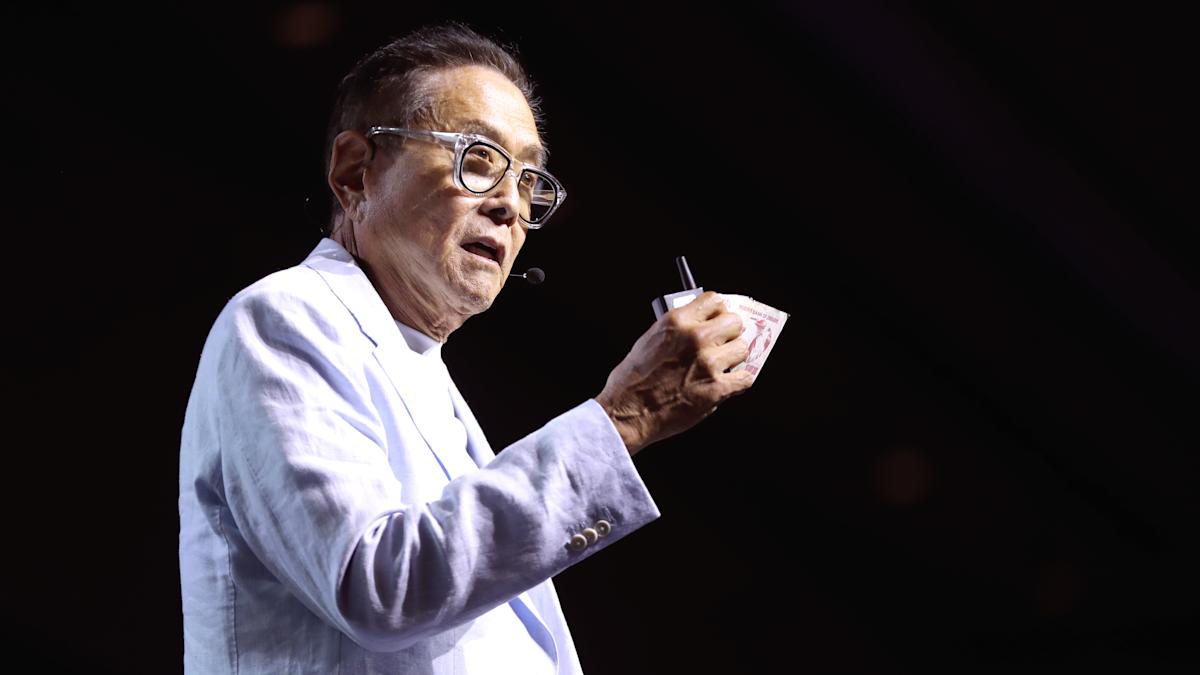
When you retire after decades of work, the expectation is simple: financial security and a comfortable life. But according to “Rich Dad Poor Dad” author Robert Kiyosaki, that may not be the impending reality for millions of Americans.
In a recent post on X, Kiyosaki issued (1) a stark warning: “Millions of baby-boomers will soon find out they have no income once they stop working.”
He argues this isn’t a sudden problem — but the result of a shift decades in the making.
“In 1974 ERISA (Employee Retirement Income Security Act) was passed. Up until 1974 most employees had guaranteed retirements income for life. After ERISA millions of employees went on to 401k, RRSPs, IRA which guaranteed nothing,” he wrote.
Kiyosaki is referring to a major shift in how retirement is structured in the U.S.
The Employee Retirement Income Security Act (ERISA) of 1974 set rules to protect workers’ pensions, but over time, many employers moved away from traditional defined-benefit plans — which promised a fixed income for life — toward defined-contribution plans like 401(k)s, while IRAs were introduced for individual savers.
These newer accounts place more responsibility on individuals and are tied to market performance, meaning retirement income is no longer guaranteed and can vary widely depending on how much people save and how their investments perform.
That variability is already showing up in the data. According to Fidelity (2), the average 401(k) balance for baby boomers is $249,300, while the average IRA balance is $257,002 — figures that may fall short (3) of what many retirees need to sustain their lifestyle.
But retirement accounts aren’t Kiyosaki’s only concern. He also warned that key government programs may not provide the safety net many Americans expect.
“Adding to the mess, Social Security and Medicare are broke,” he said. “Millions of Boomers will be homeless or living in RVs as rising oil prices cause the price of food and fuel to rise.”
Social Security is indeed facing mounting pressure. A new report (4) from the Congressional Budget Office projects that the Old-Age and Survivors Insurance Trust Fund — the program that pays retiree and survivor benefits — will run out of money in 2032.
According to the CBO, that shortfall would trigger a reduction in benefits — with payments dropping by about 7% in 2032, followed by average cuts of roughly 28% annually between 2033 and 2036.
Meanwhile, broader fiscal concerns continue to build. The U.S. national debt now stands at about $38.97 trillion (5) — and that doesn’t include unfunded liabilities like Social Security and Medicare.
Add in geopolitical tensions pushing oil prices higher — and the risk of renewed inflation — and the financial strain on retirees could intensify.
Against that backdrop, Kiyosaki is urging Americans to take matters into their own hands.
“I continue to recommend saving real money….gold, silver and Bitcoin….and keep investing in your personal financial education,” he said. “Make your future a rich future.”
Let’s take a closer look at these assets.
Kiyosaki has long been a vocal advocate for precious metals. His reasoning is straightforward: “I’m not buying gold because I like gold, I’m buying gold because I don’t trust the Fed,” he said (6) in an interview back in 2021.
Indeed, precious metals are often viewed as a natural hedge against inflation — unlike fiat currencies, they can’t be printed at will by central banks. Gold is also widely considered the ultimate safe haven asset. It’s not tied to any one country, currency or economy and in times of economic turmoil or geopolitical uncertainty, investors often flock to it — driving prices higher.
Kiyosaki himself has been hoarding gold. “I have boxes of gold. I own gold mines,” he revealed (7) in a 2025 interview.
He’s not alone in this stance. Ray Dalio, founder of the world’s largest hedge fund, Bridgewater Associates, told CNBC last year that “people don’t have, typically, an adequate amount of gold in their portfolio,” adding, “when bad times come, gold is a very effective diversifier.”
And the market has rewarded gold holders. Despite a recent pullback, gold prices have surged by more than 45% over the past 12 months.
One way to invest in gold that also provides significant tax advantages is to open a gold IRA with the help of Priority Gold.
Gold IRAs allow investors to hold physical gold or gold-related assets within a retirement account, thereby combining the tax advantages of an IRA with the protective benefits of investing in gold, making it an option for those looking to help shield their retirement funds against economic uncertainties.
When you make a qualifying purchase with Priority Gold, you can receive up to $10,000 in precious metals for free.
Read More: I’m almost 50 years old and don’t have retirement savings. Is it too late?
Precious metals aren’t Kiyosaki’s only strategy for building what he calls a “rich future.” In past warnings, he has also pointed to an income-generating asset he believes can hold up even during a downturn: real estate.
“I have always recommended people become entrepreneurs, at least a side hustle and not need job security. Then invest in income-producing real estate, in a crash, which provides steady cash flow,” he wrote (8) in 2025.
Real estate has long been a go-to asset for investors seeking reliable income. While stock markets can swing wildly on market sentiment, high-quality properties often continue to generate stable rental income.
It can also be a powerful hedge against inflation. When inflation rises, property values often increase as well, reflecting the higher costs of materials, labor and land. At the same time, rental income tends to go up, providing landlords with a revenue stream that adjusts with inflation.
Perhaps that’s why Kiyosaki once disclosed (9) he owns 1,500 rental properties.
Today, you don’t need to be as wealthy as Kiyosaki to get started in real estate investing. Mogul, a crowdfunding platform, offers an easier way to get exposure to this income-generating asset class.
It’s a real estate investment platform offering fractional ownership in blue-chip rental properties, which gives investors monthly rental income, real-time appreciation and tax benefits — without the need for a hefty down payment or 3 A.M. tenant calls.
Founded by former Goldman Sachs real estate investors, the team hand-picks the top 1% of single-family rental homes nationwide for you. In other words, you gain access to institutional-quality offerings for a fraction of the usual cost.
Each property undergoes a rigorous vetting process, requiring a minimum 12% return even in downside scenarios. Across the board, the platform features an average annual IRR of 18.8%. Offerings often sell out in under three hours, with investments typically ranging between $15,000 and $40,000 per property.
You can sign up for an account and then browse available properties here.
Another option is Lightstone DIRECT, which offers accredited investors access to institutional-quality multifamily and industrial real estate — with a minimum investment of $100,000.
Founded in 1986 by David Lichtenstein, Lightstone Group is one of the largest privately held real estate investment firms in the U.S., with more than $12 billion in assets under management.
Over nearly-four decades, their team has delivered strong, risk-adjusted performance across multiple market cycles — including a 27.6% historical net IRR and a 2.54x historical net equity multiple on realized investments since 2004.
With Lightstone DIRECT, you gain access to the same multifamily and industrial deals Lightstone pursues with its own capital.
Here’s the kicker: Lightstone invests at least 20% of its own capital in every deal — roughly four times the industry average. With skin in the game, the firm ensures its interests are directly aligned with those of its investors.
Kiyosaki has also been a vocal backer of Bitcoin — the world’s largest cryptocurrency.
While recent pullbacks in its price have underscored just how volatile the asset can be, Kiyosaki has made it clear that price swings don’t shake his conviction. If anything, he views them as a buying opportunity.
“I am so bullish on Bitcoin I am buying more and more as Bitcoin’s price goes down,” he said (10) in February, noting there “will only ever be 21 million Bitcoin,” a supply hard-capped by the cryptocurrency’s underlying code.
Kiyosaki also added that he will be “buying more Bitcoin as people panic and sell into the coming crash.”
That said, cryptocurrencies remain highly volatile — and not everyone has the stomach for the swings. But for those curious about adding crypto exposure, getting started has never been easier.
If you’re looking to diversify beyond traditional stocks and ETFs, Robinhood Crypto lets you buy and sell cryptocurrencies with as little as $1.
With some of the lowest trading costs on average in the U.S., you could end up with up to 2.7% more crypto compared to other platforms.
Robinhood Crypto makes it easy to make investing a habit with recurring buys on a fixed schedule, while giving you access to all your favorite coins — from Bitcoin and Ethereum to Solana, Dogecoin, XRP and more.
You can also transfer crypto securely to other wallets, set custom price alerts, track market trends and manage your portfolio all in one place.
Robinhood ensures the security of your cryptocurrency is a top priority, with the majority of coins held in offline cold storage. Robinhood also carries crime insurance against theft and cyber breaches and 24/7 customer support is available if you need help.
Join 250,000+ readers and get Moneywise’s best stories and exclusive interviews first — clear insights curated and delivered weekly. Subscribe now.
We rely only on vetted sources and credible third-party reporting. For details, see our ethics and guidelines.
X (1),(8),(10); Fidelity (2); Yahoo Finance (3),(6); Congressional Budget Office (4); U.S. Department of the Treasury (5); YouTube (7),(9)
This article provides information only and should not be construed as advice. It is provided without warranty of any kind.