
Australia is stitching together a steady supply of fuel through a patchwork of relationships. But how long can that last?
A month-long disruption to oil shipments through the Strait of Hormuz is creating chaos in the international market for oil — and there are now signs global competition is becoming more intense.
A very small proportion of Australia’s oil comes directly from the Persian Gulf.
Iran war live updates: For the latest news on the Middle East crisis, read our blog
But most of our oil imports — which have already been refined to petrol (gasoline), diesel or jet fuel — come from countries that are heavily dependent on imports of crude oil from the Middle East.
And the ripple effects are being felt right around the world.
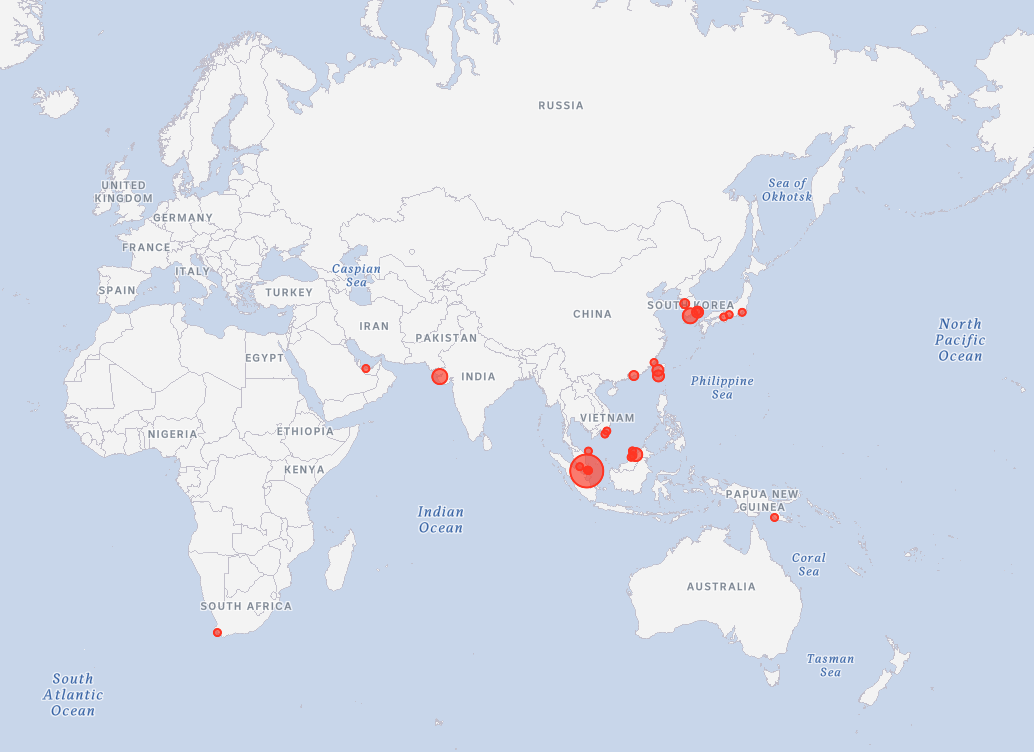 Key sources for oil imports to Australia in April 2025.
Around this time last year, 62 fuel and oil tankers had recently arrived or were en route to Australia, according to marine tracking data from Kpler.
All but five left from Asia or the Middle East.
But the global oil crunch is reshaping this map.
A close look at the same data for this April provides a hint of just how much has changed.
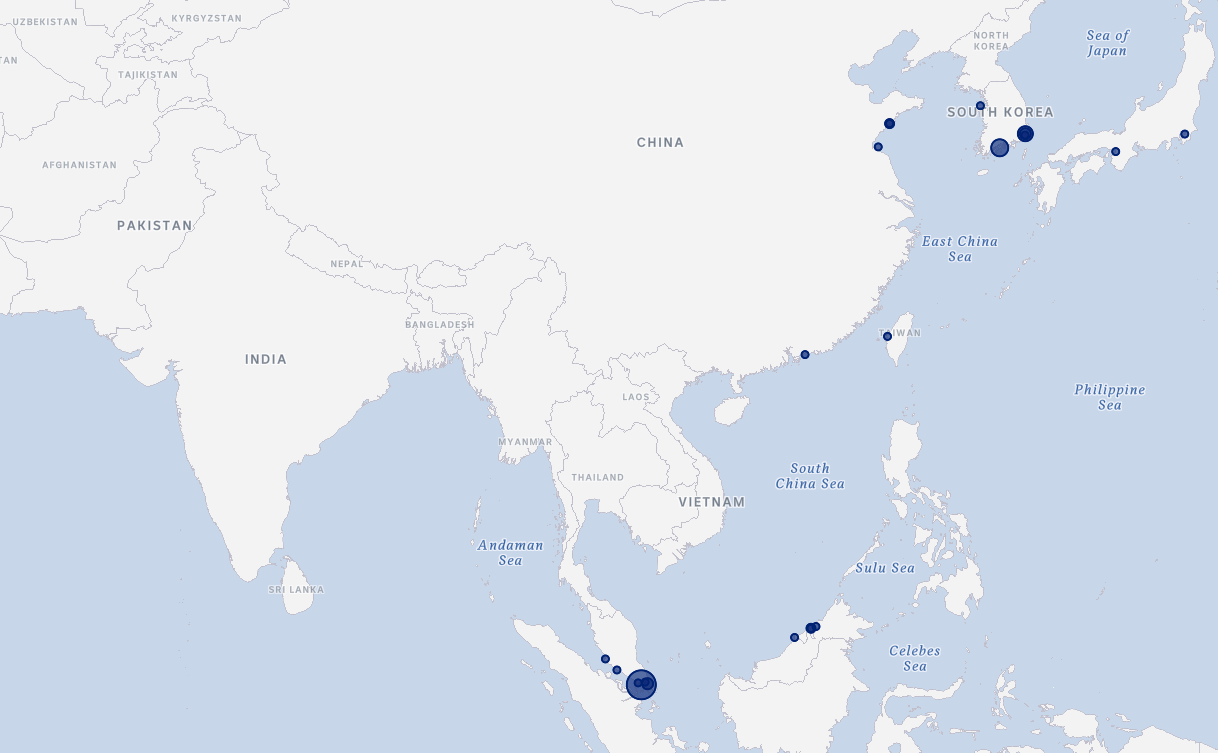 Key sources for oil imports to Australia in April 2026.
For comparison, we’re now looking at the port of origin for all the ships that have either already arrived this month or are on the way to Australia.
As of Thursday April 9, there were 59 tankers — that’s three fewer than at the same time last year.
This window of time is a small snapshot of Australia’s oil supplies, but the longer-term data shows our shipments have not dropped dramatically at this stage.
What has changed is where our fuel is coming from.
In April last year, there were just a couple of tankers from the United States, and one from South America.
This year, there are 11 tankers on their way from the US, and two from South America…
And there are another four making long journeys from Europe and Africa…
… compared to just one at the same time last year.
The mix of Asian suppliers has also seen a dramatic shift.
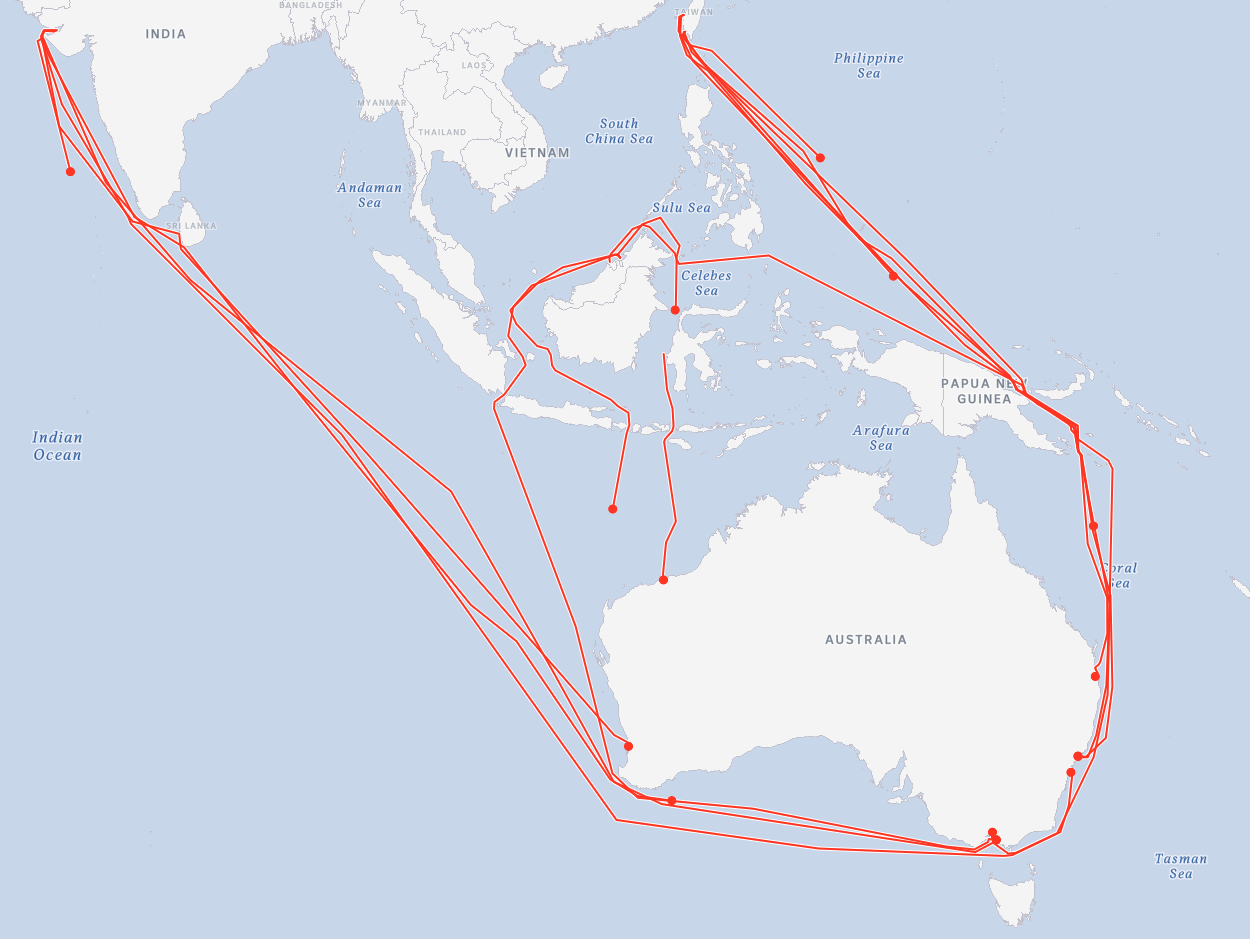 Taiwan, Brunei and India were among suppliers of oil to Australia in April 2025.
Looking only at tankers from Taiwan, Brunei and India shows that shift. At this time last year, 16 tankers had arrived or were expected in April from those three countries.
This year, there aren’t even a handful.
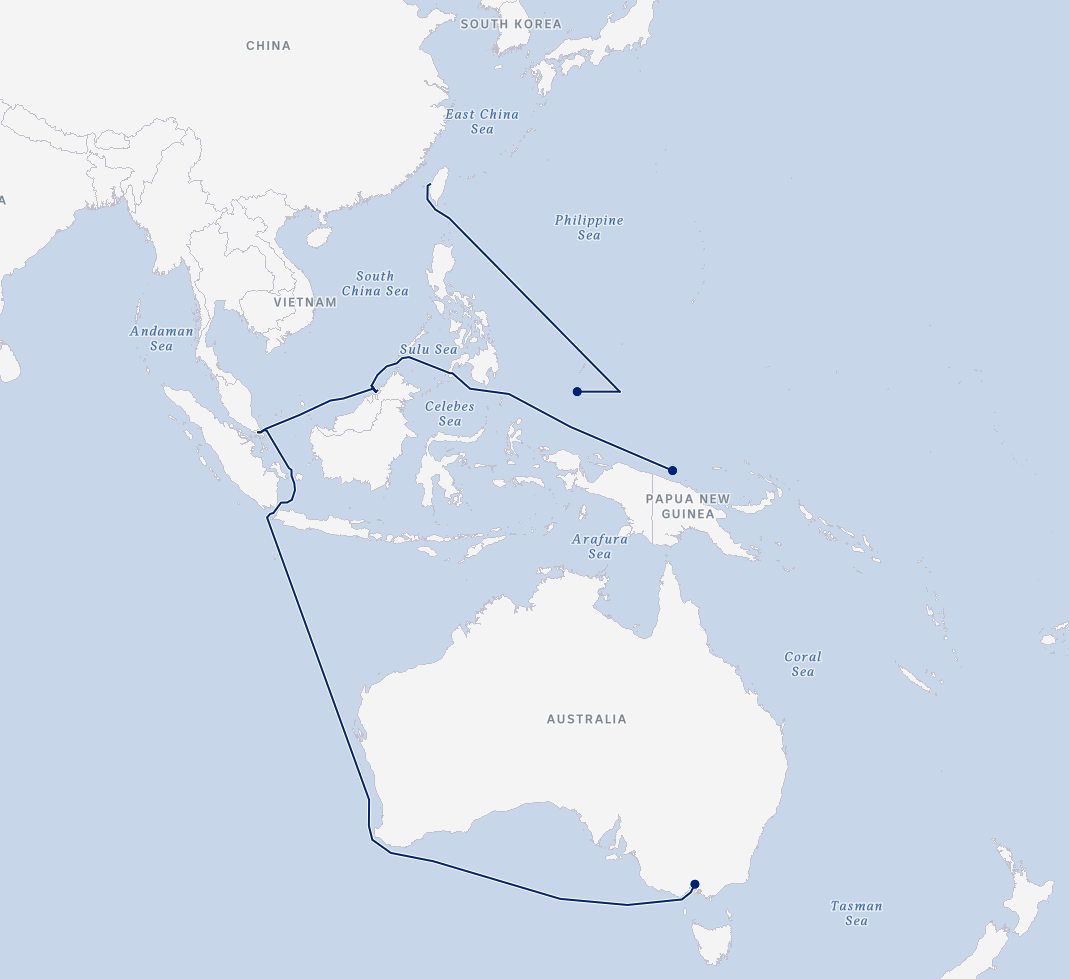 Barely any fuel supplies are coming from Taiwan, Brunei and India in April 2026.
James Noel-Beswick, the head of commodities at energy analytics firm Sparta, says those countries, as well as China, are producing less and are unlikely to increase supplies to Australia any time soon.
“All of those are essentially doing product export bans now, or reducing it, or hoarding their clean products because they need it themselves, because they aren’t getting their Arabian Gulf crude,” he says.
Meanwhile Singapore, South Korea and Malaysia remain some of our biggest fuel suppliers.
With some of their neighbours cutting off supply, these trading partners are more crucial to Australia than ever.
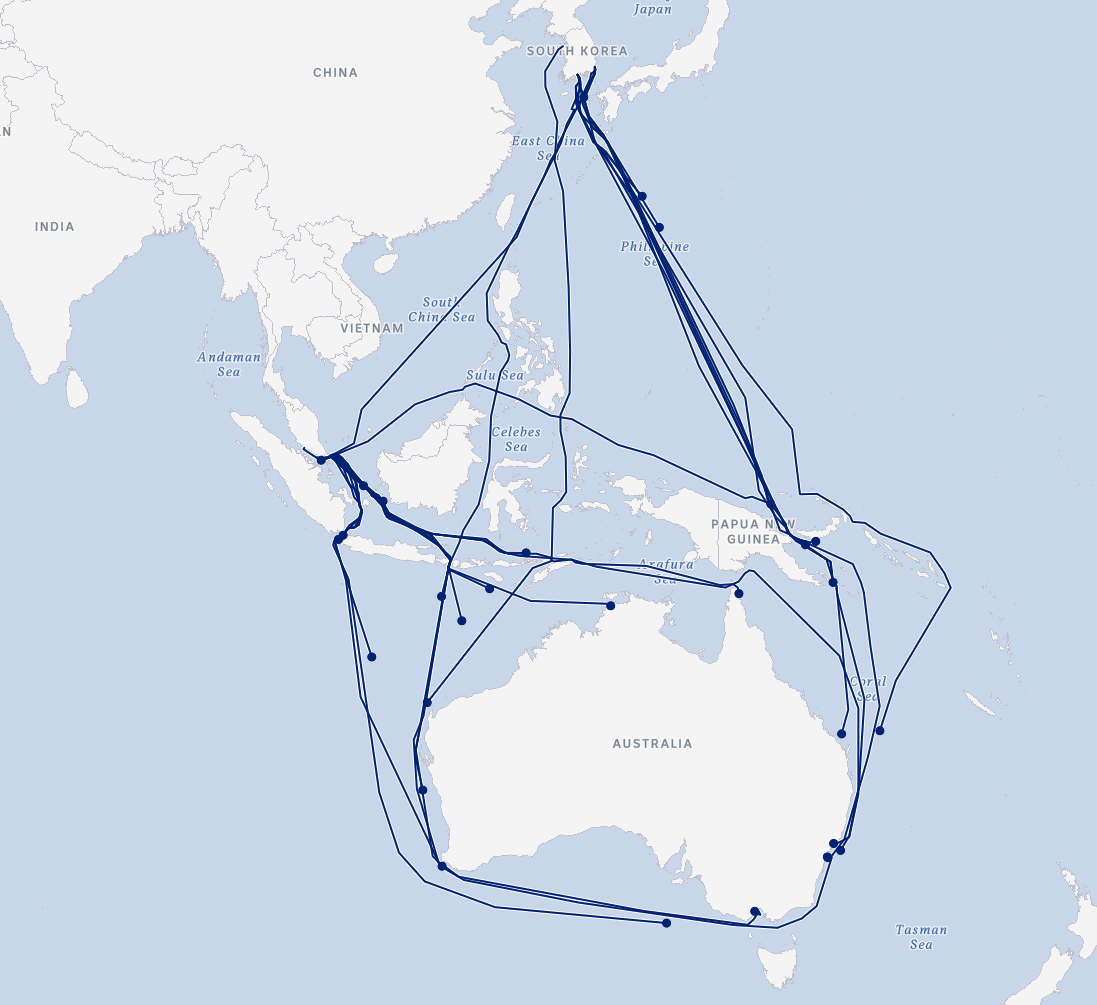 Fuel supplies from Singapore, South Korea and Malaysia remain critical in April 2026.
This week Prime Minister Anthony Albanese has travelled to Singapore and announced a deal aimed at shoring up both countries’ energy security. Singapore will continue to ship fuel products to Australia, while supplies of crucial liquefied natural gas will flow in the other direction.
But analysts say the Singapore deal does not provide Australia with diesel or jet fuel security.
“The deal is diplomatically sensible and provides some comfort on gasoline, but the Hormuz constraint caps what Singapore can physically deliver,” Noel-Beswick says.
“And for the two products under most pressure — diesel and jet fuel — Singapore was never a solution to begin with.”
Rahman Daiyan, an associate professor at the University of New South Wales, told the ABC that fuel shipment allocation was largely driven by commercial contracts, pricing and logistics.
Kevin Morrison, energy finance analyst at the Institute for Energy Economics and Financial Analysis, says it’s entirely possible that other countries could make moves to divert tankers away from Australia.
“[If] they get a call because China’s going to pay a higher price,” he says, “then all of a sudden the ship no longer is going to Australia, it’s heading towards China.
“It’s just a cutthroat business.”
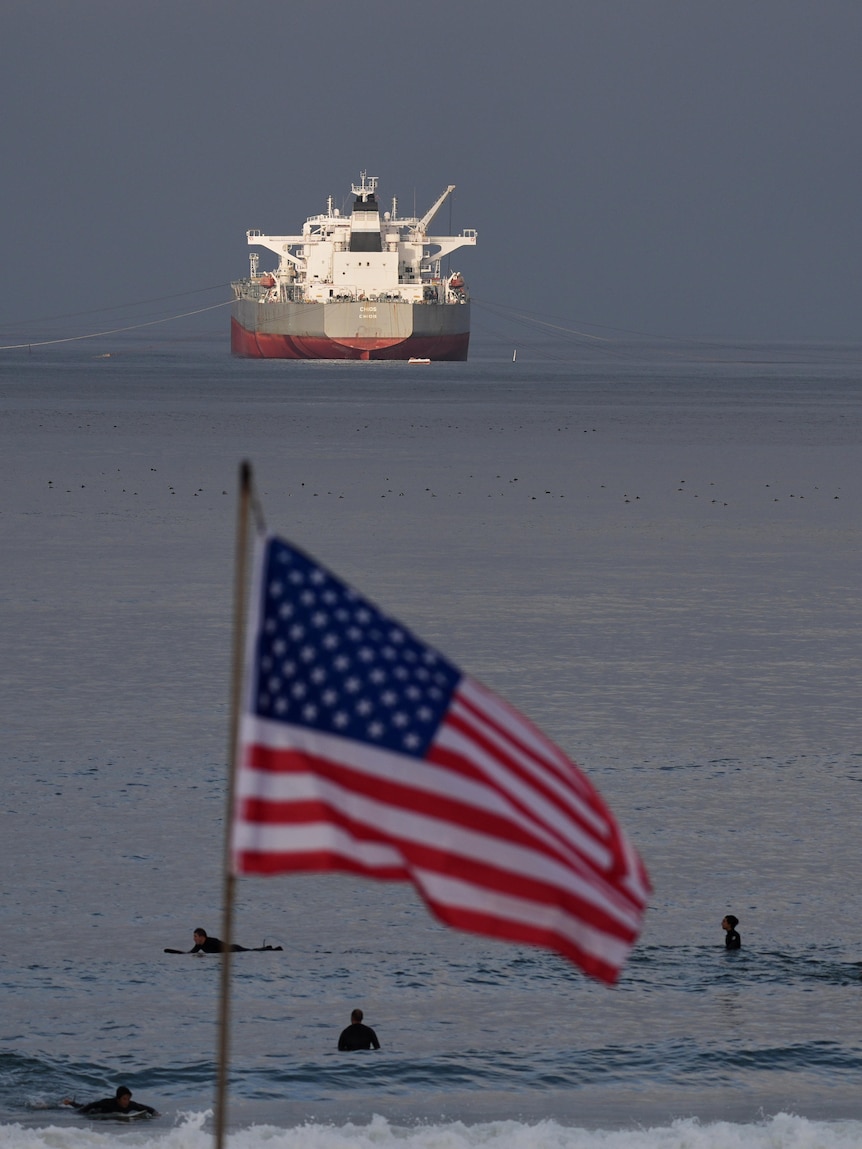 Australia is relying on US oil supplies as the Strait of Hormuz remains choked.(AP: Damian Dovarganes)
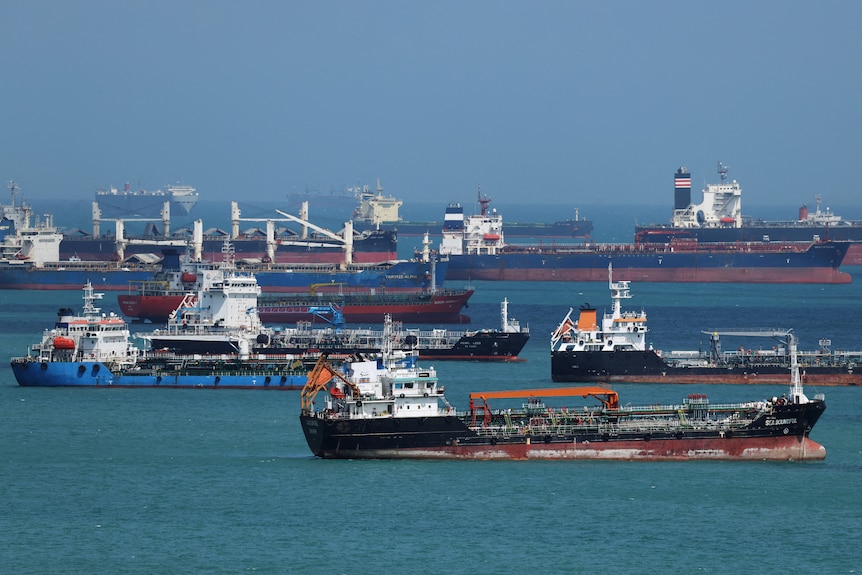 Singapore is proving crucial to Australia’s ongoing fuel supplies.(Reuters: Edgar Su)
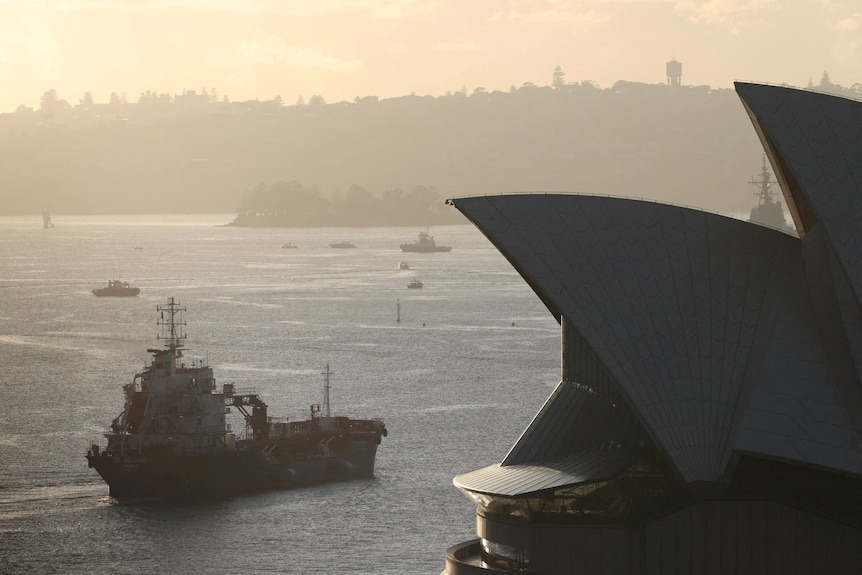 Australia is heavily dependent on imported fuel products.(Reuters: Hollie Adams)
The cost of shipping oil products is also skyrocketing.
Morrison says he is usually quoted about $20,000 a day for a fuel tanker — but now “that’s jumped up to over $300,000”.
Australia is in the fortunate position of being a wealthy country that can afford to supplement its supply by paying a premium.
“You’ve got to bear in mind how the whole supply chain works,” Morrison says. “It just goes to the highest bidder.”
That means, of course, there’s the possibility that over time Australia could find itself outbid.
At the same time, Australia is largely at the whim of other nations for almost all of its diesel and jet fuel needs.
“We desperately need the fuel more than anybody else because we’re one of the largest importers of products in the world,” says Noel-Beswick.
That’s why we are now seeing the use of less conventional routes to get much-needed fuel to Australia.
Three tankers are making unusual around-the-world journeys, heading towards Australia from the UK, Netherlands and Algeria.
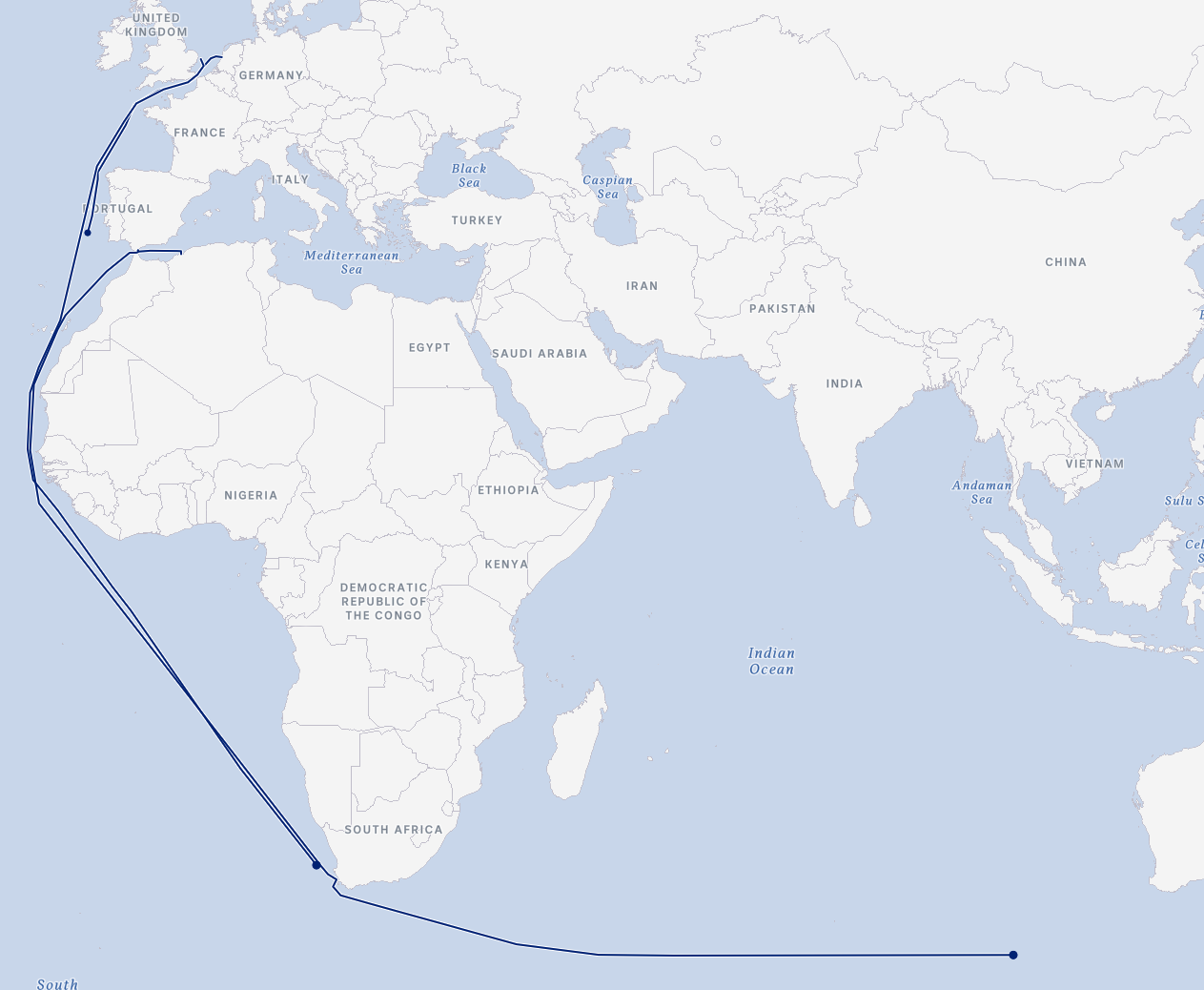 Some oil is coming to Australia from unusual global destinations.
Europe is short of diesel itself, but it has been outpriced by Asia and countries like Australia, says Noel-Beswick.
There are also those 11 tankers on the way to Australia from the US, most of them carrying diesel and petrol.
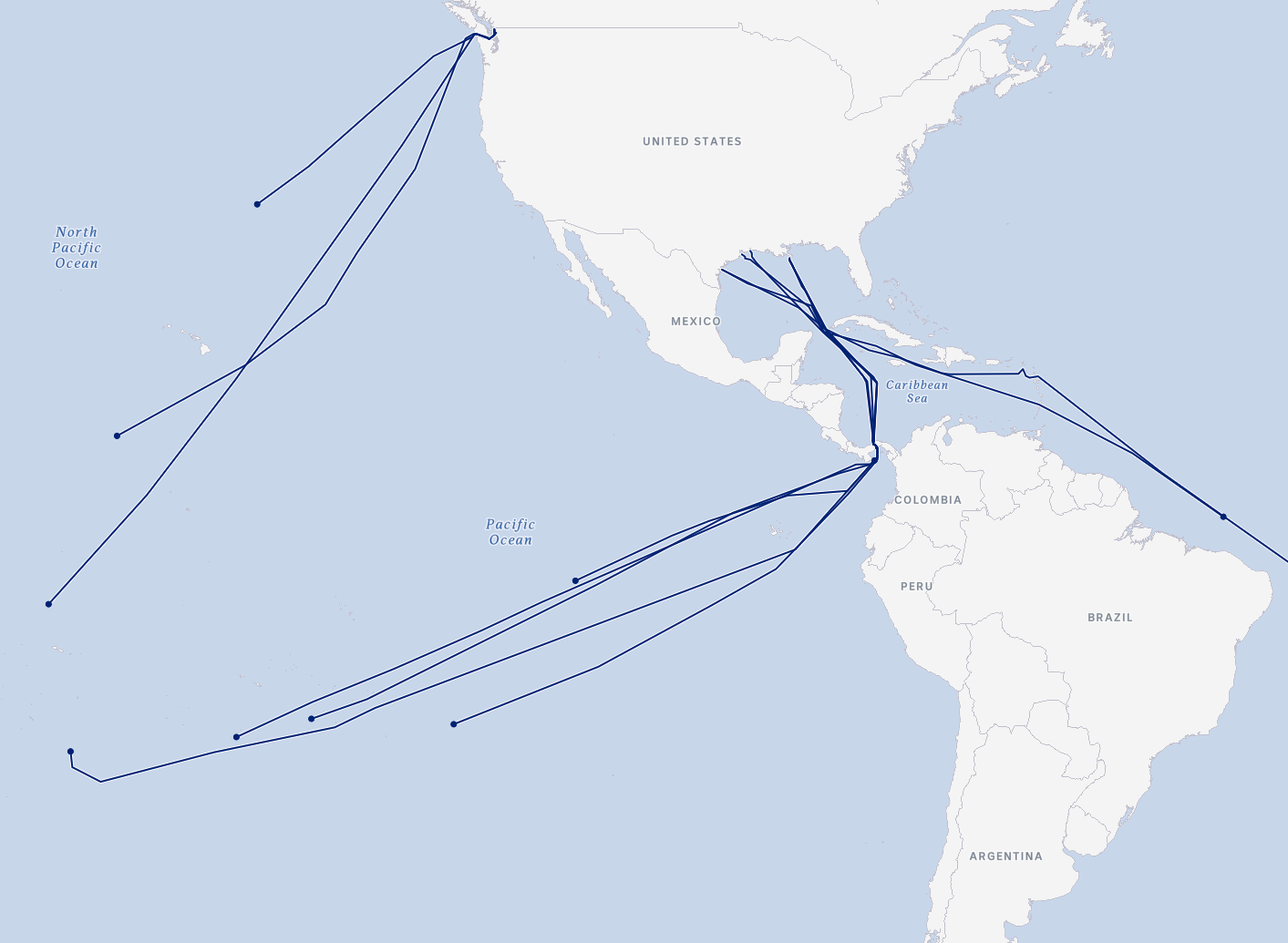 The US is sending more oil to Australian than is usual.
Two of them are following a route that crosses the Atlantic, and then past the African cape and on across the Indian Ocean.
Others are transiting through the Panama Canal and then crossing the Pacific Ocean.
This is “extraordinary”, says Fabian Vera of Mire Petroleum Consultants, as it takes about 40 days for a ship to take this route, and it costs about $8.5 million more than a comparable one from Asia.
Several more are on their way from the west coast of the US.
But Australia will increasingly face competition for all these US barrels, says Noel-Beswick.
“Diesel stocks in general in the US are not that healthy — they’re going to need at some point to start keeping this stuff for themselves.”
Already the competition for US fuel is getting more intense, as the oil crunch continues to bite across the world.
Last week, four tankers were headed from the US Gulf Coast towards various destinations in Europe.
Midway through their journey, they all turned sharply south. They are all now heading for South Africa, from where some of that supply may make its way to Asian markets.
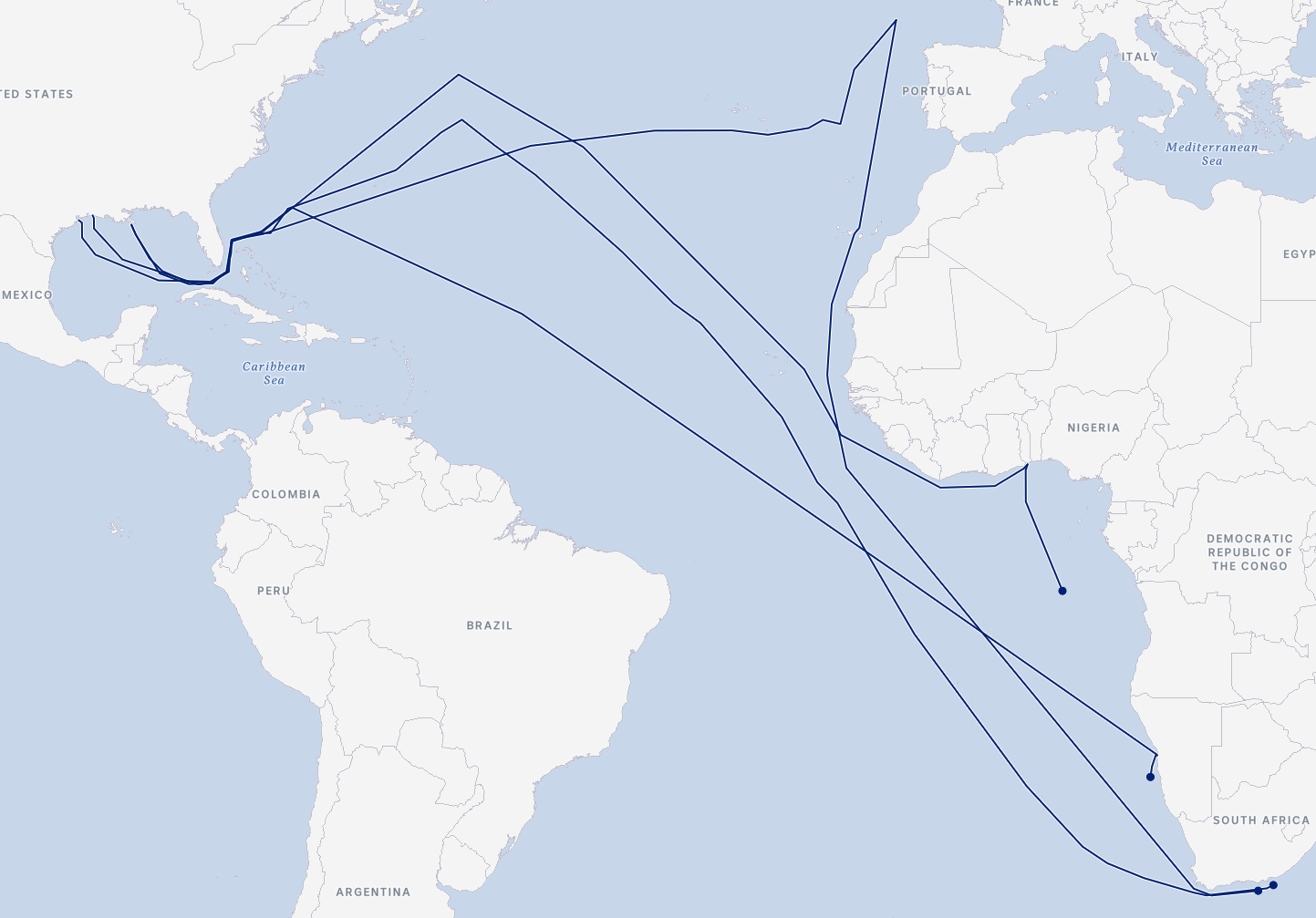 With the fuel market in turmoil, some oil tankers are changing destination while at sea
This worldwide scramble for diesel, with unusual journeys and diverted tankers, could soon become a big issue for countries that depend on fuel imports.
It’s unprecedented for Australia to be so reliant on the US for diesel, says Lurion De Mello, a senior lecturer at Macquarie University.
“That particular type of oil that’s coming out of the Middle East, you get a lot more diesel out of that,” he says.
“There’s enough oil around the world to make petrol, but it’s the diesel that’s the problem.”
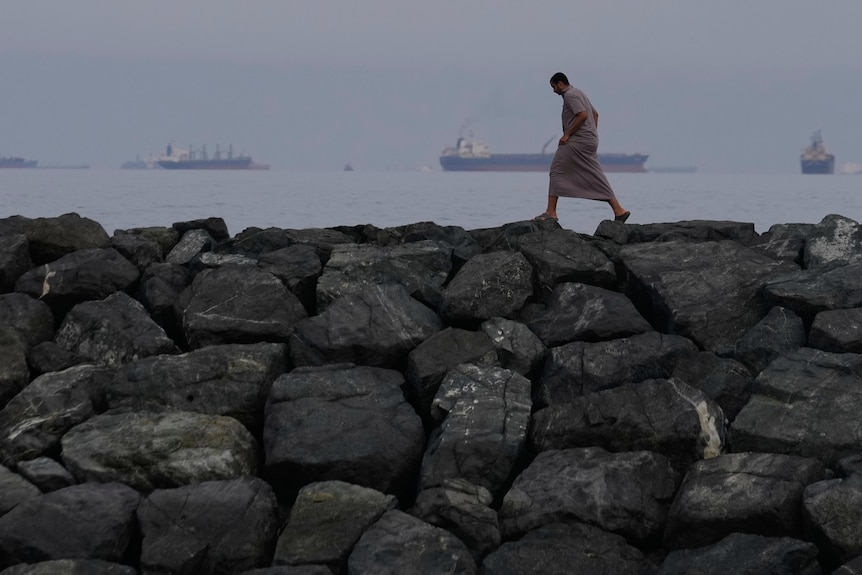 Oil tankers and cargo ships in the Strait of Hormuz, seen from Khor Fakkan in the United Arab Emirates on March 11.(AP: Altaf Qadri)
Noel-Beswick warns that things will get worse before they get better.
“We haven’t gone renewable and also we’ve shut [almost] all our refineries because they were too expensive and we’ve moved them all to Asia … so it hasn’t made us very energy secure at all.
“I don’t want to make it sound too tragic, but Australia is — in terms of gasoline, diesel and jet fuel — one of the most import-dependent countries, if not the most import-dependent country in the world … I think it looks pretty bad.”
Even if the Strait of Hormuz opens, analysts say it is likely to be months before refineries get back to full production and supply chains stabilise.
“Everything kind of hinges on how quickly we can fix this,” Noel-Beswick says.
About the data:Tanker routes based on available Kpler marine tracking data as of April 9, both in 2026 and in 2025 for comparison.The data included all laden or partially laden crude oil tankers, oil products tankers and oil/chemical tankers which arrived at an Australian port from a foreign country in April of that year, or those which were en route by April 9.