
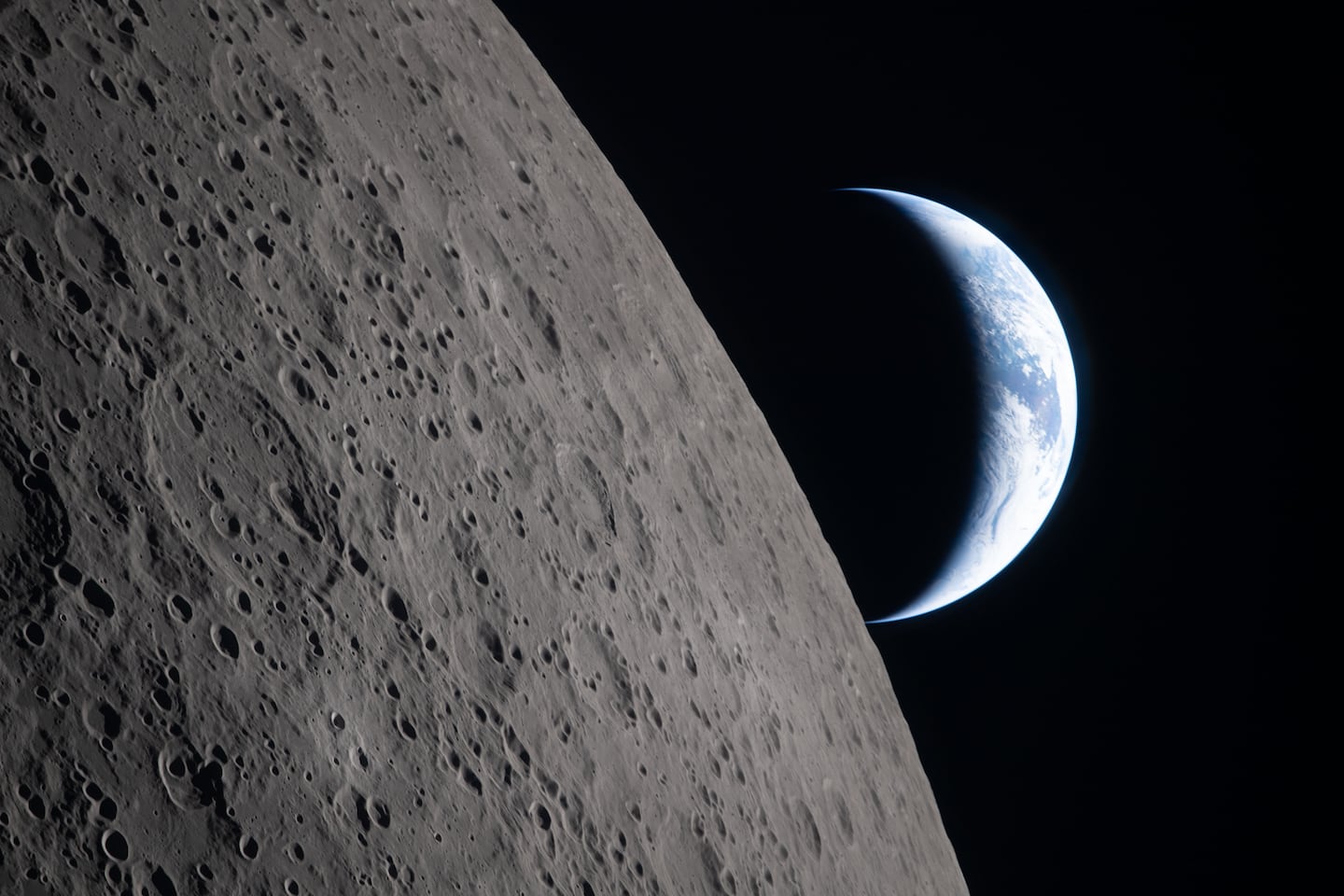
While Apollo was a “Lewis and Clark-like” scientific expedition, Head said Artemis has bigger ambitions: establishing a permanent base on the moon.
Head said, like Apollo, Artemis astronauts will gather for a debriefing in the months following splashdown near San Diego on Friday. They will discuss what worked, and what didn’t.
Get Rhode Map
A weekday briefing from veteran Rhode Island reporters, focused on the things that matter most in the Ocean State.
One early Apollo mission found a problem traveling behind the moon when the crew plunged into blackness, according to Head.
“Apollo 15 Commander Dave Scott said, that’s when you feel really alone because the only way you know that you’re in orbit around the moon is that there’s a circular place where there are no stars,” Head said. “Everybody crowds at the window to watch the first sunrise and it’s like a bolt of lightning — everybody’s around floating blind.”
Future astronauts have since donned solar glasses for far-side emergence.
Orion astronaut’s experienced a stunning solar eclipse in space.
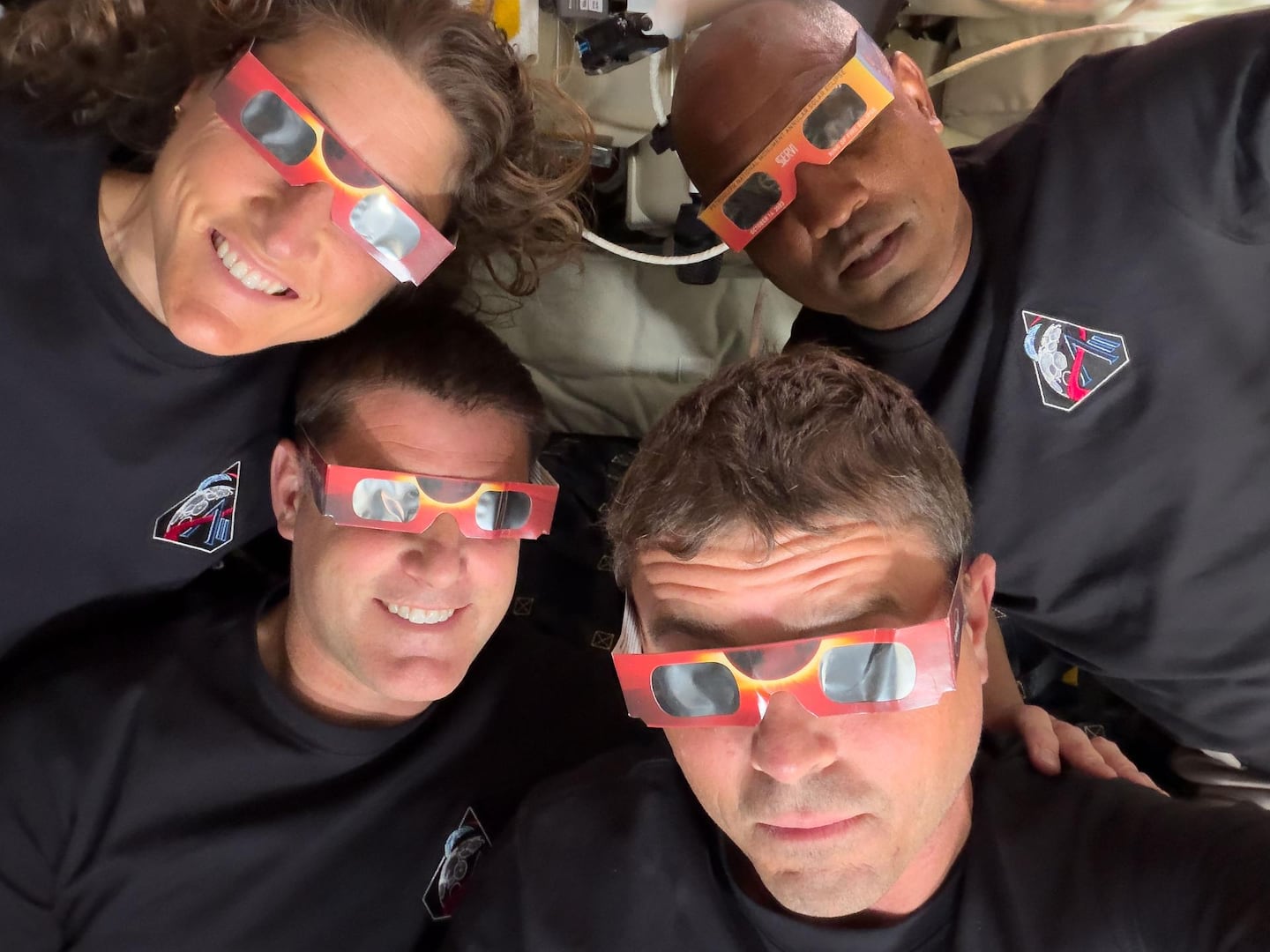 The Artemis II crew – Mission Specialist Christina Koch (top left), Mission Specialist Jeremy Hansen (bottom left), Commander Reid Wiseman (bottom right), and Pilot Victor Glover (top right) – uses eclipse viewers, identical to what NASA produced for the 2023 annular eclipse and 2024 total solar eclipse, to protect their eyes at key moments during the solar eclipse they experienced during their lunar flyby. This was the first use of eclipse glasses at the Moon to safely view a solar eclipse.NASA
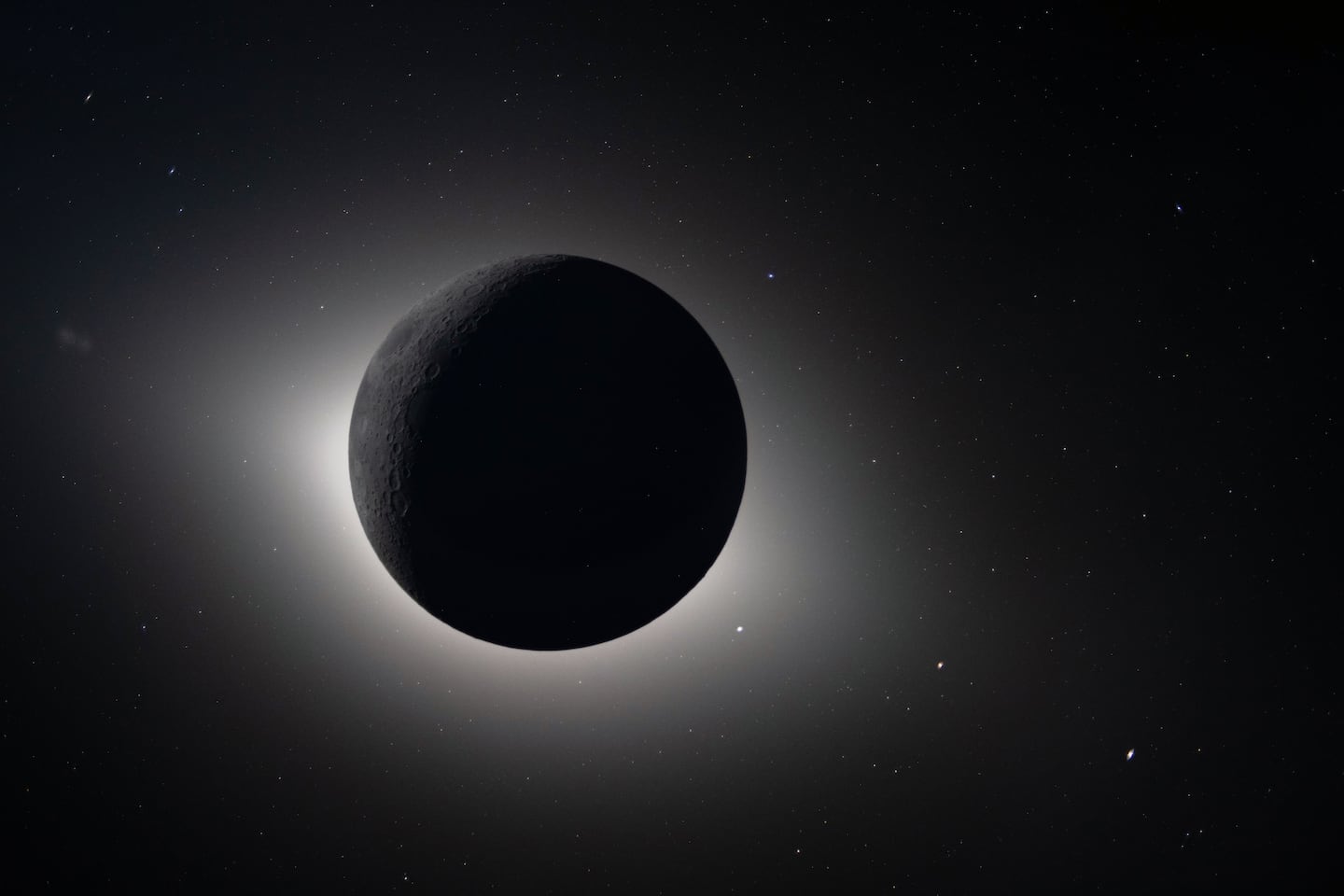 A photo provided by NASA shows a solar eclipse, captured by the Artemis II crew from the Orion Integrity spacecraft during their flyby around the far side of the Moon on Monday evening, April 6, 2026. On the sixth day of the mission, 248,655 miles from Earth, four people Ñ NASA astronauts Reid Wiseman, Victor Glover and Christina Koch, and Canadian Space Agency astronaut Jeremy Hansen Ñ ventured farther from home than any human being who has ever lived. NASA/NYT
Meteoroids slamming into the lunar surface stunned astronauts and inspired cheers at mission control in Houston. The frequency of these strikes remains unknown and could hold keys to dating the lunar surface, according to Mustard.
“That was mind blowing,” said the professor, who worked with India’s Chandrayaan-1 lunar mission in 2008-2009 that created the first global mineralogical map of the moon’s surface. “That was a major moment where we could see in real-time this process happening.”
Features within the craters, like central peaks and rings, show the size and power of meteorite impacts.
“Those central peaks are an example of energy,” Mustard said. “It doesn’t turn into a liquid but all the vibrations of the impact transforms it into this fluid-like substance.”
Colors on the moon’s surface may be an indication of older material underneath, he said.
“The lava flows that have spilled out on the surface tells us that the interior of the planet had to be warm enough to generate liquid magma with enough pressure to push that to the surface,” Mustard said. “It was a dynamic planet.”
Head said meteorites slamming into the moon dig up its past, which can be analyzed from orbit.
“Impact craters are drill holes, so we know from the ejecta of craters of all different sizes what the structure is,” he said. “We also have gravity data, seismic data, and sample data which we can piece together. … If the lava flows are embaying the crater, we know that the lava flows are younger.”
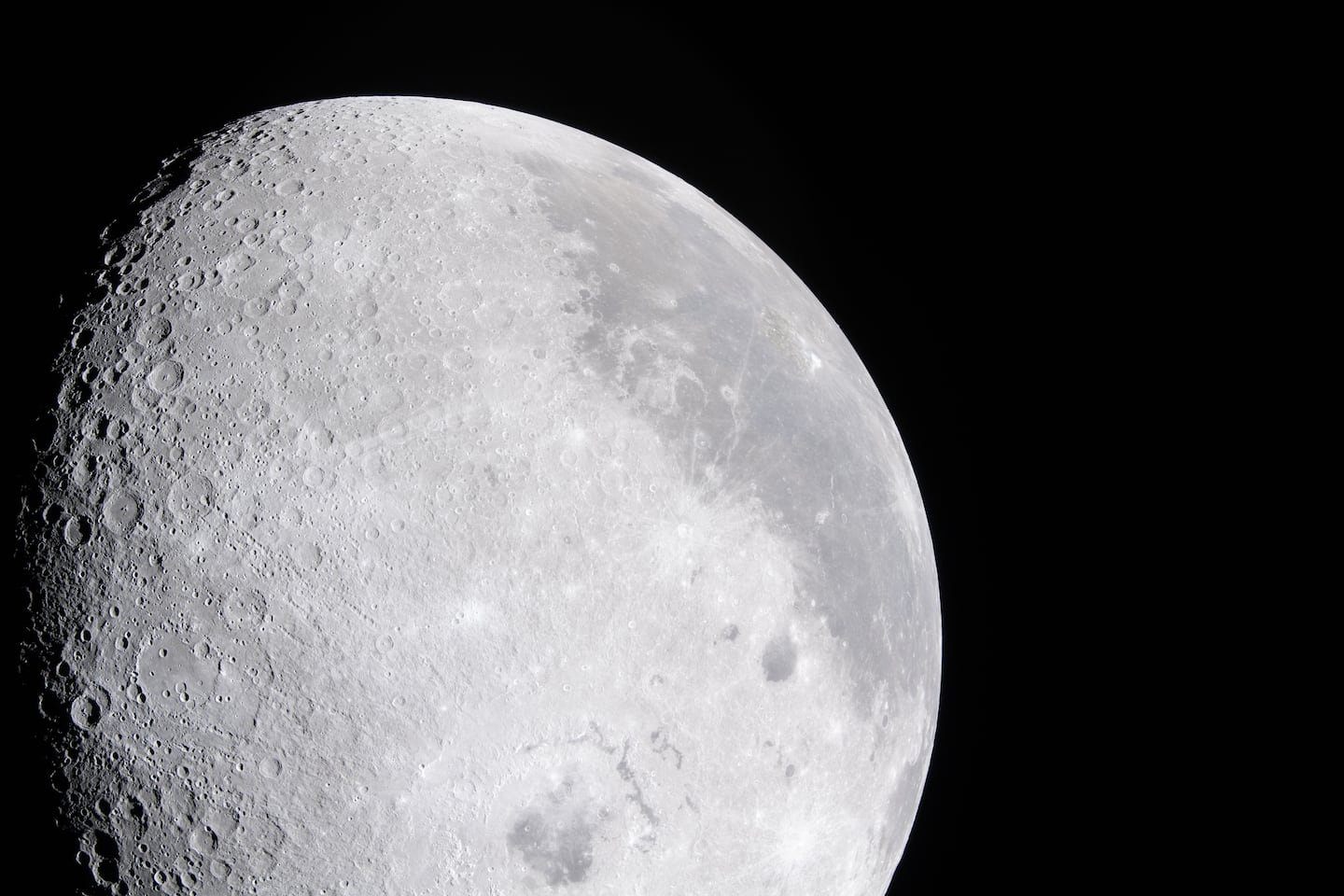 In this image provided by NASA, the Artemis II crew photographed a bright portion of the Moon on April 6, 2026. (NASA via AP)Uncredited/Associated Press
The colors may also show minerals on the moon that haven’t been collected.
“That would tell us that there’s geological activity that we’re unaware of,” Mustard said. “Or it could be that there was transformation from igneous rock to something else that we’d like to know more about.”
Head said observations could help scientists determine whether there is a major difference in the abundance of lava flows because one side of the moon is facing Earth.
“It’s been known from orbital images that the amount of lava flows on the far side is really, really low, whereas about 18 percent of the near side is covered,” he said. “That’s a big mystery that’s pervaded along with a lot of other near-side, far-side asymmetries we don’t understand.”
Some scientists, using orbital data, have reported seeing the mineral hematite on the surface with its reddish color similar to the red brick factories all over New England. Astronaut observations of these reddish features could confirm the presence.
Carlos Muñoz can be reached at carlos.munoz@globe.com. Follow him @ReadCarlos and on Instagram @Carlosbrknews.