
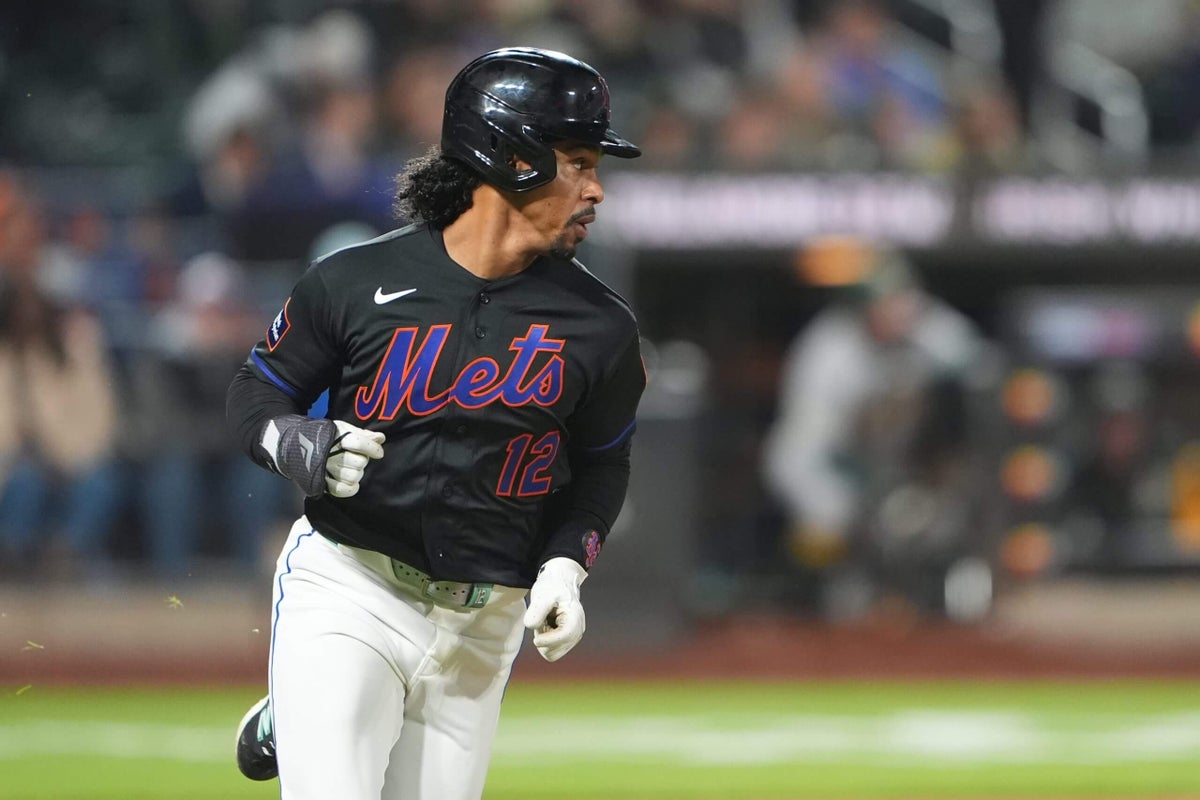
NEW YORK — The boos at Citi Field kept coming. After Carson Benge’s error. After Francisco Lindor made another mental mistake. After Francisco Alvarez allowed a passed ball. After a couple of more balls leaked through the infield for hits. After a ball stayed in the infield for a hit. After Kodai Senga served up a second long home run.
And that all occurred just by the third inning of the New York Mets’ 11-6 loss to the Athletics on Saturday at Citi Field.
The Mets (7-8) have dropped four straight games. Roughly, a whopping 91 percent of the Mets’ regular season remains. Both things can be true: It is way too early to sound alarm bells, and there are some legitimate gripes with this team.
With such context in mind, here is a ranking of the Mets’ concerns that aims to sort out current problems that probably won’t persist into the future from the issues that appear more worrisome. With an eye toward the remaining 147 games (interpret: a lot) and an understanding of the roster construction, the topics are ranked from least to most concerning.
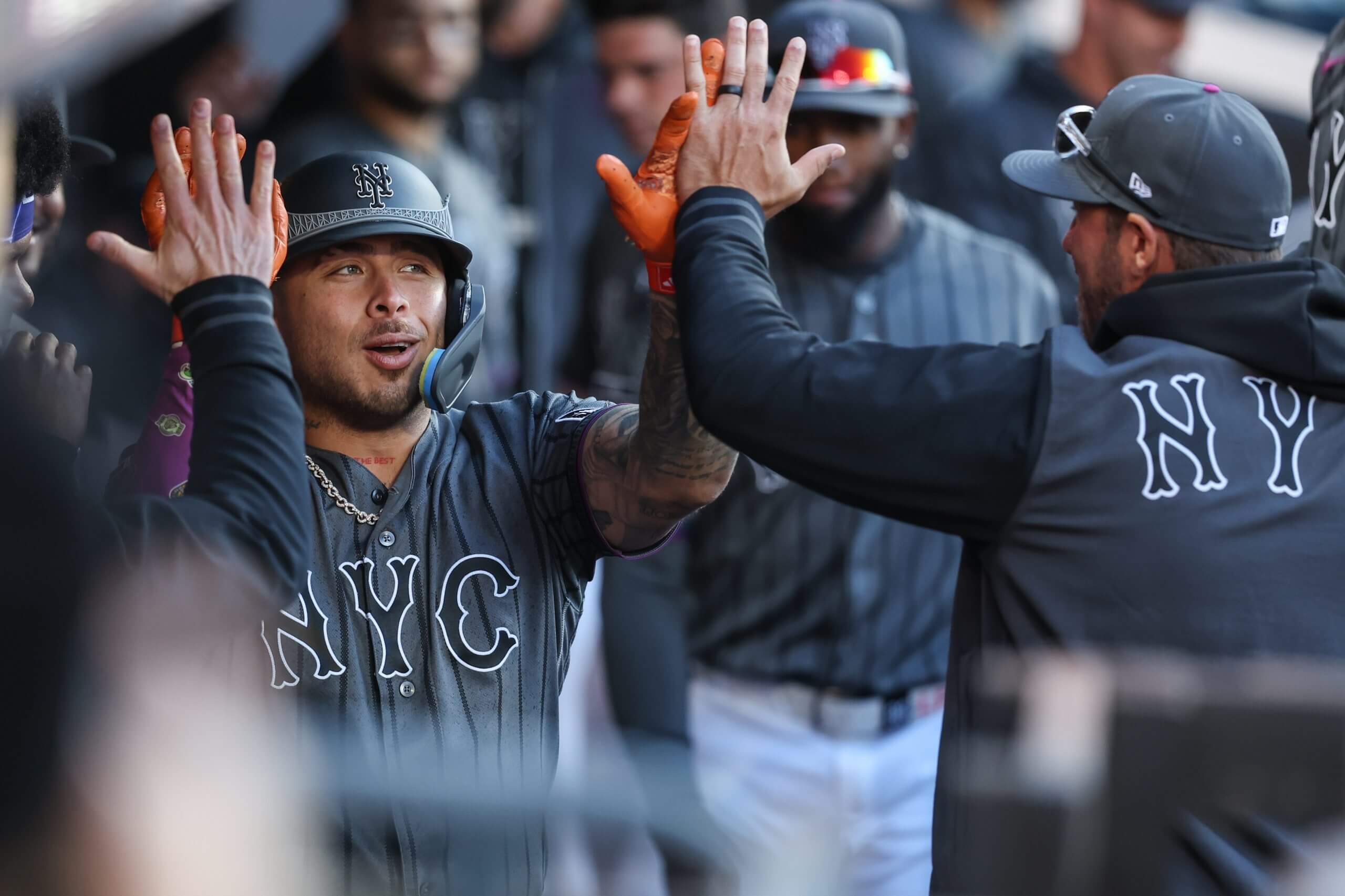
Francisco Alvarez hit his fourth home run of the season Saturday, in the Mets’ fourth straight loss. (Wendell Cruz / Imagn Images)
And, no, Lindor doesn’t top the list. But he’s close.
4. Overall defense
Lately, the Mets’ defense has not looked crisp. Lindor is a culprit, but there are more Mets guilty of making mistakes on the field. On Saturday, the Mets’ lone error happened in the first inning when a ball got by Benge in left field.
“We’re better than that,” Mets manager Carlos Mendoza said. “Making errors and mental mistakes, we’re better than that. We gotta fix it. And we will.”
Though they weren’t outs and a few balls were tough to handle, some other plays weren’t made Saturday. For example, a couple of hard-hit balls went just beyond Mark Vientos’ reach at first base. That kind of stuff happens. Miscommunications, mental mistakes and errors are worse. Earlier in the season, Luis Robert Jr. overthrew a ball on one play and failed to reel in a catch on another. In at least three instances, Lindor has made a mental error in the field.
Overall, statistics suggest the Mets’ defense ranks somewhere between fine and good. The Mets are susceptible at the corner spots because they have players at positions that are new to them, but they project to be strong up the middle (where most modern front offices, including David Stearns’ group, place more value). Progress at the corners can happen, too; after a shaky first few games, Bo Bichette’s defense at third base has looked better with a couple of nice plays Saturday. Per FanGraphs, the Mets entered Saturday seventh in defensive runs saved.
3. The lineup
The Mets’ lineup has run hot and cold. Between Robert’s home run Thursday and Bichette’s RBI single in the first inning Saturday, New York went 17 straight frames without scoring a run. Friday marked the third time in 14 games they’ve been scoreless through nine innings. At times, however, the Mets have shown an ability to come back; on Saturday, they cut the Athletics’ lead to 7-6 by the seventh inning with home runs from Bichette, Alvarez and Jorge Polanco.
The Mets essentially hinge on Juan Soto’s health. Their lineup without him is lacking. His stint on the injured list because of a calf issue is expected to last two or three weeks. He has not yet started running. In the seven full games with Soto sidelined, the Mets have averaged 3.7 runs per game.
There are some bright spots. Robert (.905 OPS) is off to a great start. In 10 April games, Bichette owns a .333 batting average (14-for-42). Alvarez has four home runs.
Still, depth and power are questions. Lindor (.167 batting average, .546 OPS, 0 RBIs), Marcus Semien (.200 batting average, .553 OPS) and Benge (.140 batting average) are off to cold starts. After a torrid stretch, Vientos is hitless over his last four games (15 at-bats). In separate instances Saturday, he spiked his helmet and slammed his bat into the ground.
Consistency is lacking from the lineup early on, but it projects to be strong when healthy.
2. Francisco Lindor
Lindor has endured cold stretches to start the season before. Through his first 15 games in 2021, he had a .608 OPS and three RBIs. Through his first 15 games in 2024, he had a .430 OPS and two RBIs. A rough showing at the plate through the first few weeks of the season for Lindor is nothing new.
If it were just Lindor getting off to another slow start at the plate, then his funk, while not ideal, could be explained away thusly: He is streaky. His poor offensive production has hurt the Mets, but top-10 MVP finishes in each of the last four years point to his poor offensive production probably not lasting much longer.
The problem: It is not just that.
What makes Lindor’s poor start to the season this time stand out for the wrong reasons goes beyond his offensive numbers. Uncharacteristically, he has already committed a few mental errors. Forgetting how many outs there are. Getting picked off. Being out of position. This is all unlike Lindor.
That’s what makes Lindor’s start concerning.
On a grounder hit to the right side of second base, Lindor raced up the middle instead of covering the bag. Second baseman Semien fielded the ball, ran over to the base and then made a throw well late to first base. Perhaps if Lindor had been in position for a feed from Semien, the Mets wouldn’t have turned a double play on the Athletics’ Lawrence Butler, anyway. The mental lapse prevented them from ever knowing for sure. Worse, it extended the inning and cost a run.
“It’s weird,” Mendoza said. “That’s not him. It’s hard to explain. He’ll tell you that he has to be better. But, yeah. Never seen that, some of those plays, just out of position at times.”
Lindor had a shorter ramp-up in spring training because of his hamate bone injury, but he said that was not an excuse. A slow start statistically is one thing. Consistent mental lapses are another. When asked what he attributed them to, Lindor paused for a moment and then said he wasn’t sure.
“I feel like I am locked in,” Lindor added. “It’s just, I gotta be better.”
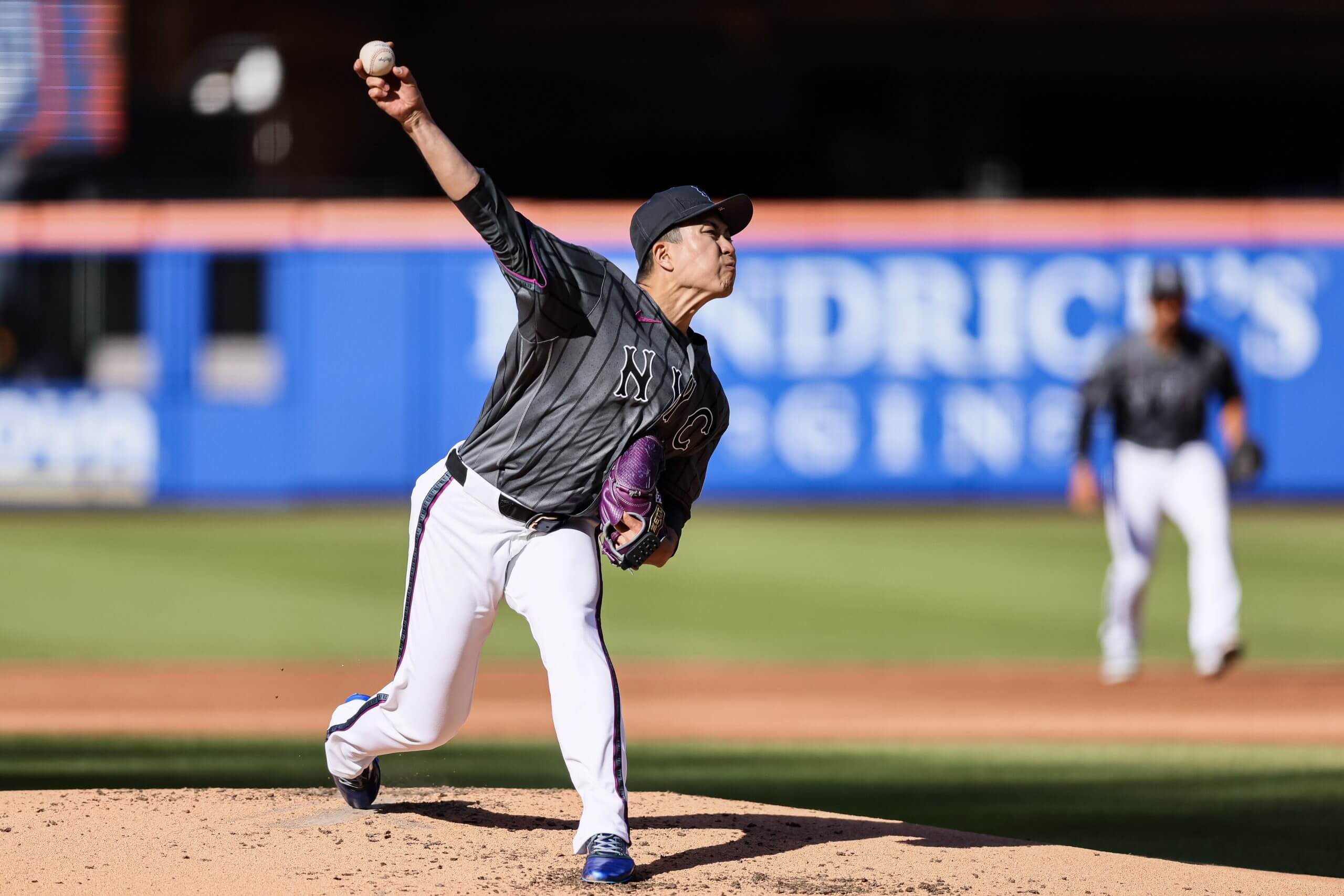
Kodai Senga allowed eight hits, seven runs and two home runs in 2 1/3 innings Saturday. (Caean Couto / Getty Images)
1. The pitching staff
Upon leaving the game with one out in the third inning Saturday, Senga slapped his glove against a leg. It was a day of bad firsts for Senga, in his fourth season. For the first time in a game, he walked a batter with the bases loaded. For the first time in a game, he allowed seven runs.
“He didn’t have much,” Mendoza said.
Senga’s command was off. His velocity was inconsistent. Huascar Brazobán started warming before Senga recorded an out in the third inning. After the game, Senga said he was feeling fine. But after two good starts, his third outing served as a reminder of why he can be hard to trust.
Elsewhere in the rotation, Mendoza said Clay Holmes (hamstring) is in line to make his next start, but the health situation underscored the delicacy of the rotation with David Peterson coming off two bad starts.
In the bullpen, Luke Weaver has allowed six runs over his last two appearances. On Saturday, he got behind batters, and it cost him. Luis García’s scoreless inning while the Mets were down five runs lowered his ERA to 7.11. New York added Craig Kimbrel to its roster ahead of the game (designating Richard Lovelady for assignment), and the veteran tossed a scoreless inning with the help of a lineout carrying a 100 mph exit velocity, a checked swing for a third strike and a called strike that narrowly nicked the corner of the zone for a second strikeout.
The concern with the Mets’ pitching staff isn’t as compelling as Lindor’s issues. And unlike the lineup, the pitching staff won’t face the same wholesale comparisons to last year’s group throughout the season. But the pitching staff entered spring training as the Mets’ biggest question. Through 15 games, that has not changed.