
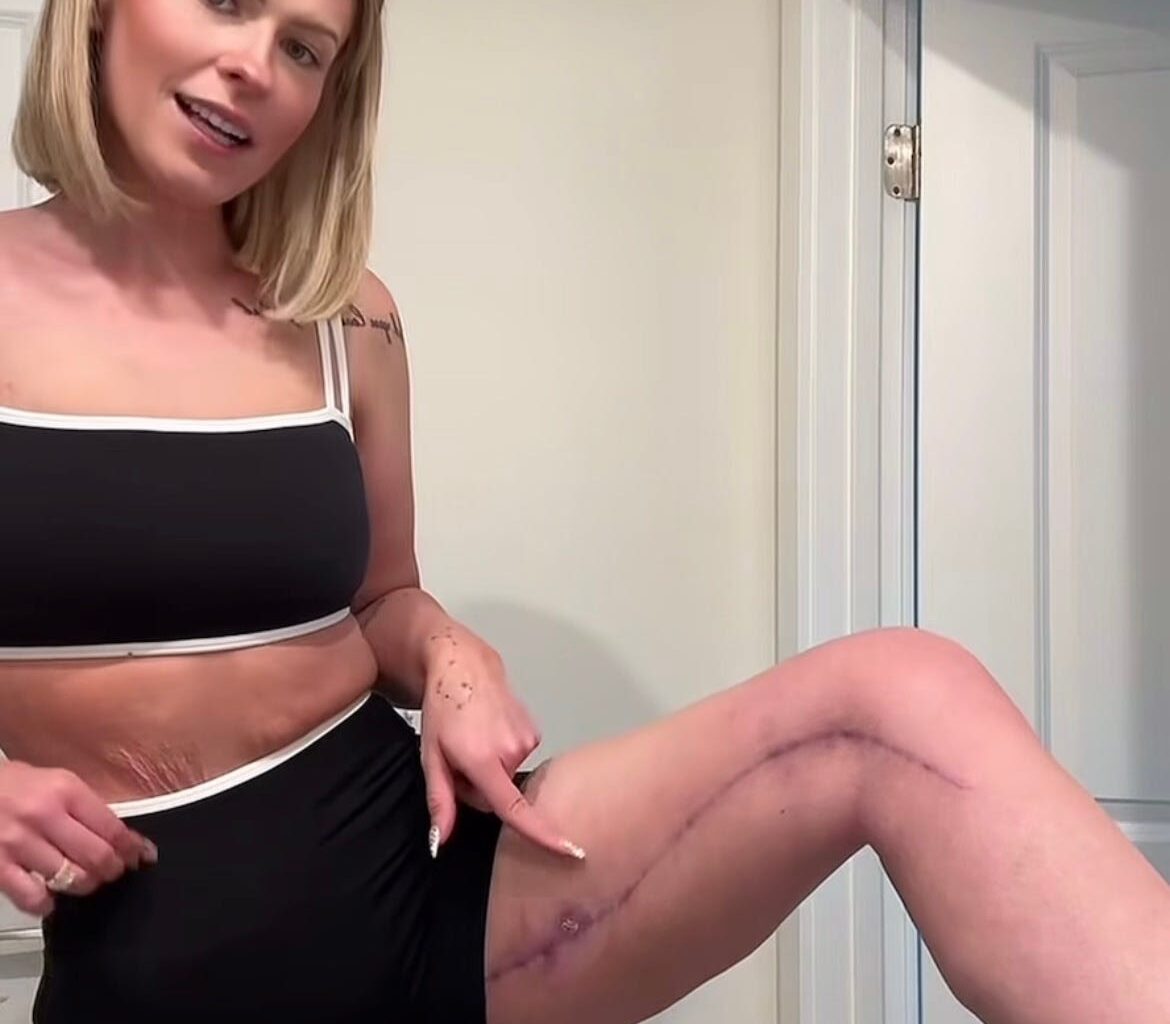
Over the past five years, Samantha Milton lost 260 pounds − and about 12 of those pounds were solely from loose skin she had surgically removed.
The rise of GLP-1s has given a new spin to conversations around losing weight. But after massive weight loss, many face a challenge that is underdiscussed: excess skin.
Milton, known online as @smaller_sam.pcos, has grown a following on social media documenting her challenges with polycystic ovary syndrome, or PCOS, including her weight loss achieved through nutrition changes and the help of GLP-1s. She’s also been transparent about her post-weight loss struggle with excess skin, baring herself to the internet both pre- and post-surgeries − a transformation she calls “a relief.”
In total, Milton has had five procedures to target loose skin after her weight loss: an initial tummy tuck, an extended brachioplasty that targeted her arms and chest, a lower body lift, a thigh lift and a breast augmentation paired with an arm revision.
“Sometimes these surgeries seem extreme to another person who hasn’t had to live in a body that didn’t feel like theirs,” she said, adding she now “feels like I’m home.”
Surgeons are seeing an increased interest around these procedures.
“GLP-1s have changed the plastic surgery landscape tremendously. These meds are very effective but don’t change the basic biology of skin,” said Dr. Sean Doherty, a board-certified plastic surgeon in Boston. “With significant weight loss, skin doesn’t typically retract fully. This causes loose-hanging skin.”
Others online are also normalizing conversations about loose skin after weight loss.
Jenna Elizabeth, known as @jenna_bariatricbestie on Instagram and TikTok, has lost 180 pounds through dietary changes, bariatric surgery and the support of GLP-1s.
“A lot of people say that their loose skin is like a trophy and a testament of how far they’ve come. And I absolutely agree with that,” she said, but added she’s looking forward to getting an extended brachioplasty and breast lift because, “I want to look like how I feel.”
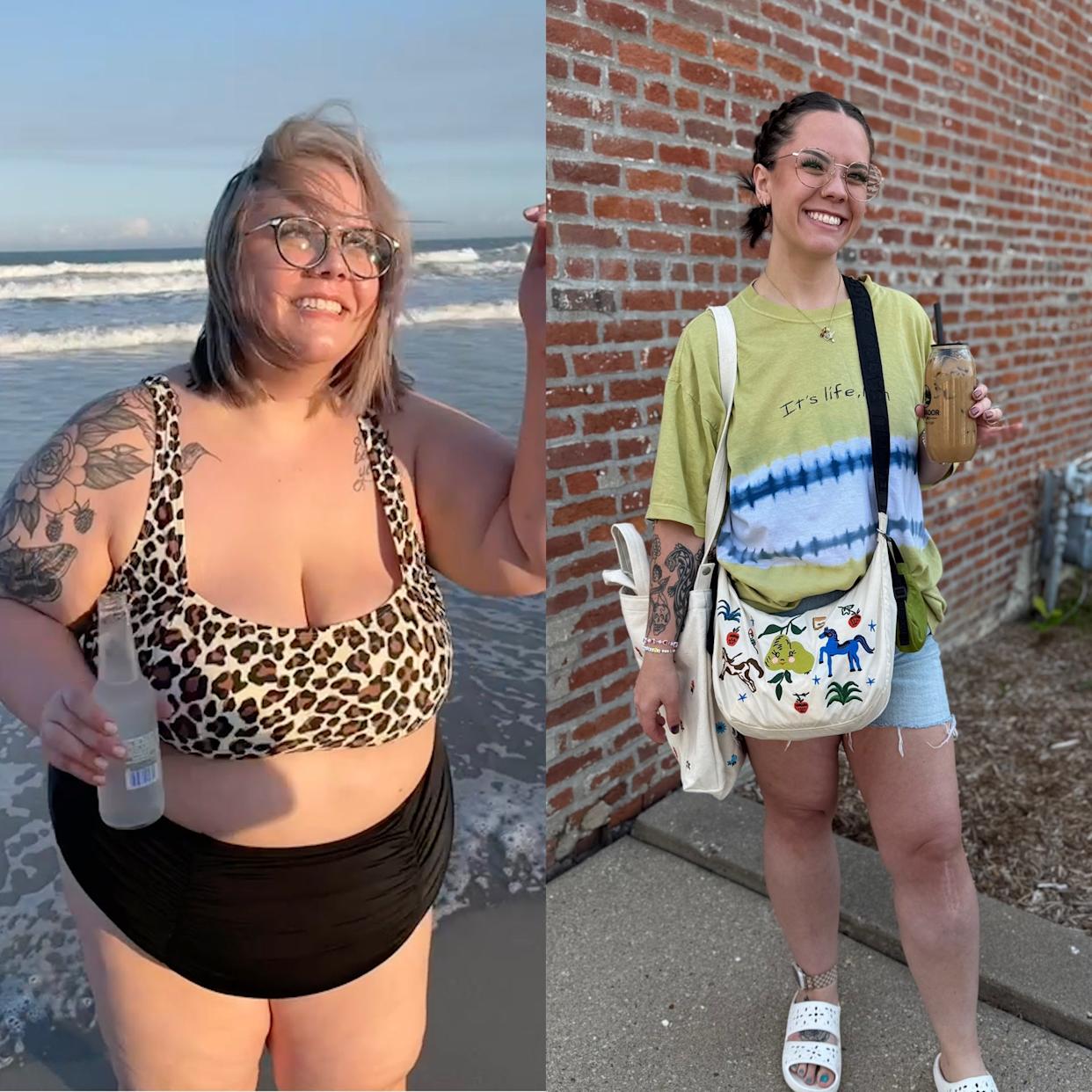
A side-by-side photo of Jenna Elizabeth before and after her weight loss journey.
Still, despite more representation of different bodies, society has a long way to go in shedding certain stigmas.
“I always say that everybody hates fat people, and then they hate when fat people do something about it,” Elizabeth said, adding the same judgment applies to whether you choose to get loose skin removal surgery or not. “You’re damned if you do, damned if you don’t.”
Why do people get excess skin removed after weight loss?
Though it’s not necessary to get skin removed after weight loss, and some choose not to, others find the extra skin troublesome. For many, excess skin carries both a physical and mental toll.
Before her initial tummy tuck, Milton dealt with rashes.
“I tried everything − switching my underwear, wearing high-waisted pants, wearing low-waisted pants, like nothing worked. It was very uncomfortable. There’s an itchiness that can happen,” she said, adding that could also lead to swelling and pain.
“(The swelling) would accumulate in those areas where I had loose skin. And because the loose skin is so thin, it’s even more sensitive,” she explained.
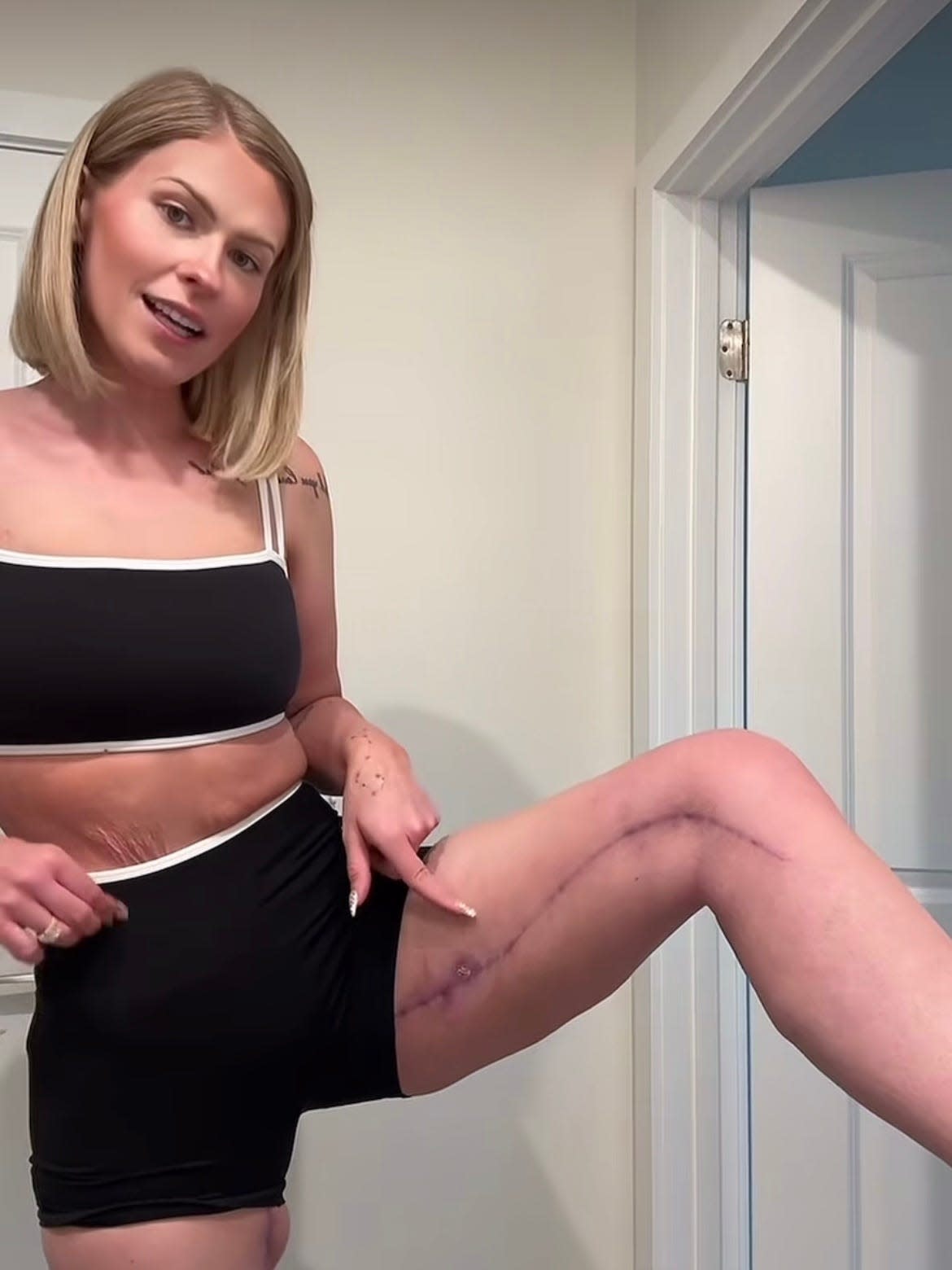
Samantha Milton, known online as @smaller_sam.pcos, showing her post-skin removal surgery scars.
In addition to occasional rashes and irritation, Elizabeth also struggles with finding clothing that fits properly. She has trouble finding a true-to-size shirt that doesn’t cut into her arms, for example.
Doherty has seen loose skin cause issues like irritation and rashes, chafing, hygiene challenges and discomfort with clothing choices and exercise.
“Choosing to do a plastic surgery procedure for these patients is often a quality-of-life choice,” he said. Treating excess skin after weight loss isn’t about vanity but comfort and function, he added.
Mental health is a big factor, too.
“What I don’t think is taken as seriously as it should be is the mental struggle and the mental aspect of the loose skin,” Milton said.
Elizabeth agreed. “We come all this way and we lose all this weight just to feel again, like we’re not ourselves and like we can’t live to our fullest potential.”
‘It feels like I was cured’ − but it cost over $100,000
Not only do Milton and Elizabeth want conversations around loose skin normalized, they also argue for improved accessibility.
As a young mom struggling financially with two kids, Milton tried getting her first surgery covered by insurance to no avail, citing strict parameters and requirements to qualify.
“Sometimes being in the category of obesity will qualify you for certain surgeries because they’re recognizing that this is a disease, but we’re not quite to the point of recognizing that the skin removal is part of the disease treatment,” she said. “It feels like I was cured. … Removing the loose skin was like curing a terrible disease that was wreaking havoc on my body. And the relief that comes with that is indescribable.”
In total, Milton has paid more than $100,000 out of pocket for her surgeries.
Elizabeth has received quotes between $15,000 and $20,000 for the combined surgeries she’s looking to have done and said the procedures should “absolutely” be considered treatment by insurance companies.
The American Society of Plastic Surgeons notes body contouring surgery can vary widely based on the type of procedure and where you’re located, adding costs may include anesthesia fees, hospital or surgical facility costs, medical tests, post-surgery garments, prescriptions for medication and a surgeon’s fee. The organization also makes clear that health insurance plans may not cover the surgery or its complications.
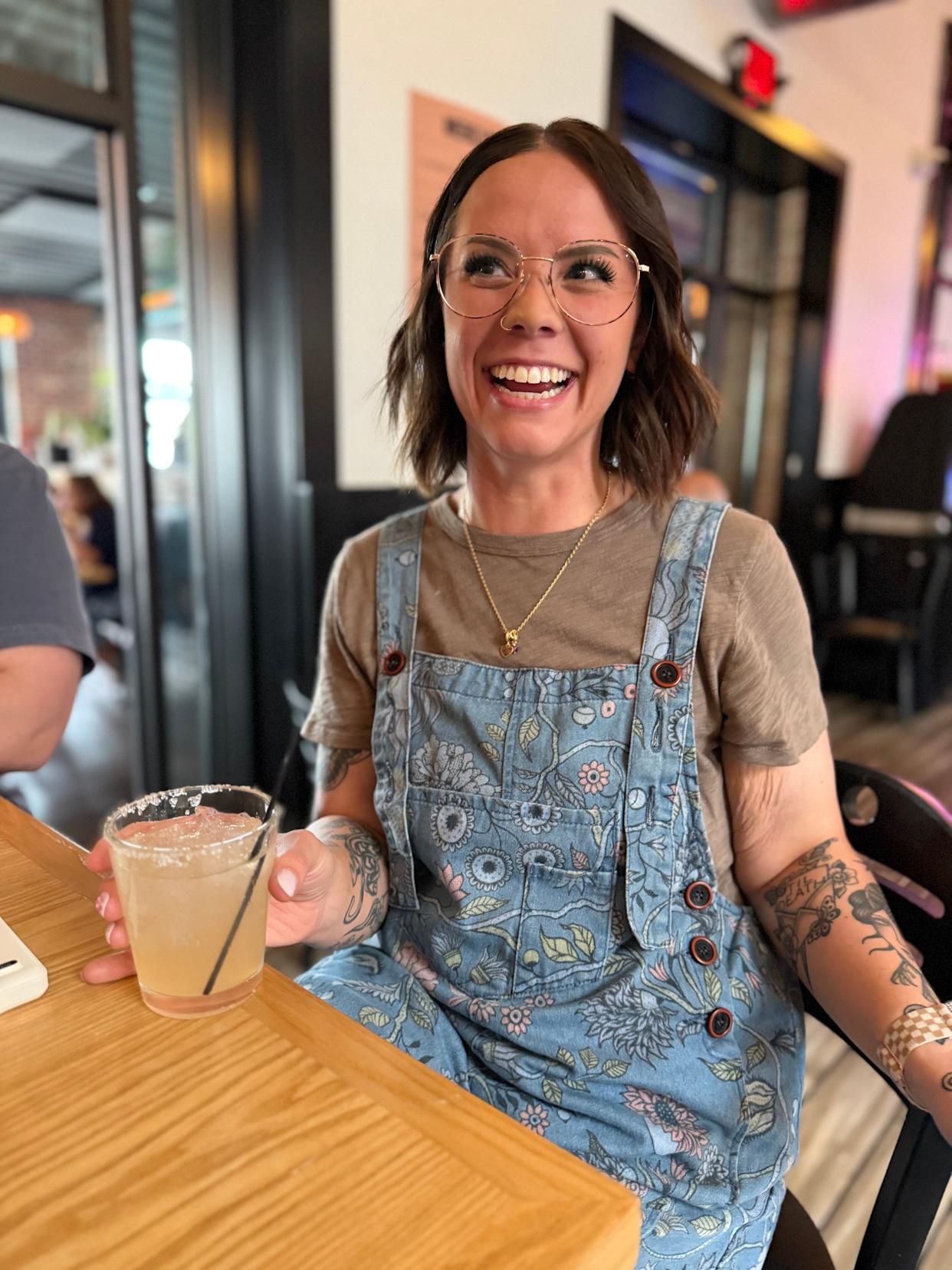
Jenna Elizabeth, known online as @jenna_bariatricbestie, plans to get skin removal surgery.
While people like Milton and Elizabeth are propelling conversations about loose skin online, some commenters still share their fears around it.
“I put (my journey) on the internet because seeing something normalizes it. The more we see it, the more we accept it,” Milton said.
To anyone worried about dealing with loose skin after weight loss, Milton said it’s “worth it” for your internal health.
Since everyone’s bodies are different, it’s important to talk to your doctor when it comes to plans for weight loss.
Elizabeth was one of those people who got in her head about loose skin before her weight loss, saying she remembers Googling things like “magical creams to prevent loose skin.”
But now, she would “so much rather have the loose skin than to have my health compromised in the way that I used to.”
“(My weight loss) is something that I will never regret, and even if I never got my loose skin removed, I would still do it all over again. … I would hate to scare somebody out of bettering their health just because I’ve got some bat wings on,” she laughed.
If you or someone you know is struggling with body image or eating concerns, the National Eating Disorders Association’s toll-free and confidential helpline is available by phone or text at 1-800-931-2237 or by click-to-chat message at nationaleatingdisorders.org/helpline.
This article originally appeared on USA TODAY: After weight loss, excess skin can be the next challenge. Here’s why.