
Eating clean isn’t the same as losing fat. While nutrient-dense foods support overall health, weight loss still comes down to one non-negotiable factor: a calorie deficit. And according to experts, that’s where many people get it wrong.
In today’s wellness culture, foods like avocado, olive oil, granola, and smoothie bowls are often seen as automatic “wins.” But those same foods can quietly drive calorie intake higher than expected. A smoothie bowl loaded with fruit, seeds, and nut butter can top 700 calories—before snacks even enter the picture.
“The problem isn’t always food quality, it’s quantity,” says Elliot Beadle, RDN, LDN, a sports and performance dietitian at St. Luke’s University Health Network. “Even the cleanest diet won’t produce results without a consistent energy deficit.”
Why “Healthy Eating” Can Still Stall Fat Loss
Many healthy foods are calorie-dense, meaning small portions pack a big energy punch. A handful of nuts can add 200 calories, and a drizzle of olive oil can double that. Stack those choices across a full day, and what feels like disciplined eating can erase your deficit.
There’s also a hidden variable: nutrition labels aren’t perfectly accurate. Packaged foods are legally allowed a margin of error, meaning small discrepancies can add up to hundreds of unintended calories.
“Balancing nutrient-dense foods with reasonable portions is what makes weight management sustainable,” Beadle says.
Kristy Del Coro, MS, RDN, LDN, culinary nutrition manager at CookUnity, sees another common issue: people cut calories too aggressively. “Becoming overly restrictive will ultimately backfire,” she explains, noting that it often leads to low energy, mood swings, and poor adherence.
Related: Trainer Explains How Smart Hydration Can Boost Your Metabolism
The Smarter Way to Create a Sustainable Calorie Deficit
Experts agree: slow and steady works. A modest 300–500 calorie deficit per day is enough to drive fat loss without compromising energy or muscle.
“A plan that’s slightly less aggressive but sustainable for months will always outperform a crash diet that lasts two weeks,” Del Coro says.
Protein also plays a critical role. Del Coro recommends aiming for 20–30 grams per meal and spreading intake throughout the day to preserve lean muscle and support metabolism.
Convenience can make or break consistency, too. “The easier a plan is to follow, the more likely someone is to stick with it,” Del Coro adds, pointing to ready-made, portion-controlled meals as a practical option for busy schedules.
Beadle agrees that simplifying decisions, like limiting late-night eating, can help reduce overall intake. “Sometimes it’s easier to just not eat after dinner than it is to consistently make healthier food choices,” he says.
How One 12-Week Test Using CookUnity Meals Led to a 2% Body Fat Drop
There’s a simple reason structured, ready-made meals can work for fat loss: they make it easier to stay consistent. Research backs this up—studies in Obesity and the International Journal of Obesity show that portion-controlled meals improve adherence and lead to greater weight loss than self-directed dieting.
That played out in a real-world, 12-week test using CookUnity meals, which resulted in roughly a 2% drop in body fat—from about 13% to near 11%—without aggressive dieting or complex meal prep. The key variable wasn’t a new diet, it was consistency.
By outsourcing meal planning, grocery shopping, cooking, and portioning, daily decision-making dropped significantly. Each meal arrived pre-portioned with clear calorie and macro breakdowns, tightening control over intake and reducing the margin for error that often stalls fat loss.
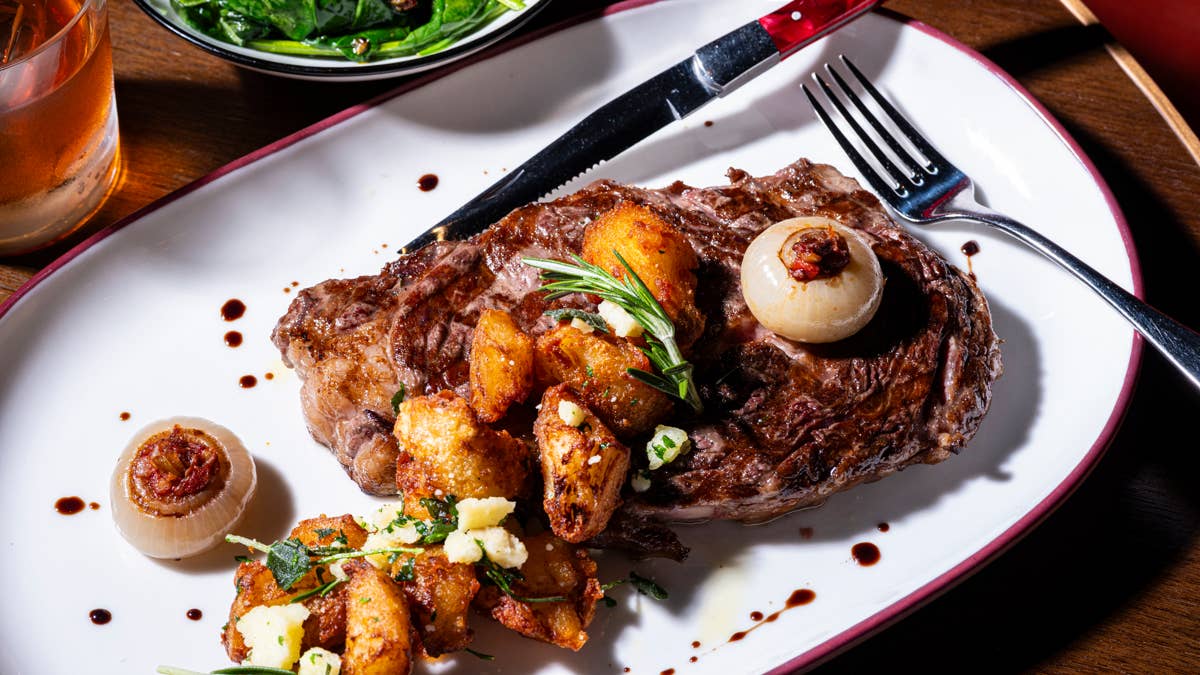
The meals themselves also helped drive adherence. Options like Argentinian Grilled Skirt Steak with Smashed Potatoes & Chimichurri delivered restaurant-quality flavor while still aligning with macro targets—making it easier to stay consistent without feeling restricted.
The result: steady fat loss, stable energy, and no major drop-off in training performance. The takeaway mirrors what dietitians emphasize: convenience doesn’t replace discipline, but it can make consistency far easier to maintain.
Related: I’m a Trainer. Here’s the Best Morning Routine to Help You Live Longer
What to Eat When Calories Are Lower (Without Losing Energy)
When calories drop, what you eat becomes just as important as how much you eat. Rather than simply cutting portions across the board. Del Coro recommends focusing on nutrient density to maintain energy and control hunger.
Her go-to framework is a “protein-and-fiber anchor.” In other words, build meals around lean proteins like chicken, fish, or legumes, paired with high-fiber vegetables, complex carbohydrates such as whole grains or fruit, and moderate amounts of healthy fats like olive oil or avocado. This combination helps stabilize blood sugar, regulate appetite, and keep energy levels steady, making a calorie deficit far more sustainable over time.
Simple Fat-Loss Strategies You Can Start Today
If you want results without overcomplicating your routine, these practical habits can help you create—and stick to—a consistent calorie deficit.
Track your current intake for 3–5 days to establish a baseline.
Reduce daily calories by 300–500 for a sustainable deficit.
Aim for 20–30g of protein per meal.
Pair protein with fiber to stay full longer.
Watch portions—even with healthy foods.
Use convenient, portion-controlled meals when busy.
Consider limiting eating to a set daily window.
The bottom line: food quality supports your health, but quantity determines weight loss.
Related: This Backyard Gym Upgrade Could Help You Stay Strong for Decades
This story was originally published by Men’s Journal on Apr 11, 2026, where it first appeared in the Health & Fitness section. Add Men’s Journal as a Preferred Source by clicking here.