
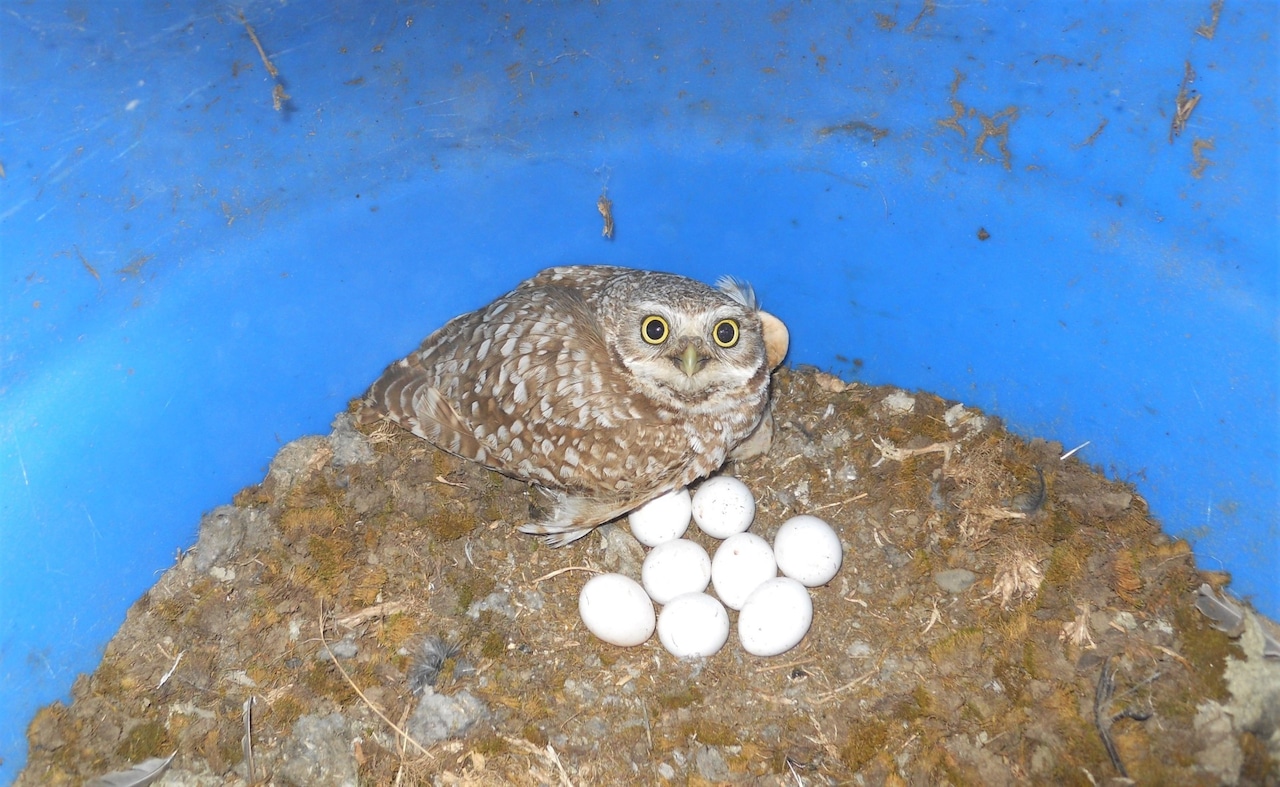
Research at the Global Owl Project’s human-made burrowing owl network in eastern Oregon has revealed some fascinating habits of the tiny raptors.
Here are five things that project Director David Johnson and other scientists have found by working with the colony for 17 years:
1. In the West, burrowing owls rely on badgers and other prairie mammals to build homes for them.
Burrowing owls in many parts of the Americas, including Florida and Brazil, dig their own burrows. Owls stay in those regions year-round because of their relatively mild climates, so they have time to scope out areas, dig holes, mate and nest, Johnson said.
Read more: The tiny burrowing owls of Oregon faced collapse until one man answered the call to save them
But in Oregon and other Western states, owls migrate when temperatures drop over winter, so they don’t have time to dig their own burrows after returning in the spring. Instead, they find homes in existing holes dug by prairie mammals — or, in the case of some colonies, artificial burrows.
2. They’ve got some surprising migration patterns.
Before this project, researchers knew some groups of burrowing owls migrated, but “had absolutely no idea where,” Johnson said. They’ve tracked the Umatilla Chemical Depot colony’s owls each year since 2008 with numbered bands and sometimes tiny 3-gram backpacks equipped with geolocators.
They learned that female owls migrate from Oregon to California for warmer weather but that male burrowing owls head to the chillier Washington for the winter. That way, Johnson said, male owls can stay closer to the burrows in Oregon, often returning to the same ones each year.
3. The mating scene is fiercely competitive.
Burrowing owls live short lives. Johnson said the oldest owl he’s seen at the Hermiston colony was 8. That means they have a sense of urgency to reproduce, resulting in “high drama on the depot” during mating season, Johnson said.
Males return from migration a few days earlier than females, he said. They compete with other males to claim the best burrows. Then females come back and shop around for a mate.
They tend to pair up with males who are similar in size and age to create the best chances of survival for themselves and their chicks. In years where food supply is scarce, smaller pairs are more likely to survive and provide for their chicks than larger ones, who require more food for fuel.
Females are aggressive in claiming their mates, Johnson said. He’s seen video footage from cameras inside nest chambers where two females fought for several hours over a male and his nesting spot.
4. They’re predators and prey.
Oregon burrowing owl diets consist of kangaroo rats, deer mice, pocket mice, small snakes, beetles, grasshoppers and crickets, according to Johnson.
They can be snatched up by predators including coyotes, badgers and larger birds such as northern harriers, great-horned owls, ravens, prairie falcons and great-tailed hawks.
And while burrowing owls nest in holes dug by badgers, they’re not cohabitating or invading other animals’ homes, Johnson said.
Before building the artificial burrows near Hermiston, Johnson measured and studied 400 natural burrows around the western U.S., designing burrow cams to see inside the tunnels.
He found that burrowing mammals dig long tunnels with an entrance on one side and an exit on the other to allow airflow. When those mammals get chased by predators — or shot at by farmers — they go in the middle and plug up the tunnel with dirt, then use just one side of it to prevent predators from attacking from two sides.
The other unused half then becomes available for burrowing owls.
5. They’re also … exterior designers?
Inside the burrows, female owls lay eggs on the ground. Meanwhile, males get busy hunting and storing food: mice, small snakes and insects. But they also pick up other materials — coyote scat, moss chunks, potato and onion skins, corn straw or bits of cloth — to “decorate” the entrance to the burrow.
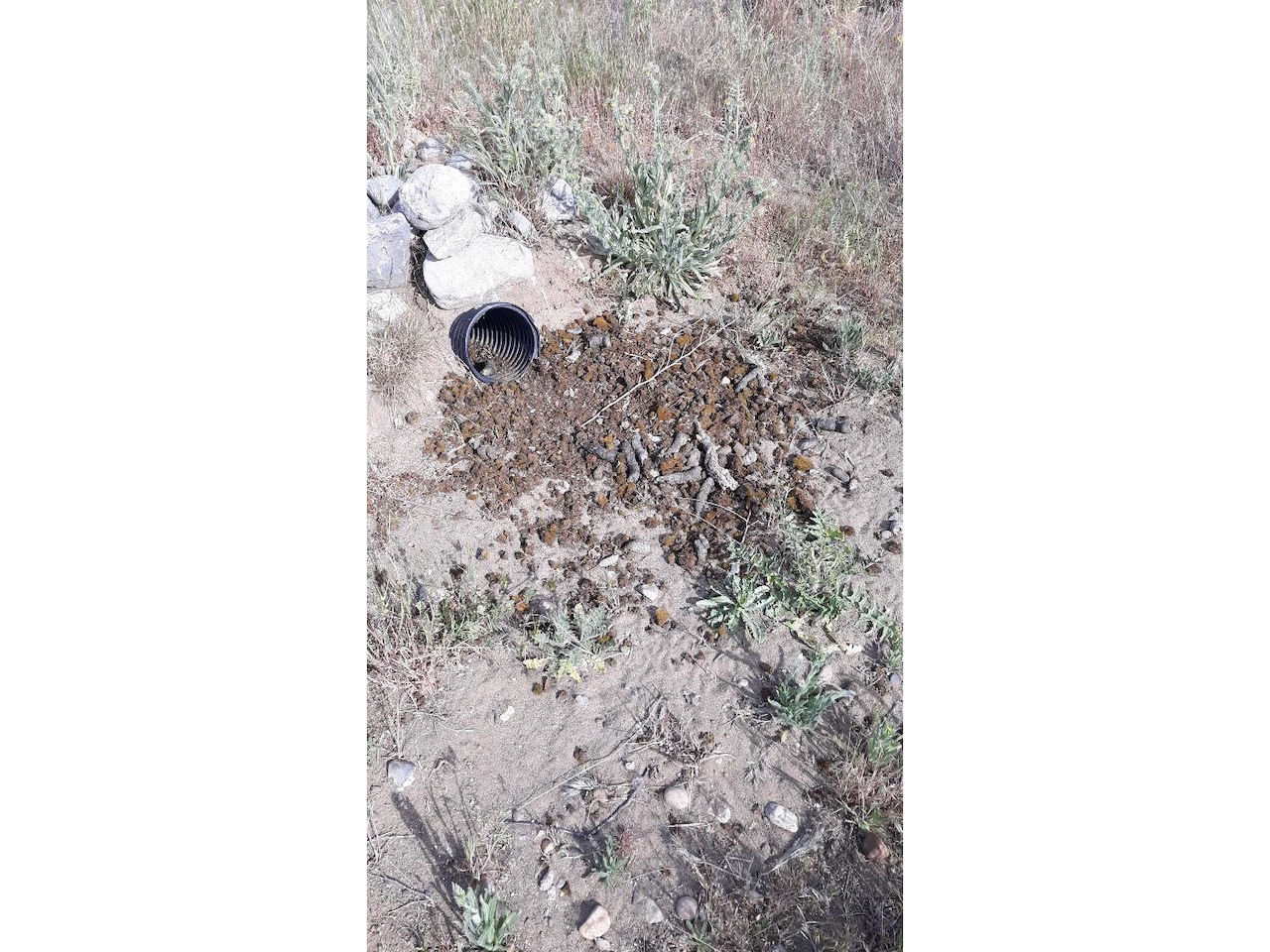 Burrowing owls “decorate” the entrance to their burrows with coyote scat, moss, small stones and other items. Researchers suspect it could be a way for owls to mark their territory or establish dominance.David Johnson
Researchers have yet to ascertain the exact reason for the decor. But documentation at the Oregon colony site supports some working theories, Johnson said.
The male owls might be marking their territory, he said, signaling dominance to other males or advertising to other females: “While I currently have a mate, come back next year.”
— Maddie Khaw covers breaking news, public safety and more for The Oregonian/OregonLive. Reach her at mkhaw@oregonian.com.
If you purchase a product or register for an account through a link on our site, we may receive compensation. By using this site, you consent to our User Agreement and agree that your clicks, interactions, and personal information may be collected, recorded, and/or stored by us and social media and other third-party partners in accordance with our Privacy Policy.