
Since the Las Vegas Raiders don’t intend to allow anyone else the opportunity to select quarterback Fernando Mendoza, the intrigue of the NFL Draft truly begins the moment the New York Jets are on the clock with the second pick.
The Jets, once again, desperately need a franchise QB, but they’ll have to wait to solve that pesky riddle. For now, they’ll take solace in knowing there’s still an assortment of potential difference-makers who will be there for the taking.
They all bring such a diverse range of skills; how will teams decide which flavor is right for them?
“The best player — damn, that’s a tough question because their styles are so different,” a team scout said.
Two high-ranking team executives and two scouts who have studied this class extensively broke down the candidates — and decision-making process — with The Athletic. They were granted anonymity in order to speak freely on the topic.
Texas Tech defensive end David Bailey and Ohio State linebacker Arvell Reese drew the most favorable reviews, though Ohio State inside linebacker Sonny Styles, Notre Dame running back Jeremiyah Love and Ohio State safety Caleb Downs all warranted a spot in the discussion. Regardless, the Jets and any other team drafting in the top five seem to be on the verge of adding blue-chip talents.
Our four panelists agreed Bailey and Reese should be the second and third picks (the Cardinals pick third), in some order, because of their production at premium positions. And because Styles, Love and Downs don’t necessarily play at high-investment spots, the panel believed their future teams will be thrilled when they essentially stumble into top-quality players.
“You want as many impact players as you can get,” the first executive said.
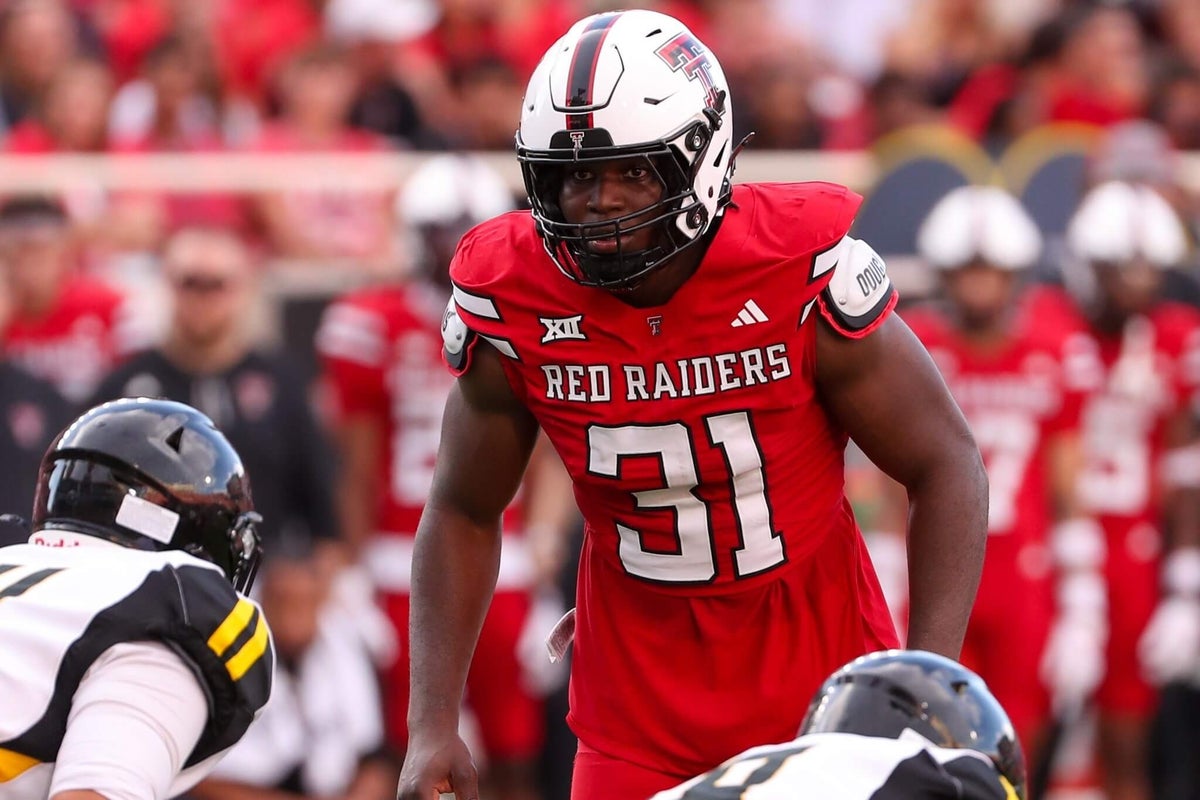
No one can impact a game defensively more than a dominant pass rusher, and Bailey is the best in the class. The 6-foot-3, 251-pounder had 14.5 sacks last season for Texas Tech, and he should make an immediate impact on passing downs as a readymade rusher. Bailey is Dane Brugler’s No. 7 overall prospect.
The evaluators tempered expectations — they were reluctant to put Bailey on a level with past top-two selections like Myles Garrett and Nick Bosa — but they all agreed Bailey is the draft’s premier edge rusher with room to develop.
“Bailey is just so explosive and dynamic of a rusher, just true game-wrecking speed and explosiveness off the edge,” the second executive said. “He can get home when he wants. He can affect the game. He can win with speed. He’s got speed-to-power (ability).
“It’s a passing league. The idea is to affect the QB as quickly and as much as possible. I think I would lean toward knowing what I’m getting with Bailey and his fastball off the edge.”
The first scout added: “He’d be an easy pick.”
Reese, however, is Brugler’s top-ranked prospect. The versatile linebacker handled an array of responsibilities for coordinator Matt Patricia’s complex defensive scheme at Ohio State, and Reese has evaluators envisioning a Micah Parsons-style usage.
The 6-foot-4, 241-pound Reese has shown proficiency as an off-ball linebacker in base packages and as an edge rusher on passing downs. He plays with power and explosion, and he’s athletic enough, with a relentless motor, to recover when necessary.
“If you want a guy who has more freakish ability and versatility, but you’re working with more of a projection, you go with Reese,” the second scout said. “It’s how comfortable you are with the projection, and you have to have a plan with how you’re going to use him.”
There’s a rawness to Reese’s game, which yields a higher dose of the unknown. But as the second scout said, if the coaching staff can’t figure out how to deploy Reese, that’s on them.
“He should affect games from different alignments in different parts of the field,” the second executive said.
Collectively, the evaluators leaned toward Bailey because of the known element to his game, but they agreed Reese could have the most long-term upside if he maintains his developmental arc. The Cardinals should be sitting pretty at No. 3.
“Both of those guys are slam dunks,” the second exec said. “It’s close. It would be a tough decision.”
The Tennessee Titans (No. 4 pick) and New York Giants (No. 5) drafted quarterbacks in the first round in 2025, so they’re undeterred by missing out on Mendoza and don’t need to consider jockeying for position for Alabama QB Ty Simpson.
The Titans could opt for Love, who has been described as an Alvin Kamara-type of back with more long-range explosion. If Love is deployed in a dual capacity like Jahmyr Gibbs of the Detroit Lions, as the first executive envisioned, the Notre Dame running back would aid quarterback Cam Ward’s development.
But defensive-minded head coach Robert Saleh could be drawn to Styles, Downs or maybe even Miami defensive end Rueben Bain Jr. Styles has been described as a rockstar of a person and leader, which is important for an inside linebacker from a culture standpoint, and he’s loaded with physical traits.
“He’s a stud,” the first scout said. “Big as s—, fast as s—, smart as s—, committed, everything you want — just not a high value position. Ten years from now looking back, you’ll be like, ‘Wow, what a pick, a five-time All-Pro player who’s being compared to (Hall of Famer Luke) Kuechly and those freak linebackers.’”
The 6-foot-5, 244-pounder feels like a near certainty to go down as one of the draft’s best players. He’s a converted safety with strong coverage skills, and evaluators love his ability to match up with tight ends. Styles has also improved his playing strength while adjusting to life closer to the line of scrimmage.
“He’s a great kid,” the second executive said. “He will probably be a CEO when he’s done playing. He’s incredibly impressive with how he presents himself.”
Styles and Downs were credited as the leaders of Ohio State’s impressive defense, and both have the capability of leading an NFL locker room for the next decade. And like Styles, Downs is considered one of the safest prospects in the draft.
Downs doesn’t have elite athletic traits, and teams will pick apart his lack of difference-making plays. Those should be viewed as nitpicks more than criticisms, though teams have wondered if that could cause Downs to slide out of the top 10. His lack of positional value doesn’t help, either.
Former Alabama coach Nick Saban loved Downs, who started immediately for the Crimson Tide and became the first freshman to lead Alabama in tackles. Our evaluators couldn’t stop gushing over Downs.
“He’s a pro,” the first executive said. “He’s one of the cleanest prospects, one of the top four or five football players in the draft class. He’s just a really good player. You’re hoping you have a chance to take him if you’re in the top 10.”
The second exec added: “We probably don’t appreciate him enough in how he impacts the game, commands the defense and allows others to do so many different things with how he plays, the intelligence on top of the instincts. You’re getting a player in the middle of the field who you have to account for.”
Like many draft decisions, teams in the top 10 will determine whether they’re drafting the player or the position, and plenty of mystery comes with that. If positional importance rules the day, prospects who benefit could include Bain, Ohio State wide receiver Carnell Tate, LSU cornerback Mansoor Delane, Utah tackle Spencer Fano and Miami tackle Francis Mauigoa.
There’s still much to decide, even with the draft just days away.