Welcome to the 2026 edition of my ranking of the NHL’s best prospects at The Athletic.
This two-part, twice-a-year project ranks the league’s top 100 drafted skaters and top 20 drafted goalies, which will be released on Tuesday.
This edition of my top 100 drafted prospects ranking includes 31 players from the 2025 draft, 27 from 2024, 25 from 2023, 12 from 2022 and five from 2021. It’s made up of 70 forwards and 30 defensemen (of which 11 are lefties and 19 are righties).
To be considered a prospect, a skater must be under 23 and not fully established with his NHL club. The latter qualifier is arbitrary. There, I trust my judgment for whether a player should be considered fully graduated more than any predetermined games-played cutoff. Preference for inclusion as an NHL prospect is more likely to be given to teenagers than 21- or 22-year-olds.
Since the summer 2025 edition of this ranking, the following players are now considered graduated: Matthew Schaefer, Ivan Demidov, Zeev Buium, Beckett Sennecke, Artyom Levshunov, Ryan Leonard, Simon Nemec, Jimmy Snuggerud, Danila Yurov, Ben Kindel and Matt Savoie.
The Predators lead this edition with nine prospects in the top 100, followed by the Blackhawks with eight, and the Flames, Red Wings, Flyers and Jets with six apiece. Four teams don’t have a ranked prospect: the Panthers, Stars, Kings and Avalanche (though L.A. and Colorado will appear in the goalie ranking).
Final cuts included guys with NHL experience like Maveric Lamoureux, Luca Cagnoni, Matt Poitras, Gavin Brindley, Ville Koivunen, Otto Stenberg, Fabian Lysell, Theo Lindstein, Seamus Casey, Lenny Hameenaho, Elias Pettersson, Nikita Chibrikov, Jani Nyman, Braeden Bowman and Oscar Fisker Mølgaard, likely bottom-sixers like Filip Bystedt, Malcolm Spence, Sacha Boisvert, David Edstrom and Cole Beaudoin, skilled players like Jagger Firkus, Felix Unger-Sorum, Quentin Musty and Eduard Sale, breakout prospects over the last couple of years like Cooper Simpson, Will Zellers, Charlie Cerrato, Felix Nilsson and Alex Bump, and others I’ve got a soft spot for like Leo Sahlin Wallenius, Lucas Pettersson, Ty Nelson and Henry Mews. I consider all of them Tier 6 prospects.
As always, the list is also broken down into tiers and presented within our fully sortable user interface.
There are six tiers in this year’s list: 1-2, 2-12, 13-18, 19-37, 38-78, and 79+.
Team ANA BOS BUF CAR CBJ CGY CHI DET EDM MIN MTL NJD NSH NYI NYR OTT PHI PIT SEA SJS STL TBL TOR UTA VAN VGK WPG WSH
Draft Year 2021 2022 2023 2024 2025
Tier Tier 1 Tier 2 Tier 3 Tier 4 Tier 5 Tier 6
Pos. C LHD LW RHD RW

Loading
Try changing or resetting your filters to see more.
Tier 1
Misa, the OHL’s eighth exceptional status player, drew headlines when he broke Connor McDavid’s OHL Cup scoring record with 20 points in seven games while playing up a year with the Mississauga Senators in what became his final year of minor hockey. He then followed that up with an impressive 15-year-old season in the OHL, missing 20 games after fracturing the top of his tibia in a knee-on-knee collision and still leading the Spirit in scoring. If not for the injury, he might have broken John Tavares’ exceptional status year scoring record of 77 points. Two years ago, in what should have been his rookie year in the OHL, he finished second to Zayne Parekh on the Spirit in regular-season scoring and finished the year with 91 points in 89 combined regular-season, playoff and Memorial Cup games on the Memorial Cup champs. He also played his way up Canada’s lineup at the Hlinka Gretzky Cup and registered eight points in five games as an underager. Entering his draft year last season, scouts wanted to really see him take charge more and take over as the guy for the Spirit and that’s exactly what he did, answering the questions some had of him with an emphatic draft year in which he led the league in scoring, was its top player basically from start to finish, and tied Tavares for the most points by a U18 skater in the OHL since 2000 with 134 (in two fewer games than Tavares). I also thought he was one of the standouts of the CHL-USA Prospects Challenge. He didn’t have the same impact in Saginaw’s first-round sweep to Erie, but he was also playing banged up for a second consecutive playoff run. A center coming up, Misa played mostly on the wing in his first two seasons but found another level in the move back to the middle last year, playing to nearly a goal per game and over two points per game. This year, though he has spent most of the season in the NHL and has again dealt with injury, he spent a spell in the AHL and went to the World Juniors with Canada. Though he didn’t meet expectations at the tournament, he wasn’t yet back to 100 percent and has played some strong hockey in the second half with the Sharks now that he is.
Misa is a beautiful skater with some quiet explosiveness and a real knack for weaving, cutting, turning and spinning in control of the puck to either shake defenders under pressure in the offensive or defensive zone or slip past them in transition with his speed and agility. He’s also a very smart player who makes his linemates better with his playmaking, vision and ability to execute while tightly covered. Off the puck, he’s willing to track, stick with plays and compete (I’ve seen him sacrifice the body to block shots, etc.), hallmarks of his game in minor hockey that have also been more consistent this year — though I’d argue they were always present and he played a more well-rounded game last year than he was given credit for by some. He finishes his checks even if it’s just to bump into better body positioning and has good defensive instincts on interceptions and support. He gets the puck a lot and then protects it beautifully. There are times when he’ll turn over pucks, or when I’d like to see him work to get open and glide less, but he has done a nice job cutting back on both of those things and was a top player in the OHL at five-on-five, on the penalty kill (where he led the league in short-handed points last season) and on the power play. He’s a slippery player in the offensive zone. He’s a weaving skater in transition and has developed more of a scorer’s mentality and started to look for his own looks more, using his natural curl-and-drag wrister more intentionally and getting to the guts of the home-plate area with more consistency. And there’s natural skill and playmaking layered in, which lights up when he gets the puck inside the offensive zone.
The move back to center really involved him in more plays and highlighted the value of his skating, which is most useful when he’s getting touches lower in the zone. He’s also now almost 6-foot-1 (up from 5-foot-11 in his exceptional status season). I think he has some star quality and that he, Celebrini and Smith should form a three-headed monster up front for the Sharks. He’s just starting to be more assertive in the NHL and when he figures out how much he can do, watch out in a couple of years.
Photo:
Ezra Shaw/Getty Images
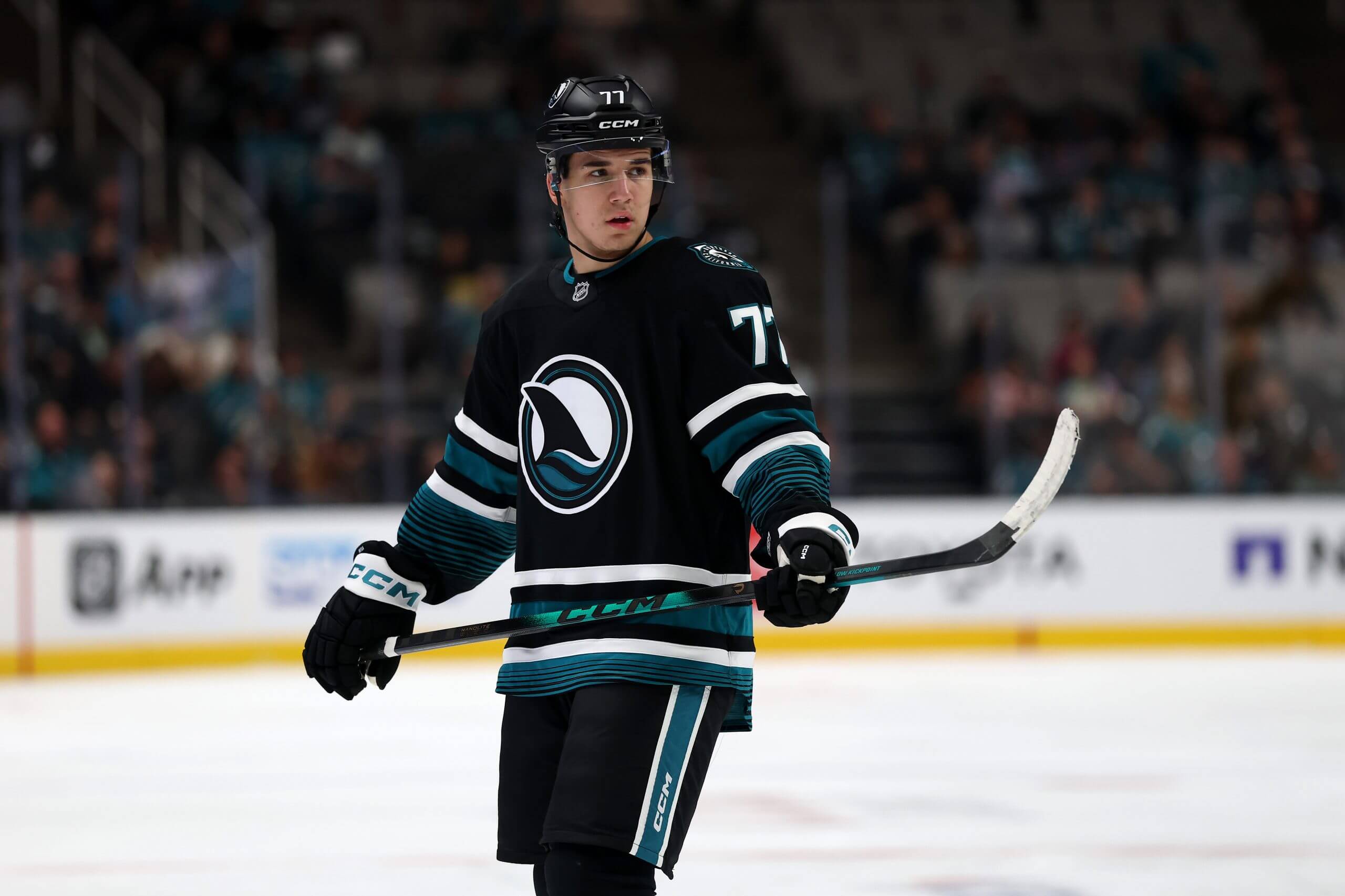

Because of his October birthday, I’ve seen a lot of Martone live over the years even though he’s still a teenager. Entering his draft year, Martone already had a ton of prestige. He’d already scored 33 goals in the OHL as the Mississauga Steelheads’ second-leading scorer and captained Canada to gold with 23 points in 14 combined games across two U18s. Then he got off to one of the hottest starts in the OHL last year and scored the overtime winner at the OHL Top Prospects Game. He played a limited role at his first World Juniors and had a limited impact early in the tournament, and some started to wonder whether his average pace/skating was a potential limiter to a game that otherwise looks like it has NHL star potential. His production also leveled out a little as the season went on, though he still finished with 98 points in 57 games (a 117-point, 68-game pace) and, for me, was the Steelheads’ best player in their first-round loss to Oshawa, winning his minutes.
This year, he made the post-draft jump to college hockey as one of the country’s leading scorers and an impact first-line player for the Spartans. He also captained Canada at the World Juniors as a returnee and led the team in goals, though I didn’t feel he really elevated and his line didn’t drive the bus like it was expected to.
Martone plays a physical, direct game with real skill and scoring ability. My viewings before last year had been a bit of a mixed bag, with games in which I thought he looked like a stud and others in which I left the rink not feeling like he made much of a mark. Last year, though, he looked dominant more consistently and completely took over some Steelheads games I was at, particularly early in the year when he was one of the best players in the OHL out of the gate. This year, he has gotten better and better as the year has gone on and was a real driving force at MSU on a line with Charlie Stramel and Daniel Russell, two very good college players. He has also looked impressive to start his NHL career.
Martone has a pro build, battles for pucks when he’s on them, goes to the net, finishes his checks and will drop the gloves. He handles the puck extremely smoothly for his size and can be quite noticeable in possession when he’s playing with confidence and intention. I’ve seen him make a ton of individual skill plays one-on-one, cleanly beat goalies from mid-range with his strong shot and release and execute low-to-high plays from below the goal line or off the cycle. He has a nifty toe-drag, both in release and one-on-one handles, and slick handles for a 6-foot-3 player, regularly making individual skill plays on the puck. He has a deceptive release point and is an excellent passer of the puck.
There have been games in which I’ve wanted to see him keep his feet moving and take over, and others where his discipline on the puck (in terms of play selection/turning it over) and off it (bad penalties, losing his man to chase, not finding open space, etc.) have been an issue. His skating can kick out from the knees a little bit, too, and it will need to improve if he wants the rest of his game to really pop at the NHL level. But he has a lot of attributes: size, strength, power, shot, playmaking, puck skill. And he’s going to score goals, make plays and potentially impose himself in the NHL when he really comes into his own. He’s a stud and has the talent to become a high-end point-producing winger. The skill and hockey sense are real, and the consistency of his effort level and toughness have developed over time, too. He’s one of the top forward prospects in the game.
Photo:
Kyle Ross/ Imagn Images
Tier 2
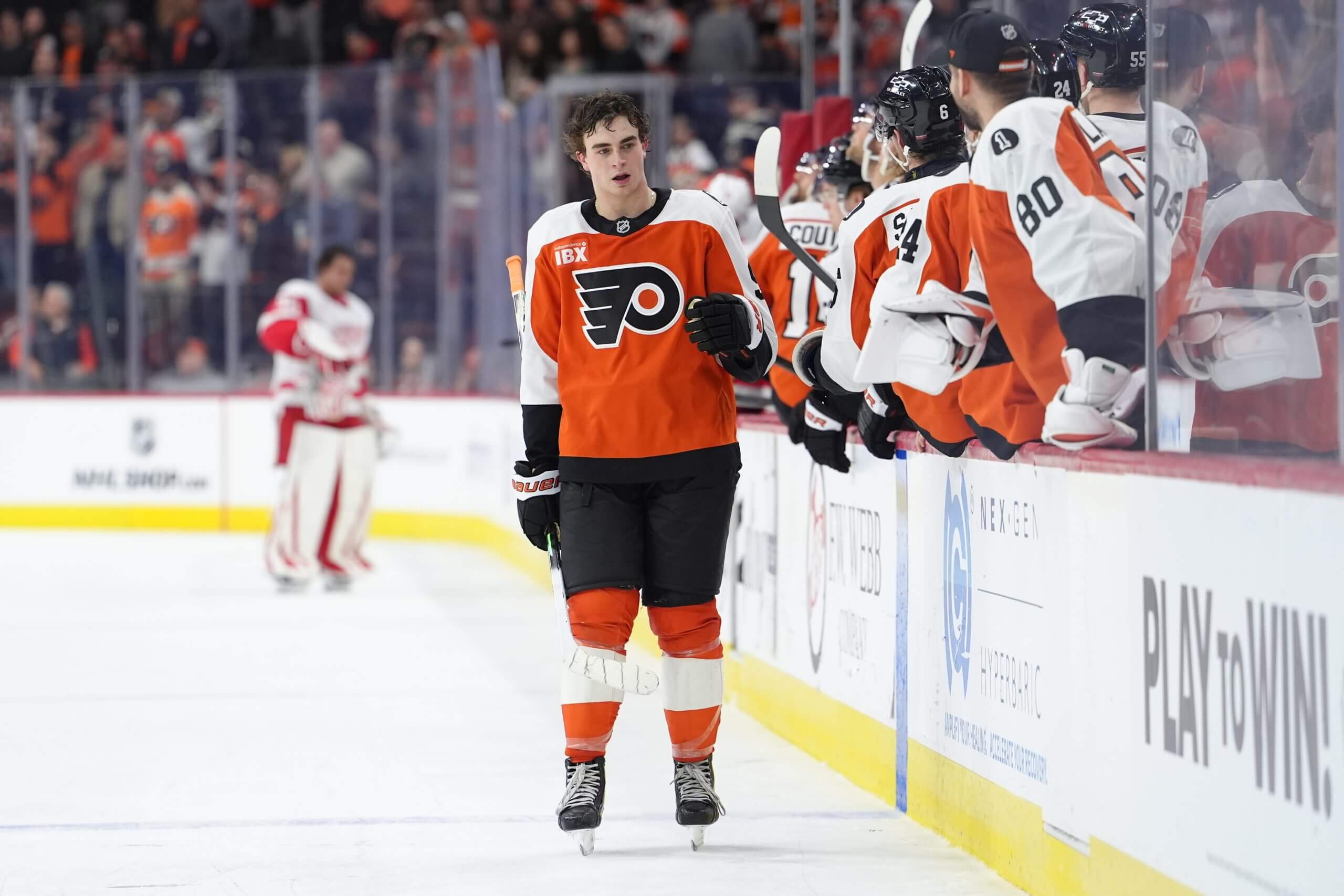
Parekh is one of the most talented prospects in the sport and has the potential to be an offensive game-changer. He might even be in a special tier offensively. Three seasons ago, despite playing in just 50 of Saginaw’s 68 games after missing three weeks due to injury from the end of February into March and another couple for the World Under-17 Hockey Challenge, he still broke the OHL’s all-time goals record by a U17 defenseman, scoring 21 times. An OHL Cup All-Star and first-round pick into the OHL before that, Parekh became the most talented offensive defenseman in junior hockey over his last two years of junior, winning the CHL’s defenseman of the year award and producing at an all-time great draft-year rate, breaking the 30-goal and 90-point mark as the leading scorer on the Memorial Cup hosts by more than 20 points. He was also extremely impactful against the three best teams in the CHL at the Memorial Cup, playing big minutes to help the Spirit to the championship; though he missed some playoff games due to an upper-body injury, he was still a difference-maker for Saginaw in the postseason.
He got off to a slow start last season after a very short summer due to the Memorial Cup, the draft, development camp, rookie tournament and the World Junior Summer Showcase, but he made plays with ease in the second half and still managed to somehow finish with 35 goals and 118 points in 66 combined regular-season and playoff games. This season, he would have benefited from next year’s rule change permitting select first-rounders to play in the AHL, but was still 19 and so had to play in the NHL, where he has played to fine results in sheltered usage but has at times struggled with the physicality — as all 19-year-old D do.
His World Juniors had the usual give-and-take that comes with Parekh’s game, but his play creation and swagger were also welcome additions to a team that really lacked that last year. He was running both of Canada’s PP units by the end of it and made several huge plays in important moments offensively. Turnovers and man-to-man D were issues at times, but he broke up his fair share of plays with an active stick and gave the team needed juice offensively. He was impressive in his four-game conditioning stint in the AHL as well, creating against men with ease there.
Parekh plays an aggressive and natural offensive style, where he looks to attack off the line into the slot or even the front of the net or below the goal line. He’ll also regularly involve himself in the rush much like a winger does, driving down the wall in control to challenge defenders and attack into his shot or create an odd-man rush. He’s extremely confident offensively and opens up his feet (where necessary) around the zone without going to his heel-to-heel by default. He has great hands and a casual-looking skating posture, which he uses to carry pucks with a visual ease and beat the first layer of pressure to get to his spots. He has excellent feet crossing over and falling onto his heels, but does lack pull-away speed in straight lines going forward. When the puck arrives on his stick, it just seems to stop and glue to him through his movements — a very rare quality that almost makes him look lackadaisical with the puck because it’s settled so easily into his pocket and upright stance.
He likes to roam, but he’s also learning to pick his spots better, and his head is constantly on a swivel to identify where he is in relation to his teammates. When he plays freely, which is almost always, you’re drawn to him whenever he touches the puck because he’s always a threat to make something happen, and he sees and identifies plays early. He protects the puck extremely well with players leaning on him, escaping situations you wouldn’t expect him to and often avoiding contact with deft little pre-planned plays, though he’ll also take a hit to make a play. He has great footwork and edges to manipulate across the line and stop up along the boards to change directions or maintain gaps.
I also believe he defends at a high enough level to be given free rein to go out there and be himself offensively. Though his defense has been a common criticism among scouts at times, I’d argue he has a great stick and reads the play at a high level in anticipation. I’ve liked what I’ve seen from him on the penalty kill, and even though he definitely doesn’t play a physical style and can get exposed for not being hard enough in engagements, I think he’s made important progress in his own zone. He’s also become a very chippy/mouthy/pest-like player, though his lack of discipline at times can get him in trouble. There are times when his posture will look disengaged and upright, and you’d like him to really get low and battle, but he’s playing to win pucks with his stick and does so quite well — though he’s never going to be a staunch defender and may be injury-prone because of his posture.
Add in that he’s a very good communicator (he’s constantly talking on the ice), has passes that are almost always tape-to-tape and perfectly flat, an ability to draw penalties escaping pressure as well as just about anyone in the draft class, and a want to have the puck and make a difference, and there’s a very high-end package. If he can defend at a reasonable level in the NHL, which I believe he’ll be able to, he has true star power offensively. I’m bullish on him becoming a top offensive defenseman.
Photo:
Sergei Belski / Imagn Images
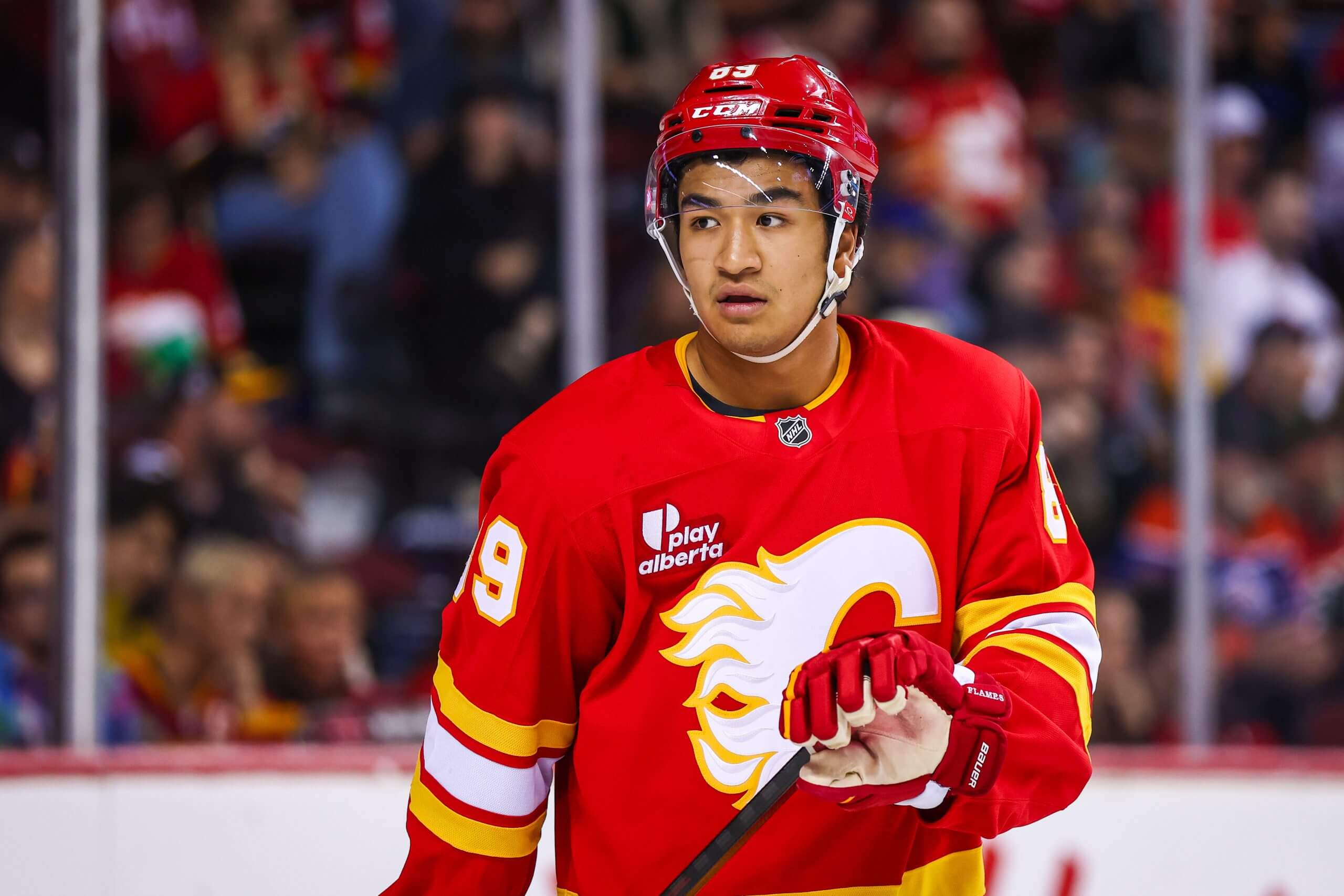
After playing his rookie season in a limited role with the WHL champion Seattle Thunderbirds — at times he was even scratched — Tij, the son of Jarome Iginla, was traded to Kelowna and took off with the Rockets in his draft year, regularly looking dangerous both off the rush and attacking inside the offensive zone. In his post-draft season last year, he got off to a strong start before undergoing hip surgery. This year, he returned to action and was one of the top forwards in the CHL with the Memorial Cup hosts. Since the trade to the Rockets, he has now combined for 102 goals and 206 points in 133 games across three seasons at age 17-19. In between, he had a point in every game at U18 worlds and finished the tournament with goals in the semifinal against Sweden and final against USA to end with 12 points in seven games (fifth in the tournament). He also registered eight points in seven games at the World Juniors, where he also hit a few posts, drew multiple power plays, and I thought he was the most consistent player on a line with star prospects Michael Misa and Porter Martone. He has also done it mostly as a center after many viewed him as a winger in his draft year.
He’s an excellent skater who can beat you in a straight-out race, cut past you laterally with quick weight shifts or build speed through tight crossover patterns around the offensive zone. On the puck, he’s a threatening individual creator who can create in knifing bursts and works quickly to put defenders on their heels, attacking on angles and jumps. Off it, he has great instincts for jumping into gaps in coverage to get open for his linemates. His snap shot, which has a traditional look to it and is more wrists and leverage than the curl-and-drag you commonly see now, consistently beats goalies cleanly with both its pop and how quickly it comes off. He has high-end handling with impressive hands in tight and always seems to handle his first touch at speed, even when pucks are put into his feet, and adjustability, which blends with real creativity to create an often-dynamic one-on-one player.
He’s an impressive athlete who performed well in the combine testing. He’s also a fan favorite type who gets after it on the forecheck and involves himself in the play often with some sneaky strength, though I think his defensive awareness and consistency still need to come, and his off-puck play might have been a little overrated in his draft year. Add in NHL puck skill and a dangerous and heavy wrister from mid-range, and you have a fun player and prospect. Add in the emergence of a power game that has seen him really begin to take pucks to the inside and drive the net, and suddenly you have a perimeter and interior offensive threat who has strength, speed, skill and scoring in his profile. He doesn’t always make the right play as a passer, but plays with speed and skill, can score and protects pucks well through open ice and into coverage, and has some star qualities.
He has a pretty clear top-six, scoring-skill-jump profile, with a ton of tools that have developed at an exciting rate when healthy. He’s going to score goals and make plays in the NHL.
Photo:
Steve Dunsmoor / CHL Images
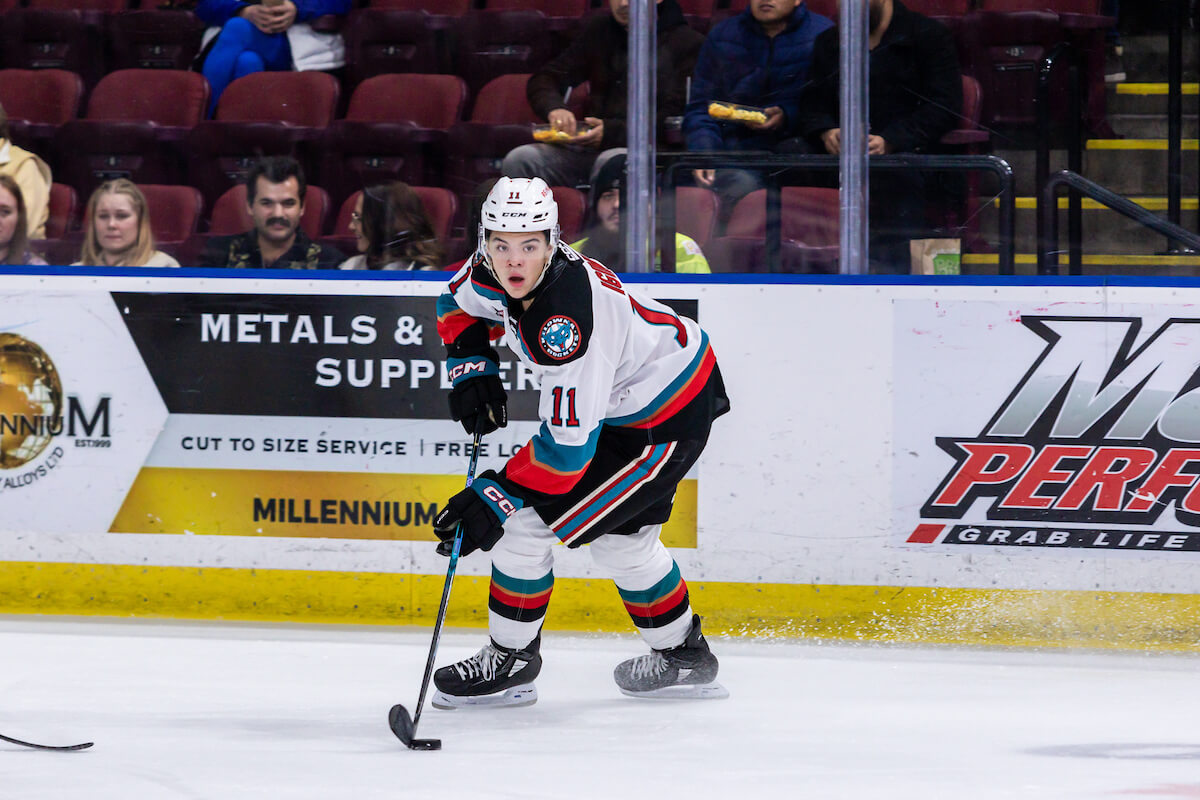
Hagens, after two years as the top player at the NTDP and two record-setting international events at U17 and U18 worlds, entered last season as a front-runner to go No. 1. His draft year was good without being a star-making campaign, though. He played to a point per game as a freshman at BC and was a driver of positive results who often played over 20 minutes for the Eagles. At the World Juniors in Ottawa, he was also the No. 1 center on a gold medal-winning Team USA, leading their forwards in ice time (20:33), and was their fourth-leading scorer with nine points in seven games. This season, he has been BC’s leading scorer following the graduations of Ryan Leonard and Gabe Perreault, playing both center and the wing for the Eagles, and was good but not great at the World Juniors.
Hagens’ game is about skating and playmaking. He’s breezy as a skater, making his patterns look easy out there. To use a hockey cliche, he’s on top of the ice, he’s agile and his stride and edges are dynamic, light, mobile and adjustable, with good speed and quick acceleration through his crossovers and cuts (he often beats guys on angles and loses them on cutbacks). He has high-end touch and handling and real finesse as a passer or in playing pucks into space for himself. He’s very aware of spacing and timing on the ice and does a good job hitting his spots off the puck to present an option in motion to teammates, as well as finding teammates when they’re open with his vision through layers. He has an impressive small-area game and an even more impressive game in open ice, with an ability to take his first touch and put opposing defenders on their heels when he gets the puck. He makes a lot happen in transition with his ability to flow up ice and make plays at pace, because the puck just sticks to his stick, and he moves with control of rare quality. He has phenomenal dexterity and reflexes, catching passes into his first touch. He’s crafty and has a game that mixes delays with one-on-one skill that pulls defenders in and then beats them. He has drive and wants to take charge on the ice. As soon as he gives it, he’s dashing to get open. He tries things and has the skill to pull off bold decisions when he makes them, but also plays a team game first. His game has detail. He has some sneaky jam and competitiveness, with more of a willingness to put his nose in dirty areas than some scouts give him credit for, in my opinion. He’ll engage in battles. He’s a strong athlete, with natural strength for 5-foot-10/11 that certainly isn’t overpowering but allows him to stay on pucks. He’ll also stand his ground post-whistle. He’s well-conditioned and doesn’t tire over the course of games or shifts. He’s slippery off the cycle and has a nifty release. But it’s his combination of skating, skill and craft that defines him.
Hagens profiles as a top-of-the-lineup, play-creating center in the NHL. I remain a big believer. I did debate ranking him a little lower in Tier 2 here though.
Photo:
Eric Canha / Imagn Images
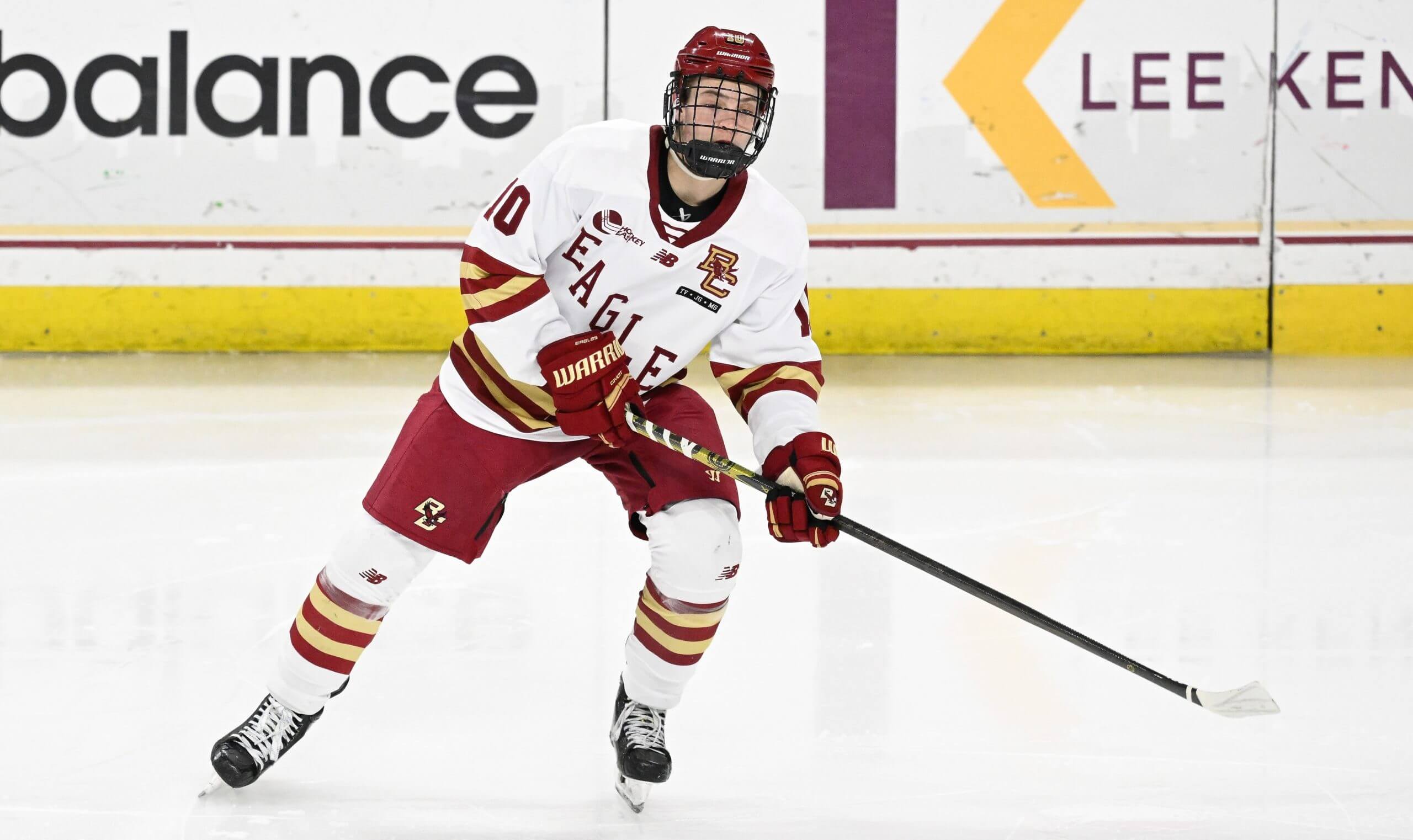
The top Swedish prospect in the 2007 age group, Frondell dominated at the J20 level two years ago and excelled internationally at the World Junior A Challenge, the world under-17s and particularly the U18 Five Nations (both in a dominant as an underager, and then in Helsinki last year). He struggled to create offense at U18 worlds, though, and while he arrived late and was coming off a run to SHL promotion with Djurgården and dealing with jet lag, his final showing pre-draft was a disappointing one. Still, he looked in a full season from his draft year as if he belonged with the Djurgården pro team in the second-tier HockeyAllsvenskan as a 16-year-old before hurting his foot in late February and later his knee (which required surgery), two injuries that combined to keep him out for most of 2023-24 and the start of last season. After jumping back into the men’s team’s lineup in limited minutes right away last year, Frondell looked early on last season at both the pro and junior level like he was still finding his game, pace and conditioning. He really stood out over the final few months pre-U18s though before playing a bit of a lesser role in the playoffs, with a couple of four-point games in Allsvenskan and that aforementioned second standout showing at Five Nations that included a two-goal, three-point game against USA (though he also had a mediocre Five Nations mixed in with his mediocre U18 worlds). All told, it was a bit of a mixed bag for Frondell last year, with some real highs (two or three months of excellent play against men) and some lows. On the whole, his HockeyAllsvenskan production was very strong in a historical context; on the whole, it should be noted, producing in line with names such as William Nylander and David Pastrnak at the same age. He then built upon that this year after Djurgarden’s promotion to the SHL, becoming just the fourth U19 player in league history to score 20 goals in a season and the first since Daniel Sedin (though there were some ups and downs for him with Djurgarden again this year as well, particularly after a hot start), and impressing in his first NHL action. He was good (eight points in seven games) at the World Juniors without being a force as well, helping Sweden to gold with a couple of big moments.
There’s a lot to like about Frondell’s game. He’s heavy but plays with intention, strength and some power (there were some questions about his fitness level after the time off, but he worked on it and quieted those concerns with a strong showing at the Scouting Combine). He’s competitive. He excels in puck protection (which, again, we saw more of late in the Allsvenskan regular season). He engages himself on and off the puck, offensively and defensively, to get involved in impacting play in all three zones. He has fairly quick hands, a big one-timer, a natural and hard release and a good sense for spacing (he does a good job finding soft ice and being opportunistic) and attacking. He has an ability to both create his own looks (though I want to see him do it more consistently), challenge defenders and find and use open ice to play off and to his linemates and free up his shot. He can be relied upon defensively and does a good job supporting play and picking up his assignments when he needs to help out the D. Though he has played mostly wing for Djurgården’s men’s team, he’s a natural center and I’ve liked him at both positions. He has pro quality and tools. I’ve wondered about whether his pace (he can look like he has big boots out there at times but can also build a head of steam when he gets going) and his playmaking are high-end enough, but he should be an excellent top-six player in the NHL who has a strong combination of size, strength, shooting and two-way play.
Photo:
Bruce Bennett / Getty Images
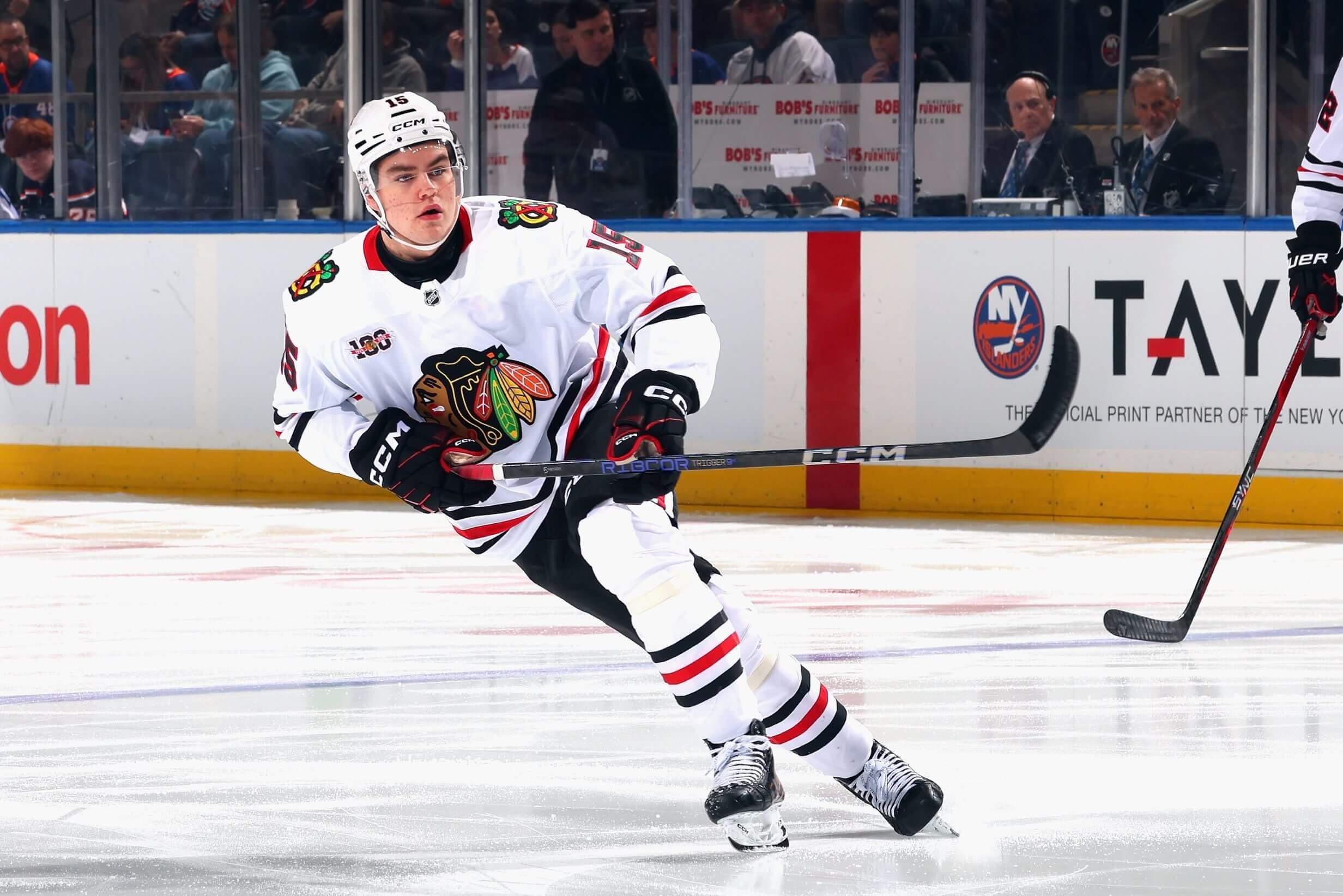
Dickinson is a very projectable defenseman who has size, high-end skating and an offensive game that really rounded into form two seasons ago and took an even bigger step last year on route to 30-plus minutes per game as the best D in the CHL. He stepped right onto a deep Knights blue line at 16 (which is rare), and played bigger minutes by year’s end than some drafted guys (which is rarer), including in key situations in the playoffs. Two seasons ago, he played a leading role in all facets of the game on another strong London team (which included successfully quarterbacking one of the power-play units and developing his shot into more of a weapon to nearly hit 20 goals), making two huge plays in the Memorial Cup final. Last year, his game continued to expand as a dominant two-way force who crushed huge minutes to incredible on-ice results and a Memorial Cup win. This season, he has averaged just under 17 minutes per game for the Sharks as the second-youngest full-time D in the league to Schaefer, but it still often felt like a development year for him and that the best place for him would have been the AHL had it been an option. He has also twice worn a letter for Hockey Canada.
He’s a strong 6-foot-3/4, 210ish-pound defenseman whose skating is a major strength (forward, backward, four-way mobility — the full package for a defender his size). He plays to who he is and what makes his game so successful. He defends at a very high level for his age, both man-to-man, down low and positionally in his own zone. He has skill and command with the puck in the offensive zone and shows real vision and an NHL shot consistently. There are times when he needs to pivot and set his gaps earlier (when he’s ready and in flow to accept the rush, he’s an excellent defender), but his only major hiccup is decision-making under pressure in his own zone. He still needs to read the ice and move it quicker at times, and there are moments in games when he doesn’t process it fast enough coming out of his own zone and can turn over pucks (though that improved last season). On offense, he shows comfort, speed, presence and even deception past opposing forwards, and has developed a nice feel for the game offensively when there are plays to be made. He just needs to count, read and problem-solve faster in his own zone. Some still have minor concerns about his IQ but he has all of the physical tools you look for, he can really shoot it (which I know he has worked on to turn into a real weapon), he comfortably handles and skates it, he has a high floor, and he could have a very high ceiling (at both ends) with continued development along the path he’s on. There are also some who want to see him play a little meaner, but he was a dominant defender at the junior level, and he has competed/played hard across huge minutes over the years. He’s also helped by a June birthday that gives him some runway to continue to find new levels/layers and get the reps in with the puck in his own zone. He can dominate a game in all three zones and four corners of the rink, which is saying something for a defenseman his age. His size, skating, defense and blossoming offensive game make him a true top prospect. He looks like he’s going to be a two-way stud in the NHL even though there have been some tough nights this year, and if he continues to improve the way he reads pressure, I think there’s No. 2 upside.
Photo:
James Guillory / Imagn Images
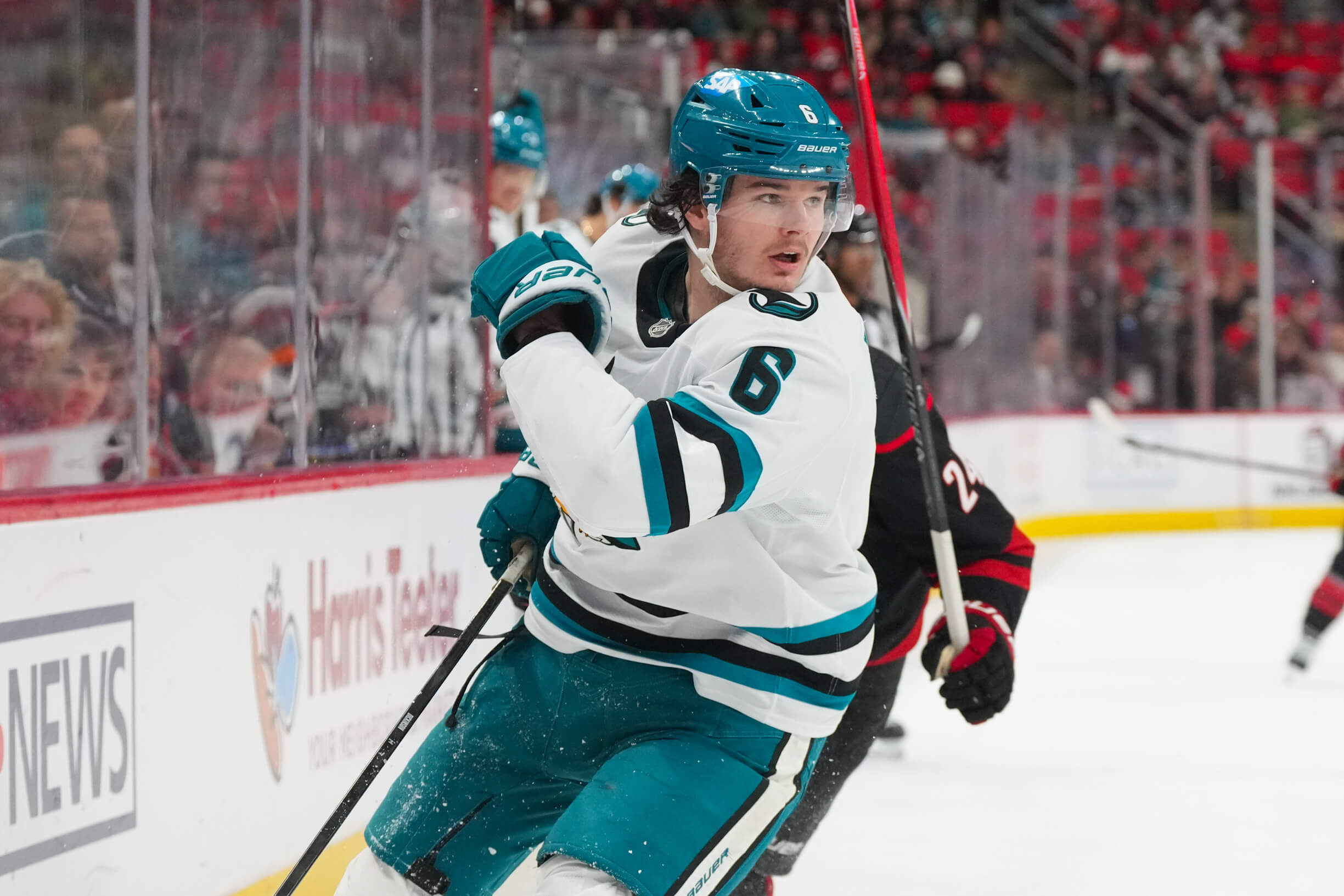
The most productive defenseman in NTDP history and the first defenseman to lead the World Juniors in scoring (he also led the tournament at plus-11 and was named to the media all-star team), Hutson is a highly talented offensive defenseman who has a star-level statistical profile already. Last year, he played to a point per game as a primary play creator with Team USA at the World Juniors and BU as a freshman, finishing second on the Terriers in scoring with 48 points in 39 games, winning the NCAA’s rookie of the year award and leading the Terriers to the Frozen Four final. This year, he led the Terriers in scoring and, in the games he played at the World Juniors before and after an injury scare, was USA’s best player. He has looked himself in early NHL action after signing a couple of weeks ago, too.
He’s a 5-foot-11, 175-pound left-shot defenseman with dynamic on-puck movement, impressive handling and an NHL release (he has a wicked release and pre-shot adjustment). His point-per-game U17 season (and well above point-per-game U18 team production) set the single-season D points record at the NTDP, and he set the all-time mark at U18 worlds, doing it while four and a half months younger than his big brother Lane was at the same age (he was the most talented defenseman on either of the NTDP’s teams in his two years there, which says something considering what Zeev Buium has since become). He was also the most impressive defenseman as an underager at a previous U18 worlds. In his draft year, though the points didn’t come quite as easily for him early on and some scouts felt he had a disappointing first half, he was excellent late in the year, and it was clear all season long that he was trying to really dial in his game defensively. His NTDP team also didn’t have a great blue line around him, which required them to pull back on him a little.
His offensive gifts are extremely impressive but Cole has more of a physical element to his game than Lane does as well, and plays opponents really hard so that his size is less noticeable (Lane is plenty competitive, but Cole delivers more hits if you will), gluing himself to them in order to be as disruptive as possible and really outwardly battling along the wall. He quickly identifies second and third options, often a step ahead of opposing structures. The way he shows one thing and does another is pretty unique. His little hesitations in control into quick, decisive attacking moments grab your attention and allow him to make plays past the first layer and walk off the line as well as any D prospect in the sport. He has the puck on a string at times. I think he’s a better skater than his big brother was at the same age (he snakes his way through gaps in coverage so effortlessly, and his lateral agility on cuts is a major strength). He executes some beautiful stretch passes. He has great touch and feel on his backhand as well as his forehand. He has the shakes and head fakes that Lane has. And while some questioned whether his style would translate against pros, he defended really well with his feet, anticipation and timing both in college and at the World Juniors (I thought his play defensively in Ottawa and Minnesota was as notable as his playmaking offensively). His teams have been better with him out there on the back end in each of the last four seasons than without him. The consensus, despite the production, is that he’s not quite as dynamic/smart as Lane, but I’m still a big believer in the talent, ranked him 34th when he went 43rd, and think he’s a star prospect.
Photo:
David Berding / Getty Images
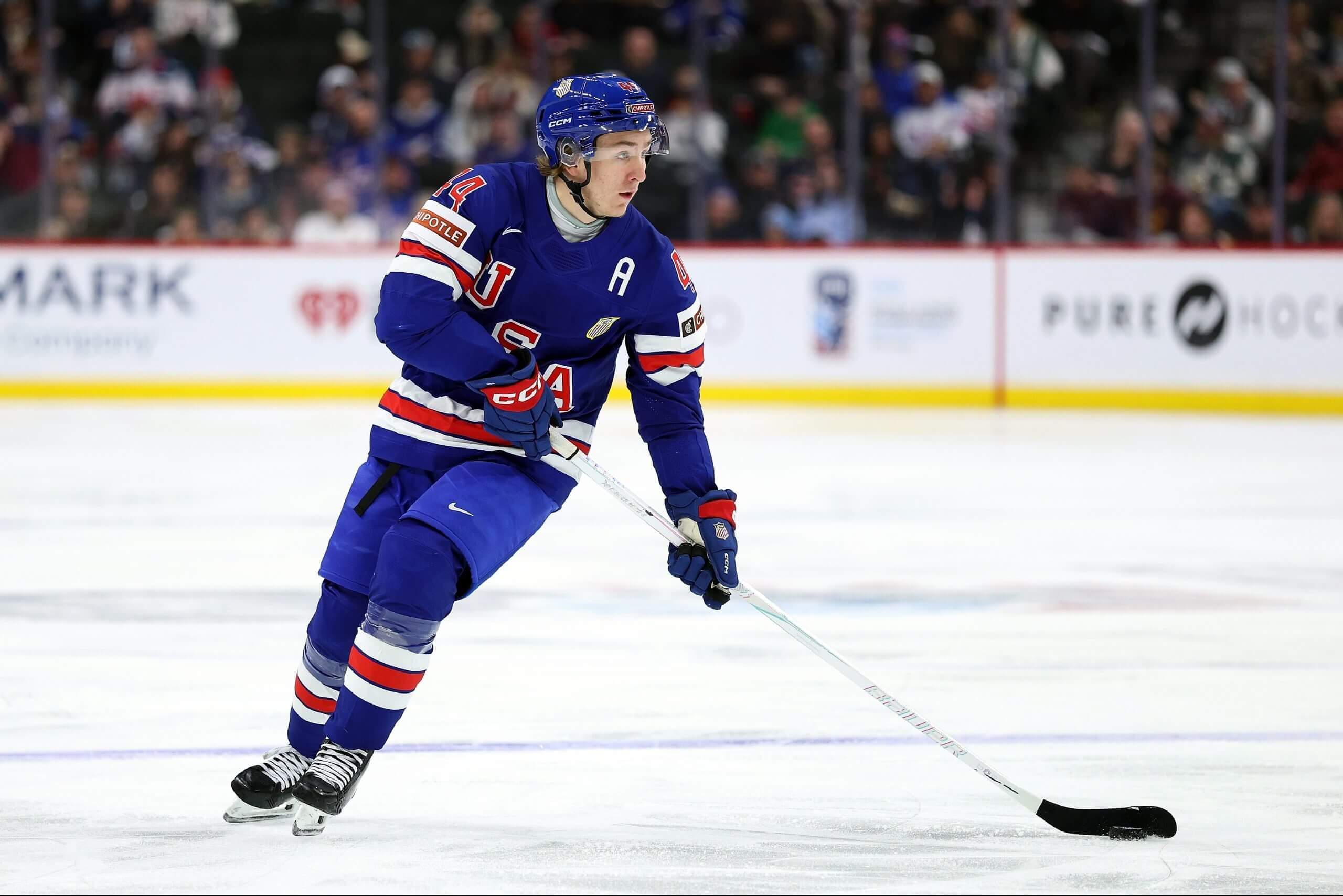
Even though he has played exclusively in the NHL this year, including at times on Seattle’s first line, I’ve elected to include Catton because of a combination of his age and the fact that he’s ineligible for the AHL. He would have been a prime candidate for the rule change that’s being implemented next season, which will allow first-round CHL 19-year-olds to play in the AHL.
The WHL’s fourth-leading scorer in his draft year, Catton registered 54 goals and 120 points in a combined 72 regular-season and playoff games on a Spokane team that lost more games than it won. He had real pedigree even before his draft season as a No. 1 pick into the WHL who was an offensive catalyst on a bad Chiefs team in his rookie season who also led Canada Red to silver as captain at the World Under-17 Hockey Challenge with 12 points in seven games, and then again captained Canada at the Hlinka Gretzky Cup with a tournament-leading eight goals and 10 points in five games. He continued to build on his strong statistical profile last season as well, producing near the top of the WHL (151 points in 77 combined regular-season and playoff games) and looking like he was playing with his food after the arrival of Capitals top prospect Andrew Cristall. They were the best duo in the CHL and made plays with ease inside the offensive zone.
Catton is dangerous whenever he’s on the puck and shines with his knifing, slippery game. Inside the offensive zone, the way he baits and shades, drawing players to him and then playmaking past them with a pass or a cut, is pretty impressive to watch. Catton is a heady playmaker who uses spacing to his advantage and sees the ice at an advanced level, regularly executing quick plays through coverage or delaying into a pre-planned play. He has multi-dimensional skill, with an ability to play both with speed on the rush as a smooth, fast and nimble high-end skater and more slowly inside the offensive zone when the pace ramps down and he has to spin away from pressure, which he does so well. He has great instincts offensively. He tracks back consistently and will get up and under sticks to win his fair share of battles, with more room to round out his game defensively (mostly inside his own zone) and steady progress made on that front. He supports play well off the puck defensively, which was a focus of his this year.
He gets to the guts of the ice and also makes plays out wide. He thrives in tight spaces and on cutbacks; he can play on the perimeter or take it to the net, and he has a dangerous and quick release while moving. He does such a good job of losing defenders with his back to them to avoid getting pinned down because of how adjustable his skating is through stops and starts and tight turns. He draws a lot of penalties with his skating and has also been a top penalty killer in the WHL the last two years because of his ability to pounce and create offense short-handed.
He has some very translatable top-six elements with his skating and skill set. I believe he has the chops to stick as a center despite being on the smaller side, though he has played both this year and may end up on the wing, because you want him getting touches lower in the zone so that his skating can lead in transition. He has a bit of an injury history, which has affected a couple of offseasons and led to him sitting out of U18 worlds, but he’s an exciting talent with higher-end offensive chops.
Photo:
Rick Osentoski / Imagn Images
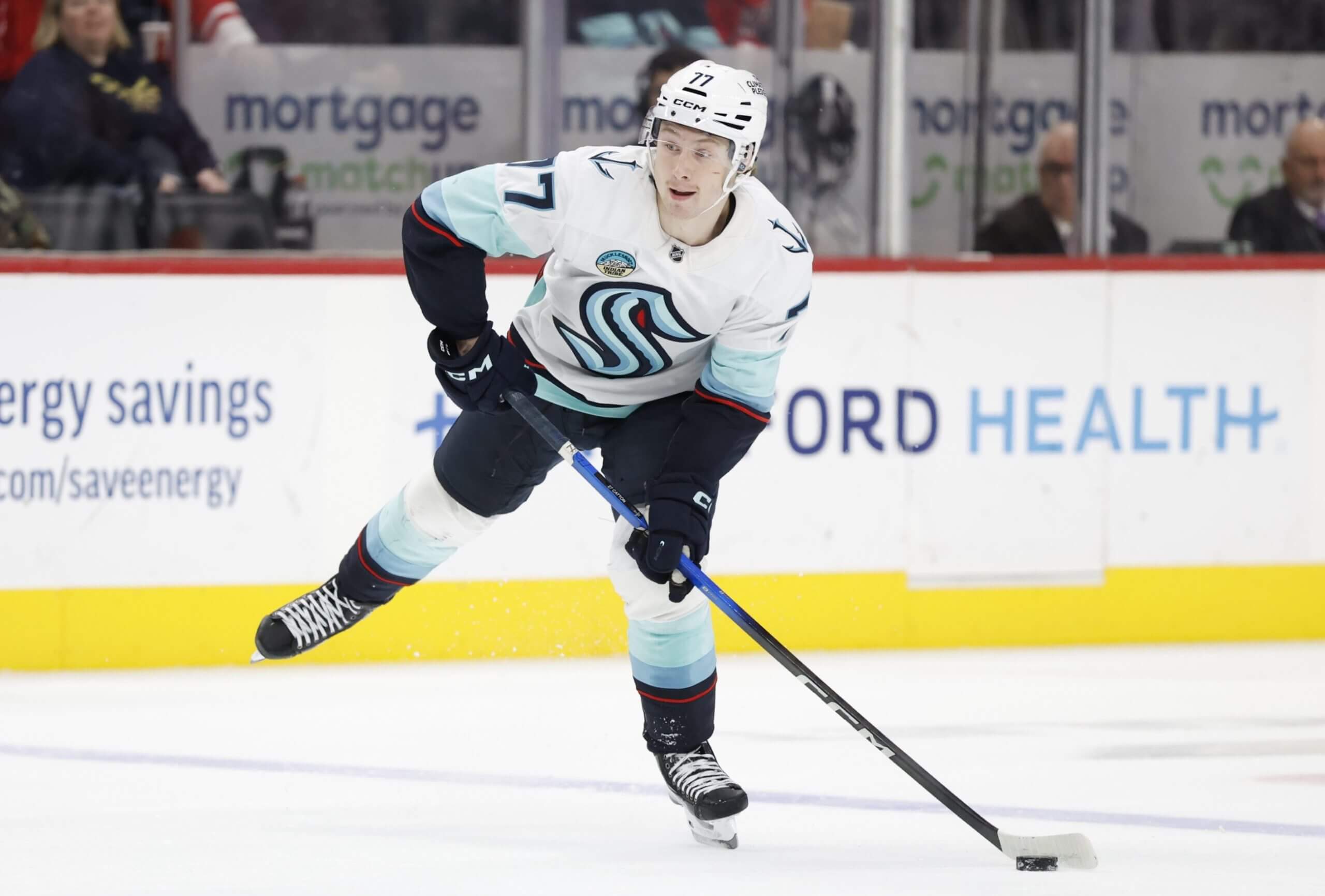
I’ve stuck my neck out on Perreault over the years and still believe he’s going to hit and outperform his draft slot and the way many have handicapped him over the years. I view him as one of the most talented and offensively intelligent prospects in the game, and when the points pile up as they have, and they happen while making the kinds of plays that he does, I think you downplay his player type at your own risk at that point. You can say what you will about his leaner frame (though he has added substantial muscle in recent years and is now listed at a very playable 180 pounds). You can say what you will about perceived questions of skating (which I think completely lost the plot in his draft year and haven’t corrected enough in the consensus). You can say what you will about his linemates at the NTDP and then BC. But it’s Perreault who holds the program’s single-season points record, it was Perreault who had a rare 60-point season despite an injury, it was Perreault who again led BC in assists as a sophomore, and it’s Perreault who, without almost any help, produced and made plays immediately in the AHL.
I see an incredibly clever facilitator and playmaker who plays the game with a light touch and a heady spatial awareness of not only where his teammates are, but where he is in the flow of play (and relative to defenders). The son of former longtime NHLer Yanic Perreault and brother of Jacob Perreault, Gabe doesn’t have his dad’s defensive acumen or his brother’s build, but he’s a highly intuitive player who sees the play develop offensively at a more advanced level than his two family members did/do — and comparably to any prospect in the sport for me.
He has extremely quick hands to complement that mind for the game offensively and allow him to execute all the plays he sees. He problem-solves his way out of trouble as well as just about anyone his age that I’ve watched. He has dexterous tools catching, tipping and redirecting pucks on first touch. He arrives in space at exactly the right time to make himself available and finish plays. His ability to bait defenders and open them up so that he can slide passes through their feet is so impressive. He gets shots off extremely fast and without bobbles in catch-and-release sequences. He plans things out on the ice at speed and then finds ways to make his desired play.
He’s a slick one-on-one player but will also wait for that extra split-second and then just sling a pass tape-to-tape across the grain. He has become a bit of a puck thief, consistently tracking back hard to empty the tank and make effort plays on lifts. There are times when he waits too long to make his plays, but you live with that, given his unique ability to find guys in open space with real craft and puck skill in possession.
He’s a better skater than he gets credit for, with average to above-average speed and developing power to his stride as he has gotten stronger. I see a skilled, crafty, inventive, nifty top-six playmaking winger with clear PP1 upside. I still think he has a chance to be a star if the Rangers develop and use him properly.
Photo:
Brad Penner / Imagn Images
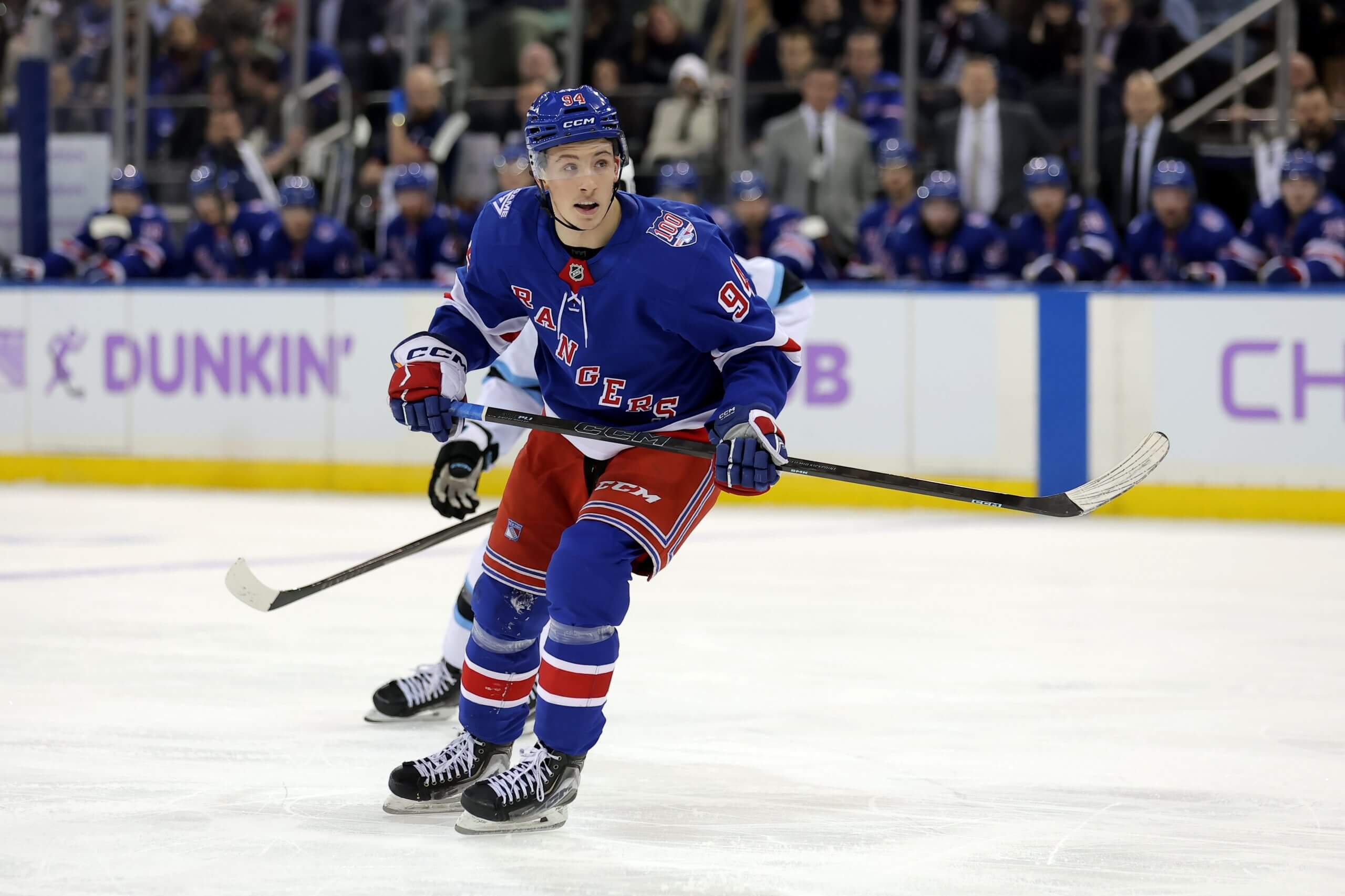
Hage has re-emerged as one of the top forward prospects in the sport this year, finishing tied for fourth in NCAA scoring before the national tournament with 51 points in 38 games. He proved he could drive play both on the No. 1 team in the country and for Canada at the World Juniors, where he led the tournament in scoring, even with a couple of posts and a missed penalty shot.
Last year, on a Michigan team that didn’t have the high-end skill of recent years, Hage also played to above a point per game as an 18-year-old freshman and made a lot of plays offensively for himself. Coming up, he was a star minor hockey prospect who would have gone at the very top of the OHL draft had he not chosen to go to the Chicago Steel and commit to the Wolverines. He was then limited to 13 games (in which he had 10 points) in his 16-year-old season in the USHL after undergoing shoulder surgery from an injury suffered in an early practice. Some in USHL and NCAA circles believe that had he not lost that time, he might have been in the top-10 conversation for the 2024 draft. Though he didn’t play back into that mix in his draft year, he came close, taking off in the second half of his draft year and looking, for a multi-month stretch, like debatably the USHL’s best forward before finishing with 35 goals and 79 points in 56 combined regular-season and playoff games. He should have been on Team Canada at U18 worlds two springs ago, too.
I’ve long been high on him and believe he has top-six potential. The big question over the years was whether he could do it as a second-line center or if he would be better served moving to the wing (think Jordan Kyrou). Over time, the consensus has shifted from viewing him as a winger to wondering if he might just stick as a center.
Hage is a natural center with plenty of offensive dimension, though. He has pro size (6-foot-1 and now 199 pounds, with more room to add muscle to his once-lean but always-athletic build) and excellent skating. He has dual-threat skill as a shooter and passer, and he can do both in flight and at pace. He’s talented as a handler and can create for himself or make plays for his linemates. He plays harder than he used to get credit for, stays on pucks and he’s competitive enough. He reads the game well with an intelligent approach to the way he maneuvers around the ice, but also good instincts that he can fall back on and a willingness to try things (and sometimes turn pucks over). I like him in puck control/protection, including in full flight. His detail and work rate are both developing, even if they’re not going to be his calling card. He’ll finish his checks.
His blend of skating, skill, scoring, playmaking and sense is hard to come by and noticeable in every game he has played this year. I’m a big fan.
Photo:
Nick Wosika / Getty Images
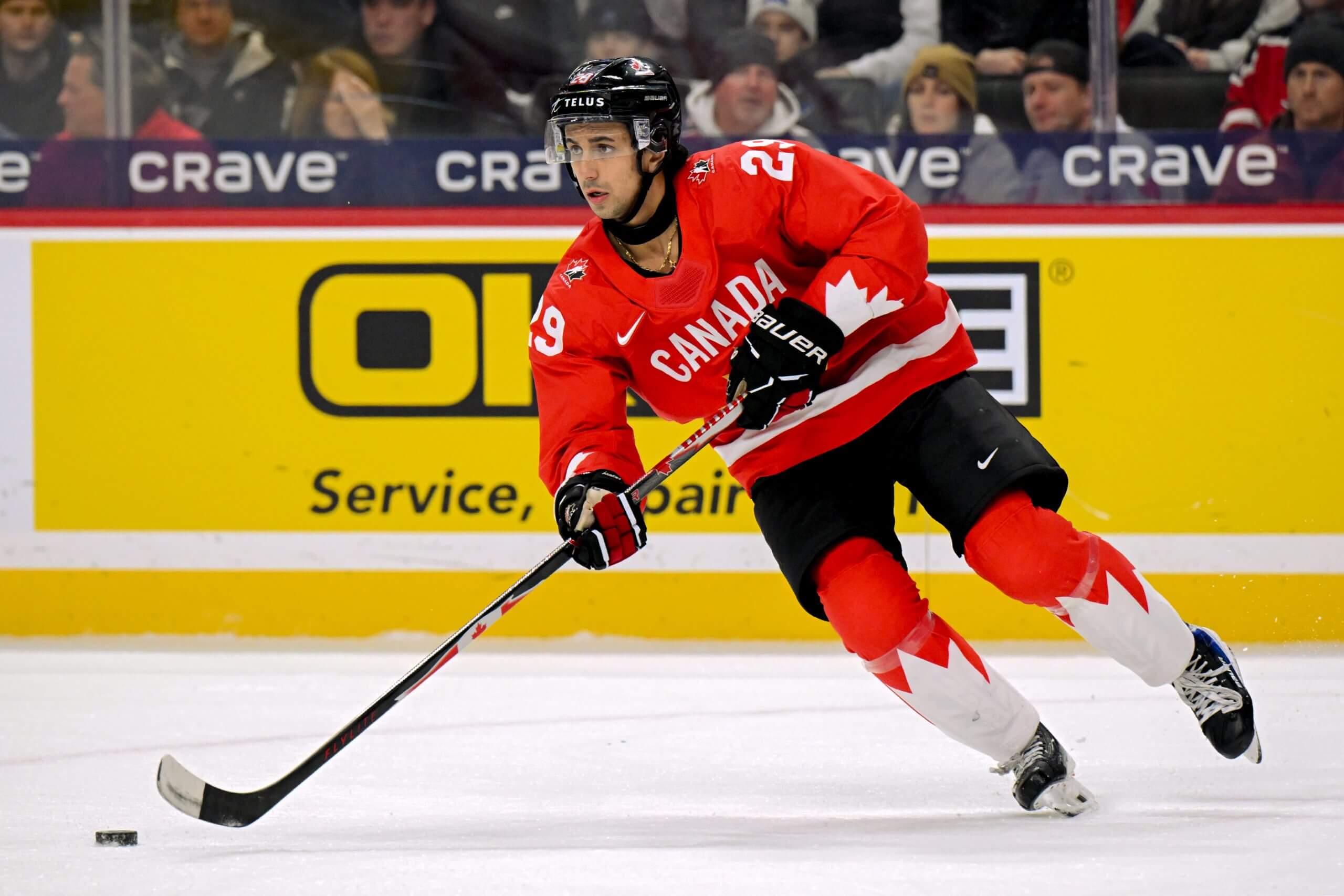
Desnoyers was the No. 1 pick in the 2023 QMJHL Draft after a run to a silver medal at Canada’s under-18 championship and captaining Quebec at the Canada Winter Games. He was one of the top young players in the Q as a rookie two seasons ago, regularly playing 20 minutes per game as a forward for a good Wildcats team, and wore a letter for the gold medal-winning Canada White at under-17s as well as for Team Canada at the Hlinka. I thought he had a tough time as a center in a limited role at U18 worlds two springs ago despite registering five points in five games and his numbers didn’t pop out of the gate last season, but he was one of the best players in the QMJHL for six months and really elevated his game — and, importantly for scouts, his production — as the top forward on the top team in the QMJHL. That’s despite dealing with two injured wrists from November onward in his draft year. He stamped that by leading the Wildcats to a Q title as the league’s playoff MVP with 30 points in 19 playoff games as well. He wasn’t able to rise again in the Memorial Cup for them, but the wrists were really nagging him by then, and he still made two big plays in the semifinal.
This season, after a bit of a slower start again in his return from injury, Desnoyers took off with another top team in Moncton, finishing the year with 78 points in 45 games for a 1.73 points per game clip that was second-best in the league. He also registered six points in seven games at the World Juniors, where he started as the 13th forward but quickly rose to and stayed on the third line, playing well at five-on-five and making positive plays.
Desnoyers is a good-sized center with room to add muscle, and scouts love him as a projectable top-six pivot who plays a smart, detailed, well-rounded two-way game with good skill, smarts and poise. He’s competitive and has great habits. He’s committed to playing defense, supporting pucks, staying in good positions and not cheating for offense while excelling in the faceoff circle. He gets glowing reviews as a winner that people gravitate around. He’s opportunistic and gets open really well. He involves himself in play, he can carry and hold pucks or play off his linemates in give-and-gos, he has a real feel for the game offensively and he’s consistently impactful.
While he’s not a dynamic skater or individual creator, I see plenty of skill and have seen him make plenty of high-skill plays — including a Michigan goal and a ton of high-IQ, quick-hands plays in tight/in traffic — and he’s a better skater than his older brother Elliot was at the same age. If he can add a little more pace and muscle, he’s going to have a long career as an important center who contributes to winning on good teams. He has had a very comparable QMJHL career and impact to Nico Hischier and Pierre-Luc Dubois, who were both also top-five picks. He’s more Hischier than PLD, though.
Photo:
Daniel St. Louis / Moncton Wildcats
Tier 3
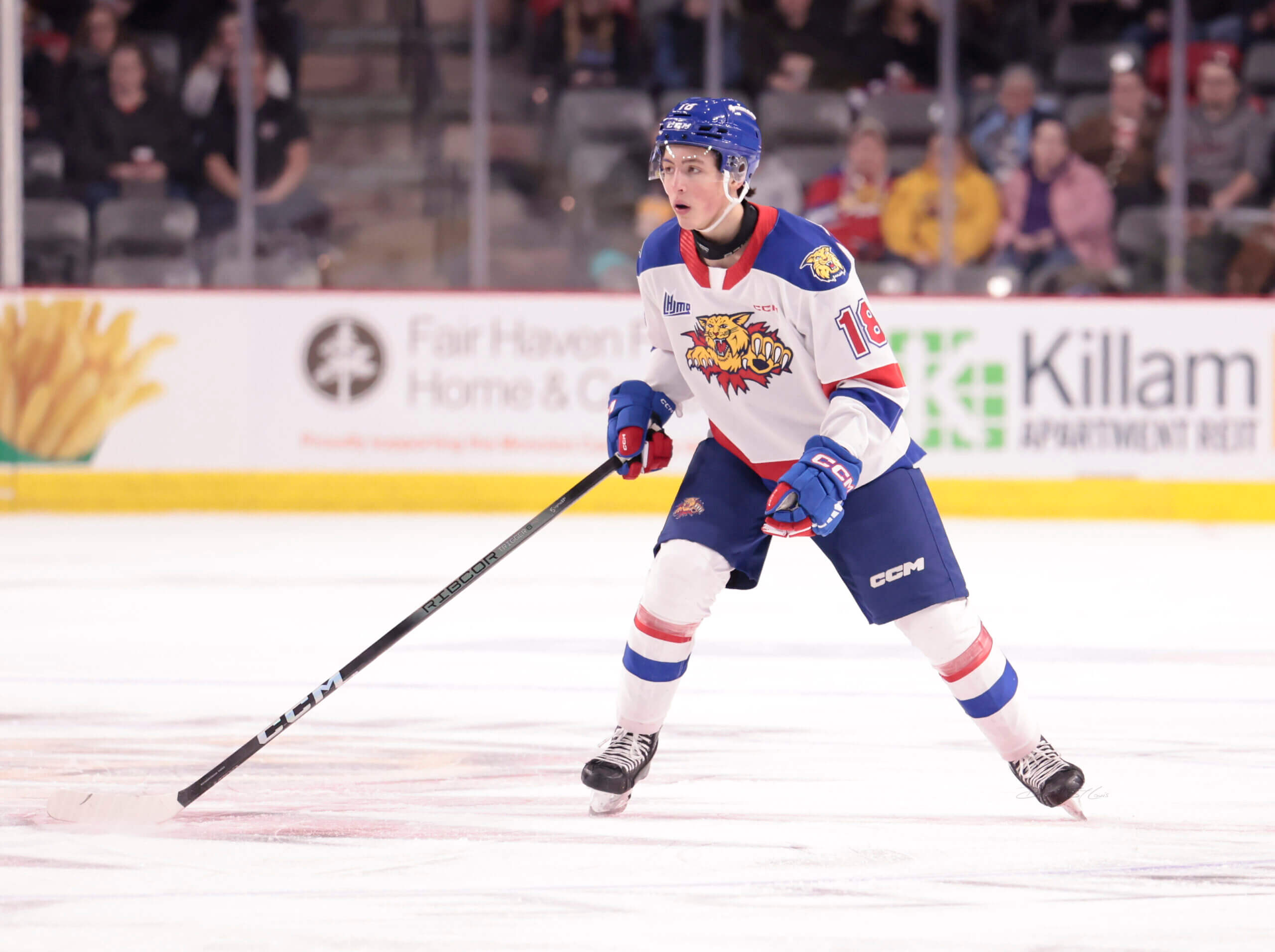
O’Brien was the OHL’s Rookie of the Year after playing to above a point per game and leading all rookies in points and assists. He didn’t grab me in repeat live viewings in the OHL that year and early on last season to start his draft year, but he really took off as the year went on and sold me in the second two-thirds of it. He created a lot for the Bulldogs and drove his line (while not playing with OHL leading goal scorer Nick Lardis at five-on-five, and without his usual running mate of Marek Vanacker until the end of November). He was a little quiet at two separate tournaments for Hockey Canada, but he was definitely a little snakebitten in his scoreless Hlinka and didn’t play the typical top-of-the-lineup role he has in the OHL. He nearly broke 100 points by the end of his draft year, too, finishing with 98. He then had 11 points in 11 playoff games and played a lot for the Bulldogs in their final four games after Lardis went down with an injury. This season, he was named captain of the Bulldogs, and while he didn’t make Canada’s World Junior team, he led the OHL in points per game (1.75, or a 119-point 68-game pace).
He’s a finesse player with tons of feel, skill, poise (this one with emphasis, with just an unshakeable ability to wait and wait in possession, including around the crease/under pressure) and craftsmanship on the puck and as a passer (he seems to know where guys are even when they’re in his blind spot). The IQ and passing ability are high-end tools. He has a high-end ability to put pucks into spaces for both his linemates and himself. He’s a decently fast skater who uses fluid crossovers to build speed and weave up the ice in control (though he could use a little more power). I’ve wanted to see him up his tempo and put the puck in the net more at times, but he has shown he can do all of that. He’s extremely smart on and off the puck. He’s also viewed as a competitive enough center (though he supports play well off the puck, I’d like to see him involve himself more in the fight and he lacks a physical element) who should fill out his frame (which should also help him in the faceoff circle, where he needs to improve). It’s also worth noting that he’s a June birthday and the son of two high-level hockey players, so the athleticism is there, and the muscle should come. The skill, sense, IQ, patience and ability to make plays at different paces are all very appealing when you consider he’s still a lean almost-6-foot-2. He has top-six forward written all over him.
Photo:
Brandon Taylor / OHL Images
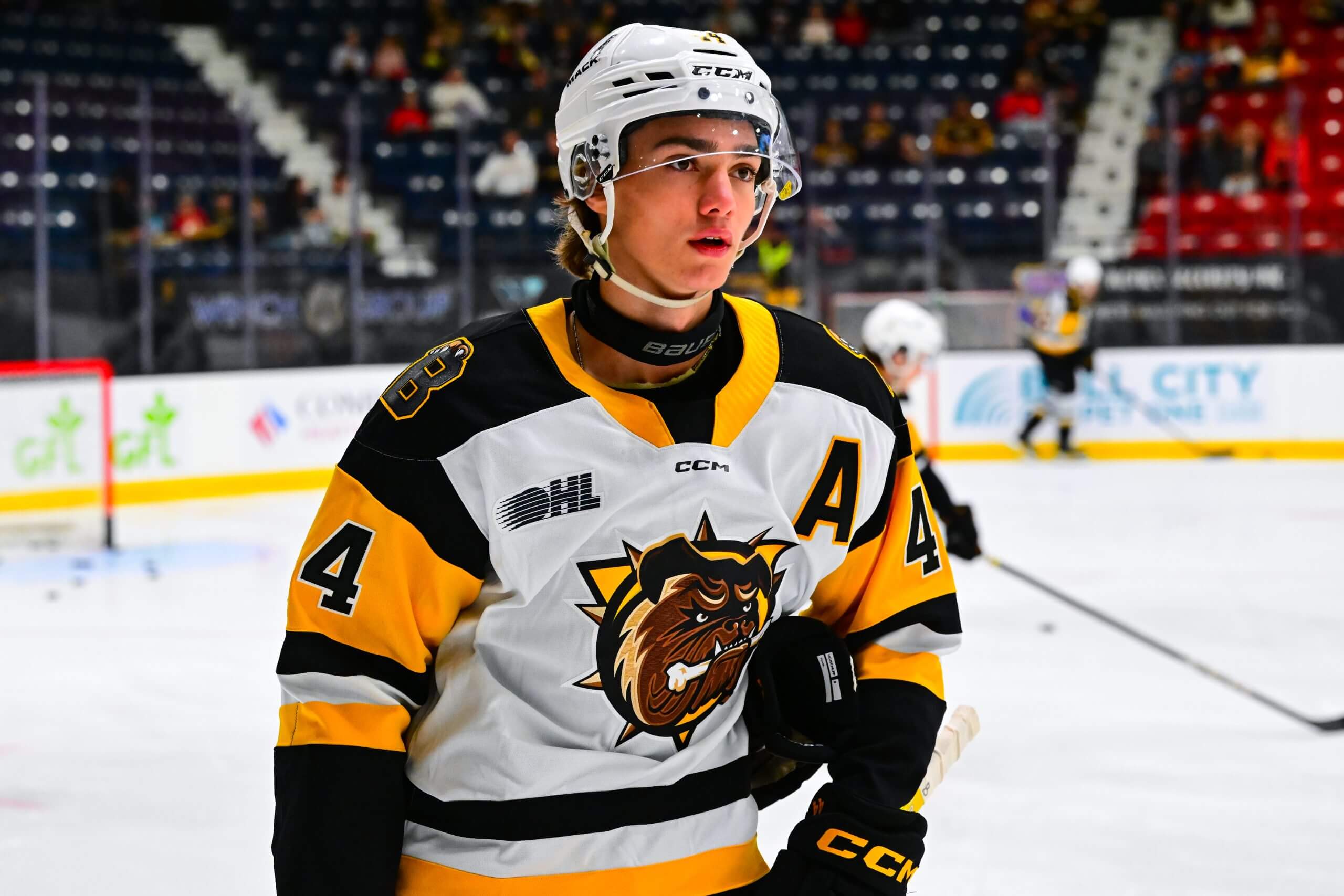
A standout October 2006 with size and some real skill, McQueen is a big, right-shot center with talent on the puck and skating that has come a long way over the years to fall into place nicely for a player his size (6-foot-6 and 203 pounds). The big question with McQueen in his draft year was about his health. He impressed for Canada at U17s, Hlinka and U18s — where, after a standout first game, he got injured in the second game of the tournament — and had stretches of dominant play for Brandon in the WHL, including early on in his draft year after a four-goal game kick-started it. He missed 15 games with a back injury midway through his draft-minus-one season, though, and after returning for the playoffs and U18s and getting off to that hot start last season while still trying to manage it, the injury flared up enough that he and his team felt it was important for him to step away and get it right. He has said the injury was a pars fracture, or a spondylolysis — a stress fracture of the spine.
After missing almost his entire draft season, he returned to play in early March and looked like he was getting back into the swing of things early before getting closer to form down the stretch and finishing with 20 points in 17 games on the year. But he wasn’t himself in Brandon’s first-round playoff series against Lethbridge and missed the final two games of it. If not for the injury, he was viewed as a top-five-caliber prospect. This year, after making the move to the NCAA for his post-draft season, he has played to just under a point per game as a freshman and leads the Friars in assists, sitting second in points.
I like his tenaciousness/willingness to go get pucks and then stick with them when he has them. He’s competitive. When he was younger he lacked strength, and his skating dragged behind/never properly developed because he was trying to cheat his mechanics to keep up, but it has come, and there’s a belief it will continue to develop as he adds strength and stays healthy. He uses his linemates well and plays with an offensive intellect. But it’s his ability to control and manipulate pucks in tight to his body, with his length, that I think distinguishes him. He can carry pucks into traffic and problem-solve in ways that players his size typically struggle to do. He can also go to the net and make tuck plays/rebounds with good dexterity, which has helped him play the net front successfully on the power play, a translatable role for him. His shot is pinpoint accurate around the home-plate area and even from tough angles.
There are the makings of a really unique player there, and the payoff could be significant. He often looks like a potential top-six center with some distinct attributes.
Photo:
Steven Garcia / Getty Images
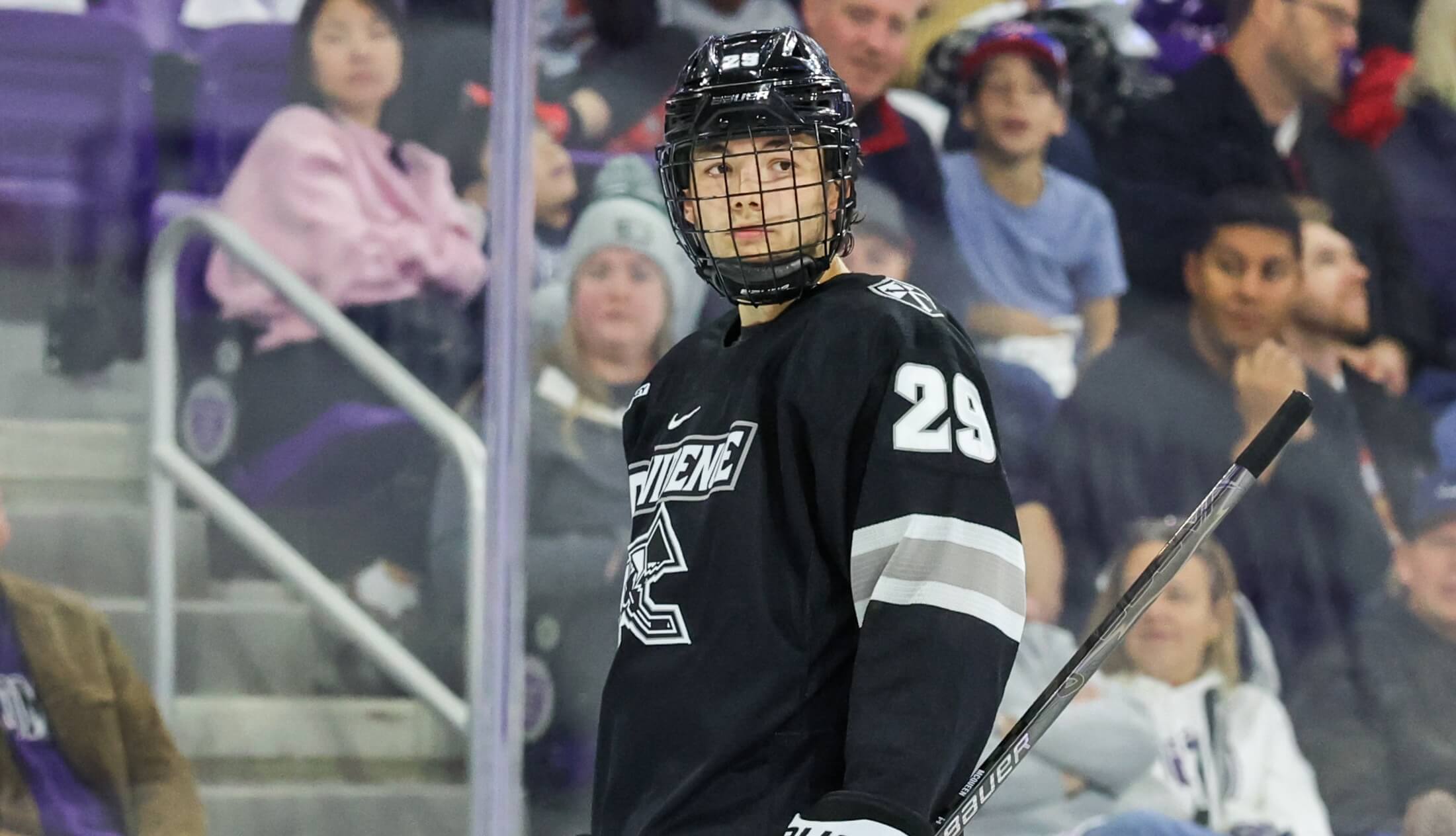
Protas was one of the biggest risers in the prospects world last season in his post-draft season with the OHL’s Spitfires. He had a very respectable 51 points in 61 games as a rookie in the USHL in his draft year (that’s not an easy league to produce in as a 17-year-old, especially when your highest level of hockey previously was playing for Belarus’ U18 team), finishing second on Des Moines in scoring and eighth in the league among U18 skaters. That season — considering his profile as a 6-foot-5 forward — probably should have sent a stronger signal to me than it did (he wasn’t in my final top 100, and I considered him more of a late-rounder than a third-rounder). But nobody, the Capitals included, expected him to have the kind of season he had as a summer birthday 18-year-old OHL rookie last year, finishing second in the league in scoring and registering 55 goals and 149 points in 73 combined regular-season and playoff games. In Windsor, he featured prominently on the power play and penalty kill, played 20-plus minutes per game as a first-year forward and did it all after making the move from the wing with the Buccaneers to center with the Spits (though he has some work to do in the faceoff circle). He has built on that with another strong rookie season in a third league in three years in the AHL this year, producing just under a point per game as one of the top young players in the league and the Bears’ leading scorer.
He has great hands for a big man, with an ability to balance on his heels and pull pucks through and across his body to make plays both one-on-one and around the net. He understands how to hold onto and protect pucks and has a good feel over them as a passer who sees the ice well. His skating is below average by NHL standards, but passable for his size. He’s not a mean power forward type, but he has the required skills on the cycle/on tips and redirects. It’s his skill level that is ultimately what stands out for his size. He’s quite talented and makes a ton of higher-end skill plays with the puck on his stick. It’s not hard to imagine him as a second-line forward in the NHL or a talented and one-of-one third-liner.
Photo:
Aaron Doster / Imagn Images
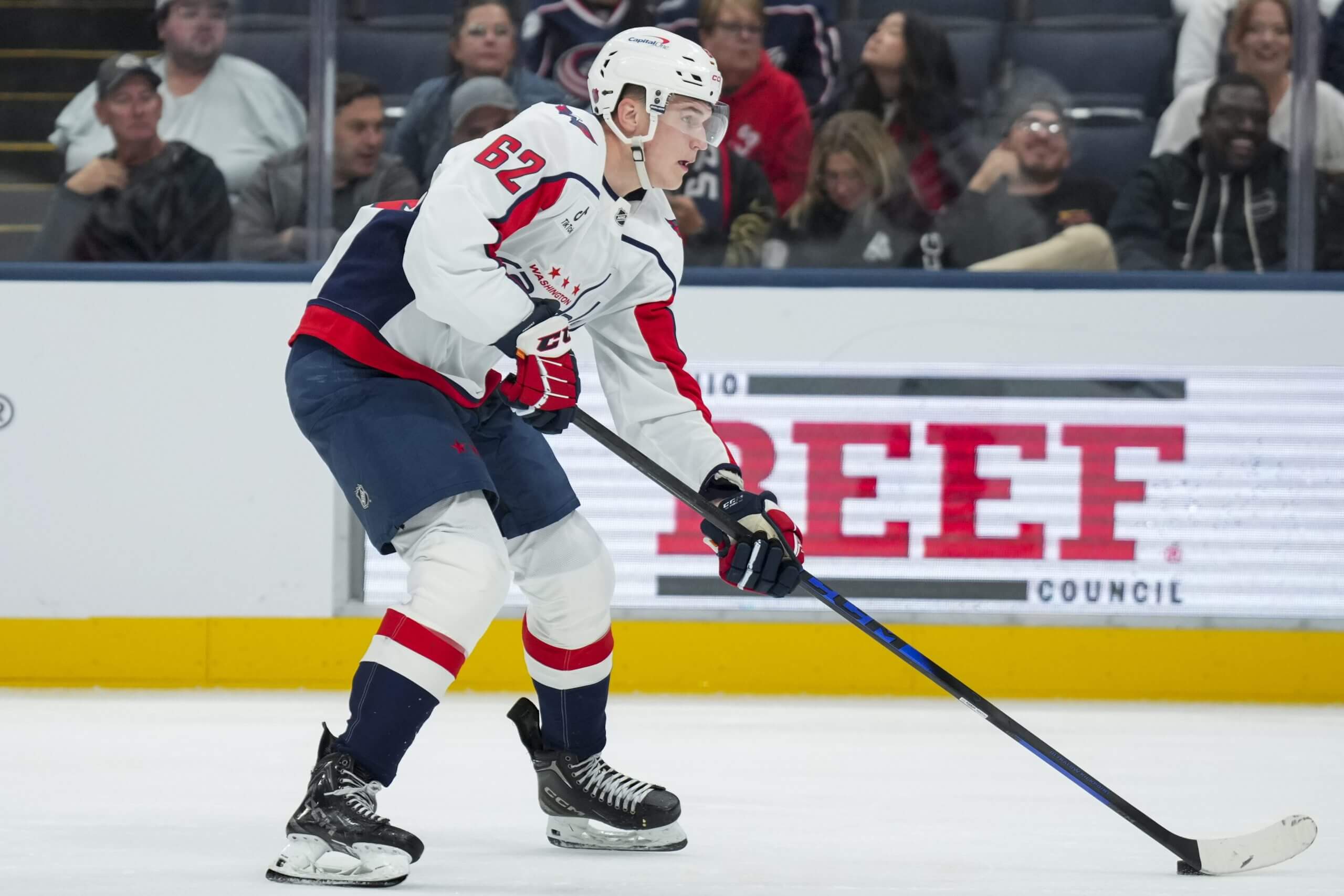
Kantserov emerged as one of the top young forwards in the KHL last year when, despite missing 20 games due to injury, he still finished second on Magnitogorsk in scoring with 38 points in 47 games. He took the league by storm this year, though. Wearing a letter, he led the KHL in goals (36) and broke its U22 points record (64) in 63 games to solidify himself as one of the top young forwards outside the NHL. And he did it playing as a full-time first-line center a year after he didn’t play a single game down the middle.
Pre-draft, Kantserov was also one of the more productive players in the MHL across two seasons, registering 61 goals and 120 points in 112 games at 17 and 18. He finished at No. 65 on my board when the Blackhawks took him at No. 44 in the 2023 draft but as I wrote at the time, “On talent, Kantserov belongs in the 50s here. (Between his size, his 2004 birthday, and the uncertainty surrounding Russian players at the time, I was cautious with slotting Russians that year.)
Kantserov’s a highly gifted, knifing player who can create for himself with his quick, adjustable hands, plus-level straight-line speed and lateral quickness, real one-on-one skill and attack mentality. But he can also finish plays as a shooter who is capable of playing off his linemates so that he can get open, be opportunistic and take pucks into his quick and dangerous release or comfortable one-timer. And while he’s short (5-foot-9), he’s well-built for his size (a strong 176 pounds), he’s a willing worker, and he has clear top-six NHL attributes — and potentially even some star power. He’s coming and Blackhawks fans are going to love him.
Photo:
Brian Babineau / NHLI via Getty Images
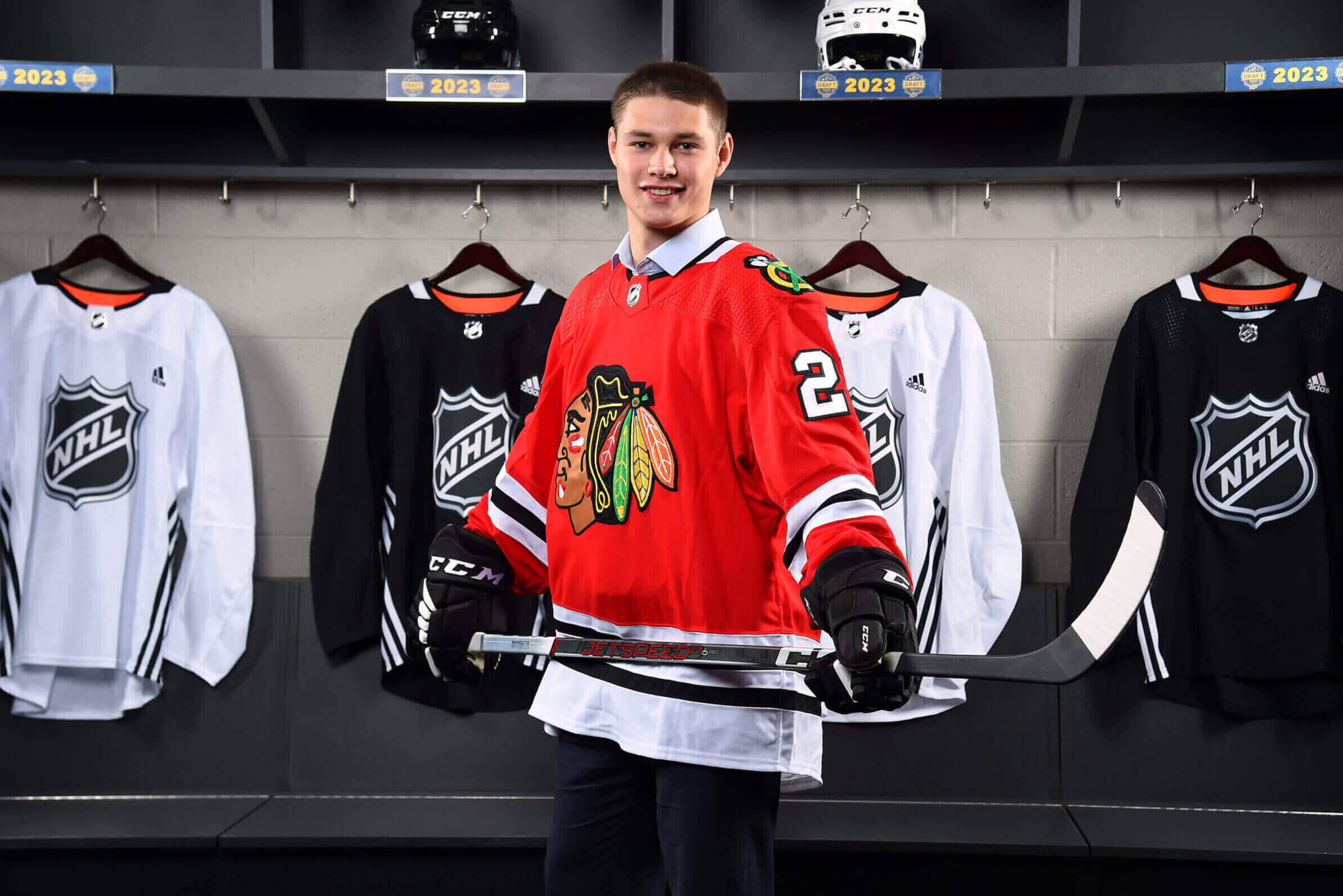
Zharovsky is a highly talented winger who scored some beautiful individual goals in the MHL last season and made skill plays in bunches, lighting it up in the second half after starting the year in a more limited role and playing his way to the second pick of the second round. He was streaky early on in those minutes but really began to make a ton of plays both at five-on-five and on the power play once he was elevated and started getting more touches. This season, he showed that his hot streak last year wasn’t a fluke, continuing to flash his individual skill at the KHL level. At season’s end, his 42 points in 59 games were third-best on Ufa and set the league’s all-time U19 scoring record, surpassing names like Evgeny Kuznetsov, Vladimir Tarasenko and Kirill Kaprizov. He was also the only full-time U19 skater in the league this year — no other U19 player scored more than two goals or four points, let alone 16 and 42 — and even its most productive U20 skater, beating Nashville Predators first-rounder Yegor Surin by five points.
He’s lean and needs to add some weight, and has started to do that; he’s now listed at 6-foot-2 and 176 pounds. Even so, he’s a slick puck carrier with a knack for taking pucks to dangerous areas and beating his man one-on-one. He has great hands and poise on the puck. Despite lacking strength, he’s a decent skater and will play through bumps to get to his spots. He can drift in games and can lack focus at times, but when he gets the puck, his eyes light up, and he has the skill to execute and make things happen at any moment. He has top-six gifts, and it’s rare to find a player with his talents outside of the first round.
Of note: He’s signed through the end of the 2026-27 KHL season at the moment.
Photo:
Maksim Konstantinov / Getty Images
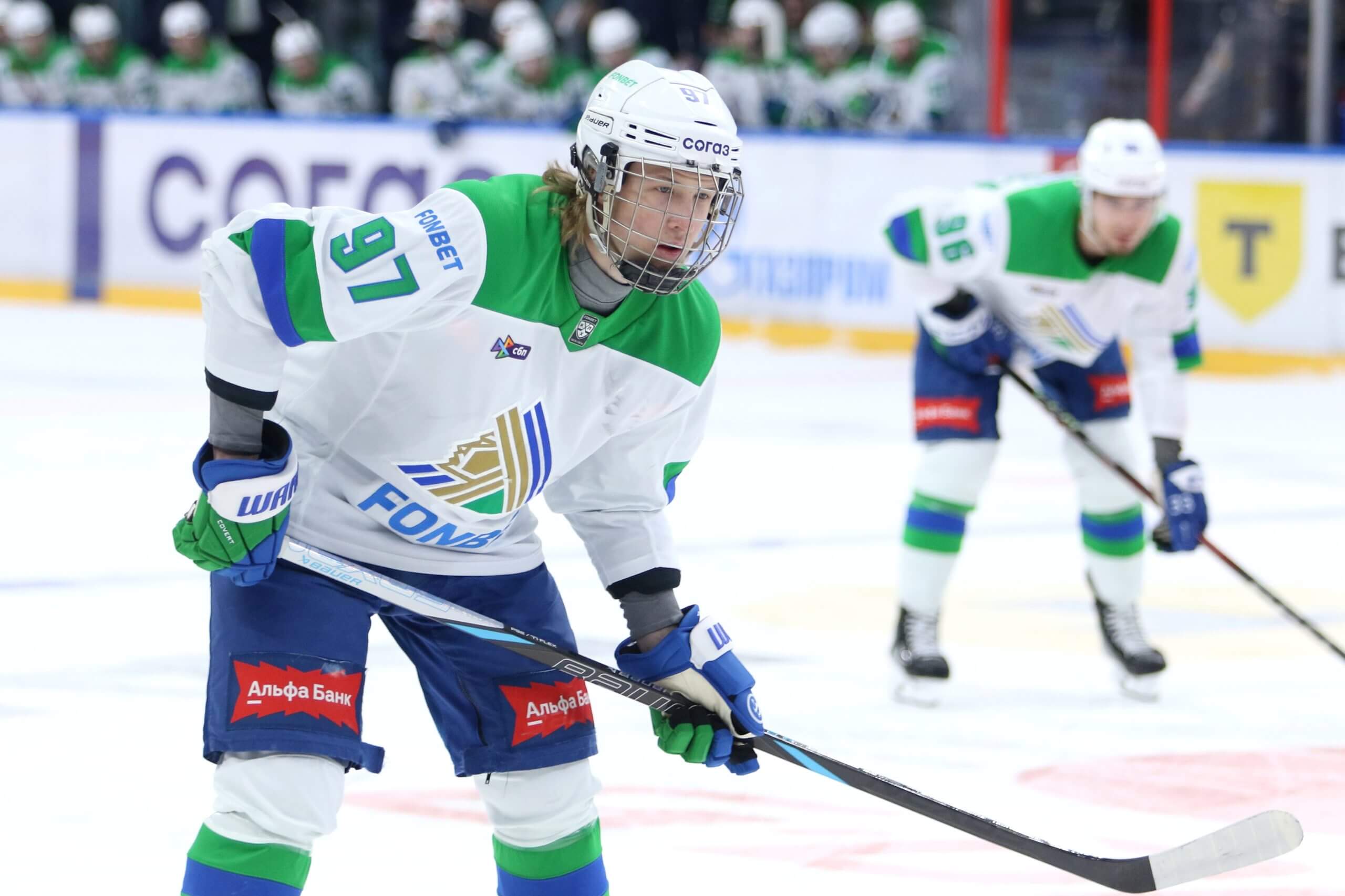
Yakemchuk’s rookie season in the AHL has gone about how I expected it would. He has been pretty productive on a poor Belleville team, but they’ve also given up a lot of goals, and he has been on for more of them against than anyone else on that team. His track record of production speaks for itself; Yakemchuk was one of the highest-scoring and most penalized draft-eligible defensemen in recent WHL history, breaking the rare 30-goal and 70-point benchmarks and sailing past 100 penalty minutes with the Hitmen (who missed the playoffs) two seasons ago. That’s a year after he was the only 2024 draft-eligible to make one of the WHL’s All-Star teams when he was named a Central Division Second All-Star, which was important considering he was only a couple of weeks away from being eligible for the 2023 draft.
I thought he was unremarkable at the 2023 U18 worlds, and he struggled in stretches at both the World Junior Summer Showcase and his first rookie tournament with the Senators, but an impressive first main camp with the Senators demonstrated his upside, and he’s always going to make plays. He has some highs and lows, though: after returning to the WHL last season, he had a good season and made some modest progress in a couple of important areas, but didn’t take a big leap forward there, either.
Led by his instincts, plenty of confidence and legit skill for a D his size, Yakemchuk generates a lot from the back end. While his game comes with some give and take, he has pro size, a pro shot, excellent one-on-one skill and hands, and an attack mentality that’s complemented by an active disposition to eagerly jump off the line or into the rush. He also has a developing sense for when to hold it and when to move it, which has been a work in progress for him over the years. He also protects the puck extremely well for a defenseman, which allows him to make the most of his decisions to involve himself in the play around the offensive zone, holding pucks past and away from reaching defenders and sometimes dazzling in extended sequences with the puck. It’s not uncommon to see him take a puck to the inside of the wall, beat his man off the line or go to the front of the net. And while he has work to do to refine his game and reads defensively, he has the size and tools (it never hurts when you’re a 6-foot-3 righty) to take the steps he needs to get there, and he plays really hard at both ends.
I would like to see his skating — which is fine going forward but heavy-footed in other areas and can burn him — improve, particularly from a standstill, where he can be a little slow out of the blocks. He’s not a natural athlete, either. There are games in which he dictates terms with his offense and physicality, really taking charge on the ice. If he can get a little quicker and continue to mature in his decision-making, he has high-end upside, especially offensively.
Photo:
David Kirouac / Imagn Images
Tier 4
Martin is a well-rounded, fearless, workhorse, pro-style forward whose combination of competitiveness and strength has endeared him to people around the OHL and NHL. He has played huge, all-situations minutes for the Soo the last two years, often clocking 25-plus minutes as a forward, and then wore a letter for Canada at U18 worlds and was one of their best players at both U18s and the World Juniors despite suffering a shoulder injury. He also made the Preds out of camp this fall, and while his numbers haven’t popped in his post-draft campaign in the Soo, he has been playing through the shoulder issue for much of it and played at a 39-goal, 86-point pace in his draft year.
He plays extremely hard, plays in the guts of the ice, his effort level and physicality get A grades and he stays involved in all three zones, constantly seeming to make things happen and have an impact on shifts and games. He’s strong on his feet and finishing checks, plays on instinct more than smarts, delivers some of the hardest hits I’ve seen in junior hockey and does it seemingly every game without being a dirty player. He has good hands and reflexes on tips and redirects around the net. He has some raw power and should continue to get even stronger. He has a B and C game that allows him to consistently impact games in a variety of desirable ways. While I wouldn’t call his skill or skating extremely dynamic (his feet are average from a standstill), he’s very talented, regularly attacking at and challenging defenders with his hands and middle-lane drive and beating goalies with his quick release (he has an NHL shot already). So he’s not just a worker type with secondary skill; there’s some play-driving and individual playmaking to his game as well. He’s going to have a long career as a productive up-and-down-the-lineup player in the NHL and should be an excellent and unique top-six forward (whether as a center or winger) in his prime. There’s some untapped potential yet with him and his development curve as well. He’s very early in it, and while he’s a quick skater and a very powerful player, both of those things still have another level. I don’t think there’s a more competitive, honest, stick-to-it, high-motor player in the game. He’s consistent, brings it every shift, can play the back post and net-front on the power play, and his teams miss his identity when he’s not in the lineup.
Photo:
Natalie Shaver / OHL Images
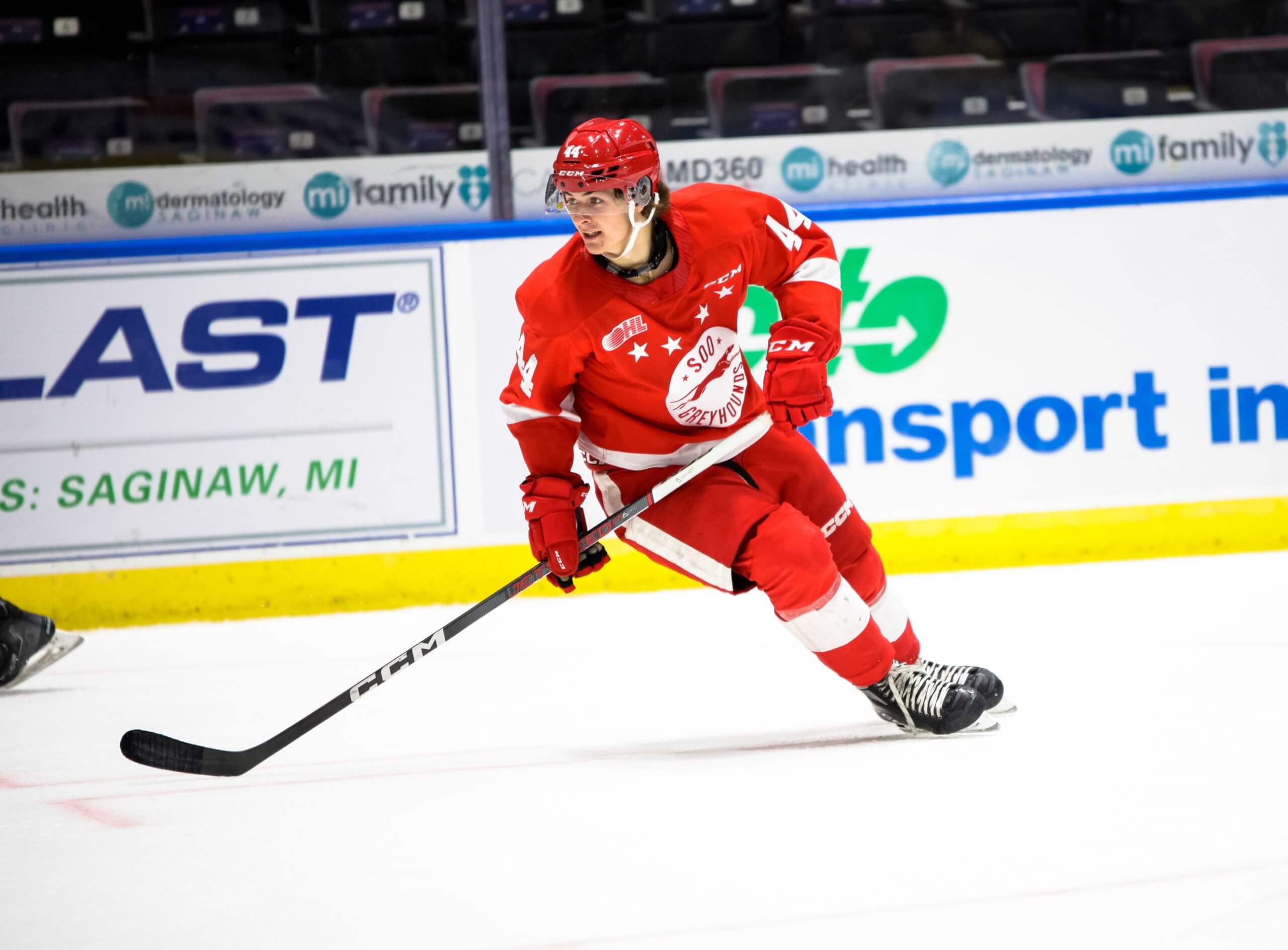
Sandin-Pellikka had a brilliant run in the SHL in the two years before this one, producing at near-historic rates as a teenager in both, winning an SHL title and emerging last season to play 20 minutes per game as one of the league’s most productive defensemen regardless of age before coming over. He also won back-to-back directorate awards as the top defenseman at the World Juniors, including as Sweden’s youngest defenseman the first time he did, too. He faced some predictable challenges in the NHL this year before his recent demotion to the AHL, but none that are out of the ordinary for a D his age.
Sandin-Pellikka is an individually talented, competitive 5-11 defenseman with natural scoring instincts and the tools to execute. He has really good edges and mobility and has shown improved speed in straight lines to pull away from chasers, with more room for growth there still. He walks the line to get shots through at a high level, wants the puck in the offensive zone and has the skill and shot to make things happen when teammates find him off the point or as the trailer off the rush, which he often activates into. He keeps his head up in the neutral and defensive zones and is a confident puck carrier on exits and entries. Though he’s not big, he’s athletic and he plays hard and physical and engages in battles in the defensive zone with some sneaky strength. He has a good stick. He does a good job maintaining gaps and matching opposing forwards step for step skating backward, and times his close-outs and pinches effectively.
He can really shoot it with a pinpoint accurate shot, a wrister that comes off hard and an eagerness to put pucks on net from the point. He has comfortable handles. He walks the line looking for his shot and chances to take space off it to attack into better spots, but he’ll find open teammates cross-ice through seams as well and is seeing the ice better and better. There are times when he can wait too long to make his decisions, and I wouldn’t call him super creative or a highlight-reel type, but he’s very talented, he makes good choices more often than he’s careless, and he has progressed really rapidly.
He projects as a high-end offensive defenseman and a defensively capable one at five-on-five. When he’s on, he can control the game in all three zones and really drive shot creation. Defensemen of his size have struggled in recent years to make the same impact in the NHL that they made at lower levels, but I think ASP gets there.
Photo:
Rick Osentoski / Imagn Images
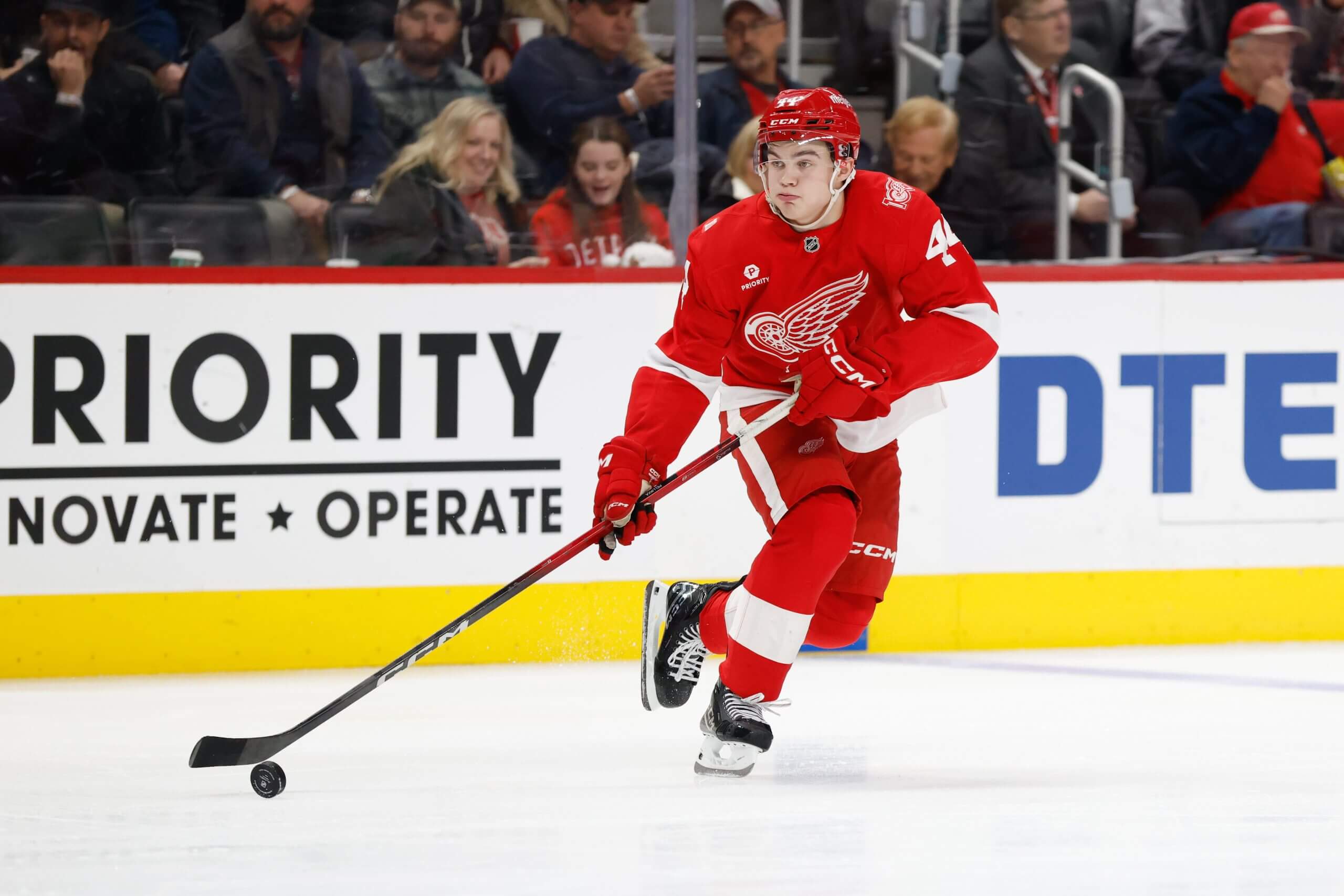
Every team wants long defensemen who can really skate, and Simashev checks both of those boxes as a mobile 6-5 lefty. He’s a rangy, smooth-skating defenseman who played 18 KHL games in his draft year, was great in the MHL playoffs and played full-time in the KHL in 2023-24 and 2024-25 to good results for a defenseman his age. Though his numbers didn’t take a step last year, they have in his first year in North America, where he has played to a point per game in the AHL — an important step for a player who has always played to good defensive results and featured on the penalty kill. Though his results in the NHL have been just OK early on, he’s only 21 and has already defended at a strong level in two top pro leagues. He’s also comfortable playing both sides.
It’s hard not to like the way he can play in transition, whether defending the rush with his feet and reach, skating back to retrieve pucks or skating through neutral ice/out of the defensive zone in possession. He has shown improved comfort and smarts in control, even if his play with the puck and offensive game are never going to be his calling card at the NHL level. He gaps well and can take away a carrier’s space. He has a good stick and defends more with his length and feet than body. I’m still not as high on him as some others are and didn’t feel he was a No. 6 pick in 2023, but he has most of the more important makings of a potential top-four defenseman who can play minutes and drive results with his defensive play, length and skating.
Photo:
Nick Turchiaro / Imagn Images
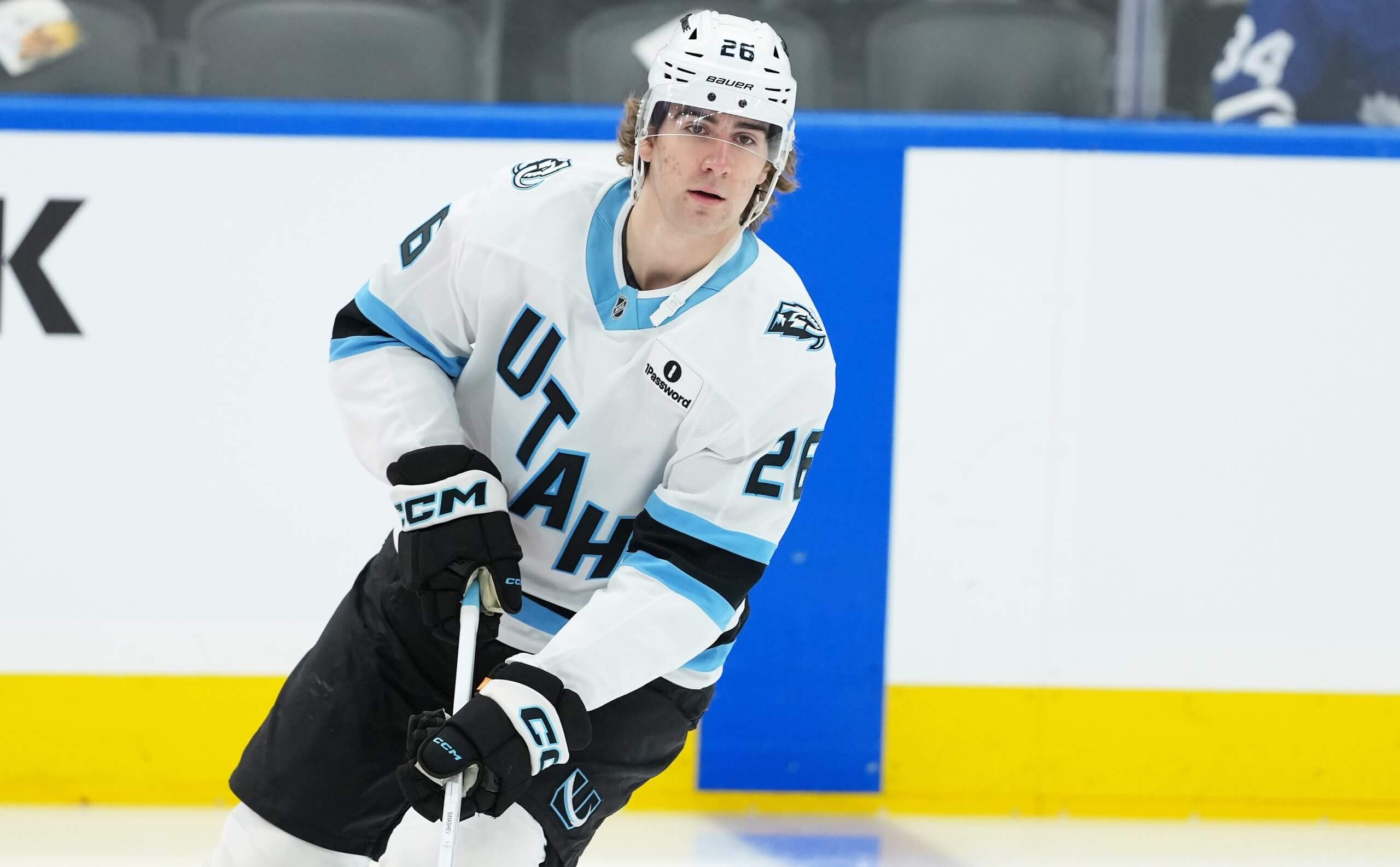
Mrtka is a towering right-shot defenseman who skates extremely well and played huge all-situations minutes last season for Czechia at the Hlinka, Seattle in the WHL and the national team again at U18 worlds in Texas, where he was outstanding in the tournament opener against Team USA but didn’t stand out in the same way in Czechia’s other games. After joining the Thunderbirds in his draft year, he was phenomenal, playing to nearly a point per game on a low-scoring team, logging an average of 27 minutes and often 30, and going over the boards first on both the power play and penalty kill. This season, after starting in Rochester, he has had a good year back with the Thunderbirds and played at the World Juniors for Czechia, where he missed the start of the tournament due to injury, but I wouldn’t say he has taken a step. He has a very compelling combination of tools, though.
Mrtka can transport pucks down ice, activate and join the rush, walk the line and even side-step pressure in control at 6-foot-6. He shows poise and comfort on the puck with a willingness to hold onto it and make a play in small areas, though I think he can be indecisive at times. He has a good shot that he keeps low and on target and can occasionally really attack into, which I’d like to see him do more of! He’s super smooth moving around the ice. He defends well with his long reach and standout skating ability. He has a good stick, and with his length and mobility, his defensive upside is high. I’ve seen him play physical and impose himself that way as well, though there are scouts who want to see him play a little harder at times and coaches may try to push him that way at the NHL level.
It’s also important to remember that Mrtka is a June birthday and already doesn’t have some of the kinks you expect a D his size and age to have. I would like to see him take charge a little more on both sides of the puck at times, given the tools — he reminds me a little of Owen Power in some ways — but the upside is real, and he’s going to have a long career.
Photo:
Brian Liesse / Seattle Thunderbirds
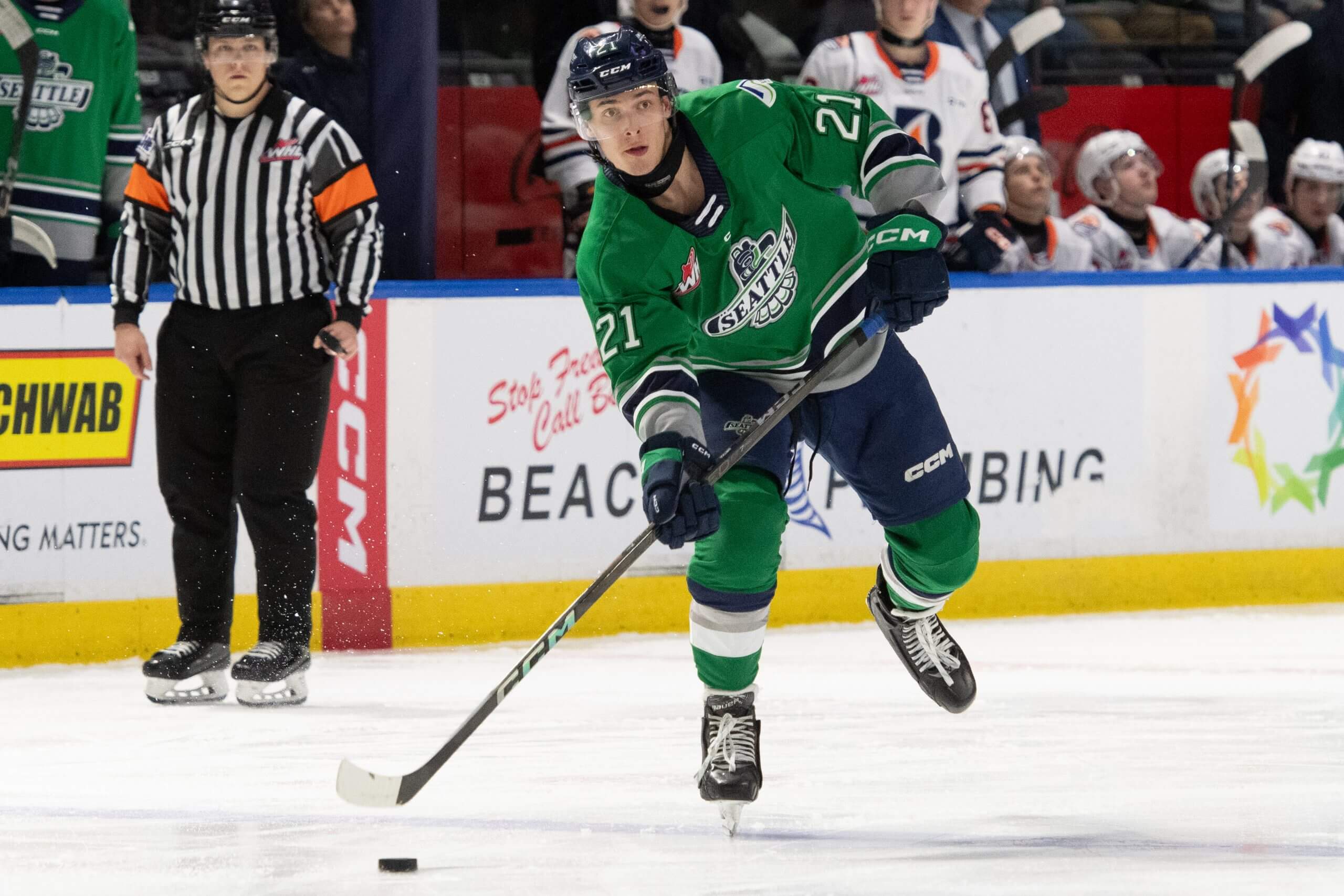
Smith, the No. 2 pick in the 2022 WHL bantam draft, had a solid 16-year-old season with Tri-City and made an impact in his minutes and role at the Hlinka, playing 18-19 minutes per game for Canada’s gold medal-winning squad. In his draft season last year, he tried to play a more aggressive and ambitious offensive style and drove more offense while playing big minutes (23-24 per game) for the Americans and committed to Penn State. As a freshman with the Nittany Lions post-draft, he has averaged more than 20 minutes per game, runs the power play and contributed positively at five-on-five. I know the Blue Jackets are very excited about the year he has had.
I’ve had a bit of a tough time with him and his game at times over the years. It can be pretty high-event hockey at both ends at times (for better and worse), and while he has all of the physical attributes and has made some high-end plays in junior, I’ve questioned his hockey IQ both in moving pucks under pressure out of his zone and in defending. I thought he struggled at times with his decision-making and man-to-man defense at U18 worlds as well, and though he had a fine tournament on the whole, I think a little worry within Hockey Canada about his reads kept him off the World Junior team this year.
There are a lot of appealing attributes, though. Smith is a big, athletic, excellent-skating left-shot defenseman who plays hard and can affect play in a variety of ways. He can skate pucks through the neutral zone. He has good edges opening up in the offensive zone. He’s strong through his pushes as a skater, regularly beating the first layer of pressure laterally. He walks the line proficiently and gets his shots through, opening up well. He can make plays in open ice and shoot the puck. He’s capable of playing the game firmly and even boldly at times, and has transition value both ways. He’s competitive and strong. But his reads and processing still need some fine-tuning, he can skate himself into trouble, he can take bad routes defensively, and I’m not sold on him as a PP1 guy up levels (I think he’s more likely a PP2 type).
He has most of the makings of a top-four NHL defenseman, and he still has some untapped upside. I just haven’t been able to fully fall in love with his game. He should make next year’s World Juniors team and could really be something coming out of college if he stays 3-4 years, which I think he should.
Photo:
Michael Miller / Getty Images
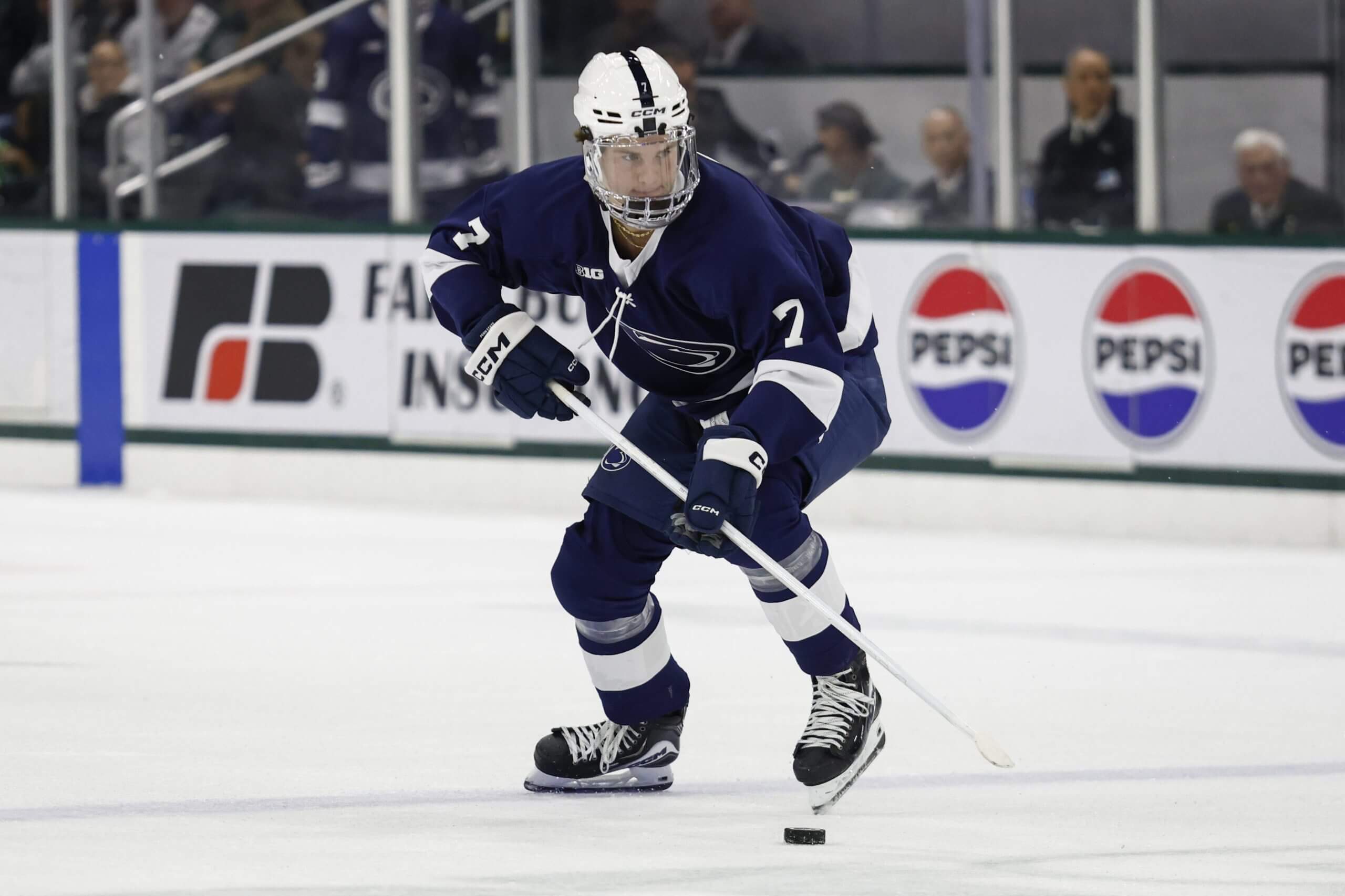
Silayev is a unicorn 6-foot-7 defenseman who surprised some people with a hot start offensively in the KHL in his draft year and rose to the top of the 2024 class playing legitimate minutes for one of the KHL’s better teams for most of the year (including in the playoffs) — an extremely rare feat for a 17-year-old. His 11 points in 63 games broke the league’s under-18 scoring record (Vladimir Tarasenko had 10 points and Kirill Kaprizov and Evgeny Kuznetsov each had eight at the same age). He played on the power play, consistently registered multiple shots per game and even played both sides. The last two seasons haven’t kept climbing along that meteoric trajectory at the same pace, though, and there’s not as much offense as we saw early on in his draft year for a stretch (largely due to average smarts). He’s still averaging only about 14 minutes per game, and while it’s his third KHL season, we have to remember he’s just 19. I do think it’s important that he makes the move to North America when his contract expires at the end of May. Silayev remains a unique prospect with a high defensive ceiling, but he hasn’t progressed over a period of time.
He’s an excellent skater who walks the line with ease, drops back onto his heels comfortably and pushes forward to either carry pucks up ice, close gaps or disrupt a carrier with an active stick. He has more steps to take in his decision-making on the puck (I find he’s a little too trigger-happy — he actually shows good poise and comfort when he doesn’t rush), his shot (which he gets off in volume and does a good job putting on target, but will definitely need to add power as he gets stronger and works on it) and his ability to really impose himself with his size even more than he already does (which he really learned to do in his draft year, leading Torpedo in hits). He’s disruptive in zone defense and hard to beat off the rush because of his length. There’s still plenty of room for continued growth and development within his game. I see the appeal of Silayev and the projection. His upside is high, especially if he can develop his offensive game further and maintain his mobility as he gets heavier.
Photo:
Maksim Konstantinov / Getty Images
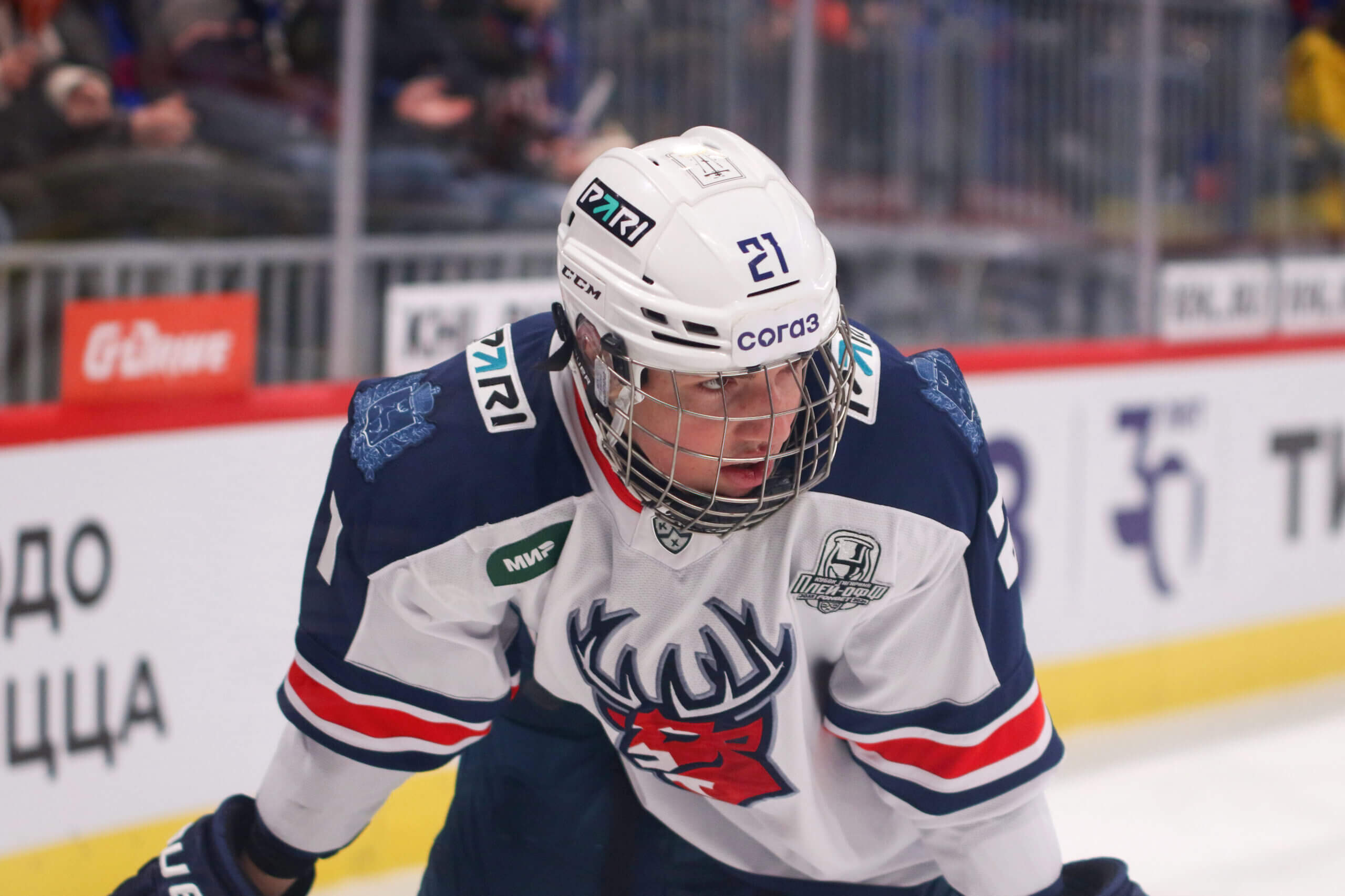
Carbonneau was on the older side of the 2025 draft class as a November 2006 birthday, but he broke the 30-goal mark as the Armada’s leading goal scorer and second-leading point-getter two seasons ago and then broke the 45-goal mark last year before scoring three goals in five playoff games in a first-round loss to Sherbrooke (in a series I thought he was owed more in; he averaged 5.6 shots per game). He also played well in the CHL-USA Prospects Challenge, which I think is important for Q players to demonstrate. This season, after impressing at Blues development camp and considering the college path before ultimately returning to junior, he broke the 50-goal and 300-shot marks in the Q, leading the league in both.
Carbonneau is a talented offensive-zone player with naturally quick hands, a quick release that can beat goalies from midrange and change angles on defensemen and strong athletic tools as a solid and sturdy skater (though he could get a little quicker) with a pro frame. He can challenge defenders and threaten offensively on or off the puck. He has good outside-in hands pulling pucks across his body. He has a good wall game and can make plays for himself or play in and out of give-and-gos; he does try to beat guys one-on-one a little too much, but often pulls it off. He’s a volume shot generator without sacrificing shot quality, and he has really grown into the body of a power forward, with a very strong physical build and an ability to play through contact. He’ll also finish his checks. When there’s an opportunity inside the offensive zone, whether it’s off a broken play or in tight, he’s usually there to capitalize and make something happen.
There have been minor questions about his play style and some inconsistency in some of his habits/attitude, and I think those things kept him off the Canadian World Junior team, but I don’t think there’s much fire to that smoke, and I think he’s mostly just a very confident player. And he’s quite skilled — skilled enough to project as a strong and productive top-six forward if he continues to develop more pace and consistent habits off the puck.
Photo:
Sebastien Gervais / CHL
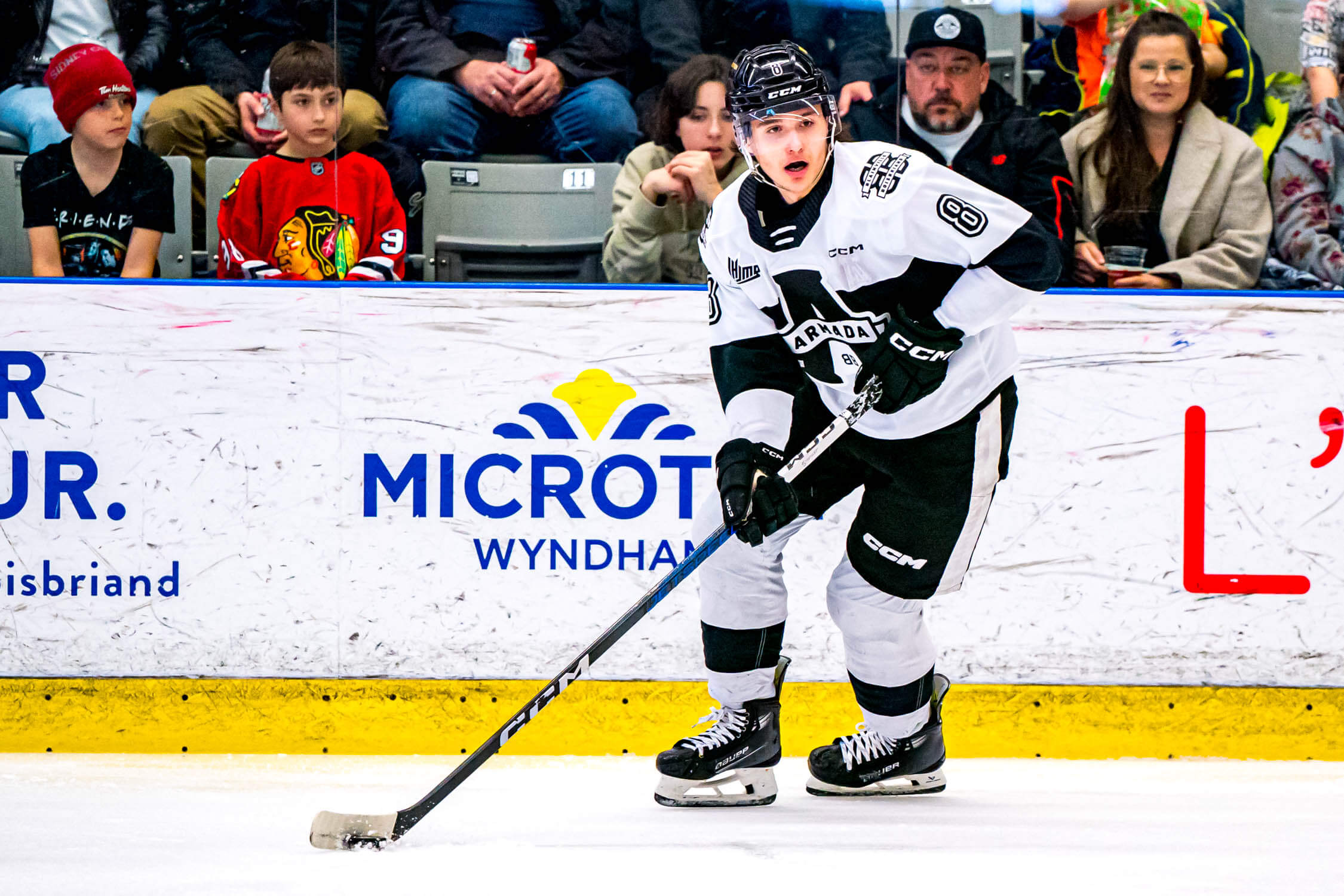
This will be the first and last time Ritchie appears in the Islanders’ pool ranking (his three AHL games this season narrowly resulted in his inclusion on this year’s list), as he has looked like a legitimate NHL player and has already carved out a niche at the side of the net on the power play.
Ritchie is the complete package and was one of the top players in the OHL in his last two seasons of junior. From my first live viewing of him five Octobers ago in St. Catharines when he looked like the Generals’ most talented forward in just the second game of his OHL career; to his four-goal, seven-point series in Oshawa’s six-game first-round defeat against the Kingston Frontenacs four years ago; to his Hlinka performance three summers ago; to Langley at the CHL Top Prospects Game, Switzerland for U18 worlds and continued live viewings in Oshawa right into the OHL Final last year (he didn’t elevate at the World Juniors for Canada but I thought he was fine there), Ritchie consistently impressed me before he turned pro this year and the continuation of that strong play comes as no surprise.
On the puck, he’s a multifaceted playmaker who often looks like the player who was the No. 2 pick in the 2021 OHL Priority Selection and an OHL First All-Rookie Team member. Off the puck, he’s a reliable two-way center who defends and supports play but can also play off his linemates offensively without taking up too much oxygen on his line.
He has quick hands (he’s prolific on breakaways/in the shootout/around the crease), a dangerous curl-and-drag wrister, decent cleverness to his game as a passer (whether through seams or often blind), slick skill in traffic and out wide sliding pucks under sticks and rotating through coverage or past checks for a player his size, and a knack for finessing pucks into spots for himself or his linemates to skate onto. He has also begun to fill out his frame (though his shoulder surgery did hurt a key summer for him post-draft), which has helped turn him into a diligent, relied-upon two-way player off the puck. He’s also strong in the faceoff circle, makes those around him better and has picked up a bit more of an acceleration gear from a standstill (and his skating was completely fine before that).
He takes smart routes with and without the puck, he has become a reliable three-zone player and the skill is there (he has superb puck control). He does a good job finding inside ice in possession (or off it). He’s also a very selfless player for his age who is quick to change in the offensive zone and will sooner make the right play than try to overdo it. I’ve noticed an uptick in his physicality as well, and he’ll forecheck and finish his checks. I’ve liked the progress I’ve seen in how strong he is over pucks and getting up and under sticks to take them back in pursuit or go to the net for tips (which he’s actually quite dexterous on) instead of always trying to free himself for his shot. When he keeps his feet moving, he’s an impressive player. I’ve always seen second-line potential and his ability to play center and the wing helps.
Photo:
John Jones / Imagn Images
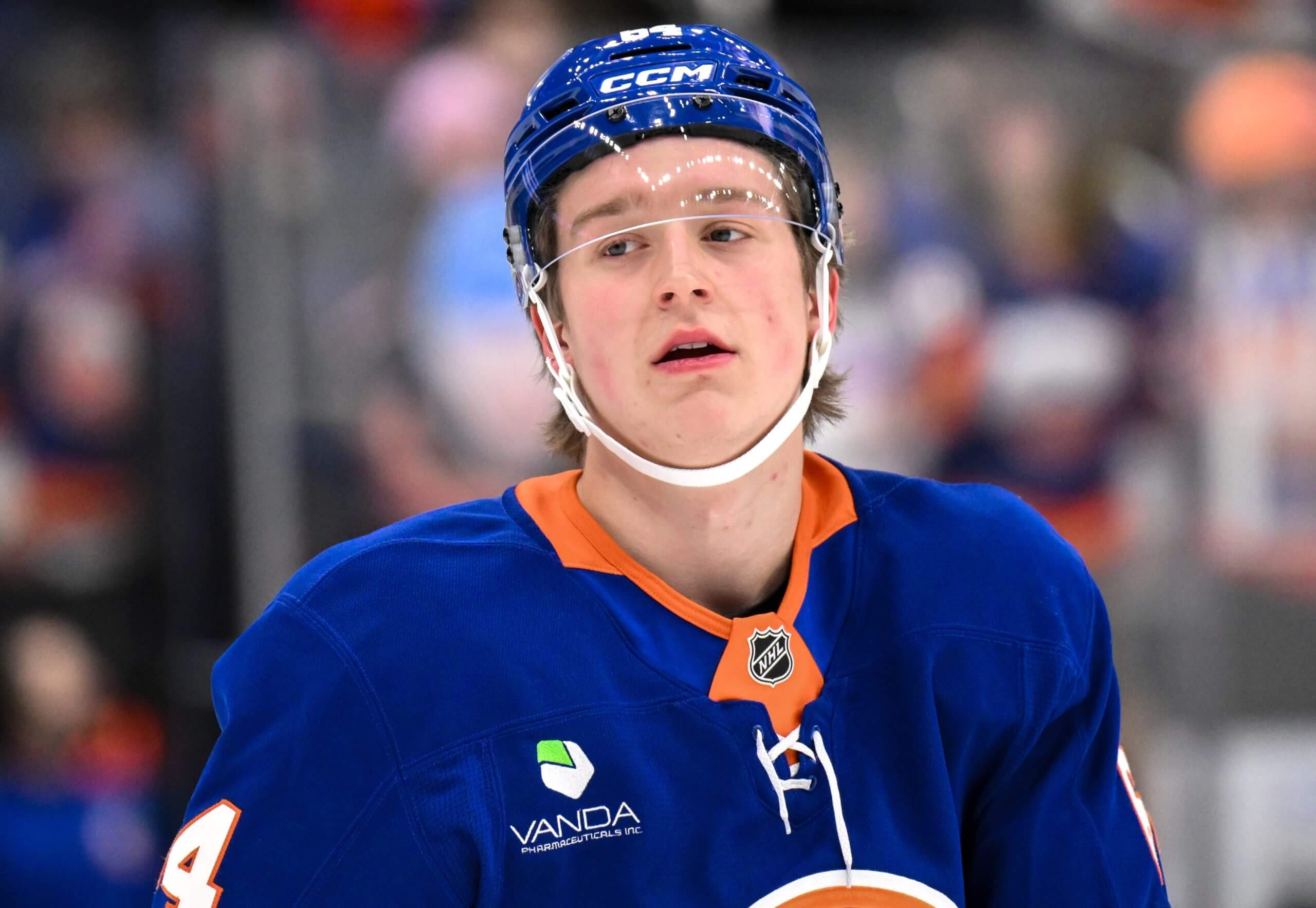
Dvorský’s June birthday made him one of the younger players in the 2023 draft, but he has already accomplished a lot at an early age, and it feels like he’s older than he is because of how many international events he has played in and how much pro experience he has. He led a Slovak Hlinka Gretzky Cup team that featured Juraj Slafkovský in scoring as an underager, was well above a point per game in Sweden’s J20 level four years ago and produced at a strong age-adjusted clip in his draft year in the second-tier HockeyAllsvenskan. He drove the bus on a Slovak team that exceeded expectations in Switzerland at the 2023 U18 worlds and played in five World Juniors, which concluded with a strong showing as their captain in 2025. And though he didn’t play much in the SHL to start his post-draft season two years ago and had to move to the OHL, he was a force on Sudbury’s unstoppable top line and would have easily broken 50 goals and 100 points had he started the year there.
He also had more success at the pro level in the AHL in 2024-25 than he did the prior year in the SHL, finishing third on Springfield in scoring with 47 points in 64 combined regular-season and playoff games as a 19-year-old rookie, good for second in U20 AHL scoring. And he has continued to build on that this year, establishing himself at the NHL level and impressing for Slovakia (including in some big moments) at the Olympics.
The big question with Dvorský for a while was whether he’d be a center or a winger long-term. After noticeably adding some muscle and a little more speed — his skating still isn’t a strength, but he works — he has shown he can stick in the middle. Though he has only won about 47 percent of his draws this year, he has taken more than 500 and was strong in the dot at lower levels. He has the roundedness, defensive awareness and positioning, habits and stick detail already, too.
He uses his body to gain inside positioning on defenders and shields pucks from defenders extremely impressively. I don’t think his skating is prohibitive. He has shown more fire and competitiveness as he has developed. His gifts in control of the puck are real — I actually found it weird he was cast as a high-floor 200-foot player as his draft year progressed because while his energy and detail are certainly strengths, I see legitimate finesse skills, point-production upside and power-play tools. He can run the wall or the point on the PP, effortlessly picking coverage apart and feathering pucks through seams. He has excellent touch and weight on his passes (he’s a great saucer passer off his forehand and backhand in particular) and does a beautiful job waiting for lanes to open. He trusts his one-timer and his wrister from midrange. He has quick hands and instincts, with standout puck control and shading — and he uses them to take pucks to the middle. I like him in give-and-gos and in individual attacking sequences inside the offensive zone.
Dvorský is a highly talented and intelligent playmaker who can threaten coverage in a variety of ways, whether that’s carving through in control at his own pace and finishing cleanly from the home-plate area, sliding off coverage to find pockets of space to get open into, or drawing coverage and facilitating. He does a wonderful job hanging onto pucks and waiting for options to open. He’ll occasionally force things, but he usually finds his way through with his skill, strength on pucks and smarts. His statistical profile is really strong, too. I’ve always seen second-line potential and a middle-six floor with clear power-play upside, and that’s still where I’m at.
Photo:
Joe Puetz / Imagn Images
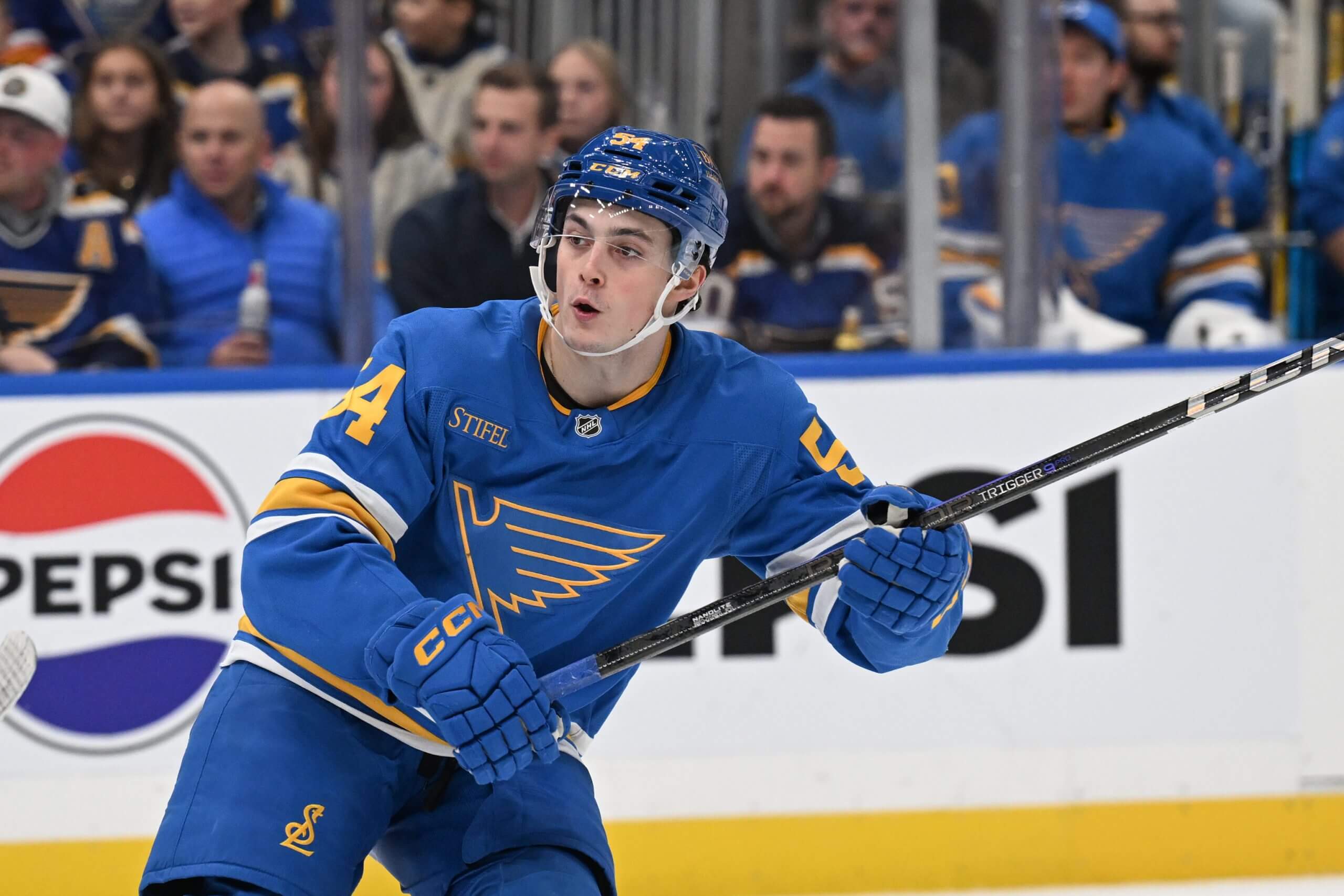
One of my favorites from the 2025 draft class, Reschny broke 90 points last season and was sensational for the Royals in the playoffs, taking his game to an entirely new level and finding the scoresheet in every game. This season, though he scored just six goals for North Dakota as a freshman, he played 18 minutes per game for them as an 18-year-old center, was a point per game, won 56 percent of his faceoffs, and even featured prominently on the penalty kill. Entering this week’s Frozen Four, his 35 points in 35 games are second-most on the team and one point back from the lead despite only shooting 8.8 percent. He also got better as the World Juniors went on and had a strong medal round, playing the bumper on the PP for Canada and making some plays at five-on-five in a depth role. I expect him to be a go-to guy on next year’s team.
He also impressed at U17 worlds and the Hlinka, and both Victoria and North Dakota have relied on him to create offense and carry the load. In both of his WHL seasons, his linemates had career years playing with him. Last season, he led the Royals in scoring while playing to team-best goal differential results (plus-42), really driving play at five-on-five and being a top penalty killer. Some were starting to question if he was a first-rounder after a slow start in the fall, but after a quiet first game at the CHL-USA Prospects Challenge, he went bar down for the series-clinching 3-2 goal with just over a minute left in the second game and was as hot as any player in the WHL down the stretch before stamping his season in the playoffs.
He’s a player I’ve really enjoyed watching over the last couple of years. He’s highly skilled but also highly competitive, and has driven both play and creation as a 5-foot-11 center who is strong, involved and committed in all areas of the ice. He has a motor and defensive zone know-how and commitment, but he’s also a natural playmaker, with soft skill under pressure and with limited time and space. He creates chances for himself and his linemates as a natural handler, capable finisher (he has a nose for the net and was owed more in the goal column this year) and passer (he sees it at a very high level). He will then work off the puck and takes pride in his play in all three zones. He’s one of the best 200-foot players in this class and also one of its smartest offensive players.
Though some scouts wonder about his first three steps, I think he’s a good skater and certainly a better one than he gets credit for, and I have no issues with his speed or pace whatsoever. He has very quick hands. He’s stronger on pucks and in battles than his height might suggest at a glance, with a thick lower half and an ability to protect pucks and shed contact low in the zone. He plays an excellent, trustworthy, dependable and consistent three-zone game. He has the IQ component on both sides of the puck. He has finesse on the puck and a natural shooter’s shot, with an ability to create angles around sticks and feet or place pucks through them into space for himself or his linemates. His hands and feet also move in unison, giving him dimension one-on-one, even if he’s not a burner out of the blocks.
I think he has a chance to be a heck of a top-nine player in the NHL, and I see a little Seth Jarvis/Nick Suzuki in him. I’m higher on him than most, though.
Photo:
Matt Winkelmeyer / Getty Images

Gridin got off to one of the hottest starts in North American junior hockey as an import in the USHL in his draft year and continued to produce all year, leading the USHL in scoring with 83 points in 60 games. That’s pretty uncommon for a draft-aged player and is usually reserved for first-round locks. I didn’t quite have him there (he ranked No. 38 on my final board) but the Flames did, and he then made the move from Muskegon to Shawinigan last season. Though he got off to a bit of a slower start in the Q, his production took off as the year progressed, and he finished with 44 goals and 96 points in 72 combined regular-season and playoff games, as both the Cataractes’ leading scorer and goal-differential leader. He has exceeded expectations for a 20-year-old late-first-round pick in his first pro season as well, performing as one of the Wranglers’ top forwards in his time in the AHL and establishing himself as a top-nine, PP1 winger with the Flames.
Gridin has a desirable makeup, developing athleticism, skill on the puck as a 6-1 winger and a quick, NHL look to his release. He can play a north-south direct game and an east-west one with a little more poise. He regularly tries and pulls off difficult plays on the ice. He has shown he can snake his way out of trouble or play pucks through or past defenders, but he can also play off his linemates as more of a quick-strike option. Part of that is a credit to his ability to think and adapt quickly on the ice: I’ve seen him lift his head from a pass reception and make several instinctual, no-panic plays under immediate pressure in a split second. He has good size and good enough skating. He has also taken positive steps away from the puck to round out his game — his B game was once a concern, but no longer feels like one. He’s not going to be a first-line player on a contending team, but he has second-line skill and offense.
Photo:
Sergei Belski / Imagn Images
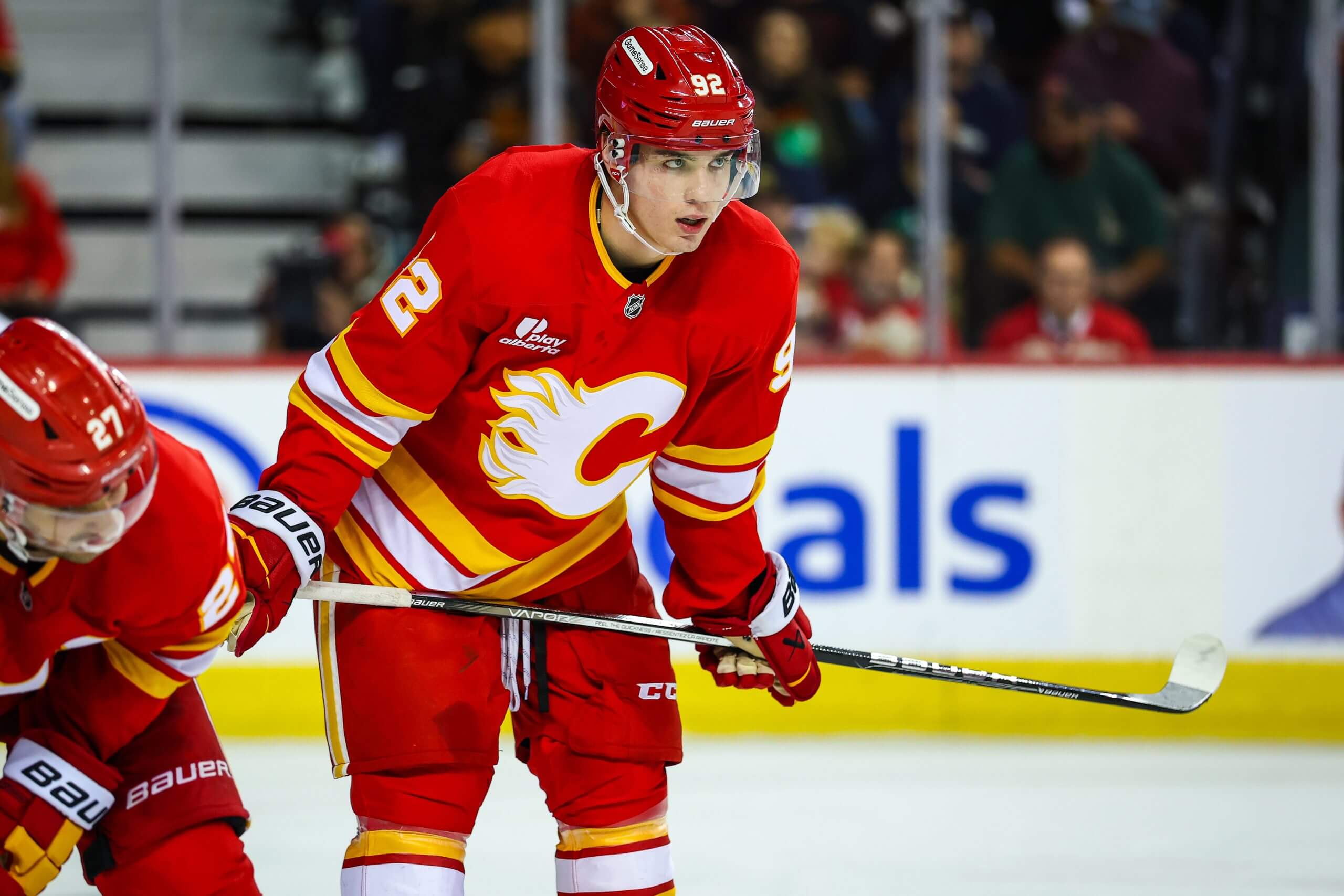
I have a lot of time for Eklund, but most do. He’s a 2006 who played 30 pro games in the second-tier HockeyAllsvenskan two seasons ago, registering 10 points and looking like he belonged. He then took another step last season, producing regularly at the pro level on a Djurgarden team that earned promotion into the SHL and impressing as one of Sweden’s better forwards at the World Juniors. He also stood out on a team that needed him to be an impactful top-six player as a 2025 draft-eligible at U18 worlds two years ago and had a strong World Junior Summer Showcase leading into last season. This year, he was a top-nine regular in Djurgarden’s first year back in the SHL and finished fourth among U20 skaters in league scoring with 24 points in 43 games. He also had a good, relied-upon second World Juniors without being dominant, saved his best game for the gold medal game, and got off to a strong start in the SHL playoffs.
The younger brother of Sharks first-rounder William Eklund, Victor gets above-average grades for his smarts, skill and skating, but he’s really a standout competitor who works and plays extremely hard for a 5-foot-11 winger. He wins races. He keeps his feet moving. He’ll make effort plays in key moments. He gets inside body positioning. He finishes his checks and battles. He can play the bumper or the flank on the power play. He has great edges and handles, and a quick and accurate wrister. He has feel on the puck and is a slick saucer passer. And he plays an intuitive, heady game on and off the puck, but can also be a go-getter who relies on timing and instincts. I think he has the tools to develop into a nice top-six player in the NHL. He’s a smallish winger, but he has proven through his motor, skill, good feel for the game and determination that he can still be a driver. He uses Travis Konecny as his comp, and it’s a fitting one — though he’d be an absolute best-case outcome. He’s a very good, likable player who is going to have a long career.
I just want to see him score a little more (he had six goals in the SHL this year).
Photo:
Steven Ellis / Daily Faceoff
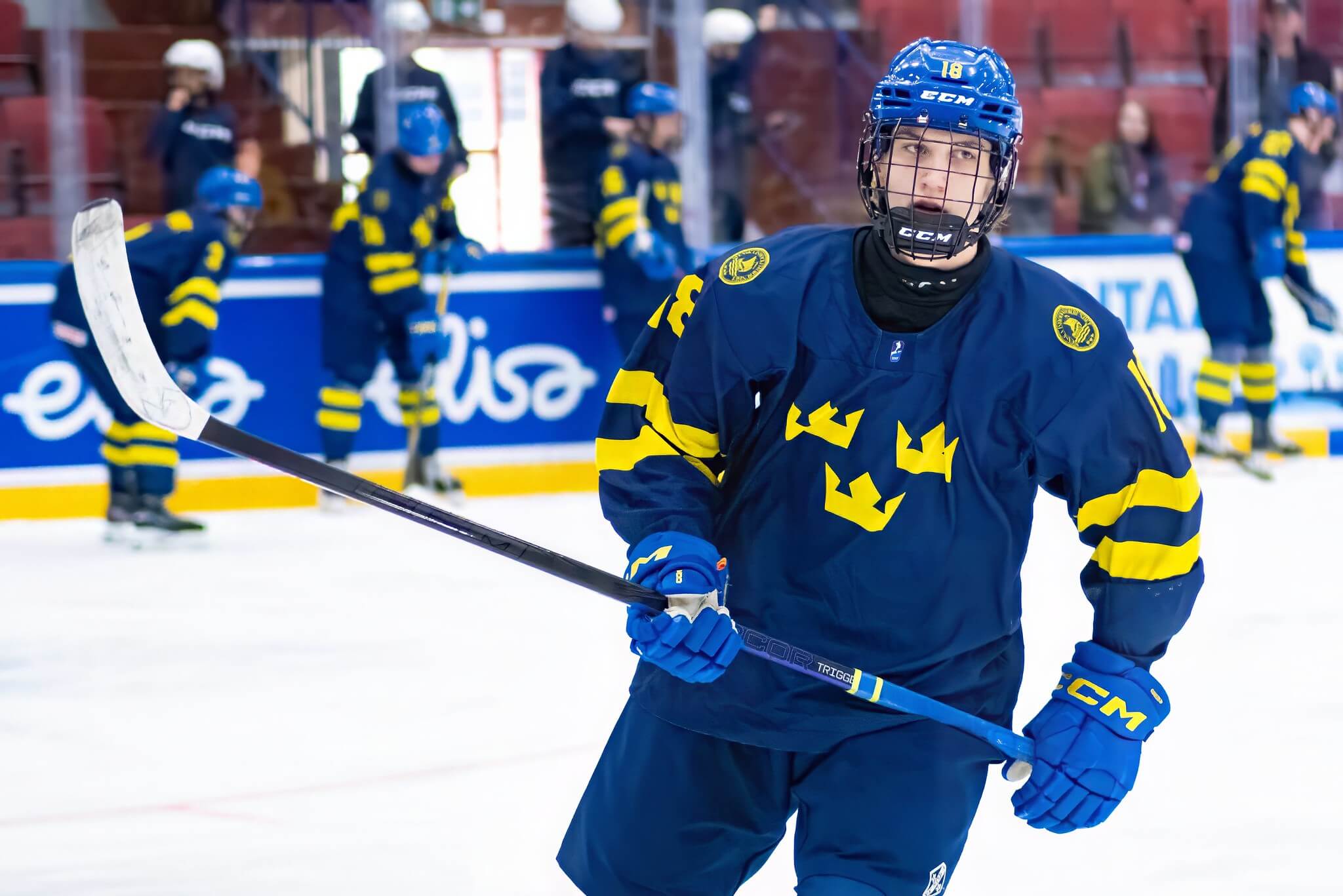
Chernyshov is a November 2005 who has progressed in line with his older age. He established himself as a point-per-game MHL player and scored his first KHL goal (at 16 years and 352 days, he was actually the 11th-youngest player to ever play in a KHL game) three seasons ago and bounced between the MHL and KHL in his draft year, showing mostly well in limited usage with Dynamo Moscow’s pro team and registering 28 points in 22 games when he played with his peers. At the junior level, I felt he created more looks than his production suggested in the first half of his draft season. Then, in the second half, the points really started to fall and his production elevated back to where it belonged to reaffirm his first-round merits for me (he finished No. 23 on my board when the Sharks selected him with the first pick of the second round at No. 33 after he was unable to showcase himself at Gold Star’s pre-draft camp due to, of all reasons, a severe sunburn he got in Florida). After undergoing shoulder surgery a couple of months after the draft, he then missed the first half of his post-draft season before returning and lighting it up with the Spirit in the OHL, registering 21 goals and 61 points in 28 combined regular-season and playoff games (he also had two points in three AHL games at the end of the year), and looking more like a top-20 talent than a top-40 one. He has continued to look like that in his full first season of pro hockey in North America this year as a 20-year-old as well, showing top-six quality in both the AHL and NHL in my opinion.
Chernyshov is a big, strong (6-foot-3, about 200 pounds) winger and modern power-forward type where driving is a part of his identity but not to a bullish fault as his only focus and his skill/finesse might take on greater emphasis. He plays a straight-line game and has the individual skill and a quick release to go at defenders and make plays off the rush or finish from the slot with a quick, one-touch shot in zone. He’s a smooth enough skater and his stride has some real power, which complements his impressive rush package without needing a dynamic burst. Add in a relatively committed game off the puck (there’s still some room for growth there, but he competes fine and has played to very respectable results for his age this year), and there’s a lot to like about his mold. He can attack defenders in a variety of ways, threaten on the puck or get open off it, and he works hard enough. With his tools, size and scoring skill, he profiles like a second-line winger and secondary threat on a line who can finish, makes plays and has size. He often looks like a top prospect.
Photo:
Gary A. Vasquez / Imagn Images
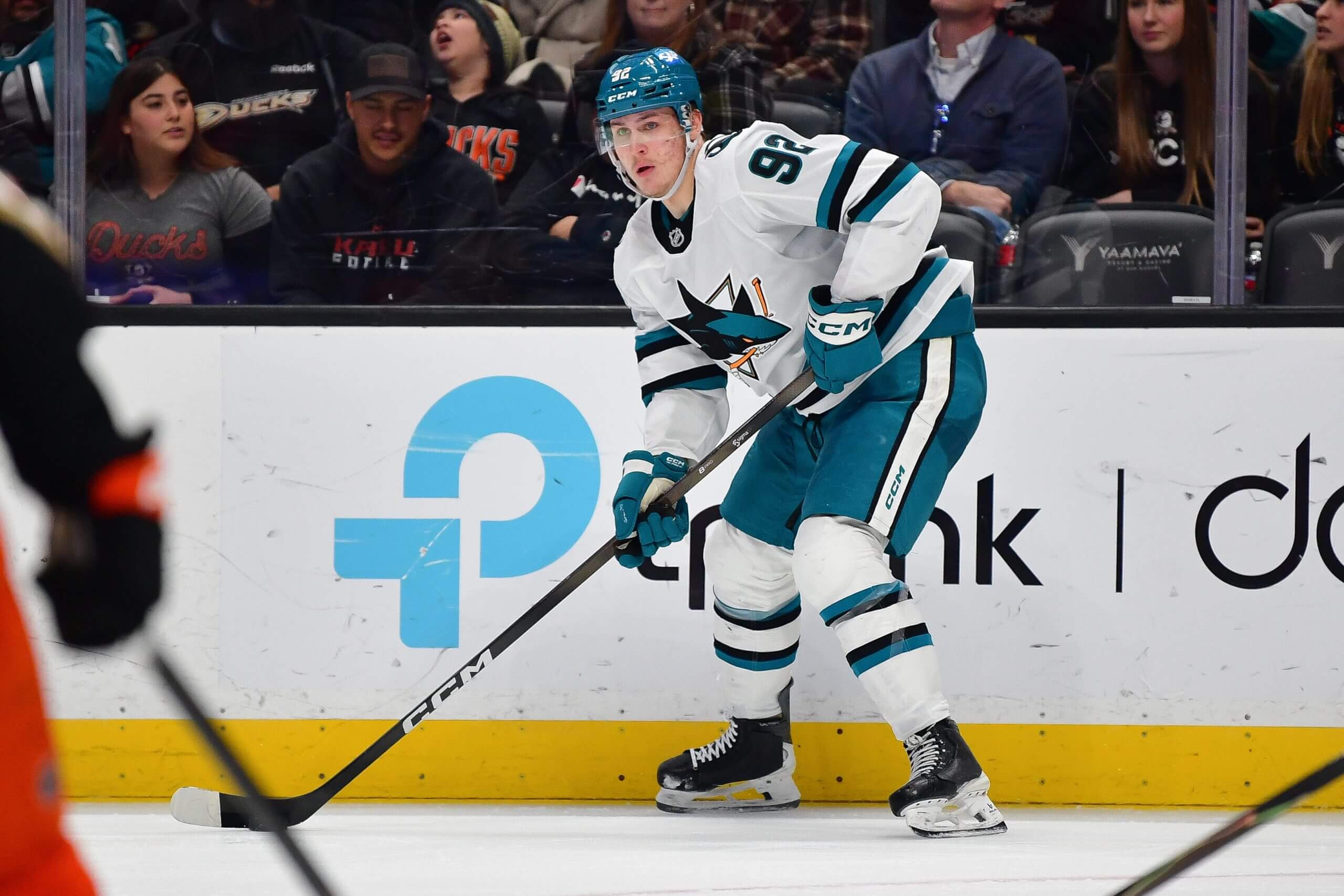
Helenius put together one of the most productive under-18 seasons in Liiga history in his draft year, in similar territory as names like Patrik Laine, Kaapo Kakko and Mikael Granlund without quite chasing down record-holder Aleksander Barkov. He wasn’t just one of the better young players in Liiga, or one of the better players on Jukurit, either. He became one of the top players in the league, cemented by an excellent Liiga playoffs, and did it while sticking at center as a 5-11 17-year-old, too. At year’s end, he was also excellent in his debut with the Finnish men’s team, earning a spot on the senior world championships roster though his men’s worlds was a little up and down. He was also Finland’s top player at U18s, though he didn’t completely take over in the way many expected he would. All this, after impressing at world under-17s and a prior U18 worlds; after playing 33 Liiga games as the league’s youngest player at 16 and still registering 11 points; after impressing at the World Junior Summer Showcase months after his 17th birthday and still as the youngest player invited; and after centering a top-six line as an underager at his first World Juniors, where he wasn’t a star but I thought played better than his two points in seven games indicated.
Last season, while he was a good player in the AHL and a top point producer for the silver medal-winning Finns at his second World Juniors, I don’t think he was a standout for either, and the quiet showing marked a second consecutive international event like that. This season, he seems to have moved past the rookie learning curve in the AHL and has really settled in as a top player in the league as a teenager, scoring his first NHL goal along the way.
Helenius is going to have a long NHL career, and you have to remind yourself of his age when contextualizing what he’s accomplished, but some things in his profile do give me pause about a true top-six projection. He may end up as more of a middle-six type. Some wondered for a time if he’d be a center or winger at the NHL level, but he’s solid enough in the faceoff circle and aware enough defensively — it was a real strength of his game pre-draft because of his reads, positioning, tracking and puck-winning on the forecheck, but there have also been times post-draft where I’ve found he’s not engaged as much as he was last year — that I project him as a center.
Helenius is enjoyable to watch navigate, manipulate and pass the puck with his smarts and intuition. He’s crafty in traffic and does a great job finding ways through the neutral zone and across the line on entries. He can find his teammates in space and then get pucks to them with the perfect weight and timing, even while he’s well covered. He can also stir the drink through his effort level, though again I’ve found it to be inconsistent in stretches of his young career as well, and can come up with pucks when you don’t expect him to (he’s good on steals and lifts) while quietly and efficiently affecting play.
He needs to play with more pace at times, but he does such a good job identifying lanes and taking what the defense gives him. He’ll look for his own look when it’s there or play in a quick give-and-go when spacing tightens up. He seems to create constantly for his linemates with his poise and passing play. He’s a decent, though not above-average, skater who anticipates the play at a very high level off the puck — the puck just seems to find him again and again inside the offensive zone. He shields pucks extremely well for a player his size and can play keep-away to wait for his options to open up. He has a sixth sense for timing and spacing. He’s usually in good support positions and makes smart decisions with the puck. He has vision and finesse as a problem-solver.
He’ll be an interesting case study in how far smarts can take a player without a defining/dynamic trait to complement the IQ.
Photo:
James Guillory / Imagn Images
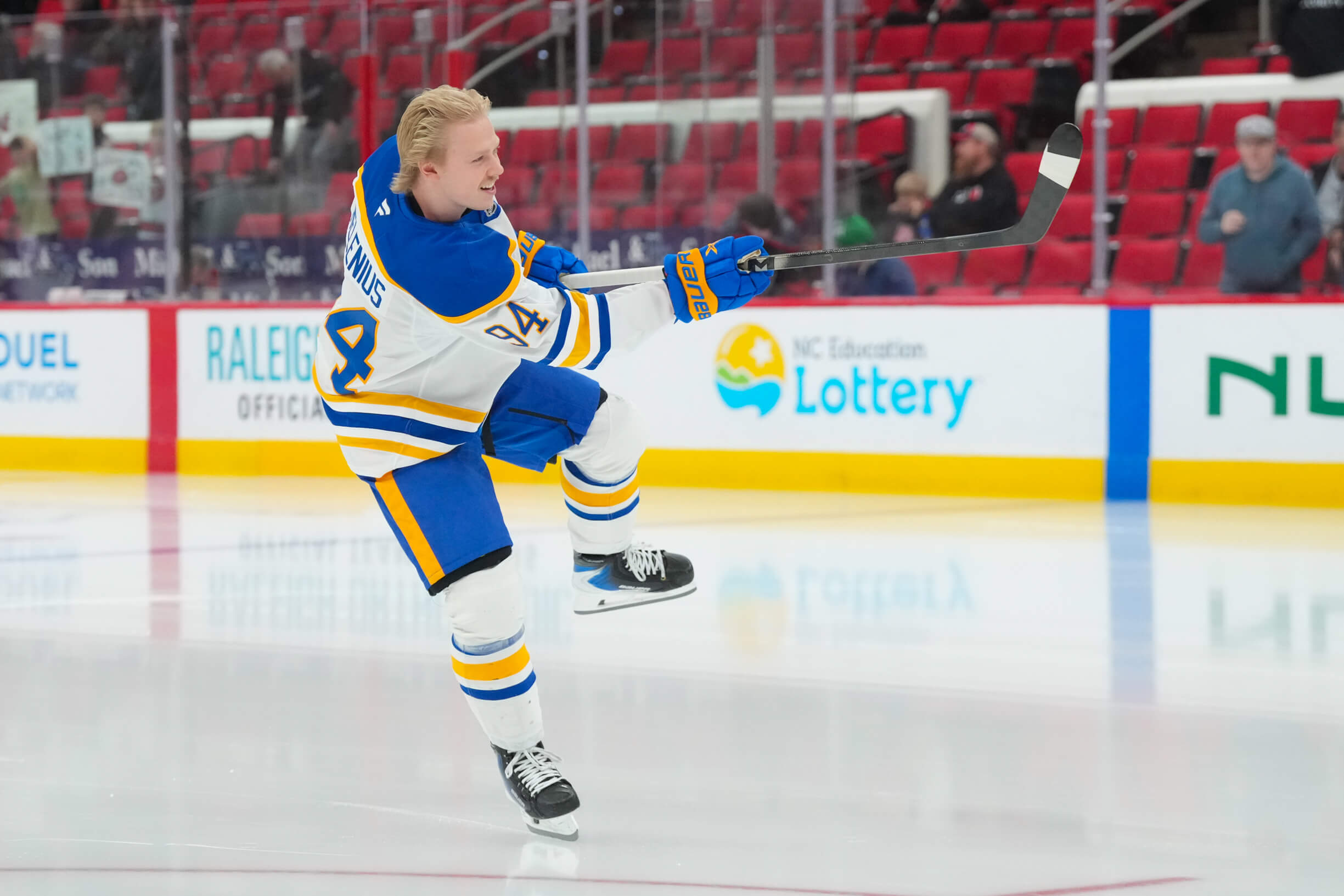
Aitcheson was a big-minutes player for Team Canada at the 2024 U18 worlds — where his ice time rose when the games and the shifts mattered most, especially in defensive situations — and has been a big-minutes player for Barrie the last three seasons, featuring as a go-to guy on both the power play and penalty kill. After wearing a letter last year in his draft year, he was also named the Colts’ captain this year. He has chased 30 goals in back-to-back years and led all OHL defensemen in scoring this season. He was also a part of Canada’s 2026 World Junior team, where he blocked shots, won a lot of battles, played his physical brand and flashed his big shot a few times, but also looked scrambled at times and struggled setting gaps in neutral ice, revealing some of the work he has to do.
Aitcheson is a powerful, bullish defender who is hard to play against, defends firmly and commands his ice. He knows who he is and plays with confidence and aggression, often directing his teammates and always talking (to his teammates and opponents). He’s strong on the PK. He’s chippy and extremely physical, looking for every opportunity he can to lay a hit, get in someone’s face or give someone a shot. He’s eager to drop the gloves. He’s a willing shot-blocker. He has step-up physicality and likes to knock guys around (I’ve seen him lay some huge hits in visits to Barrie). He has a hard shot and makes a good first pass. He’s a strong enough skater (though his feet can splay and kick a little when he’s in a hurry, and he still has work to do on his stride mechanics, which I know have already been a focus) and a physically mature athlete with some real power and presence about him. He has a good stick, so his defending isn’t completely reliant on his physical play. His discipline and decision-making can get him into trouble, and he takes a lot of stick penalties and will make the odd mistake, but he can play in all situations and has a lot of the tools you look for in a hard-nosed two-way type. Aitcheson was named to the OHL’s Second All-Star Team in 2024-25 and has a real chance to be the OHL Defenseman of the Year this season. He’s going to have a long career in the NHL as a two-way competitor with some real bite.
Photo:
Terry Wilson / OHL Images
For a long time, Rinzel’s appeal was all about the potential, and it always felt like he was just scratching the surface. He has realized that potential over the last couple of years, though, and even with some ups and downs in his first full pro season this year, he no longer feels like a “what if.” He found another level after returning from the World Juniors two years ago and hasn’t really looked back, climbing a steep incline in his progression to become one of the top defensemen in college hockey as a sophomore last season and then immediately impressing at the NHL and bypassing Kevin Korchinski on the NHL depth chart. He’s a long, right-shot defender who thrives in transition, continues to fill out his frame, has already quickly played catch-up with his peers and has time (thanks to a late June birthday) to continue to do even more of that. He’s a fluid skater with an active stick and an eager approach to playing offense and defense that keeps him involved in all three zones (which comes with some good and bad but more good than bad). His game used to be a little haywire, his play selection needed some buttoning up, and he’d occasionally get burned, but all of those things have started to fall into place nicely for him as he has gotten more reps and his skill and talent have taken over from there. You can see the tools, and he has really figured out how to deploy and utilize them in a more cohesive way. There was a stretch last year from college and into the NHL where you could see his confidence building in real time as he started to look like more than just his length and skating. There’s been some expected learning this year but he can really impact play when he’s reading the game well. He’s going to be a top-four D and while he hasn’t yet established himself on the power play I expect him to quarterback one in the league.
Photo:
Talia Sprague / Imagn Images
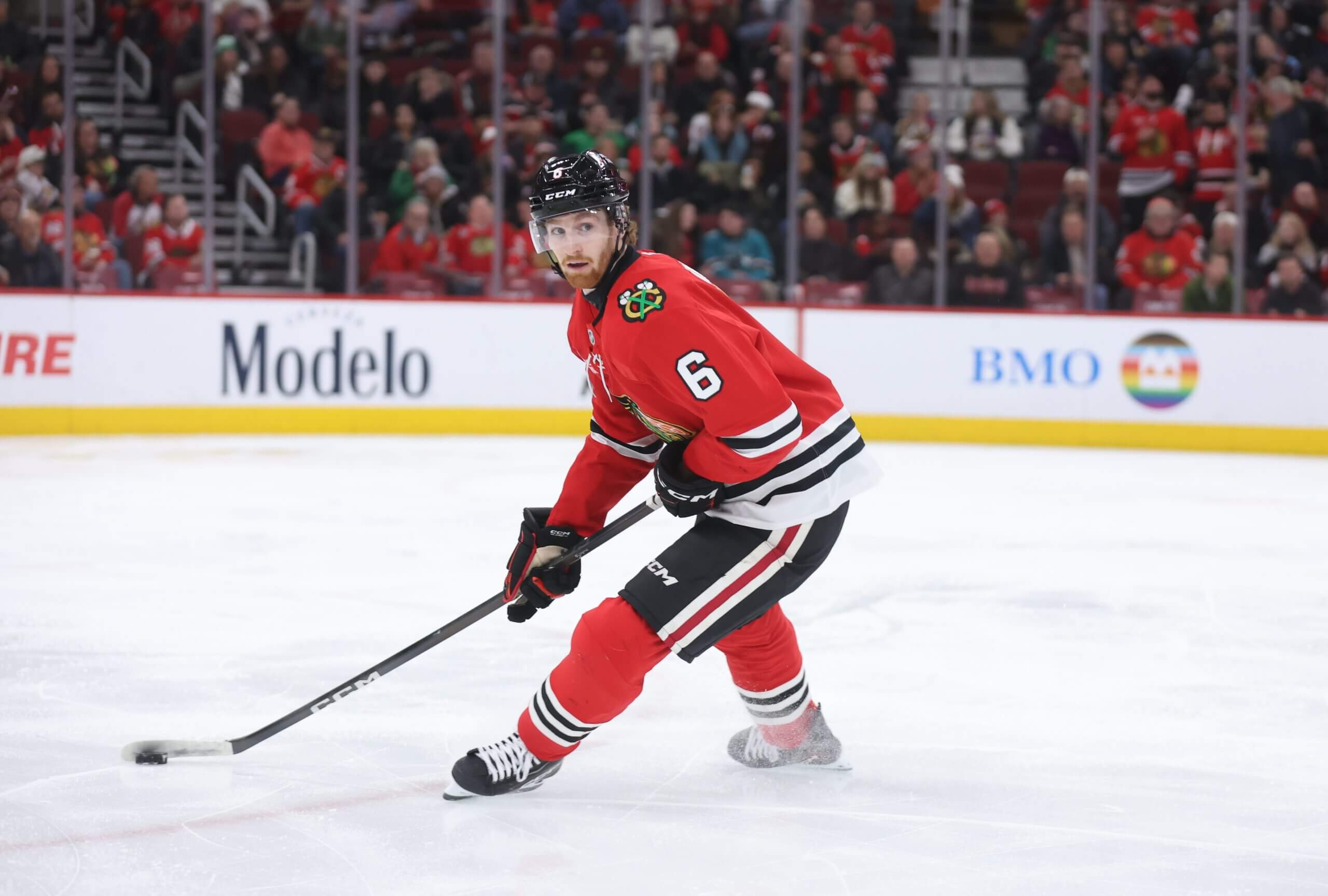
Reinbacher is a likable player who can do it all at a decent level. We sometimes see draft-eligible D play their full draft year in a professional league. We seldom see them play big minutes in a good league, though, even when they’re on the older side, as Reinbacher was with his October birthday. But that’s what the Austrian did in Switzerland’s top flight four seasons ago, where he played over 20 minutes more often than he played under it. He drove results at both ends in those minutes, too, with a positive goal differential on an under-.500 team that was outscored pretty significantly.
His post-draft season was a lot tougher on a Kloten team that was difficult to watch and, frankly, a mess, but he was impressive in the AHL right away and showed his very tangible two-way elements with Laval. Last year, he got injured in a hit along the boards early in his first NHL preseason game, requiring knee surgery, sidelining him until late February and limiting him to 23 combined regular-season and playoff games. This year is, in essence, his first full season in North America as a result, and while his numbers don’t — and won’t — pop, he has played to strong two-way results in 21 and a half all-situation minutes per game.
Reinbacher has pro size, desired handedness and a really strong foundation of tools that all guarantee he’ll become a good NHLer. He’s a solid forward and backward skater (though he can look a little stilted at times) who gaps well and defends the rush effectively with a noticeably long stick. He looks to take instead of give in the neutral zone, regularly stepping up to try to bump puck carriers off possession and force dumps, though there are times that style can leave him chasing if his timing is off or he’s flat-footed. He’s strong and plays hard in his own zone and in battles. His head is always up and on a swivel, and he does a good job pre-surveying the ice when he’s going back to get pucks through frequent shoulder checks. He has some poise and processing under pressure, even if his play with the puck on his stick isn’t dynamic per se. He has shown a willingness to attack offensively in the AHL, but also picks his spots and doesn’t search it out. I think his game works better on the smaller ice generally.
I have reservations about whether his game has what it takes to live up to his draft slot — it just lacks a little juice for me — but he should become a really solid second-pairing D. He’s a projectable two-way defenseman who looks like how teams want their D to look these days, and he’s going to have a long career.
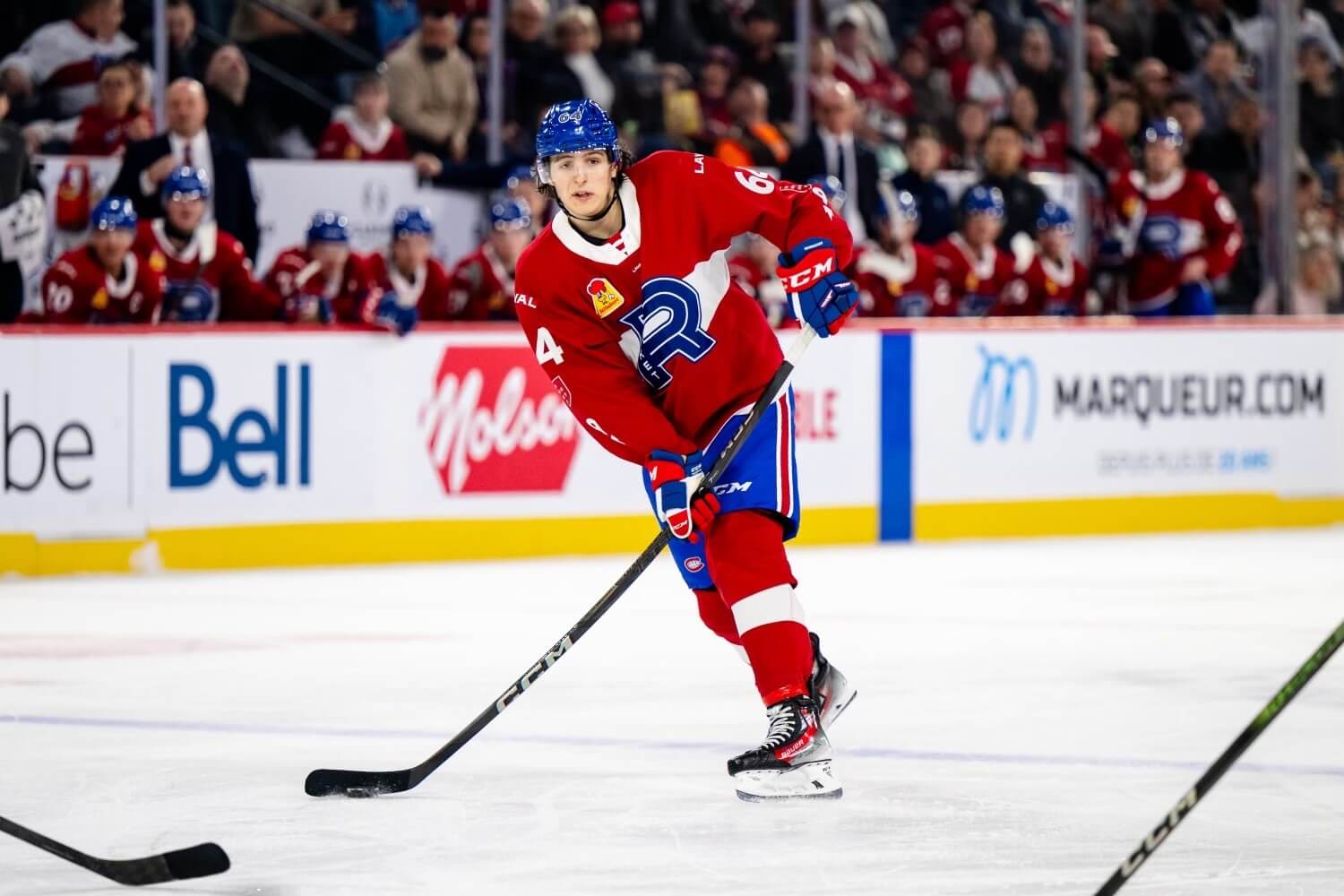
Lee was one of the top players on a Shattuck St. Mary’s U18 team that had three players drafted two years ago, and was the most purely skilled player in the USHL last season. After getting a taste of the USHL two springs ago, he was Madison’s leading scorer as a rookie in the league (albeit as a late birthday who turned 18 in the fall) and really popped with the puck on his stick at the Chipotle All-American Game as well. This season, he made some of the prettier plays made all year in college hockey as a freshman as well. And while he had an up-and-down tournament with Team USA at the World Juniors, turning over pucks trying to do too much, he was a standout at the World Junior Summer Showcase and finished his freshman year with 30 points in 35 games as Michigan State’s fourth-leading scorer behind the three players who made up their top line.
Lee is an extremely talented offensive winger with elite hands who can take and beat defenders one-on-one with his individual skill level and isn’t afraid to be cheeky and try things. I’ve seen him score some gorgeous goals, dancing defenders or lifting pucks in tight, and I’ve seen him set up some pretty assists. He’s a crafty offensive forward who can make plays inside the offensive zone, off the rush and on the half-wall on the power play. He thinks the game at a very advanced level offensively. His skating could use another step, and his play off the puck defensively could use some rounding out (he has a great stick defensively on lifts), and that, combined with his average size and competitiveness as a winger, did cause debate as to whether he was a first-rounder for some teams despite having clear first-round skill. I think the Preds were smart to take the swing on his offensive gifts. His nickname is “The Wizard,” and he lives up to it. The lightning-quick, puck-on-a-string hands. The shiftiness. The clairvoyant vision and eyes on the back of his head. The touch and finesse on passes. The feel. The natural release. He has a great energy about him and loves the game. Not that long ago, he was 5-foot-7, and now he’s 6 feet, and he still has room to grow and get stronger. If he can improve his skating (he performed well at the combine, which was promising of progress he has already made on that front after his growth spurt), he has the top-six talent/star potential that the Preds’ pool is missing a little of.
Lee is one of my favorite prospects, and his ranking here is indicative of that.
Photo:
David Berding / Getty Images
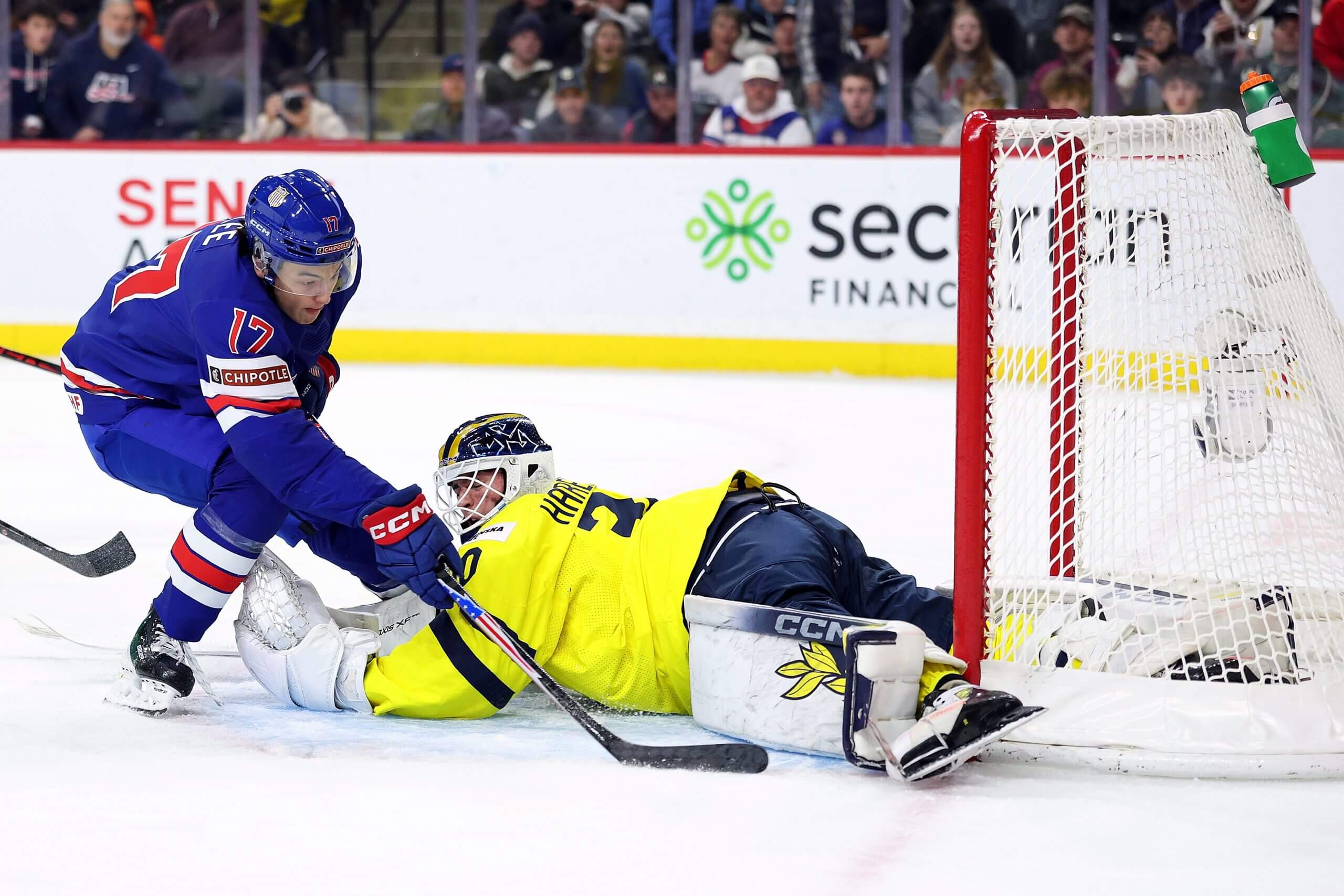
Connelly is a talented playmaking winger who has been highly productive and consistently flashed exciting individual skill with Tri-City in the USHL, for Team USA at the Hlinka Gretzky Cup (where he led the Americans in scoring with 10 points in five games en route to a bronze medal), the World Jr. A Challenge (again leading the Americans with 11 points in six games en route to a bronze medal) and the under-18 worlds (where he made some pretty plays and scored a Michigan goal, but also had extended shifts of offensive-zone time in a good pairing with LJ Mooney) before he was ejected from the gold medal game for an illegal check to the head. Last season, he was less noticeable and impactful offensively at Providence and the World Juniors, though he still flashed at both, and he was owed more on the scoresheet in college for all the touches and carries he executed. After making what many felt was an early move to turn pro, he registered four points in his first six AHL games and made some plays there. This season, after the start of his first full pro campaign was delayed by a knee injury, he has been decently productive for Henderson when healthy.
Connelly is a high-end talent who has continued room to develop physically and add strength, but whose slight build doesn’t hold back his shot (which uses a quick release to fool goalies, although his one-touch shots in the slot do often lack power) or his skating (which is really fast and pretty fluid even without the muscle/power that’s coming). I like his work rate off the puck. He possesses borderline elite hands, and his on-puck movement at speed, offensive-zone small-area skill and touch as a passer all also get high grades as he regularly makes difficult skill plays in tight coverage and finds his way out of trouble or through traffic. He’s a dynamic one-on-one player who can turn defenders and goalies inside out with his hands and uses quick crossovers and a light skating stride to be agile on cuts, jumps and changes of direction. He’s creative. He’s as comfortable playing off his backhand as he is his forehand. He plays pucks under sticks and into space as well as anyone in his age group. And while he can try to do too much, force one-on-one plays into congested areas or be too cute, you live with it because of how often he makes something out of nothing.
The big developmental leap he’ll have to make is in his decision-making and discipline, which have shown positive signs in the AHL. Connelly’s ability to beat players laterally and shake around and through coverage, combined with his playmaking sense, gives him top-six, PP NHL upside. He does come with some risk, though, and there are parallels between his game and makeup and Brad Lambert’s in Winnipeg — and Lambert has struggled to make the jump. He’s an imperfect player and can frustrate, but the talent is there.
Photo:
Ethan Miller / Getty Images
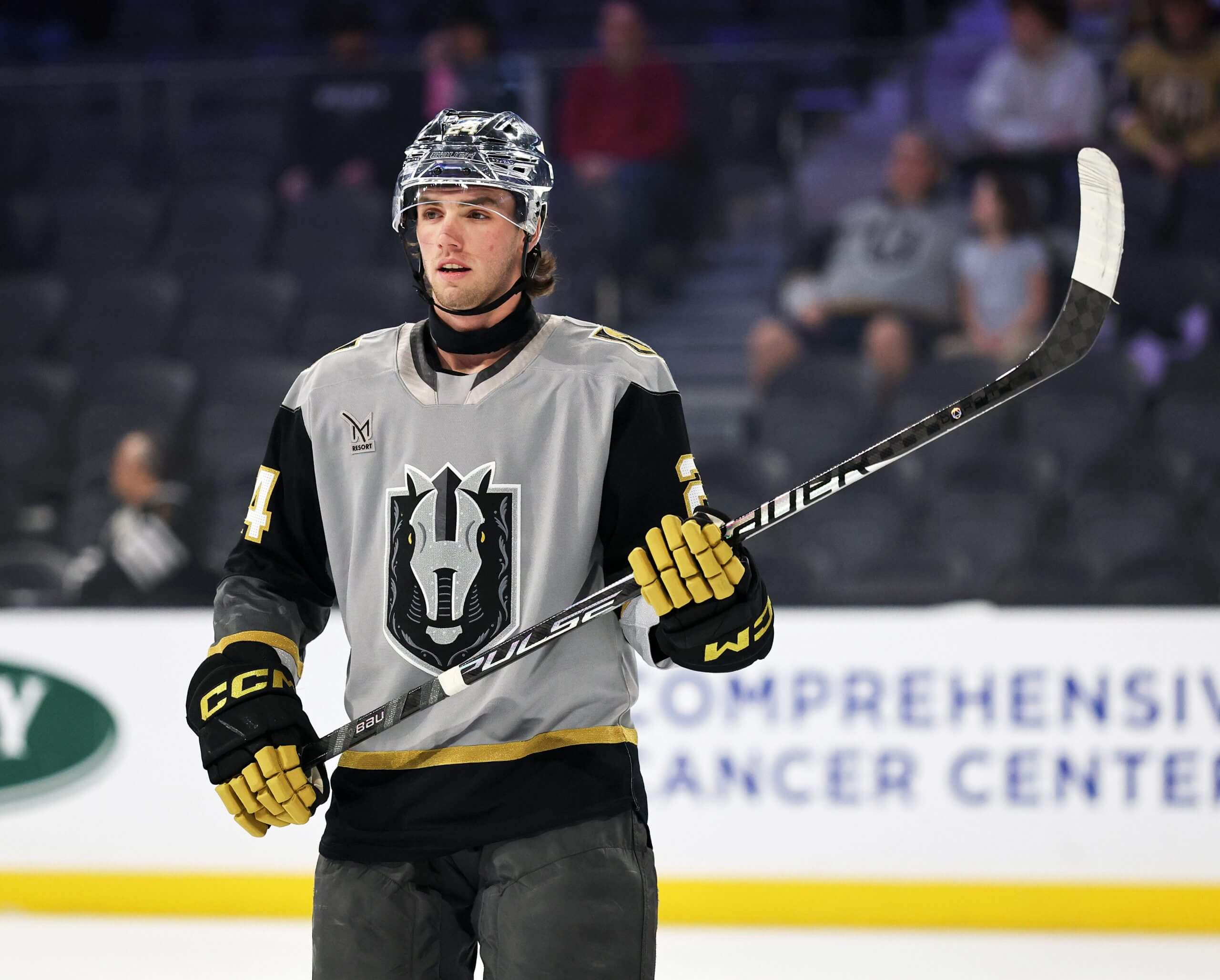
Tier 5
Östlund’s calling card is his airy, agile skating stride, excellent hands, cleverness and committed two-way game. The skating and defensive aptitude (including on faceoffs) make him an able penalty killer, and the rest give him clear tools of play creation at five-on-five and on the flank on the power play. He wins a ton of short races, creates quickly as soon as he’s in possession and darts around the ice in control to get into scoring areas or facilitate from the perimeter.
His lack of size and strength — he has always been lean at 5-11, though he is now up to a playable 180 pounds — has been a talking point at times, but I thought it’d make his jump to the SHL and then AHL and NHL a little more challenging than it was. He wasn’t helped by a fall hand injury in his rookie season in the AHL, but he really came on strong in the second half of his first season in Rochester last year, and the on-ice results have been consistently strong, earning him a full-time NHL job that will soon graduate him from this list. His well-rounded game, consistent play and skating have always made him a coach’s favorite.
Östlund is silky smooth in possession and a superb puck transporter through neutral ice. He has a slippery quality that few players have; the puck just sticks to him in tight coverage, and he is a catalyst on his line in a variety of ways. He’s a nifty little player. Some scouts worried about whether he’d be able to get to the inside/hold his own physically along the wall in the NHL (he has never scored a ton), but his approach and skating have predictably helped mitigate against that. The flow, the work ethic, the ability to hang onto it or play in quick give-and-goes, his stick on steals, the changes of directions and cutbacks: there’s a lot to like. He has and holds the puck a lot, he’s so shifty in possession side-stepping defenders or turning them on angles, and even though he doesn’t always produce something out of his natural playmaking game because he’s still missing that finishing strength, he’s noticeable and making plays nonetheless. The stops and starts, and how quickly and tightly he turns, really make him hard to get a handle on and have helped him escape the cycle well against bigger competition.
He has skill and pace, and he can be a driver.
Photo:
Wendell Cruz / Imagn Images
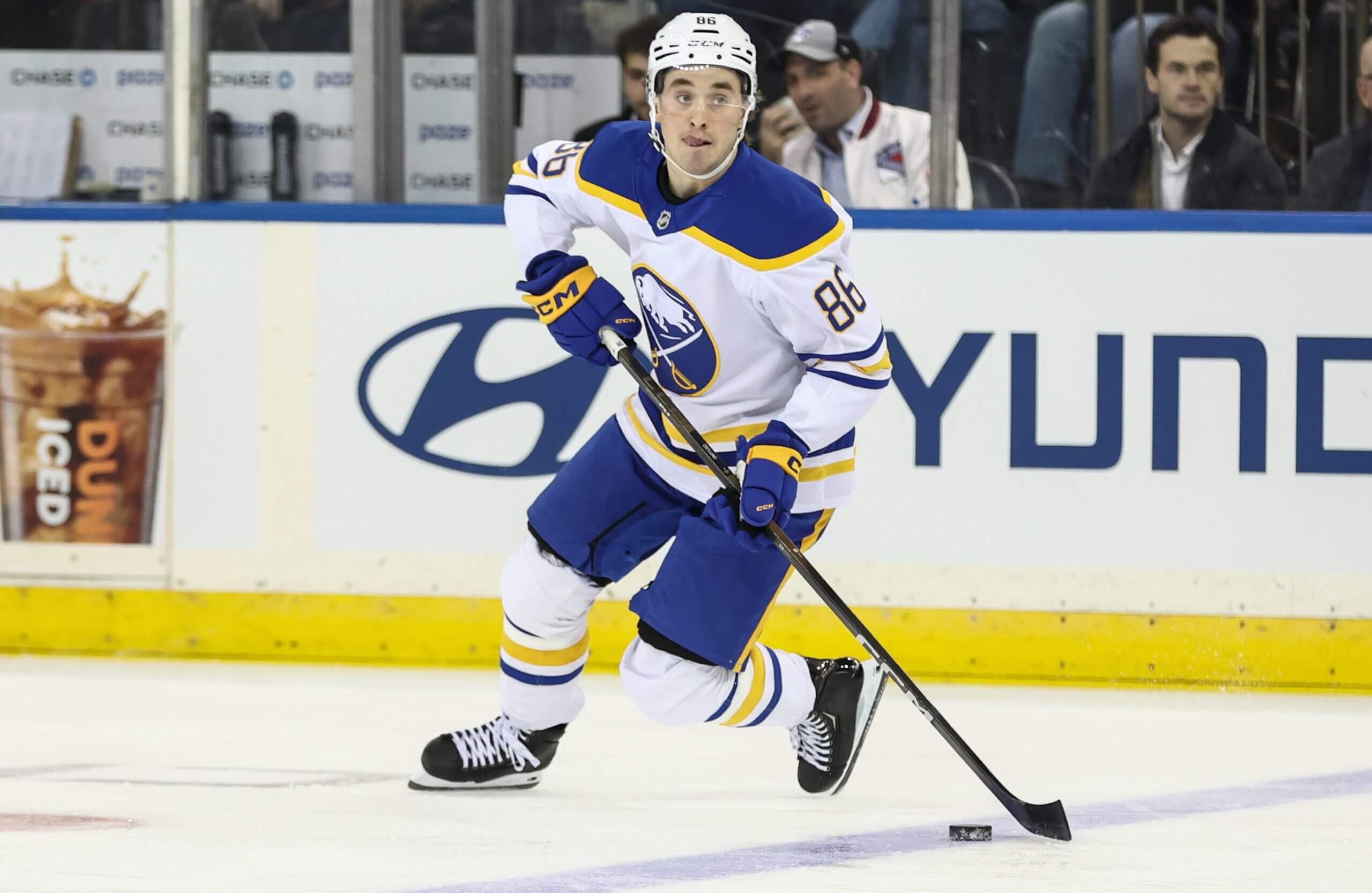
Cristall was one of the WHL’s top scorers over each of his last three seasons and was a final cut by the Capitals and Canada’s World Junior team (after a four-point game at this World Junior Summer Showcase and a primary assist/several chances against U Sports, it should be noted) last year. He registered 44 goals and 126 points in 73 combined games in the regular season and playoffs two years ago to lead the Rockets in scoring by 27 points over 2024 top-10 pick Tij Iginla. Last season, he was the most productive player in junior hockey, split between Kelowna and Spokane, toying with teams alongside Kraken first-rounder Berkly Catton after a trade to Spokane and registering an incomprehensible 69 goals, 104 assists and 173 points in 76 combined regular-season and playoff games. Though his first-round WHL playoff series and U18 worlds underwhelmed many and combined with concerns about his skating and size (5-foot-10 winger) to result in a second-round selection at the 2023 draft, Cristall has since proven to be one of the most creative, crafty playmakers outside the NHL. This season, as a rookie in the AHL, he has had a very respectable year as Hershey’s second-leading scorer.
Cristall isn’t afraid to try things and possesses a rare ability to play in small areas, pull eyes and bodies toward him and then expose opposing structures to the weak side of coverage. A quad contusion cost him five weeks as his stock was on the rise in his draft year, but it shouldn’t have taken anyone watching the Rockets long to realize just how much offense he creates for himself and his teammates while being a marked man every game. Outside of Connor Bedard, he had one of the most productive draft-eligible seasons in recent WHL history. He has also played with more pace since, and his stride has cleaned up a bit.
Despite his diminutive size, he’s also a smarter player off the puck/defensively than he has gotten credit for and is often in the right position above the puck to hold play inside the offensive zone. He’ll make effort plays defensively to stretch out and knock a puck out of the zone or work to gain inside body positioning on the forecheck and surprise people with the number of pucks he wins. He’s a ton of fun to watch with the puck on his stick. When you think you have him trapped, you usually don’t, and not because he’s faster than you but because of how clever he is (he’ll often make plays past you with the puck even if he doesn’t skate it through you). He’s just a natural creator for himself and others who manufactures offense in a variety of ways inside the offensive zone and has developed his rush game to create at his own pace and find ways to enter the zone in control as well. And while his speed in straight lines still isn’t a strength and has some kinks, I’d say it’s NHL average now, and his footwork is adjustable in tight spaces. He can also stickhandle himself into trouble at times, but he does such a good job holding onto pucks until his options open up that you’re OK with the odd offensive-zone turnover, especially because he can always fall back on his finesse and touch on the puck to put it into space for someone else if he gets cornered. Despite his size, he’ll also track pucks to the net so that he can be opportunistic. His skill, touch, problem-solving and spatial awareness are legitimately high-end, and I believe in his ability to become a top-six winger in the NHL. There’s some risk, though, that he becomes a AAAA type with his profile.
Photo:
David Reginek / USA Today
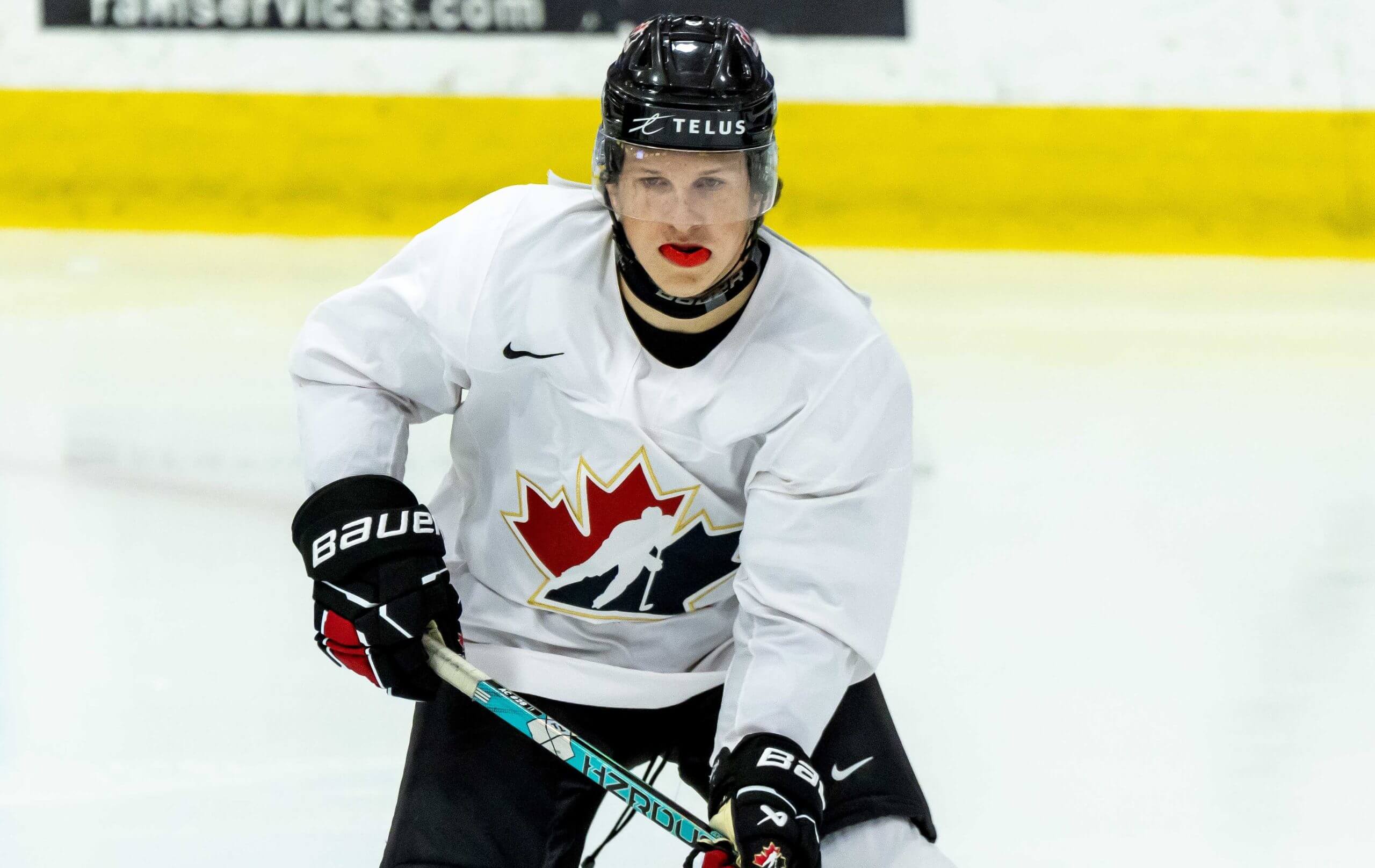
Nadeau is a talented goal-scoring winger with top-six traits and second-line/PP upside. He was one of the top-producing freshmen in college hockey in his lone season at Maine — playing to 46 points in 37 games with the Black Bears, fifth among U19 forwards behind only Macklin Celebrini and the BC line of Will Smith, Gabe Perreault and Ryan Leonard — and has now been one of the most productive young players in the AHL in back-to-back seasons. Nadeau’s hands, skating and shooting all get high grades.
I thought his decision to go one-and-done and turn pro was a little premature, but he found his groove as his rookie season went on and finished tops in the AHL in U20 scoring, led the Wolves in goals with 32 and finished second on the team in points with 58 in 64 games (one back of Ryan Suzuki in five fewer games). He was just OK at the World Juniors and had some vanilla stretches in the AHL, but was consistently productive and found the zip to his game whenever he briefly lost it, producing on a low-scoring team and really threatening on the flank on the power play. This season, he has played to a point per game in the AHL and has scored his first couple of NHL goals.
He’s capable of creating offense in a variety of ways, whether that’s bursting wide in transition with his quick feet, attacking on angles and cuts, or releasing a pinpoint shot, whether off catch-and-releases, standstill shooting mechanics off the flank on the power play or through his one-timer. His 113 points in 54 games in the BCHL in his draft year were the most by an under-18 skater in the league since Kyle Turris in 2007, outproducing players like Kent Johnson, Alex Newhook and Tyson Jost at the same age. He’s a 5-foot-10 winger who is going to have to learn how to attack at the NHL level as he did in junior, college and the AHL, but he has the talent to get there as a potential second-line/PP winger.
Photo:
Minas Panagiotakis / Getty Images
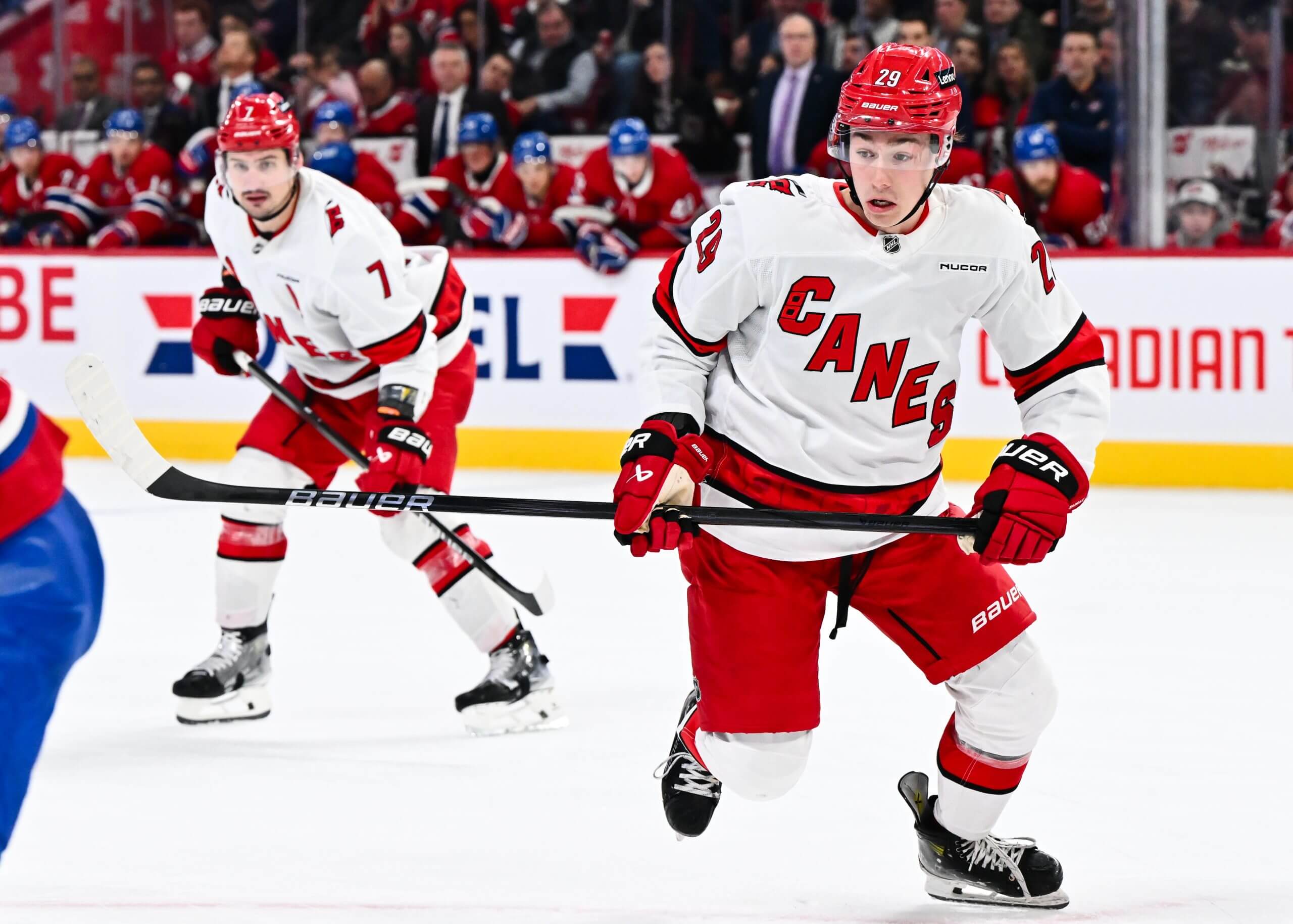
One of the hottest players in the CHL after a trade from Peterborough to Hamilton saw him score 30 goals and 56 points in just 39 games to close his draft year, Lardis has been one of the most prolific goal scorers in his age group since, became the first OHL player since John Tavares to score 70 goals last season, scored immediately in the AHL, and has started to score of late in the NHL already.
Lardis is a standout skater and natural athlete (which is evident on the ice with his natural speed but also showed up when he led on-ice testing at the CHL/NHL Top Prospects Game in his draft year). He’s fast in straight lines and smooth weaving up ice through his carries. But he also has a dangerous curl-and-drag wrister, a one-timer that he trusts and regularly scores on (his one-timer from the flank and even closer to the goal line is a feared weapon in junior), good touch on the puck and on the power play, an innate ability to be opportunistic around the net and, because of his speed, a knack for winning races and getting to loose pucks. He’s on the smaller side for a winger (though he’s a very playable and fit 5-foot-11 who has worked hard to fill out his lean frame), and he’s not as engaged physically in battles as you’d hope a player with his speed would be, but his summer birthday gives him the benefit of a little more time to continue to add more strength to his natural athleticism. WHis speed and skill took over games offensively in the OHL and quickly the AHL. He’s making more and more soft area plays into space as a passer while remaining net-focused on offense. His hands are moving in unison with his feet, edging and shading pucks with ease against junior-level players. He flashes slick one-on-one handling. He’s an excellent saucer passer, which makes him an even better flank guy on the power play because he can go back against the grain with a pass when the one-timer isn’t there.
I’d be eager to work with him to build around the one-timer, the skill, the quickness and the top-flight speed to try to make him into a top-six scoring winger. Not all of the Blackhawks’ abundance of 5-foot-9/10/11, speedy forwards are going to be able to play in the same top six, so that may work against him in a battle for one of those jobs with Kantserov, but he looks like more like a first-rounder than a third-rounder — and has for some time. He has also dealt with some nagging injuries over the years while still maintaining his gaudy goal-scoring totals.
I did debate different orders for the prospects in 4-9 tier here but he has the most goal-scoring upside and that gave him a slight edge for me this year after he showed he could do it as a rookie against pros.
Photo:
Michael Reaves / Getty Images
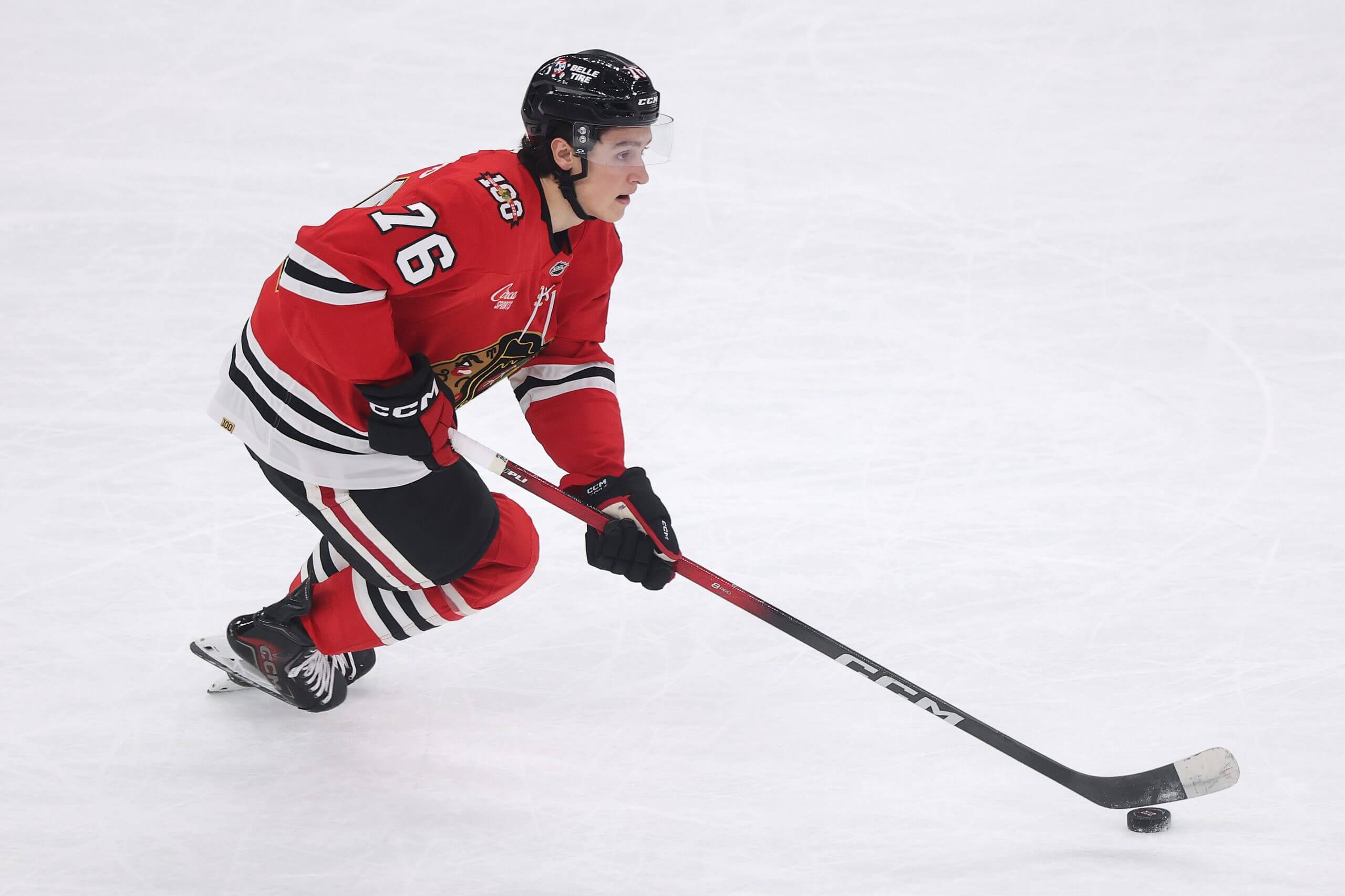
Surin is a talented and multi-dimensional offensive player who really took off in the second half of the MHL regular season and into the playoffs in his draft year, becoming one of the most impactful forwards in the league as an August birthday who was one of the youngest players on my draft board. I ranked him a little lower than where the Preds took him (41st when he went 22nd), but he had late-first momentum late in the year, and the Preds certainly weren’t alone in viewing him in that range. Last year, though he played just eight minutes and change per game in the KHL, he scored 12 goals and 21 points in 60 combined regular-season and playoff games with Lokomotiv and was utterly dominant when back in the MHL as an 18-year-old. He took a big step this year as well, playing 13-15 minutes per game and registering 37 points in 57 regular-season games, good for second among U20 skaters in the league and supported by excellent two-way results in his usage (Lokomotiv outscored the opposition 42-20 with Surin on the ice at even strength).
Surin is a good skater who plays with plenty of pace and tempo to hunt and win pucks or push play down ice. He’s also now listed just below 6-foot-2 and 201 pounds, but has the individual skill of a smaller player. He can play all three forward positions. He excels on the flank on the power play because of his plus vision and a dangerously quick release from midrange. He’s very physical and plays with a real chip on his shoulder. He can frustrate with his lack of discipline at times, whether by trying to be too cute at five-on-five, attempting unnecessary one-on-one plays, or by taking careless penalties (scrums after the whistle, interference trying to be sly, high hits, stick infractions, etc.). Some of it you can live with because he’s competing for possession and battling for pucks or looking to play the body, but there are instances in a game where he’s reckless in his decision-making on and off the puck (though he has made progress on the discipline front in the KHL). His skill, size, tools and fire make him very appealing. He thrives playing on instinct and has a lot of projectable elements. He’ll be a top-nine forward with some skill and competitiveness. Of note: His KHL contract expires at the end of the 2026-27 season.
Photo:
Maksim Konstantinov / SOPA Images / LightRocket via Getty Images
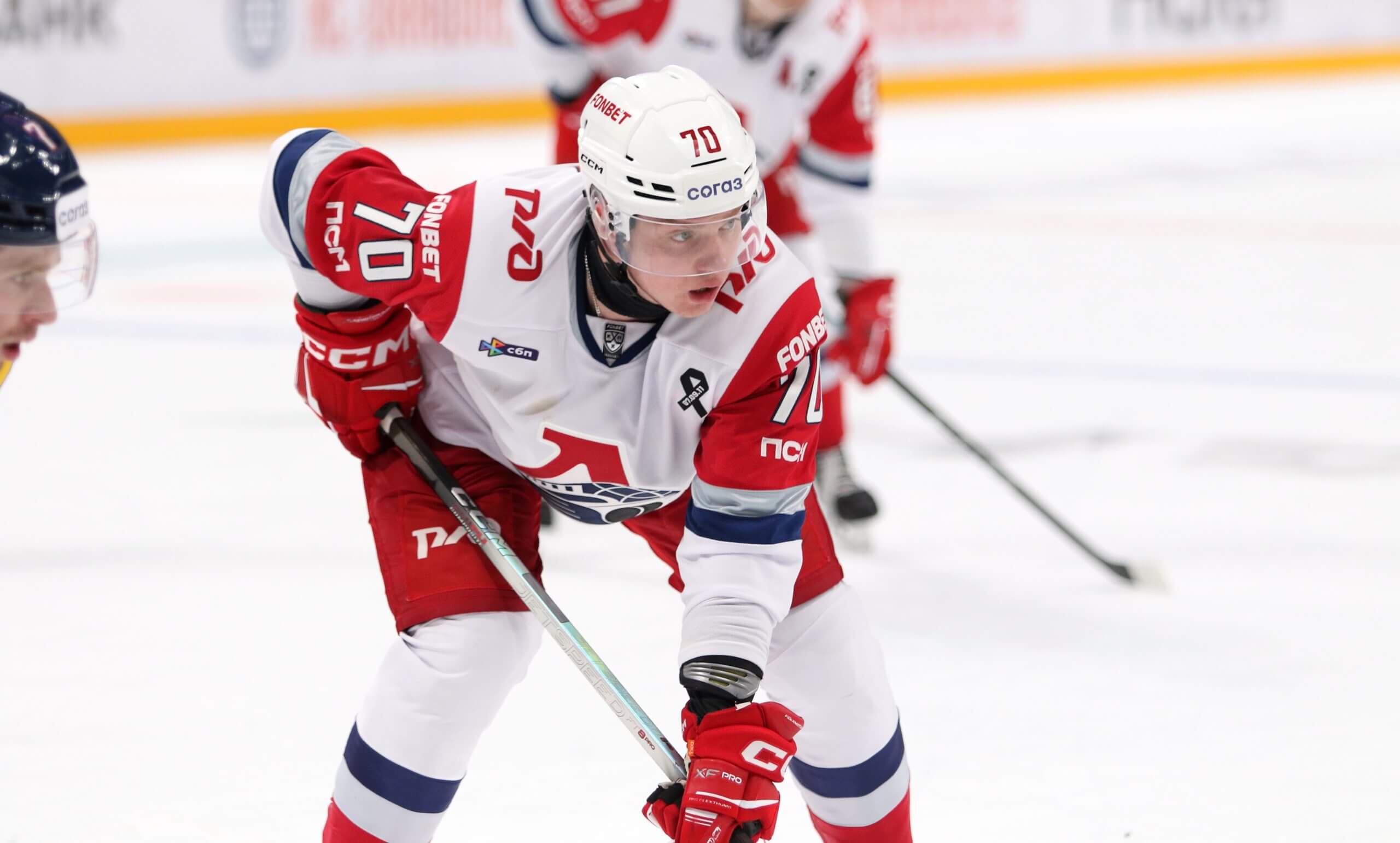
You could rank the Red Wings’ trio of Bear, Nate Danielson and Michael Brandsegg-Nygård in any order, and I debated them all, but I’m partial to Bear, who I just think has a little more skill though he’s a weaker skater, too.
Bear is a late ’06 who scored 25 goals and 57 points for the Silvertips two years ago and last year wore a letter, broke 40 goals and was their leading scorer and a go-to forward before suffering a skate laceration on the back of his leg that partially tore his Achilles. This year, he got off to a slow start in his return from the injury but picked it up enough to play his way onto the Canadian World Junior team and, despite only playing 10 shifts in the tournament, returned to Everett in January and continued his strong play down the stretch for one of the CHL’s best teams.
He’s a play driver and play creator at the junior level, and it’s rare to be both. He possesses quick, soft hands, legit skill and a natural shot, but he also stays around it, plays with intensity, works extremely hard and goes to the net and inside ice. Though people talk about him for his motor and pro style, I’ve seen him make some impressive skill plays and dance some goalies and defensemen. But he can also beat you with his work ethic, and I like both the intentionality of his game and the way he uses his skill to play to the middle third. He works his tail off, tracks and puts himself in good spots. He can push play at five-on-five, make things happen all over the ice and contribute on both special teams.
He was a bit of a late bloomer, and his skating is just average, but he looks like a player now and should become an impactful top-nine worker with skill in the NHL who can be the best player on a third line or a go-getter for a top line. The more I’ve watched him over the years, the more I’ve appreciated his game, his approach and his identity.
Photo:
Caroline Anne / Everett Silvertips
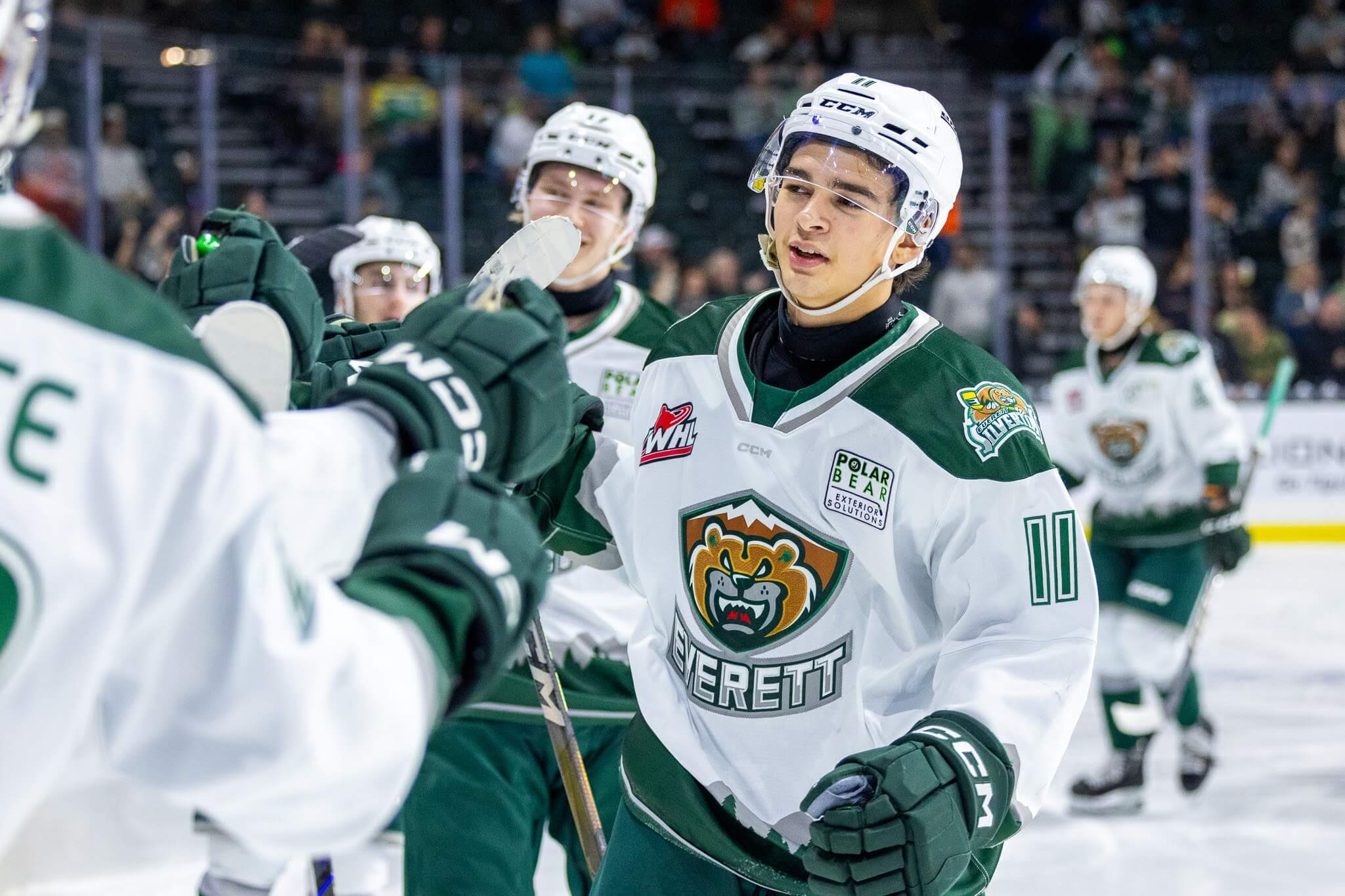
Salomonsson has become a nice development story for the Jets and is already playing real minutes to positive results without needing to be sheltered.
He was off to a really positive start to his post-draft season in the SHL three seasons ago and was bound to make Team Sweden for the World Juniors before a late-November ankle injury halted his year. It was particularly noteworthy after he was just OK in his draft year and didn’t take the steps many hoped he would, sliding out of first-round consideration and into the second round, where the Jets took him. You don’t often see teenage defensemen play 16-20 minutes per game in the SHL, but that’s how much Salomonsson was playing before he got hurt and how much he continued to play two seasons ago. He was just two weeks away from eligibility for the 2023 draft with his Aug. 31 birthday, too, so had his pre-injury play in the SHL been in his draft year, he would have been viewed differently.
He then became an important defender for the 2024 SHL champs and the Swedish World Junior team. Despite missing time with an upper-body injury he suffered in mid-December last year, he had a really strong first season in the AHL as a 20-year-old as well, driving impacts at both ends on a bad Moose team. This season, he has averaged 21-22 minutes per game for another Moose team that has struggled to score and has also emerged in the back half with the Jets.
He’s a tremendous north-south skater who can join the rush with ease off the puck, skate it down ice when he has it and close gaps quickly to play a physical and tight-defending brand of hockey while funneling opposing carriers wide into rub-outs along the wall. If he does get caught down ice trying to involve himself, he tracks back easily.
His decision-making physically does need some tightening up at times and has gotten him into suspension trouble at different levels, but his reads in other areas of the game have improved. I like his comfort level under pressure and confidence for a player as young as he is. He moves really well in all four directions, involves himself in a lot of plays offensively, has a pro frame and build, and most of his finer skills (including his shot and his handling) get good grades. He closes and snuffs out a lot of plays and projects as a two-way top-six defenseman at five-on-five who may be able to help out on either special team. It doesn’t hurt that he’s a 6-foot-2 righty, either.
His problem at times in the past has been that his actual tools were better than the way he used them. That was something I was comfortable betting on when I ranked him 39th on my final draft board for 2022, though, and I think he has figured out what he needs to be at the next level. He looks like how most teams want their D to look nowadays: big, strong, highly mobile. He already looks like a full-time top-six D but could be a two-way second-pairing piece.
Photo:
Neville E. Guard / Imagn Images
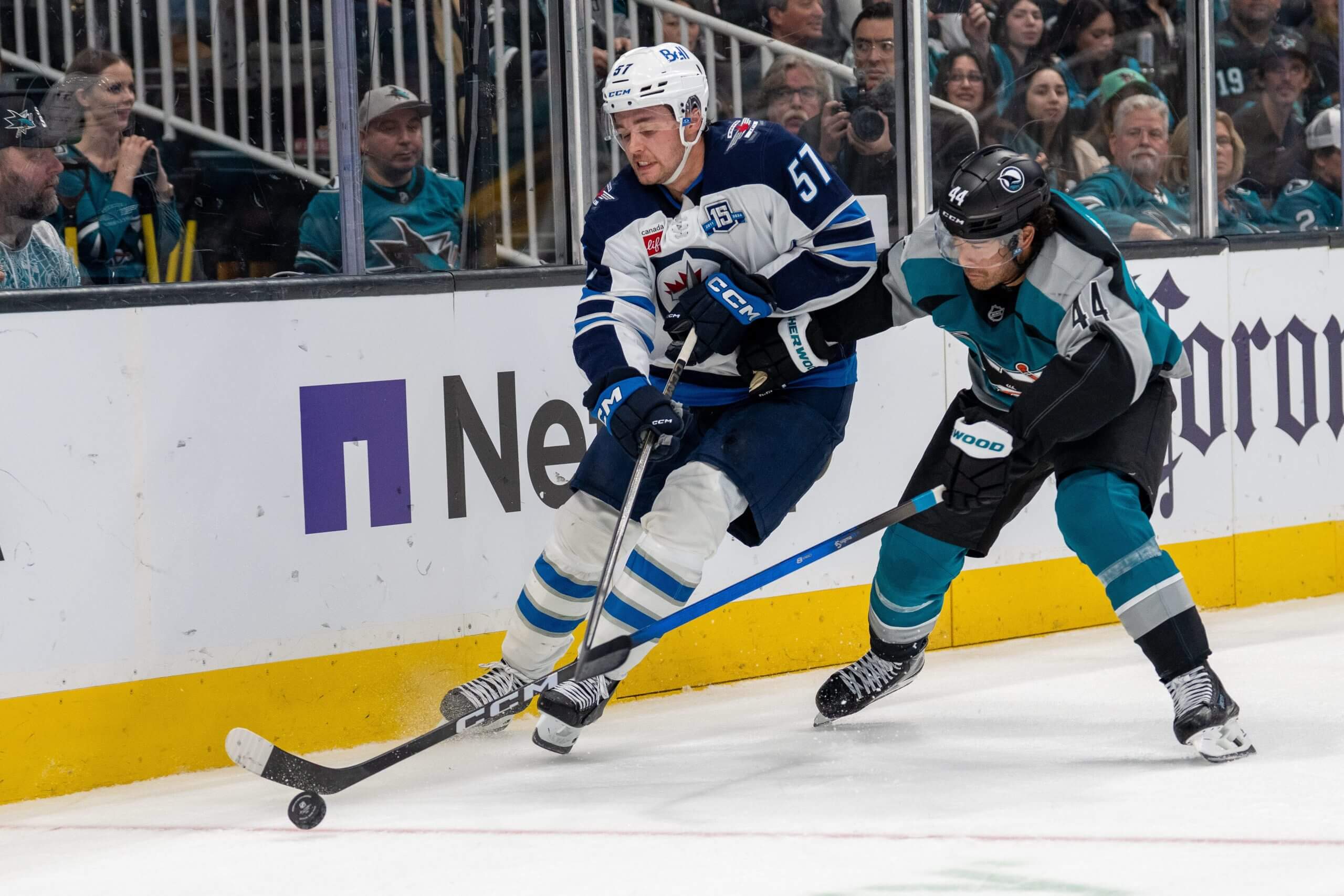
After a disappointing post-draft season that included two lackluster performances at the World Juniors (first in the summer tournament in Edmonton and then in Halifax) and a challenging regular season in HockeyAllsvenkan, Lekkerimaki really hit his stride in the HockeyAllsvenskan playoffs at the end of the 2022-23 season. He re-emerged as a top prospect, winning a World Juniors MVP on home ice in Gothenburg and then leading his SHL team in scoring as a teenager. Some of that progression was likely some natural catch-up given his late July birthday. Some of it was good health after his draft year was derailed by injuries and illness. And some of it was natural talent taking over, and important work he did in areas of his game that needed it.
Last season, he had an as-expected up-and-down first season in North America that saw him score his first three NHL goals and nearly break 20 in the AHL but also struggle in the Calder Cup playoffs and drift at times in games on a championship team. And though he hasn’t been able to break through and establish himself as a full-time top-nine NHL winger and power-play guy this year, he has looked extremely dangerous in the AHL.
Lekkerimaki’s talent is undeniable. He’s dynamic in control and threatening from anywhere in the offensive zone. He can beat you in an instant with a quick catch-and-release or curl-and-drag shot, or hang onto pucks and make things happen himself. He has a knack for hitting holes in the net, frequently beating goalies low-blocker and five-hole. He has A-level hands, a deceptive release, a lethal one-timer and a slyness to his game that allows him to get to spots to score with and without the puck. He has slowly become more threatening on a consistent basis at five-on-five against men, coming and going less in games, fading to the perimeter in control less and making sure he’s getting touches by keeping his feet moving more and working to involve himself in the play. He has learned to play with more intention off the puck and on the forecheck, and has found more consistency in his approach and consequently his game.
Maybe most important of all, he has added some more tempo to his game so he doesn’t have to default to long shots through feet because he can’t attack defensemen one-on-one quickly enough. He has started to push the pace more and to draw more penalties because he’s more comfortable hanging onto pucks longer and taking some bumps. His skating and tight turns in particular have gotten quicker. He has played with a little more fight. He’s still figuring out how to be more consistent and how to make his talent work in the NHL, and he’s never going to be a burner in terms of speed, but he has the skill and finishing.
With the right coaching and usage, he has upside as a top-six/PP1 finisher — you want the puck in his hands. He’s imperfect, though.
Photo:
John Jones/ Imagn Images
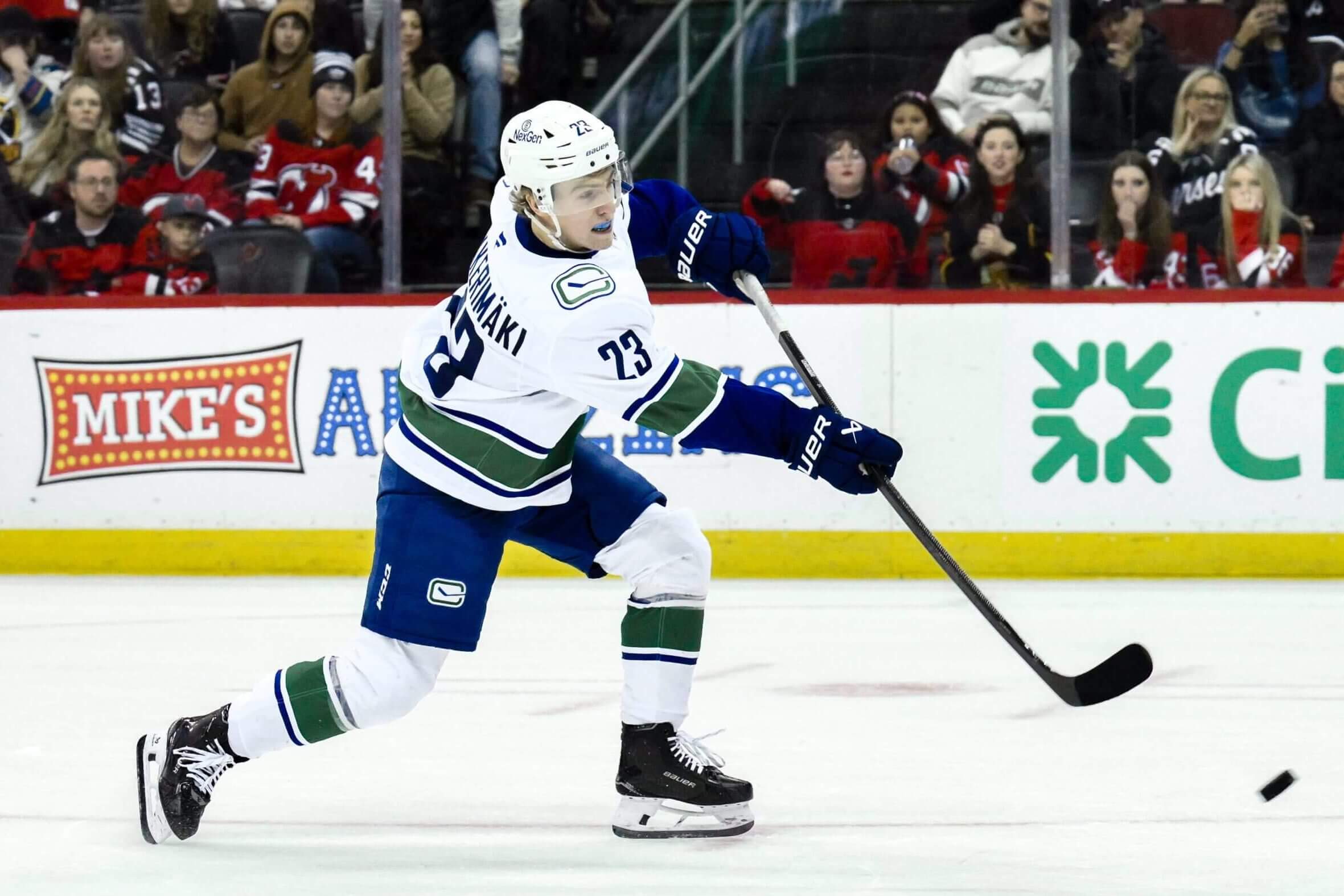
Wood has begun to establish himself as an NHL player with the Preds, but the five games he has played in the AHL this year have kept him eligible for what will likely be the last time.
Wood was the youngest player in college hockey in his draft year (he was, for a moment, the only 17-year-old) and stepped right in to become an impactful offensive player and eventually the leading scorer on a decent UConn team (albeit as a winger after playing mostly center in Jr. A, though he’s comfortable at all three forward positions). His counting stats as a sophomore took a bit of a hit, moving from 34 points in 35 games to 28 points in 35 games, but most of that was the byproduct of a much weaker UConn team (he still led the team in scoring by five goals and six points) — although it did highlight concerns some have about his ability to be a driver/his need to play with other good players who can get him pucks. Last season, after a transfer to Minnesota, he played to a point per game as the Golden Gophers’ second-leading scorer and was cut as a returnee to Team Canada ahead of the World Juniors before signing and registering one point in six NHL games. This year, he has flirted with 20 goals as a rookie.
His statistics were always projectable, but there are parts of his game that felt less projectable. That point-per-game production as a freshman came a year after he led the BCHL in goals (45 in 46 games) and points (85) for a 1.85 points-per-game clip that stands as the most productive 16-year-old season in the league in decades. He also found ways to get his looks in a limited role at the World Juniors in Gothenburg, even if they didn’t bring him back because they weren’t sure where he fit in the lineup, and they had questions about his skating/pace (ultimately, they probably could have used his scoring/skill).
What Wood is, though, is a rangy, multi-dimensional shooter and goal-scoring forward who has silky hands for 6-foot-4 (considering the long stick he uses, he has superb control on the toe of his blade out wide and the heel in tight to his feet), a marksman’s shot inside the offensive zone (both through a natural shooting motion and his one-timer) and a sixth sense for arriving around the net/slot at the right time. He protects the puck well out wide to his body, does a good job holding onto pucks for that extra second required to walk into his spots without needing bursts of speed to get there and can also slip and navigate pucks through traffic against reaching sticks. I’ve seen him support play well defensively off the puck, though that area is not a strength of his game.
He has quick hands one-on-one, he drops pucks back into his shooting stance effortlessly and he has a beautiful curl-and-drag motion. He has also worked to up his work rate. But he’s slow out of the blocks, which results in some wondering if he can go from being the 20-25-goal, 40-something point forward we all expect him to be to the 30-30-60 one that moves the needle a little more. When he keeps his feet moving in puck protection, he draws a ton of penalties, but he doesn’t have a ton of pace, and he’s not ultra-competitive or a driver. He’s better suited as a playmaker and finisher than a power-forward type (he’ll never be that), but he has become more competitive over time (a little more than he gets credit for). I like the way he slows down the game, adjusts and maneuvers his frame and shades pucks, and I believe he has second line/PP upside even without the speed. There’s some risk he doesn’t take that next step, though, too.
Photo:
Steve Roberts / Imagn Images
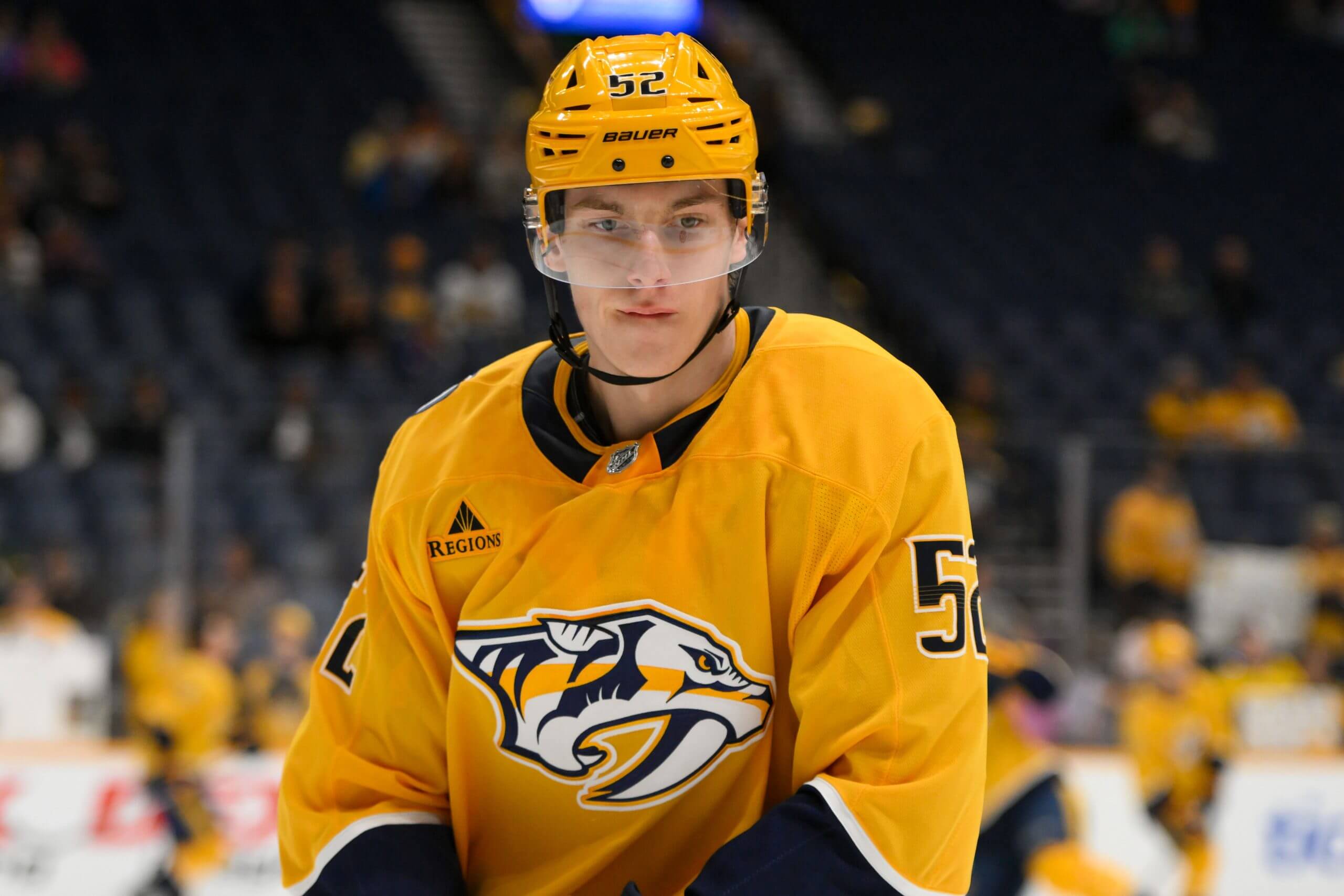
Eiserman is a shot creator and finisher with the ability to score off the rush and in-zone. There have been some big games over the years where he has found it tougher to beat top defensemen one-on-one, causing some to question him, but I thought he helped his case in some big games last year. Eiserman is always a threat to score, even when he’s occasionally forcing things or fighting it in a game, because all he needs is one look. He’s also more competitive than he gets credit for, and is willing to forecheck and battle for pucks even if he’ll sometimes also cheat for offense.
I actually think he’s a better skater than he has been given credit for in conversations I’ve had with folks about him too, but it’s his puck skill, quick release, shot variety — he can rip it in motion or standing still, and he’ll make goalies guess wrong in alone because of how fast his hands are — and sneaky strength (when he uses it) that have allowed him to score with relative ease against his peers. But how easy that part of the game has always been for him has also created some bad habits. He can frustrate, and scouts have wanted to see him round out his game and improve his play selection (which I also thought he made progress on at BU). Though he’s still very much an imperfect player, I saw some progress in his playmaking and off-puck detail with the Terriers (though they’re still inconsistent). He can be a little careless and selfish with the puck, but he actually has good vision when he looks for it as well. He can get carried away trying to do too much: stickhandling into trouble, shooting into shin pads, forcing shots from bad spots on the ice or trying to be too cute.
He does the hardest thing in the sport to do better than just anyone his age, though: He doesn’t miss when he has an opportunity. And it’s so hard to find goal scorers like him outside of the very top of the draft. I have seen him play pretty complete, competitive games. I’ve also seen him zip passes around and show a playmaking tilt, and think he’s an underrated passer who actually identifies second and third options quite well, even if he doesn’t always give the puck to them.
Eiserman produces that “he’s about to score here” feeling when the puck comes to him in a good spot. He has work to do still in other areas, and there’s some risk that it doesn’t work long-term at the NHL level (a la Patrik Laine and others). But he also often looks to me, with continued coaching, like he’s capable of becoming a 30-goal-scoring winger and PP1 focal point — if a flawed one. I understand the reservations many have about him and his game. He’s a complicated player and person, though I think he has been overanalyzed as well. His next couple of years are going to be fascinating to track.
Photo:
Maddie Meyer / Getty Images
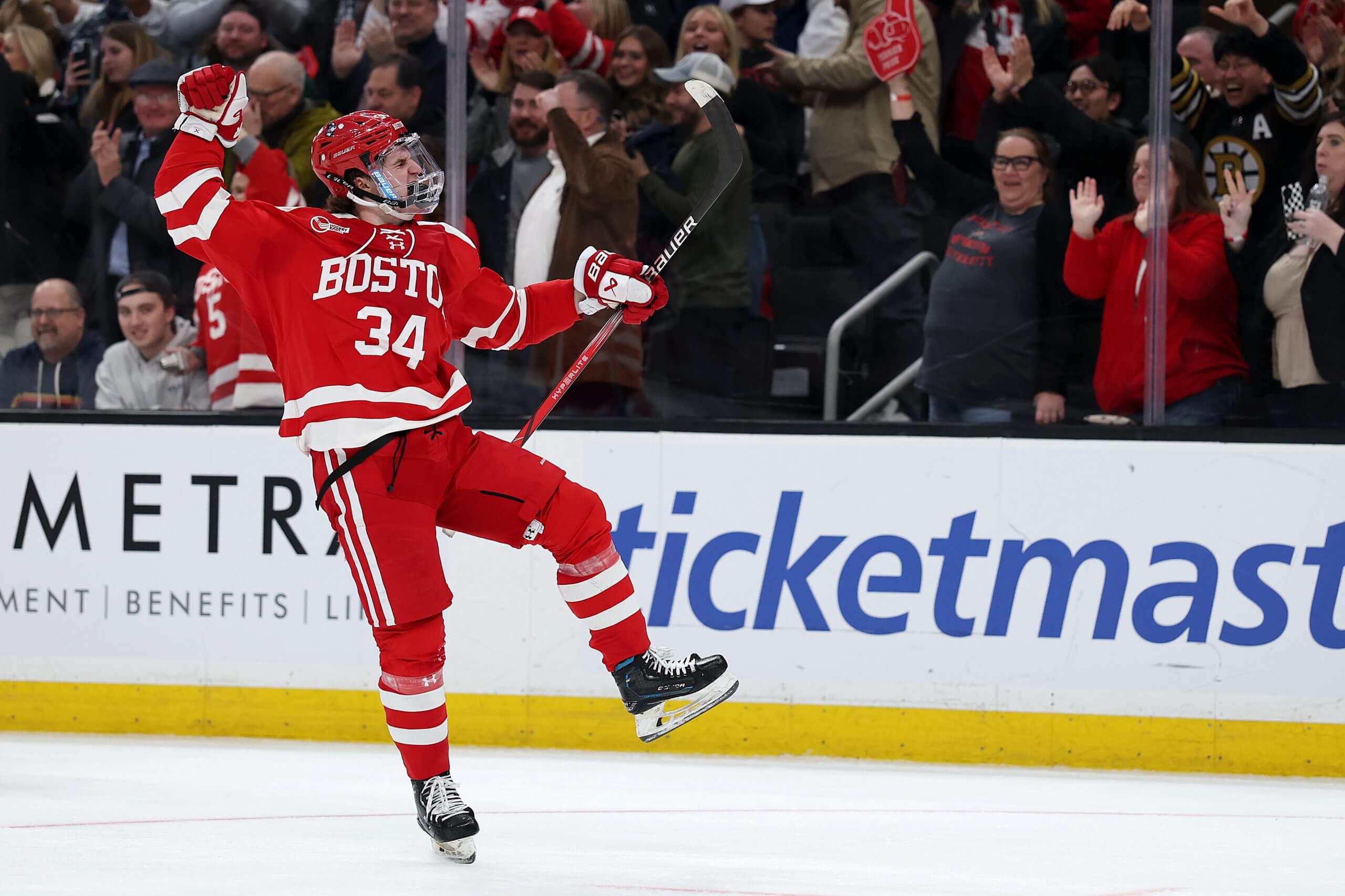
A favorite of mine over the years, Moore has consistently impressed me across levels and competitions — on trips down to Plymouth during his time at the program (as well as after two World Junior Summer Showcases), where he was the focal point of the 2005 age group’s second line and a real driver of play and offense behind their record-breaking first line; in Switzerland for the 2023 U18 worlds, Sweden for the 2024 World Juniors (where he began as the team’s 13th forward but also had a good run on the first line) and Ottawa for the 2025 World Juniors (where he created and drove more than he finished, which is a bit of a theme); and with the Golden Gophers from his exhibition run as a freshman through his sophomore year (even if he didn’t take a step statistically as a second-year player). I think he looks like he belongs in the NHL as well and really liked him in his AHL stint earlier in the year.
His consistent game-to-game impact, even when the points aren’t going in, has always been there (he rarely has a bad game and works and finds ways to involve himself and make things happen). Moore’s game is defined by his world-class skating ability (both in straight lines, where he turns defenders with ease out wide, in quick bursts from explosive stops and starts and rounding corners and winding up through his edges) and consistency of presence on the ice. He has gallops, cutbacks, crossovers, all of it. I’ve seen him create breakaways with ease, win races he shouldn’t and send defenders sliding when he stops up on them with a head of steam. He also hunts pucks and applies pressure with the best of them and his motor doesn’t stop, bouncing from one won battle to the next.
He wants to hang onto the puck and make plays, but he’ll also hurry it up and dominate in and out of give-and-gos. He has quick hands. He has a one-timer from the right flank and can really rip his catch-and-release or in-stride wrister when he gets clean looks. He’s an impressive athlete who is strong for a 5-foot-11 player, which should help him stick at center up levels. He has learned to use some more diverse movement patterns to make defensemen miss and get to his spots as a shooter. He’s strong in the faceoff circle. Increasingly, his game isn’t all just about the speed/hound element, and I’ve been impressed by his puck protection in and out of stops and starts in the offensive zone, changing directions to beat defenders off the wall into valuable ice.
But he just doesn’t seem to finish off plays around the slot or in all alone enough and that lack of finish despite the tools and some pretty goals over the years on both dekes and shots, has become a bit of a constant, raising questions about his offensive upside in the NHL (we all know he’s an NHL player).
I don’t see much to nitpick in his tools or his approach, although he does need to think the game a little better with the puck at times. He has the ability to impose his will on games. But while his game is fast and tenacious, I think you’re more likely looking at a fast and determined third-liner.
Photo:
Zak Krill / NHLI via Getty Images)
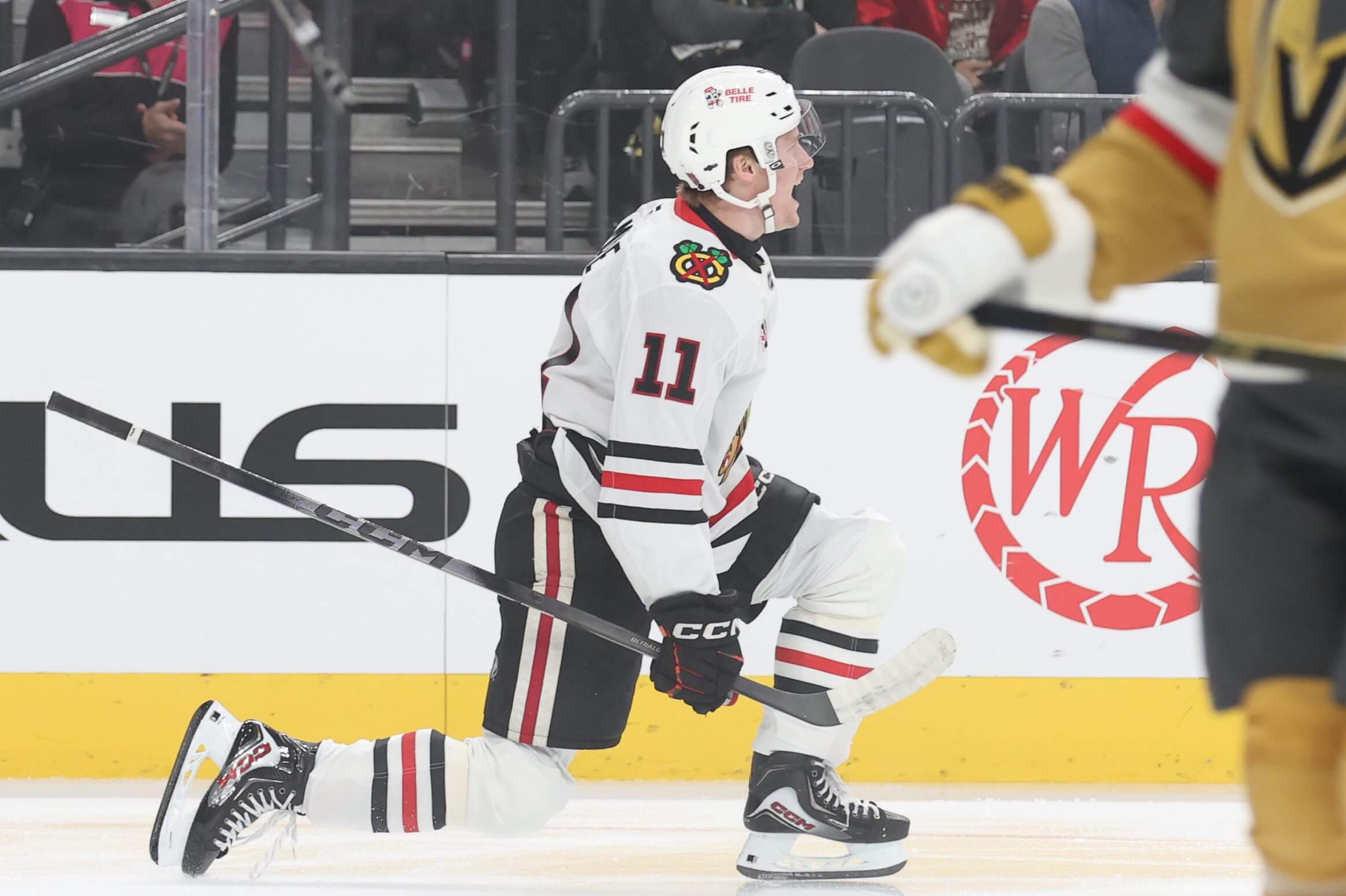
Cowan is a strong skater who buzzes around the ice, works and plays hard and thrived on the penalty kill in the OHL (a role he may eventually play in the NHL). He emerged as an important player for a strong Knights team in his draft year (especially in the playoffs where London’s first line — Cowan, Philadelphia Flyers prospect Denver Barkey and Seattle Kraken prospect Ryan Winterton — was relentless) and took another giant step forward post-draft to win both the OHL’s most outstanding player award and OHL playoffs MVP, registering 130 points in 76 combined games in the regular season, playoffs and Memorial Cup. His play was so strong that it upgraded his projection from an effective third-line contributor to a potentially impactful top-nine player for me at the time.
Last season was also another strong one and saw him return from whiplash to continue his record-setting OHL points streak, lead the OHL playoffs in scoring for a second straight year and win Memorial Cup MVP. He had a difficult World Juniors, displaying some of the bad habits, poor play selection and hockey IQ questions that have followed him at times, but was one of the best players in junior hockey for a second consecutive season. This season, he has given a Leafs forward group in need of some jump exactly that, too, and he looks like he belongs in their top 12.
He plays a fast, determined game, hunting pucks, winning races and then making little skill plays when opportunities or openings in coverage present themselves. He takes or plays pucks into the middle, thrives in give-and-gos playing off his linemate, supports play defensively and can play in a haze/rush, but has also shown the ability to use and elevate his linemates. He does a good job holding pucks around sticks at speed. He’s a heart-and-soul guy who I’m confident will take his career as far as it can go. He can gain a step on defensemen, and while his effort can sometimes be ineffectively deployed (he has work to do on his routes and decisions on and off the puck), he thrives on instinct more often than it burns him. His overreliance on those instincts does need some coaching at times, but you can live with it.
He plays with a bit of a hunch in his stride, which affects his game both positively and negatively as well. On one hand, he’s always engaged and on his toes because he never straightens up his stance and comes to a standstill, and he’s agile on his first cut/change of direction (less so on his second because of the commitment required). On the other hand, when he really commits to a position into contact or a reach-in, it can put him off-balance.
He has learned how to make his game work on a shift-to-shift basis, though, and now makes better choices on his touches than he used to. It doesn’t hurt that he has experience playing all three forward positions, either, and is comfortable on his off-wing.
Photo:
John E Sokolowski / USA Today
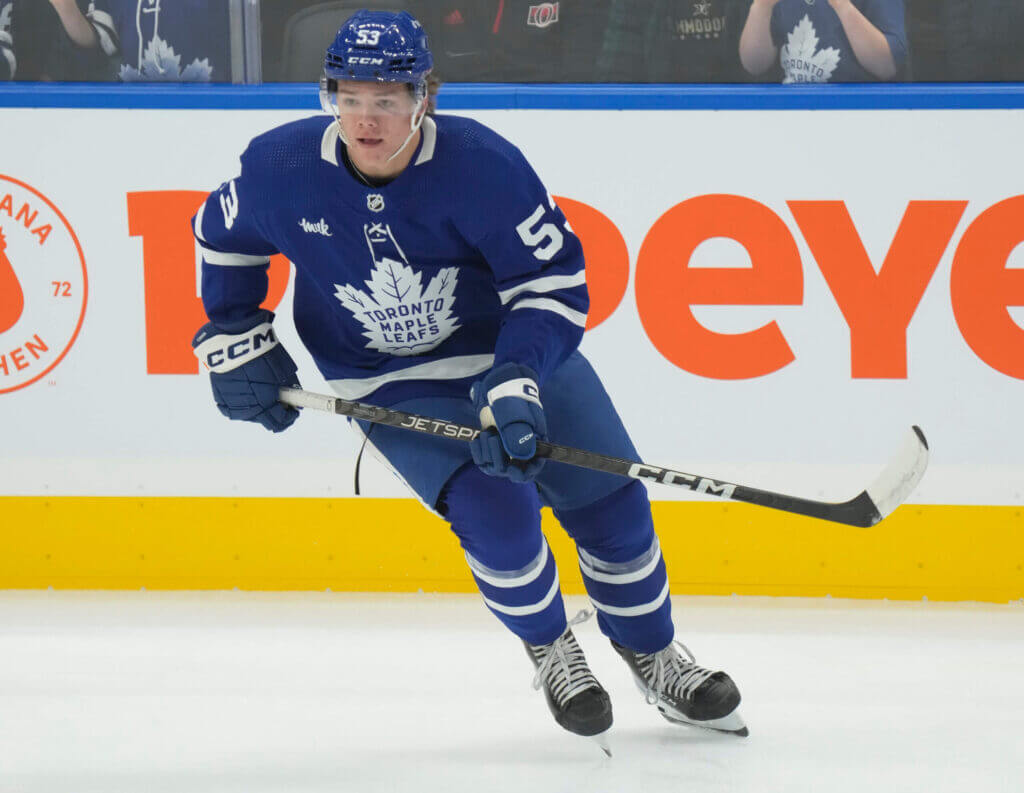
An excellent directional skater, Willander was a beast for the Swedish under-18 team and Rögle’s junior team in his draft year and drove strong two-way results for the Terriers as a freshman and for the Swedish U20 team post-draft without necessarily taking a pronounced step. Last season, he played top-four minutes as a sophomore at BU and was impactful as Sweden’s go-to D on a shutdown pair with Theo Lindstein, while also sharing the blue line on the power play with Axel Sandin Pellikka. This season, he has played predominantly in the NHL as a 20-year-old, making him one of the league’s younger players at his position, and his underlying results have been OK in favorable deployment.
He’s a strong-in-all-three-zones defenseman who plays a steady, decisive defensive game that uses his balanced skating to swallow up opposing carriers and then push forward or fall back onto his heels and outlet the puck. He pulls away or retreats from pressure with ease, and excels on exits and going back to get pucks. His head is always up. He gets his shots through. And then, on top of the pro frame, the skating and the general athleticism, he also just plays the game with an intentionality that’s rare in players his age. He looks and operates like a pro out there. His passes are quick and firm. He activates when he can and picks his spots. Defensively, he’s aggressive on pinches and closing gaps, and rarely mistimes them, taking away the space so well in neutral ice. He’ll make some mistakes that show his youth at times, but he’s pretty polished for a D his age on the whole.
Willander doesn’t have dynamic skill or creativity on the puck, and his offensive-zone instincts are still coming, but he could become a two-way transition monster in a second-pairing role with continued development. Because of how high a level he defends and skates at, he rarely has bad games and play has normally tilted in his team’s favor at lower levels. And even though the offense doesn’t always pop inside the offensive zone, he’s a comfortable puck mover and transporter. He’s going to have a long career as a No. 4.
Photo:
Bob Frid / Imagn Images
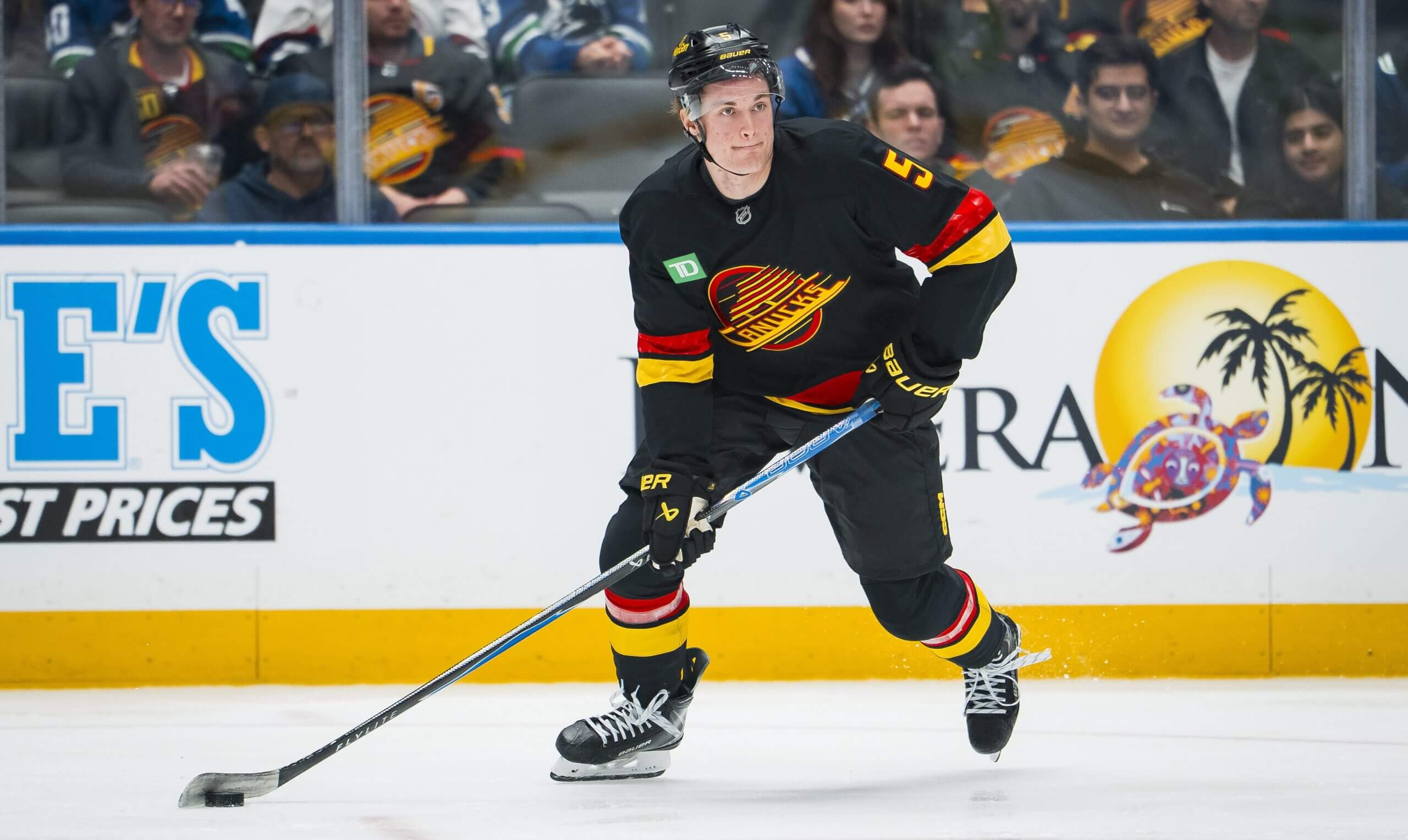
There has always been a lot to like about Öhgren as a player. He’s strong on pucks, holding them with ease against his peers and with comfort against pros, which has helped him become a natural at drawing penalties and hold his own to start in the NHL. He’s also a combination shot-and-pass, power-and-finesse player who can show a variety of tools over the course of a game. I like the way he shades into and away from pressure in control. His shot comes off his blade quickly, hard and naturally, rocking it back into his stance and letting it go — it really rattles off his stick. He has some underrated craftiness to his game to complement the strength, effectiveness and shooting that are more evident. He releases quickly and goes and gets pucks/wins races. He’s good on the cycle.
He could use another step, but I don’t think his skating will impede him from having a good career as at least a complementary third-liner. (I always thought he might have a chance to be like Brock Boeser, ironically, if things break well.) His skating has also noticeably improved over the last couple of years, looking a little lighter through his crossovers and his pickups, and he finds ways to get to pucks and/or get open around the home-plate area, where his skill and shot take over. Add in a commitment to puck retrievals and battles and a strong base knowledge of when to make the simple play and when to attack, and you’ve got a pretty safely projectable winger.
And don’t confuse completeness for lack of talent, as I think that can often be misconstrued, and that’s not the case here. He’s not going to be a dynamic, high-skill guy, but he can attack when opportunities present themselves. You can’t fault his effort level. He’s strong. He can score. Again, there’s a lot to like.
Öhgren put together one of the most productive age-adjusted seasons in the history of Sweden’s top junior level and two strong performances internationally for Sweden in his draft year. And he was in the middle of following that up with a strong post-draft season in the second-tier HockeyAllsvenskan while riding a three-game point streak when he got injured late in January 2023, only to return and pick up where he left off in the home stretch and into the playoffs. Two years ago, after developing a nagging injury in offseason training, Öhgren then didn’t play with his new club in the SHL until late November and had to be eased into the new level, but finished with a very respectable 19 points in 26 games before coming over to make his AHL and NHL debuts. He was also a little snakebitten for a third straight World Juniors, going goalless on 26 shots (second on Sweden) despite some really good looks. He was nearly at a point per game last season in the AHL as a 20-year-old and 21-year-old, too.
Ultimately, I expect Öhgren to have a long career as a solid NHL player and secondary scorer.
Photo:
Bob Frid / Imagn Images
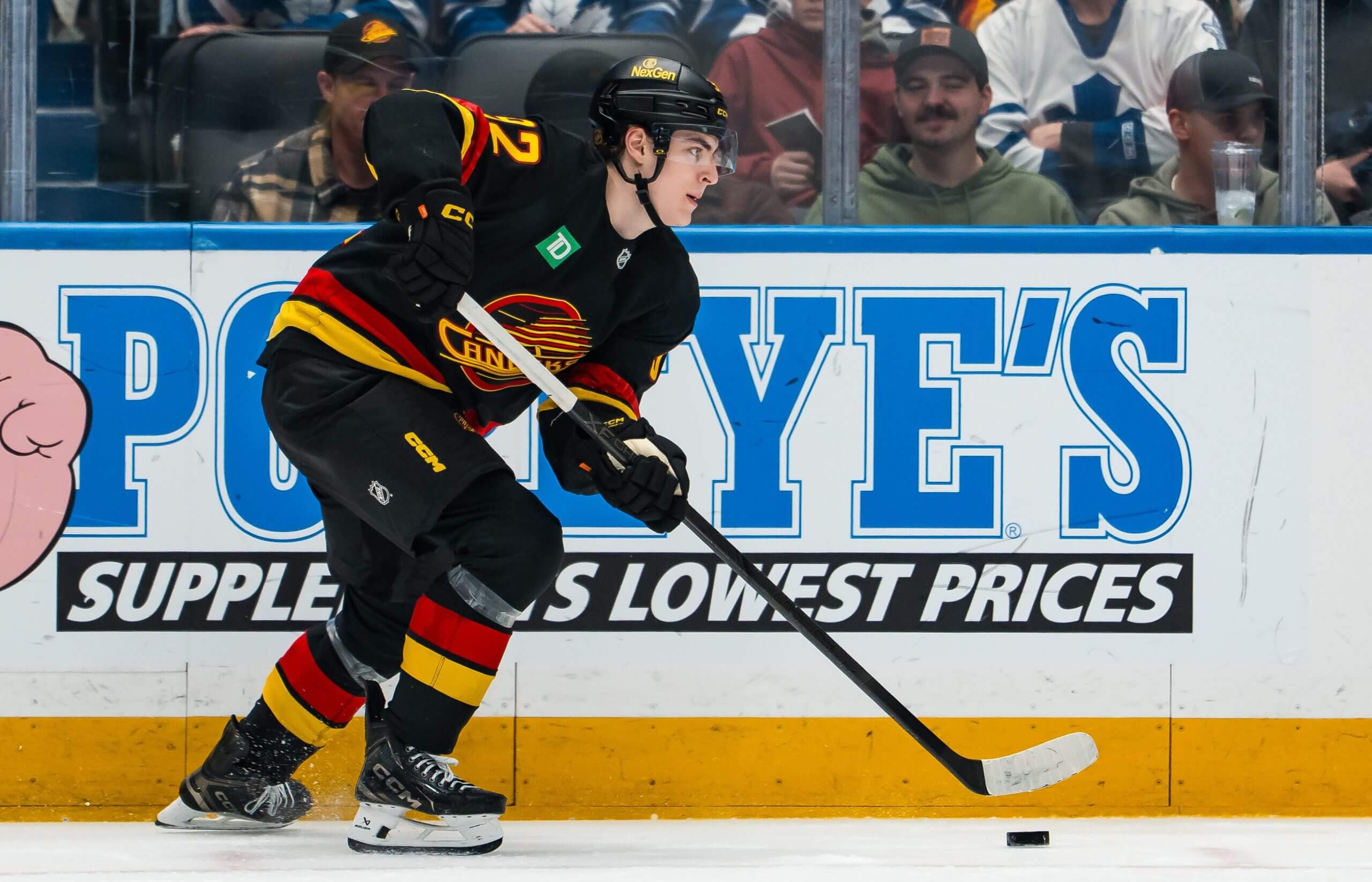
After playing on Russia’s Hlinka Gretzky team four summers ago, But played to a point per game in the MHL as one of its top 2005s four seasons ago and then began his draft year three seasons ago on a tear in the MHL, scoring 11 goals in his first 15 games of the season before earning a mid-October promotion to the KHL. Two seasons ago, playing as a regular in the KHL with Lokomotiv, But broke 10 goals and 20 points despite playing under 10 minutes per game. Last season, those minutes rose to about 12 on average, and he won a KHL title playing a reduced role in the playoffs (6-7 minutes per game). Despite the limited usage, he registered a respectable 28 points in 54 games, which was seventh on Lokomotiv in scoring. This season has been a positive first one in North America, too, and has included point-per-game play in the AHL and his first few NHL goals. Though it feels like he has been around forever, he’s still only 21.
Scouts were drawn to But because of his size-skill combo as a 6-6 winger with natural skill/scoring touch and a committed 200-foot game. While he could look a little uncoordinated out there at times earlier in his career, those things have smoothed out, he skates well and his hands are nimble for his size. The draw is real, and there are some definite tools there. He’s excellent on the wall in puck protection and also has some outside-in skill so that he can attack off holds into the middle third. He has impressive shooting mechanics, given how long his stick is, and he regularly pulls pucks into his feet to change his angle face-up against goalies. I love the way he shields pucks and waits for his opportunities to attack. While he has some work to do to get a little quicker from the jump in the game’s 10-foot races for the NHL, he does have some power and balance through his stride to build upon and skates pretty well for his size and age.
It’s hard to be a true top-of-the-lineup forward at his size, though, and he’s not the most physical player, so he’ll have to rely on his reach-skill-shooting combo to be an impactful secondary producer in the NHL. I think he projects as a complementary scorer who gives a lineup a bit of a different look. There’s a lot to work with, and he’s a legitimate prospect. He’ll be a unique top-nine winger in the NHL and maybe even a second-liner if he hits.
Photo:
Ronald Martinez / Getty Images
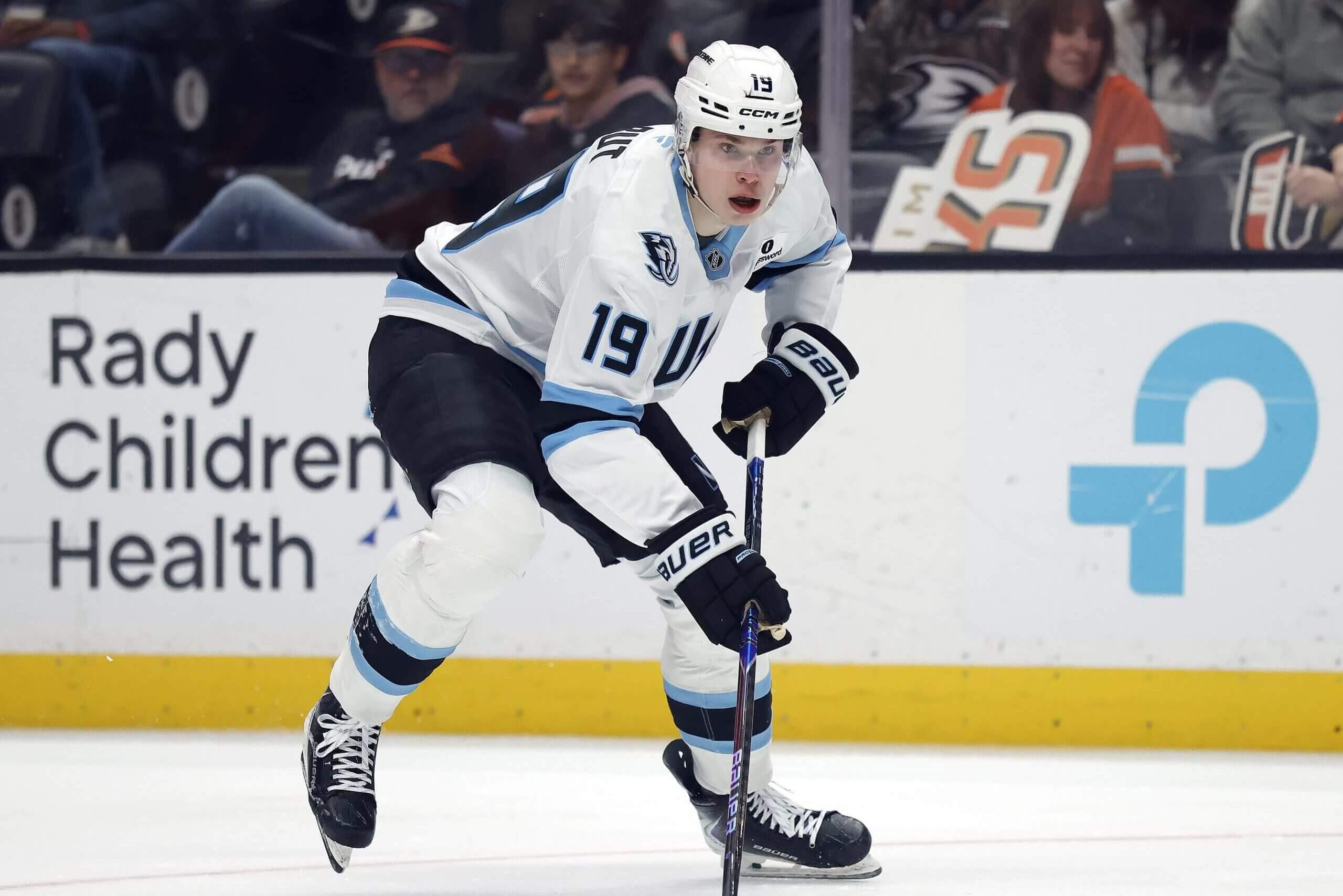
Geekie played predominantly in the NHL last season as a 20-year-old, but also registered 20 points in 24 AHL games. And while he hasn’t taken a step this year, playing predominantly in the AHL now, his production at that level has continued to hover around a point per game, and he’d be playing in the NHL if he belonged to most other teams.
He’s a big forward (6-foot-4, 212 pounds) who can play both center and wing. He has clear skill as a handler, passer and shooter, and a comfort trying things with the puck that I admire and you don’t often see in players his size. He has impressive hands and body control for his size, which helps him control pucks inside the offensive zone and make plays while also getting the upper hand in board battles.
He plays through bumps and thrives taking pucks from the cycle to dangerous areas, pushing through the guts of the ice in control, or even drifting to the perimeter in control to facilitate. He also skates well enough for his size for me — it’s a little below average, and he can look like he lacks pace but I wouldn’t call him slow/it a major impediment — and I think he moves better than his big brother Morgan (who has become one of the league’s top goal scorers) did at the same age, creating his fair share in transition at lower levels.
I do find he forces things too much by trying to go one-on-one and create something that’s not there. There’s also a hunch to his stride. He has some work to do in the faceoff circle, too. But it’s hard to deny the impressive size-hands combination he has, considering his length. He has a real ability to hang onto the puck, draw players into him and then make plays through or around them. He processes the game quickly offensively, knowing where he wants to go with the puck early and constantly pre-surveying so he always knows where his options are. He makes an unusual amount of soft little plays for a player his size, and can attack into coverage because of his hands. He’s really quite comfortable in control of the puck. He also has a hard wrister.
Geekie is a legitimate young player with a desirable set of skills. As he continues to work on his pace/skating, he has the touch and skill to become a unique player. I still think he’ll have a productive career as a middle-six forward who brings a length-skill combo to his line, though some project him more as a bottom-sixer than a middle-sixer.
Photo:
Steve Roberts / Imagn Images
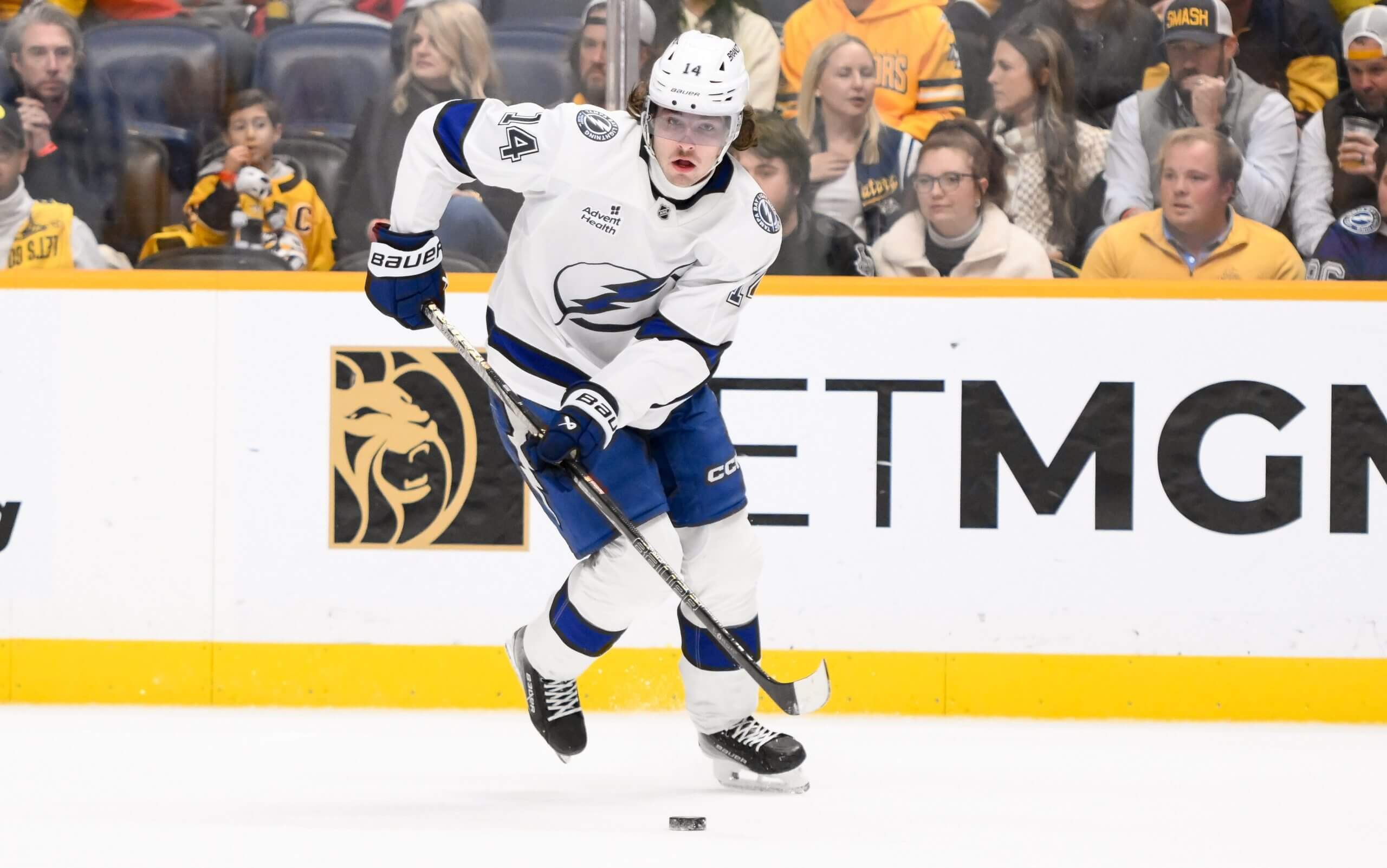
Korchinski is capable of playing an ambitious, free-flowing game when he’s at his best and playing with confidence, but has struggled to consistently play at his top level and define his game against pros. He has a June birthday, so while it can feel like he’s been around forever and he hasn’t fully established himself in the NHL, it’s important to remember that he was the youngest defenseman in the NHL in the two seasons prior to this one, that defensemen typically don’t make their way into the league until his current age and that he still has plenty of runway to take steps and get better. I thought he finished last year on a positive note in the Calder Cup playoffs with Rockford, even if he’d been passed by Rinzel and Levshunov by then, and he has had some good stretches this year where he has looked close in my viewings to taking that next step.
Korchinski handles the puck smoothly on his hip, his good footwork and maneuverability (both of which have come a long way) help him adjust to, away from and around pressure and then he’s a decent playmaker who can make something happen and facilitate out of all of his movement and carries.
I like his stick and his ability to use his feet to defend the rush and disrupt play (though he’s a better transition defender than a defensive-zone one). His hallmark has become his balance over his skates (an area that, astoundingly, was once a major concern before a growth spurt somehow straightened his posture out), allowing him to stay stick-on-stick through stops and starts with opposing carriers.
He tries to guide play with and without the puck with his mobility, pivots and directional changes. He can impact play with his ability to transport the puck, roam and find seams. He can stretch the ice on outlets. He reads the play quickly, which allows him to make hurry-up passes when a long carry sequence isn’t there for him. He sees the play develop inside the offensive zone and regularly hits cross-ice holes in coverage. Though his shot isn’t hard, he’s comfortable attacking into the slot. He’s also an underrated competitor who is willing to take a hit to make a play and fearlessly pursue pucks into corners.
There’s still some fine-tuning that needs to happen defensively, and he’s prone to the occasional brain cramp, but Korchinski can play under pressure when he’s really seeing it. He has made progress making quicker decisions, he exits and enters the zone well, he can control play when he arrives there, he gaps up well in neutral ice, he sees it and handles it at an advanced level, he has shakes and shoulder fakes. He just needs to be a little firmer out there on both sides of it and has never added some needed strength. He projects as a No. 5 and PP option now. I do wonder if he could become a No. 4 somewhere else with a change of scenery to get out from behind the Blackhawks’ young crowd on blue line, though.
Photo:
Jamie Sabau / Getty Images
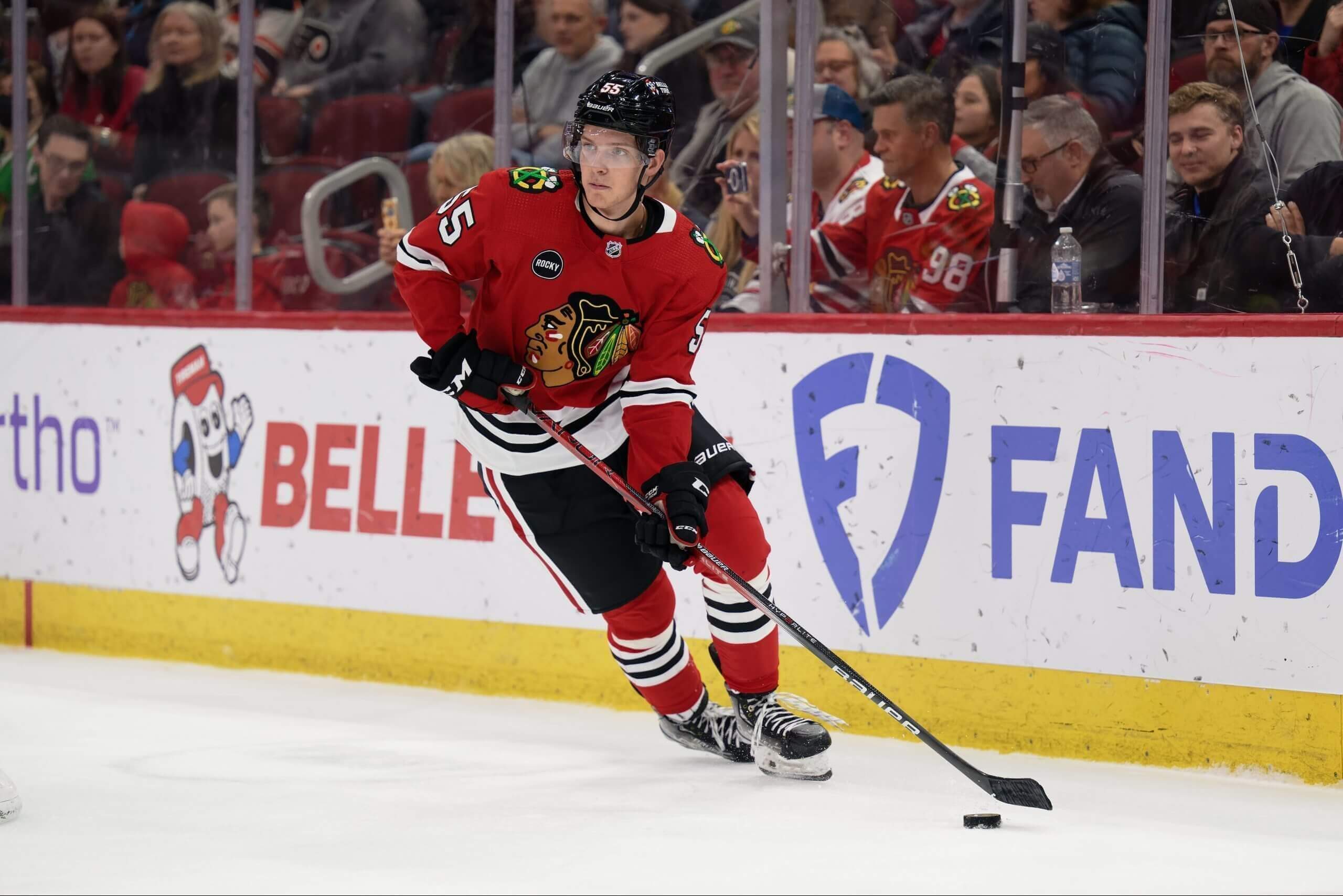
Mailloux’s game still needs some work, but he has made some progress over the last two and a half years in some areas that were really ugly previously. He had a really strong AHL season all told in 2023-24, finishing with 47 points in 72 games, and followed it up last year with 39 points in 76 combined regular-season and playoff games while trying to put a greater emphasis on buttoning down defensively and cutting down on his mistake-prone game. Still, while he has made more progress in his decision-making, his game has still come with real ups and downs whenever he has been asked to play tougher minutes. Striking the right balance between his offensive and defensive presence and the number of hiccups will determine his wide range of potential outcomes as a player.
He’s a strong and athletic 6-foot-3, 212-pound right shot who’s physically advanced and showcases that strength through a strong forward skating stride, a hard and heavy shot (it’s a real weapon) and a presence over pucks and in board battles. He’s a confident puck carrier in transition and is eager to take space off the line to make a play. His game does have some notable deficiencies, including the aforementioned decision-making and reads that can let him down, but they’ve started to become fewer with more reps.
His game is always going to come with some brain cramps, but you’ll be able to live with it because of his natural talent and the personality of his game on the ice. The hiccups show up with the puck in distribution and/or on carries in dangerous spots on the ice, and without the puck in choices on when and how to close gaps or puck-watching and losing his man in D-zone coverage. He has some sloppy stickwork in man-to-man coverage that can require him to overcompensate by trying to make a hard play on the puck as well, which can result in some penalties. But the physical tools and talent are going to carry him. His game has some very real upside and some clear plus attributes, even if it’ll come with the odd headache. Though this isn’t a projection and he won’t get there, he has a bit of a Brent Burns look to him out there.
Photo:
Sergei Belski / Imagn Images
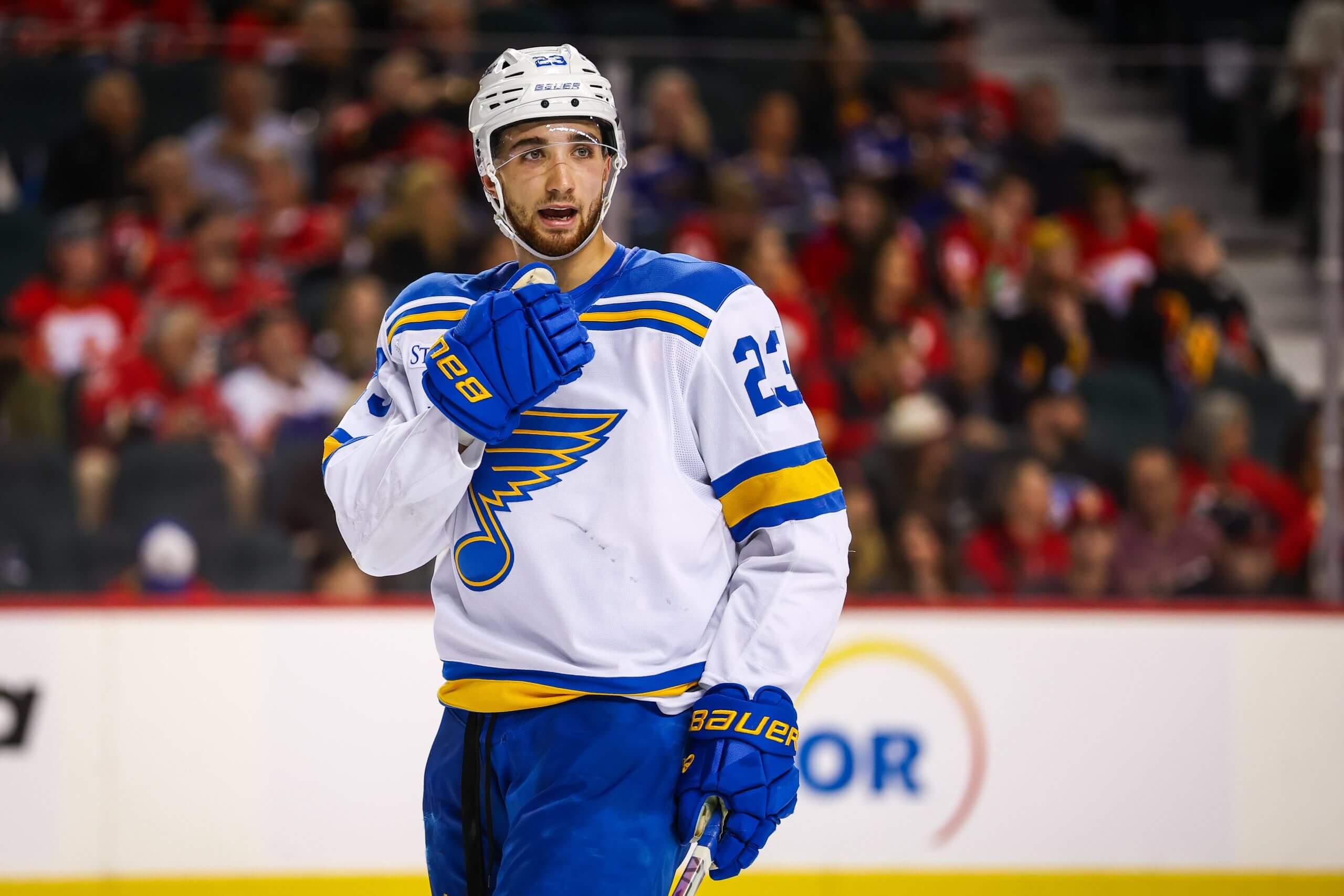
Brunicke blew me away with his play at the Penguins’ rookie tournament in 2024 and was going to be on Canada’s World Junior team as an 18-year-old before he broke his wrist blocking a shot in practice. Brunicke garnered increased attention from NHL clubs as his draft season progressed, too, before hurting his shoulder on a late hit in late February of that year. That hit effectively ended his WHL season just as his momentum was really building. He returned to play at U18 worlds for Canada, though, and performed really well as an important top-six defender and particularly prominent penalty killer who was counted upon in defensive situations throughout the tournament.
Last season, after returning from injury, he was involved in everything the Blazers did and finished the year with 30 points in 41 games on a low-scoring team. At year’s end, he also registered four points in 12 combined regular-season and playoff games in the AHL. This season, after another strong camp, Brunicke started the year with the Penguins. And while he had some ups and downs, there were games where he looked like a solid NHL D as a teenager, and that kept him around until the World Juniors. He then got caught out of position and spun around in the D-zone a few times early in the tournament, and his minutes were reduced. He was also tried and then removed from the PP, which isn’t a natural role for him at that level. Since returning to Kamloops post-tournament, he has played 24 minutes per game for the Blazers and again made his two-way impact at that level.
His statistical profile doesn’t pop, but he has good size, a pro build, excellent skating and good enough instincts on both sides of the puck. He has shown a real willingness to join the rush and look for opportunities off the offensive-zone blue line in the last two years or so, playing a very active two-way style and recovering when he’s down ice with his skating. I think he has another level to find offensively — he has shown some skill on the puck, even if it’s not dynamic, and the skating is obviously legit. He can defend with his active stick, length and feet, though there are times where I want to see him play a little harder in man-to-man D coverage and be a little more aware in his own zone. He’ll stand up for his teammates, block shots, etc.; it’s more just about really battling out there consistently. He can lead exits and entries with his skating or an outlet, and has progressed very quickly since playing a depth role for the Memorial Cup hosts in his 16-year-old season. He has developed his poise and makes a great first pass.
The Penguins drafted him 44th, but he has looked like a late-first caliber of prospect since. He’s going to be a transitional, two-way No. 3-5 D in the NHL for a long time.
Photo:
Allen Douglas / WHL Images
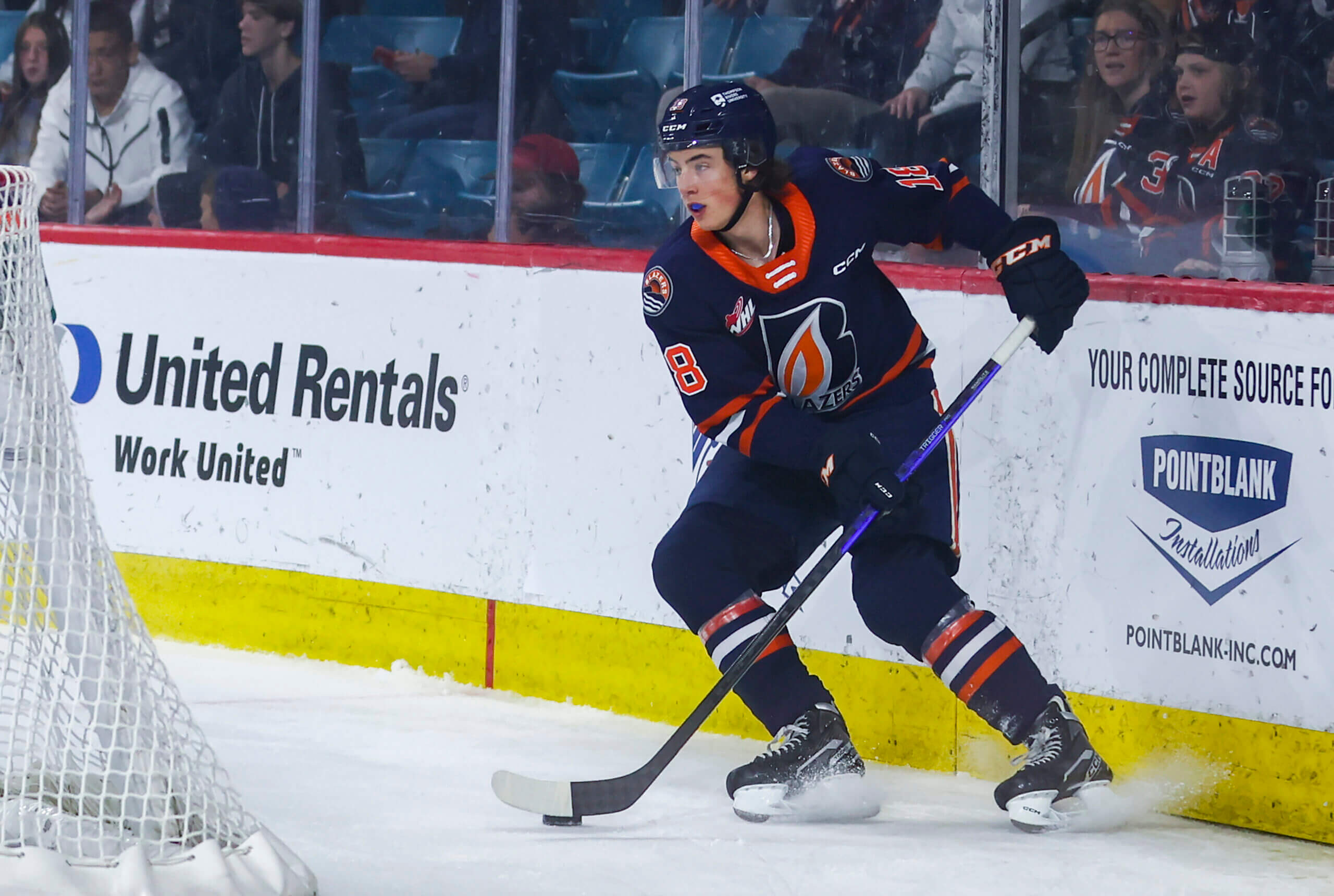
The pace of the pro game was clearly an adjustment for McGroarty early on last season, but he really began to figure it out in the second half and has continued to take steps this year. In the AHL, he has been a point-per-game player and has driven positive results.
McGroarty has always looked like a pro hockey player in most areas, other than his speed/pace at times. He’s also a charismatic leader who has worn letters all the way up, including for a Team USA that won gold at the World Juniors. He has energy and light about him that everyone talks about. You have to be careful not to put too much stock into the off-ice pieces of the puzzle (he’s also very strong and has had a pro build for a long time), but I think he’s a darn good player, and the pieces of the puzzle fit together nicely on the ice as well.
His skating doesn’t look the prettiest through his first few steps, but there’s some power when he gets going nonetheless. And his spatial awareness, reads and effort level help him avoid losing short races and being behind the play. He has great hands and feel on the puck as a passer. His finishing touch around the net is there, with a hard one-touch shot that leverages his strong frame to power through. He has always been a sneaky-good facilitator who passes the puck really well and can hold it.
He has particularly mastered the net drive into a high rotation away from coverage that brings him back to around the net. (He arrives in space with the right timing for his linemates, an important and underrated skill in today’s game.) And then when he gets there, he has the strength to shoot from bad postures/off balance. He always seems to put his shots into good locations (along the ice, low blocker, high short side) too. He’s dexterous. He’s a tone-setter who will track and finish his checks even if he doesn’t have the speed.
The ice normally tilts in his favor; he’s such a smart player. He can score, he works and he just understands where to be out there and how to put himself in positions to create offense. He reinforced his strong statistical profile from the NTDP at Michigan, where he was a point-per-game freshman and one of the top-scoring players in college as a sophomore despite a pretty severe injury in the fall (a broken rib and punctured lung). And he has now done it in the AHL.
If he can get a little quicker from the jump, he has all of the other makings of a legitimate top-nine forward who can play up and down a lineup with a variety of player types.
Photo:
Nick Turchiaro / Imagn Images
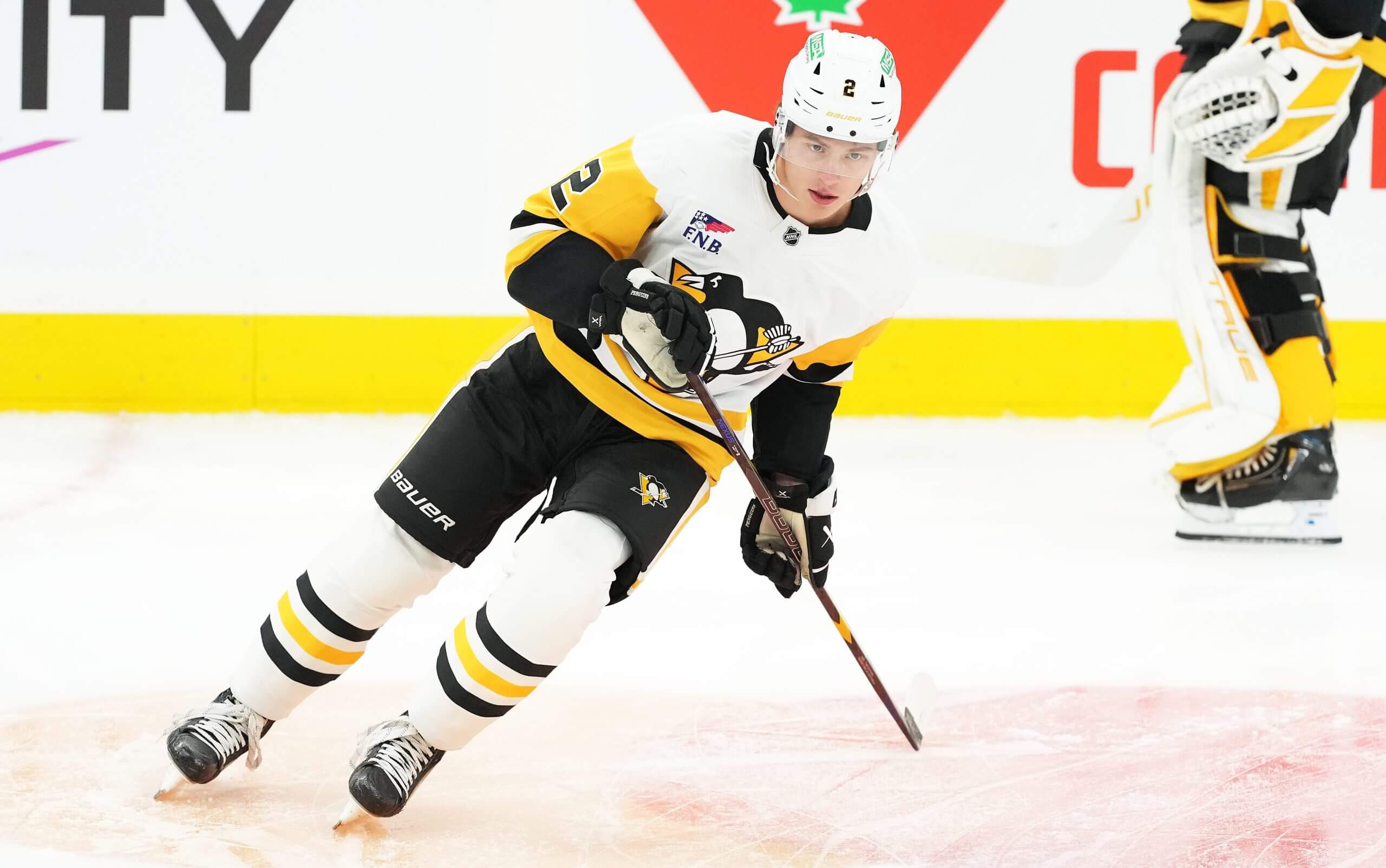
Lakovic is a 6-foot-4 winger who can really fly and blends good handles and scoring touch into his movements nicely. However, injuries have impacted his last two years of junior. Last season, he was a standout of one of the CHL-USA Prospects Challenge games and was on a 13-game point streak when he went down with a fractured collarbone that sidelined him from the end of December to the middle of February (he heated back up after returning to a Moose Jaw team that had entered a full rebuild post-deadline). This season, he’d scored 18 goals in 22 games when his season was ended late in 2025 by a shoulder injury (he was likely to be traded a month later at the deadline to a contender had he been healthy, though he wasn’t expected to be invited to Canada’s World Junior selection camp).
He protects pucks well, can get off the wall and has taken strides to keep his head up on the puck and survey/use his linemates better and better. He still has room to improve his scanning, off-puck play and decision-making, and his physicality needs to be more consistent, but his ability both in transition and protecting pucks in the offensive zone can really pop, and he has clear top-nine projectability with good coaching. When he’s on pucks and up and under sticks and winning inside body positioning, he can be really noticeable in a game with his skating, strength, power and skill. He has quick hands and can take D one-on-one as well. He also reportedly really impressed at Caps development camp.
Photo:
Nick Pettigrew / Moose Jaw Warriors
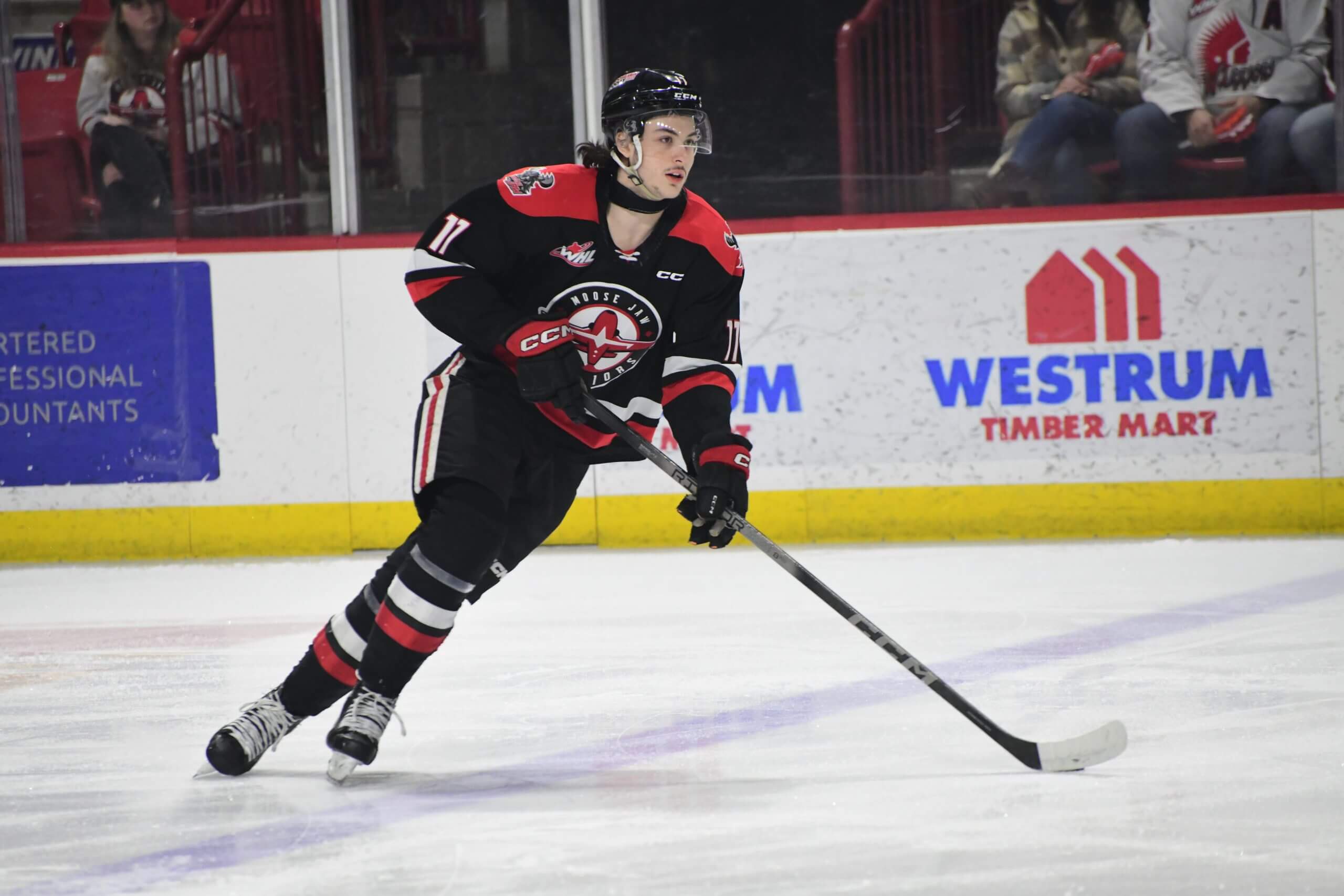
Danielson is a good prospect who had a good rookie season in the AHL last year, took another step this year, has started to get NHL play and is going to be a good NHLer for a long time as an effective top-nine forward. But his skill has never grabbed me, and I’ve always wanted to see him score more, which has left me a little lower on him than most.
His counting stats in junior never popped when you contextualized them with his late birthday and near-2022 draft eligibility. He has some pedigree, though. Danielson was a point-per-game player and one of Brandon’s top producers four seasons ago. He was named captain of the Wheat Kings for his draft year, and after a bit of a slow start, he came back into his own and finished with 33 goals and 78 points as the best player on a bad team. Two years ago, he was an effective bottom-sixer for Canada at the World Juniors and the counting stats began to come more after a move from Brandon to Portland, but even then he didn’t light up the league. (Post-trade he had 41 points in 28 regular-season games, an impressive 100-point pace over 68 games and a noteworthy uptick, but production that still would have landed him third on the Winterhawks in scoring and outside of top 10 in the WHL.) Last season, he was consistently good for the Griffins, logging 19-20 minutes per game in the AHL as a 20-year-old rookie and contributing in all areas, and was probably owed a little more than his modest production indicated. But that can only be a talking point for so long, too, and eventually you have to score as a top-10 pick. Even this year, as his production climbed closer to a point per game in GR, the goals didn’t come with it.
Danielson is well-liked by scouts and should become a solid middle-six center in the NHL, though he needs to improve in the faceoff circle. He’s a 6-1, 190ish pounds, hardworking pivot who can skate, drive through the middle of the ice, push tempo and play with a decent talent level and good overall detail. He plays a well-rounded two-way game, is a proficient penalty killer, wants to make a difference in all areas when he’s on the ice and blends good overall skill with his effort. He plays with intention and consistency. He can simplify his game or mold his play to his line or coaching assignment. His lines tend to spend their shifts in the offensive zone. He’s a good skater who can play in transition as well as a good forechecker with some secondary skill. He’s a smart player on and off the puck, offensively and defensively. Though his game lacks dynamism for me, he’s a complete player without any glaring holes. I’ve just never been able to get excited about his offense.
Photo:
Nicolas Carrillo / Griffins
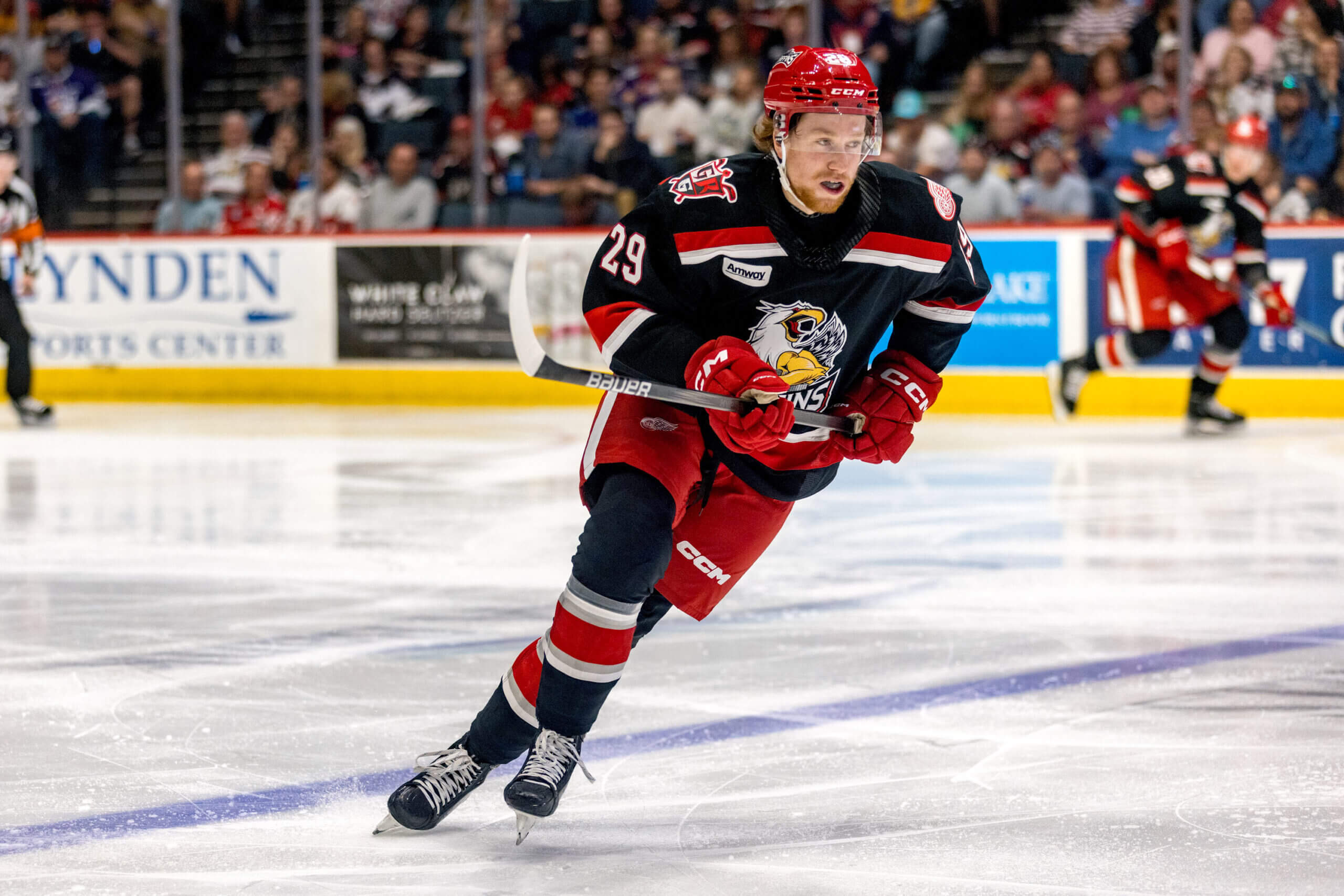
I think Brandsegg-Nygård will have some scoring punch and presence about his game at the NHL level in the prime of his career.
He’s a very well-rounded and projectable winger. He’s an October birthday with a pro frame who played to above a point per game at the junior level and scored his first pro goal in HockeyAllsvenskan three seasons ago. If not for knee surgery in March 2023, he might have played for Norway’s senior national team at men’s worlds before his draft year had even started. He then got back in time for his draft year and got off to an excellent start, registering nine points in his first three J20 games and quickly establishing himself back with the pro club, building as the season progressed toward a standout postseason that saw him register 10 points in 12 playoff games at Sweden’s second-rung pro level.
Last year, he played on loan with the reigning SHL champs in Sweden’s top flight, averaging 14-15 minutes per game and contributing at five-on-five and on the power play. He has also been really solid for the Norwegian men’s national team, which has included nine points in 12 games at men’s worlds, two goals in three Olympic qualifying games and a four-goal game in a men’s worlds tuneup against Denmark. His numbers didn’t pop in the SHL, and he only scored one goal at the Division 1A World Juniors for Norway, but he did lead the entire tournament in shots on goal with 25 in five games, so I’m not reading into it too much. After coming over to the AHL last spring, he looked solid in Grand Rapids in the playoffs last year and has had a decent first full year in North America split between the AHL (where he has played 17-18 minutes per game) and NHL, where he has averaged a little over 12 per game and has had enough looks in my viewings for this as of April 1 that I think he’s probably owed his first NHL goal.
Brandsegg-Nygård’s game is built on his work ethic and drive. He’s a multifaceted shooter who can score from the top of the circles with his wrister but also gets down to one knee and really powers through a good one-touch shot — skills that have helped him excel on both the flank and the bumper on the power play across domestic and international levels. He’s not a dynamic individual play creator, but he has pro size (6-1 and a strong 204 pounds), he works extremely hard and engages himself in the play, he plays well off his linemates and he has good all-around skill. He also plays the game with a physical tilt, even against pros, constantly engaging in battles, bowling players over and keeping his effort level ramped up. He has good straight-line skating. He has a commitment to staying on pucks and finishing his checks, and uses a long stick to protect pucks well out wide to his body.
He looks like a projectable middle-six push-and-pop driver and shooter to me as the third guy on a more talented line or a driver on a bottom-six line with continued development. Some wonder about his skill in terms of NHL points, but you won’t find anyone who doesn’t at least like his game/style, and I think it’s going to translate into a real go-getter with some jam at the NHL level.
Photo:
Charles LeClaire / Imagn Images
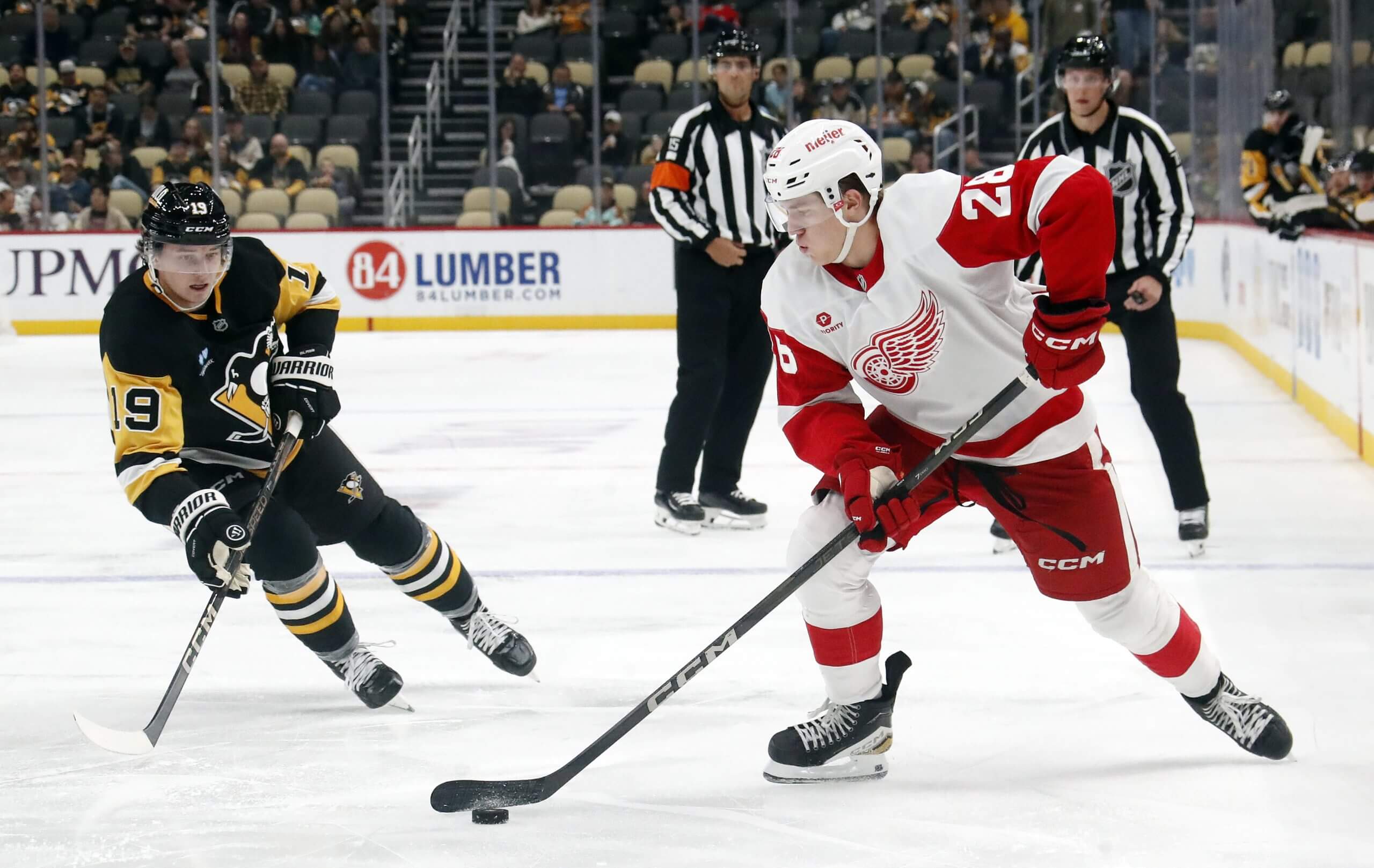
Greentree is an interesting one because he was just OK for Canada at the 2023 Hlinka Gretzky Cup and played a diminished role at both the 2024 U18 worlds and 2026 World Juniors, and in the latter two, Hockey Canada decided pretty quickly that he didn’t have the required pace. But he has also been one of the most consistent game-to-game offensive players in the OHL over the last three seasons. He scored 25 goals and was named to the league’s First All-Rookie Team at 16. At 17, he was named captain of the Spitfires in his draft year as they began a rebuild and led the team in scoring by a wide margin (his 90 points were 24 more than his nearest teammate) to prove he could drive offense himself. Last season, at 18, he finished third in the OHL in scoring (albeit on a line with Ilya Protas, who finished second) and registered 63 goals and 143 points in 75 combined regular-season and playoff games. And this season, he has again been a top producer on a top team.
But despite having a makeup (size, strength, shot, skill, on-and-off-ice habits, etc.) that would usually lend itself to being universally well-liked, and despite some strong showings at other marquee events like the CHL/NHL Top Prospects Game (in which he scored, was robbed and had multiple looks against other top prospects), he had some skeptics pre-draft and he hasn’t fully been able to silence them, even as his pace has improved slightly (it’s never going to be a strength but should be passable).
Greentree’s game has finesse for a bigger, stronger player. He finds his way onto pucks inside the offensive zone, can stay on them, can win battles, and when he keeps his feet moving, he plays an opportunistic style with above-average talent in multiple areas (shooting, handling, first touch for a player his size, etc.). He has skill and an NHL release; the puck comes off his stick hard and quickly and hits his spots. I haven’t seen a dynamic quality, though, and his skating needs work (though his speed is OK when he gets going and it’s more through his first few steps), but he has pro size, a good toolkit offensively, individual skill and a growing statistical profile. He’s not ultra-competitive, but he has played harder over time.
Greentree has work to do still, but he projects as a potential middle-six/PP2 forward if he can develop more pace.
Photo:
Tim Cornett / OHL Images
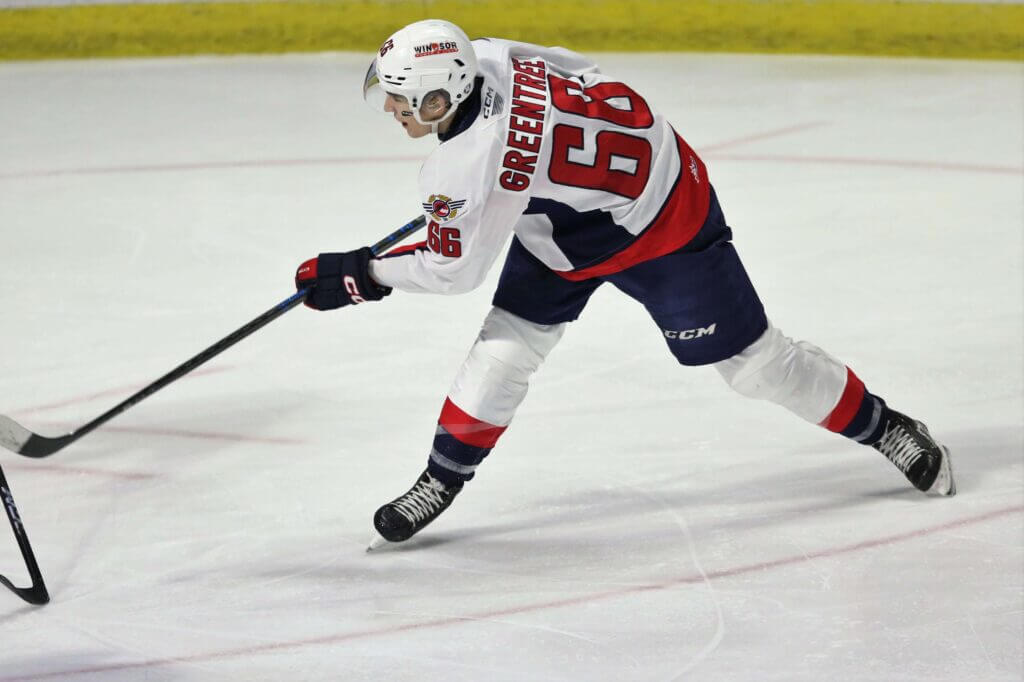
Howard is a player I diverged from the consensus on in his draft year, ranking him in the front half of the first round when he was drafted at the tail end of it. After an up-and-down freshman year at Minnesota Duluth gave me some pause about whether I was a little too high on him, he got back to looking like the player I believed him to be following a transfer to Michigan State. With the Spartans, he was a top team’s top offensive player as a sophomore and junior, winning the 2024-25 Hobey Baker after he led college hockey in points per game (52 in 37, or 1.41 per game). He also scored seven goals and nine points at the Gothenburg World Juniors, where he was an important part of an excellent line and made some big plays in big moments, including the gold medal game, and was impressive on my trips down to East Lansing. This year, as a rookie at the pro level, he hasn’t impressed me in limited usage with the Oilers (after an up-and-down summer and preseason) but has looked dangerous in the AHL.
Howard is a player with the kind of track record of success that nearly always translates. Though he’s “short” at 5-foot-10ish, he’s not small, with a fairly muscular build. He has quick crossover acceleration with a hurried stride that cranks its way up ice to give him good speed. There are times when he can look like an all-offense player, but when his effort level and tenaciousness match his skill level, you’ll see him around the puck all game. (He ramped up his off-puck movement and drive at MSU, too.)
Inside the offensive zone, he’s extremely dangerous on the puck, with underrated creativity to complement his high-end skill; though he tries things occasionally at the offensive-zone blue line that he shouldn’t get away with, he also usually executes them. He makes a lot of plays under the triangles of defenders’ sticks, he navigates in and out of holes in traffic really well, and when he’s in attack mode taking pucks from a standstill into the middle of the ice to create looks, he’s a ton of fun to watch and forces opposing players to reach in on him, which draws a lot of penalties.
But he’s even more dangerous off the puck, with a scorer’s sixth sense for always arriving just in time in Grade-A locations, whether that’s hiding in coverage or just staying around the puck at the net. He’s the kind of player who finds ways to get open in the home-plate area and then makes quick, aggressive finishing plays either with his hands or a heavy one-touch/catch-and-release shot. I think some of his so-so freshman year can now be attributed to some of his struggles to create for himself, but also that they didn’t have a natural playmaker to find him in soft space and facilitate for him (a similar challenge he has faced at times early on as a pro). He needs to play in a certain role and with a certain type of linemate in order to maximize his potential, which makes him a tricky evaluation to be sure about.
Still, Howard is a player who is always going to have power-play utility, and I think he’s capable of becoming a second-line winger under the right coach. It was nice over the last two years to see him play with more jump, get to more loose pucks, move his feet to get off the wall and to the slot/net, and be above and supporting more pucks when the other team has possession. Now he has to find a way to play that game at the NHL level.
Photo:
Bob Frid / Imagn Images
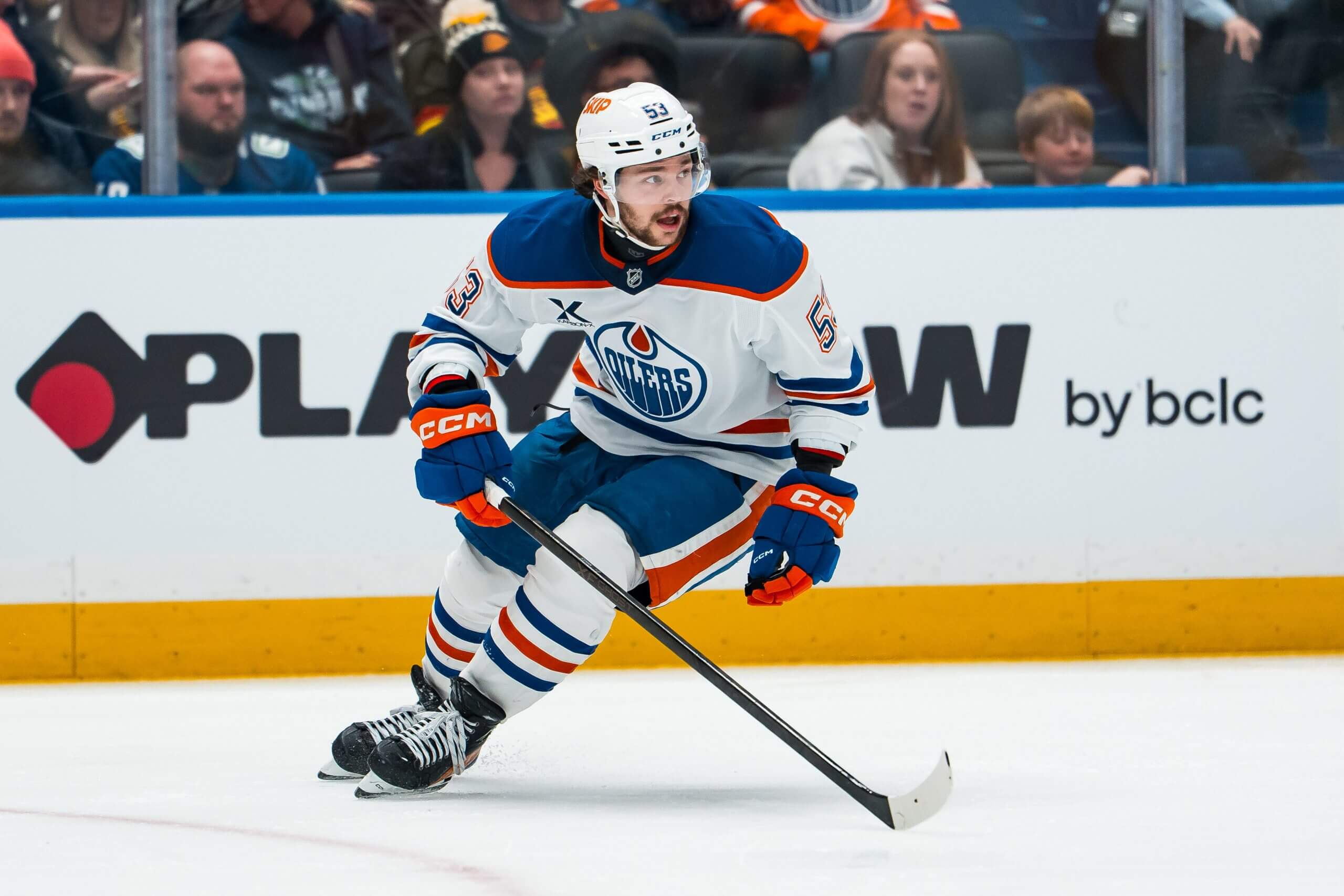
An incredibly mobile defenseman, Molendyk uses light edges to adjust and shape to coverage with ease in all four directions. He evades pressure and walks the line beautifully and effortlessly, displaying comfort on his heels and inside and outside edges. He’s also a competitive defender on both sides of the puck who plays tight, active gaps to use his feet to be disruptive, step up in transition and kill plays early. In his draft year, he drove results with the Saskatoon Blades, helping them into the third round of the WHL playoffs while playing behind 21-year-old overage defenseman and captain Aidan De La Gorgendiere on the power play. Two years ago, though a couple of injuries impacted his post-draft season and cost him a top-four role on Team Canada at the World Juniors as an 18-year-old, he was one of the best defensemen in junior when healthy and finished with 66 points in 66 combined regular-season and playoff games while playing to a plus-51 rating. Last season, after nearly making the Preds out of camp, Molendyk wore a letter and played on Canada’s first pair at the World Juniors in advance of a trade from Saskatoon to Medicine Hat, and then won a WHL title as the team’s No. 1 defenseman. This year has come with a bit of an adjustment at the AHL level — where he has played 16-17 minutes per game — in terms of the size piece, but his skating should still get him to where he wants to go.
I don’t think anyone who has watched Molendyk closely would be surprised if he becomes an effective all-situations, play-steering No. 4-5 defenseman on the back of his mobility, comfort and consistent decision-making. He plays quickly, leads entries and exits with his feet, makes quick passes under the first layer, has poise under pressure and defends at a high level because of his feet. He has also worked to show more skill on the puck and up his activity level over the last couple of years. He really does have tremendous edges and is very smooth in possession. He’s an elite skater and was one of the best players in the CHL. He can influence the game in all areas (in-zone defense, getting back to pucks, breakouts, entries, lock-up rush defense, offensive zone creation, etc.). He needs to be a little stronger on pucks/in battles at times, but he plays hard and defends at a high level for an average-sized, 5-foot-11/6-foot D.
Photo:
Danny Murphy / Icon Sportswire via Getty Images
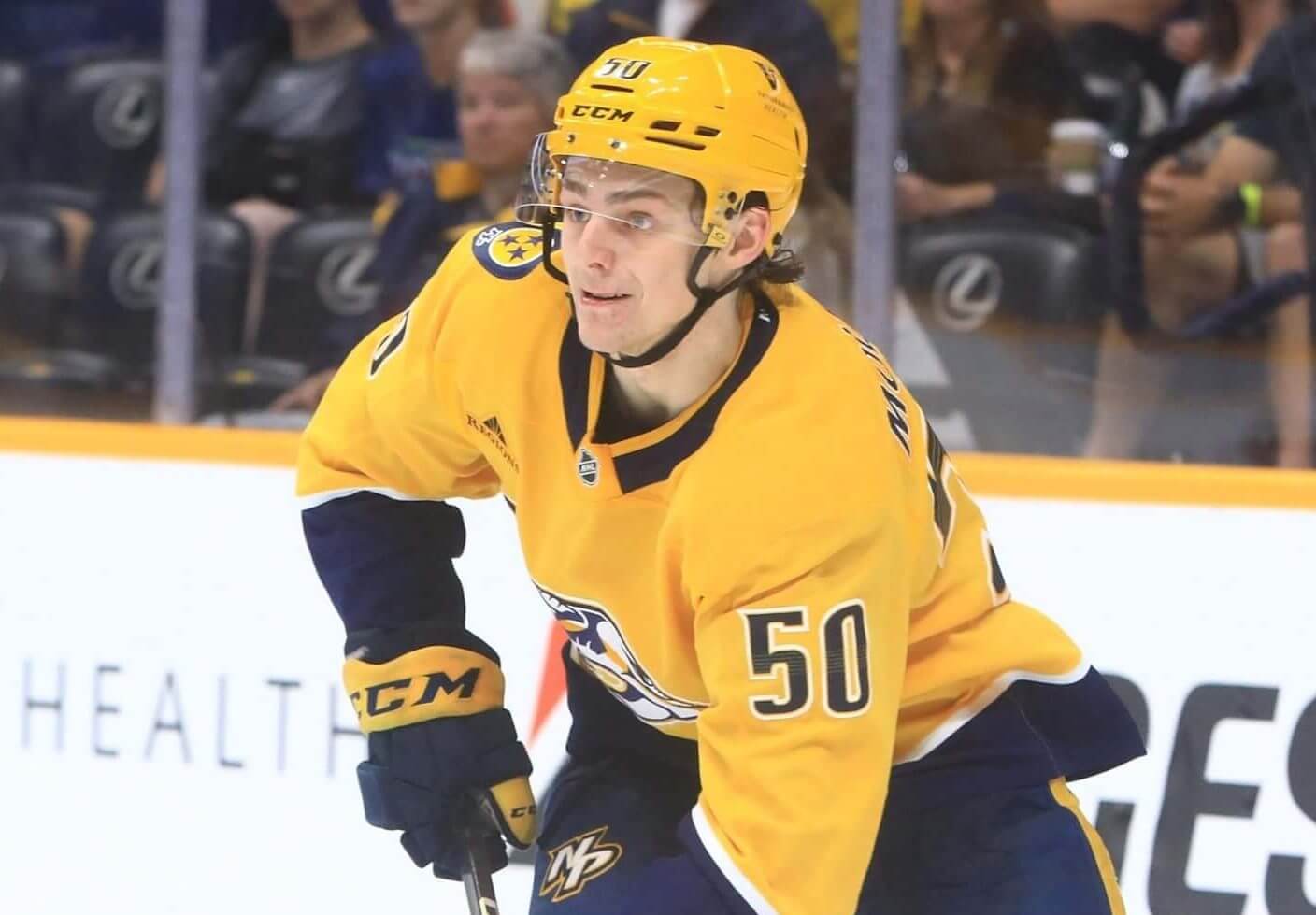
Reid was a breakout star for the Rangers last year, playing big minutes to 0.8-0.9 points per game and wearing a letter in his draft year after a strong rookie season the year prior (despite playing the second half injured). I also liked him at the OHL Top Prospects Game (where he had three assists on four West goals and also wore a letter). He wasn’t as productive for Kitchener in its playoff run to the conference finals, but he was being asked to do a lot for that team, and the Rangers went as far as they could. This year, he was named Kitchener’s captain and played to a point per game on a top team. He did have some uncharacteristic struggles defending and with some sloppiness at the World Juniors, though (it’s not like him to get caught out of position or beat one-on-one).
He’s a good athlete and smart, engaging and well-liked. He’s a plus skater whose game is shaped by his movement and mobility. He can influence play with his feet, whether that’s defending and closing gaps, escaping pressure, transporting pucks or getting open and active off the puck. He’s a heady, offensively capable player, but he doesn’t chase it for the sake of the points. He also defends really well, with a good stick and sense for timing and disruption. He has been a major driver of two-way results for the Rangers in tough minutes. I see a modern defenseman. He reminds me a little of young Blue Jackets D Denton Mateychuk. I’m a big fan of the skating-smarts combo he brings. There are some who wonder if he’s dynamic enough offensively at 6 feet, but he’s an excellent player.
Photo:
Natalie Shaver / OHL Images
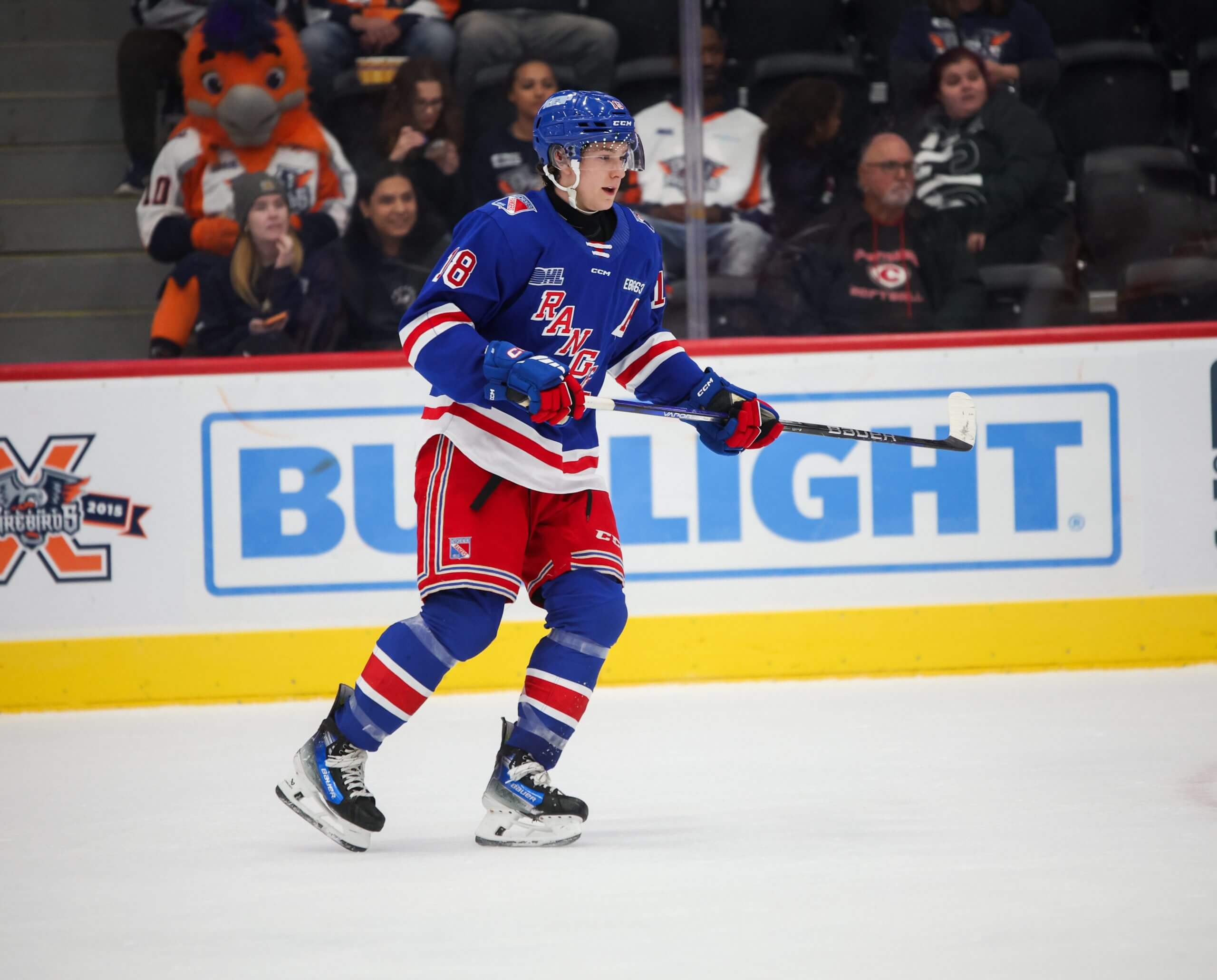
Bonk’s smarts are his game’s defining quality, but he also defended at one of the highest levels in junior hockey over his last couple of years there before turning pro. He has an impressive feel for coverage and timing and escapes pressure well despite having average feet; they were once an issue but no longer are for me, though they won’t be an asset at NHL speed of play. He influences the game through his effectiveness, reads, anticipation, defensive know-how, play-calling and the consistency of his habits. He knows where to be and how to play. He sees the ice at an advanced level, both with the puck but maybe especially so before he gets it, so that he knows where to go with it.
He’s not a high-end skill guy who plays the game offensively with a ton of ambition, but he moves play along, his outlets are clean, he manages the puck, he keeps the chain going and he has some unique utility/attributes, including his proficiency playing the bumper on the power play. He looks like he’s going to be a solid two-way defenseman who can influence play and potentially help out on both special teams, even if he’s not a natural power-play quarterback or your prototypical penalty killer.
He was an important player on a strong London team in his draft year, which isn’t always the case for defensemen his age with the Knights and spoke to the maturity of his game in advance of the draft. That maturity helped him make Team Canada for the World Juniors as one of only two 18-year-old D to do so. After returning from the World Juniors in Sweden, I thought he was one of the top defensemen in junior hockey and found another level offensively for a Knights team that went on to win the OHL title. Last year, he was again a top player for the Knights and was Canada’s ice time leader (about 22 minutes per game) as a returnee at the World Juniors in Ottawa. I thought he fought the puck a little in that role, but he was asked to do a lot, and there was a lot around him that was out of sorts on that team as well. He also finished with a Canada-best plus-4 goal differential at five-on-five. He played big minutes en route to a second OHL title and Memorial Cup, albeit in a lesser offensive role, so that he could really be their go-to guy defensively.
His rookie season in the AHL has been fine — he has played to respectable results in nearly 22 minutes per game and has contributed on both special teams without necessarily taking that quick next step — but he still projects as a good No. 4-5 defenseman at the next level.
Photo:
Bruce Bennett / Getty Images
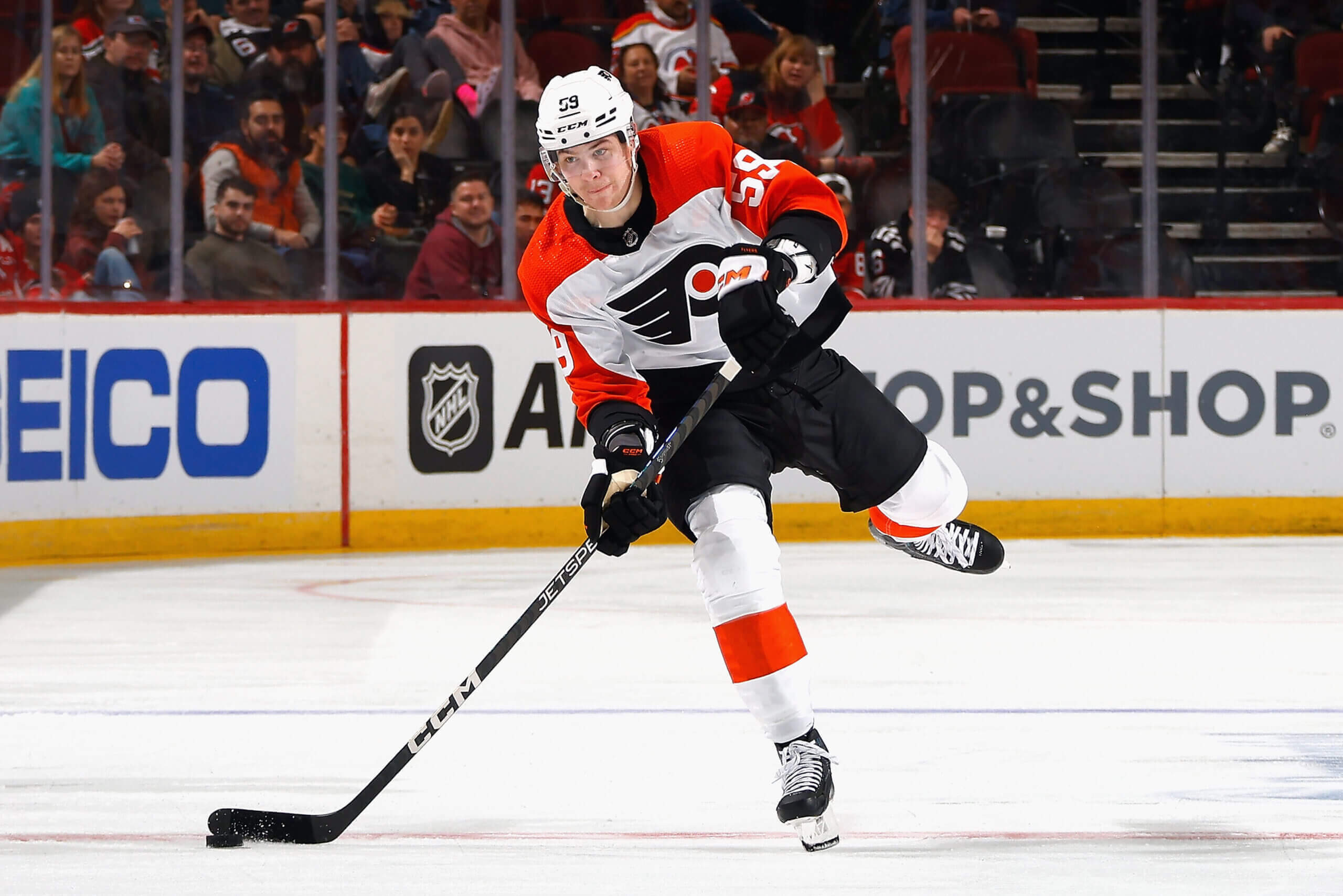
Jirícek is a summer birthday who worked his way from junior into Czechia’s top pro rung as a 16-year-old. He lost chunks of two seasons to knee injuries, and I didn’t think his draft year had gone as well as he would have hoped for, but he has found his game and re-established his pedigree over time. He played atop Czechia’s defense alongside Los Angeles Kings draft pick Jakub Dvorák as an underager at the 2023 U18 worlds, made the Czech World Junior team as an underager despite the slow start that year, was excellent at the Hlinka Gretzky Cup when his stock was highest and then had a second and third successful World Juniors. This year, he impressed at Blues camp and has stepped up as the No. 1 D on a deep blue line with the top team in the OHL in Brantford this season.
Jirícek plays the game with confidence and intention, and has shown real ambition and even creativity at times against his peers. He has good four-way mobility, an active disposition — he also showed at the pro level that he could simplify and play a more effective game — and balanced shooting mechanics. Jirícek has an eye for spacing and identifying opportunities to jump on both sides of the puck, plus good skill with the puck, and has spent a lot of shifts all over the offensive zone in the OHL this year. He’s also competitive.
I like his defensive habits, and he has size and ability. He breaks up his fair share of plays in the neutral zone with good timing on surfs and close-outs, though he will occasionally get beaten by being a little overactive. He’s capable of involving himself against his peers. He’s a good NHL prospect who has length and has had some really strong stretches over the years. He projects as a No. 4 D for me.
Photo:
Michael Miller / ISI Photos via Getty Images
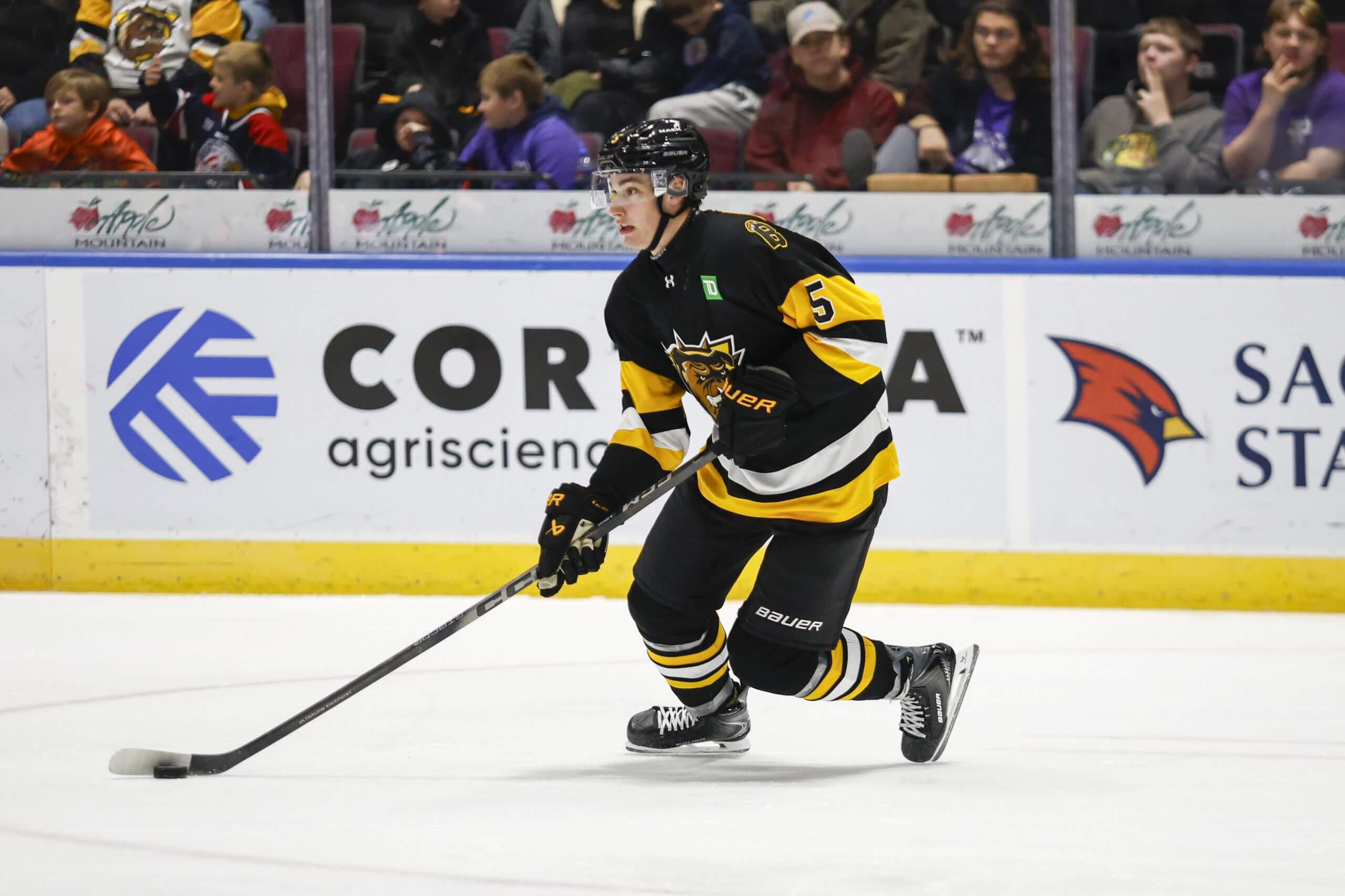
Letourneau drew a lot of attention from scouts in his draft year as a towering center who can skate and plays with finesse. But he was also always going to be a project, and last year’s struggles and lack of production as a freshman were predictable: The jump from prep hockey into the NCAA is a big one, and he only bypassed a season in the USHL because a late spot opened up with the Eagles when Will Smith decided to turn pro. (It’s worth noting that a nagging shoulder injury impacted his offseason as well.)
This year, as a sophomore, we’ve seen more of what his profile and potential could look like in a point-per-game freshman year that has seen him emerge as a top producer for the Eagles.
Letourneau’s skating, shot and puck control in tight to his body all leap out as unusual for a player his size. He’s fluid through his crossovers and comes out of them lighter than you might expect.
When you see him on the ice, his makeup is striking. He’s a great athlete for his size, with legitimate natural athleticism. When he finishes his checks (which he still needs to do more of), he can overpower opposing players at the boards or muscle through in control. Off the cycle, he can take pucks off the wall and make plays with his good sense on the puck. He plays the flank on his off-side on the PP rather than the net-front/bumper role big men are usually tasked with. He has some vision, handling and a natural shot. I don’t love how passive he can be without the puck at times, but he has worked to involve himself more. There’s still too much standing around and too much time spent with one hand on his stick at times, but it’s coming. I’d like to see him close out pucks and win them back quicker than he does because he actually has a good stick when he’s around it. I’m not sure he’ll make a good penalty killer up levels (which players his size are usually asked to do) without an adjustment to his approach and play style. There are definitely some real gifts/tools to work with, though, and he has stayed over more pucks this year.
He’s going to continue to be fascinating to monitor because if he makes it and continues to put it all together, he’ll be a unique player. But there remains some risk despite the steps he has taken this year.
Photo:
Eric Canha / Imagn Images
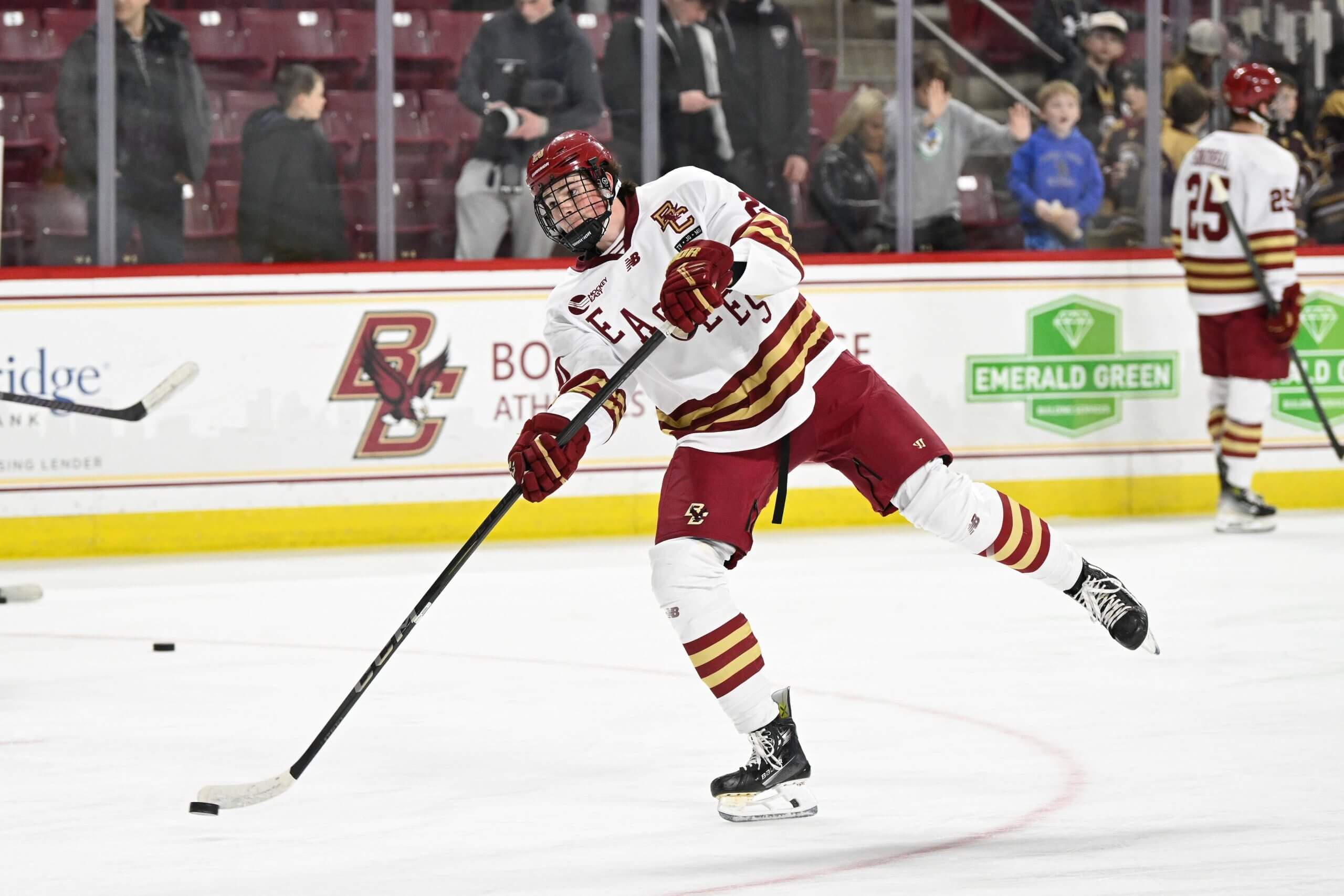
Cootes is a well-liked, well-rounded center who plays in all situations at the WHL level, was named co-captain in Seattle in his draft and led the low-scoring Thunderbirds in scoring at just above a point per game. He was also outstanding as Team Canada’s captain at U18 worlds, playing well in each game and making an impact when he was on the ice. After making the Canucks out of camp this year, Cootes struggled in his first three NHL games before returning to the Thunderbirds. He has since played for Team Canada at the World Juniors (where he wasn’t particularly impactful in depth usage) and been traded to Prince Albert, where he has become the WHL’s best team’s top center.
He’s a strong skater who plays with energy and detail, earning the trust of coaches with his diligent, complete game. He’s a good athlete. He plays with determination as a good penalty killer and five-on-five driver. He plays the bumper on the power play well because of his nose for the net and competitiveness to get to pucks. He gets open and has an NHL wrister and release. He always seems to be lurking around the slot and involved in everything. He works and makes little plays, arriving on time in good spots. He’s just a smart, well-rounded center.
I’ve wondered about whether he has enough skill to become a top-six type, but he also confidently projects as a top-nine NHLer. His U18s sold me a little more on his skill, and there was a lack of talent around him in Seattle last season, but the World Juniors also showed that against top competition he can struggle to make an impact; his production has never been high-end and he’s average-sized. He has secondary skill and can make plays, though, even if it’s not the focal point of his game. I’m a little lower on him than where he was picked in last year’s draft, but his combination of work ethic, smarts, competitiveness and reliability should result in a long career in the league.
Photo:
Bob Frid / Imagn Images
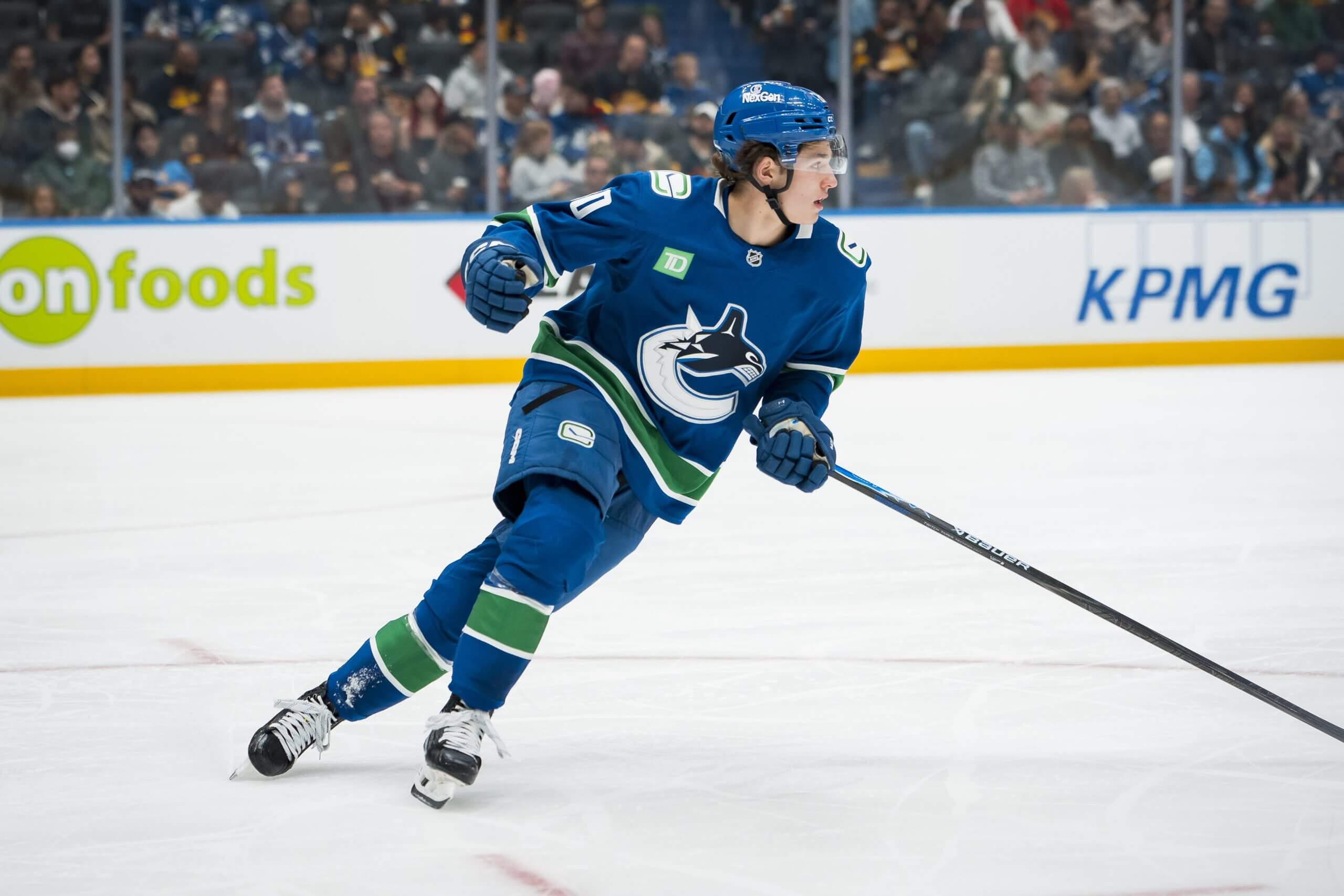
One of the best-skating prospects in the world, the 5-10, 178-pound Potter is a smallish but talented player who uses his electric speed to put defenders on their heels, create opportunistic chances, get out in transition and jump onto loose pucks. He’s a fun player to watch with his ability to go inside-out and outside-in on players, round corners on them and his desire to attack off the rush and challenge D by turning on the jets and burning them wide or blazing into a quick stop-up. He’s tough to catch in straight lines or track in and out of cuts. He has some cleverness one-on-one. He can be creative with the puck on his stick, and can really get going in a hurry and has shown an ability to finish plays as well, with a great release.
His decision to leave the national development program to join Arizona State for his draft was a testy one, and some questioned whether he and his game were ready for the NCAA level, but while he was inconsistent at times in the first half, I felt he really popped late in the year with the Sun Devils before rejoining Team USA for U18 worlds. At U18s, he made some skill plays, drew some penalties with his speed, had a goal disallowed, had some third assists and had several chances around the net that he was probably owed from. But he also came and went a little too much for some, and didn’t take over like they wanted him to. This year, he got off to a bit of a slow start and wasn’t invited to play for Team USA at the World Juniors, but played at a high level in December and January before injuring his shoulder and ending his year. His post-draft season finished on Jan. 10 with 12 goals and 26 points in 24 games, which would have given him a chance at 20 goals and 40 points across ASU’s full season. His 1.08 points per game were third among all U19 skaters in college hockey this season behind only Gavin McKenna and the next name on this list; with Reschny, the Flames had three of the top four. He also played 20:27 per game.
He has regularly flashed and occasionally even thrilled with his speed and legit puck skill. His skating truly is on another level, both through his edges and through a uniquely wide straightaway base. There’s still some real learning of the game and how to deploy his speed that needs to happen, but there’s also a real draw/appeal/upside to his game. Proponents see Frank Nazar. Opponents see Fabian Lysell. I think Potter is somewhere in between — he’s an even better skater, too, which is saying something next to those two. He’s an exciting player to watch when he winds up, and while there’s some boom-or-bust to his profile and mixed opinions on him out there, the talent and speed are undeniable.
Photo:
Bruce Bennett / Getty Images
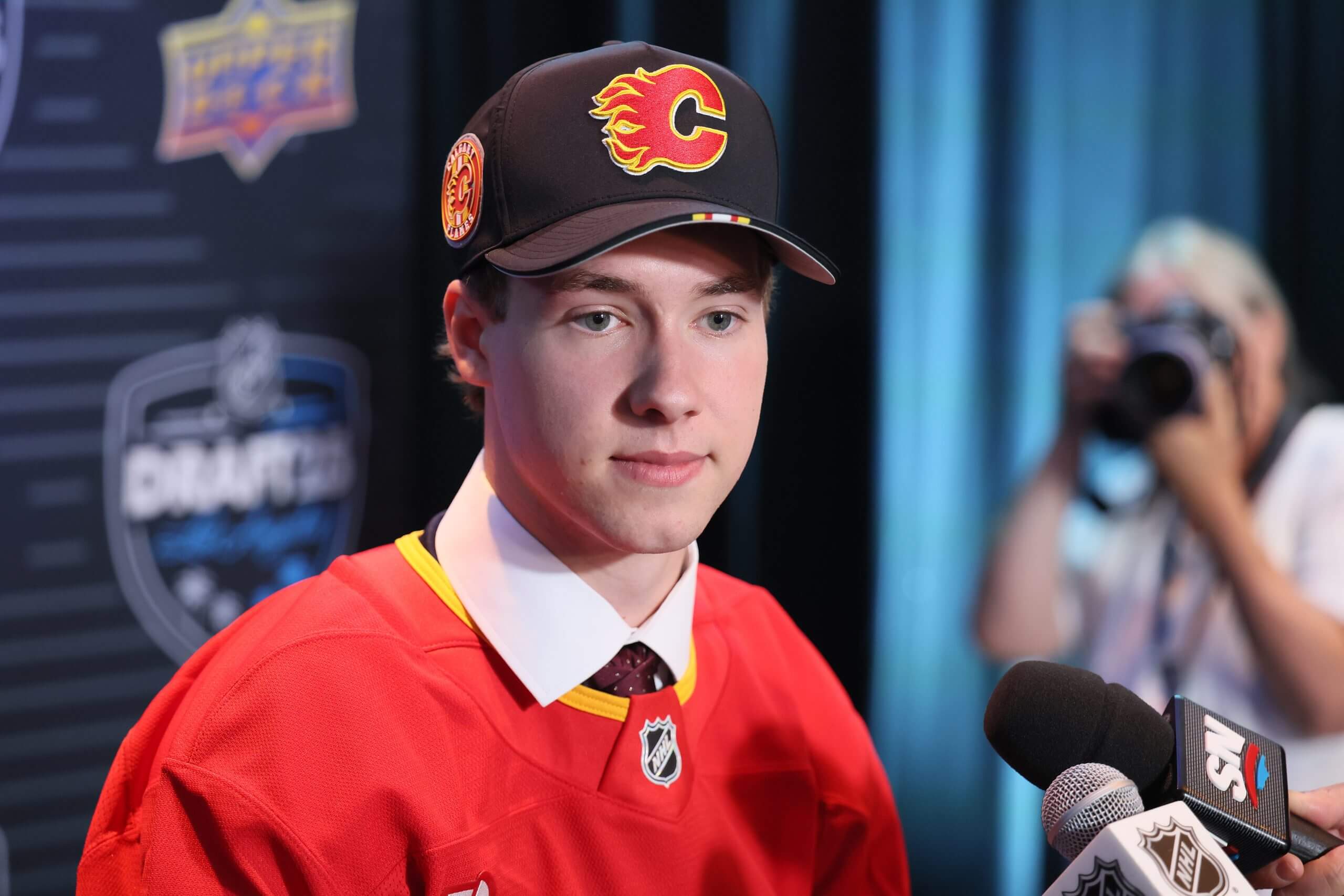
Horcoff is a big (now 6-foot-5) forward who has taken big steps in the last year or so. He wasn’t getting better at the National Talent Development Program and left after Christmas to join Michigan for the second semester last year. He then got off to a strong start with the Wolverines, and NHL Central Scouting ranked him No. 28 in North America at midseason and then No. 24 on their final list, signaling that he was a better player/pro prospect than the player we’d watched at the NTDP. He also returned to Team USA for U18 worlds and was a solid contributor in Texas.
After contributing and generating good shot attempt totals in his 14-15 minutes per game for Michigan last year, he has taken another big step in his first full season of college hockey this year as one of college hockey’s only 20-goal guys while playing 16 minutes per game. He had a disappointing World Juniors despite plenty of opportunity on the top line, though, and his below-average acceleration was noticeable there.
The son of Shawn Horcoff, William is strong and a better athlete than his below-average skating may indicate; he crushed testing at the combine and broke the long jump record. He’s a smart player who understands where to be, both in timing and routes. He can rip the puck — catch-and-release, one-touch, standstill, you name it — and finds open space in the offensive zone. He just needs to build some more pace. He can actually hustle and build a head of steam, it’s more just about getting quicker and playing quicker at times. He can look a little upright and heavy through his stride when he really has to come to a standstill, but he can drive down ice, forecheck and does a great job getting open in transition.
He’s also good on the net-front on the power play, and when he plays in the guts of the ice at five-on-five, he can make things happen and be a handful driving the net or planting himself there. He’s also physical and has some secondary skill. There are times when I’d like to see him play through contact and keep his feet moving more, but he’s progressing well in that area.
Pre-draft, I thought Horcoff was more talented than his statistical profile indicated and that with proper development at Michigan, he could emerge from college as a solid potential bottom-six pro player. That placed him as a second-rounder more than a first on my list, though, still. Today, I’ve upgraded that projection to a top-nine piece and first-rounder, so I was a little low on him in hindsight.
Photo:
Rick Osentoski / Imagn Images
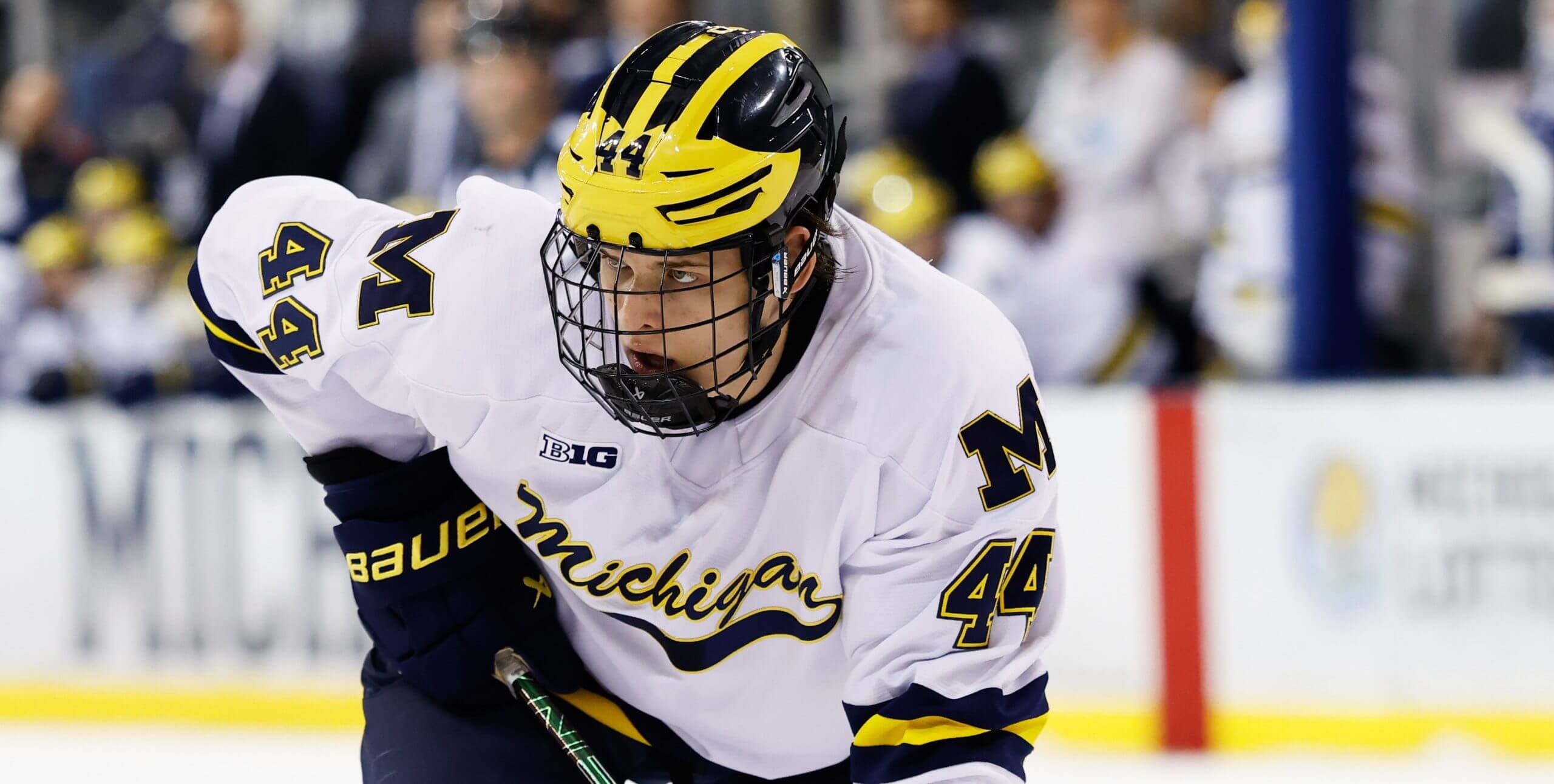
A riser in last year’s draft class, Nestrasil’s numbers didn’t leap off the page but he started the year with eight points in his first 21 games and finished it with 34 points in his final 40 games in Muskegon and he did it as a hard-working, driven and 6-foot-6, 186-pound winger. His minutes rose from 10-15 per game to 17-20 per game as last season progressed in the USHL, too, and he also played well in the playoffs for Muskegon, registering another 13 points in 14 games. He took such big steps in the second half that UMass moved his commitment up from 2026-27 to 2025-26. And he took another big step this year as a freshman with the Minutmen, finishing fifth among all U19 NCAA players in scoring with 31 points in 34 games (good for second on the team) and fourth in goals with 13 while playing 19-20 minutes per game. He also had a good World Juniors as an important third piece of the Czechs’ successful top line, though I liked him more in the preliminary round than the medal round for the Czechs.
Scouts are intrigued by his rangy frame, his room for physical growth and his blend of work ethic and sneaky skill. He skates well for his size, he gets in on the forecheck, he hunts and wins pucks with his body positioning and a great stick and he showed some playmaking sense and skill this year. The belief is that once he fills out his frame furth, he could become a pretty unique middle-six winger who can play with anyone.
Photo:
Ellen Schmidt / Getty Images
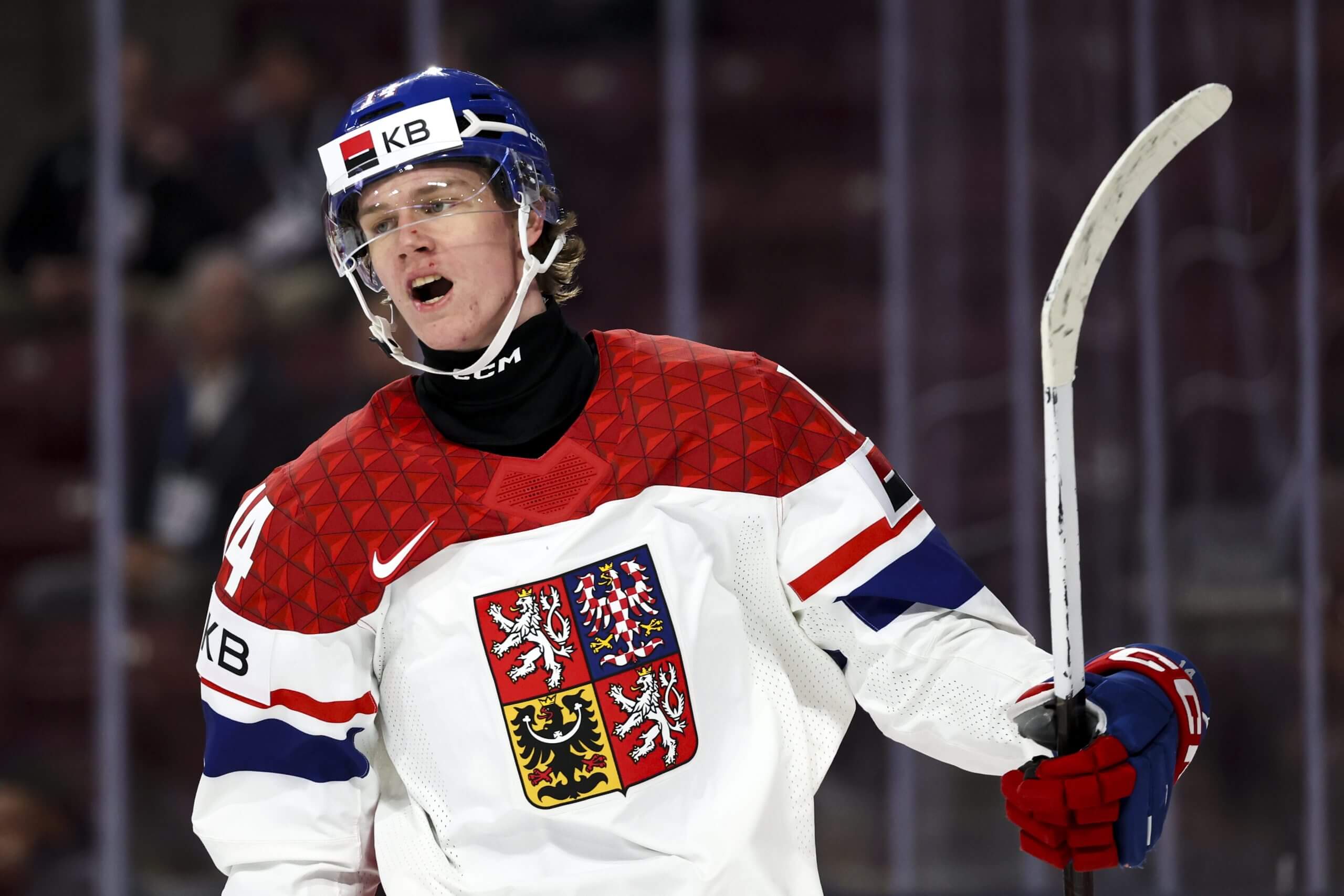
Lindstrom is a big (6-3, 220 pounds), strong center with prototypical power-forward tools. He uses his size to his advantage, whether through finishing his checks (hard), shielding pucks, pushing through contact or going to the net front to provide screens or take pucks to the far post. He has quick-twitch hands both in flight and around the net and the wall, including getting off the wall and pulling pucks into his feet to release from different stances and change angles. He can take up space in front and make plays in tight, play on the cycle and stay over pucks to help his team maintain possession inside the offensive zone. He showed in junior that he could create in transition — putting defenders on their heels with a head of steam — and even make skill plays from a standstill inside the offensive zone, getting to the inside. But he has also lost crucial development time to lingering back issues and has struggled to find his game, manage the puck, convert offensively and maintain his energy over the course of shifts and games as a freshman at Michigan State this season. His stride, which had so much power to it pre-injury and was a calling card when he was selected at the very top of the 2024 draft, now looks upright and more rigid: he often picks up his stick and pitchforks, and has work to do to sort out his mechanics.
He’s still distinctively competitive, constantly running hot and wanting to make a difference (at times to a fault, in terms of his discipline with and without the puck). Pre-injury, he looked like a potential force and profiled as a unique second-line center or winger. Some believed he might even have first-line upside in the first half of that draft year. Now, you’re just hoping the back continues to heal, he can manage it, and he finds a path to become a full-time NHL player.
He’s an easy player to like when he’s at his best, but we haven’t seen that in a while now. Given his makeup, size and what we saw in Medicine Hat for a few months there, he’ll get every opportunity to continue to build. The hope and appeal are still real. He should stay at Michigan State and continue to chip away, a lot like teammate Charlie Stramel did. I’ll continue to track him very closely and will be quick to get excited if he starts to put it all back together, but I should also call out that there’s some bust risk here until I see it again consistently. You do still see flashes in his games at MSU (where he has averaged just 14 minutes per game and has missed some games), and I thought he was quite noticeable at the World Junior Summer Showcase at the end of July as well.
Truthfully, he was the hardest player to slot here.
Photo:
Nick King / Lansing State Journal / Imagn Images
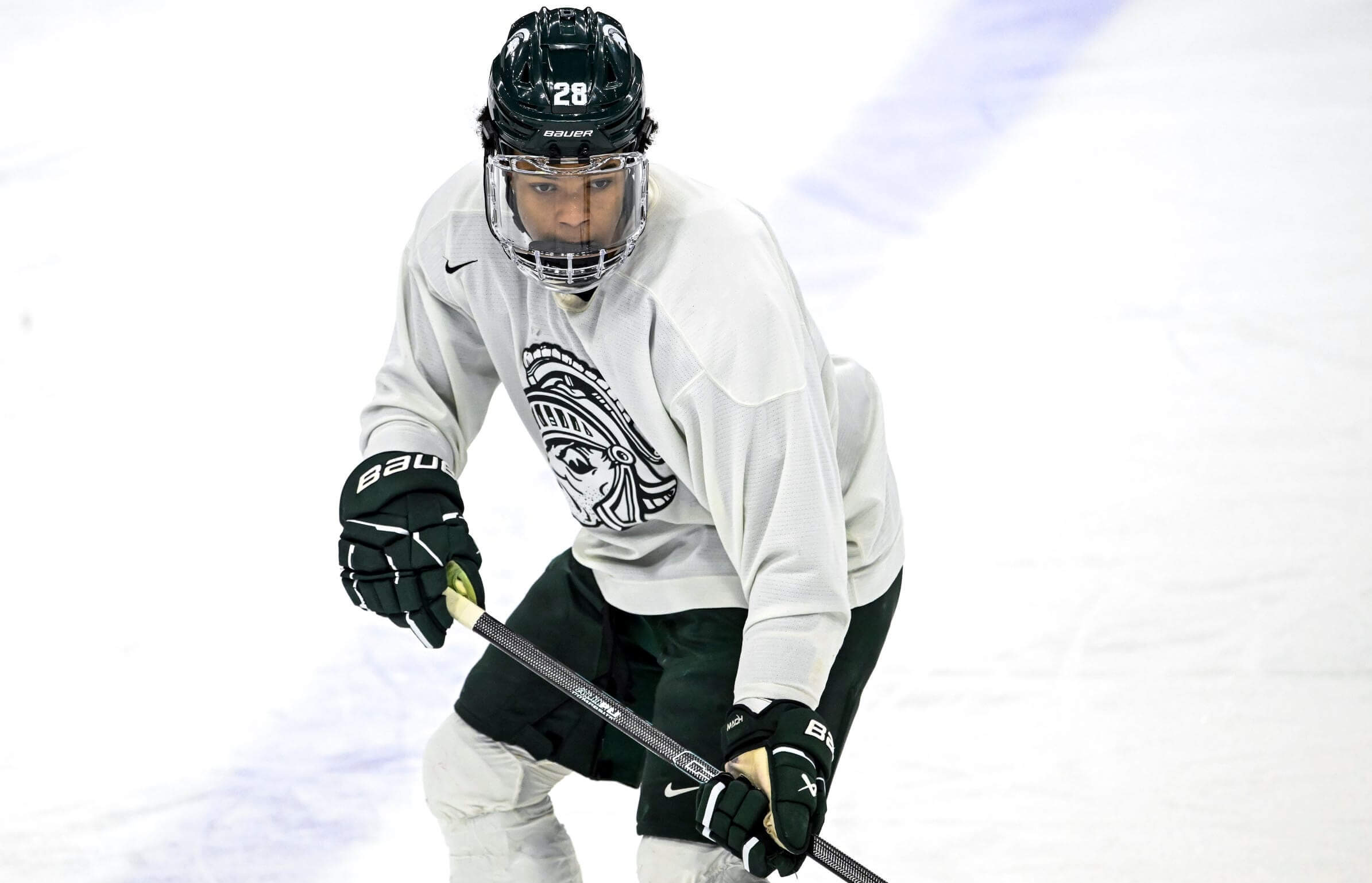
After conversations with scouts or folks at the National Team Development Program about Stramel when he was there, I always felt I wasn’t quite sure where they were in terms of their belief in the player and his upside. That continued to start his draft year at Wisconsin, as he struggled to have a real impact with the Badgers early on as a freshman (albeit a young one, and albeit on a bad/at times lost team). He started to come on before the World Juniors in Halifax, though, and then he was good in a bottom-six role for Team USA and played quite well in college in the second half, renewing the hope and belief many had in him. That was encouraging enough for the Wild to take him at No. 21 in the draft (he was No. 37 on my list). He didn’t look like a first-round pick in his post-draft year, though. Between early-season injury issues, a struggle to assert himself as he had in some impressive stretches against his age group coming up, and low-end production, it really felt like he wasn’t trending in the right direction.
His transfer to MSU in fall 2024 to play his junior year under Adam Nightingale, who was his coach at the program, has done wonders. He finished third on the Spartans in scoring last year, registering 27 points in 37 games, and he took another step this year, playing to well above a point per game on their often-dominant top line with Porter Martone and Daniel Russell.
He always had tools to work with and build around. Nicknamed “Big Rig” when he was at the program, Stramel is heavy, and his athletic, muscular build jumps out at you right away. His strength complements a competitive, physical, forechecking, middle-lane style that makes good use of his length and includes a hard wrister from mid-range. He can push into space. He has decent hands when he pushes through the middle. Scouts were fascinated by his power-forward package and size down the middle (following a move to center from the wing as a 16-year-old). I’ve questioned his talent level, processing and pace, but he has played with more intention and confidence over the last two years to help re-establish himself as a potential bottom-six NHL center with size. He has played on both special teams and been a solid driver of play at five-on-five at MSU.
There are still times when I don’t see enough playmaking or sense and he’s a little sluggish from a standstill through his first few strides — once he gets moving, his stride actually has good power and he’s a decent skater for his size on the whole — but the consistency of his involvement in plays and the number of touches he’s getting have gone way up, which speaks to both confidence and also some learning in terms of how to get open/what he needs to be. When he’s around it, he can be a handful. He’s now getting around it more consistently and then making his decisions more confidently and quickly. I don’t think he’s going to provide much offense at the NHL level, but he should be able to chip in and become a good, hard and heavy bottom-six player at the next level in time. There’s probably still a scenario where he just becomes AHL depth, but his NHL likelihood has recalibrated nicely.
Photo:
Nick King / Lansing State Journal / Imagn Images
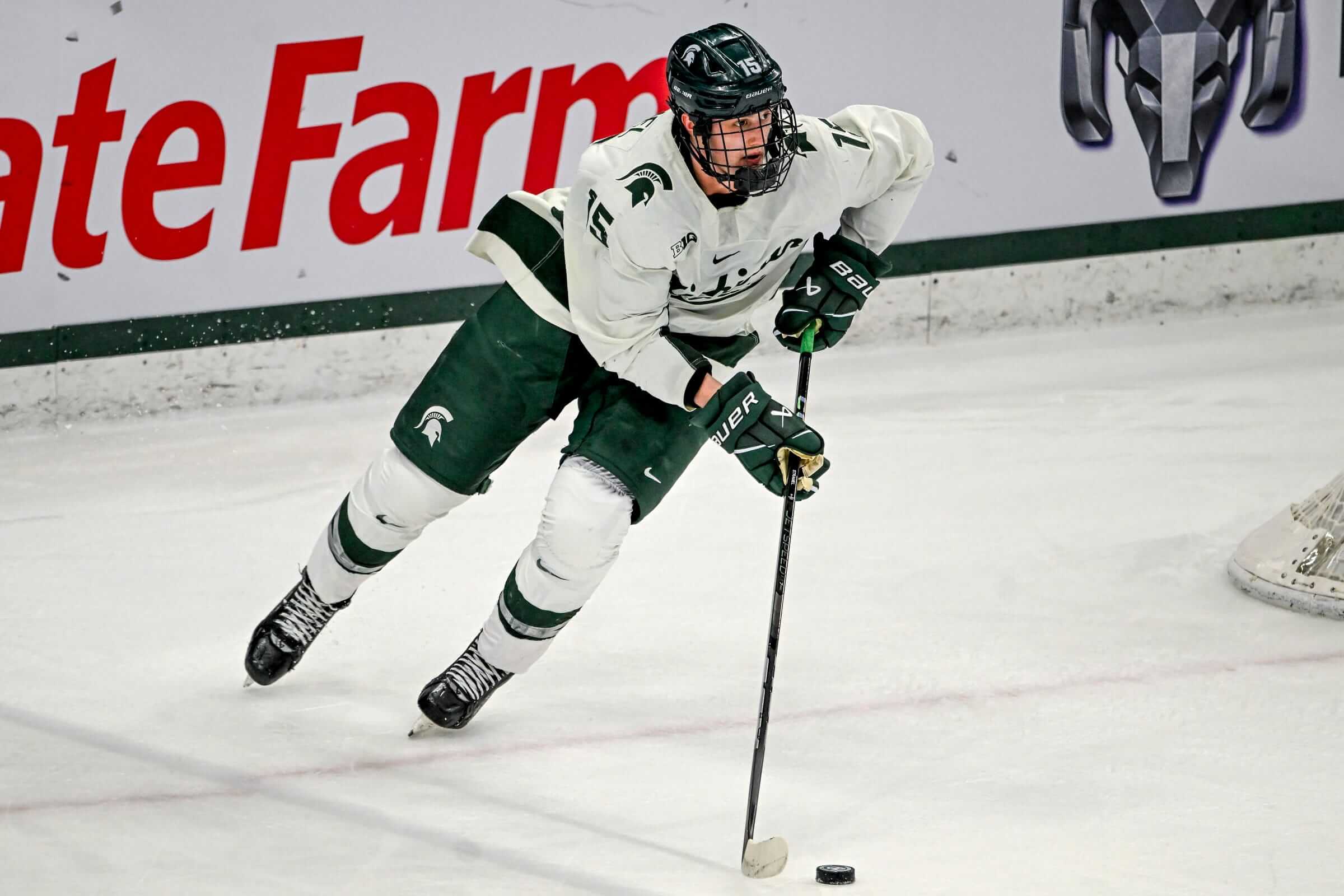
I had members of the Blazers get in my ear about Finnie when he was playing for their very deep, Memorial Cup-hosting team, and I couldn’t quite get to where their belief was in him at the time and felt where he ended up getting picked was appropriate. Boy, has he followed the exact path they said he would, though. Last year, he was their captain, their leading scorer (by 18 points!) and finished top 20 in the WHL in scoring. And then we all know the story this year, starting on the first line and sticking in the NHL. Despite his end-to-end year in the NHL, I did make an exception to include him here because of his age: he’s a June birthday who was a young 20 to start the season.
Finnie is going to be an up-and-down-the-lineup NHLer for a long time. I don’t know whether he’s ever going to produce points in a significant way because he’s never going to be a top PP guy — though I know he has a handful of power-play goals this year, which is a definite positive — but there’s a path for him to go from the low-30s pace he has played at this year to a consistent 40-something point player. That’s huge value out of a seventh-round pick. Finnie is a 6-1, 190ish-pound forward who can play both center and the wing and who works his tail off. He can play in all situations, can be relied upon to give a consistent effort and find ways to win shifts and plays his high-energy, stick-to-it game without taking penalties, winning battles cleanly and then making quick, smart decisions with the puck. He plays with intention and pace. He’s already a success story for a No. 201 pick, earning his 15-plus minutes per game this year and everything he has gotten to date in his young career.
Photo:
Dave Reginek / Getty Images
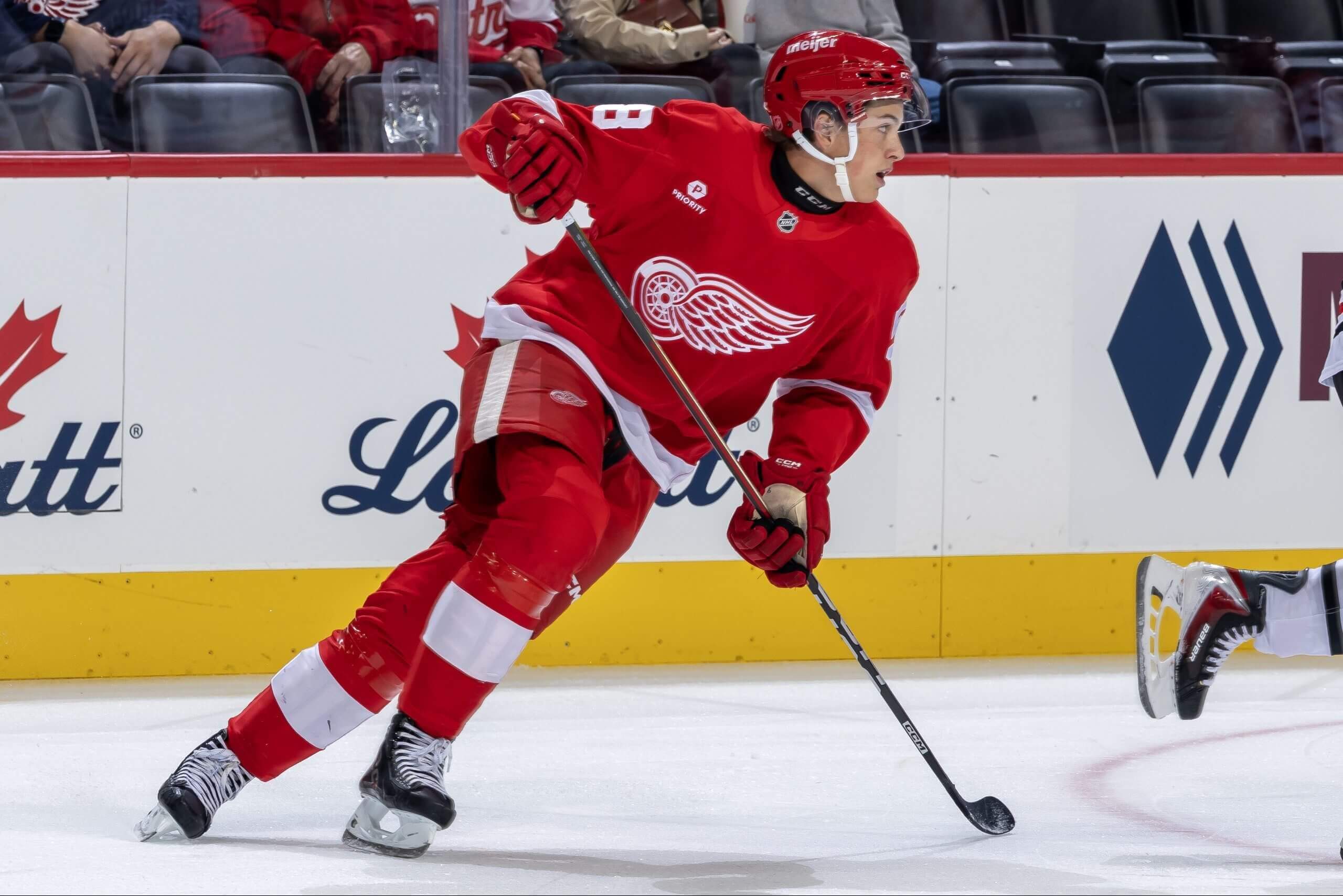
The first time I watched Max Plante play, I was scouting his older brother Zam, then a star at Hermantown High and now a Penguins prospect. Immediately, Max stood out even next to his older brother for his dynamic puckhandling ability and hardworking disposition. Where Zam’s game was about smarts, Max’s was all about working to get the puck and then creating with it. His smarts are also a major, major asset, and funnily enough have become more of his calling card since. When I was done with the viewing, the pair had toyed with the opposition, and I texted a Minnesota-area NHL scout to say this: “That Max Plante is a demon.” A year later, he was predictably named to the national program.
But there was a hitch: He was really tiny. So even when he made plays in his U17 year, it always seemed to come with a “but.” Now he has grown a couple of inches, and while his body (and face) still look like he’s behind the curve physically, and he has dealt with injury issues, the playmaking has continued into his college career at Minnesota-Duluth. Despite a prolonged absence due to an upper-body injury he suffered in his NCAA debut last year, he finished his freshman campaign with 28 points in 23 games (1.22 points per game, making him the most productive U19 forward in college hockey). He took another step this year as well, establishing himself not just as a top player in his age cohort but as one of the top forwards in all of college hockey and a candidate for the Hobey Baker with a 52-point campaign. He was limited to slightly under three games due to injury at the World Juniors and wasn’t as impactful as many expected there, but we’ll call that a wash for him.
His game is packaged with a well-liked character, which has always made him a favorite of coaches and teammates. He has also clearly worked hard to continue to build a sellable identity as an all-around player and worker when he doesn’t have the puck. He supports well, he plays a team game and then the skill enters the equation when it should, rather than as his only thing. I’m a fan of the skill level but also the way he plays the game, which has an endearing quality to it. He can lack pace, but his smarts and feel for spacing and timing compensate. There are times in games when he just can’t beat his guy or get to his spot fast enough, but he’s not slow, and you hope that more jump comes with the physical maturity that should still be ahead of him. He has small area skill, feel and sense, and puts pucks into areas so well for his linemates.
I’ve felt since the draft that he could surprise some people to become a skilled and determined NHLer. I think there’s a good chance he just tops out as a top-six AHLer/call-up option as well, but something about his game just clicks.
Photo:
Richard T Gagnon / Getty Images
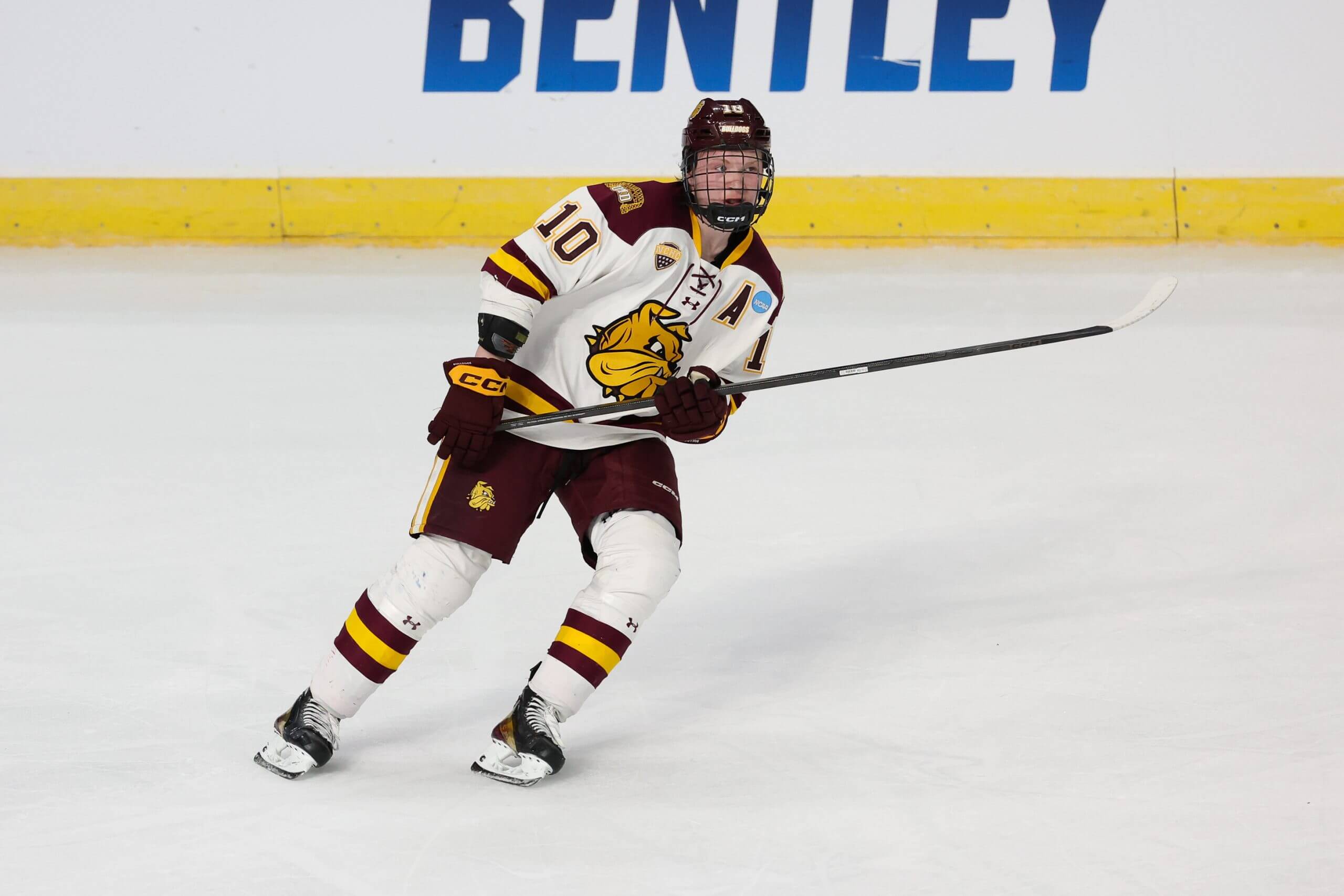
The Flames’ selection of Wyttenbach was among the many recent signs that Calgary’s amateur scouting group isn’t as preoccupied as most teams are with size on draft day. That open-mindedness has paid huge dividends with him in particular. A late bloomer who was one of the USHL’s most productive players as a rookie last season, Wyttenbach, a 5-11 (up from 5-9.75 pre-draft), 185-pound winger, was one of the stories of the college hockey season this year after an offseason knee procedure and after he was supposed to return to the USHL’s Sioux Falls for this year before his rehab at Quinnipiac helped open the door. He led the country in scoring with 59 points (19 more than his nearest teammate) in 40 games and finishing tied for second in goals with 25. It’s not by accident either. Bobcats head coach Rand Pecknold has said he’s maybe in the No. 1 slot in his rink rat power rankings all-time.
Wyttenbach’s skating — which got an average grade pre-draft and is never going to be a separator — showed improvement this year, and while his play defensively still needs some work, he tracked and got back more pucks than I expected and cut down on how much he was gliding. And the offense didn’t just look legit this year; he created a lot of it himself. He can play the game at different paces with the puck, gets open off it, and has high-end skill as a handler, playmaker and shooter, with an ability to beat coverage, beat goalies one-on-one, and pick spots in the net off the flank with his curl-and-drag release. He’s also a highly intelligent offensive player who understands spacing, timing and execution on offense. He’s going to be an interesting case study in the NHL because of his makeup, but it’s hard to ignore what he accomplished this season. If he can repeat it next year as a sophomore, we could be seeing him in NHL games as early as spring 2027.
Photo:
Greg M. Cooper / AP Photo
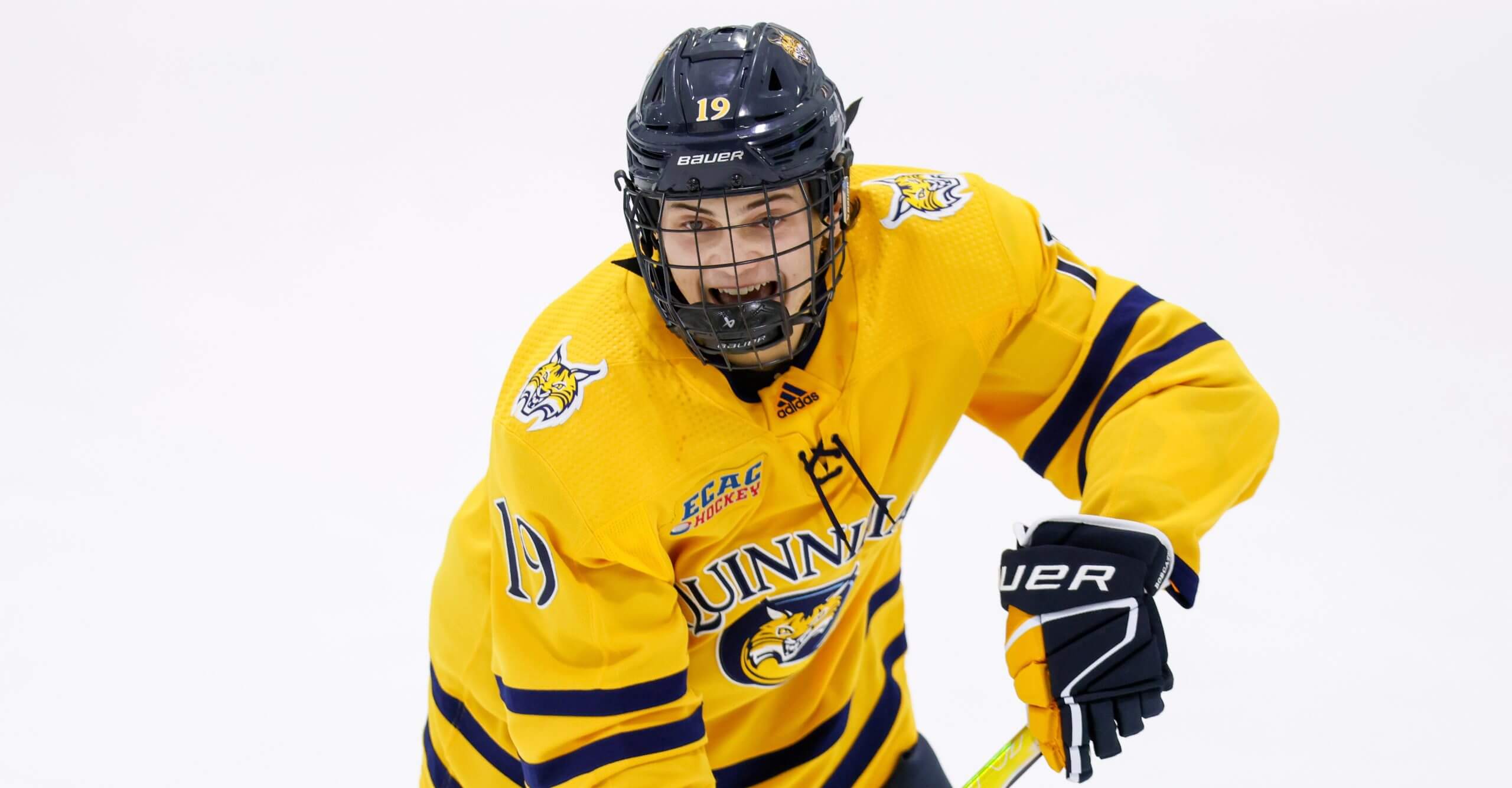
Brzustewicz was a star in minor hockey growing up who really returned to that form in his final year of junior after a bit of a winding road. He spent two years at the program playing with the draft class in front of him due to his birthday (though he missed almost all of his U17 year due to a shoulder injury) and decommitted from the University of Michigan to play his draft year in the OHL so he could get more game action. That season, he led Kitchener’s defense in scoring and turned me into a believer, finishing 40th on my ranking but going 75th to the Canucks. In his post-draft season, he then found another level altogether as one of the most productive D in junior hockey, regularly showcasing high-end smarts, above-average skill and high-end spatial awareness on the ice to finish with 101 points in 77 combined regular-season and playoff games.
His rookie season in the AHL last year was a very respectable year for a 19/20-year-old defenseman as well, averaging a little more than 18 minutes per game and running one of the Wranglers’ power-play units while holding his own at five-on-five defensively. This year, I’ve quite liked his game in the NHL as well, even as his minutes have expanded from 14-15 to start to now regularly 17-20.
Brzustewicz is a mobile and strong player who has worked hard to fill out his frame (the lost season helped with that), defends the rush effectively and is now getting to show he has always had more offense to his game than his production at the program, where players like Seamus Casey and Lane Hutson were awarded greater opportunities offensively after his injury. He walks the line well, he’s comfortable, poised and patient in control of the puck in all three zones, and he will take and execute on what’s given to him. He plays and reads the game very tactically — he’s one of those players who makes the right calls with the puck pretty much whenever he has it and sees and processes the game at an advanced level. He’s also a strong athlete who impressed in testing at the CHL/NHL Top Prospects Game, was a high-end skater coming up and has been a better skater throughout (even when he lost half a step after the injury) than I think most gave him credit for.
He has become more and more active in transition. He can comfortably play his off-side. His on-ice intelligence gets high grades for how methodical and pinpoint accurate his execution is in the offensive zone. His head is always up, and he’s comfortably beating the first layer of pressure to make his plays even if he’s not a dynamic creator who will break multiple ankles in a sequence. He projects as a smart, offensively inclined but defensively capable No. 4 in the NHL.
Photo:
Ezra Shaw / Getty Images
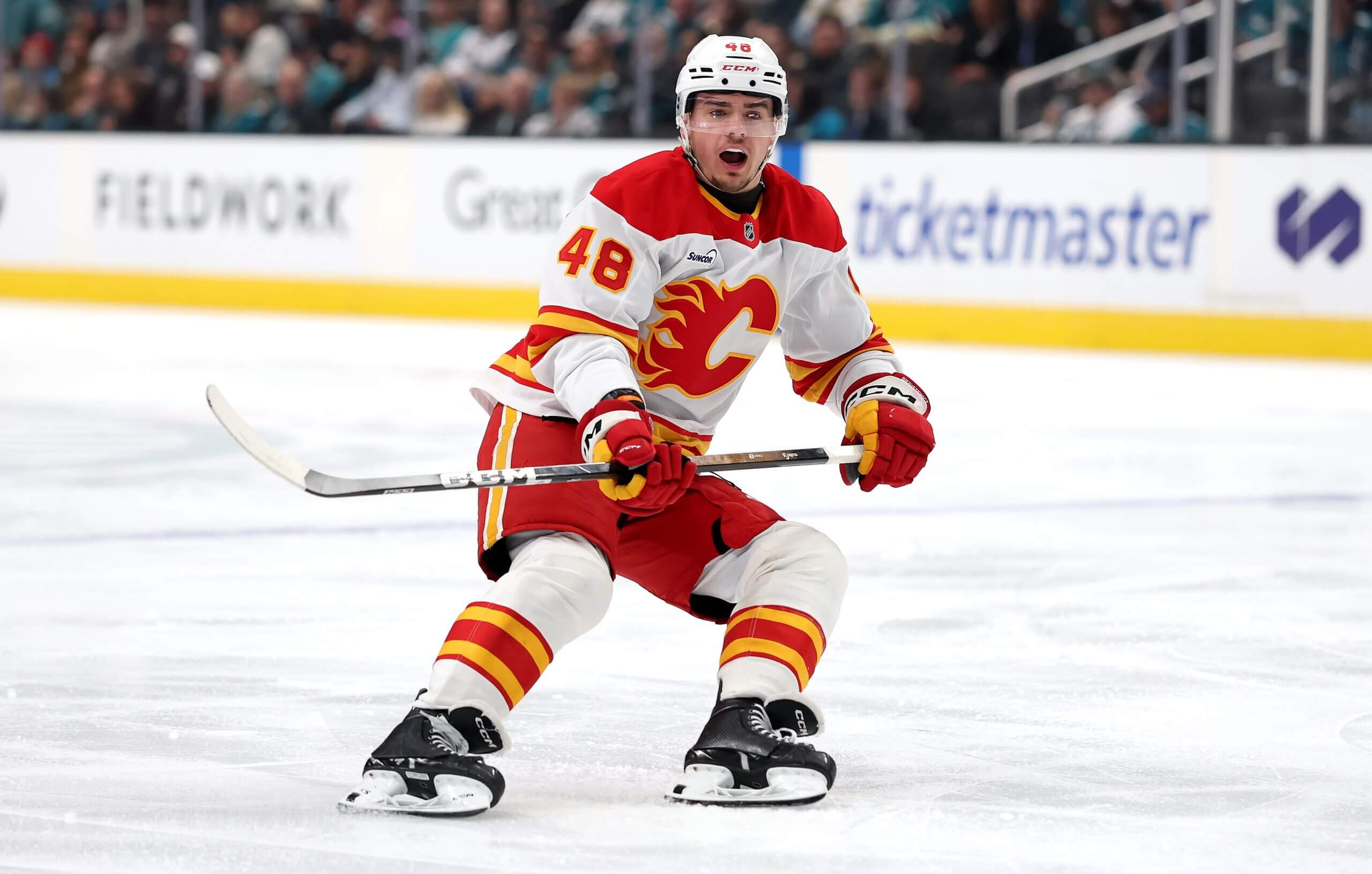
Tier 6
Don’t let the size (he’s listed at 5-foot-10 and 182 pounds in the AHL and 6-foot and 174 pounds in the NHL) fool you. Ufko plays bigger than he looks, with a sturdy base and a willingness to engage in bumps/physical engagements. That helped him make the jump to the college level relatively easily as a freshman (when he finished third on UMass in scoring and held his own defensively as a freshman who was asked to do a lot) and it helped him continue to impact play at both ends and produce as a sophomore and junior (the latter as UMass’ captain) despite having to share offensive opportunities he would have gotten elsewhere with top offensive defenseman Scott Morrow. They also helped him make the jump to the pro level and continue to look like himself against bigger, stronger competition in the AHL last year, and then take a huge step this year to emerge as a top defender in the league and even make some plays and perform well in his first taste of the NHL.
Ufko’s smarts (his planning, reads, anticipation and awareness) define him and complement his competitiveness. While he’s not a flashy skater despite his strong overall statistical track record and legit skill, he has made some pretty plays this year. His puck-moving starts with the quick decisions he makes to advance play up ice, his efficient puck management and how fast he plays without being super fast himself. He steers and influences play through calculated aggression, knowing when to skate it and when to pass, an understanding of spacing inside the offensive zone and heady little plays under pressure or along the boards. He’s consistently involved at both ends and has proven he can drive results and compete in the USHL, NCAA, AHL and now NHL with the best in his age group.
Photo:
Steph Chambers / Getty Images
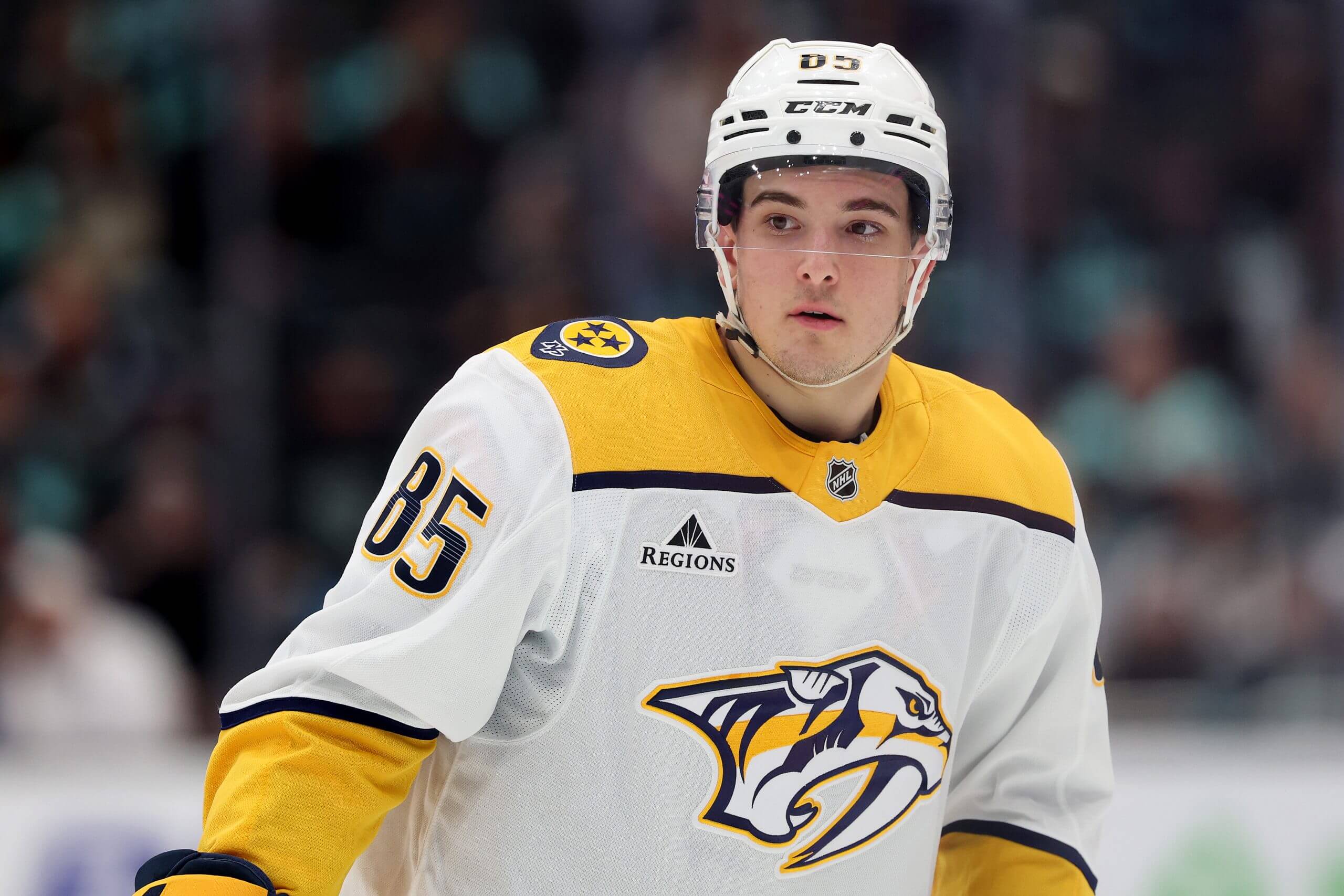
Yager has been on the radar in western Canada for a long time, and he has some pedigree to his profile, though his numbers never found that true upper echelon in junior. He was the No. 3 pick in the 2020 WHL Bantam Draft and the CHL Rookie of the Year (with 34 goals), then an alternate captain and second-leading scorer at the Hlinka Gretzky Cup. He was Canada’s second-leading scorer at the World Juniors as an 18-year-old and their captain and most-used center as a 19-year-old. As an alternate captain and one of Moose Jaw’s leading scorers for two consecutive seasons, he centered the first line to a WHL title with 49 goals and 128 points in 81 games split between the regular season, playoffs and Memorial Cup in 2023-24. And then last year in the final chapter of his junior career, he registered 33 goals and 96 points in 70 games split between Moose Jaw and Lethbridge.
This season, he has had a fine though unspectacular rookie season in the AHL with the Moose. He has been a solid center for them, winning 54 percent of his draws, and has contributed around half a point per game on a low-scoring team while playing 15 minutes per game in the middle of their lineup — including regularly on the power play and spot usage on the penalty kill, where he was dangerous in junior. His actual statistical profile has always been good without being great, but he has been a consistent offensive player in his age group while playing a detail-oriented off-puck game as a center.
Yager plays a threatening, attacking game with skill in straight lines and in cutting sequences in transition. He has smooth-skating mechanics. He’s dangerous inside the offensive zone from the top of the circles in with a quick-release wrister that comes off his blade hard and with a slight, goalie-fooling adjustment pre-shot. He has good puck skill in congested areas, an ability to attack in bursts and make something happen out of dead plays, and an equal ability to play off coverage and make himself available as a shooter for his linemates.
He’s a natural scorer who plays a direct style, but he also has vision and good touch, though I wouldn’t say his creativity is necessarily a strength. I like the way he supports the puck defensively as a center. He’s very intentional with his routes, offensively and defensively, which should help him stick at the center position long-term. He’s a decent, though not standout, skater; his skating hasn’t taken a step to add a separation gear in the last couple of years. He’s a smart player who finds ways to get open and supports his linemates well. I like his work rate. He doesn’t have a star quality, but he’s going to play in the league and projects as a potential 3C/PP2/PK2 type.
Photo:
James Carey Lauder / Imagn Images
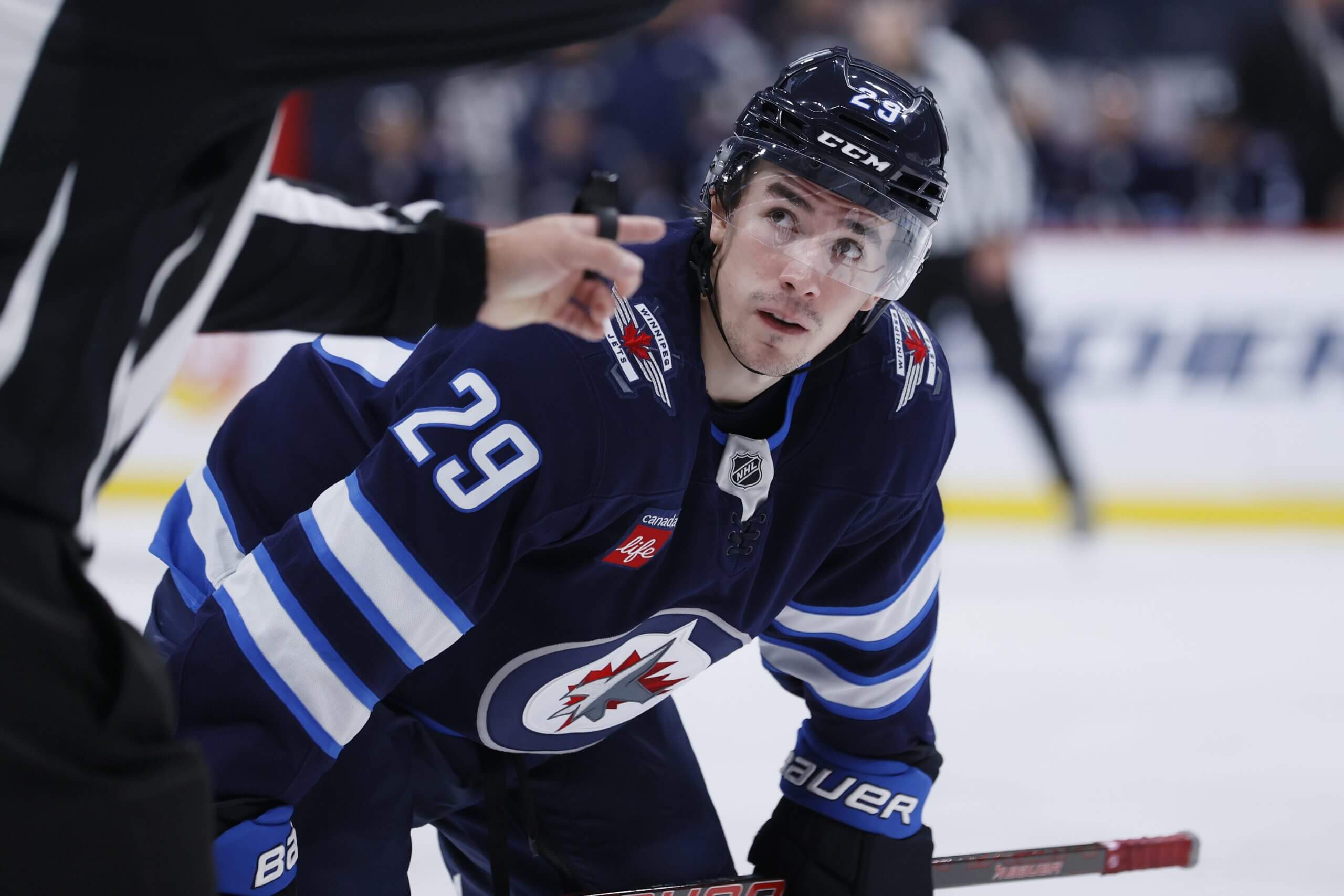
Nesbitt was one of the most improved players in the OHL last season, emerging to play significant all-situations minutes for the Spitfires before getting picked early by the Flyers. He, like Jett Luchanko, is a player I viewed as more of a late first, though, and while he has played to really strong two-way results in a relied-upon all-situations role on a top team this year — 21 minutes per game, including as a top-unit PPer and PKer and go-to faceoff guy — there are similar questions about his ultimate offense and whether he projects as more of a third-line player than a top-six one.
He’s a tall (6-4/5), strong, competitive center who looks like a man and yet still has room to get stronger. He’s also strong in the faceoff circle, reliable on and off the puck, with some of the complementary skills you look for in a bigger pivot, including good hands in tight and on tips and a willingness to battle, go to the net and then release into the corners to get pucks back and go to work on the cycle. He’s competitive. He has some secondary vision/sense on the puck and reads and anticipates well on and off the puck. He has some puck skill, is physical and will drop the gloves with some meanness to him. He works to track back. He can take pucks off the wall to the dangerous areas and hold them on the cycle. He’ll carry pucks through neutral ice even though his skating needs work. He has a good wrister from mid-range. He has learned to survey better and find guys, and can make some plays with guys on him.
There’s a lot to like. He needs to get quicker, for sure, though, and there have been times (including at U18 worlds) where his below-average skating has been highlighted. He’s going to have a long career in the NHL; I just felt and feel that 12th was a little early.
Photo:
Bruce Bennett / Getty Images
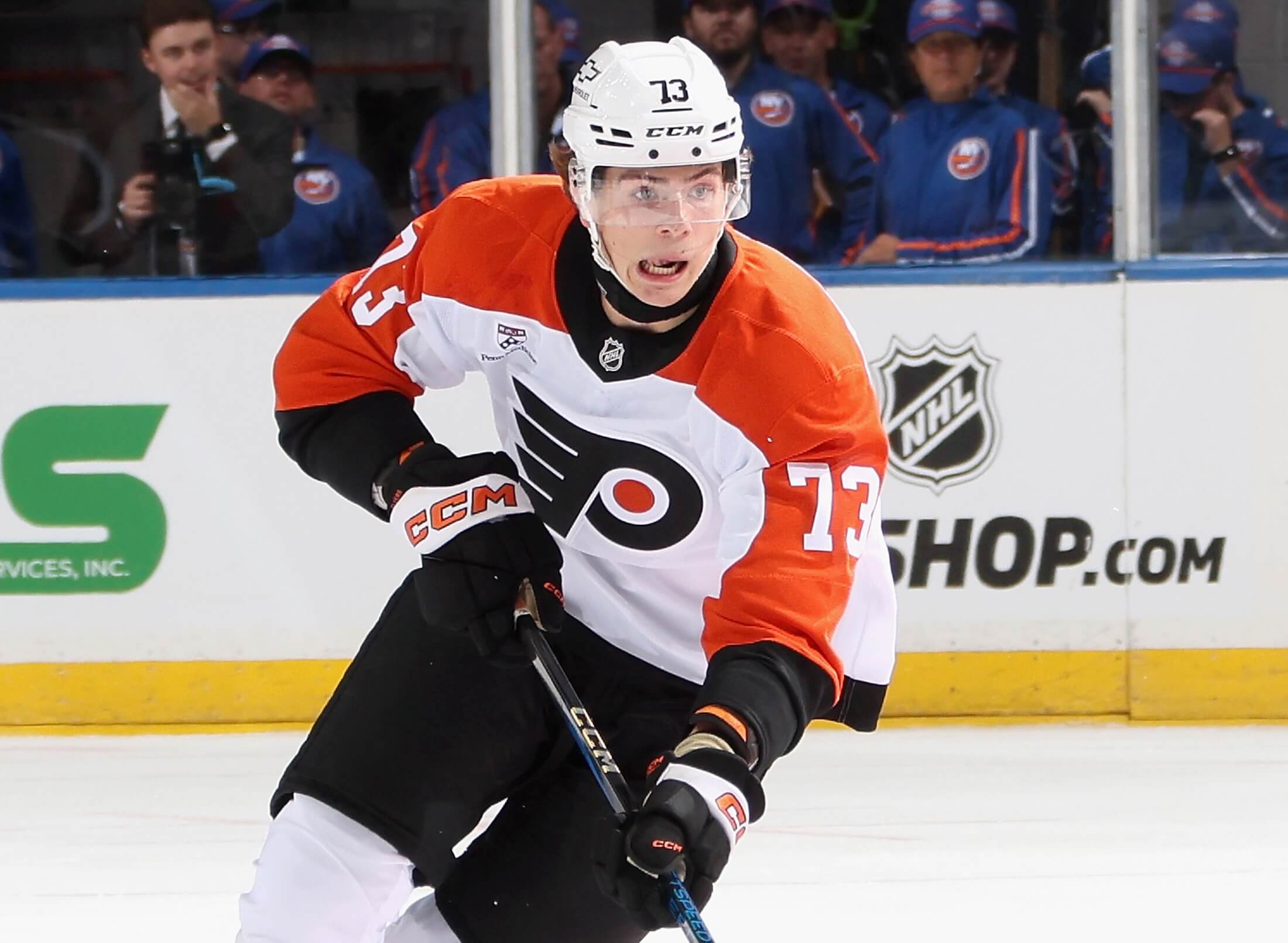
After registering 14 points in his rookie season in the OHL, Luchanko got off to a good enough start to earn a “B” rating from NHL Central Scouting in the fall of his draft year (which “indicates a 2nd/3rd round candidate”) and then rose all the way to No. 20 on their final list after emerging as Guelph’s leading scorer with 74 points in 68 games. He was then Canada’s second-line center at U18s, continuing to impress scouts in Finland ahead of his selection with the 13th pick in the draft. I never quite got there, viewing him as more of a late first, though. And while earning games with the Flyers to start each of his two post-draft seasons is certainly notable, those two seasons in the OHL (with Guelph and now the OHL favorites in Brantford) and at two World Juniors were more “fine” than following the upward trajectory of his draft year.
I thought he was impressive on the PK for Canada in Ottawa and Minnesota, and that his skating was noticeable at times, but he really struggled to generate offense despite being on the power play at this year’s tournament. Everyone wants to see him put the puck in the net in the OHL more than he has, too, and while he might be an important piece of a championship team in the spring, I want to see him make more plays along the way.
Luchanko is a standout athlete. He performs exceedingly well in fitness testing and is very strong for a 5-11/6-0 player with average skill, impressive skating ability and standout on-ice intelligence. He understands timing, spacing and puck movement at a very advanced level, always finding his way into good spots. He has good instincts on the PK and can really apply pressure with his skating. And then there are other complementary tools which come second. He protects pucks well with a wide gait. He has really good balance, posture and mechanics, and while I wouldn’t call his upper-echelon skating elite, it’s a definite asset, and he has some pull-away speed. He plays in and out of give-and-gos. But it’s the consistency of his reads, paths and decisions that define his game. He makes the right play with the puck almost always, and he’s extremely unselfish. There are, however, times when I’d like to see him hold onto pucks and attack so that I can evaluate his skill better, but he just always gives it to the open man and then gets back open.
He has a chance to be a reliable, fast, intelligent all-situations third-line center, but I don’t see a ton of offense in his game in terms of the top-of-the-lineup NHL outlook you’d hope for out of his draft slot. He has quieter tools and habits that should help him (the routes, pressure points, penalty killing upside, strength, skating, good poise on the puck and vision), but he doesn’t have loud elements that suggest an NHL skill player, and his game has some definite limitations offensively.
Photo:
Steph Chambers / Getty Images
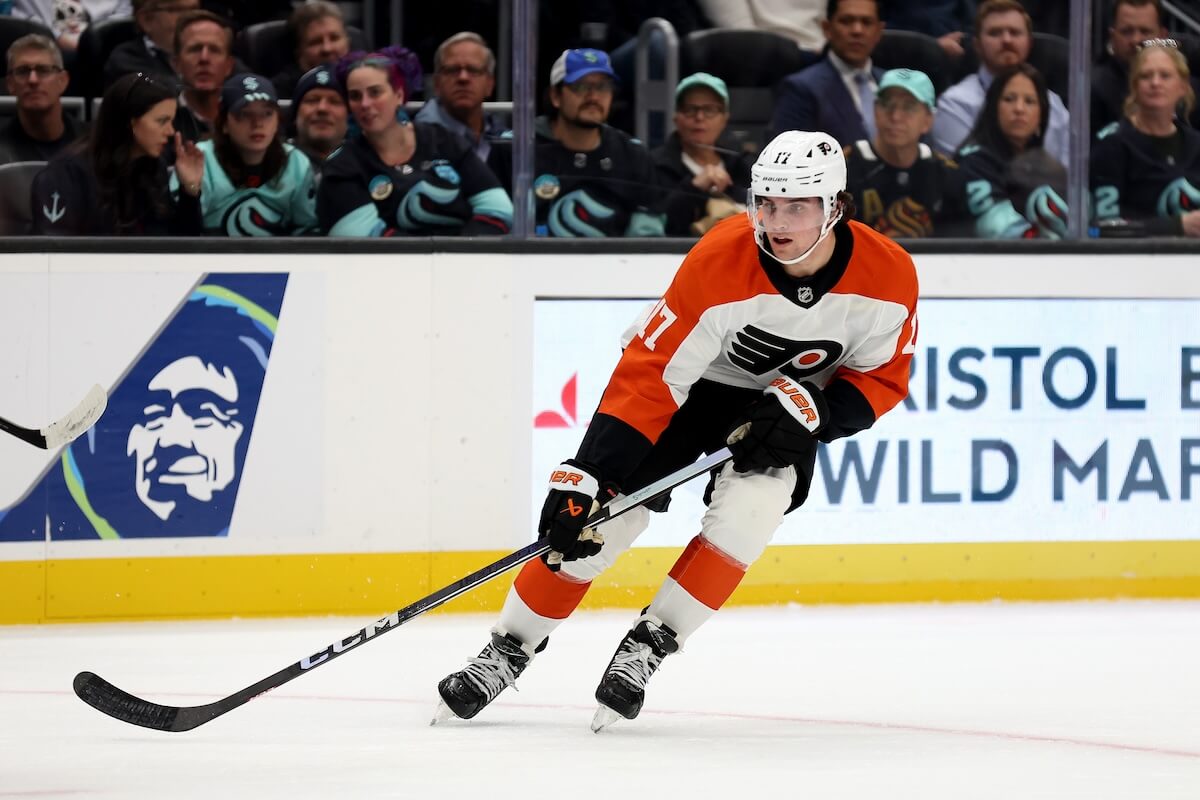
Jiricek has some extremely desirable attributes, marked by a booming point shot that he does a really good job of keeping on target and a couple of feet off the ice, a strong 6-4 frame that continues to fill out, and a commanding on-ice presence that can look to take control with the puck inside the offensive zone. But some persistent warts in his profile have held him back to the point where he’s no longer a top prospect in line with where he was picked.
Defensively, he’s a capable man-to-man in-zone defender, but his stilted backward skating/pivots and how often he gets caught flat-footed off the rush are real impediments against speed/changes of direction. He closes out on gaps with his length and aggression when the game is low pace,but struggles when it’s not, and he can struggle maintaining gaps, but uses timing to his advantage and is eager to pounce. Offensively, he leads rushes as an eager puck transporter, and he’s a capable handler and distributor whose point shot is complemented by an aggressive approach. He also makes a good first pass and has a sneaky first touch for a player his size into his first move and an ability to make a second move. But his modus operandi is a confident, active, engaged player who has some of the tools you look for in a top defenseman while missing some of the most important ones; on top of the feet, his reads can let him down.
When his timing is on and he’s stepping up early to take ice in the neutral zone, he can affect a game on both sides of the puck. He can be a little overzealous at times offensively and defensively, though, and will get burned wide. That eagerness to make something happen defines his game, and he’s a lot to handle when he builds a head of steam through his tall crossovers and starts circling the offensive zone to attack. He wants to dictate and influence the game on his terms, rather than wait for it to come to him (which can also come with waiting a little too long to make his decisions) but his ability to actually do that has clear limitations. Because his decision-making and footwork don’t seem to be improving enough, he no longer projects as a top-four D and now looks more like a potential third-pairing type with some offense.
Photo:
Bob Frid / Imagn Images
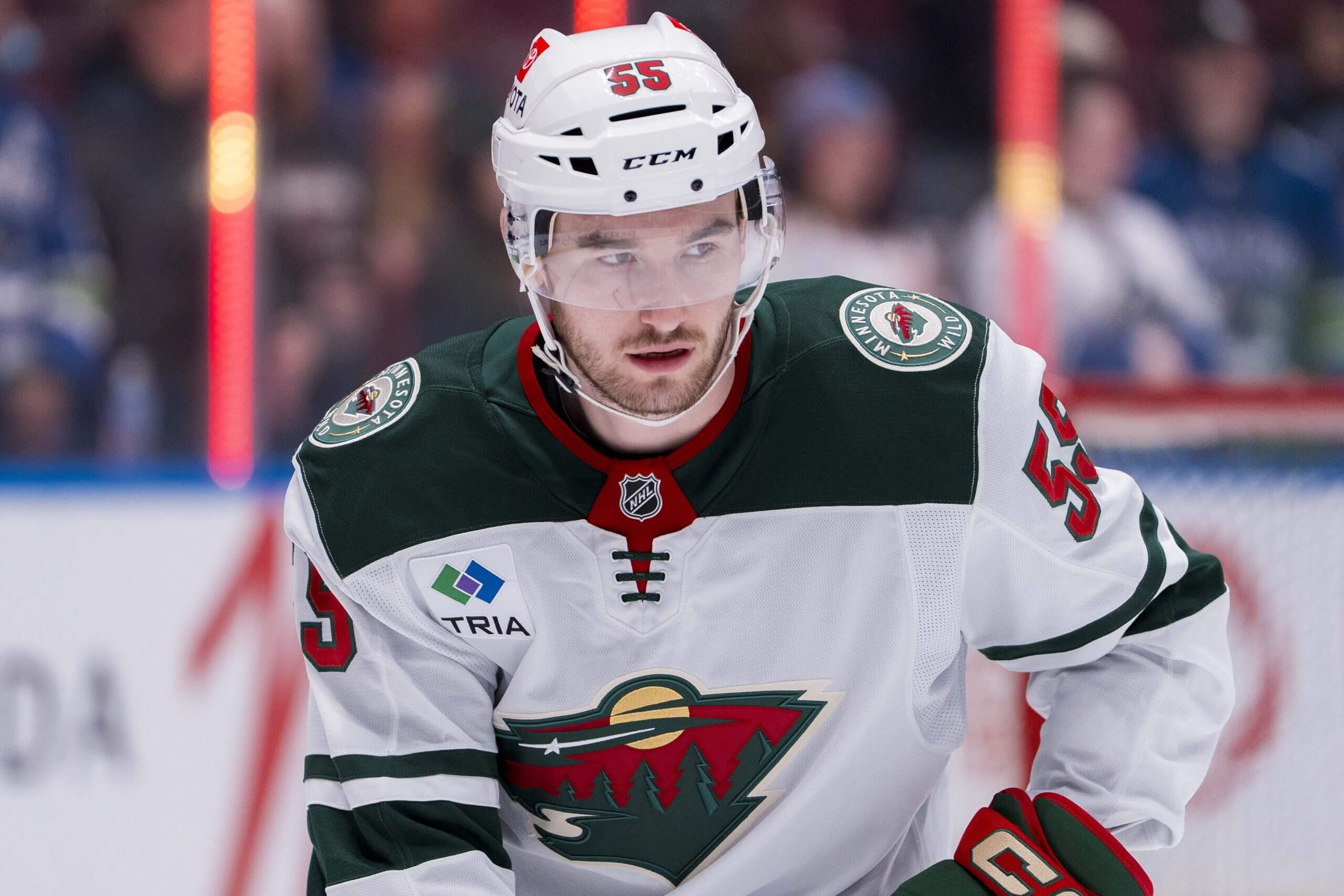
Pohlkamp’s a very unique player type. He’s a 5-foot-11 D but he’s really stocky (210 pounds and muscular) and strong and he uses that strength to play a physical, competitive and aggressive style offensively (taking charge with his shot) and defensively (playing to win bumps and engagements). He also has one of the hardest point shots outside the NHL — like he can absolutely bomb it.
Two years ago, as a freshman at Bemidji State, he played huge minutes (23 on average, most on the team), scored double-digit goals as a defenseman, played for Team USA at the World Juniors and then transferred to Denver to play under his USA head coach David Carle last year. As a sophomore last season, he again played big minutes (23 on average, second on the team to Zeev Buium) and was a prominent part of both the power play and penalty kill. He took another step this year and was, for me, the best defenseman and arguably the most impactful player in college hockey (he would have been my Hobey Baker vote), leading the Pioneers in scoring with 39 points in 41 games to lead them to this week’s Frozen Four while playing nearly 24 minutes per game to a plus-25 rating and 185 shots (the most of any player in college hockey). He also performed at the Spengler Cup.
He doesn’t look or play like your typical sub-6-foot defenseman, playing with decisiveness before poise (while also having it when he needs it), attacking past the first layer and often laying big hits. I think he’s going to be a unique NHL defenseman who can do and provide a lot. He’s also a righty. I’m a big fan and this slotting is reflective of that.
Photo:
Aaron Ontiveroz / The Denver Post
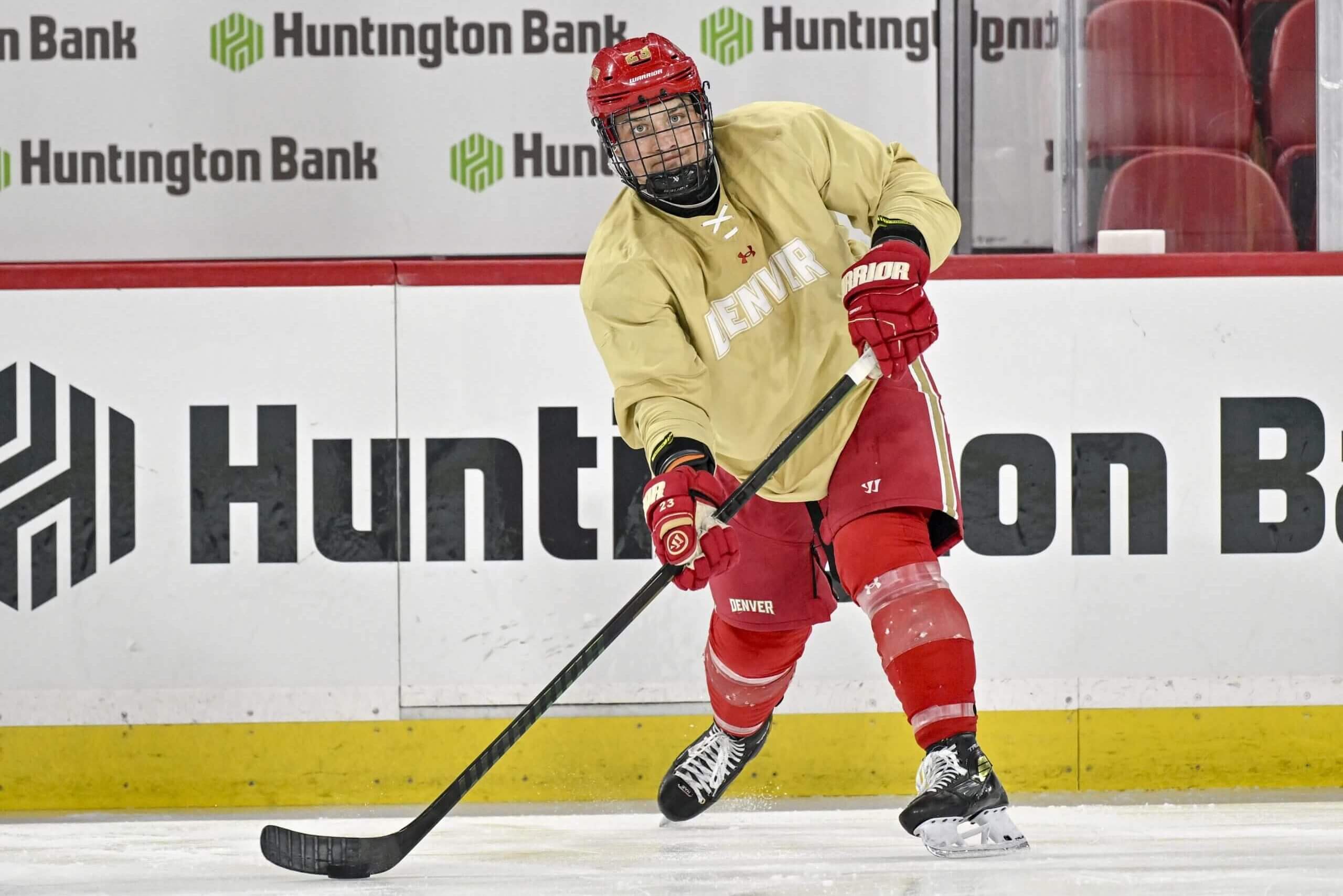
Svechkov had for years looked like a legitimate prospect in his age group and at the MHL (which included a 16-shot performance three years ago!) and second-tier VHL levels in Russia, but he wasn’t able to really establish himself in the KHL with two different teams (SKA and then Spartak) before he made the jump to North America. Since arriving, though, he has established himself within the organization, first in the AHL where he looked more like himself right away, producing as a rookie center who averaged about 15 minutes per game, and then last year playing 17-18 minutes per game to nearly a point per game in the AHL and earning his first NHL opportunities with the Preds (who he played well with). He has taken another step toward establishing himself in the NHL this year as well, and now it’s about proving he can be more than just a guy with the big club.
I think he has benefited from the smaller ice surface, where his heady game was always going to work better.
He doesn’t have high-end scoring touch or enough skating (his stride extends back through his toes, hunching him over his skates, instead of back and out through the arches of his feet) to elevate his projection from everyday NHL center to a potential impact one, but there’s a lot to like about his makeup and future as a contributing third-liner. His defensive awareness and intelligent, efficient offensive game make him an intriguing player. Though he has work to do in the faceoff circle, he’s otherwise a very complete player with a knack for disrupting and lifting pucks, sound positioning and an understanding of how to support the play and lead it in the right direction. He stays available for his linemates and involved through the neutral zone without needing to be fast. He does a good job creating separation with his go-to stop-up to force defenders off him and allow him to attack back into the space they’ve left behind. He has managed to produce at a consistently high level over the years despite lacking that star quality that most first-round forwards possess. He makes a lot of quick, smart plays with a good understanding of spacing. I don’t want this to position him as unskilled, either. He’s capable of carrying the puck and making plays in the offensive zone. But the real strength of his game is in its subtleties and intellect.
Photo:
Sergei Belski / Imagn Images
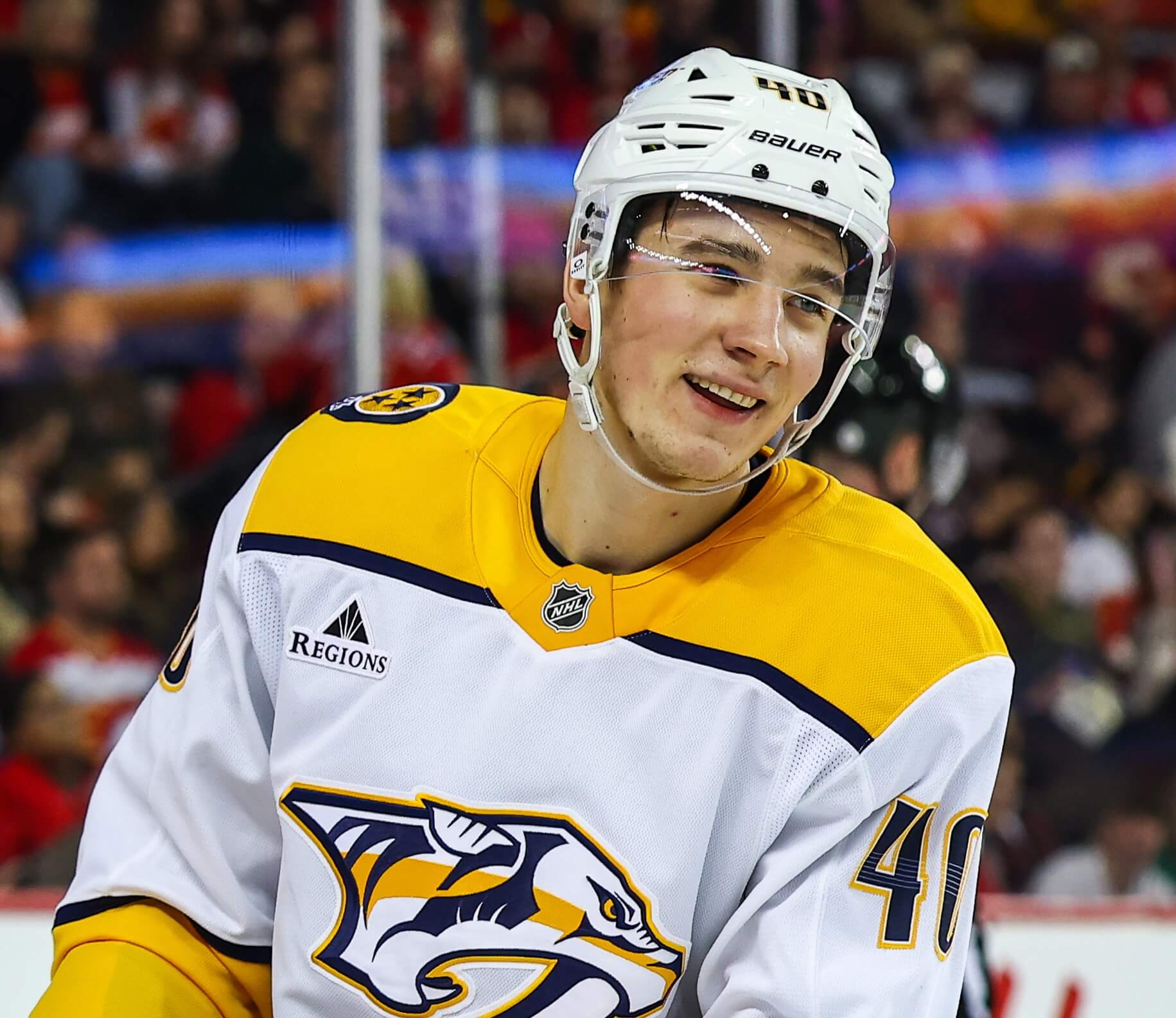
Before last year, Solberg was a tricky projection as a player who had played exclusively in Norway at the junior and pro level before the draft, which seldom produces NHL talent. But he has also played the better part of the last six (!) seasons against men. And after an excellent playoffs for Vålerenga and an even better showing playing first-pairing minutes against NHLers for Norway’s national team at men’s worlds, his stock was at its highest as the draft arrived. (He was the biggest riser on my board in the second half of the season.)
Last season, after signing with Färjestad, he registered 15 points and a plus-10 rating across 60 games in the SHL and the Champions Hockey League as a teenage defenseman. He also registered another five points in his first 10 AHL games (where I thought he was immediately solid) and another eight points in 10 games split between a second men’s worlds and Olympic qualifying, playing a huge role for Norway’s national team. This season, in his first full year in the AHL, he has played 17-18 minutes per game (fifth among regular Gulls D), and his primary contributions have come through his physicality and big shot at five-on-five, though he hasn’t been relied upon on either special team yet.
His game has some real identity and form to it at an early age. One of the most competitive prospects in the sport, Solberg plays really hard and firm on both sides of the puck, with a mean, strong, physical presence that has seen him make life hard on opposing players whenever he has played against his peers internationally and even against men in Norway and Sweden. He’s really physical in man-to-man coverage, sometimes too much. It’s tough to take him one-on-one, and then he can skate the other way, though he can also be a little too eager on that front. His reads and decision-making need some tightening at times, as he can be sloppy/turnover-prone, but his game has grown more mature as time has gone on, leaving me less concerned about his brain than I once was.
He’s also a strong skater and advanced athlete with an athletic 6-2 build that is already over 200 pounds and is really strong/sturdy. Players with his makeup — a hard-nosed, highly engaged defenseman with good size/athletic tools who’s shown enough offense — are always going to be valuable. They tend to fit in on North American ice, too. I see a potential second-pair ceiling, third-pair floor as a hard-to-play-against D with some secondary offense that gives the Ducks’ future blue line something different from guys like Olen Zellweger and Pavel Mintyukov.
Photo:
Bruce Bennett / Getty Images

Luneau is a player I’ve long had a lot of time for and have felt is underrated. He was the first pick in the 2020 QMJHL draft and looked like a surefire first-rounder through the Youth Olympics and into his strong rookie season in the QMJHL, where he won the league’s defensive rookie of the year award. And while it took him some time to get back to that status after a knee procedure cost him the summer, preseason and first three games of the regular season in his draft year, he hit his stride in the second half of his post-draft season. He was the QMJHL’s defenseman of the year and was clearly the league’s most complete defenseman by a long shot, logging huge all-situations minutes and driving offense in a big way while playing a matchup role against the opposition’s best.
Two years ago, in his rookie pro campaign, I thought he looked like a stud in the AHL and NHL early on, and he was clearly a cut above all of Canada’s other defensemen in practices and the Red-White scrimmage in Oakville for World Junior Selection Camp before a serious infection to that knee hospitalized him and derailed his season. He would have been Canada’s No. 1 D and changed the look of that World Juniors team in Gothenburg. Last year, though he didn’t make the full-time jump to the NHL that I think he was on track to make pre-infection, Luneau was one of the best D in the AHL, driving offense and play in significant minutes. Though his numbers have taken a hit in his third year (as have his team’s) and he still hasn’t made the full-time jump to the NHL, he has led the Gulls in ice time this year, and I remain a firm believer that he belongs in the NHL.
Luneau’s game isn’t dynamic in the obvious sense, but he’s a balanced and smooth-skating right-shot defenseman without being explosive, something some scouts worried about but I’ve often argued is closer to a real strength than anything else. He can run a power play, is a plus-level passer, has developed his shot and reads the play at a high level with and without the puck at both ends. His skating has looked comfortable, flexible and smoothed out when healthy. He plays a poised and polished two-way game that lends itself to driving play. And while he’s a high-floor type — he should be a good third-pairing guy at minimum — I think he has second-pair upside in the right situation, though it’s starting to feel like he’s not being prioritized by the Ducks as much as some of his peers.
His size (6-1, about 200 pounds), maturity, roundedness and discreet offensive game and skating have put him, when healthy, on a path toward becoming a contributor. He has proven he can control play and log significant minutes in the AHL.
Photo:
Isiaiah J. Downing / USA Today
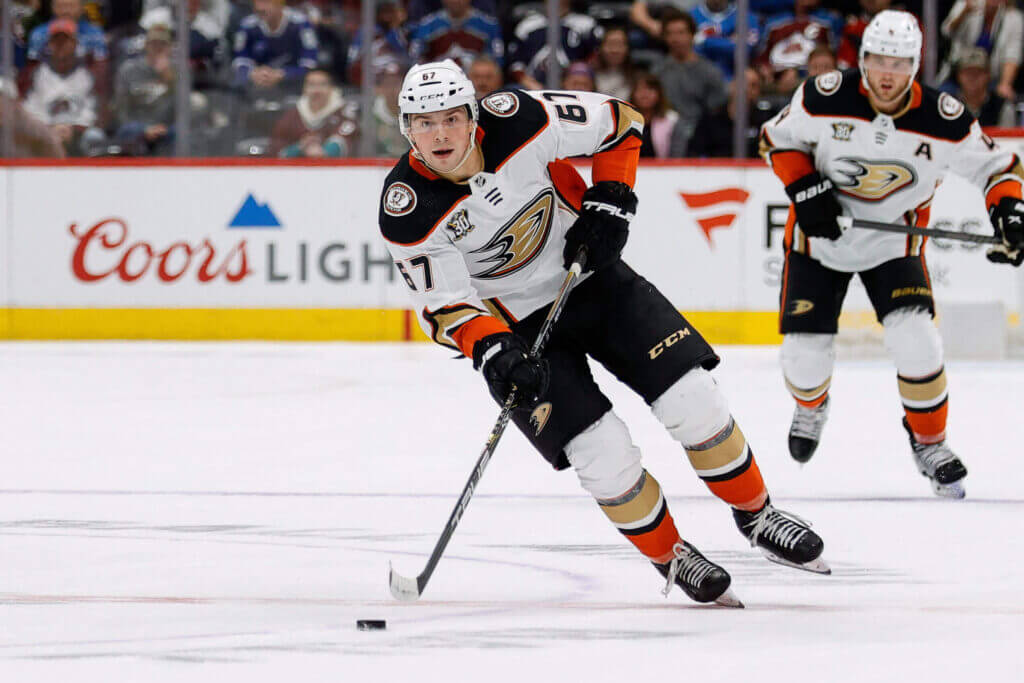
Rosén is a slippery goal-scoring winger who just looks talented in possession. On the attack, he’s a crafty handler who sneaks through traffic to navigate in and out of space in control, drawing attention as he goes. A lot of the tools he has are also the ones required of average- or slightly below-average-sized players in today’s game; he’s now listed at 6 feet and 185 pounds, which is up an inch and 15-plus pounds over the last couple of years.
He’s inventive. He’s a light, fluid skater who changes directions in an instant and beats defenders off cuts, and his ability as a marksman really can’t be overstated. Both his one-timer and his wrister are pinpoint accurate, and he makes a ton of quick adjustments before he releases the puck to catch goalies and defenders off guard. Though his first instinct is to look to attack the slot to score, he’s also got great touch with the puck when play breaks down and he has to improvise or make a play to a linemate.
He was a top scorer in Rochester the last two seasons, playing to around a point per game and learning to find ways to get to the heart of the offensive zone to create more for his shot. I think he’s got what it takes to inject skill into an NHL top nine and threaten on the power play. There was a risk that he would just become a AAAA scorer blocked by the wing depth in Buffalo, but he should have more of an opportunity to fulfill his potential in Winnipeg. He’s got the threatening transition game, nifty release, shot shaping and perimeter speed and control to become a 20-goal complementary middle-six finisher and PP2 scorer.
Photo:
James Carey Lauder / Imagn Images
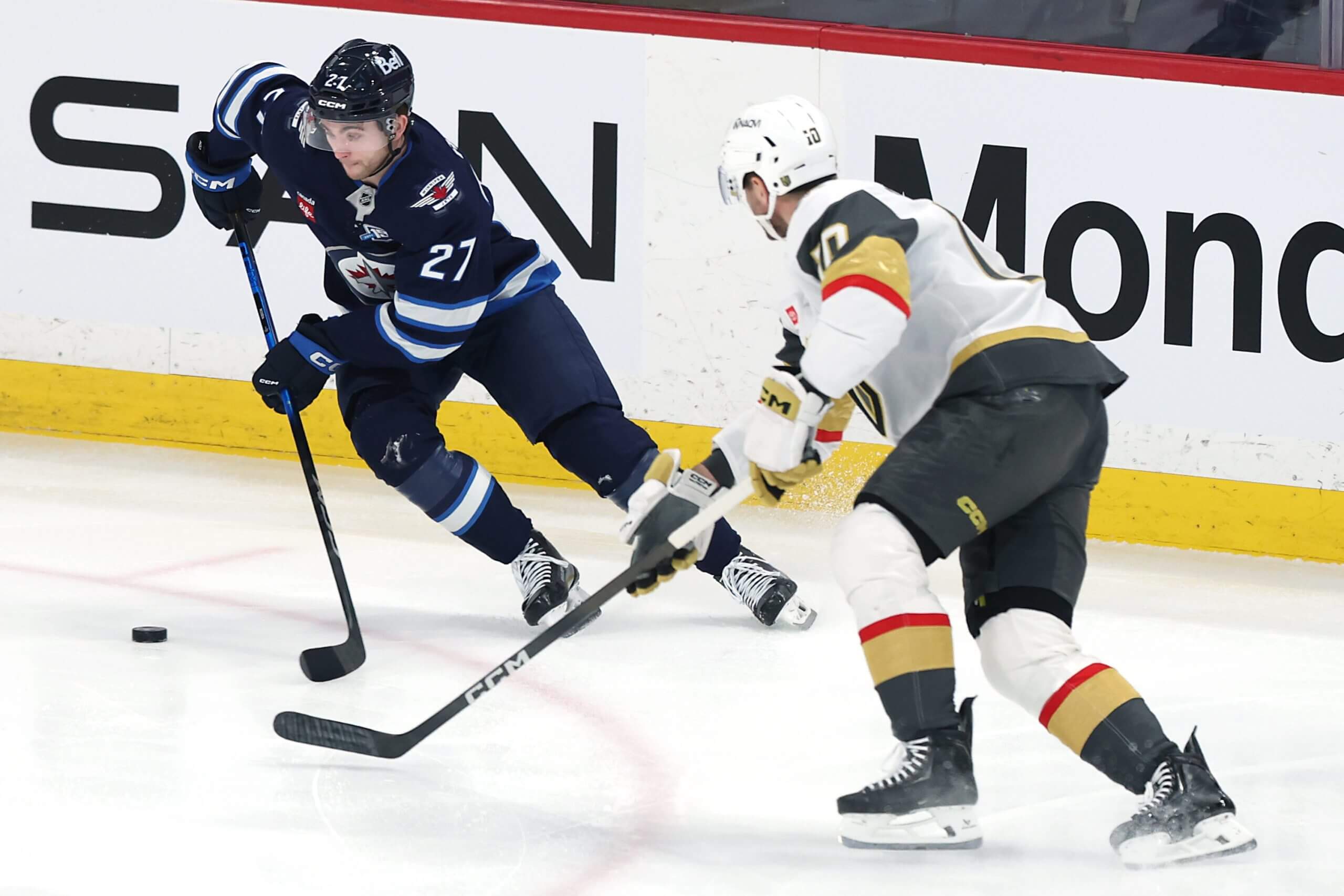
The story of Lambert’s career has repeated across half a dozen teams, five levels and three World Juniors, and through the pandemic, injuries and illnesses. There have been times in junior, internationally and in pro in Finland and the AHL, where he has shown some really nice flashes of the skill and skating that made him one of the biggest names in his age group growing up. But there have also been extended and recurring stretches where he looks like he doesn’t know who he is or how to affect a game. Just as he looked like he was ready to take the step to the NHL over the last couple of years, that inconsistency in his play has seemed to crop back up, too.
Lambert’s gifts are undeniable. He’s a beautiful skater whose hands flow in sync with his feet. When he’s feeling good, he’s fearless with the puck, makes a ton of plays in control and looks to dictate in possession. He has excellent control of his outside edges, which allows him to carve up coverage on cutbacks and carries. He’s slippery because of his ability to spin away from his man and make a play. He’s a good passer off his backhand. He’s capable of playing pucks into space, getting to the interior, splitting lanes and cutting off the wall aggressively, and has a low base to his stride that allows him to extend plays (though he does have a bit of a hunch to his posture, which can put him off-balance). He’s capable of playing the point and half-wall on the power play because of his puck skill, dangerous wrister off the flank and playmaking instincts.
But there’s a difference between ability and know-how or execution. Some scouts have worried about Lambert’s game without the puck in terms of both his intensity off it and ability to make things happen offensively when he’s not getting a ton of touches. I actually think playing him at center full-time both in the WHL and then with the Moose, instead of bouncing him between the wing and the middle, helped to keep him more involved, but they’re now back to playing him on the wing. Others have worried about how often he has skated the puck into trouble and made his decisions too late at times during his career. I’ve wondered at times whether he goes to the net enough to score up levels.
With the puck, though, Lambert is a multifaceted threat who blends impressive puck skill with standout all-around skating mechanics and an attack mentality that can complement a dangerous curl-and-drag shot (which also complements the short stick he uses).
There has been a boom-or-bust prognostication for him because of some of the inconsistencies and the requirement that he’s going to have to play in an offensive role in the NHL. It can feel like he’ll follow a shift where he has the puck four or five times with one where he’s not processing things quickly enough or making bad decisions, but those brain cramps and bad habits have begun to show up less. He’s a fascinating ongoing case study.
Photo:
Jonathan Kozub / NHL via Getty Images
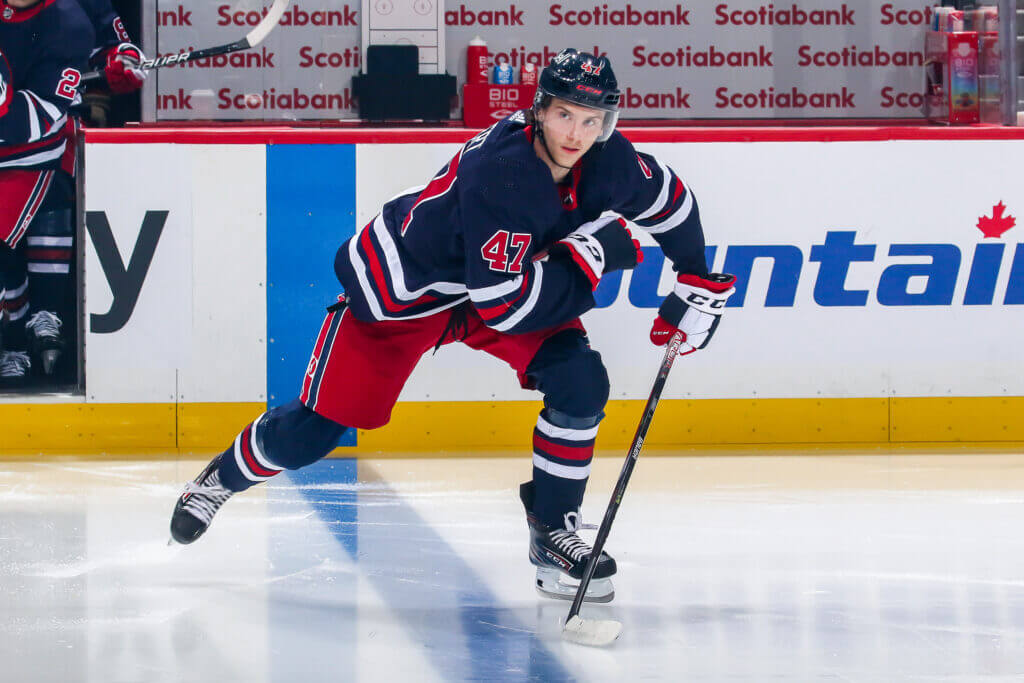
I’ve been hearing about Boumedienne for some time, and he’d lived up to the billing before a disappointing showing at Hlinka. He impressed as a rookie in the USHL to play his way onto its All-Rookie Team and internationally with the Swedish national under-17 team. He’s a plus skater with a long and fluid stride complemented by good footwork and balanced four-way mobility. He has natural glide but can also stay on top of the ice and flow through his skating patterns in straight lines. His puck management/decision-making in control needs work, though, as he doesn’t think the game particularly well and relies too much on his instincts both with and without the puck — he can take an extra second to make his read at times and is prone to turning the puck over. He has a good stick defensively and can take away time and space with his length, skating and timing in neutral ice, though. He can also try to do too much for his skill level with the puck and put himself in bad spots at times. He’s also going to get stronger and fill out his frame further to add some more power to his game (which he has started to do, but remains lean relatively speaking).
After an up-and-down start at BU in his draft year, he took major steps as his freshman year went on, playing his best hockey down the stretch and logging significant minutes alongside Canucks first-rounder Tom Willander. After playing in the teens through much of the year, he was logging 21-26 minutes into the national tournament for the Terriers. And after wanting to see him play a more assertive, sure-of-himself game on both sides of the puck in the first half of last year, he also began taking action more proactively in games and jumping into the play more confidently and at better times. By year’s end, he was playing to positive results and even helping out on the penalty kill after making what some believed (myself included for a time) was a too-early move to college.
He also led all D in scoring at U18 worlds after his college season was over, putting up big points and playing a lot while still struggling at times with giveaways and defensive-zone reads. There were positives in his play defensively in some areas at U18s as well: he got first touch on a lot of pucks with his skating on the penalty kill and cleared the zone, skated a lot of pucks out, made some effort plays and blocked some shots. This season, he has played 22-23 minutes per game as a sophomore for Jay Pandolfo at BU, and while it has been a learning experience on an up-and-down team, he has handled it pretty well and his production should tick up as a junior now that Cole Hutson has turned pro. He also had a positive World Juniors in Minneapolis, where he got better as the tournament went on and was big in the big games en route to gold, showing some vision, PKing well, getting open for his one-timer and making some mistakes but still making an impact all over the ice.
He just needs to move it a little quicker and cleaner at times. When he looks to create and plays decisively, you can see it. He also wants to make a difference and can be very involved in offense when he’s activating, walking the line and swinging off the point. Once his game matures and the execution/decision-making/getting caught up ice trying to do too much starts to improve, he has NHL upside with his skating. There’s definitely a better player/prospect in there than the one we saw at that Hlinka a year and a half ago. His skating should carry him, and there’s some untapped potential there still.
Photo:
Rick Osentoski / Imagn Images
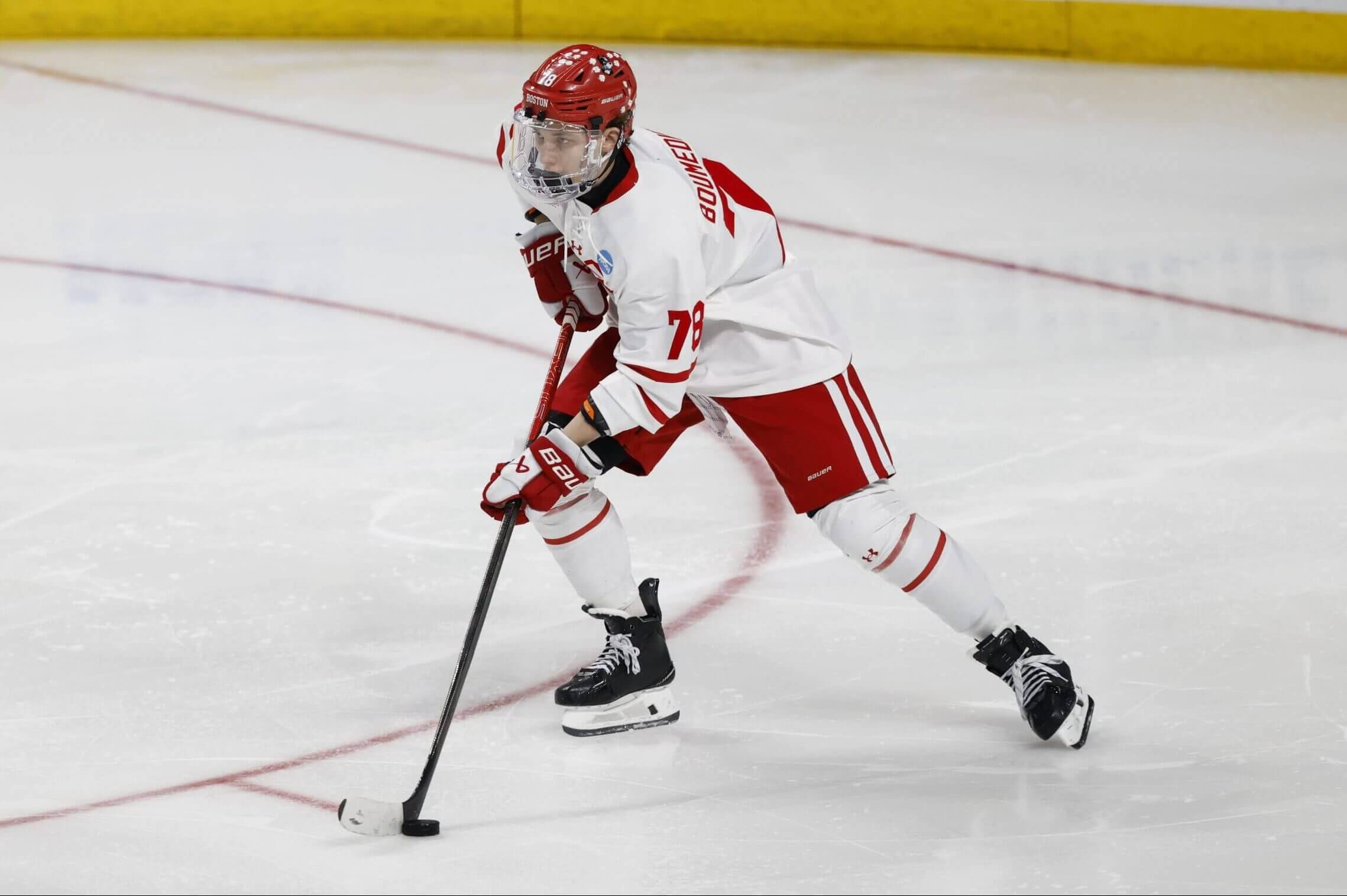
One of the stories of the 2024 draft since being selected in the sixth round, Walton found a new level (or two, or three) last season, finishing ninth in OHL scoring with 92 points in 66 games as a 6-foot-6 center. He has shown that it wasn’t a fluke this year with the Wolves and now the Petes as well.
Walton is a massive forward with impressive handling and feel on the puck for a player his size. And while he’s not a natural mover, his skating has come along enough to give him a real chance at becoming an NHL player. Teams wanted to see him impose himself more last season on and off the puck, given his skill level, and he has really taken charge this year. He doesn’t have the big, mean streak that you might expect out of a player his size, but he has some other qualities that pop, including some sneaky power-play utility around the net and good playmaking feel/puck skill. He’s not the big man prototype, but I think he’s even more interesting because of the offensive acumen he has. He has been impossible to contain in many games over the last two seasons, generating a ton of offense and looks not just for him but for his linemates as well.
He was one of the final cuts for my top 100 in 2024, and I’m kicking myself for not including him. He certainly doesn’t look like a No. 187 pick, and it’s notable that I’ve slotted him in front of a couple top-two-round picks here.
Photo:
Candice Ward / Getty Images

Barkey is on the small side at 5-10, 171 pounds, but he’s one of the hardest-working prospects in the sport and was a top player in the OHL in his last two seasons there, helping the Knights to two OHL titles and one Memorial Cup as captain. He was also one of the final cuts for Team Canada in back-to-back years for the World Juniors; I think they could have used him. This year, as a first-year pro, he has — unsurprisingly to anyone who has watched him over the years — quickly endeared himself within the Flyers organization to earn NHL time.
He’s a competitive, energizing player who empties the tank shift to shift, wins more battles than a player his size should and has the skill required to make plays out of all of that effort. Despite his size, Barkey can play center as well as wing and wins his fair share of battles through his skating, motor and pure determination. He can play in all situations, is a highly effective penalty killer and has a way of setting the tone on his line and dragging everyone else into the fight. He has hustle, jump and skill in between. He has always felt to me like an up-and-down-the-lineup NHL type. He’ll be a fan favorite, too. He’s an incredibly likable player.
Photo:
Bob DeChiara / Imagn Images
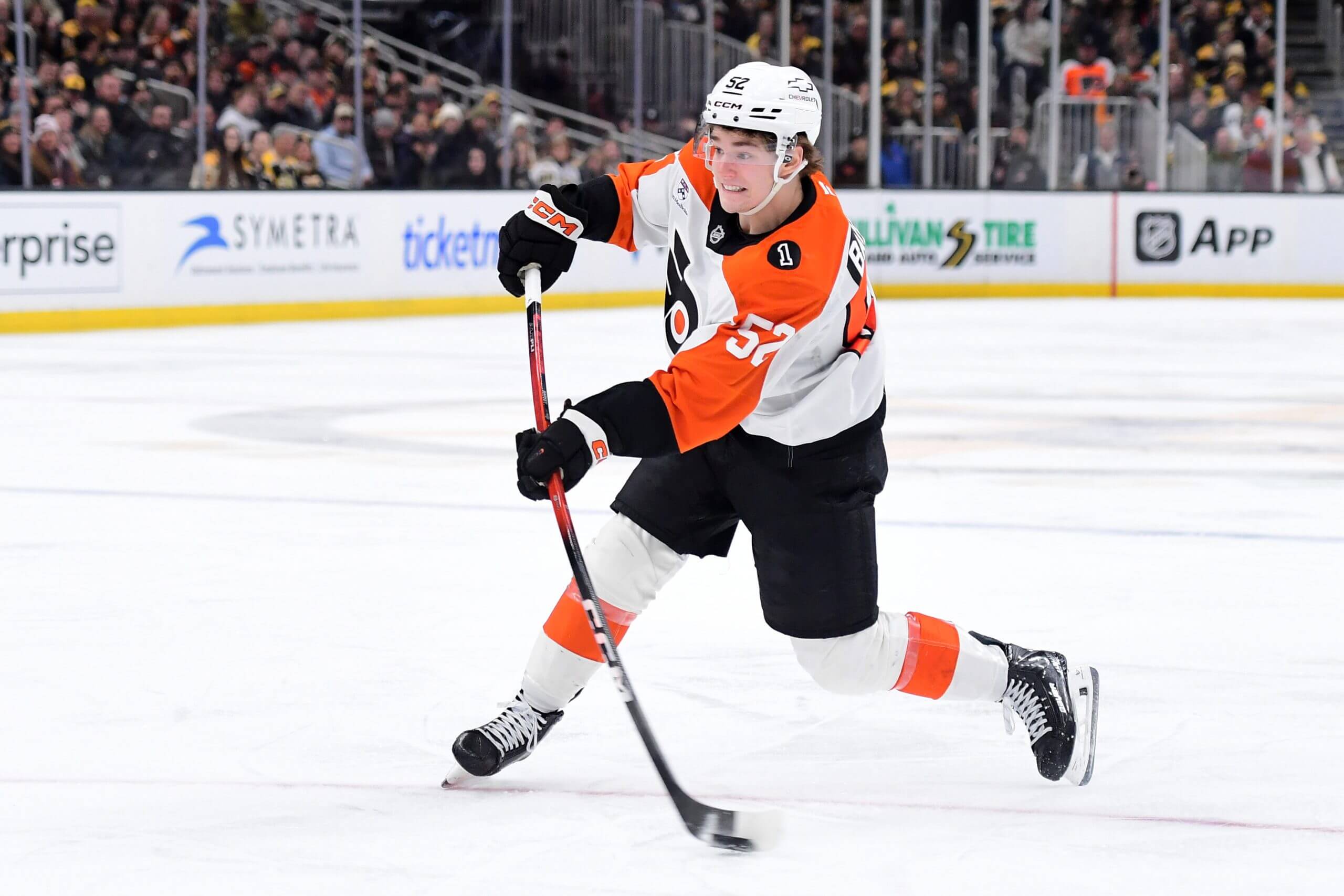
Though O’Reilly was drafted at the end of the first round and the Oilers weren’t alone in viewing him in that range, I viewed him as more of a mid-to-late second-rounder ahead of the 2024 draft, ranking him 52nd on my board. He followed the London Knights’ tried-and-true path through the GOJHL London Nationals as a 16-year-old and right into an important role as a 17-year-old, where he had a really solid season, producing just below a point per game and contributing to the Knights’ run to an OHL title. He made some big plays on the big stage at the Memorial Cup as well. But I wondered about his offensive ceiling, and he hasn’t taken a step offensively in either of the last two seasons, though he was still obviously the first-line center on last year’s OHL and Memorial Cup champs. After a strong showing as an important player on Canada’s bronze medal-winning team at the World Juniors, he has now been traded to Kitchener, where he’ll chase a third consecutive OHL title. That winning pedigree and style of play are a big part of his projection.
O’Reilly does the little things really well, whether that’s making good little plays off the wall, stick lifts, his board work offensively, spinning off a check to create a little bit of space to funnel a play to the slot or defending with detail. He’s also a natural center who’s good in the faceoff circle. He’s not the quickest or most talented player, but he’s a strong skater and athlete overall, he executes at a high level with the puck and he has secondary skill and good feel on the puck/around the offensive zone. He’s also a strong penalty killer and willing shot blocker who will drive the net and stay around the action at five-on-five.
He projects as a potential well-rounded, complementary pro with a ceiling as a solid 3C.
Photo:
Michael Miller / Getty Images
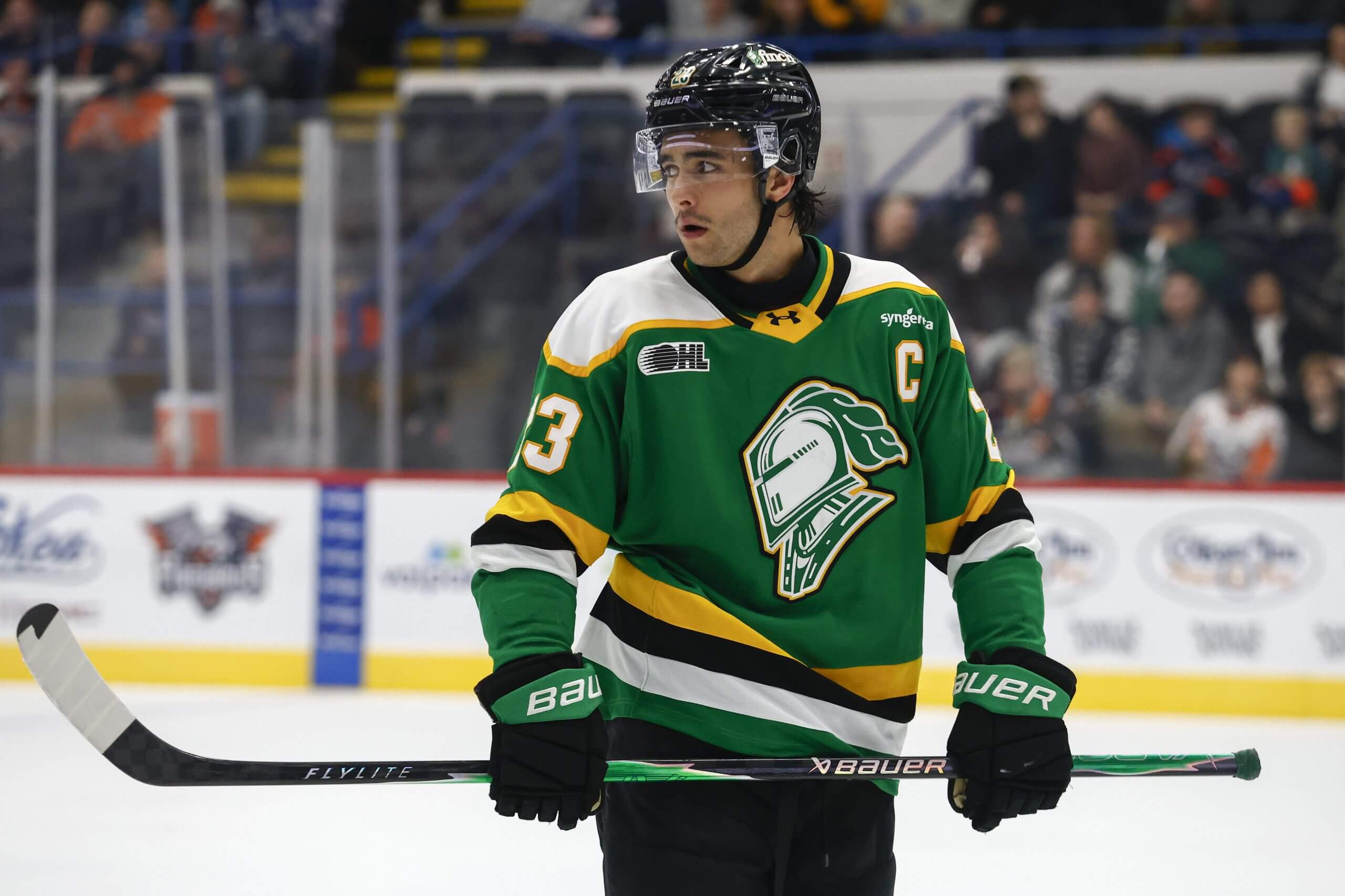
One-third of Sweden’s standout 2005 line at U18 and two U20 worlds, the third-most productive under-18 player at the J20 level three seasons ago as the youngest player in the 2023 draft and a breakout player post-draft in the SHL two seasons ago who even played at men’s worlds, Unger Sörum was a real riser for a couple of years. He then played in the AHL as a teenager last season, and while his game drifted to the perimeter as he figured out how to make his style work consistently in North American play, he has figured it out more consistently in his second AHL season this year.
Unger Sörum is a crafty and slippery winger with plenty of intrigue. Though he has never scored a ton, he has always been productive. He’s a slick player in possession who plays off shooters and drives really well, using his puck skills and finesse to make plays and facilitate. His stride lacks explosive power in straight lines — it can look hurried and sway above the waist a fair amount — but his ability to weave and cut in control/change angles and directions through his edges is pretty high-end. He also processes the game at an advanced level and can anticipate coverage on and off the puck.
He makes plays through layers to the middle with consistency, will play-make on cutbacks out wide and he’s just so, so hard to get a hold of with the puck on his stick. Defensemen have a hard time staying with him inside the offensive zone — he’s smooth in open ice, too, but it’s the changes of direction in coverage that really stand out. He’s shifty and creative with a knack for holding onto pucks, and he’s a problem solver who is superb at finding his way out of trouble or into the offensive zone on entries. There are times when he overpasses as well.
He’s going to have to put the puck in the net a little more, but the snaking nature of his game on the puck is unique, and he has the benefit of time on his side to figure out how he’s going to apply his game to become a complementary playmaker in the NHL if all goes well. I’m not entirely sure how it’ll work in the NHL in the end, but he’s a fun, talented player.
Photo:
Joel Auerbach / Getty Images
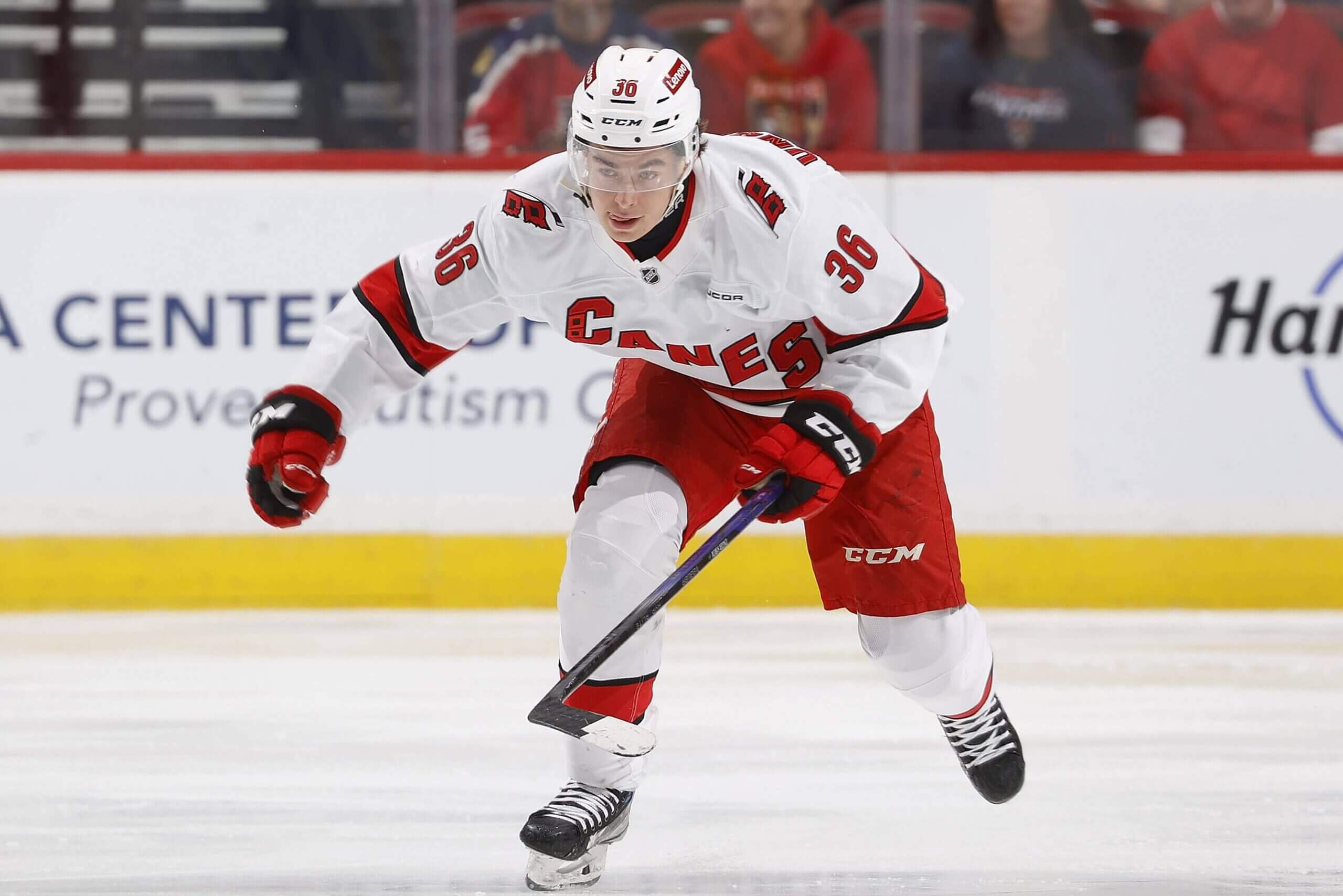
Vanacker is a player who, after he impressed me in an early season live viewing to start his draft year, I immediately made time for on tape and asked around about. After that, I became more and more of a fan. After a good showing in the CHL/NHL Top Prospects Game’s combine testing, he found another level in the second half of his draft year to finish as Bulldogs’ leading scorer after Lardis went down with an injury in January, with 36 goals and 82 points in 68 games at season’s end (while playing through a shoulder injury that he then had surgery on in the offseason and which delayed the start of his post-draft year). He had a quiet U18 worlds (again, while injured) and didn’t produced at the same rate following his return to play at the end of November of last year (42 in 45, though that included 24 goals) but I think the injury had a lot to do with both of those outcomes and he re-established himself as a top power forward in the OHL this year, leading the league in goals with 47 in 60 games and playing well both at the World Junior Summer Showcase and Canada’s selection camp after he was a late invite (and before he was eventually cut).
There’s a lot to like. He has a strong foundation of tools and habits. He has an athletic 6-foot-1, 190-or-so-pound build, he’s a strong skater, he’ll take pucks to the net, he protects and shields the puck well, he knows where to be and go on the ice, he has a solid two-way game and he works to get the most out of his above-average skill. He has the makings of a complementary winger and he knows who he is and what he’s going to have to be up levels. He’s just a good hockey player who will be a good and I could envision producing 20 goals and 40 points a season over a long career. He banks a lot of pucks in at the back post on the power play ala Brantford owner Zach Hyman as well, another transferable NHL skill.
Photo:
Logan Taylor / OHL Images
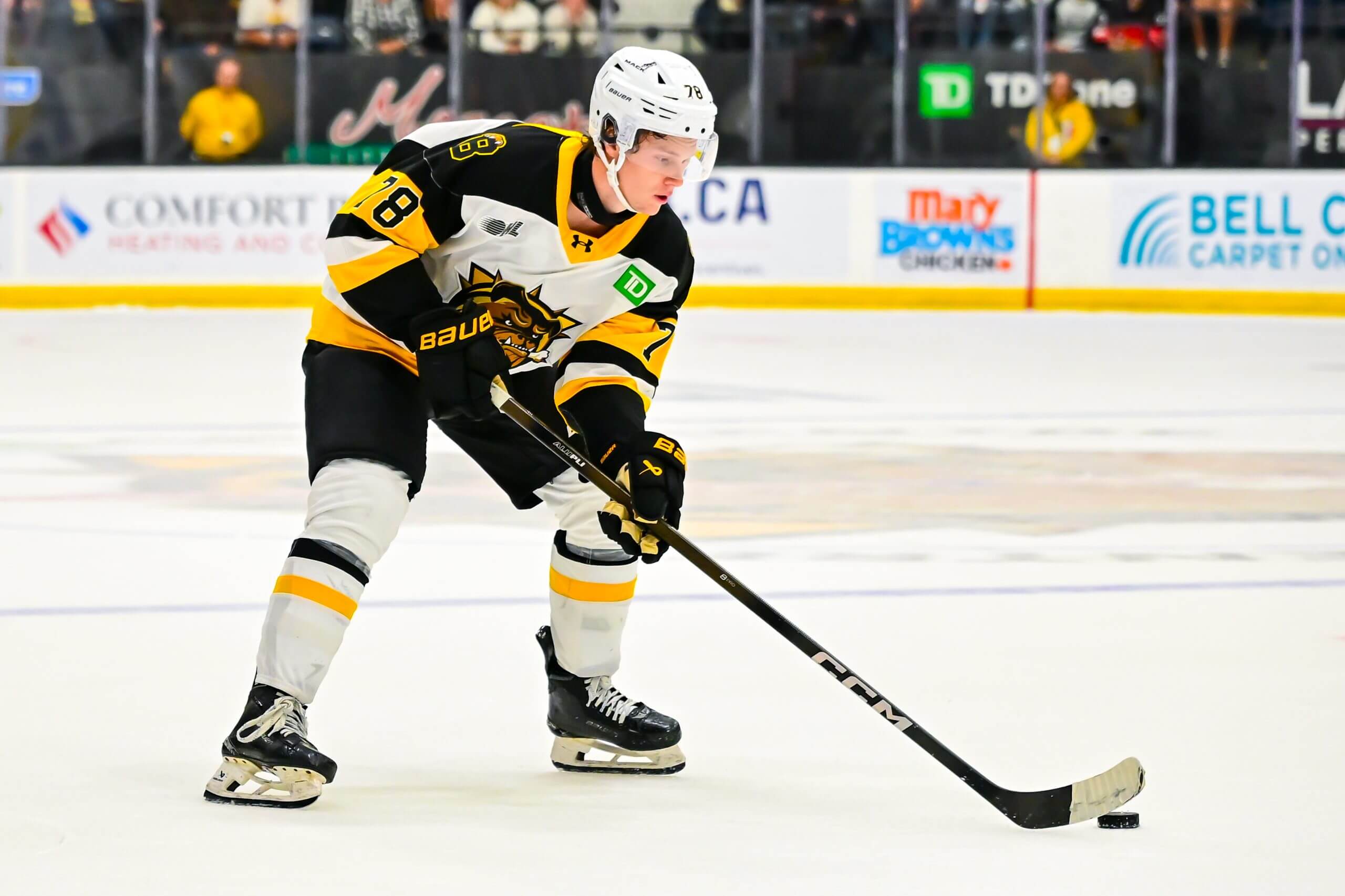
After missing the first couple months of his year four seasons ago rehabbing a hip injury that had become debilitating for him, L’Heureux was a force for the Mooseheads after returning and has progressed nicely while playing to his fearless identity up levels ever since. The timing of the injury was a shame, because I thought he was one of the best players at Hockey Canada’s summer showcase for the World Juniors in Calgary that year and I think he would have had a real chance of making the Halifax team that won gold had he been healthy (even with some of the issues with on-ice discipline that have followed him, he would have made a lot of sense as a bottom-six guy). He didn’t lose any of his identity as a pest/drink-stirrer when he made the jump to the AHL, either, and was productive and impactful while being one of the league’s penalty minutes leaders (which comes with some drawbacks, but coaches have learned to live with it because he also pulls his team into the fight). He has begun to establish that identity in the NHL now, too, while also learning where the line is as he has gotten older. I’d still like to see him spend less time in the box than he does, but it’s positive that he didn’t change his style once he started playing against bigger, stronger competition. He’s someone that opposing teams are aware of and hate playing against.
When L’Heureux plays within himself, he’s a powerful, talented, heavyset winger who is a lot to handle and difficult to knock off the puck. His stride can look a little choppy, but he’s strong through his pushes to attack defenders, and then he has the dexterity to play through sticks and feet as well as the shot to score (when he leans into his snap shot, it really whips off his stick quickly). When he’s ramped up and engaged, he’s a pesky, physical, hard-on pucks winger who can barrel at, or through, opponents to the middle third of the ice, win back possession on lifts and battles and impose himself on the game. And while he can be his own worst enemy at times, he’s always going to have to walk a fine line. I view him as a hard-to-play-against third-line contributor who gives a line some skill (he’s quite talented) and sandpaper and could move up the lineup to play off skilled linemates in a pinch as well. He also doesn’t have to play in a top-nine role to impact a game and could be an in-your-face fourth-liner (which not a lot of first-rounders have to fall back on). With the right coaching, he has what it takes to be a valuable and unique player for the Predators.
Photo:
Ellen Schmidt / Getty Images
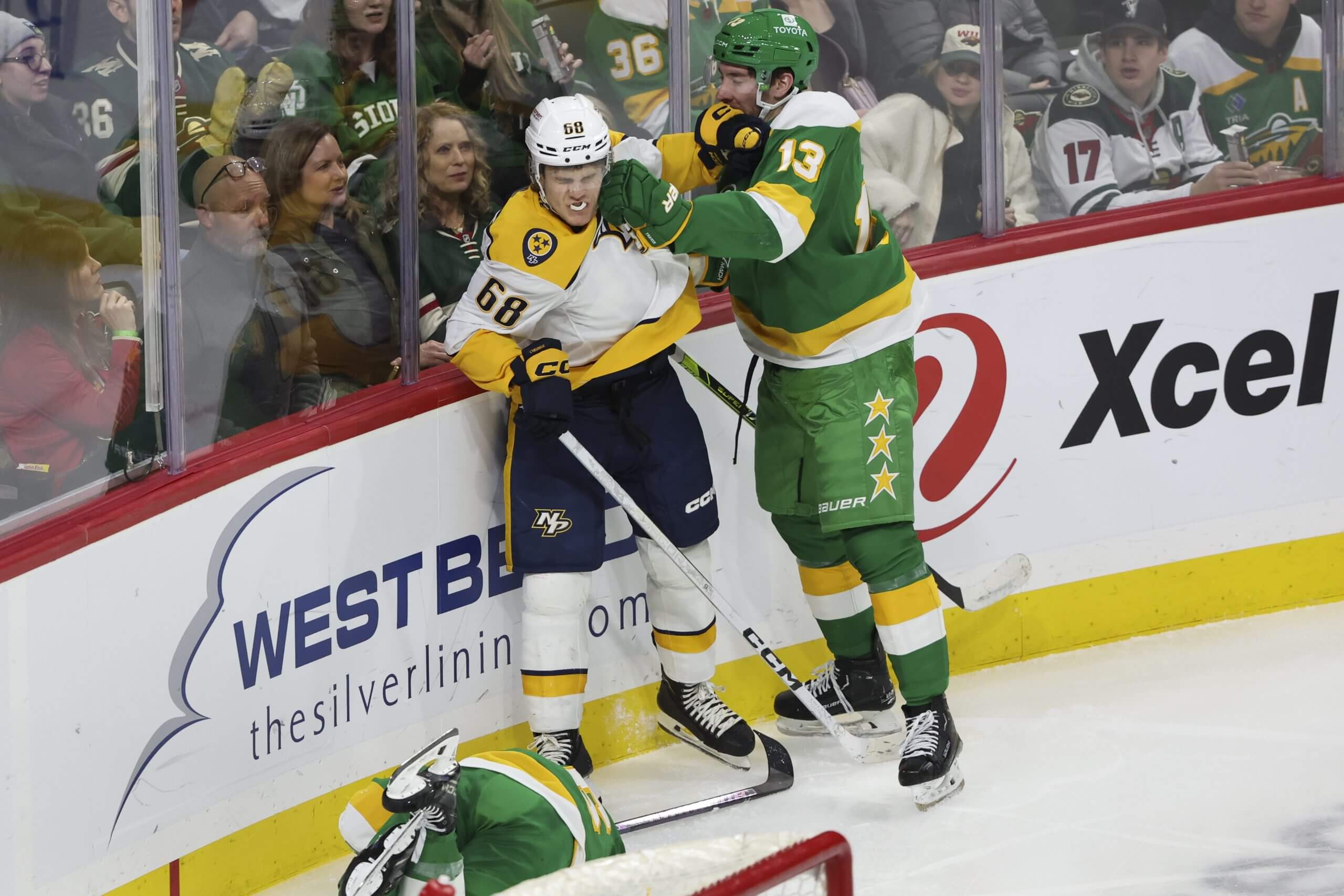
Hensler, who because of his October birthday played his two years at the U.S. NTDP before his draft year and played his draft year as a freshman with the Wisconsin Badgers, consistently impressed me in early viewings in his U18 season and then left me wanting more pretty often in the second half before finishing better at U18 worlds and acquitting himself nicely at the World Junior Summer Showcase. Last season, he played top-four minutes (more than 18 per game) for a Badgers team that lost more than it won and contributed on their power play. He was also OK in a third-pairing role at the World Juniors, where he clearly tried to simplify and play mistake-free.
I thought he was better than the numbers indicated at Wisconsin, especially given his age and the context of his team, but there are some who aren’t sure what his identity/role will be in the NHL, and I’ve also had a tough time with his projection at times. He hadn’t taken the step forward this year that I wanted to see him take at Wisconsin prior to a season-ending lower-body injury, either, and was a major disappointment at his second World Juniors. Though his production was up modestly and his on-ice results were solid pre-injury, he was actually playing less (down to 16-17 minutes per game), and I was still waiting to see him take charge more out there on both sides of the puck.
Hensler is a talented player and good prospect, but he’s not a no-doubter offensive defenseman or a lockdown defensive D type. He’s a smooth, mobile, balanced skater. He can use his feet to attack and create lanes. He’s a good athlete. He keeps his head and eyes up. He’s skilled with the puck. He has a decent stick and defensive instincts. He reads the play well on both sides when he’s dialed in, but there are times when it can feel like he’s just out there for a skate. There are also times when it seems like he doesn’t know his identity as a player.
I’ve really just wanted to see him take charge more on blue lines at the NTDP and Wisconsin. Even as one of the younger players on all of his teams with both USA Hockey and the Badgers, he has the talent to be more impactful than he has been (and he has been good for both). It can feel like he’s unsure of himself at times out there, and his game can miss that grab-it mentality. He has moments when he jumps up in transition and makes something happen, and shows some exciting qualities and instincts. I want to see more of that, and an equal assertiveness defensively. My viewings were mostly positive last year, but I’m still waiting for him to jump off the page at me. He’s capable of it.
He’s really fluid in and out of his edges. He has pro size. He has good handles. He has balanced posture on his heels and toes, and he’s capable of using it to play strong stick-on-puck gaps and carry and lead in transition. He has poise and comfort in all three zones. He has skill and offense. He’s a righty. It’s in there. If it all comes together, there’s a skating, transitional, PP2 second-pairing NHL D in there. I think there’s some risk that he doesn’t take that next step and just becomes a fine depth five-on-five guy who can move pucks.
Photo:
Steven Ellis / Daily Faceoff
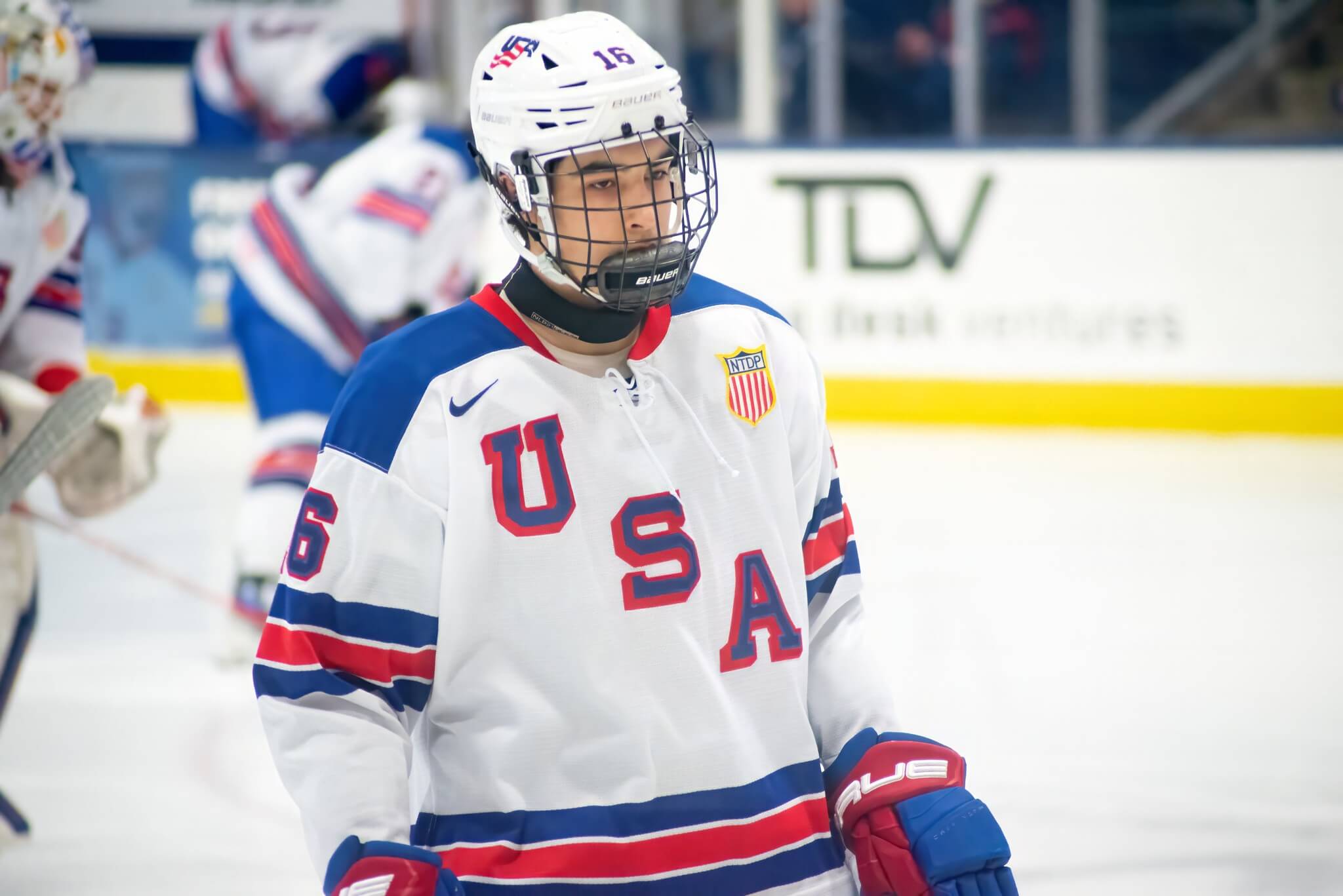
Ryabkin is a mercurial but talented prospect. He entered his draft year with some excitement after a historic season in the MHL, had a three-assist, 22-minute first game of the year in the MHL and then was quickly promoted to the KHL. But that excitement cooled just as quickly when he couldn’t find the back of the net, his discipline on the puck (and with penalties) wavered, and he was eventually a healthy scratch at the MHL level. That led to a move to Muskegon in the USHL, only to get suspended for slew-footing before he’d barely gotten started. Even before last year, there was talk of him being difficult to coach and work with coming out of Russia. He also interviewed poorly with NHL teams and received heavy criticism for his fitness and weight.
And yet he broke Matvei Michkov’s U17 scoring record in the MHL two years ago and put up comparable numbers to Ivan Demidov in his draft-minus-two season while being four and a half months younger than Demidov was. He was also very productive for Muskegon, finding the back of the net more and rebuilding his confidence while continuing to come and go in games and in discipline. He finished strong, though, and showed you can win with him with the USHL champion Lumberjacks, registering 16 points and a plus-9 rating in 14 playoff games. At year’s end, his final USHL totals were 26 goals, 46 points, a plus-15 rating and 100 penalty minutes in 41 combined regular-season and playoff games. This season, after starting in the AHL with Chicago, he’s now in the QMJHL, where he has had an immediate offensive flair.
Ryabkin has a quick release. I like his instincts off the puck offensively to get open and jump into gaps in coverage. He has soft hands and makes a lot of plays off his backhand. He sees the ice well when there are plays to be made and has the finesse and touch to execute difficult passes. I like him in give-and-go plays and one-on-one inside the offensive zone. On the puck, he has a legit individual skill level with some real craft and creativity to his game. But his decision-making on the ice can leave a lot to be desired, and he has some work to do to get into better shape — he’s actually a solid skater, which is why he could stand to benefit from working on his fitness. He shows a willingness to pursue and track pucks at times. His work rate wavers, though. I also find he can get ahead of the play; he can engage and finish his checks, but needs to play the right way more consistently if he wants to be trusted enough to go out there and make his skill plays.
It’s hard to find centers with his skill and offensive instincts/intuition in the second round, though, and he remains a talent. But he’s now going to have to prove himself every step of the way, and he carries some baggage forward.
Photo:
Bruce Bennett / Getty Images
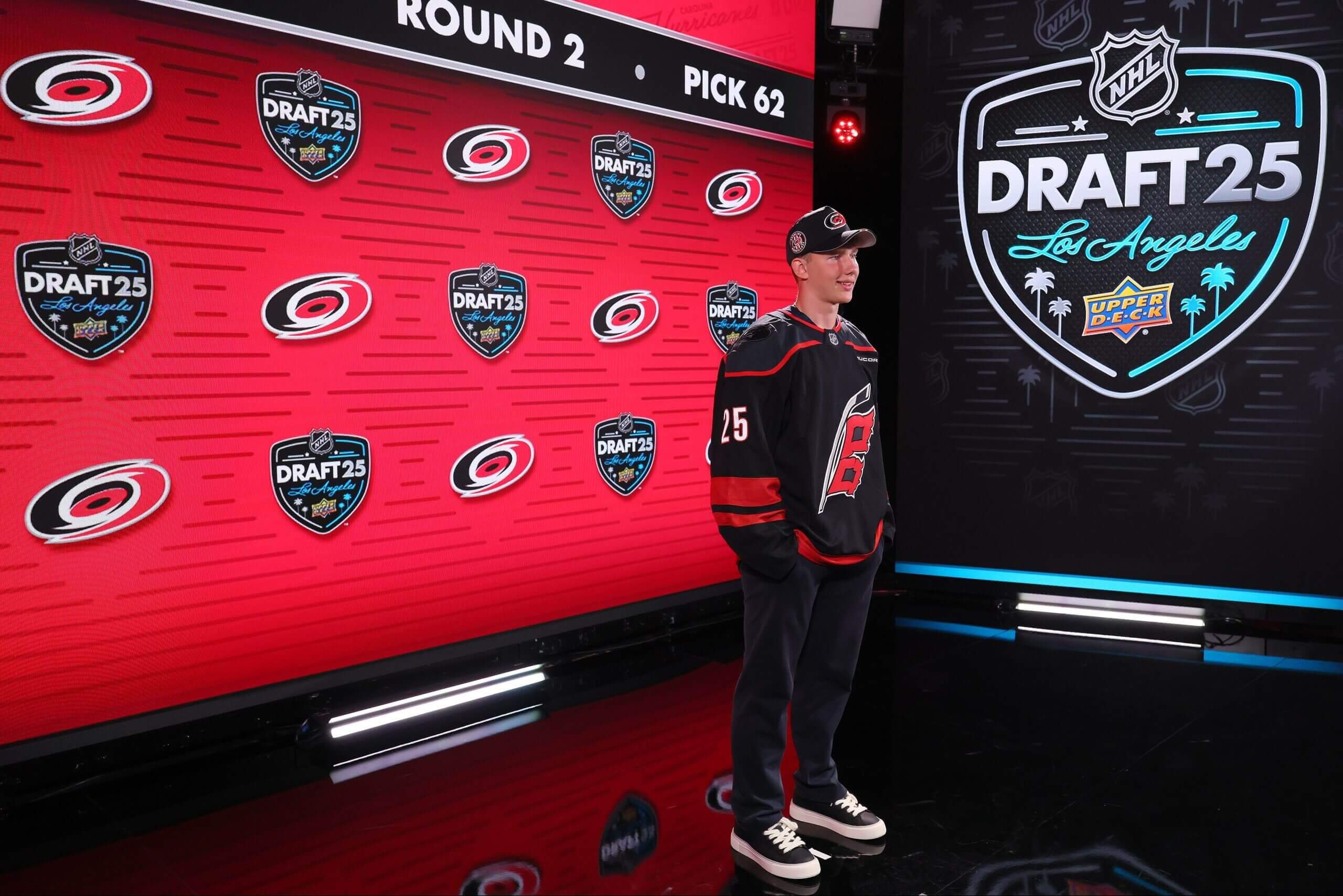
Pickford, drafted as an overager in the third round of last year’s draft, is one of the most prolific goal-scoring D in WHL history and a two-time league champion. He was a depth D on the 2023 title-winning Seattle Thunderbirds and then had a breakout season last year with the 2025 title-winning Medicine Hat Tigers, playing to above a point per game and breaking the 30-goal mark as a defenseman between the regular season, playoffs and Memorial Cup — which included an eight-game goal streak to close out the playoffs. NHL Central Scouting ranked him 100th among North American skaters on their final list, but he continued to play really good hockey after that, not only scoring but playing a hard, competitive, lead-by-example brand on the ice that earned him the ‘C’ with this year’s team. And he made history this year, registering 83 points and finishing tied for second in the league in goals with 45 despite missing 13 games to injury to lead the Tigers back to the top of the standings after they lost last year’s top four scorers and top defenseman Tanner Molendyk.
Pickford is a jacked 6-foot-1, 190-pound right-shot defenseman with a huge shot, an aggressive playstyle on both sides of the puck and a brash personality on and off the ice. He plays with an eagerness to attack and jump offensively, but also closes gaps and is physical defensively. He closes plays early, defends hard and has been a go-to guy on both special teams over the last two years for the Tigers, even after they acquired arguably the best defenseman in junior hockey in Molendyk at last year’s deadline. Pickford is known as a worker on and off the ice who is hockey-obsessed and really made a difference in Medicine Hat’s room with his attitude and boldness. He’s not the most cerebral or high-IQ player, but he plays tough minutes, takes charge of his shifts and has great instincts and skill offensively and defensively.
His production is impossible to ignore, and I’ll be fascinated to see whether his style of play will continue to work in the AHL next season.
Photo:
Randy Feere / Medicine Hat Tigers
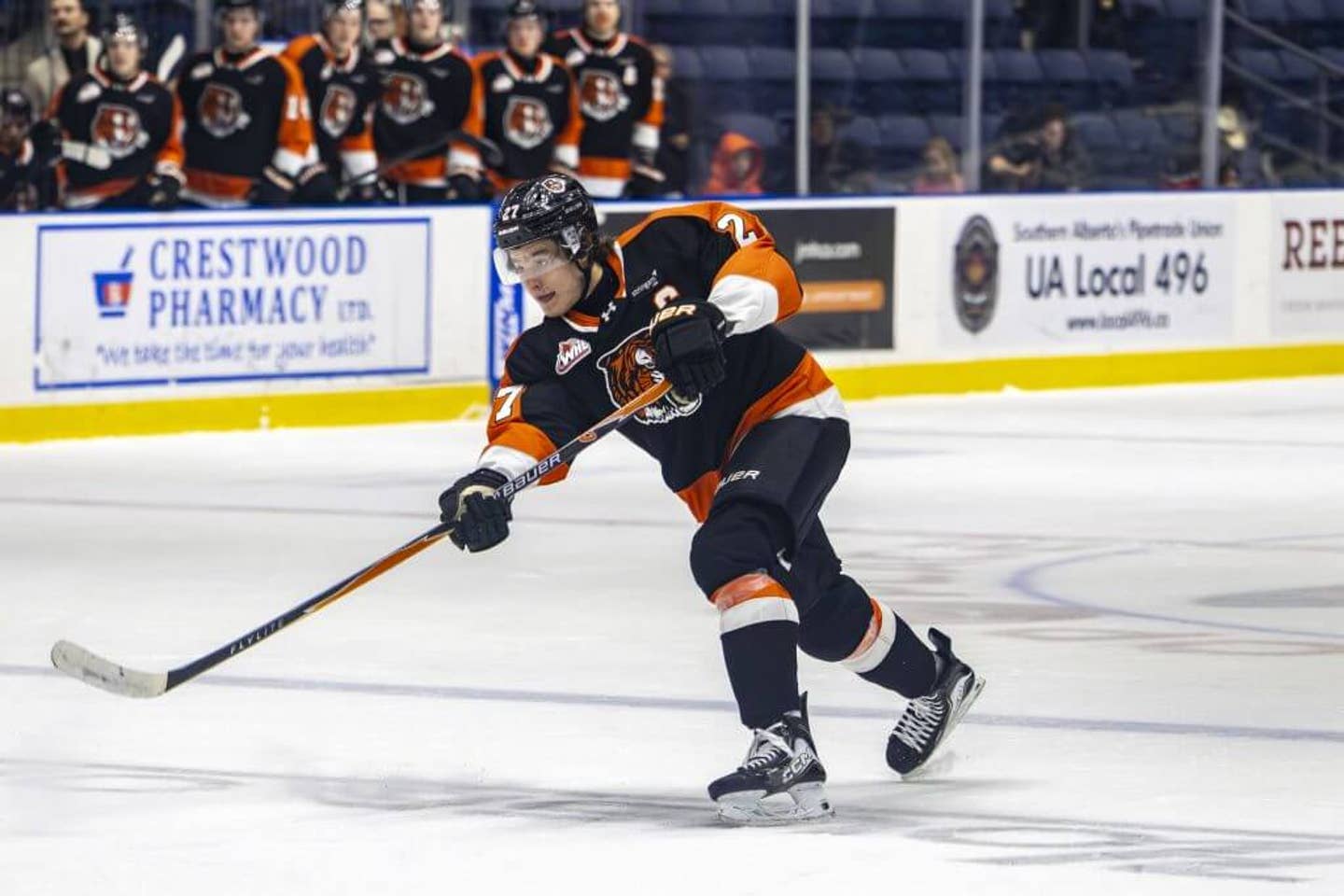
Rautiainen is one of Finland’s breakout stars of the last three years and led Liiga in scoring this year with 77 points (not among his age group, among all players!). He has put together two of the most productive age-adjusted seasons in the league’s history and played his way into finally getting drafted in his third go-around (after he attended Maple Leafs development camp in 2023). Before his two breakout seasons in Liiga, he led Finland’s junior league in scoring with 80 points in 44 combined regular-season and playoff games. He also had some flashes for Finland at last year’s World Juniors.
He’s a skilled forward (listed as a center but has played wing in Liiga and projects there) who’s a talented one-on-one player. He can be really noticeable inside the offensive zone because of his poise and comfort on the puck. Despite being a double-overager in last year’s draft, it’s worth noting that he’s a June birthday, so he was on the younger side of the class in his first year of eligibility and just turned 20 in the summer. He has had some big multi-point, double-digit shot attempt games against men over the last two seasons, which is normally a pretty good indicator for the jump to North America. He’s going to have to continue to produce to climb levels, but he should be an AHL playmaker at minimum. Average skating for a 6-foot player was used against him in his first two go-arounds at the draft, but he has so far proven his skill level supersedes that.
His play and the talent he has done it with have become hard to ignore.
Photo:
Minas Panagiotakis / Getty Images
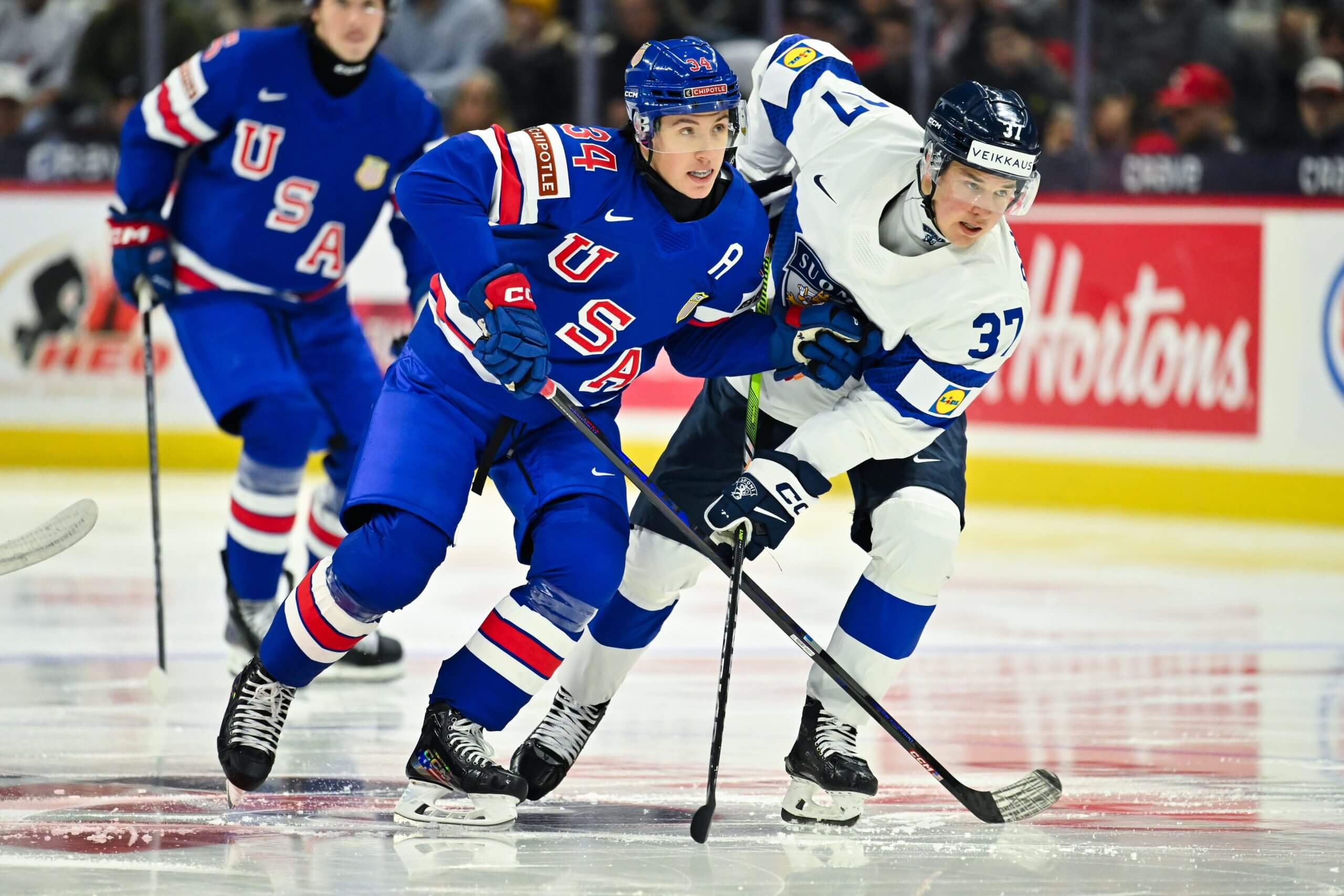
Benák, who recently committed to Western Michigan, has been the top Czech player in his age group for years and has now played at two U17s, two U18s, two Hlinkas (where he broke the all-time scoring record after back-to-back 10-point performances) and a World Juniors. At his first Hlinka, he looked like maybe the best 16-year-old Czech I’ve watched at that age and was certainly ahead of where Martin Nečas and Eduard Salé were at the same age. Last season, after making the move to the USHL with Youngstown, he played to above a point per game and led the team and all U18 skaters in scoring. He also had some brilliant performances, from an early exhibition game where he dominated the NTDP to a standout showing at the Chipotle All-American Game.
This season, after making the jump to the OHL with Brantford, he has been one of the best forwards in junior hockey and a top player on a Memorial Cup favorite. His playmaking and skating were also noticeable at the World Juniors, where he was productive in the end, but I would have liked to see him get to the slot and net more offensively.
Benák is tiny at 5-foot-8, but he’s also a very high-end skater and thinker of the game offensively. The more I’ve watched him and gotten to know his game, the more inclined I’ve been to trust that he has a real chance to defy the odds of his size.
His skating, skill, passing and smarts all get very high marks, with a standout quickness from a standstill that matches his quick reads of the ice. He has jump and high-end straight-line speed. He has slick hands and feel on the puck. He’s a superb facilitator, with excellent vision and a superb ability to set things up on the power play. It can feel like he’s constantly one step ahead of the game when he’s playing against his peers. And while he’s small, he’s competitive enough, he stays on pucks and tracks, he’s good on stick lifts, he’s fearless, he defends well and he plays a mature off-puck game with an advanced understanding for his age of how to angle and track and a willing work ethic to do it. He’s cerebral and poised. He’s fast. He’s anticipatory. He’s confident on the puck. His projection is complicated, especially as a center, but he has the tools and brain you look for in a smaller player. I know his dad, a former longtime pro in Czechia, is 5-10, and if he could get even an inch or two, he could be a player.
He’s one of the top players in his age group; it’s just a matter of whether he projects that way at the NHL level. And some have their doubts, as there always are with players of his size. I’m a fan, though, and think he’s going to surprise some people.
Photo:
Brandon Taylor / OHL Images