
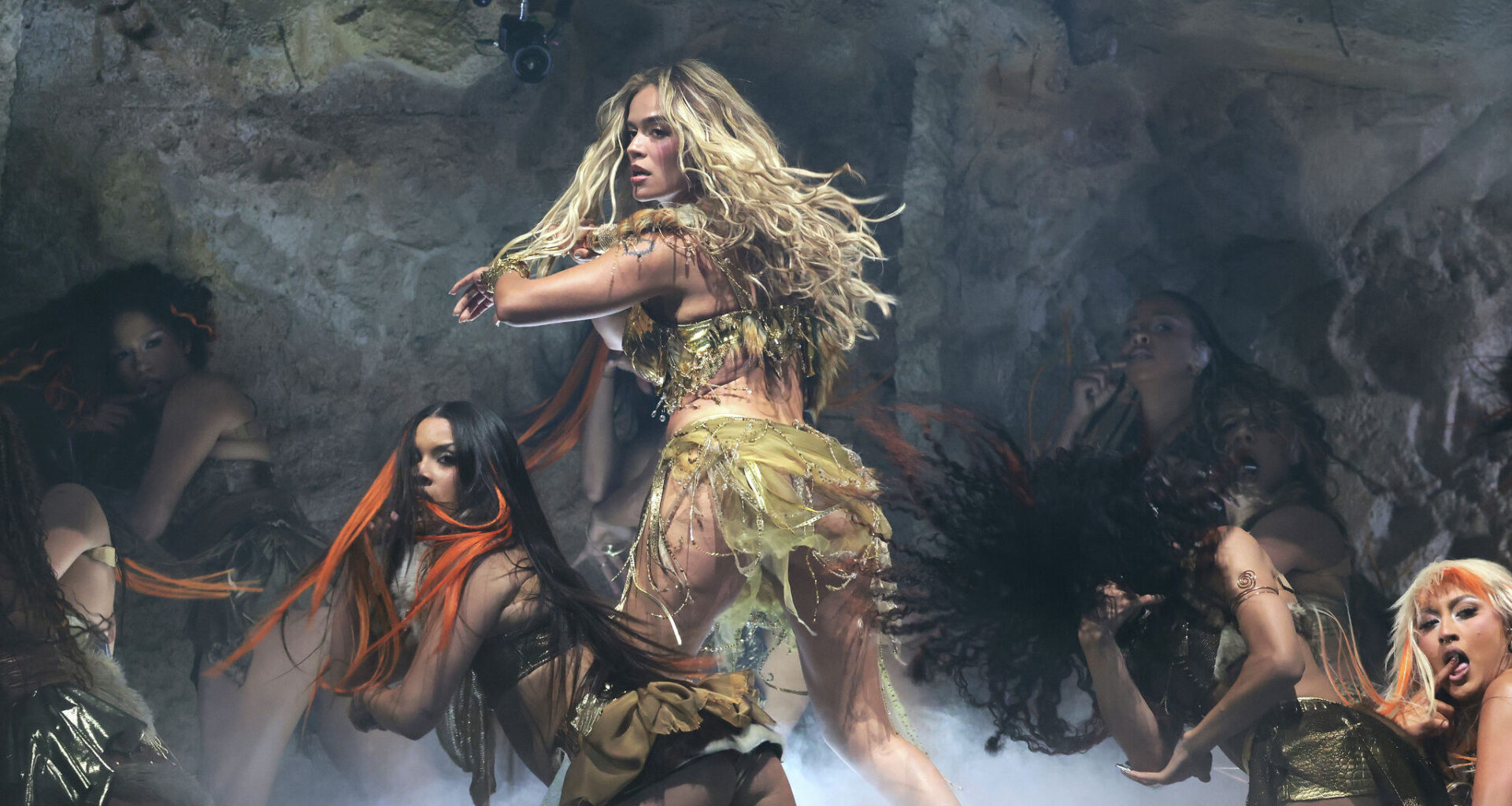
INDIO, California — It’s astonishing that it took this long. On Sunday night, Karol G became the first Latina to ever headline Coachella — a feat she acknowledged with a swell of pride, and disbelief, during a poignant moment in her set. “I’m very happy and very proud about this, but at the same time, it feels late,” she told the crowd, noting that she wouldn’t be up there were it not for the Latino artists that had come before her, who hadn’t been afforded the same opportunity.
But Karol G — born Carolina Giraldo in Medellín, Colombia — did not bend under the pressure of being the first. To close out Coachella, the musician turned out a high-octane performance that erupted into the biggest party of the weekend. In a breakneck, 25-song set that elevated divergent styles under the vast umbrella of Latin music, including reggaeton, mariachi and merengue, she intentionally kept the door open behind her so others could walk through it.
The historic set got off to a shaky start, with roughly a dozen crew members visibly tinkering with the sprawling stage production before Giraldo came on (I spotted at least one ladder). A half hour after her scheduled start time, Giraldo appeared in a massive cave divided into various alcoves, writhing with her dancers to the raunchy opener “LATINA FOREVA.” A kiss-off to men on the dancefloor who start to get other ideas, the song doubles as a convivial appreciation of her fellow Latinas.
Bringing up other women became a focal point of her set. Early on, she and Mariah Angeliq tore up their 2021 reggaeton heater “EL MAKINÓN.” When LA pop star Becky G joined her in a barn burning rendition of their track “MAMIII,” the pair were accompanied by an exceptional all-female mariachi troupe, who performed two standards of the genre while Giraldo did a quick costume change.
Giraldo’s electric showmanship kept the energy soaring right up against the city of Indio’s mandated midnight curfew. One outstanding segment featured an extended dance routine in a shallow pool, with the sloshing water lending a kinetic texture to the choreography. It was the only set of the entire weekend where I noticed that people were not only dancing,but doing so with rapturous joy.
The show had a couple brief awkward moments; a few times between acts, the screen and stage turned entirely to black for an extended beat, ceasing the momentum. Yet one of said transition moments made for one of the night’s most electrifying surprises: A guest appearance from Wisin, a Puerto Rican forebear of reggaeton who performed several classic cuts like “Rakata” as Giraldo prepared for her next act.
For the night’s sole cover, Giraldo sang a version of Gloria Estefan’s “Mi Tierra” — a song about not ever forgetting one’s homeland. The choice felt particularly significant. Ahead of her Coachella set, Giraldo was warned not to speak out against ICE lest she risk potentially losing her visa. She didn’t fully go there, instead making an oblique reference in solidarity with fellow Latinos “struggling in this country lately.”
Still, Giraldo’s set returned again and again to the theme of not feeling shame nor fear about one’s culture, which profoundly resonated with the many attendees flying their Latin American nations’ flag in the air. When Giraldo periodically caught a glimpse of a flag, she would shout into the mic, encouraging the crowd to wave them even higher. “Please don’t feel scared, feel proud,” she said at one point, donning her native Colombia’s yellow, blue, and red flag literally on her flouncy sleeves. “Raise your flag.”