
Pennsylvania’s nursing homes are not being compensated enough and will continue to struggle without legislative intervention.
This was what multiple nursing home industry groups, nursing home leaders and workers in the Lehigh Valley had to say at a recent hearing held by Pennsylvania Senate Democratic Policy Committee Chair Nick Miller and Sens. Patty Kim, James Malone and John Kane.
Despite the fact that seniors are the fastest-growing population segment in Pennsylvania, nursing homes in Pennsylvania say they are struggling: There has been a net loss of 37 nursing homes and more than 4,000 certified nursing home beds since 2020, according to the nursing home trade association LeadingAge PA. This, as the population of Pennsylvanians over 84 years old is expected to triple by 2050.
According to LeadingAge, some of its members are delicensing beds and intentionally leaving open beds unfilled as they face increasing staffing issues.
One of the top issues highlighted by speakers who gave testimony was the reimbursement structure that Pennsylvania has in place. They said it is not only inadequate but also actively undermines the ability of nursing homes to operate.
Michael Jacobs, president and CEO of the Pennsylvania Healthcare Association, said 70% of nursing home residents rely on Medicaid. Many health care providers across the industry say both Medicaid and Medicare do not cover the full cost of care, but Jacobs said that because of the large share of patients on assistance, homes cannot offset the cost through other payers.
Michael Smith, division president of Marquis Health Consulting, said that, in fact, raising rates on private payer patients only ends up hurting them later when those patients’ funds run out and they end up on Medicaid.
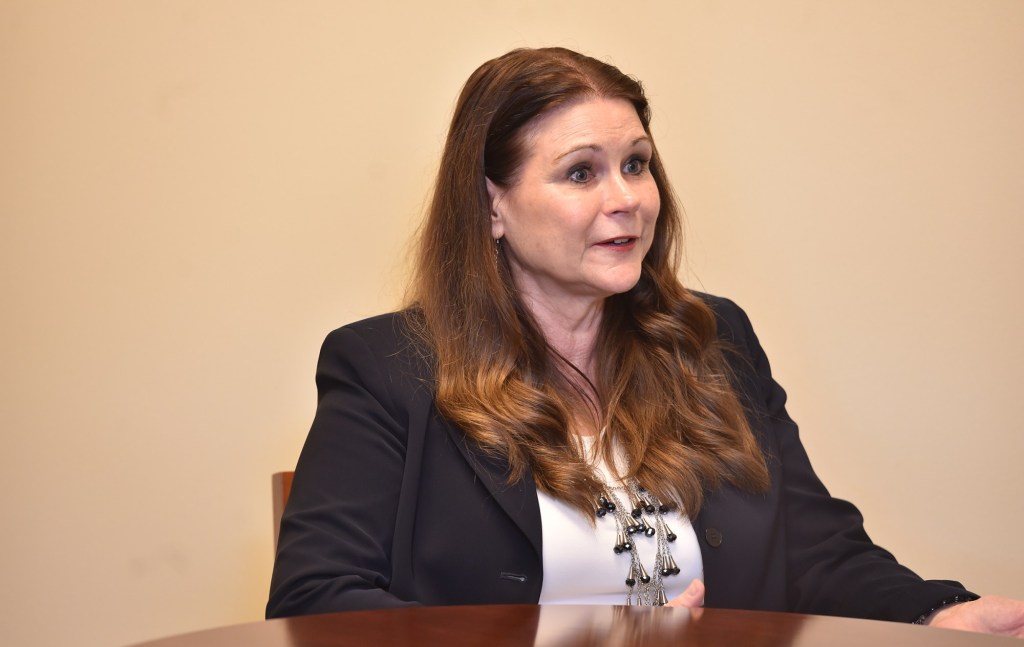
Mary Kay McMahon, president and CEO of Fellowship Community in Whitehall Township, which hosted Thursday’s discussion, said that on top of that, the glacial pace at which the Medicaid application and approval process moves leads to nursing facilities having to float by while waiting three months or longer for compensation.
“As of today, I have $235,000 that is sitting in a Medicaid pending bucket, so to speak, that we can’t access, that we can’t do anything with until the Medicaid applications get approved,” McMahon said.
Jacobs said in Pennsylvania, it goes farther than just Medicaid, though. There is a rate-setting system that determines what providers should be paid based on audited costs and resident acuity. Then, a budget adjustment factor is calculated and applied to reduce it to fit the state’s budget and appropriations. He said when the state adopted the budget adjustment factor about 20 years ago, it was supposed to be a temporary way of responding to a rapid rise in nursing home costs. He said now it’s leading to providers being paid on average only 80% of what they would be compensated without the adjustment factor.
Smith added that under the current budget adjustment factor rate, providers are experiencing a loss of $63 per resident per day. Jacobs said facilities in District 14, which Miller represents, lost over $4 million during the first quarter of 2026.
He said operating nursing homes is further complicated because the rate applied through the budget adjustment factor can change multiple times per year.
“This is just not an accounting problem. It has real consequences inside buildings and in communities,” Jacobs said. “The real-world, day-to-day impact on providers is that they cannot responsibly commit to long-term wage increases, retention bonuses, capital improvements or operational investments when their primary revenue source is subjected to quarterly shocks. A provider could be receiving a rate on the last day of the quarter, March 31. Then the very next day, April 1, the beginning of the next quarter, their rate drops. Nothing in the facility changed. The residents are exactly the same as the day before, but because of the quarterly adjustment of the budget adjustment factor, their rate dropped.”
Rhea Goodwin, regional director of operations at Eden East Healthcare Management, which has facilities in Pennsylvania and other states, said the compensation and financial issues nursing homes face lead to burnout and turnover among leadership.
“Over the past six years, I’ve seen strong, committed leaders, people that I would trust leading the care of my own family, reach a point where they simply cannot do it anymore. Not because they don’t care, but because the system they are working in [is] pushing them beyond what is reasonable,” Goodwin said. “When we lose those individuals, we lose administrators, we lose stability, leadership that our residents and employees depend on.”
She added that she has contemplated quitting due to being overwhelmed at one point in her career.
Louise Santee, a certified nursing assistant, med tech and union president at Phoebe Allentown, said workers also are struggling and many are leaving. She said that when she first applied to Phoebe, there was a waiting list for job seekers. She said now, Phoebe, like every other nursing home, faces staffing shortages.
“When I first came to Phoebe, we were fully staffed. We had five aides on a floor caring for 48 to 50 residents and we had a bath person just for baths. Now, there are no more than four aides usually on a floor. Short staffing leads to turnover. New people with no experience are less likely to stay when they are thrown into the deep end, overwhelmed and undercompensated. Caregivers who have been in this for decades are doing more with less,” Santee said.
She said fairer compensation for nursing homes would allow management and unions to work together more effectively to address staffing issues.
Jacobs requested that state legislators act by setting a floor on compensation, ideally no lower than 90% of the pre-budget adjusted amount, when they renew the budget adjustment factor this year. He said doing this would cost the state roughly $400 million in the following fiscal year. However, he also requested the legislators consider sunsetting the budget adjustment factor.
He added that without a floor being set, the gap between what providers should be compensated and what they are actually compensated for will continue to grow.