
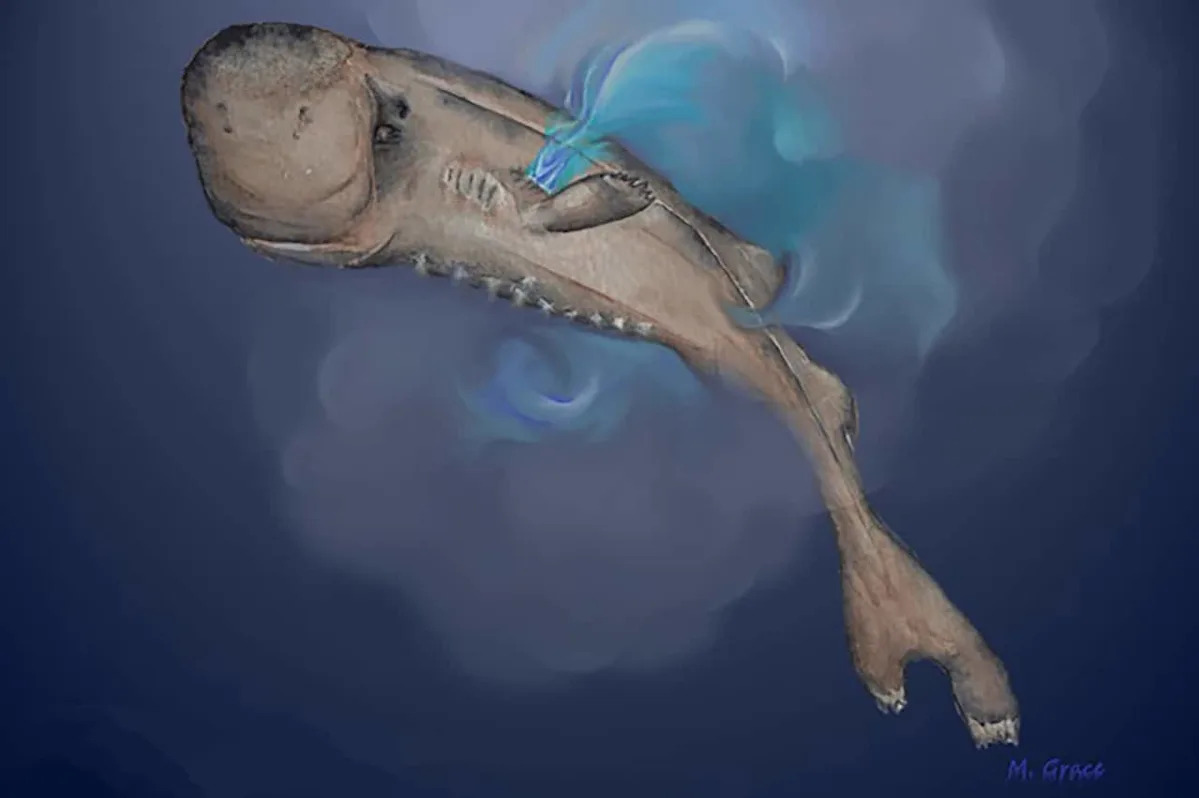
The post Meet the American Pocket Shark, the Tiny Bioluminescent Shark Found in the Gulf appeared first on A-Z Animals.
Quick Take
A shark small enough to fit in your pocket was hiding for years in the Gulf of Mexico.
The American pocket shark (Mollisquama mississippiensis) is one of only two specimens of pocket shark ever recorded in fisheries science, the other in the Pacific Ocean.
The two specimens have enough distinct features to be deemed separate species, but they share the skin pouches that secrete bioluminescent fluid.
What’s finned, bioluminescent, and hiding out in the Gulf of Mexico? A shark that’s small enough to fit into your pocket. At just 5.5 inches long, the American pocket shark (Mollisquama mississippiensis) is only the second known pocket shark in the world. Its cousin, Mollisquama parini, inhabits the southeast Pacific Ocean off the coast of Chile.
“In the history of fisheries science, only two pocket sharks have ever been captured or reported,” said NOAA biologist Mark Grace in a press release when the new one was first discovered. “Both are separate species, each from separate oceans. Both are exceedingly rare.”
Pocket sharks are unusual, so-named for the pair of pouch-like glands near the gills that open to the outside through slits. For years, the function of the glands was a mystery, with one hypothesis circulating that they released sexual pheromones. A 2020 study in Nature clarified their function after a close look with electron microscopy showed the pockets to be similar to the single pouch on the “taillight” shark, from which it secretes a blue bioluminescent fluid.
Pocket sharks, in the same family as taillight sharks, likely also secrete bioluminescent fluid from their pockets. The microscope images showed the inside of their pockets to be comprised of “brightly fluorescent cells enclosed in a pigmented sheath.” By making a cloud of light, the ejected fluid may attract prey or deter predators. The study authors suggest that the pockets “are used in similar ‘smoke screen’ predation avoidance contexts, potentially blinding approaching predators.” The hypothesis may be verified through more observations in the wild.
The new species of pocket shark was discovered accidentally by the NOAA ship Pisces, which was studying sperm whales in the Gulf of Mexico. The small shark was caught in a trawl net used to identify the types of fish prey available to sperm whales. The pocket shark was preserved in the fish research collections at Tulane University.
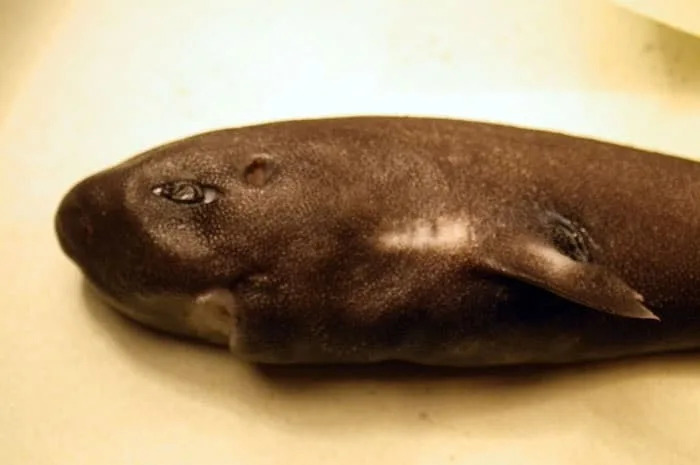
On this pocket shark, you can see the pouch opening just behind the fin.
©M. Grace/NOAA/NMFS/SEFSC/Mississippi Laboratories, Public domain, via Wikimedia Commons – Original / License
Nearly a decade later, scientists reported the shark specimen to be a new species. Using several types of high-tech imaging, including X-rays from a synchrotron, a particle accelerator that produces intense beams of light many times brighter than our Sun, researchers described features of the American pocket shark that distinguished it from its southeast Pacific cousin.
For example, its pit organ (used to sense the electric fields of prey) is in a unique location just behind the lower jaw. This Gulf of Mexico species not only has special pockets, but also has photophores (light-emitting organs) scattered over its body, including 16 clusters on its belly. Its teeth are distinct in two ways: the upper teeth lack the vertical ridge seen in the Pacific shark, and its lower teeth lack the deep dips where they meet the gums. The American pocket shark also has 10 fewer vertebrae than its Pacific cousin.
“The fact that only one pocket shark has ever been reported from the Gulf of Mexico, and that it is a new species, underscores how little we know about the Gulf,” said Tulane University biologist Henry Bart in the press release, “especially its deeper waters – and how many additional new species from these waters await discovery.”
The American pocket shark is just one example of a species with remarkable adaptations for life in the ocean’s dark depths. It joins just a handful of other sharks in its ability to emit its own light. Among cartilaginous fishes (those lacking bony skeletons), only certain sharks are known to emit light. A 2021 review study in Oceans noted bioluminescent sharks from only three shark families, which are in the same taxonomic group: Squaliformes. The study authors hypothesized that bioluminescence in sharks, therefore, evolved just once in a common ancestor of those three families of sharks.
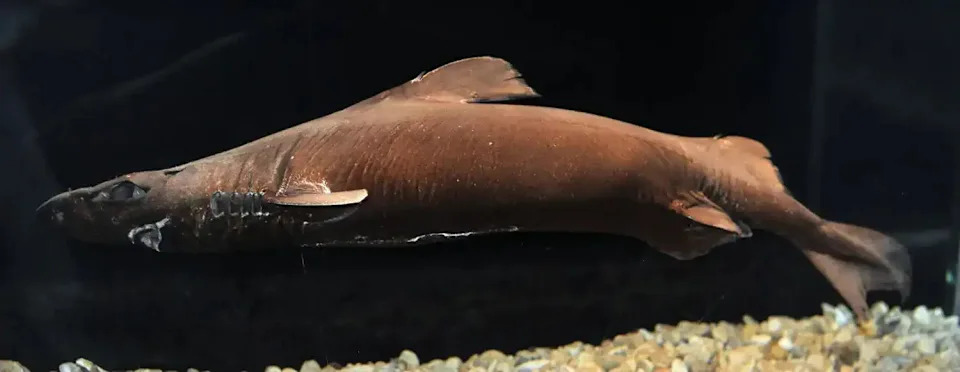
The velvet belly lanternshark (
Etmopterus spinax
) has light-emitting photophores on its underside.
©Citron/CC-BY-SA-3.0 – Original / License
A new 2026 study in Proceedings of the Royal Society B proposes that shark bioluminescence may have evolved several times independently. It’s possible that the light-emitting adaptation first served in camouflage, and then allowed some shark species to colonize the deep sea. In a phenomenon called “counterillumination,” an animal hides its silhouette from predators looking upward. The glowing belly blends in with the sunlight reaching the ocean surface. The wavelength of light produced by shark photophores, where known, is similar to the predominant light in oceanic environments.
The special pockets of pocket sharks may have evolved from photophores on the skin that were modified into a fluid-containing pouch. The structure of the cells in the pouch is quite different from the skin photophores, perhaps driven by the need for an adaptation to life in the deeper ocean. Inside the pouch are more than 50 layers of squarish cells that fluoresce green.
The discovery of this new pocket shark serves as a reminder that the deep ocean is still home to animals so unusual that even a glowing shark can remain hidden from science for decades.
The post Meet the American Pocket Shark, the Tiny Bioluminescent Shark Found in the Gulf appeared first on A-Z Animals.