
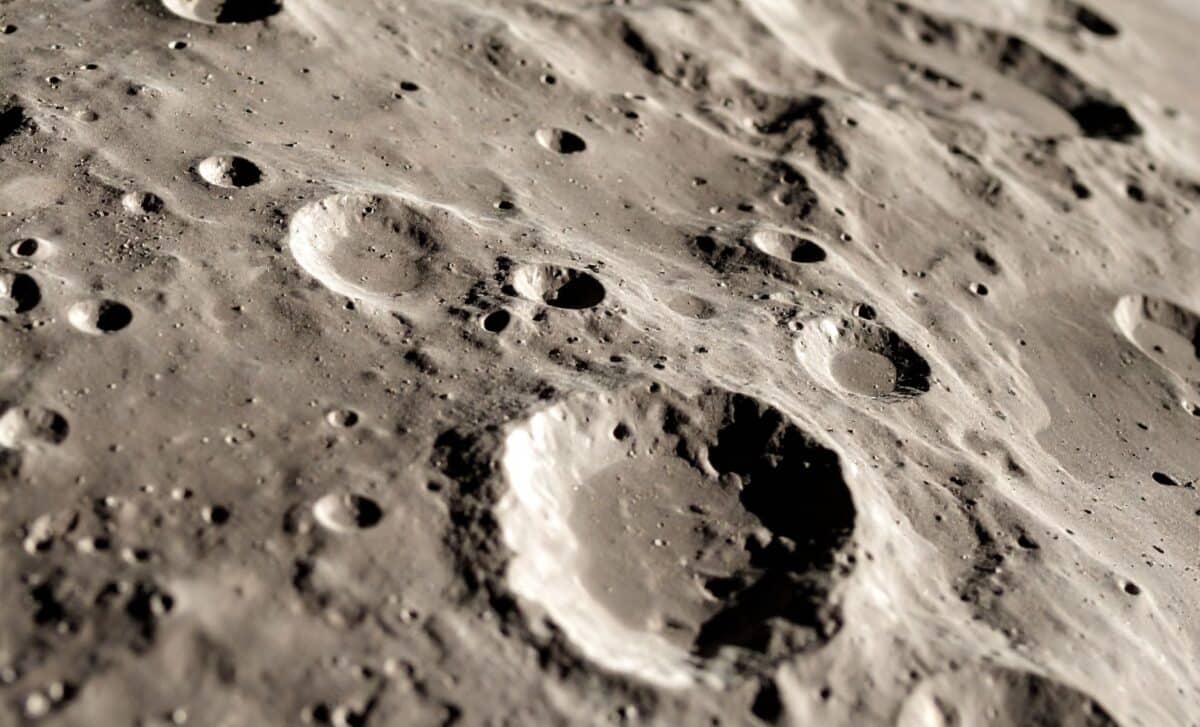
Rather than arriving in a single ancient event, ice on the Moon appears to have accumulated slowly over billions of years. This finding is changing how researchers interpret the history of the Moon’s polar regions. For decades, the prevailing theory linked lunar water to impacts during the Late Heavy Bombardment, around 4.1 to 3.8 billion years ago. That hypothesis is now being revisited in light of new modeling and temperature data drawn from lunar observations.
The Oldest Craters Hold The Most Ice
The research, led by Oded Aharonson with collaborators from the Laboratory for Atmospheric and Space Physics and the Planetary Science Institute, uses data from NASA’s Lunar Reconnaissance Orbiter. According to the study published in Nature Astronomy, temperature measurements from the Diviner Lunar Radiometer Experiment helped identify craters that have remained in darkness for the longest periods.
“Finding water beyond Earth in liquid and usable form is one of the most important challenges in astronomy,” said Aharonson.
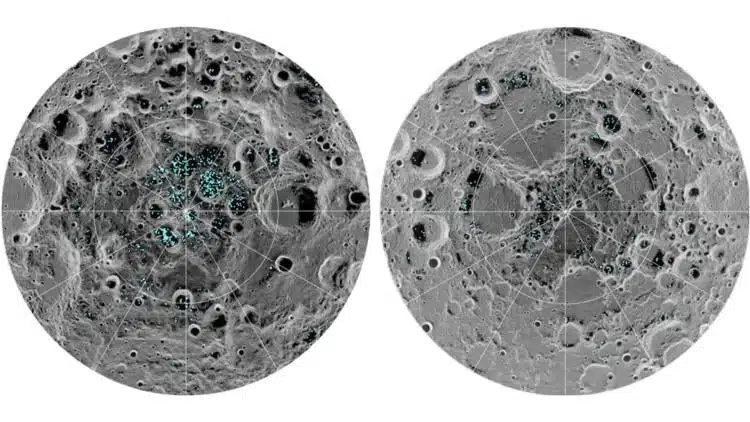 Ice deposits (in blue) at the Moon’s South Pole (left) and North Pole (right), detected by the Chandrayaan-1 spacecraft. Credit: NASA
The results show a clear correlation: older craters tend to contain more ice.Some regions, such as Haworth Crater near the lunar south pole, may have remained in shadow for billions of years, allowing ice to persist and accumulate. As Paul Hayne explained hese craters host the highest concentrations of ice.
A Gradual Build-Up from Multiple Sources
The study challenges the idea that lunar water came from a single major event. Instead, it points to several contributing sources over time. As stated by the research team, water may have been delivered by comets and asteroids, produced through interactions with the solar wind, or released by ancient volcanic activity.
This combination helps explain the uneven distribution of ice across the Moon’s surface. Some craters did not remain cold and dark long enough to retain these deposits.
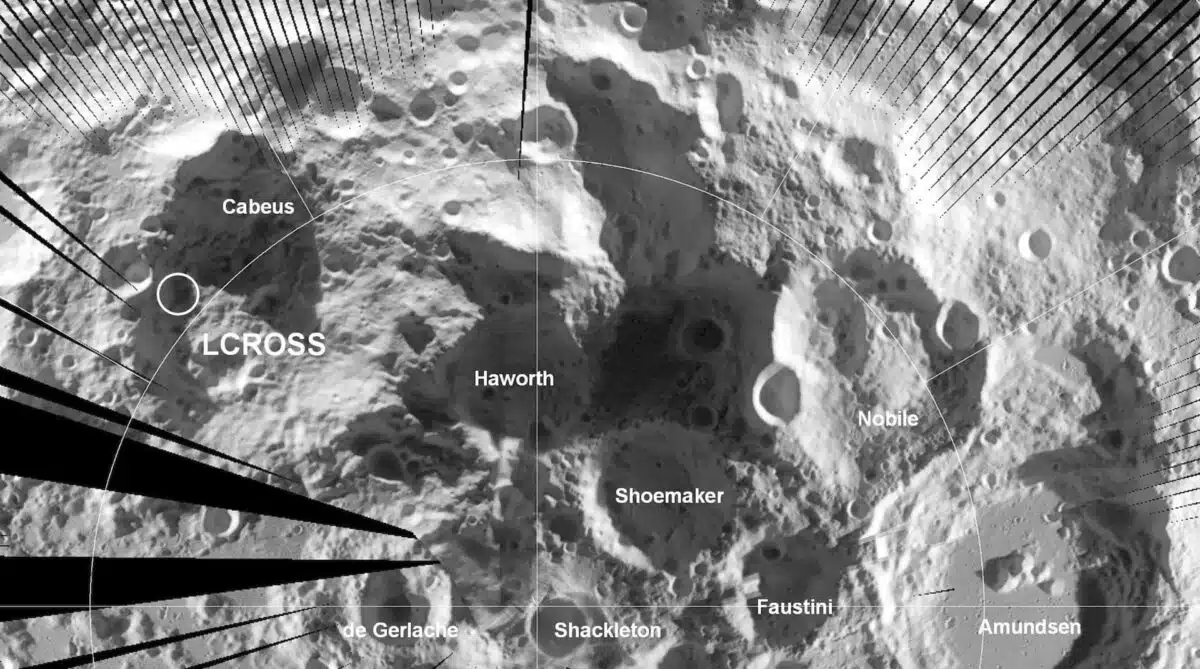 South pole craters observed by LRO, pointing to Haworth Crater for ice. Credit: NASA
Based on information relayed by University of Colorado Boulder, the team’s simulations suggest that water accumulated continuously for for 3 to 3.5 billion years, ruling out a single, large-scale deposition event.
A Building Block for Future Missions
The presence of ice in permanently shadowed regions has major implications for upcoming missions. Space agencies such as NASA and ESA, these deposits could provide drinking water, support agriculture, and be used to produce liquid hydrogen and oxygen for fuel.
This is why regions like the South Pole-Aitken Basin are central to current exploration plans. Programs such as Artemis and future missions from other nations are targeting these areas for long-term operations.
Still, the exact origin of lunar water remains unresolved. As the researchers explained, direct analysis of samples will be necessary to determine its source with certainty. Future missions, including those equipped with instruments like the L-CIRiS system, are expected to bring more precise data from the Moon’s south polar environment.
“Ultimately, the question of the source of the moon’s water will only be solved by sample analysis,” he said. “We will need to go to the moon to analyze those samples there or find ways to bring them from the moon back to Earth.”