
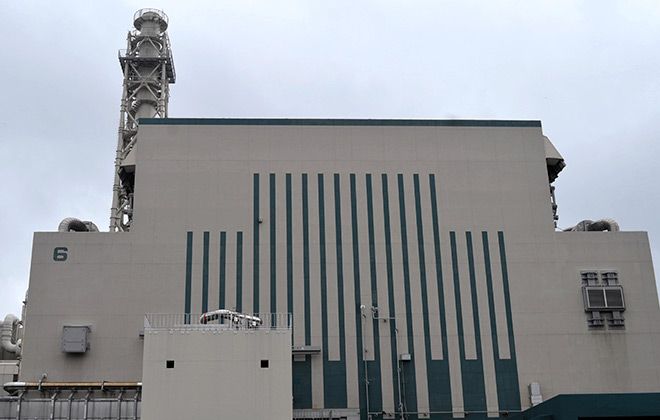
After repeated safety issues, Tokyo Electric Power Co. on April 16 began its first commercial operations of a reactor since the 2011 disaster at its Fukushima No. 1 nuclear power plant.
TEPCO expects the running of the No. 6 reactor at the Kashiwazaki-Kariwa nuclear power plant in Niigata Prefecture will improve its balance sheet by 100 billion yen ($629 million) annually.
The Nuclear Regulation Authority gave TEPCO the final go-ahead after the utility conducted a “comprehensive load performance test” in the morning.
In the evening, the NRA issued a “pre-service inspection certificate,” allowing the reactor to begin commercial operations.
The No. 6 reactor will generate close to its rated output of 1.356 gigawatts.
The reactor had been shut down for 14 years since March 2012.
TEPCO had planned to resume commercial operations on Feb. 26. But that schedule was postponed twice.
On Jan. 21, shortly after the No. 6 reactor’s initial restart, a control rod alarm sounded, forcing a full reactor shutdown.
On Feb. 9, the reactor started up again, but on March 12, an alarm indicating a minor electrical leak halted power generation and transmission. The reactor was taken offline and an investigation was conducted.
The cause of the alarm was a damaged metal plate connecting the generator to the earth ground. TEPCO replaced the part and resumed power generation and transmission.
After reaching 100-percent output on March 27, the company conducted inspections during an “adjustment operation” phase to maintain stability.
TEPCO initially planned to restart the No. 7 reactor at the plant first, but delays in the construction of mandatory anti-terrorism facilities forced the company to switch its policy and prioritize the No. 6 reactor.
The NRA plans to change the starting point for the installation deadline of the anti-terrorism facilities, which would allow TEPCO to operate the No. 6 reactor until April 2031.