
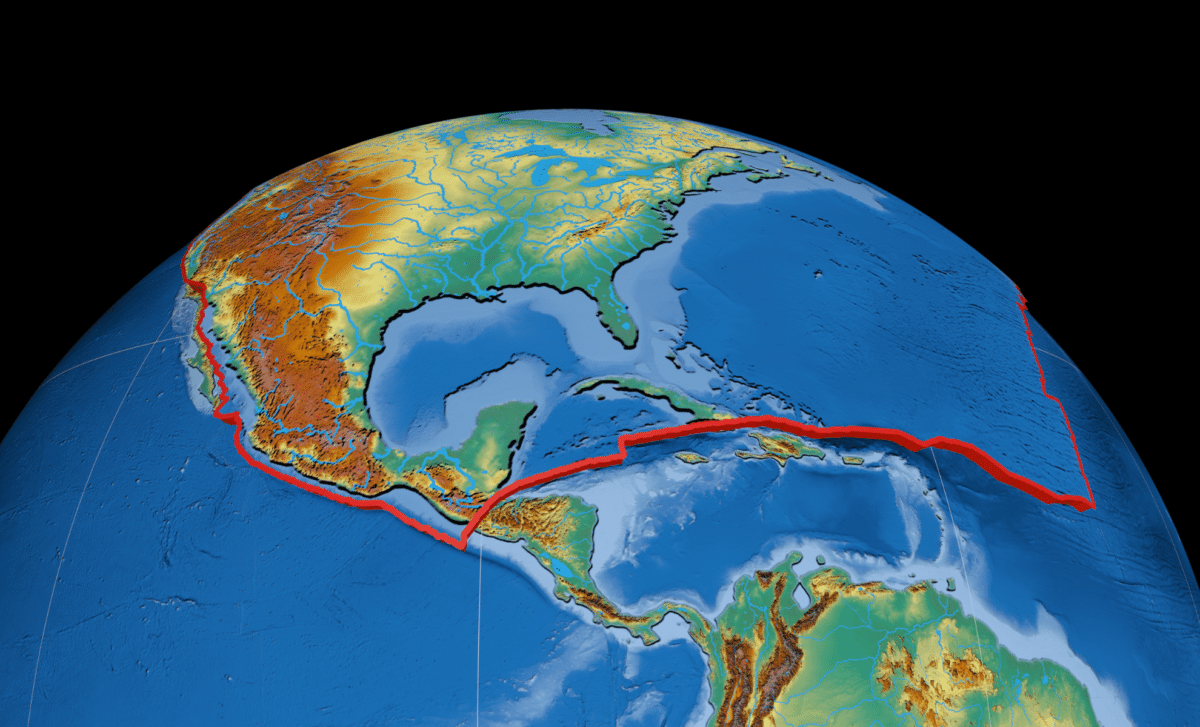
Long before humans mapped continents or understood plate tectonics, immense landmasses were already on a slow-motion collision course, reshaping oceans, climates, and the future of life on Earth. The meeting of Central and South America stands as one of the most consequential of these events, ultimately forming a land bridge that altered global currents and triggered massive biological exchanges. For decades, scientists believed they had pinned down when this collision occurred. Now, a new study published in Earth and Planetary Physics challenges that timeline, revealing that the process began millions of years earlier than previously thought and forcing a rethink of one of Earth’s most defining geological moments.
Magnetic Clues Hidden In Ancient Volcanic Rocks
Deep within volcanic formations in Colombia, researchers uncovered a geological record that had remained largely overlooked for decades. These rocks, formed during intense volcanic activity, contain magnetic signatures that act like time capsules, preserving the conditions under which they were created. By analyzing these magnetic fabrics, scientists were able to reconstruct the sequence of tectonic events with surprising precision, revealing a timeline that diverges sharply from traditional models.
“Volcanic rocks can preserve a remarkably detailed record of geological processes,” says Dr. Victor A. Piedrahita. “Their magnetic fabrics help us determine whether deformation occurred before, during, or after the rocks were emplaced.”
This approach allowed the team to detect subtle deformation patterns that would otherwise remain invisible, offering a rare glimpse into the mechanics of continental collision.
The findings suggest that deformation linked to the convergence of tectonic plates was already underway well before the widely accepted timeline. Instead of a sudden and late-stage collision, the data point to a more gradual and extended interaction between landmasses. This challenges the conventional narrative and highlights the complexity of Earth’s tectonic evolution, where processes unfold over tens of millions of years rather than in abrupt shifts.
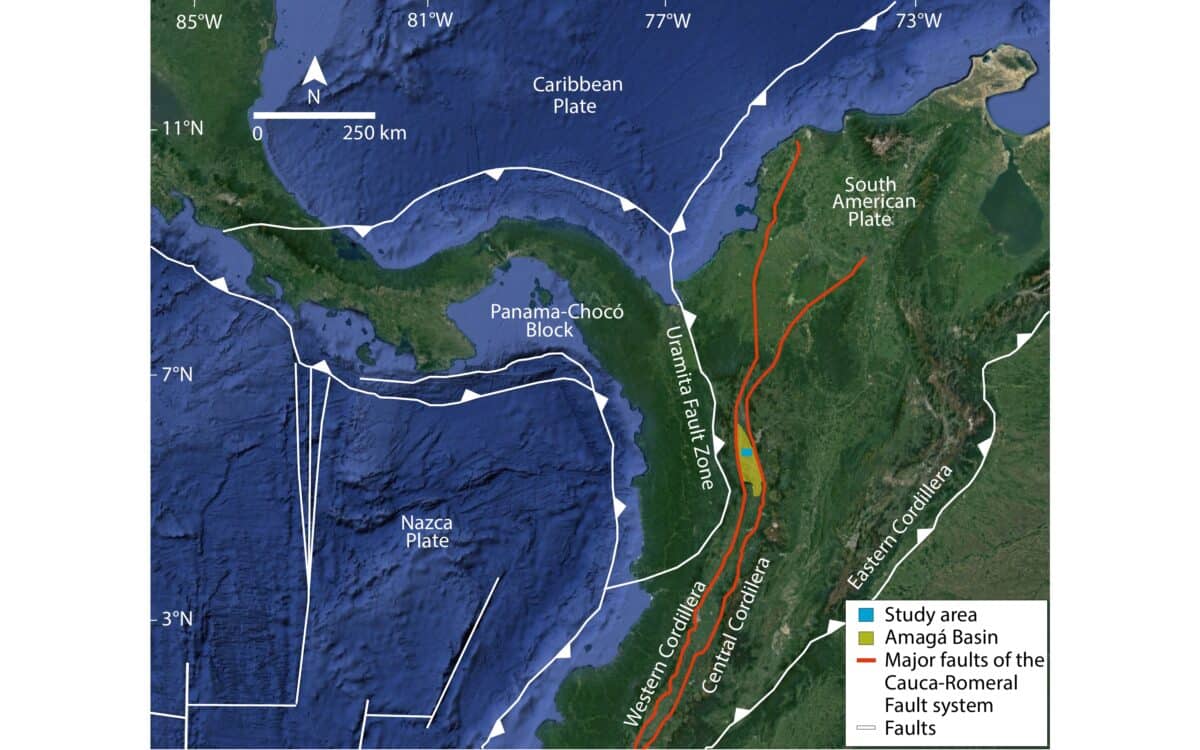 Geological framework of the northwestern Andes, including major tectonic plates, faults, and cordilleras. The Panama–Chocó Block, the Amagá Basin (yellow), and the study area (blue rectangle) are also indicated (Cediel et al., 2003; Villagómez and Spikings, 2013; Piedrahita et al., 2017a).
A Timeline Shift That Rewrites Geological History
For decades, scientists believed that the final closure between Central and South America occurred relatively recently in geological terms, leading to the formation of the land bridge that reshaped ocean currents and global ecosystems. The new research, published in Earth and Planetary Physics, paints a very different picture, placing the most significant collisional activity much earlier in the timeline.
“Our data indicate that the most significant collisional events between Central and South America occurred earlier than we previously thought, mainly during the Oligocene-middle Miocene,” explain Piedrahita and Li. “By the time these volcanic rocks formed, tectonic deformation had become weaker and more localized.” This implies that the major tectonic forces driving the collision had already peaked and begun to subside long before the geological markers traditionally used to define the event.
Such a revision has wide-ranging implications. It not only alters the timeline of continental assembly but also affects how scientists interpret changes in ocean circulation, climate patterns, and biodiversity. The formation of the Isthmus of Panama, for instance, is closely tied to global climate shifts, and any adjustment to its timing could ripple across multiple scientific disciplines.
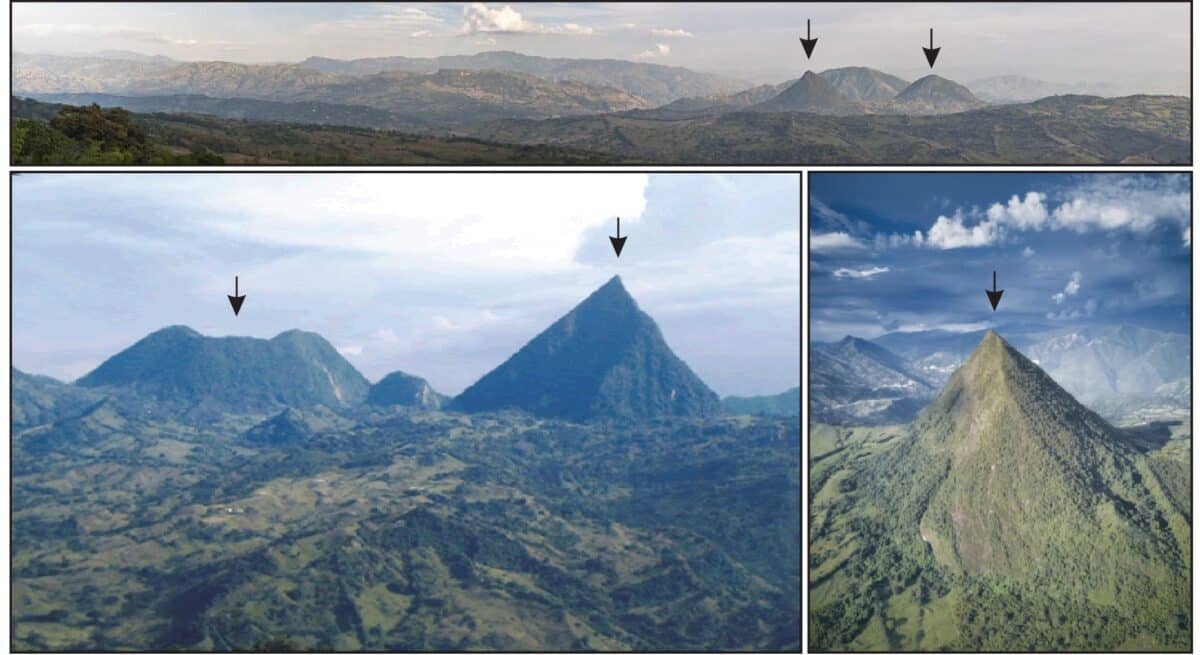 Views of hypabyssal rocks of the Combia Volcanic Province that present volcanic cone-like landforms (Weber et al., 2020).
Rethinking The Formation Of A Continental Bridge
The collision between Central and South America is more than a regional geological event; it is a cornerstone of Earth’s recent history. This process ultimately led to the creation of a land bridge that allowed species to migrate between continents and altered ocean currents in ways that influenced global climate systems. By pushing back the timeline of this collision, the study forces scientists to reconsider how and when these transformative changes occurred.
The new evidence suggests that the interaction between the tectonic plates was not a single dramatic event but a prolonged sequence of collisions, deformations, and adjustments. This more nuanced view aligns with emerging perspectives in geology, which emphasize gradual processes and complex interactions over simplified, linear narratives. It also underscores the importance of integrating multiple lines of evidence, from magnetic data to structural analysis, in reconstructing Earth’s past.
As researchers continue to refine their models, the story of how the Americas came together is likely to evolve further. What remains clear is that the planet’s history is far more intricate than previously imagined, and that even well-studied events can yield new surprises when examined through a different lens.