

NEED TO KNOW
Shayla Talei lives with Complex Regional Pain Syndrome (CRPS) and gastroparesis, the latter of which means that her stomach is essentially paralyzed
She was officially diagnosed with gastroparesis just two years ago, and her inability to eat food without extreme pain caused her to lose about 100 lbs. over the course of eight months
The 31-year-old mom of two documents her life with chronic illnesses on social media, where she shares her day-to-day routine with 249,000 TikTok followers
Shayla Talei has given herself a new purpose on social media, a place where she can sustain a career despite her debilitating illnesses.
The Oklahoma City mom of two lives with Complex Regional Pain Syndrome (CRPS) and gastroparesis. She was diagnosed with the former condition at 17. The chronic pain condition induces pain that is disproportionate to the actual initial injury, per Mayo Clinic, and it usually develops after an injury, surgery, stroke or heart attack.
Talei, 31, has built a following by breaking down her medical routine, showing her 249,000 TikTok followers the atypical parts of her day, like how she manages to eat despite her effectively paralyzed stomach. Mayo Clinic defines gastroparesis as a condition that prevents the stomach muscles from moving in the proper way for food digestion.
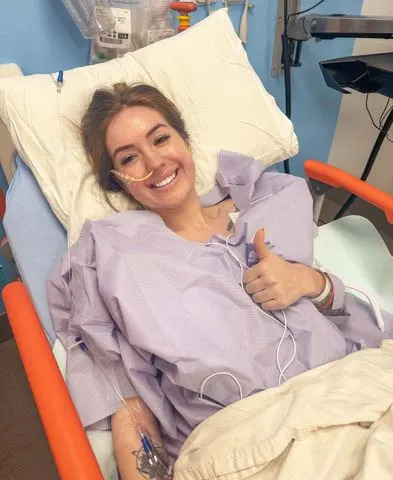
Shayla Talei.
Credit: Shayla Talei
Her initial gastroparesis symptoms — which developed about a decade after her CRPS diagnosis — became immediately apparent after Talei consumed anything. Food caused her extreme bloating, nausea and vomiting. Water, she says, “feels like glass shards” in her stomach.
Before she was officially diagnosed with the digestive issue, there were times when Talei was able to handle only three bites of food over the course of a full day. As a result, she lost about 100 lbs. over the course of eight months while doctors searched for an explanation.
After attempting various forms of medicinal aid and tube feeding, Talei’s doctors switched her to total parenteral nutrition (TPN) in July 2025. Her nutrition is delivered through a central vein that stops near her heart, and the organ is able to pump the nutrients through her bloodstream.
It’s an effective way to make sure Talei is getting the nutrients she needs, but she tells PEOPLE that starting TPN was a “big discussion,” as it’s generally considered a last resort. “There’s tons of risks with it,” the content creator explains.
For eight years, Talei ran a salon by herself. However, she had to close it down last spring due to the demands of her conditions. She says it’s not uncommon for her to rapidly run out of energy or faint in the middle of the day. She also uses a wheelchair, which is always outfitted with her heavy TPN backpack that runs for 12 hours a day.

Shayla Talei.
Credit: Shayla Talei
“For me, right now, social media is really the only thing I can do,” Talei says. “I would say I’m a 90-year-old woman in a 31-year-old’s body because I get tired so quickly.”
As is the case when any creator shares any type of content, Talei has reached audiences that reflect the good and the bad sides of social media. There are many who support her, empathize with her and encourage her to keep sharing, and then there are those who criticize her. There are also viewers who simply don’t understand the extent of what she goes through, nor the medical reality of her situation.
Never miss a story — sign up for PEOPLE’s free daily newsletter to stay up-to-date on the best of what PEOPLE has to offer, from celebrity news to compelling human interest stories.
Talei tells PEOPLE that one of the biggest misconceptions she sees in her comments section is the assumption that she developed her stomach condition from using a GLP-1. While the weight loss drug has been associated with increased risk of gastroparesis, per a study published by the Cleveland Clinic, Talei explains that that’s not what happened to her.
“I’ve never been on one,” she says. “I just lost a lot of weight because of the condition … There’s just so many ways that you can get it, and it’s nothing that I did to myself.”
Read the original article on People