
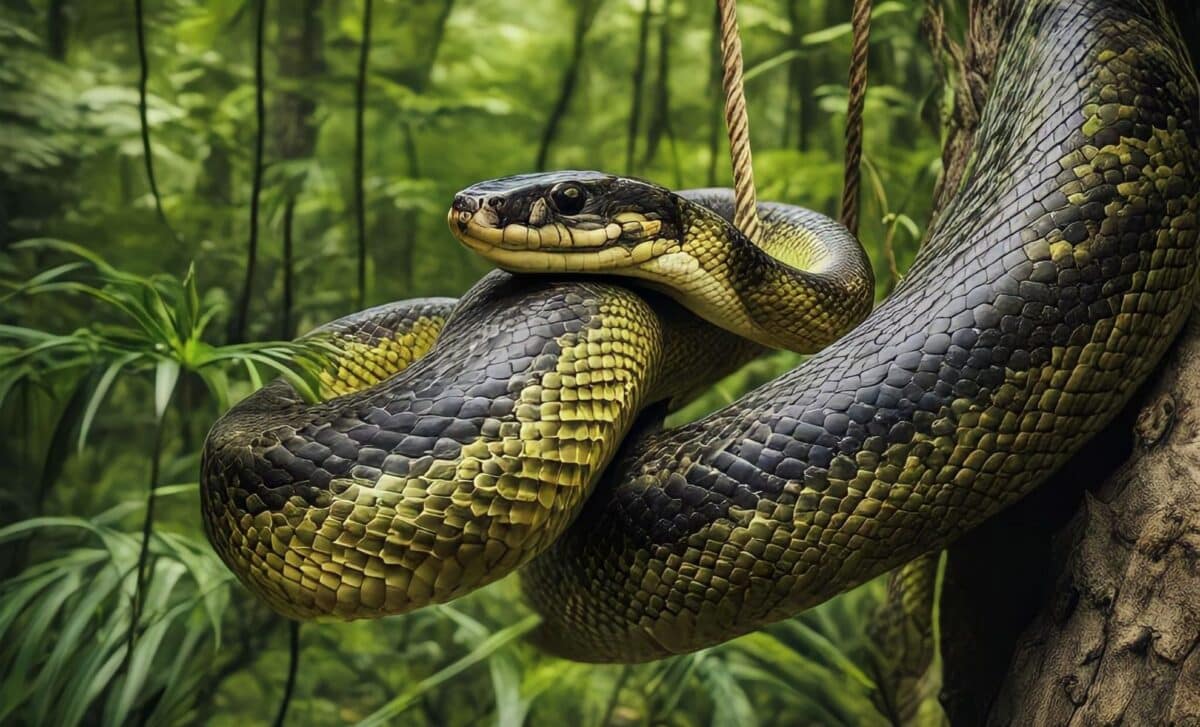
Anacondas were already massive when they appeared more than 12 million years ago. Fossils now show that their size has barely changed since, even though prehistoric conditions might have allowed them to grow much larger.
This finding challenges a common idea in paleontology. Warmer climates are often linked to bigger reptiles, yet anacondas seem to have settled early into a size that worked and never pushed beyond it.
The study, led by the University of Cambridge, is based on fossil remains discovered across South America. According to research published in the Journal of Vertebrate Paleontology, these snakes reached their typical size shortly after they first appeared. That makes them an unusual case in a time known for oversized animals.
While many Miocene giants disappeared as environments changed, anacondas managed to persist with almost no change in body size.
Fossils Uncover How Big Ancient Species Really Were
To understand how big early anacondas were, scientists examined 183 fossilized vertebrae from at least 32 individuals found in Falcón State, Venezuela. They also compared these with fossils from other parts of the continent. Snake vertebrae are especially useful because these animals have more than 300 of them, making it easier to estimate full body length.
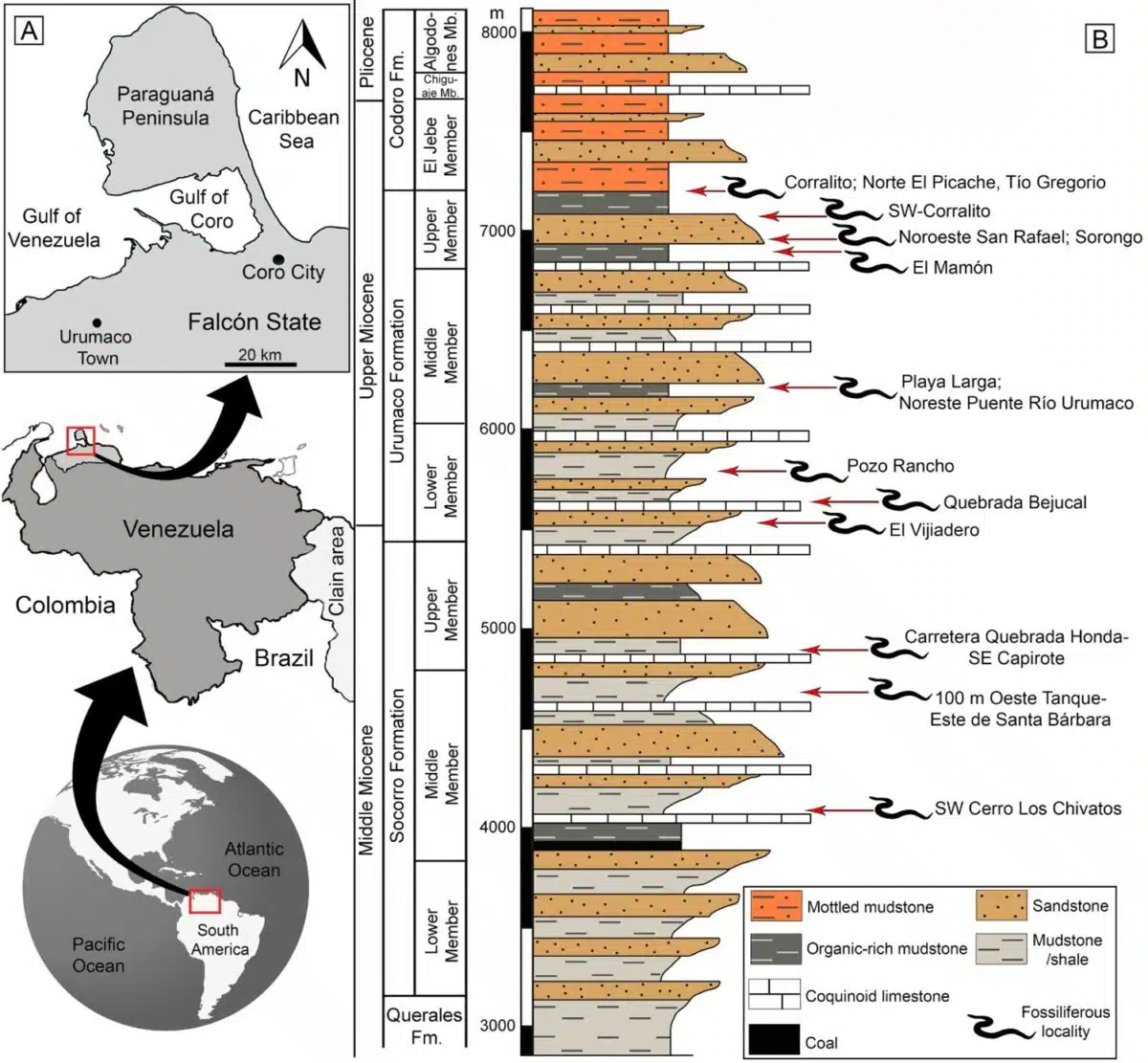 Map of fossil sites and sediment layers in Venezuela where anaconda remains were found. Credit: Journal of Vertebrate Paleontology
The result was consistent: ancient Eunectes measured around four to five meters, just like modern anacondas. This finding was unexpected for the team. Given the warmer climate of the Miocene, they expected to find larger snakes. As Andrés Alfonso-Rojas explained:
“This is a surprising result because we expected to find the ancient anacondas were seven or eight meters long. But we don’t have any evidence of a larger snake from the Miocene when global temperatures were warmer.”
A Prehistoric World Filled With Giants
The period between 12.4 and 5.3 million years ago, known as the Middle to Upper Miocene, saw many animals grow to impressive sizes. The study said that higher temperatures, large wetland systems, and abundant food all played a role.
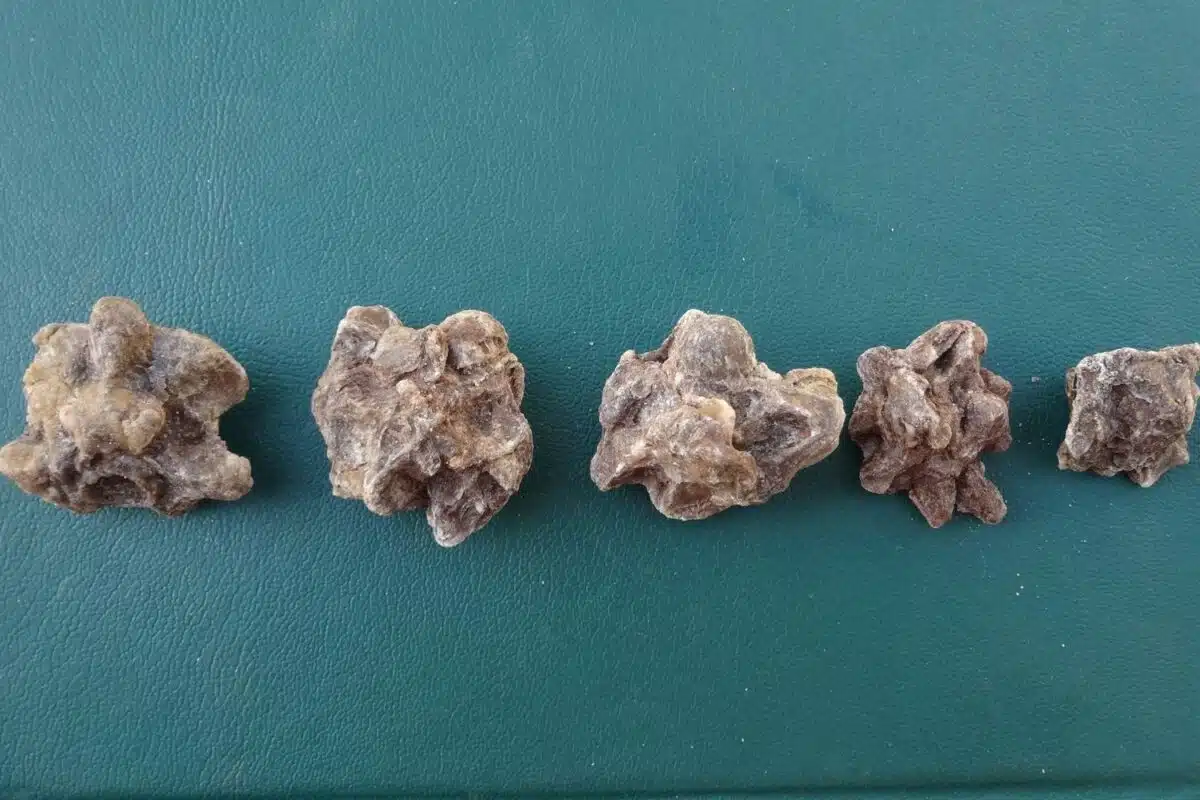 Fossilized anaconda vertebrae recovered in Venezuela. Credit: Jorge Carrillo-Briceño
South America at that time hosted species like Purussaurus, a caiman that could reach 12 meters, and Stupendemys, a freshwater turtle measuring about 3.2 meters. These animals were part of a broader pattern of gigantism across ecosystems.
Most of these giants did not survive. As climates cooled and habitats shrank, many disappeared. As explained by the study, anacondas were different. They kept their large size and adapted well enough to avoid extinction.
“Other species like giant crocodiles and giant turtles have gone extinct since the Miocene, probably due to cooling global temperatures and shrinking habitats, but the giant anacondas have survived – they’re super-resilient,” said the authors in the university statement.
A Size That Worked For Millions Of Years
To double-check their results, the team used a method called ancestral state reconstruction. This approach looks at evolutionary relationships between species like tree boas and rainbow boas to estimate the traits of their ancestors.
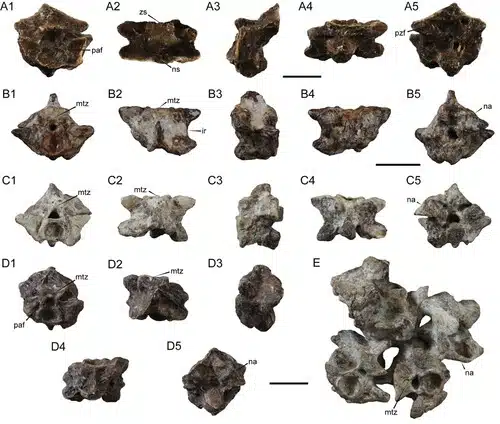 Fossil anaconda vertebrae used to study the size of ancient giant snakes. Credit: Journal of Vertebrate Paleontology
The method confirmed what the fossils suggested. Anacondas reached their large size soon after emerging around 12.4 million years ago and then stayed that way.
“By measuring the fossils we found that anacondas evolved a large body size shortly after they appeared in tropical South America around 12.4 million years ago, and their size hasn’t changed since.”
Their environment likely helped. Ancient northern South America looked a lot like today’s Amazon Basin, with wetlands and steady food sources. Even now, prey such as fish and capybaras are enough to support large snakes.