
ASHEVILLE, N.C. (WLOS) — Not all droughts are the same, and the difference often comes down to how long dry conditions last.
Short-term droughts typically last six months or less. These mainly impact soil moisture and vegetation, quickly drying out grasses and increasing wildfire risk. That’s the phase the Western Carolinas have recently experienced, with burn bans and heightened fire concerns.
SEVERE DROUGHT COVERS 100% OF WESTERN NORTH CAROLINA, UPSTATE
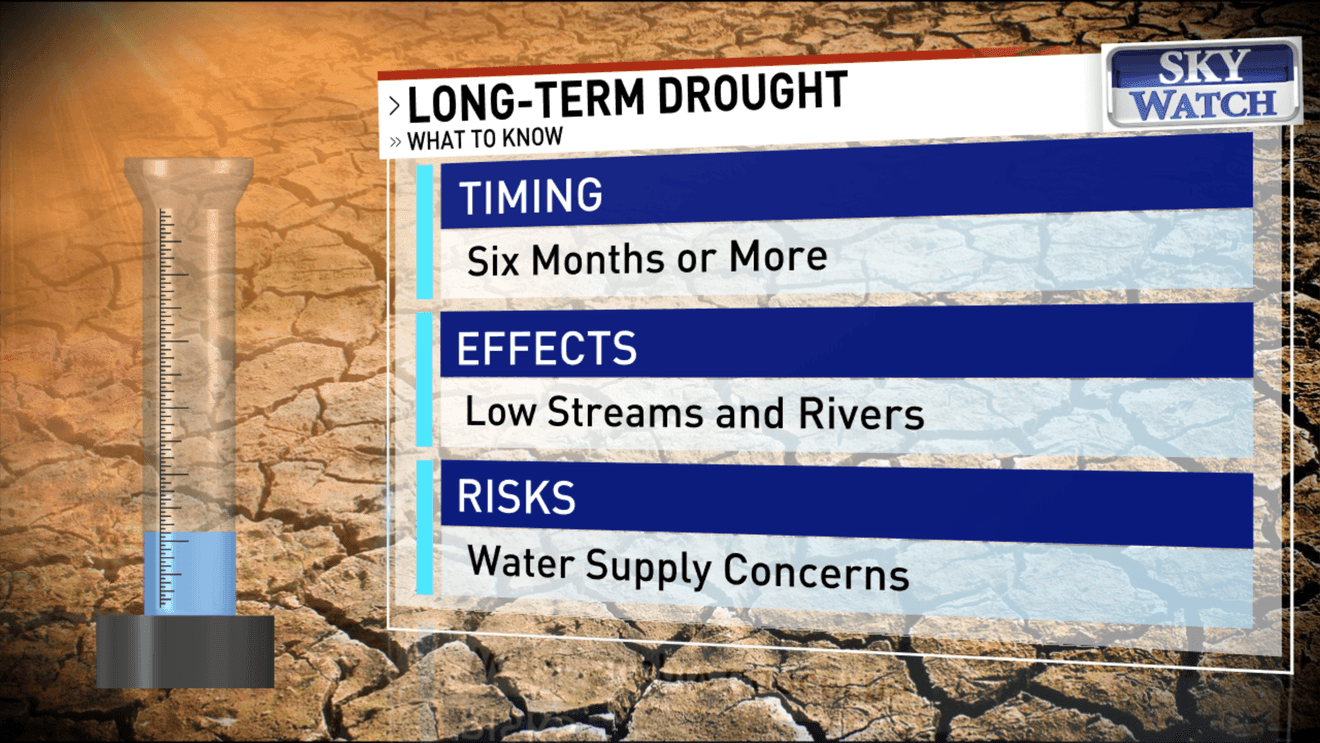
Long-term drought begins when dry conditions persist beyond about six months. At that point, impacts shift below the surface. Streams and rivers begin to run low, groundwater levels decline, and water supply concerns become more significant.
Parts of North Carolina are already seeing those signs, with low stream flows developing across the region.
Looking back, droughts in the Western Carolinas have varied widely in length. Some have lasted less than a year, while others have stretched multiple years. The 2010 to 2013 drought lasted 32 months, making it one of the longest on record.
DROUGHT PERSISTS IN WESTERN NORTH CAROLINA: HOW ONE CLIMATE CYCLE PLAYS A KEY ROLE
Many remember the 2007 to 2009 drought, which stands out for its intensity. “Exceptional” drought, the highest level possible, gripped nearly the entire state.
The current drought began last fall and has now reached about seven months in duration since our first signs of moderate drought.
While scattered rain is possible at times, it typically takes repeated, sustained rainfall over weeks to months, not just a few storms, to reverse longer-term drought conditions.