
Your support helps us to tell the story
From reproductive rights to climate change to Big Tech, The Independent is on the ground when the story is developing. Whether it’s investigating the financials of Elon Musk’s pro-Trump PAC or producing our latest documentary, ‘The A Word’, which shines a light on the American women fighting for reproductive rights, we know how important it is to parse out the facts from the messaging.
At such a critical moment in US history, we need reporters on the ground. Your donation allows us to keep sending journalists to speak to both sides of the story.
The Independent is trusted by Americans across the entire political spectrum. And unlike many other quality news outlets, we choose not to lock Americans out of our reporting and analysis with paywalls. We believe quality journalism should be available to everyone, paid for by those who can afford it.
Your support makes all the difference.Read more
At Arsenal, there’s long been a feeling that some players are a touch too conscious of social media noise. Most of that, of course, is about “bottle” and the nature of their play, but those players that care will surely have sensed something else behind that. They can’t help but be conscious of it.
There’s a glee.
So many fans, more than in most title races, want Arsenal to fail. It’s been one of the more interesting dynamics of an emotionally intense season, that perhaps says a bit about the social and media landscape that modern football now takes place in. The issue is all the more fascinating because of who Arsenal are up against.
Manchester City are one of England’s great historic clubs and have recently offered up some of the finest teams that European football has ever seen but, under this Abu Dhabi ownership, it’s also true to say that they amount to a political project by an autocratic state.
The description, in this writer’s own States of Play book, is of a “sportswashing project”. That brings questions of how the club is used in the context of human rights and geopolitical questions.
As recently as this Thursday, then, human rights group FairSquare issued a press release calling on the UK government to investigate the links of City owner, Sheikh Mansour, to the Rapid Support Forces paramilitary group accused of genocide in Sudan.
The statement cites evidence that points to Mansour, a senior Emirati royal and deputy prime minister of the UAE, of “having played a central role in the UAE’s dealings with the RSF”. The Gulf state has previously denied supporting the group, or interfering in the war.
On the football side, the backing of Abu Dhabi – especially amid multiple sponsorship deals from the state – has helped bring a glory era that has culminated in six titles over seven years. This season would make it seven in nine. The points hauls and other trophies, including the potential of a third treble, make it the most intense period of dominance the English game has seen.
In other words, the sort of thing that other fans usually get sick of. The sort of thing that would leave most fans craving something different.
There’s then the fact that all of the trophies have come either while the club has been investigated for allegations of over 100 breaches of Premier League rules, most related to financial regulations, or in the campaigns being investigated.
It remains staggering that those charges were announced in February 2023, from November 2018 leaks, and there’s still no resolution. It is also bad for English football that it has gone on this long, creating doubt about everything. City insist on their innocence.
Even then, though, there’s an argument that the Premier League itself arguably needs Arsenal to win the league if only for its own variety and sense of competition. And yet City have almost found themselves seen as the “people’s champions”, with fans who previously hated them now actively cheering their wins. That must baffle the people at the club who do think the world is against them, especially after so much discussion of the ownership and the Premier League case.
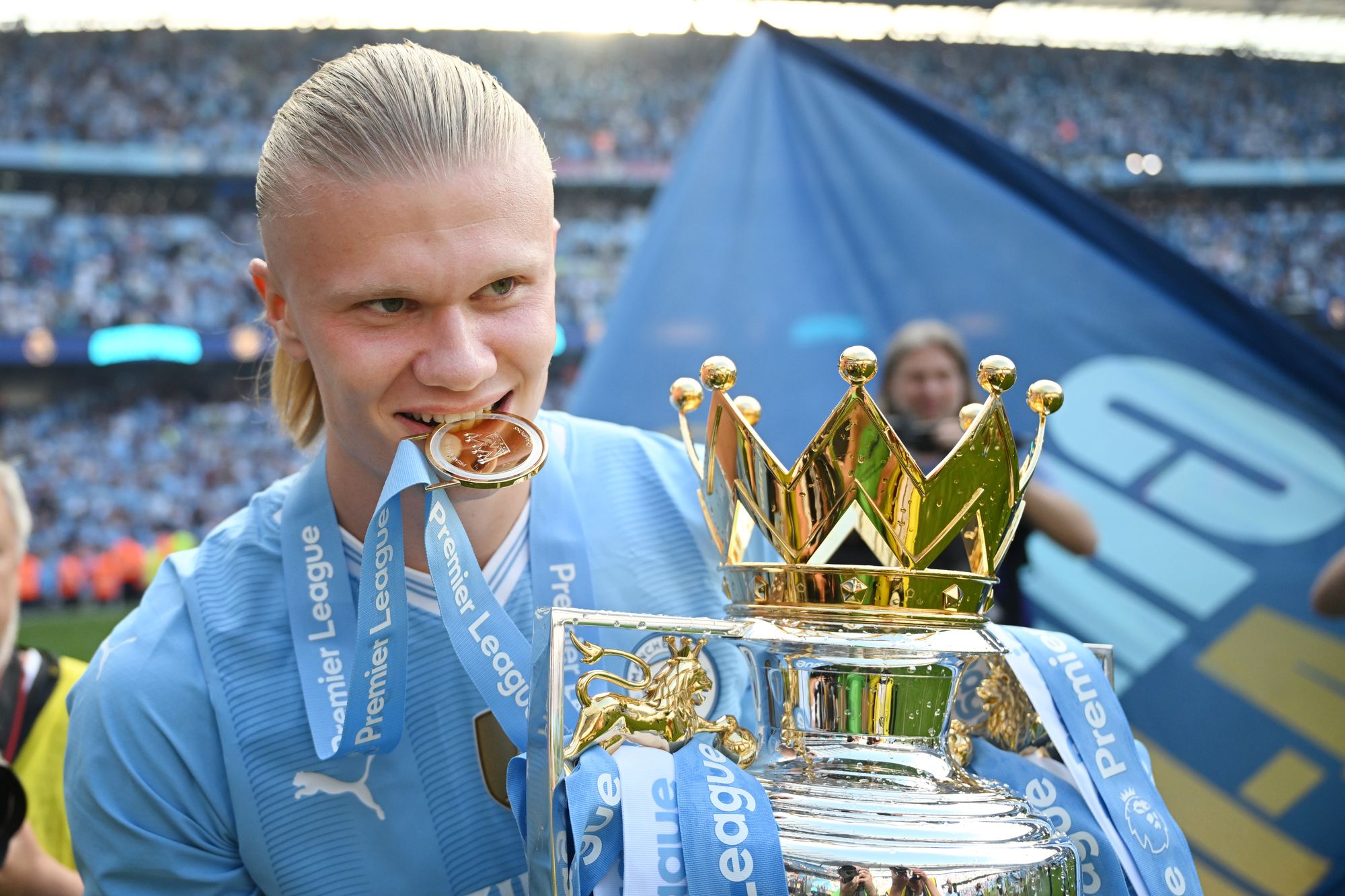 Man City won an unprecedented four titles in a row before last season and are looking to regain their crown (Getty Images)
It was only last month that Rodri said, “I know we won too much and the people don’t want us to win”. Not quite.
Many who work in geopolitics and the higher levels around football would point to many issues around Arsenal, of course.
The Kroenke ownership are viewed as an illustration of the most problematic type of American capitalist ownership that has come to define this era more than any other, ultimately interested primarily in profit. There have recently been new questions over the direction of the club, too, and the requirements to act like custodians of a social institution.
Arsenal’s own stadium has been called “The Emirates” for 20 years, after a sponsorship deal with the Emirati company, and there has been criticism of other partnerships like their eight-year sponsorship deal with Visit Rwanda – which will come to an end after this season.
The club will also face scrutiny around the forthcoming trial of Thomas Partey, who only left in the summer. Partey has pleaded not guilty to seven counts of rape and one of sexual assault involving four women.
Leaving aside the Partey case, it perhaps says a lot about how modern football is going that all of this is even being mentioned.
The point of this, however, isn’t to write up some distasteful moral and political balance sheet. It’s to actually discuss how very little of this fan dynamic is actually about such important subjects at all.
The issues around City are largely only relevant to many supporters because of how they have essentially made the club the default champions, the team who always win anyway. Many supporters would say that ensures their successes don’t have the same “meaning”, even if City fans would obviously insist that isn’t the same for them.
Along the same lines, other supporters talk about how they just don’t like Mikel Arteta, and that Arsenal play bad football.
While it’s probably true that Arsenal recapturing the spirit of the Invincibles would bring more admiration, exhilarating football didn’t exactly win more fans for Jurgen Klopp’s Liverpool in 2018-19.
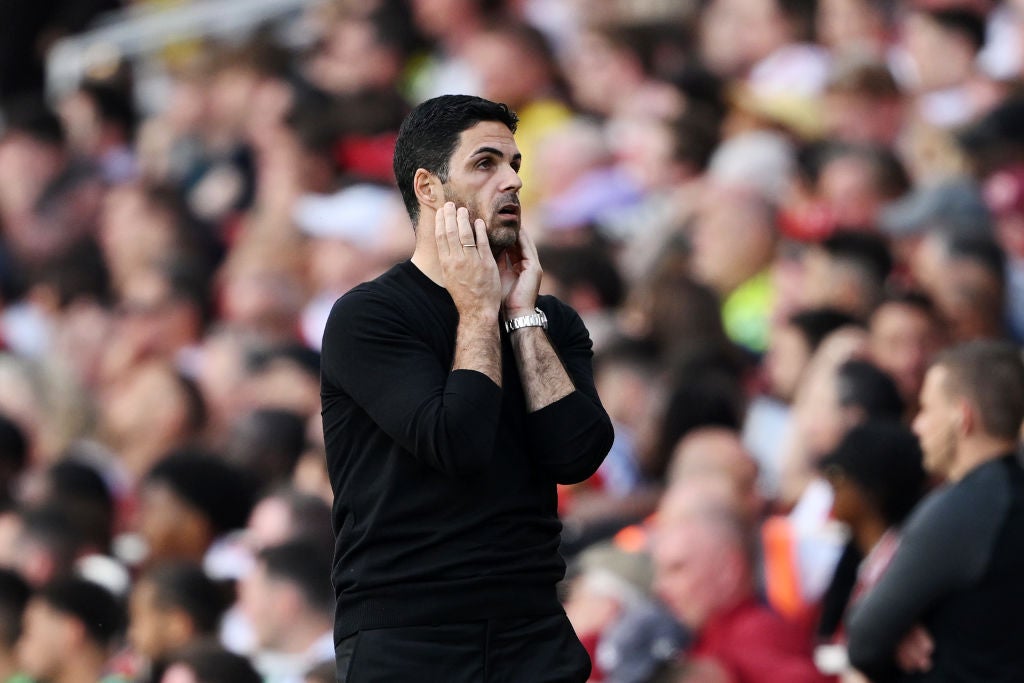 The drama around Arsenal attempting to win the league has heightened the emotion around the title race (Getty Images)
That touches on something much more central to this, and much more elemental, to go with how many talk about AFTV and how “annoying” Arsenal fans are.
Ultimately, there are many more of them. They have more than anyone except Liverpool and United, which is why all of those clubs have faced similar when seeking to end long waits. Just consider the “Anyone But United” movement, or a lot of 2018-19.
People know more Arsenal fans. They’re exposed to more of them. It is consequently more fun, and more in-keeping with what a lot of what football fandom is actually about, to mock them.
This isn’t to say that these other elements – particularly the style of football – are not factors, but they mostly just amplify something that is really rather simple.
It is funny now going through Nick Hornby’s famous Fever Pitch, which relays how parts of this have always been there, especially for a club that were the dominant side of the 1930s. How much of the following sounds familiar?
“The cover of a football magazine kicking around in the flat promises an article entitled ‘Why does everyone hate Arsenal?’” it reads. “We’re boring, and lucky, and dirty, and petulant, and rich, and mean, and have been, as far as I can tell, since the 1930s. That was when the greatest football manager of all time, Herbert Chapman, introduced an extra defender and changed the way football was played, thus founding Arsenal’s reputation for negative, unattractive football… sixty years of 1–0 wins tend to test the credulity and patience of opposing fans.”
That’s a lot of historical identity that people are all too familiar with, more so than with less successful clubs.
So, when they’re close to one of the biggest trophies after so much frustration, it’s natural there’s a backlash. Everyone has witnessed a decade of online discussion around the club.
This isn’t to say it’s all universal, of course, or completely unique to the “big three”. Even the Leicester City season brought begrudging reaction from some fans of other clubs because they wanted it to be them.
There are echoes with fans wanting City to win now because it doesn’t provoke the same emotion.
It could be argued that such feelings say a lot about modern football in itself, but so much of these topics involve big, weighty themes that require a lot of consideration. And football, even the modern game, is still mostly about basic emotion. You can see it in that glee.