

A quarter of the way through the 2025-26 season, and then again at the midpoint, The Athletic’s NHL staff broke out their red pens and handed out grades for every team.
Now that the regular season is behind us and all 32 clubs get set for the playoffs or offseason, there’s no better time to reflect on every team’s season as a whole.
That’s exactly what The Athletic did this week when it asked its NHL staff to assign a grade to every team’s entire 2025-26 regular season with expectations in mind. You’ll definitely be proud to show some of these to your parents (or general managers). Others … maybe not so much.
Anaheim Ducks: B+
The Ducks ended a seven-year playoff drought and have an exciting club in Joel Quenneville’s first season. Leo Carlsson, Cutter Gauthier and Jackson LaCombe have blossomed into front-line players. Beckett Sennecke is one of the NHL’s top rookies. But a leaky defense, erratic special teams and streakiness keep them from an A grade. Run-and-gun hockey made for lots of comebacks during the season, but it usually isn’t a winning postseason formula. — Eric Stephens
Boston Bruins: A+
Even if the Bruins get swept in Round 1, 2025-26 was an excellent step in the organizational turnaround. Jeremy Swayman is back. David Pastrnak and Charlie McAvoy are elite. Fraser Minten, Marat Khusnutdinov and James Hagens could grow into long-term chain-pullers. “Lot of doubters,” coach Marco Sturm said. “Starting when we started training camp. We proved everyone wrong.” — Fluto Shinzawa
Buffalo Sabres: A+
Despite being in last place in the Eastern Conference on Dec. 9, the Sabres stormed all the way back and won the Atlantic Division by playing like the best team in the NHL for the last four months. Ending the playoff drought would have earned them an “A” alone, but doing so by winning a rugged division is worthy of an “A+.” — Matthew Fairburn
Calgary Flames: D+
After the Flames’ scoring issues and injuries, this won’t go down as a banner season. But they took a step in the right direction by offloading key veterans while accumulating picks and prospects for their rebuild. The Flames ending their season near the bottom of the standings should also help them as they finally take themselves out of the mushy middle. — Julian McKenzie
Carolina Hurricanes: A
The Hurricanes overcame injuries — including being without Jaccob Slavin for more than half of their games — to put together arguably the most impressive season of the Rod Brind’Amour era. Carolina finished with 113 points, second only to Colorado in the NHL, and will have home-ice advantage through at least the Eastern Conference final. Nikolaj Ehlers and K’Andre Miller fit in seamlessly, and Brandon Bussi put together a memorable first NHL season. Next up: Round 1 against the Senators. — Cory Lavalette
Chicago Blackhawks: C
It’s difficult to give a 31st-placed team too high a mark. But the Blackhawks were better than previous seasons, and, most importantly, their best player became one of the league’s best players. Connor Bedard’s development into a star had to happen eventually for the rebuild to work. Now, they need their other young players to take similar steps. One late-season positive sign for the Blackhawks has been Anton Frondell’s all-around play since coming over from Sweden. He looks like a top-six center. — Scott Powers
Colorado Avalanche: A+
Colorado won the Presidents’ Trophy. It’s the third time the Avalanche have finished a season with at least 118 points. In the other two (2000-01 and 2021-22), they went on to win the Stanley Cup. This was about as dominant a regular season as a team can have. Colorado’s +99 goal differential didn’t just lead the league; it was 40 goals clear of second place (Tampa Bay at +59). — Jesse Granger
Columbus Blue Jackets: D+
The players were clear that if they didn’t make the playoffs this season, it should be considered a “failure.” So maybe a D+ is being kind. The Blue Jackets’ incredible run (19-3-4) from mid-January to late March was only a tease. They melted down the stretch when the pace of play picked up, losing nine of their final 12 to miss the playoffs for a sixth straight season. Worse, they ended on a six-game home losing streak. The rebuild has now stagnated, and the Blue Jackets head into an uncertain summer. — Aaron Portzline
Dallas Stars: A
For the fourth straight season, the Stars are one of the very best teams in the NHL. No complaints about another 100-point-plus campaign. But after falling in the Western Conference final the first three times, it won’t mean anything if they can’t get to the Stanley Cup Final this time. At this point, the regular season has become a formality for the Stars, an obligation, a necessary evil. The only measure of success that matters is still to come. — Mark Lazerus
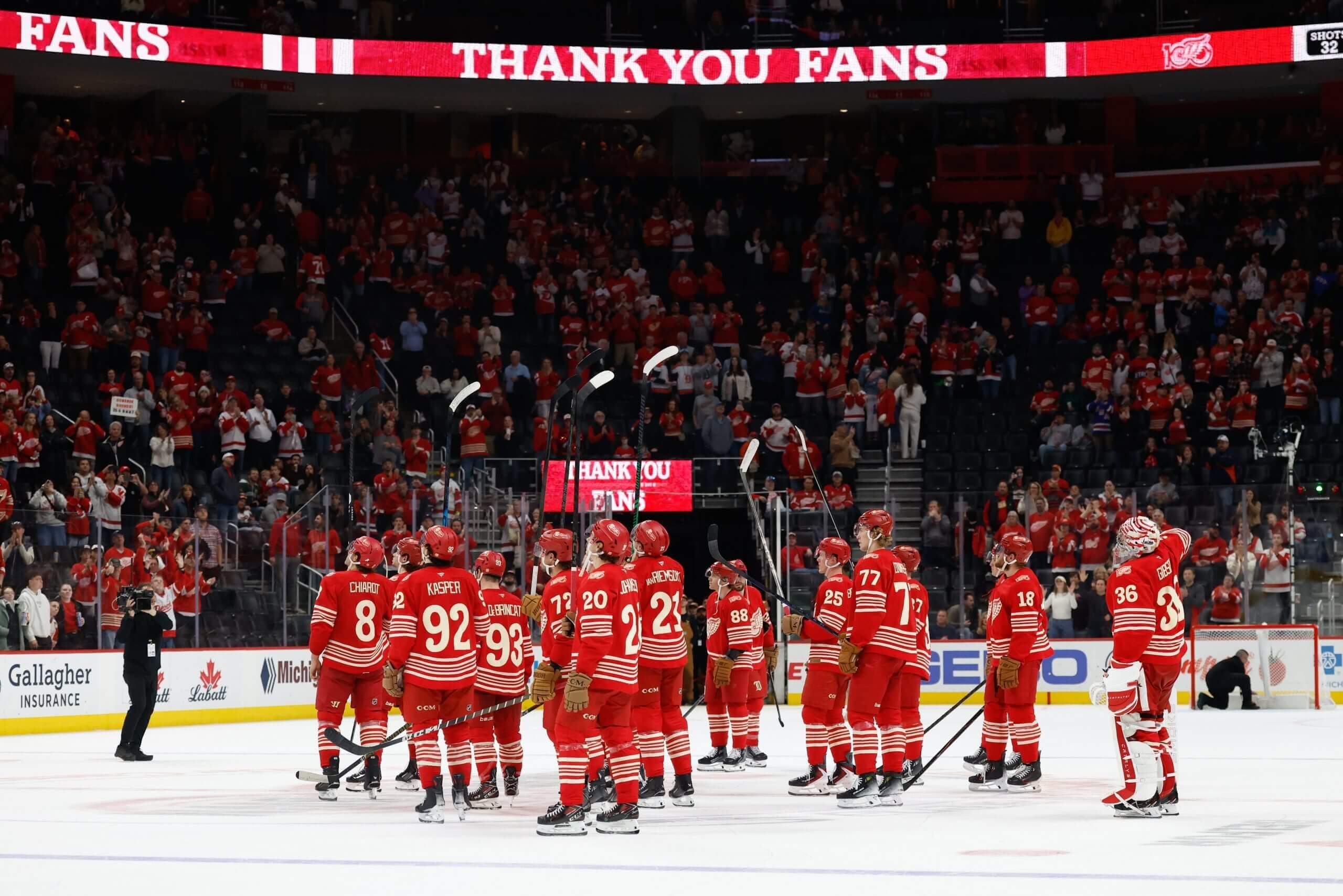
The Red Wings hold the NHL’s longest active playoff drought at 10 years. (Rick Osentoski / Imagn Images)
Detroit Red Wings: D+
Standings-wise, the Red Wings had their best regular season in a decade. But they once again failed to reach the playoffs, giving them the NHL’s longest active postseason drought. Worse than that, they hit the same late-season wall they have in past seasons, making you question just how much progress is really being made. While the team itself is the best it’s been under Steve Yzerman, the expectations have gone up, and Detroit isn’t meeting them. — Max Bultman
Edmonton Oilers: B-
The Oilers had a difficult time problem-solving in 2025-26. Rarely able to string a few wins together, the goaltending and defensive coverage were primary issues. The top players (Connor McDavid, Leon Draisaitl, Evan Bouchard) shone, but the depth pairings and lines were expansion-level. The trade for goalie Connor Ingram, plus three deadline acquisitions from the Blackhawks, were key. In the final few games of the season, the defense and goaltending finally tightened up. — Allan Mitchell
Florida Panthers: D
It’s hard to fail a franchise coming off winning the Stanley Cup twice and making three consecutive trips to the final, but this has truly been a miserable season for the Panthers, who plummeted all the way to 25th in the league. The good news is the first-rounder they traded is top-10 protected, which means Florida will add a high-end young player and presumably be much healthier a year from now with Aleksander Barkov back in the fold. A rebound to form as a contender feels highly plausible. — James Mirtle
Los Angeles Kings: C
Can you really give a good grade to a team that went 35-27-20? The Kings somehow made the postseason for the fifth straight time despite underachieving much of the way. Playoffs were supposed to be the minimum coming off a 105-point season. But we’ll give them some credit for a late-season surge. D.J. Smith has them playing more aggressive hockey, Adrian Kempe has been red hot, Quinton Byfield is at his best right now and Anton Forsberg has deservedly grabbed the net. — Eric Stephens
Minnesota Wild: B+
Despite finishing with the third-most points in the West, the Wild cost themselves home ice because they dropped too many home games, especially against average teams. But many predicted they’d miss the playoffs and instead they made it for the 12th time in 14 years. And at least they’re not expansion cousin Columbus (six playoff appearances, one series win in 25 years). Minnesota traded for Quinn Hughes. Kirill Kaprizov and Matt Boldy were studly. Special teams and goaltending were solid. Never shut out! Now, can they win a round? — Michael Russo
Montreal Canadiens: A
The goal for the still-rebuilding Canadiens was to return to the playoffs. The fact that they remained in the hunt to win the Atlantic Division or have home ice in the first round right to the end exceeded those expectations by a mile. Are they a perfect team? No, far from it. But any doubt as to how bright their future is should be put to rest, as they’ve done this as the second-youngest team in the league. — Arpon Basu
Nashville Predators: C
Is “C” too high for a team that didn’t make the postseason? No one expected the Preds to do so, and they were earning an “F” after a quarter of the season. The resilience to get back into the mix was commendable, especially after a soft sell at the deadline. Steven Stamkos, Filip Forsberg and Ryan O’Reilly did the heavy lifting to make it possible. Now it’s time for a new GM and, perhaps, major changes. — Joe Rexrode
New Jersey Devils: D-
The Devils entered this season with expectations to be not only a playoff team but one that could do damage. All was going to plan after a hot start, but the team’s lack of depth got exposed in the aftermath of Jack Hughes’ freak hand injury. It was a noisy season — from Quinn Hughes rumors to Dougie Hamilton’s scratch — and the results were poor, leading to Tom Fitzgerald’s departure. Talent remains on the roster, but changes are coming, starting with new GM Sunny Mehta. — Peter Baugh
New York Islanders: B
The Islanders were in the thick of the playoff race for most of the season, thanks to rookie phenom Matthew Schaefer and Ilya Sorokin’s excellence. It was impressive for a retooling team, but this team deviated from the plan with a few iffy trades despite defensive issues that were prevalent all year; those eventually spiraled and knocked them out of the race. — Shayna Goldman
New York Rangers: D
The bulk of the season warranted an “F,” with the Rangers exposed as a poorly constructed team that doesn’t have the skill, speed or depth to keep up in today’s NHL. But finishing last in the Eastern Conference was a necessary evil in the name of improving draft odds and replenishing a depleted prospect pool, while a handful of young players showed up late to raise a failing grade and offer at least a sliver of hope for the future. — Vincent Z. Mercogliano
Ottawa Senators: B+
A heroic run of play from Jan. 12 onward (23-8-5) saved Ottawa’s season. But under the hood, the Senators were supposed to be a playoff team because of the way they limit chances and generate offense. Thankfully, improved goaltending and penalty killing have helped. And it has turned the Senators into a veritable dark horse contender this spring. Coach Travis Green could also get consideration for the Jack Adams Award. — Julian McKenzie
Philadelphia Flyers: A-
Not many would have figured the Flyers would reach 98 points this season. But on the strength of strong defensive play, a stellar season from goalie Dan Vladar, and an offense that came around just in time with help from newcomers such as Trevor Zegras, Christian Dvorak and rookie Porter Martone, they snuck into the playoffs as one of the league’s most unlikely participants. — Kevin Kurz
Pittsburgh Penguins: A
The Penguins were among the favorites to land Gavin McKenna when the season began. Now, they are going to be favored to advance to the second round of the Stanley Cup playoffs. It’s been one of the more extraordinary seasons in Penguins history. And it doesn’t feel like a fluke. This is a very good, very deep team capable of outscoring just about anyone. — Josh Yohe
San Jose Sharks: A
The push for a playoff berth fell short, but this season went beyond anyone’s realistic expectations. The Sharks went from an NHL-low 52 points to 86 this season, the largest year-over-year jump for any team. They were in the wild-card race until the final week. Macklin Celebrini had one of the greatest age-19 seasons in NHL history. Other youngsters began to make a name for themselves. Expectations will rise now, but this was a feel-good season that brought life back into SAP Center. — Eric Stephens
Seattle Kraken: C-
The Kraken faded down the stretch and missed the playoffs for a third consecutive year. That’s tough, especially in a crowded Seattle sports market in which the Kraken are still searching to gain a foothold five years into their existence. It wasn’t all bad, though. Lane Lambert’s first season behind the bench at least established a set identity for the club as a robust defensive side. The Kraken, however, continue to lack elite talent, and there are no easy answers for that issue. — Thomas Drance
St. Louis Blues: D
Too little, too late. The Blues have had slow starts in recent years and stressed the need to change that in 2025-26. Instead, they opened 3-7-2. Their top players were AWOL, and it wasn’t until the return from the Olympics that everyone put it together. Now, despite having the NHL’s second-highest points-percentage since late February (.729), they’re paying for another sluggish first few months of the season. — Jeremy Rutherford
Tampa Bay Lightning: A
Between Nikita Kucherov and Andrei Vasilevskiy’s elite seasons, plus breakouts from J.J. Moser and Darren Raddysh and a next-man-up mentality to navigate injuries, there’s a lot to like. But the season isn’t over yet, and what happens next will define the Lightning’s year. It comes down to how they maximize on those core performances, as the clock starts ticking on their playoff window. — Shayna Goldman
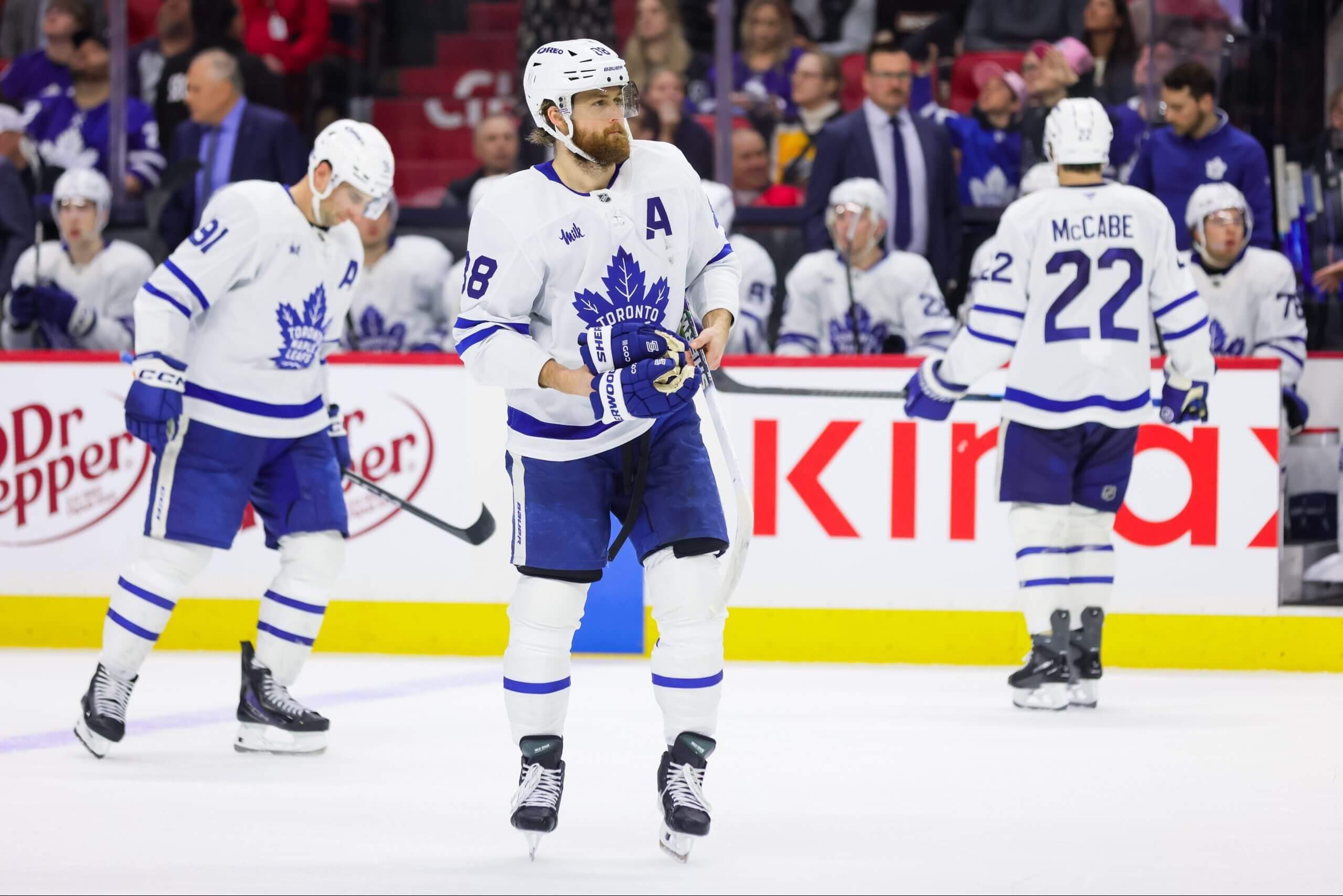
The Maple Leafs finished fifth-worst in the league this season. (Richard A. Whittaker / Icon Sportswire via Getty Images)
Toronto Maple Leafs: F
This wasn’t just a bad season for the Leafs. It was the worst — by far — in recent memory and arguably one of the worst in franchise history given expectations. The Leafs were supposed to still be Stanley Cup contenders and, at minimum, shoo-ins to make the playoffs. Not only did they fail to qualify for the first time since 2016, but they were also out of it well before game 82. The repercussions are ongoing and will change the franchise, for better or worse. — Jonas Siegel
Utah Mammoth: B
The Mammoth’s young core broke through and made the playoffs, which was the main goal for this season. I don’t think they hit their ceiling case — a low 90s point total is fairly modest — but it’s a job well done, especially considering how much time Logan Cooley missed with injury. — Harman Dayal
Vancouver Canucks: F
The Canucks won fewer games this season than in any other season in the franchise’s history — that includes the expansion era teams from the early 1970s and the performance of Canucks teams in every lockout or pandemic-abbreviated season. This was a season where the bottom fell out. Where the rebuild became a fact. — Thomas Drance
Vegas Golden Knights: B-
At the end of the day, a seat at the table is all you need to win the Cup, and the Golden Knights earned that. The Pacific Division’s status as one of the worst overall divisions in recent history certainly played its part. Vegas underperformed in relation to preseason expectations, and it cost Bruce Cassidy his job. The team has looked much better since that coaching change, but the truth is the Golden Knights’ season will be judged by their performance in the playoffs, as it always is. — Jesse Granger
Washington Capitals: D+
On some level, this might seem harsh for a team that was, quite literally, a few bounces away from making the postseason. On the other hand, the Capitals went from a 111-point team to a non-qualifier. Things went well — Logan Thompson was great, Jakob Chychrun emerged as a first-pair, offensive force and Alex Ovechkin scored 32 goals in what could be his final NHL season — but ultimately, Washington had far greater aims than its grasp and deserves a grade that reflects as much. — Sean Gentille
Winnipeg Jets: F
Winnipeg set a preseason goal of competing for the Stanley Cup and missed the playoffs. There is no way to give that result a passing grade. There were mitigating factors, including Connor Hellebuyck and Adam Lowry’s surgeries, injuries to Dylan Samberg and Cole Perfetti and more, but too many Jets underperformed this season — and it started with the front office last year. — Murat Ates