
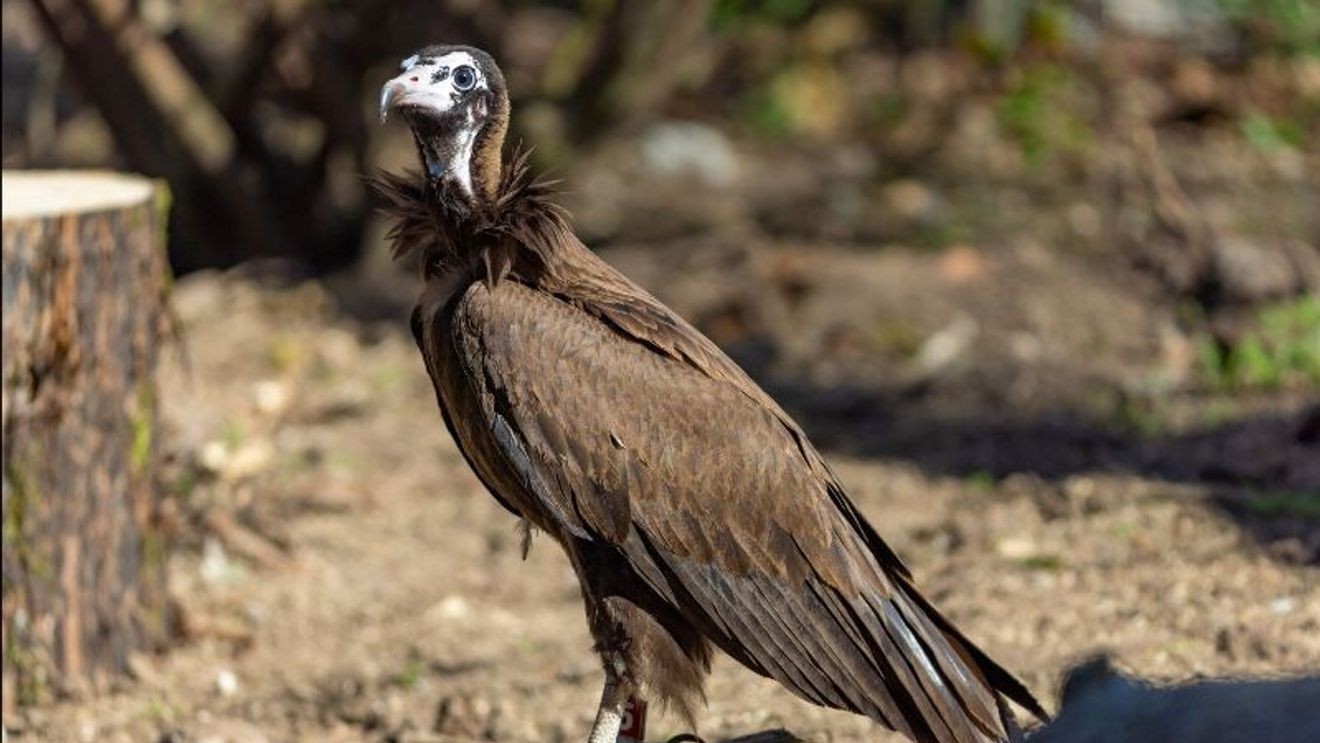
SEATTLE — For the first time in its 126-year history, Woodland Park Zoo is home to two critically endangered hooded vultures, a sub-Saharan African species whose global population has sharply declined in recent decades.
The newcomers, Tutaonana and Kiara, have already settled into their exhibit across from the maned wolves, where staff said they’ve taken a particular liking to raw meatballs.
Tutaonana (too-tah-oh-NAH-nah), a nearly 1-year-old male, takes his name from the Swahili phrase for “see you later,” while Kiara (kee-AH-rah), a female turning 2 this month, is named for “princess.”
Despite their somewhat regal introduction, hooded vultures are better known for their workmanlike habits. As scavengers, they are often called “nature’s cleanup crew,” rapidly consuming animal remains and helping prevent the spread of disease.
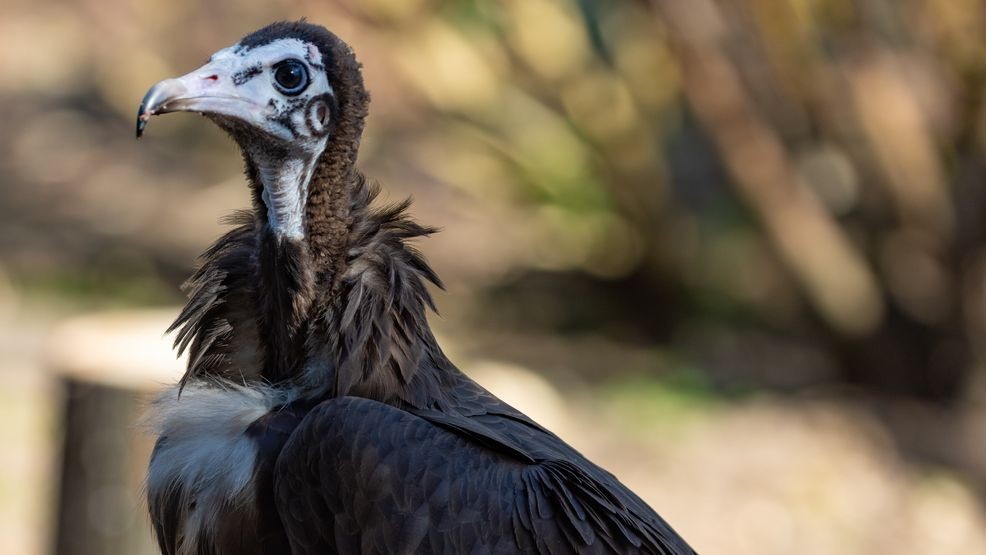
Two critically endangered hooded vultures are now viewable to the public at the Woodland Park Zoo. (Jeremy Dwyer-Lindgren/Woodland Park Zoo)
“Hooded vultures are remarkable survivors and essential to a healthy ecosystem,” said Shawn Pedersen, the zoo’s curator of ornithology. “We’re excited to welcome this critically endangered species to the zoo to inspire curiosity in our guests and help ensure the future of these birds.”
Guests may find themselves doing a double-take at the birds’ appearance.
Hooded vultures feature dark brown plumage and a distinctive look created by the thin, bare skin on their heads and faces — the source of their name.
Their wingspan, stretching well over 5 feet, adds to their striking presence.
But behind the novelty is a more sobering reality. The International Union for Conservation of Nature lists hooded vultures as critically endangered, citing threats such as poisoning, habitat loss, reduced food sources, and hunting.
The pair arrived in Seattle as part of the Association of Zoos and Aquariums’ Species Survival Plan, a coordinated effort to maintain healthy populations of vulnerable species in human care.
For now, Tutaonana and Kiara appear focused on settling in — and on their next meal — offering visitors a close-up look at a species whose survival in the wild is far from guaranteed.