
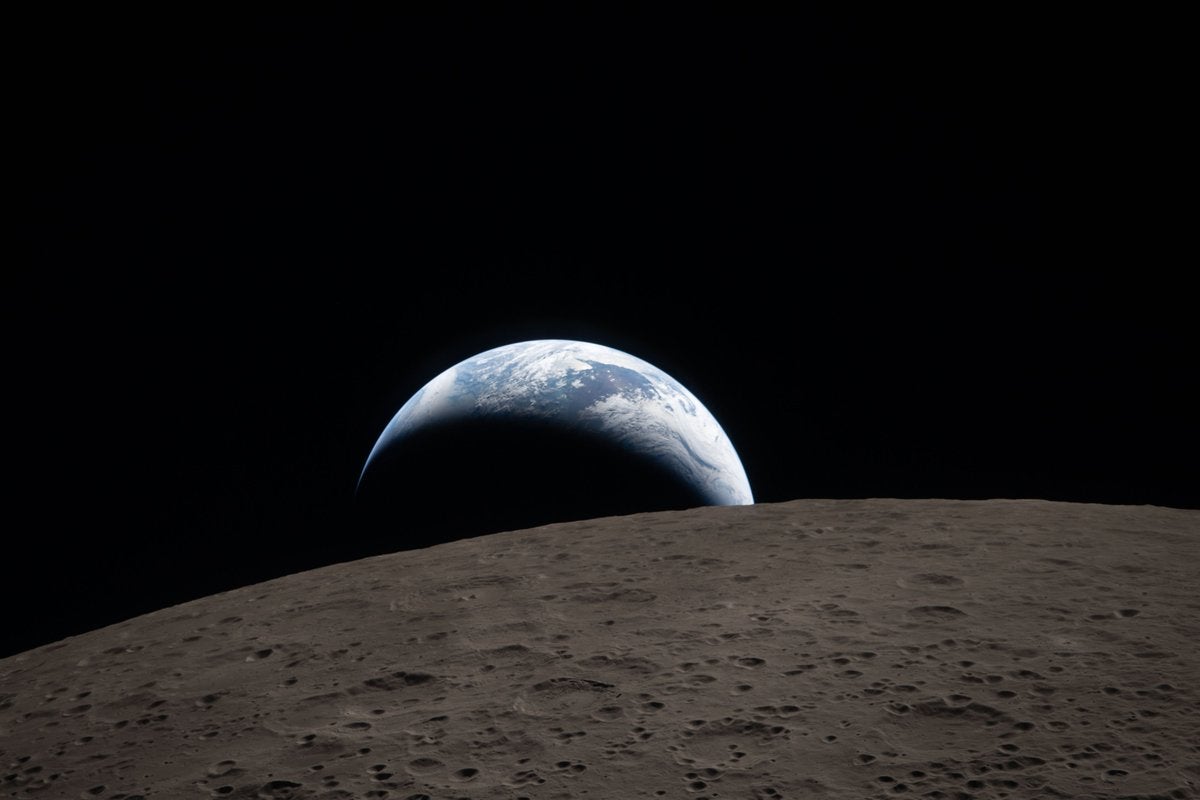
The Artemis II astronauts who recently returned from the far side of the Moon have described their “otherworldly” experience during the record-breaking mission.
Speaking at their first news conference since returning home last Friday, the four-person crew revealed they experienced a multitude of overwhelming emotions during the nine-day mission, which took them further from Earth than any human has ever travelled.
One profound instance, as told by mission commander Reid Wiseman, occurred during a solar eclipse that only they could see as the Moon passed between their spacecraft and the Sun.
“It’s very hard to fully grasp what we just went through,” mission commander Wiseman said.
“When the Sun eclipsed behind the Moon… I turned to [Artemis II pilot] Victor and said, ‘I don’t think humanity has evolved to the point of being able to comprehend what we’re looking at right now’.”
He added: “It was otherworldly, and it was amazing.”
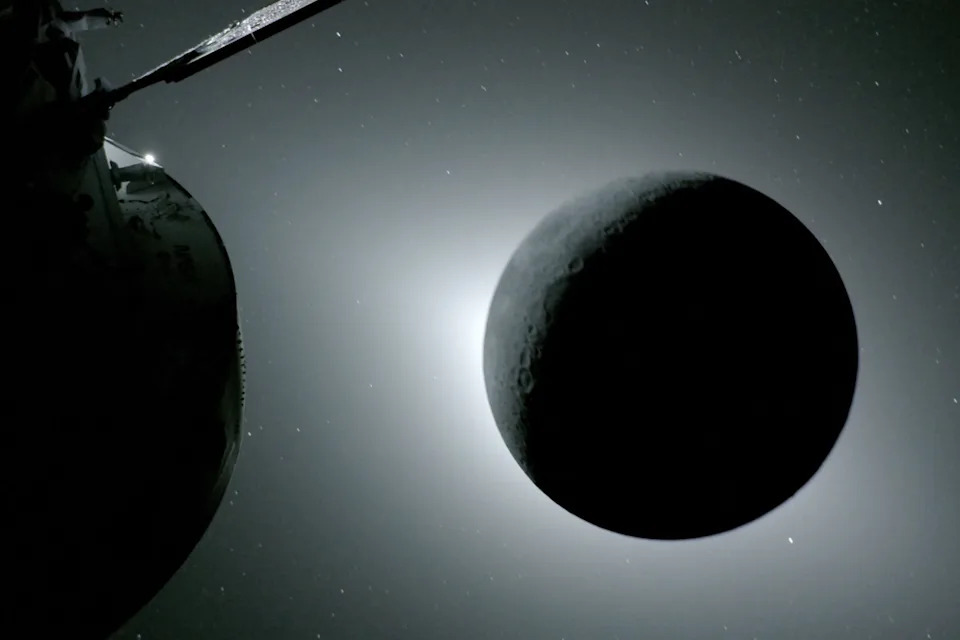
The Moon is backlit by the Sun during a solar eclipse on 6 April, 2026, as seen from the Orion spacecraft (NASA)
The Artemis II mission was the first crewed mission to the Moon in more than 50 years, though NASA holds even greater ambitions for the space program.
In 2028, the US hopes to land astronauts on the lunar surface as part of the Artemis IV mission, before eventually establishing a permanently crewed base on the Moon.
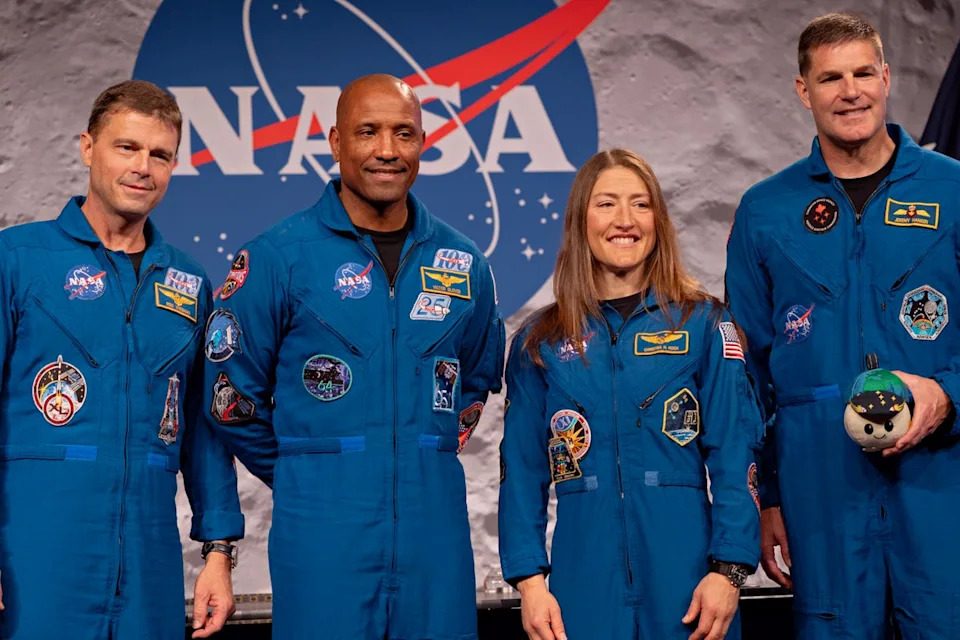
Artemis II commander Reid Wiseman, pilot Victor Glover, mission specialist Christina Koch, and mission specialist Jeremy Hansen at the NASA Johnson Space Center on 16 April, 2026 in Houston, Texas (Getty)
There have been several delays to the Artemis program, with the crewed mission to the Moon’s surface originally scheduled for December 2025.
Despite the setbacks, the Artemis II crew said they were confident that all of the objectives will eventually be accomplished.
“This mission taught me that the unknown is way scarier than the known,” said mission specialist Christina Koch.
“Every single time we accomplished a mission test objective, we all looked at each other and we’re like, ‘that actually went pretty well’.
“We know how to put in the work to accomplish a goal when the time comes.”
Before the Moon landing, NASA will launch the Artemis III mission to practice docking the Orion spacecraft with the lunar lander while in Earth’s orbit.
Preparations for the mission are already underway, with NASA rolling the launch tower back to the Vehicle Assembly Building at the Kennedy Space Center in Florida on Thursday in order to set it up for the launch next year.