
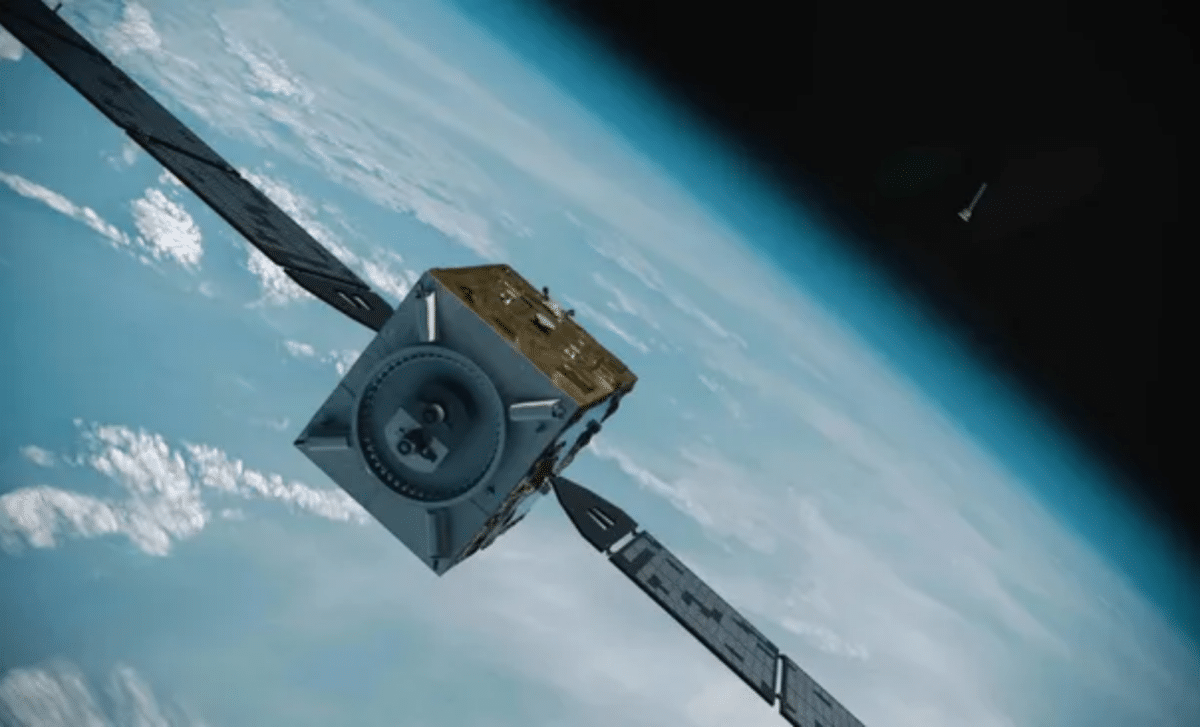
Astroscale Japan aims to change the landscape of satellite servicing. The mission, ISSA-J1, will be the first of its kind to inspect multiple defunct satellites in different orbits, offering critical insights into satellite conditions that were previously unattainable. This bold move signals a significant leap forward in space sustainability and on-orbit servicing capabilities.
The Ambitious Mission: ISSA-J1 and its Objectives
Astroscale Japan, a leader in space sustainability, has revealed its plans for the ISSA-J1 mission, an unprecedented venture aimed at inspecting two retired Japanese satellites still in orbit. Scheduled for launch in 2027, ISSA-J1 will engage with the Advanced Land Observing Satellite (ALOS) and the Advanced Earth Observing Satellite-II (ADEOS-II), both of which ceased functioning years ago but remain in orbit.
ALOS, which was launched in 2006, lost power in 2011 but continues to orbit Earth at an altitude of 429 miles (691 kilometers). ADEOS-II, a slightly smaller satellite launched in 2002, ended its mission prematurely after just one year due to a solar panel failure, and now orbits at a higher altitude of 500 miles (806 kilometers). Despite their decommissioned status, both satellites have remained in space, representing a valuable opportunity for advanced on-orbit inspection.
The ISSA-J1 mission is poised to demonstrate capabilities that were previously impossible. Instead of merely tracking satellites from Earth, Astroscale will send its spacecraft to physically approach, inspect, and gather detailed data from these defunct satellites. This mission aims to offer satellite operators crucial insights into the condition of these objects, providing information that can’t be obtained from the ground.
【本日公開】
ISSA-J1のConOps動画が公開しました。
「宇宙の安全パトロール」の全貌がご覧いただけます。
ぜひチェックよろしくお願いします🛰️🌏🛰️🛰️💫
軌道上で“近づいて確かめる”時代へhttps://t.co/5cj9HXm8QO#宇宙の安全パトロール #ISSAJ1 #アストロスケール pic.twitter.com/ziUwL4FYdC
— 【公式】Astroscale Japan | アストロスケールジャパン (@astroscale_JP) April 6, 2026
Why On-Orbit Inspection is a Game Changer
Nobu Okada, managing director of Astroscale Japan, emphasized the importance of on-orbit inspections, stating, “On-orbit inspection provides critical insight into the condition of satellites that cannot be obtained from the ground.” Satellites, once launched, often become difficult to monitor as they lose power or experience technical failures. By inspecting them in space, Astroscale will offer a new form of diagnosis, far more precise and reliable than conventional methods.
The ability to inspect these satellites in real-time, by approaching and observing them from up close, could prove vital for future missions aimed at satellite servicing, debris removal, and even satellite recovery. For instance, understanding the structural integrity of an old satellite can help engineers design better methods for repairing or recycling them in orbit.
Astroscale’s strategy for this mission is designed to push the boundaries of what is possible in satellite servicing.
“By inspecting multiple objects in different orbits in a single mission, ISSA-J1 will help demonstrate new capabilities that support satellite operators in understanding spacecraft condition and preparing for future servicing,” the company said in a statement.
This holistic approach is expected to lay the groundwork for a future where defunct satellites can be maintained or safely removed from orbit, mitigating the growing threat of space debris.
Innovative Technology and Future Implications
The ISSA-J1 mission will use cutting-edge technology to approach, inspect, and depart from these satellites in different orbits. This complex operation will require the spacecraft to switch between various orbits, performing multiple inspection sequences. “Through this sequence, ISSA‑J1 will demonstrate the ability to approach multiple clients in different orbits within a single mission, repeating a cycle of approach, inspection, departure and orbital transition,” said Astroscale.
This approach marks a significant advancement in space situational awareness and operational flexibility. For years, satellite operators have faced challenges in managing their assets once they have lost their operational capabilities. The ISSA-J1 mission aims to offer a solution by demonstrating that active servicing and inspection of satellites in different orbits are not only feasible but can be done efficiently.
The implications for future space missions are immense. By proving the viability of such on-orbit activities, Astroscale is paving the way for a more sustainable space environment. The technology demonstrated by ISSA-J1 could soon be used for tasks such as refueling, repairing, or even de-orbiting old satellites to prevent space debris accumulation.
A Strategic Move for Space Sustainability
Astroscale Japan’s mission has been supported by the Japan Ministry of Education, Culture, Sports, Science and Technology, which recognizes the growing need for sustainable space activities. The ISSA-J1 mission is part of a larger effort to enhance Japan’s space situational awareness and bolster its in-orbit servicing capabilities. These efforts are essential as the number of satellites in space continues to rise, creating new challenges for operators and space agencies around the world.
Astroscale’s success in this mission will likely open the door for other nations and private companies to follow suit, marking the beginning of a new era in space operations, one where sustainability and serviceability are prioritized.