
Here’s another record that Artemis 2 broke.
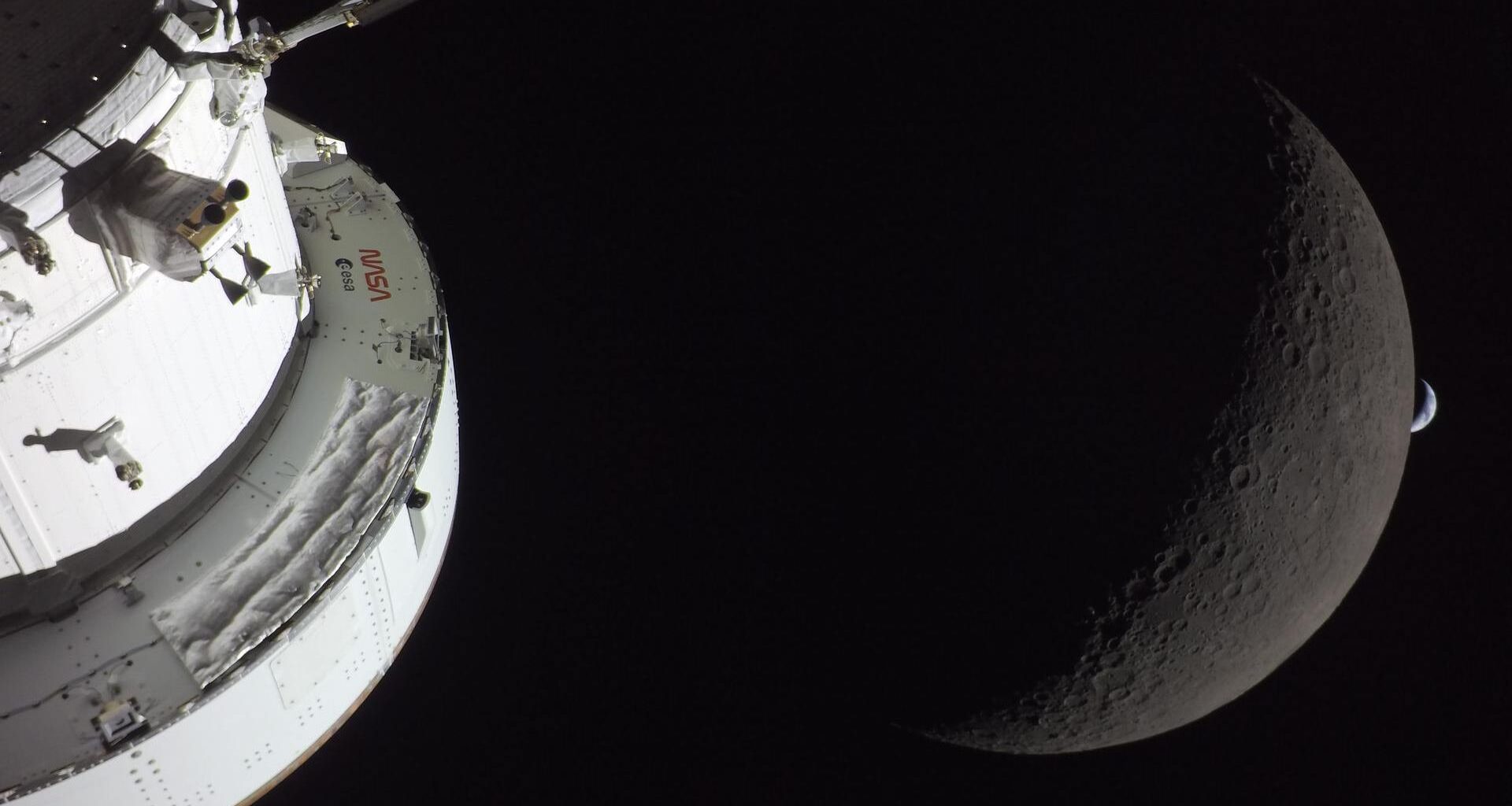
For a few moments on April 6, the four Artemis 2 moon astronauts and the three crewmates aboard China’s Tiangong space station were farther away from each other than any other humans had ever been.
You may like
At first, McDowell highlighted the astronauts aboard the International Space Station (ISS) as contenders for the farthest folks from the Artemis 2 quartet. But he amended that statement in a later post, noting that Tiangong was actually slightly more distant.
On April 6, as Integrity flew around the moon’s far side, it got a maximum of 260,754 miles (419,643 kilometers) from Tiangong, according to McDowell. The max Integrity-to-ISS distance, meanwhile, was 260,715.5 miles (419,581 km).
Space.com asked McDowell what made him think to calculate these distances in the first place. “When NASA announced the distance-from-Earth record, I immediately wondered if the ISS distance was even further,” he said via email.
“I was going to be too lazy to calculate it, but several people soon after asked the same thing, on social media and in emails to me. So, I went ahead and did it,” he said, adding that NASA’s Johnson Space Center in Houston — Mission Control for Artemis 2 and other crewed NASA spaceflights — may be interested in verifying his work.
The previous record was set in April 1970 during NASA’s near-disastrous Apollo 13 mission, whose astronauts pulled off a daring maneuver that used lunar gravity to slingshot them back toward Earth after suffering an explosion en route to the moon.
There were no space stations orbiting Earth back then, so the greatest potential distance between humans and crewed moon missions has been extended by a few hundred miles.
Space.com also asked McDowell if he thought this new Artemis 2 record would be significant when future historians look back on it hundreds of years from now.
“To some extent,” McDowell said.
“I think the significance is that it’s the beginning of a shift from ‘How far from Earth are our most distant people’ to ‘How spread out is human civilization?'” he added. “There may come a day when it’s Mercury to the moons of Saturn.”