
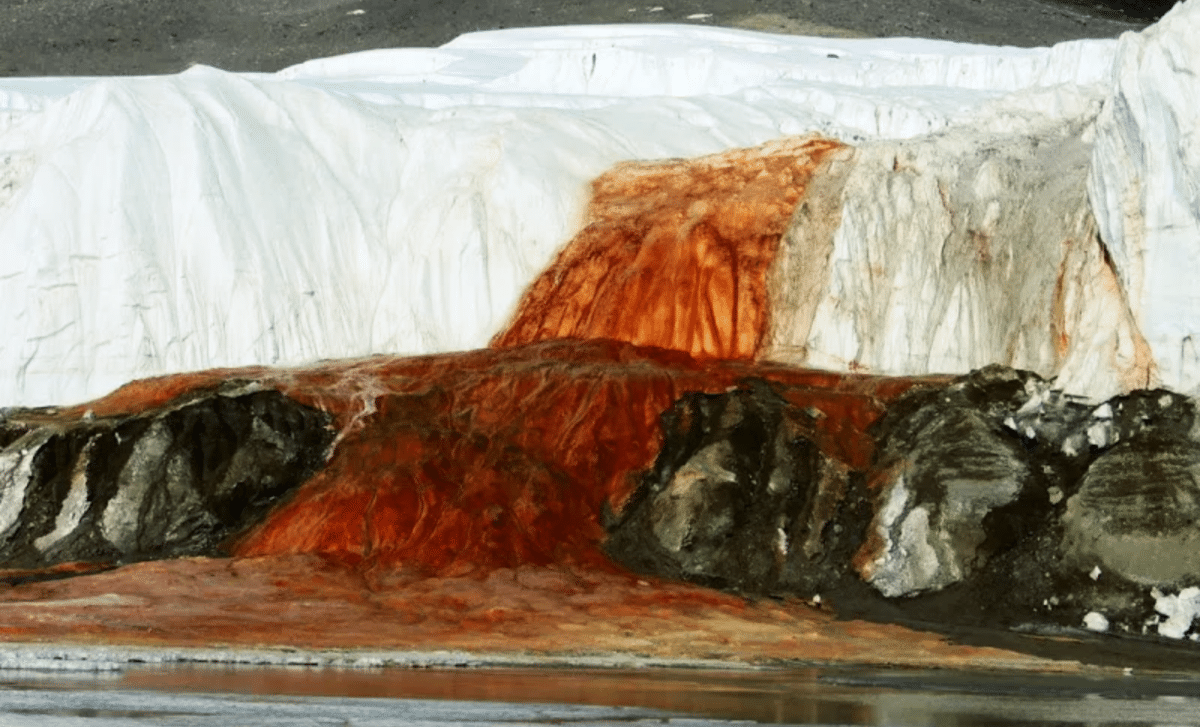
Scientists have unveiled the true cause behind the mysterious Blood Falls in Antarctica—a striking red outflow of iron-rich water that has puzzled researchers for over a century. A new study, published in Antarctic Science, links the phenomenon to pressure shifts beneath the glacier, offering fresh insight into the hidden processes of the frozen continent. This discovery not only explains the dramatic bursts of rust-red water but also sheds light on the dynamic forces at play beneath the glacier’s surface. The study, led by geoscientist Peter T. Doran, is reshaping our understanding of Antarctic glaciology and the complex interactions between ice, water, and subterranean life.
The Enigma of Blood Falls
Blood Falls, located on Taylor Glacier in Antarctica’s McMurdo Dry Valleys, has captivated explorers and scientists alike since it was first discovered in 1911. The name comes from the striking red color of the water that seeps from the glacier’s surface, giving the appearance of blood spilling from the ice. For years, the origin of this unusual flow remained a mystery. Was it the result of iron-rich water? Was it caused by some hidden chemical process? Previous theories suggested that microbial activity or trapped water beneath the glacier might be to blame, but the exact cause remained elusive.
However, the new study led by Peter T. Doran, a geoscientist at Louisiana State University (LSU), and published in Antarctic Science, has finally provided a comprehensive explanation. By combining data from a network of sensors, cameras, and temperature monitoring devices, Doran and his team have connected the bursts of red water to pressure fluctuations beneath the glacier’s surface. These findings represent a major breakthrough in understanding how ice dynamics in Antarctica function on a deeper level.
The Hidden Forces Beneath Taylor Glacier
The study reveals that the red discharge at Blood Falls is not merely a surface stain but an indicator of significant subterranean changes. The blood-red liquid originates from subglacial channels hidden deep within the glacier, where hypersaline brine—saltwater rich in minerals—has been trapped for millions of years. As the glacier shifts and moves, pressure builds up within these channels, and when the pressure becomes too great, the brine bursts through cracks in the ice, resulting in the dramatic flows observed at the glacier’s edge.
“These observations demonstrate that an extended brine discharge event, characterized by episodic pulses of brine sourced from beneath Taylor Glacier over one month, reduces subglacial water pressure, which lowers the surface and reduces ice velocity,” said Doran. This statement highlights the key finding of the study: the pulses of brine are not random but are connected to a slow, steady release of pressure under the glacier, which in turn affects the glacier’s movement and the surrounding environment.
Salt and Ice: The Chemistry Behind Blood Falls
One of the most fascinating aspects of Blood Falls is the chemistry of the brine that fuels its flow. The water beneath the glacier is not ordinary meltwater. Instead, it is a dense, saline mixture that remains liquid even in temperatures far below freezing. This remarkable property is due to the high concentration of salts in the brine, which lowers the freezing point of the water and allows it to remain in liquid form despite the harsh Antarctic cold. The process of brine formation and its subsequent movement through the glacier is one of nature’s most extraordinary feats of chemistry.
As the brine seeps to the surface and comes into contact with the atmosphere, the iron content in the water reacts with oxygen, creating the red discoloration that gives Blood Falls its name. This oxidation process occurs almost instantaneously, turning the water into a rust-colored stream that flows over the ice and stains the surrounding landscape.