

GASTONIA, N.C (WBTV) – The City of Gastonia urged residents and businesses to voluntarily cut water use by 3% to 5% or more as drought continues to worsen across the Carolinas.
On April 17, Gastonia and Two Rivers Utilities issued the request after a Stage 1 (voluntary) drought was declared for the Catawba–Wateree River Basin amid rapidly developing dry conditions.
While no restrictions are required at this stage, Gaston county officials have asked people to conserve wherever possible by taking the following steps:
How to help reduce water usageTake shorter showersLimit outdoor wateringWash full loads of laundryRun the dishwasher only when full
Through Two Rivers Utilities, Gastonia is part of the Catawba–Wateree Drought Management Advisory Group — a local coalition of cities and industries, including Duke Energy, that rely on water from the Catawba basin.
Many counties have followed suit and asked residents to voluntarily reduce water use in response to drought conditions, including Lincoln, Mecklenburg, Iredell, Union, Caldwell, Lancaster and Wilkes counties.
What “severe” and “extreme” drought can mean
Gaston County has been in severe drought since January 2026, and nearby areas — including Mecklenburg County — are in extreme drought.
Severe drought can make water shortages more noticeable as stream flows drop and crops and lawns show stress, and communities may begin or expand water-use restrictions.
Extreme drought is more serious: waterways and reservoirs can fall sharply, burn bans become more likely, and wildfires can be harder to control and extinguish.
Most of North Carolina falls into the severe drought category, with another large portion in extreme drought, including several counties in western North Carolina, the Charlotte area and counties northward, and northeastern counties near the Raleigh area.
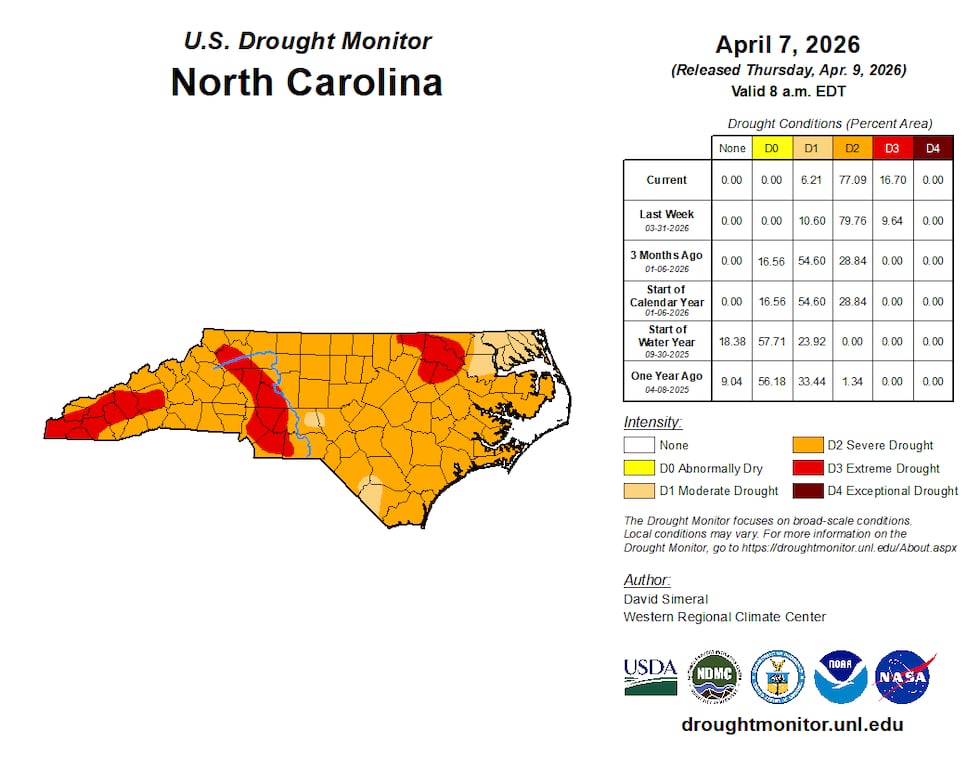 Drought monitor in NC(WBTV)
Some northwestern and southwestern counties in South Carolina were also in extreme drought.
Read more –> Why are there so many fire warnings in the Carolinas? Here’s what’s driving the risk — and how to stay safe
If Catawba River basin worsens, what’s next?
The Catawba–Wateree River Basin is a 5,610-square-mile system that begins in the Blue Ridge Mountains, runs through the Charlotte metro, and flows into South Carolina. It includes thousands of miles of creeks and tributaries, along with multiple dams and lakes such as Lake Wylie and Lake Norman.
County officials said if conditions continue to deteriorate — with extreme drought expected to expand across the Carolinas over the next two weeks — many areas could consider involuntary conservation measures.
On April 16, the U.S. Department of Agriculture designated 82 North Carolina counties as natural disaster areas due to drought conditions.
WBTV meteorologist Elissia Wilson said dry conditions are expected for most of the week in Gastonia, Charlotte and across the Carolinas.
City of Gastonia water customers who would like more information or have questions, can call or email Two Rivers Utilities. It is unclear when the voluntary water cuts will be lifted.
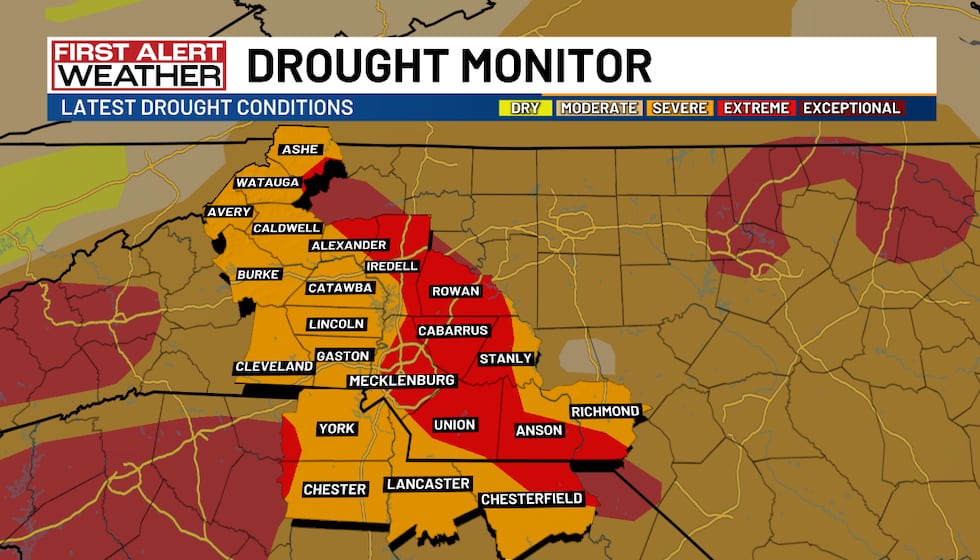 Drought monitor(WBTV)
Copyright 2026 WBTV. All rights reserved.