
April 18, 2026, 8:00 AM HST
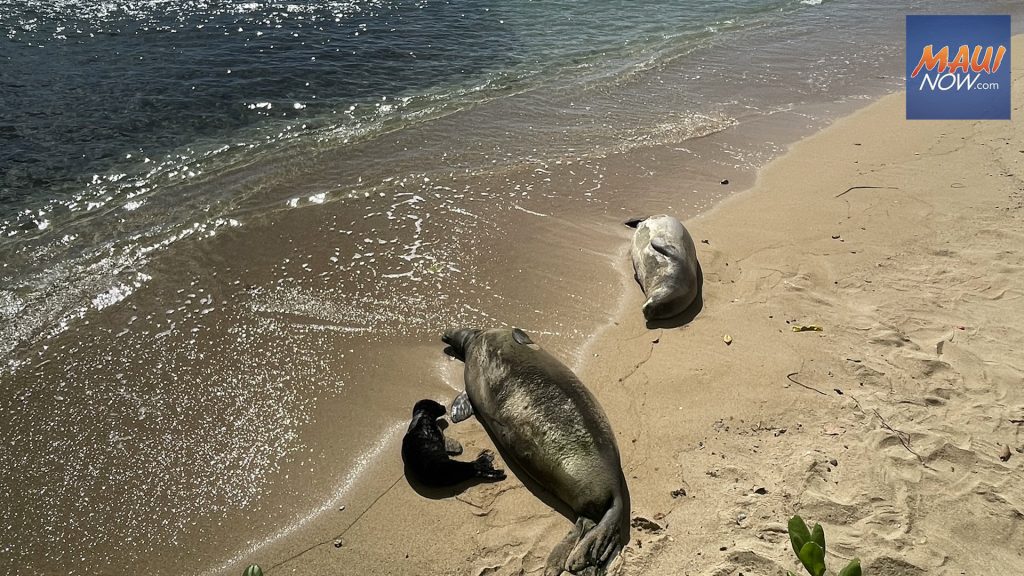 Kaimana monk seals (May 1, 2024). PC: DLNR
Hawaiian monk seal peak pupping season is underway across the islands, a critical time for one of the state’s most endangered species. Monk seals give birth year-round, but the months from March through August are the busiest for births.
After coming ashore to give birth, female Hawaiian monk seals nurse their pups for five to seven weeks. During this period, mothers invest all their energy into caring for their young and can be especially protective.
While these events offer a rare opportunity to observe native wildlife, DLNR officials emphasize that human behavior plays a key role in ensuring the survival of both mother and pup.
ARTICLE CONTINUES BELOW AD
Beachgoers are reminded that Hawaiian monk seals are protected under both state and federal law, and it is illegal to harass, disturb or harm them.
Help our endangered pups by following these best practices:
Keep dogs on a leash and well away from seals
Stay at least 150 feet away from mothers with pups
Stay at least 50 feet away from all monk seals
Remain behind any posted signs, cones or barriers
Avoid swimming near a mother and pup
Use a camera zoom or binoculars instead of approaching
Maintaining a safe distance helps prevent stress that can cause mothers to abandon their pups or act defensively. Mother seals can weigh several hundred pounds and may bite if they feel threatened.
ARTICLE CONTINUES BELOW AD
Hawaiian monk seals are found nowhere else in the world and are an important part of Hawaiʻi’s natural and cultural heritage. Continued recovery of the species depends on the collective efforts of the community to respect wildlife and share shorelines responsibly.
ARTICLE CONTINUES BELOW ADARTICLE CONTINUES BELOW AD
Community reports help biologists monitor seal health and respond quickly if intervention is needed.
DLNR encourages the public to report monk seal sightings, especially those involving pups, to the NOAA Marine Wildlife Hotline at 888-256-9840.