
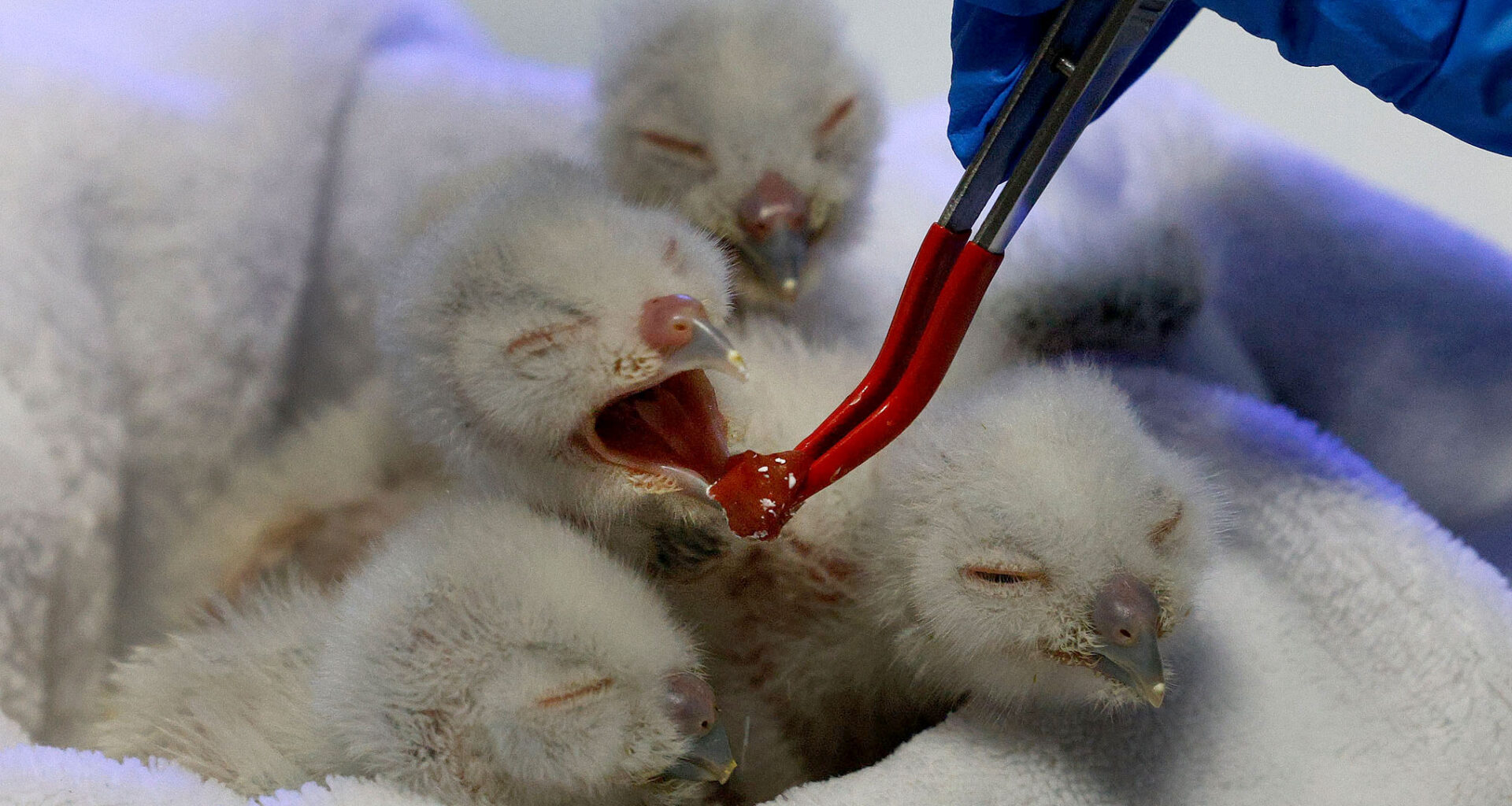
North Texas Wildlife Center Staff Fawn Heindl feeds baby eastern screeches at the center in Plano, Tuesday, April 14, 2026.
Chitose Suzuki/The Dallas Morning News
PLANO — Five babies burrowed into a blanket, tucked into an incubator in the critical care unit. Just days old, the eastern gray screech owls arrived at the North Texas Wildlife Center as eggs after their home, a tree in Richardson, was cut down this spring.

Around the corner, seven opossums sipped formula. Each no bigger than a finger, the opossums’ mother was hit by a car in Lewisville. The babies, tucked into her pouch, survived.
Article continues below this ad
The animals are among the hundreds being treated at the North Texas Wildlife Center, which is caring for a record number of animals so far this year. Since January, the Plano facility has treated more than 1,600 animals, a 50% increase over the same time last year. It has cared for nearly 100 different species, a 44% increase over the same time last year.
About 10 times this spring, the center — with six staff members and roughly 100 volunteers — was so inundated it was forced to temporarily suspend new intakes.
Wildlife rehabilitators across North Texas are reporting a similar surge in wounded and sick animals. Booming construction has displaced critters, a warm spring caused an earlier than usual baby boom, and heightened public awareness means people are more likely to rescue wild animals.
Make Dallas News a preferred source so your search results prioritize writing by actual people, not AI.
Add Preferred Source
“It has been overwhelming,” said Rebecca Hamlin, president of the North Texas Wildlife Center. “We have animals coming in all day long, and they require around the clock care, hand feedings, wound care, specialized diets…”
Article continues below this ad
North Texas Wildlife Center President Rebecca Hamlin poses for a photo with a rescued box turtle at the center in Plano, Tuesday, April 14, 2026.
Chitose Suzuki/The Dallas Morning News
The influx of animals is squeezing rehabilitators, many of whom operate from their own homes on donations. State funding is not available for veterinary care, food, medicine or other supplies, although some rehabilitators apply for grants to help offset costs.
A few years ago, Beverly Godbey, a retired real estate agent, rescued a sick squirrel from her neighborhood in Fort Worth. Almost immediately, she was hooked on rehabilitation. She eventually converted a bedroom in her home into a nursery where she cares for injured opossums, rabbits, raccoons, skunks and squirrels.
Most months, she takes in 30 to 40 animals. Lately, that number has tripled, sending costs for items like powdered animal formula soaring.
Article continues below this ad
“It has been a crazy year, just crazy,” Godbey said. “We have had babies coming in nonstop.”
Related: North Texas Wildlife Center scouts for new facility as it faces shutdown risk
Darenda Isbell cares for sick or injured bobcats, foxes, raccoons and squirrels from her home in Milford, about 50 miles south of Dallas. Isbell, who also works as a sales representative for a lumber company, began rehabilitating wildlife about a decade ago and said she sees more animals every year.
In March and the first couple weeks of April, she took in 130 animals, roughly 20% more than during the same time last year.
Article continues below this ad
“I spend more and more out of my own pocket,” said Isbell. “We’re robbing Peter to pay Paul.”
Most of the animals come in wounded or injured, but Texas Parks and Wildlife noted that each year hundreds of young wild animals are unnecessarily taken to game wardens or rehabilitators for treatment and rearing. The agency, which issues permits to rehabilitators, recommends people spend time observing an animal from a distance to determine whether it is truly injured or orphaned.
On a recent afternoon in Plano, the wildlife center’s volunteers fed the eastern gray screech owls with tweezers, supervised baby blue herons trying to gobble chopped pieces of fish and administered medicine through a syringe to tiny opossums. They took turns mopping floors, cleaning cages and laundering towels and blankets.
Baby opossums are seen under clinical conditions at North Texas Wildlife Center in Plano, Tuesday, April 14, 2026.
Chitose Suzuki/The Dallas Morning News
A woman knocked on the front door, holding a limp duckling that appeared in her swimming pool. A staff member carried the baby to a room for inspection.
Article continues below this ad
This operation began in 2013 as the Dallas Wildlife Center, working from the garage of co-founder Mela Singleton’s home in Murphy. In late 2021, volunteers pooled their savings and bought a 1,044-square-foot brick home in Plano.
It quickly outgrew that space, and the city notified the center last year it would need to look for a new home in an appropriately zoned area. Staff found a new location nearby, where it will move later this year.
Even as they prepare to move, animals continue to pour in from car accidents, run-ins with cats or dogs, ingesting rat poison or getting caught in a rodent glue trap. Often, the staff does not know how an animal was wounded. For example, among the patients now is a black vulture from Aubrey with an unexplained wing injury.
“It can be hard, draining work,” said Hamlin, who also works full time at the University of Texas at Dallas’ neuroscience research laboratory. “We see a lot of suffering. We do everything we can, but sometimes all we can do is help them cross over so they’re not suffering anymore.”
Article continues below this ad
Related: Inside an unusual Plano MASH unit: bobcat babies, a concussed owl and mended turtle shells

By signing up, you agree to our Terms Of Use and acknowledge that your information will be used as described in our Privacy Policy.
The center also sees much joy. Once the animals are nursed to health, they move to larger enclosures in the backyard to build their skills alongside their same species. Animals eat and play and prepare for their eventual release into the wild.
Some animals go to sanctuaries. Others go to nature preserves, large parks or private property in rural parts of the state. When possible, the animals are returned to where they were found, to fly or scurry away.
Article continues below this ad
Texas Parks and Wildlife provides a list of permitted wildlife rehabilitators by county if you find an animal in need of help.
North Texas Wildlife Center Vice President Lindsay Dreher holds a one-day-old baby Great Blue Heron, Tuesday, April 14, 2026, in Plano. The heron was born at the center from an egg that rescued from a fire hazard.
Chitose Suzuki/The Dallas Morning News