
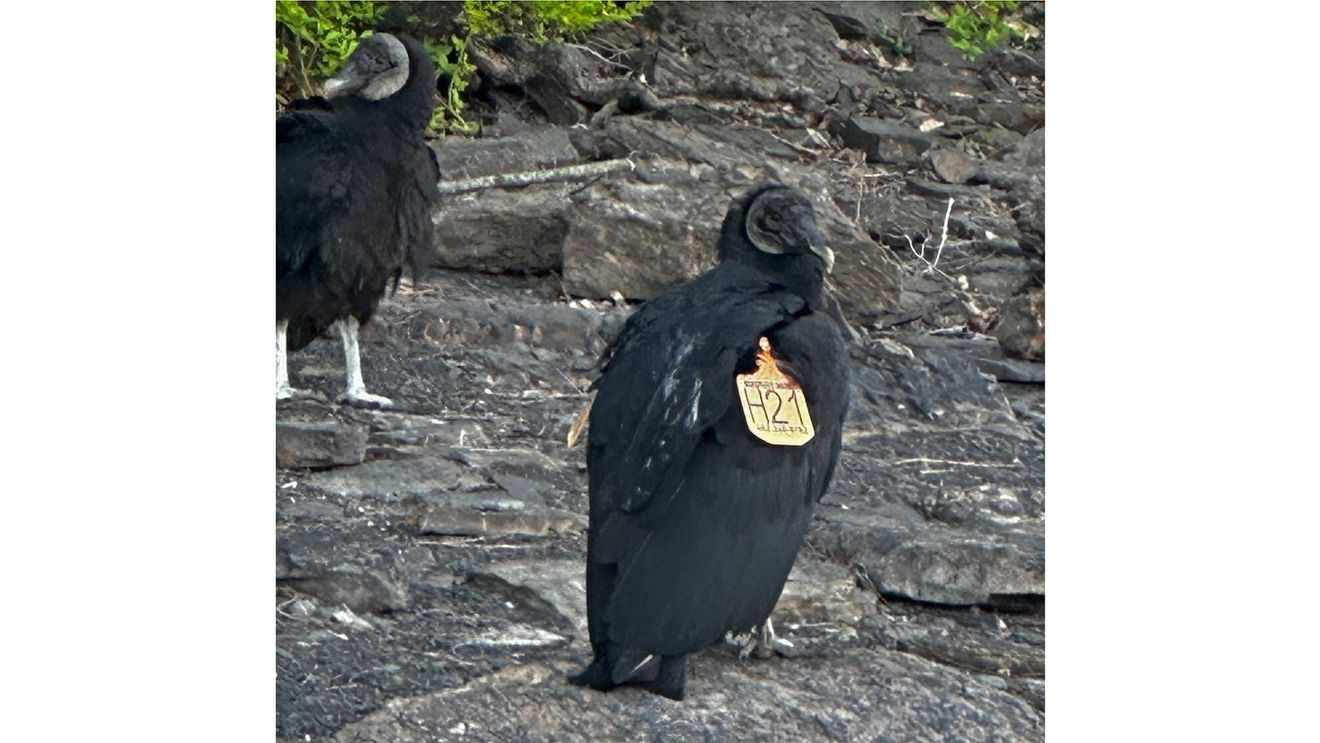
DECATUR, Tenn. — My friend Erik Almy spotted and photographed the black vulture above near Watts Bar Dam recently. Some people refer to vultures as buzzards, but no matter what you call them, for the purposes of this article we will call it “H-21.”
Almy shared the photo of H-21 with me to see if I knew anything about why it might be sporting a prominent wing tag. I am familiar with lots of banding research on birds and migration patterns, in which various species are captured and bands are affixed to their legs. But this type of marking of any bird was new to me.
However, it didn’t take very much Googling for me to track down Dr. Scott Rush with Mississippi State University (MSU).
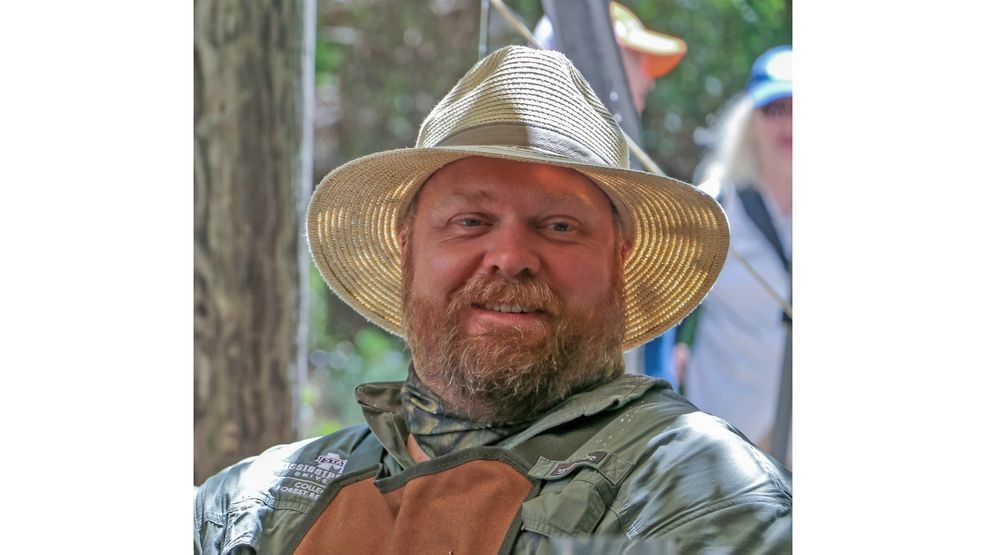
Dr. Scott Rush, Mississippi State University Department of Wildlife, Fisheries and Aquaculture. Dr. Rush has many awards and honors, including recognition for “Contributions to Conservation” from the Tennessee Valley Authority. (Photo courtesy MSU)
For at least six years Dr. Rush has been conducting research to analyze and hopefully mitigate human-wildlife conflicts, with special emphasis on potentially deadly air encounters for pilots.
We’ve now tagged both turkey and black vultures in Alabama, Tennessee, and Mississippi,” said Dr. Rush. “We’ve tagged over 600 vultures so far, most of which have been tagged in Mississippi.
However H-21 was tagged very near where Almy took this photo.
“This bird, H-21, is an adult, female black vulture we tagged across the river from the boat ramp, just outside of TVA’s Watt’s Bar (nuclear) plant, in Sept. 2024. This sighting is the first we’ve had of this bird reported to us since she was originally tagged.”
He said the research effort grew out of a partnership with the Department of Defense and the Meridian (Miss.) Airport Authority.
“The interest there was to evaluate the movements of these birds relative to military and civilian aircraft,” said Dr. Rush. “I’ve (also) been partnering with TVA for years, helping address issues with cormorants, woodpeckers, eagles, osprey, and vultures. Each of these species can affect the safety and delivery of utility distribution.”
Many fishermen know of the “conflicts.” For reasons not totally clear, vultures around the Watts Bar Boat Ramp have often been known to land on angler’s cars and trucks, pecking or chewing at the rubber molding around their vehicles’ doors and windows.
“Citizen feedback is crucial to the project,” said Dr. Rush. “We need more citizens to contact us if they spot a tagged vulture.”

This map illustrates the areas and regions where vultures have been tagged and sighted during this research project. The small pink dots are the resighting locations. (Illustration courtesy Dr. Scott RusH, MSU)
To report a sighting, call or email Rush at 662-325-0762 or at scott.rush@msstate.edu.
“Please include the date, time, location and tag number of sighted vultures,” he said. “Observers should report sightings even if they cannot read the tag number. If it’s possible for the observer to report how many other vultures the observed tagged bird appeared with and their activity, such as feeding on roadkill, roosting, etc., that information is great, too.”
Of the 600-plus birds tagged so far, he said they have received more than 400 reports – some for multiple birds.
“Of these birds which we started tagging in 2020, we also have confirmation that 21 are dead. Collectively, this information has enabled us to track where birds move, their survival, and to a lesser extent, their population changes. We are applying similar methods to the work that we carried out in Mississippi to address how to best manage vulture-human conflicts in the Tennessee River Valley.”
Again, if you spot a vulture with a tag similar to H-21, please contact Dr. Rush (662-325-0762 or at scott.rush@msstate.edu.