
U.S. Statement as prepared for U.S. Representative Michael Tierney – Agenda Item 13 – GENERAL EXCHANGE OF VIEWS ON THE APPLICATION OF INTERNATIONAL LAW TO SMALL SATELLITE ACTIVITIES
Vienna, Austria, April 20, 2026
Thank you, Chair. The benefits of satellite constellations are clear. They enable communications, especially in remote areas, provide fast and high-resolution Earth imaging to support first responders during natural disasters, and many other essential services.
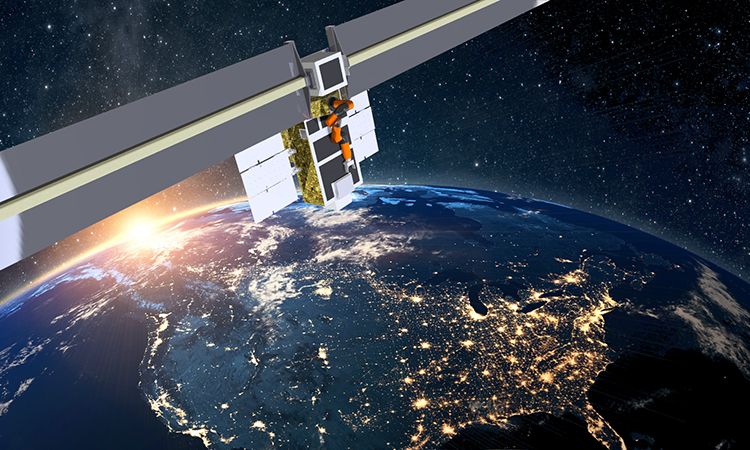
Small satellites are transforming the space industry from a government-led domain to a commercial-driven economy, fostering new jobs and providing critical data for various sectors. In rural regions lacking fiber infrastructure, LEO constellations provide tele-education, online commerce, and telemedicine access, and access to government services. Small satellites serve as platforms for innovation. NASA is using small satellites for rapid prototyping and flight testing of new technologies, such as autonomous navigation, new propulsion types, and sensor miniaturization. NASA also uses small satellites to conduct scientific research in novel and cost-effective ways both around the Earth and even in deep space.
At the Scientific and Technical Subcommittee meeting, the United States was pleased to deliver updates on how the U.S. government, commercial operators, and the astronomical community mitigate the impact of satellite operations on astronomy. We will continue to work through multi-stakeholder coordination to align best practices for protecting astronomy and our night skies, including cross-observatory and satellite owner-operator engagement. Through these efforts, mitigation approaches that protect astronomy are becoming interoperable and internationally scalable. We are pleased to see that the new STSC agenda item has enabled a robust, international conversation on best practices to preserve dark and quiet skies while enabling the continuation of vital services provided by small satellites. It is the view of our delegation that this agenda item is the appropriate place to discuss these topics.
The United States noted in our national statement that the international legal framework applies to novel activities, including small satellites. As a part of our fulfillment of the obligation for the authorization and continuing supervision of non-governmental entities’ activities in outer space, the United States has a robust regulatory framework for the licensing and regulation of small satellite activities carried out by the Federal Communications Commission for spectrum licensing, the Federal Aviation Administration for launch licensing, and the Department of Commerce for remote sensing licensing. Our national framework addresses orbital debris mitigation, radiofrequency interference, and the sustainability and safety of space operations. Many satellite constellation owners choose to incorporate debris mitigation practices that substantially exceed and improve upon international guidelines.
Chair, we note with concern the recent nationwide communication blackout in Iran, where terrestrial internet and telephone services have been severely restricted by the Iranian regime to cover up its mass killing of its citizens in January and to silence the voices and aspirations of the brave people of Iran. The United States is committed to supporting the free flow of information by the most effective means to the people of Iran in contrast to the Iranian regime’s brutal repression that include the campaign of internet disruptions and censorship of dissent.
Finally, chair, in keeping with our remarks under the agenda item “Future role and method of work,” we note that although this agenda item has been successful in raising awareness within COPUOS and globally about the important contributions of small satellite systems, continued annual discussion in LSC is no longer a fruitful use of limited resources. As such, our delegation would suggest eliminating or consolidating this agenda item.
U.S. Statement – Agenda Item 13 – 65th Session of the COPUOS LSC