
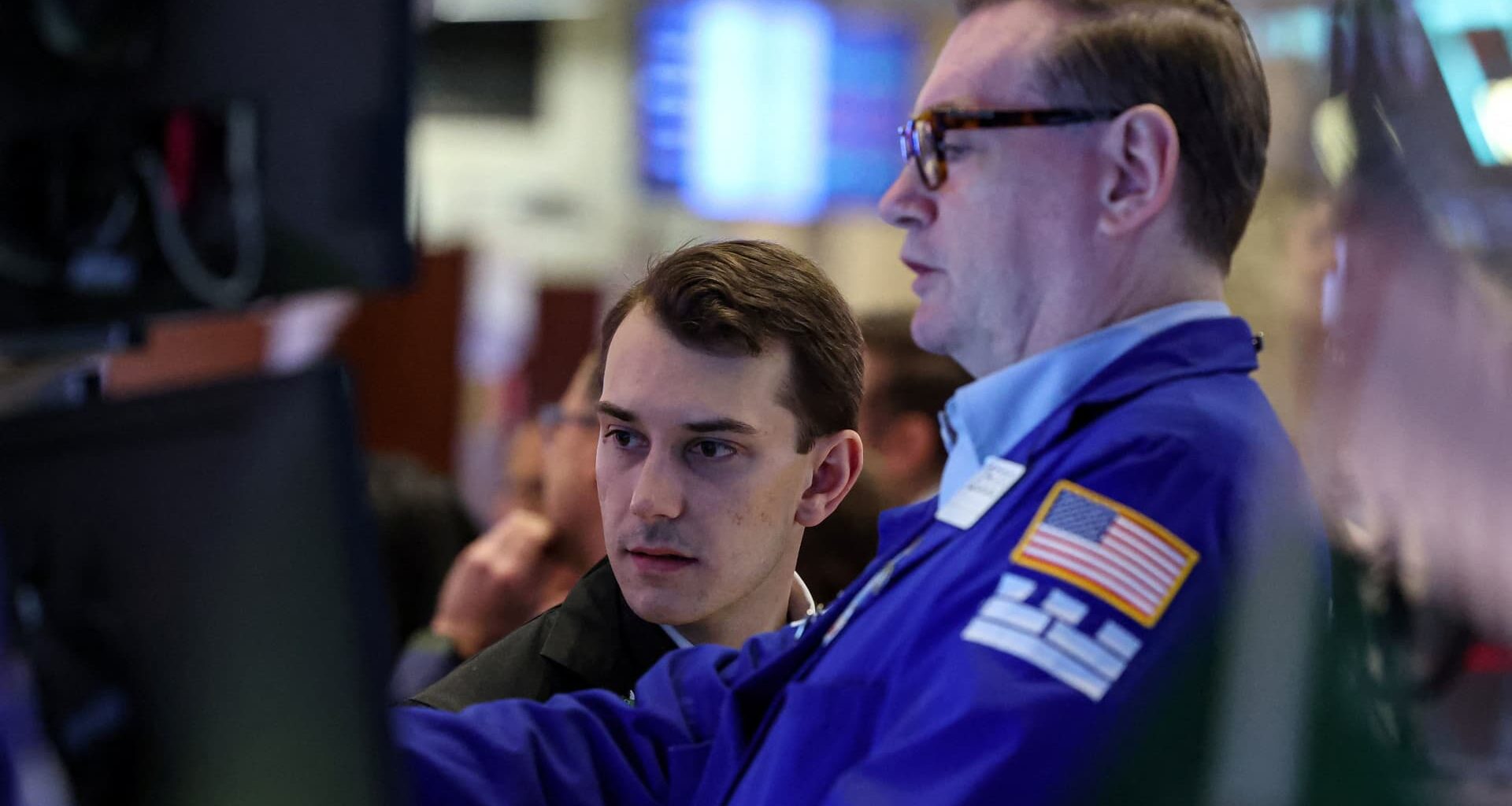
Traders work on the floor at the New York Stock Exchange (NYSE) in New York City, U.S., April 20, 2026.
Brendan McDermid | Reuters
U.S. stock futures rose early Tuesday after the Nasdaq Composite snapped a 13-day win streak, as traders monitored the Iran war with a ceasefire set to expire Wednesday.
S&P 500 futures and Nasdaq 100 futures added 0.5% each. Futures tied to the Dow Jones Industrial Average gained 333 points, or 0.7%.
UnitedHealth shares jumped more than 7% after the health insurance giant’s first-quarter results surpassed Wall Street’s expectations. The company also hiked its earnings outlook. GE Aerospace climbed more than 1% on on better-than-expected Q1 results.
Adding to the gains in futures was a decline in oil prices. West Texas Intermediate futures fell 0.4% to above $89 per barrel. Brent futures shed 0.5% to trade above $95 a barrel.
To be sure, the situation in the Middle East remains fluid, with President Donald Trump saying Tuesday in a Truth Social post that Iran “Violated the Cease Fire numerous times!”
The major averages slipped on Monday as tensions increased once again over the weekend, with the Nasdaq Composite snapping its longest winning streak since 1992.
Still, investors remain bullish on the broader picture ahead for equities.
“We still think that the market is going to overshoot to the upside. We have our upside target of 7,300 by July, which is basically our year-end target,” Ohsung Kwon, chief equity strategist at Wells Fargo, said on CNBC’s “Closing Bell: Overtime” on Monday afternoon. “I think the economy is going to be fine for the next three months.”
Kwon’s 7,300 price target for the S&P 500 would represent an upside of 3% from the index’s Monday close.
Investors will monitor on Tuesday Federal Reserve chair nominee Kevin Warsh‘s confirmation hearing. In his prepared statement to the Senate Banking committee, released Monday, the former Fed governor said the U.S. central bank must be largely independent of political influence, while also staying focused on its primary goals.
“The Fed must stay in its lane,” he said. “Fed independence is placed at greatest risk when it strays into fiscal and social policies where it has neither authority nor expertise.”