
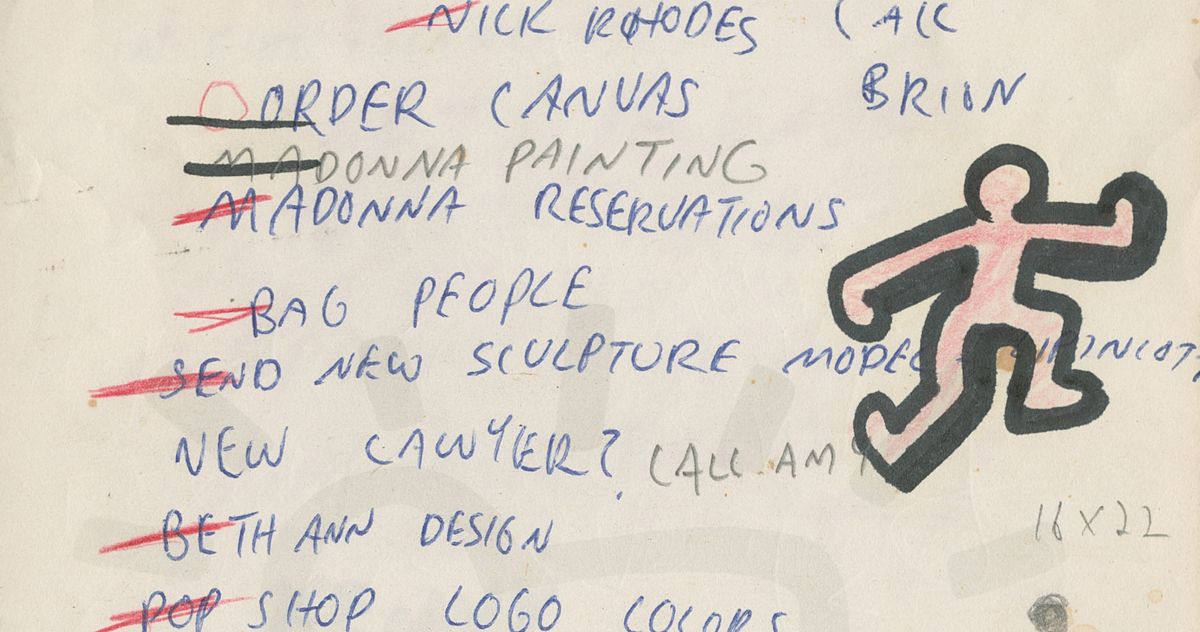
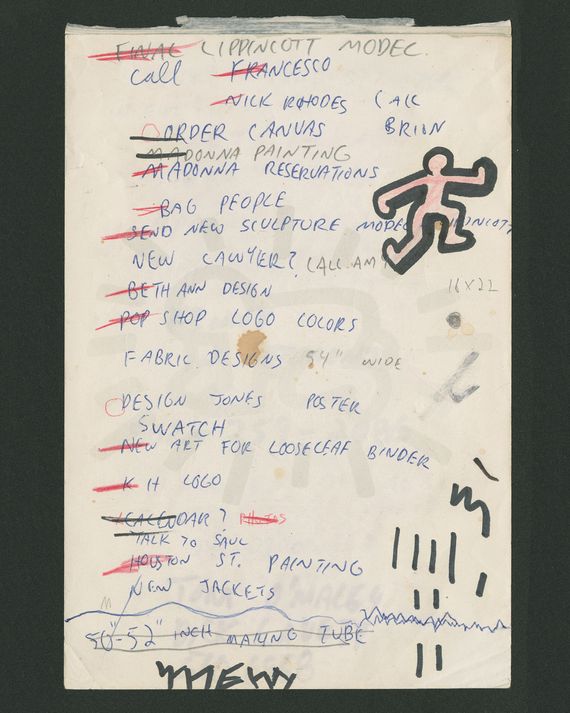
Ca. 1985: Keith Haring drew colorful watch faces for Swatch in an early version of the artist-and-commerce collaborations that have become ubiquitous.
Photo: Courtesy of the Keith Haring Foundation Archives © Keith Haring Foundation
It’s easy to form an impression of Keith Haring as a loosey-goosey and spontaneous artist, chalking his way through the subways in throwaway bursts of inspiration, then going out to the Paradise Garage with Grace Jones. A dip into his archive shows otherwise. Each morning, he made himself a to-do list and crossed out items as he completed them as straightforwardly as any middle manager. Shopping-list tasks like “china markers” or “order canvas” sit alongside reminders like “paint sister’s baby furniture.”
Look a little more closely, though, and between those mundane lines, the other part of the job starts to emerge: the busyness of being a famous person. “Call Yoko,” “Write to Whoopi,” “Jenny Holzer 3:30.” One beguiling note from 1984 reads “Steven Jobs, Apple Computer, Calif.,” with a Cupertino phone number. It’s a vivid picture of creative-industry success, 1980s style. There’s work to be done, the day-to-day management of art celebrity, logo colors to be finalized for the Pop Shop — then, afterward, you call your friend Madonna’s office to secure tickets for her next show. (That was in 1985 for the Virgin Tour when it came to Radio City Music Hall. The Beastie Boys opened for her.) In these papers, here featured for the first time, you encounter fame that has endured (“Andy” comes up repeatedly), and fame that’s more art insider (John Giorno), and fame that is evocative of the New York when downtown meant something very specific (“Michael Musto interview”).
My Lost Art World
There are about 400 of these lists preserved in the archives of the Keith Haring Foundation, most of them from the mid-to-late 1980s. A couple of them make passing reference to “Julia,” and that’s Julia Gruen, who was Haring’s studio manager from 1984 until the artist’s death six years later and then ran his foundation for decades. Today, she is the chair of the foundation’s board. “Keith usually didn’t get into the studio until noon,” she explained when I recently asked her about the lists. “During the day, he was really trying to fulfill a lot of tasks that were more business oriented. When he made a note about designing a T-shirt, it was something that he felt there was a deadline on. That is what he tried to focus on in the beginning of the day.” As he knocked off those tasks, the afternoons often grew less structured and more social: “He loved to have people come visit him at the studio, so there were often people dropping by. And so it was getting a certain amount of work done that was more on the business side, admin side, and then hanging out with friends, going out to lunch, things like that. As the day progressed, he would get to a point where he wanted to — or had to — make drawings or paintings. A lot of that was done at night.” The clubbing and nightlife happened after that second shift. “I worked a regular day, and oftentimes I would leave at six or seven, and I would come back the next day at ten, and there would be three or four paintings on the wall that he had done the night before.” From just one evening? “In the subway stations, because it was against the law, he had learned to work quickly.”
Haring seems to have genuinely liked the busywork of his days. “And unlike other artists,” Gruen said, “he was extraordinarily organized in his studio. He was very tidy — not compulsive, but definitely tidy. And he was very disciplined about getting his work done. Not only what you see on the to-do lists but also creating.” That productiveness and work ethic is likely one reason he’s still so visible: Even though Haring died at 31, after a career that effectively lasted little more than a decade, he left behind an enormous volume of lively artistic output, from fine artworks to posters to Pop Shop buttons. “I don’t want to make him sound like a saint, because he wasn’t,” Gruen said, “but when he cared about something — making certain drawings, making gifts for people, making logos for all these charities that he worked with — he made a point of doing what had to be done.”
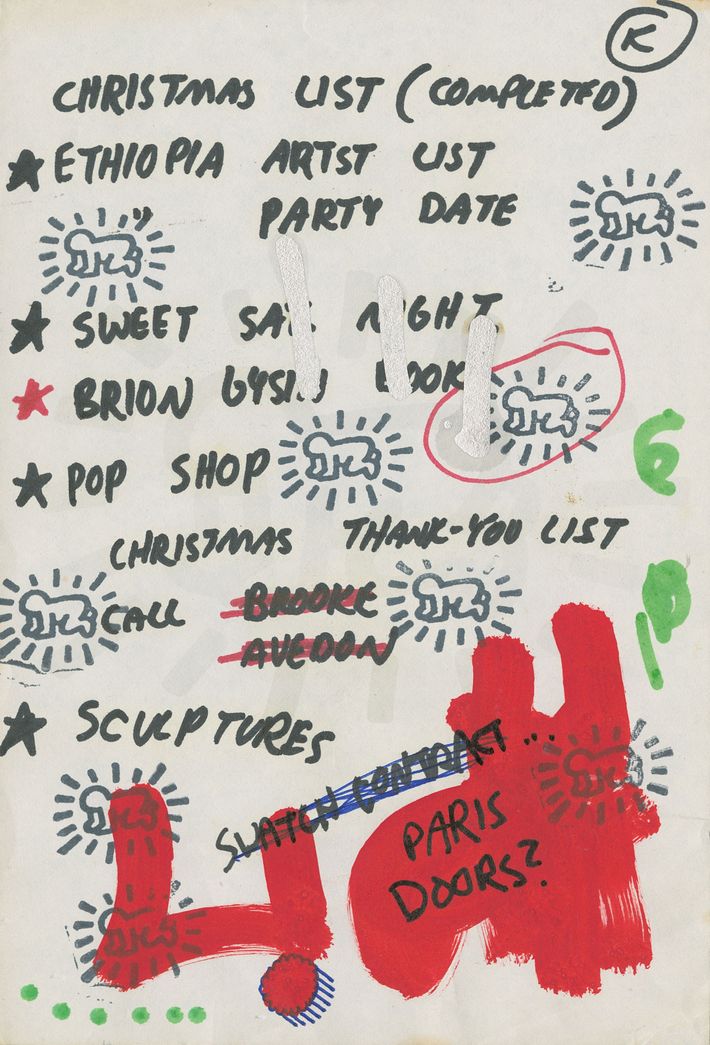
Ca. 1984: Richard Avedon photographed Brooke Shields with a Haring artwork for a poster.
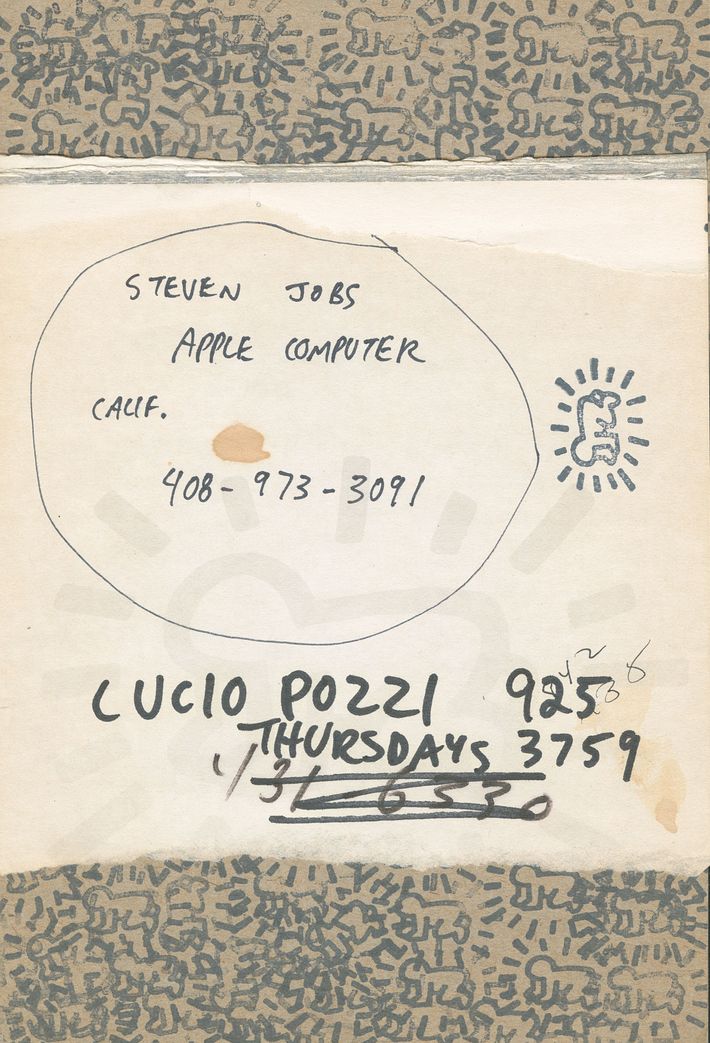
1984: During a party around this time at Yoko Ono’s Dakota apartment, Steve Jobs showed Haring, Andy Warhol, and Kenny Scharf how to use the Macintosh he’d given Sean Lennon for his 9th birthday.
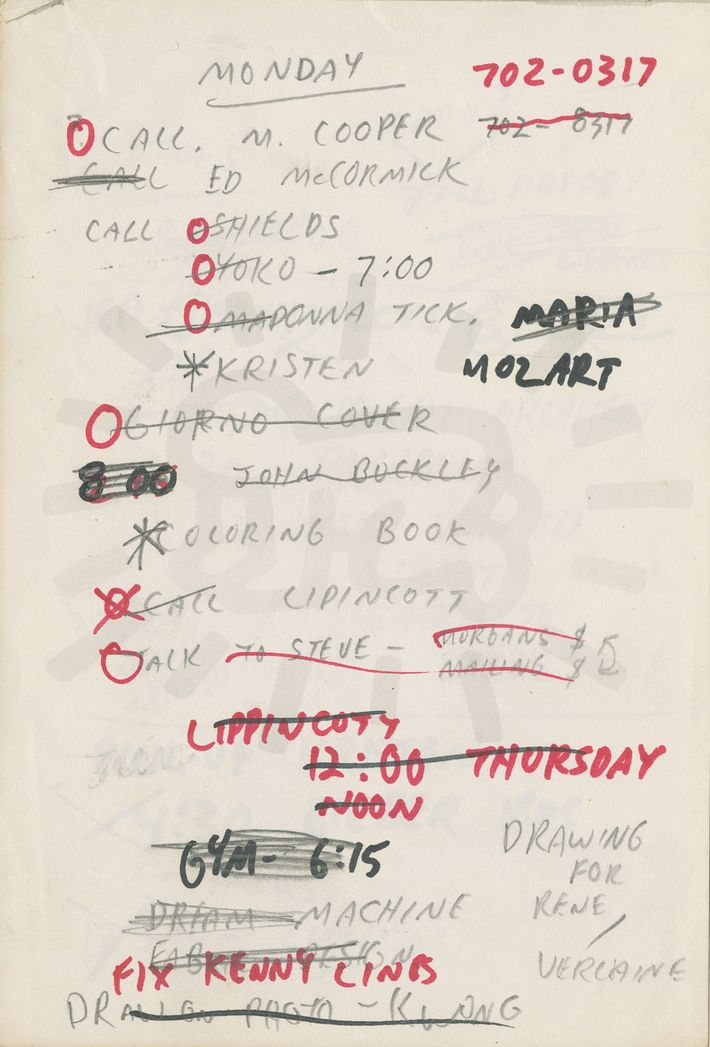
1985: Lippincott Sculpture in Connecticut fabricated Haring’s big metal works.
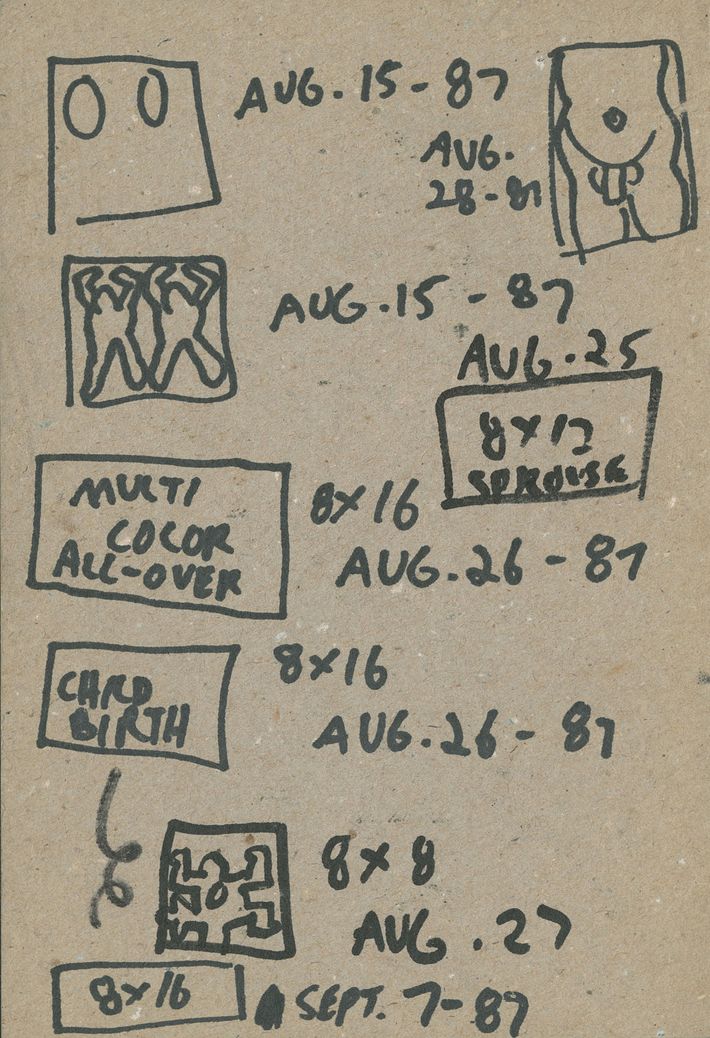
1987: Stephen Sprouse’s fall 1988 collection included a Haring-print fabric.
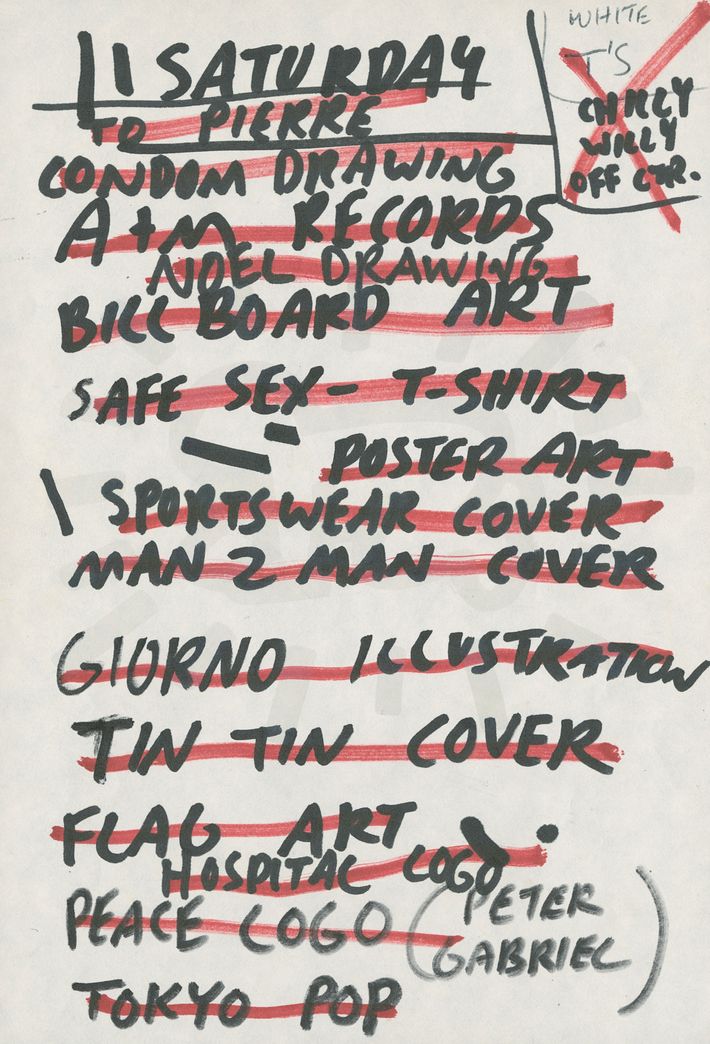
Ca. 1987: The condom drawing and safe-sex logo were among the AIDS-activism projects he did for groups like ACT UP. Haring received his AIDS diagnosis in 1988 and died in 1990 at 31.
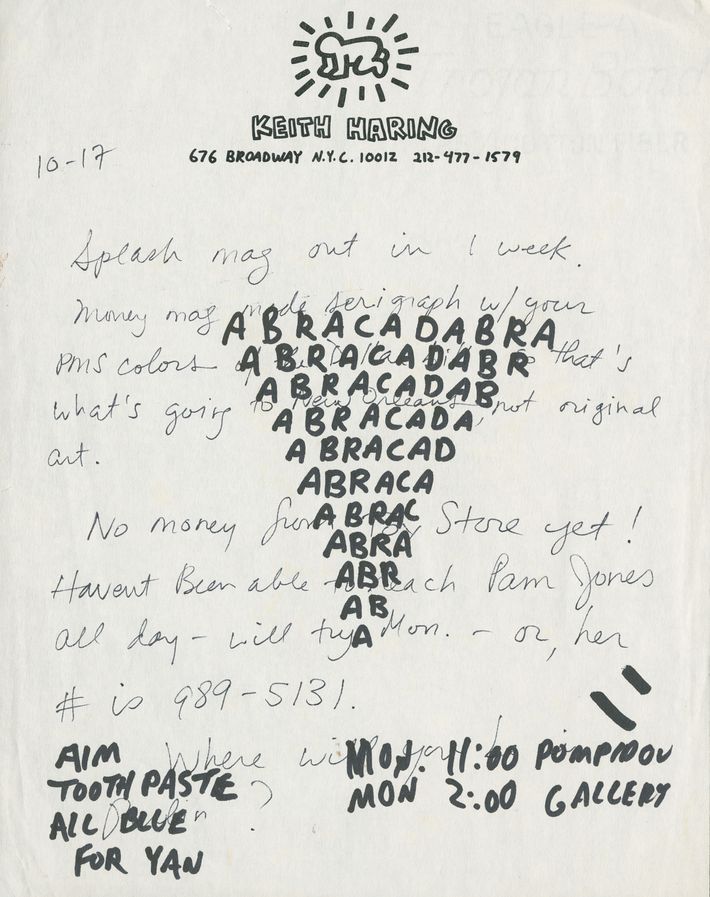
Ca. 1986: “Yan” is the Dutch artist Jan Rothuizen, who used that spelling as his early graffiti tag. “I had a craving for American toothpaste,” he says today, and when Haring visited him in Amsterdam, “he thought it was funny, but he did bring it.” Rothuizen remembers it as Crest rather than Aim.
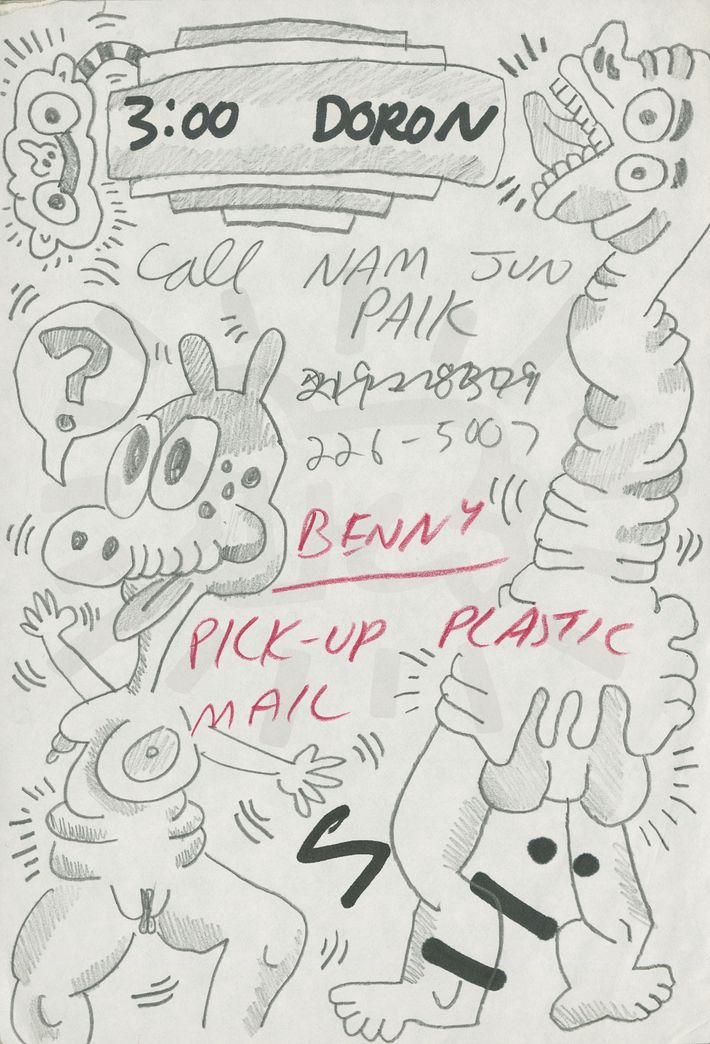
Undated, 1980s: Nam June Paik, the pioneering video artist, had a Whitney retrospective in 1982; “Benny” was likely Benny Soto, Haring’s assistant.
Photo: Courtesy of the Keith Haring Foundation Archives © Keith Haring Foundation
Thank you for subscribing and supporting our journalism.
If you prefer to read in print, you can also find this article in the April 20, 2026, issue of
New York Magazine.
Want more stories like this one? Subscribe now
to support our journalism and get unlimited access to our coverage.
If you prefer to read in print, you can also find this article in the April 20, 2026, issue of
New York Magazine.