
A minimalist art complex on a former cavalry base. A human-powered sculpture race through sand and water. Red-rock sandstone that glows orange at sunset. A wine festival that has repeatedly been voted the best in the country. The eight towns below stretch from the Chihuahuan Desert of West Texas to the Pacific shoreline of California. Each one runs on something specific, whether that’s a 340-acre art foundation, a dark-sky designation, a UNESCO World Heritage pueblo, or a 1,700-person town with more galleries than traffic lights. These are eight of the most captivating small towns in the country.
Marfa, Texas
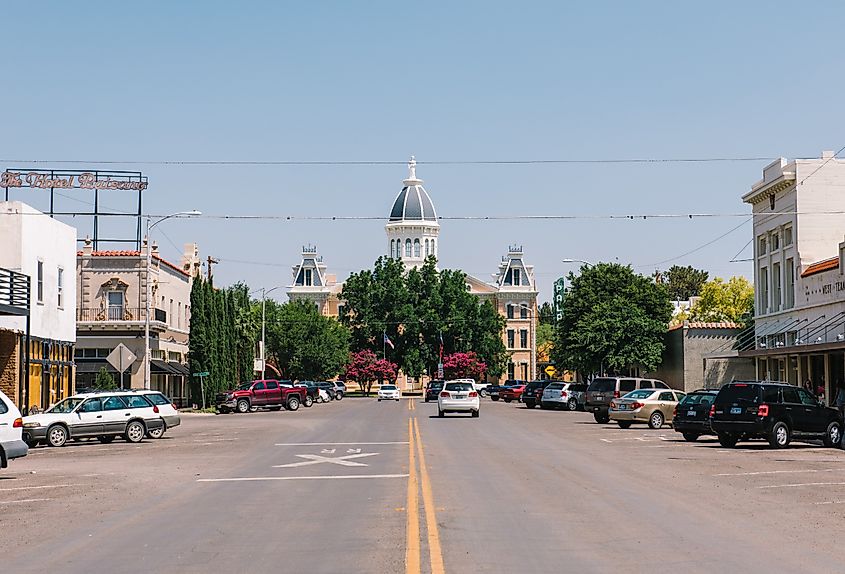 A view of the courthouse building in Marfa, Texas. Image credit Jacque Manaugh via Shutterstock
Marfa (population around 1,700) sits in the Chihuahuan Desert of West Texas at about 4,680 feet and has transformed over the past few decades from a small railroad town into one of the most unlikely art destinations in the country. The Chinati Foundation, founded in 1986 by minimalist sculptor Donald Judd on the grounds of the former Fort D.A. Russell, covers 340 acres with large-scale permanent installations by Judd, Dan Flavin, John Chamberlain, and others. Guided tours run most days of the week and usually book out in advance.
Beyond Chinati, Marfa holds a dense concentration of smaller cultural spaces, including Ballroom Marfa, which runs rotating contemporary art exhibitions and film programming. The Prada Marfa sculpture, a permanent installation by Elmgreen & Dragset disguised as a luxury storefront, sits about 26 miles northwest of town near the community of Valentine. Marfa also earned a spot in American film history when the 1956 film “Giant,” starring James Dean, Elizabeth Taylor, and Rock Hudson, was shot around town; the cast stayed at Hotel Paisano, which is still operating downtown.
At night, the Marfa Lights Viewing Area east of town on US-67/90 offers the chance to see the Marfa Lights, unexplained nighttime lights that have been documented in the area for well over a century. Proposed explanations have ranged from atmospheric refraction to distant vehicle headlights, but no single theory has fully accounted for the phenomenon. Marfa’s remote location and high elevation also make it one of the better stargazing spots in the country, with minimal light pollution in every direction.
Port Townsend, Washington
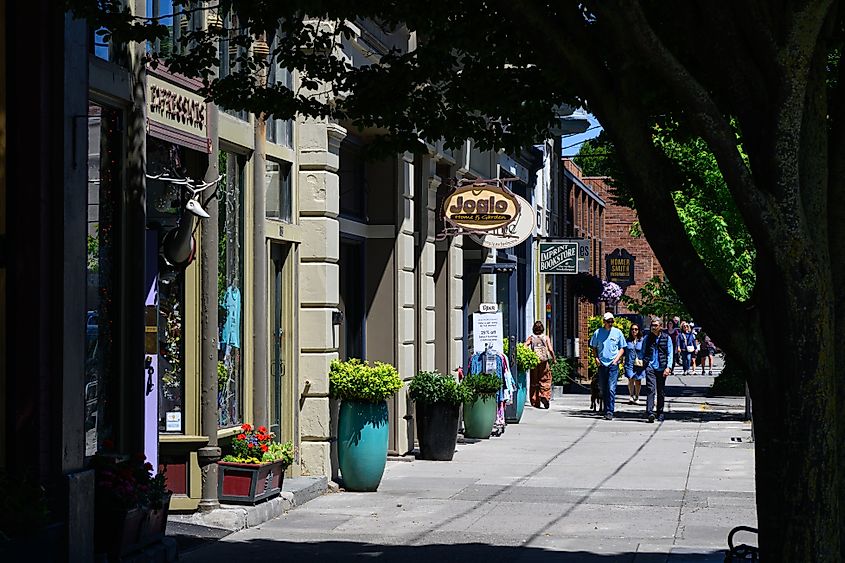 Port Townsend, Washington. Editorial credit: Ian Dewar Photography / Shutterstock.com
About two hours from Seattle depending on the ferry schedule, Port Townsend (population around 10,000) mixes Victorian architecture, a working waterfront, and a serious arts scene in a way that rewards more than a day trip. The town was founded as a seaport in 1851, and the south side still holds the Victorian residential core along with the 1892 City Hall, which now houses the Jefferson County Historical Society’s Museum of Art + History.
On the north side of town, Fort Worden State Park occupies a former military base that played Mayo’s barracks in the 1982 film “An Officer and a Gentleman.” Today the fort hosts a marine science center, a long calendar of arts festivals, and the Port Townsend Kinetic Sculpture Race, held annually, in which artist-built human-powered vehicles race through sand, water, and neighborhood streets. The Port Townsend Creative District covers the uptown and downtown historic areas, with venues like the Port Townsend School of Woodworking alongside traditional galleries including Port Townsend Gallery, Northwind Art, and Gallery 9 on Water Street.
Taos, New Mexico
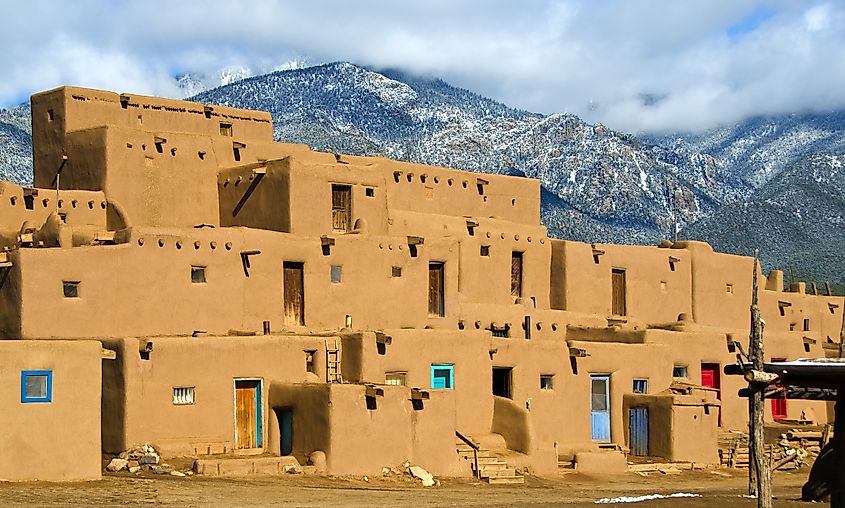 Taos Pueblo in New Mexico.
With just about 6,400 residents, Taos pulls far more visitors than its population would suggest. The Taos art colony was one of the first major art colonies in the American West, tracing to painters who arrived in the late 1890s and formed the Taos Society of Artists in 1915. The town now has more than 70 galleries, including the R.C. Gorman Navajo Gallery, plus museums like the Harwood Museum of Art.
Spiritually, Taos is unusual in the density of overlapping traditions in a small area. Taos Pueblo practices traditional Tiwa religion, Spanish colonial Catholicism arrived in the 1600s, and the Native American Church has a presence as well. Taos Pueblo itself is a UNESCO World Heritage Site and a living community at the base of the Sangre de Cristo Mountains. The annual San Geronimo Feast Day at the Pueblo, held September 29-30, is one of the most visible public celebrations on the calendar.
Just west of Taos on US-64, past the Rio Grande Gorge Bridge, the Greater World Earthship Community holds dozens of off-grid homes built from recycled materials. Earthship Biotecture runs self-guided tours, and several of the units are available as short-term rentals.
Bluffton, South Carolina
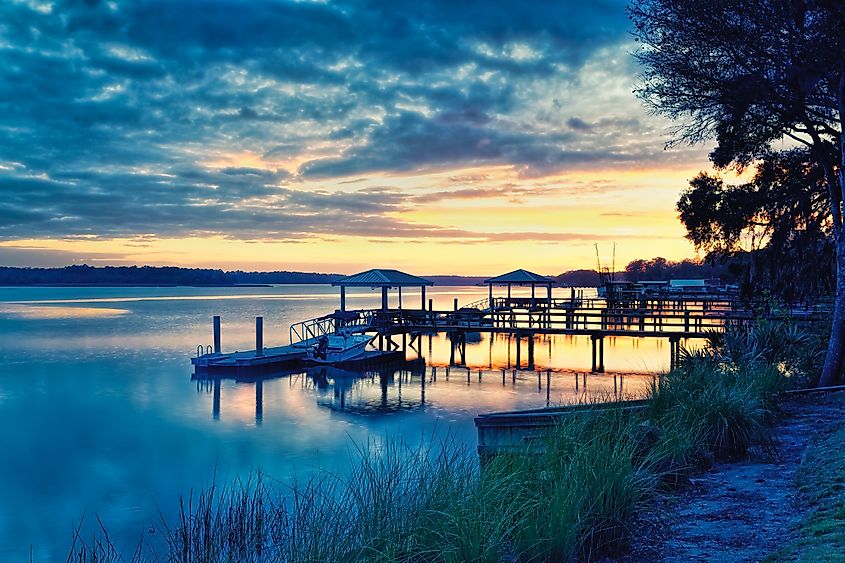 May River in Bluffton, South Carolina.
Bluffton (population around 28,000) sits in South Carolina’s Lowcountry along the May River. Old Town Bluffton is on the National Register of Historic Places, and a walking tour usually starts at the Heyward House Museum and Welcome Center, a farmhouse built around 1841 with enslaved labor. The town’s mix of pre-Civil War history, Lowcountry culture, and estuary ecology is what pulls most visitors in.
Nature is easy to access. The Palmetto Oaks Sculpture Garden covers about an acre of live oak and palm with metal sculptures by local artist Stephen Kishel. Victoria Bluff Heritage Preserve, a wildlife preserve south of town, holds pine-and-saw palmetto habitat with birds including yellow-throated warblers and painted buntings. The New River Linear Trail runs 3.4 miles along a former rail bed through swampland and hardwood forest, with frequent sightings of waterfowl, deer, and wild turkey. On the event side, the town runs Mayfest in spring, the Historic Bluffton Arts & Seafood Festival in October, and the Bluffton Christmas Parade and Tree Lighting in December.
Sedona, Arizona
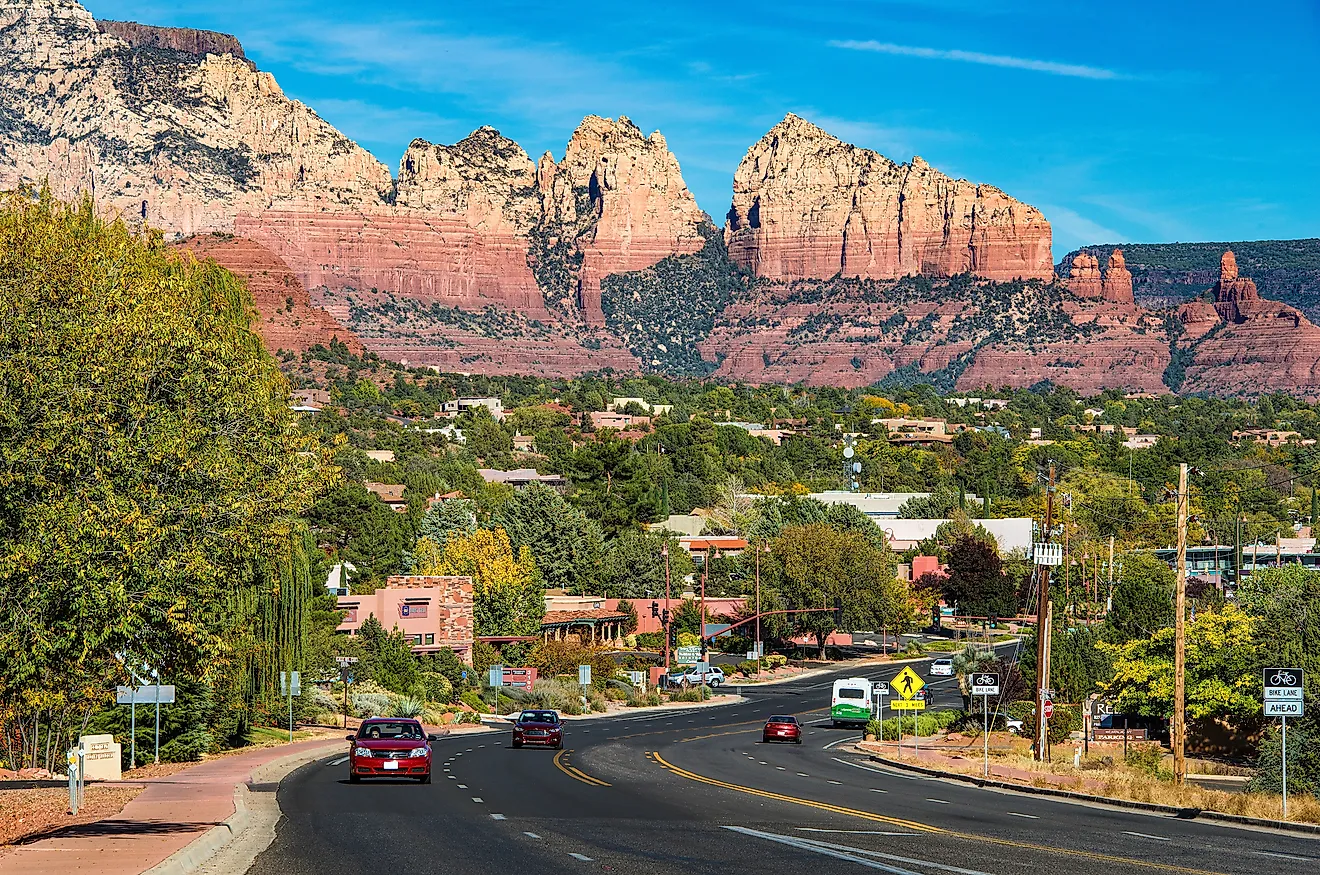
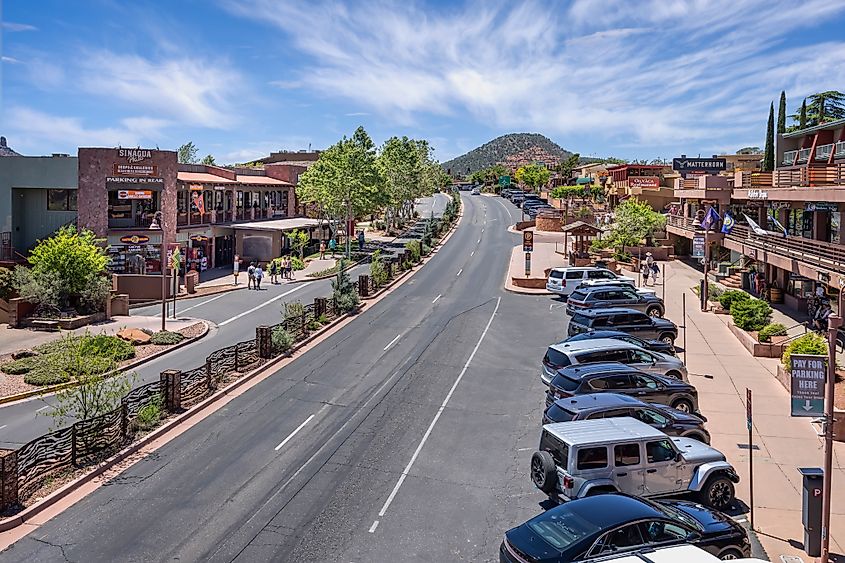 Uptown Sedona, Arizona. Editorial credit: Nigel Jarvis / Shutterstock.com
Sedona (population around 9,800) sits at about 4,350 feet in Arizona’s Red Rock Country along Oak Creek, and it pulls close to three million visitors a year. The area has over 400 miles of trails for hiking and biking, and the town is surrounded by about 1.8 million acres of national forest land, four wilderness areas, and two state parks (Red Rock and Slide Rock). The free Sedona Shuttle runs to the most popular trailheads and has cut down on the parking crunch that used to dominate weekend mornings.
The red rocks themselves are formed from Schnebly Hill Formation sandstone, and their color at sunrise and sunset is the main reason people drive in. Native communities have long considered the surrounding landscape sacred, and Sedona still draws visitors looking for spiritual renewal, particularly at the town’s well-known “vortex” sites. After dark, Sedona is an International Dark Sky Community, which means reduced light pollution and strong stargazing right from town. Winters are mild enough to keep trails open most of the year, though January lows regularly dip below freezing, so pack layers.
Palisade, Colorado
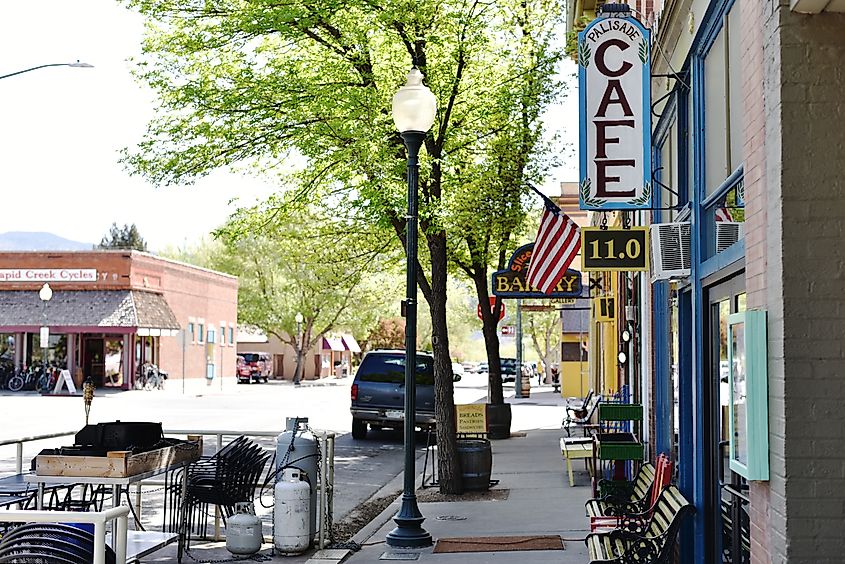 Palisade, Colorado. Editorial credit: Ben Harding / Shutterstock.com
Palisade (population around 2,500) is the wine-and-fruit town of western Colorado, with more than 30 wineries and a heavy concentration of peach, cherry, and apricot orchards. Grand Mesa, often cited as the world’s largest flat-topped mountain, rises to the southeast. The drive up the mesa stops at places like Stoney Mesa Winery, the Pioneer Town Museum in Cedaredge, and Land’s End Observatory, which gives a full panorama over the Grand Valley out toward the West Elk and San Juan Mountains.
For wildlife, the Little Book Cliffs Wild Horse Range is one of only three federally designated ranges in the country managed specifically for wild horses under the 1971 Wild Free-Roaming Horses and Burros Act. The 36,000-acre tract holds four major canyon systems and a mix of sagebrush, pinyon-juniper, wild horses, elk, mule deer, mountain lions, and black bears. Nine trails cross the area, and viewing and photography are the most common uses. Back in town, the Palisade Peach Festival in August, the Bluegrass and Roots Festival in June, and the Colorado Mountain Winefest in September (a multiple-time winner of USA Today’s Best Wine Festival) anchor the summer-to-fall calendar.
Clewiston, Florida
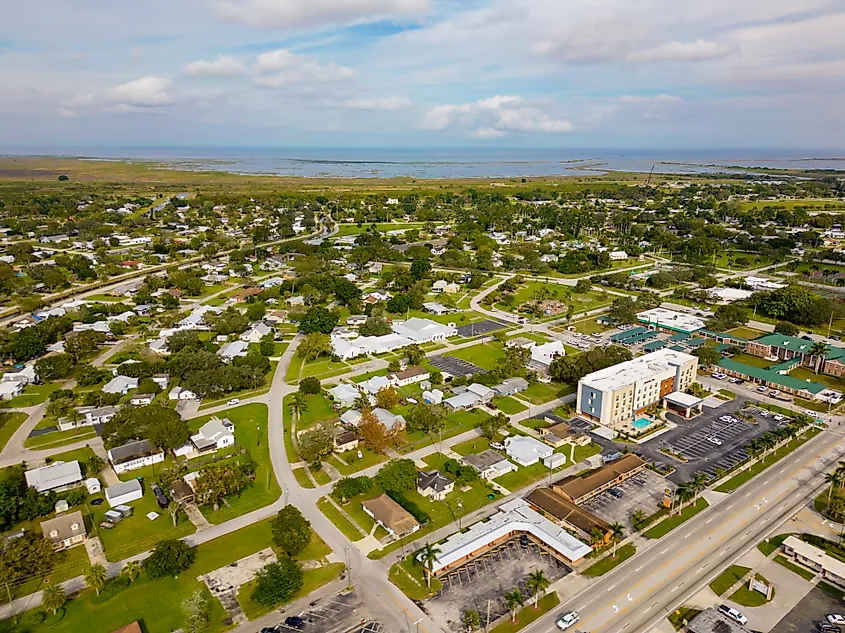 Clewiston, Florida, with Lake Okeechobee in the background.
Known as “America’s Sweetest Town” for its role in the sugar industry, Clewiston (population around 7,300) sits on the southwest shore of Lake Okeechobee, Florida‘s largest lake and a major destination for freshwater fishing. The Clewiston Sugar Festival every March is the main civic event and still frames the town’s relationship with Big Sugar for anyone passing through.
For outdoor time, Dinner Island Ranch Wildlife Management Area is about 45 minutes southwest of Clewiston and covers roughly 21,000 acres of pine flatwoods and prairies. Barred owls, roseate spoonbills, and white-tailed deer are all regular sightings, and the area is open to fishing, hiking, biking, horseback riding, and camping. For the Native American history of the region, the Seminole Tribe of Florida’s Big Cypress Reservation sits just south of Clewiston in the Big Cypress National Preserve, home to the Ah-Tah-Thi-Ki Museum, the Seminole Tribe’s cultural museum and a rare deep look at tribal history from a tribal perspective.
Carmel-by-the-Sea, California
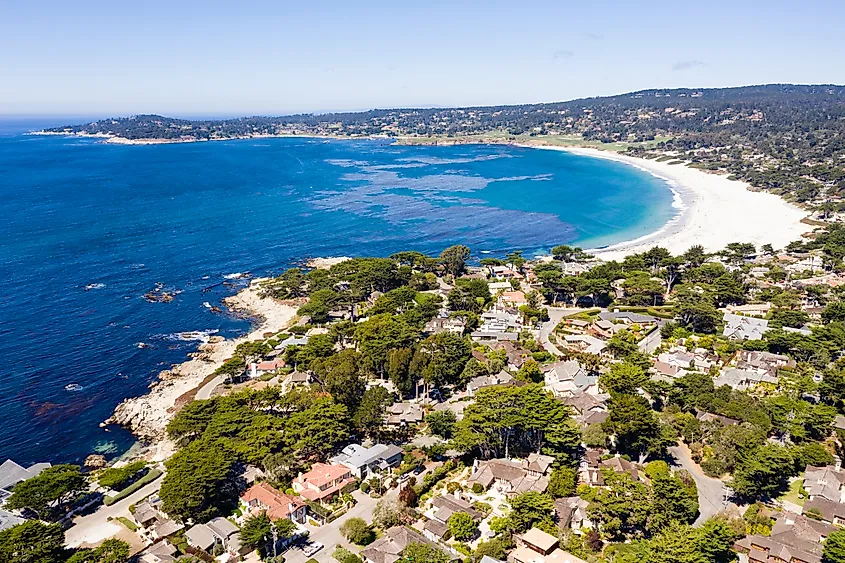 Carmel-by-the-Sea, California.
Carmel-by-the-Sea (population around 3,200) packs a white-sand beach, a 1771 Spanish mission, and a Bohemian art tradition into just one square mile of coastline. The town is known for its quirks: no streetlights in residential neighborhoods, no parking meters anywhere, and no home mail delivery, with residents picking up mail at the post office. This shows up in street life more than it sounds like it should.
Carmel Beach is the main draw on the ocean side, good for sunbathing, surfing, and a walking path along the bluffs. A self-guided historic walking tour takes in pine-lined streets past landmarks including the First Murphy House, the Harrison Memorial Library, and the Pine Inn. The Carmel Mission Basilica, founded in 1770 by Junípero Serra and relocated to its current site in 1771, is one of the most carefully restored Spanish missions in California and is open to visitors. The art scene runs year-round. The Carmel Art Walk opens 14 artist-owned galleries the second Saturday of each month, and the Carmel Bach Festival brings serious classical programming to town every July.
What Makes A Small Town Work
The eight towns here share the things small towns do best: specific local identity, a walkable scale, and a calendar that gives people reasons to show up. Marfa’s contemporary art scene in a West Texas ghost town, Port Townsend’s kinetic sculpture race, Taos’ overlapping religious traditions, Bluffton’s Lowcountry estuaries, Sedona’s dark-sky designation, Palisade’s wine country, Clewiston’s sugar industry, and Carmel’s car-light coastline all make sense only because the towns are small enough to have a point of view. That’s the reason to visit, and the reason to stay an extra day.