
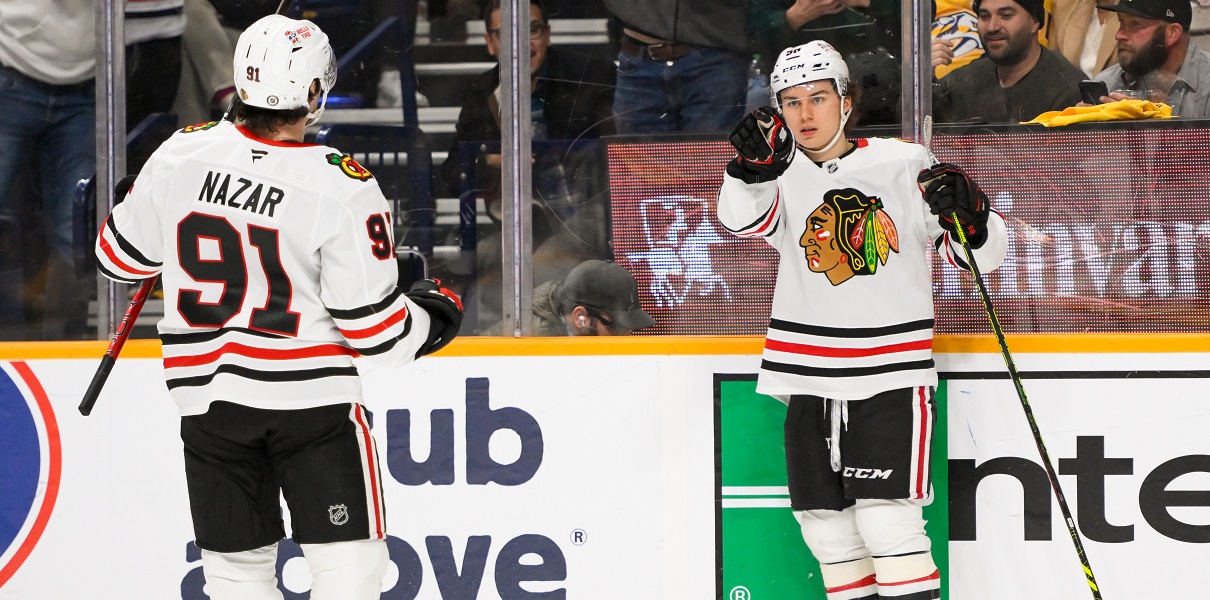
After making 11 picks in the first round alone in the last four NHL drafts, the expectation is that the Chicago Blackhawks have a lot of talent coming. And those skilled players have started making their way to the professional ranks and impacting the NHL roster. Blackhawks general manager Kyle Davidson has now signed 19 of the 38 players he has drafted in his first four years on the job.
The young Blackhawks showed a lot of flashes of excitement this past season. They also showed a lot of frustrating play as the roster learns and adjusts to the NHL in real time. With those ups and downs came stretches of offensive brilliance. It also saw a lot of scoring droughts from guys all over the roster.
Which led to the biggest talking point heading into the summer being how the Blackhawks’ offense can take a big step forward next year.
The Blackhawks scored 210 goals during the 2025-26 regular season, which tied the Vancouver Canucks for 30th in the NHL (read: second-fewest). That’s not a good number (2.56 per game).
They certainly need to at least get closer to the middle of the league in scoring to have a chance at the playoffs in 2027 — a goal many of the players expressed to us in their exit interviews.
Over the past five years, here’s where the team that finished 16th in the NHL in total goals scored finished:
2025-26: Toronto Maple Leafs — 252
2024-25: Seattle Kraken — 245
2023-24: Kings/Coyotes — 254
2022-23: Pittsburgh Penguins — 261
2021-22: Rangers/Jets — 250
So the neighborhood of 250 goals feels like a reasonable target for the Blackhawks to aim for if they want to be at least in the middle of the NHL next season.
Where are the extra 40 goals going to come from?
 Terrence Lee-Imagn Images
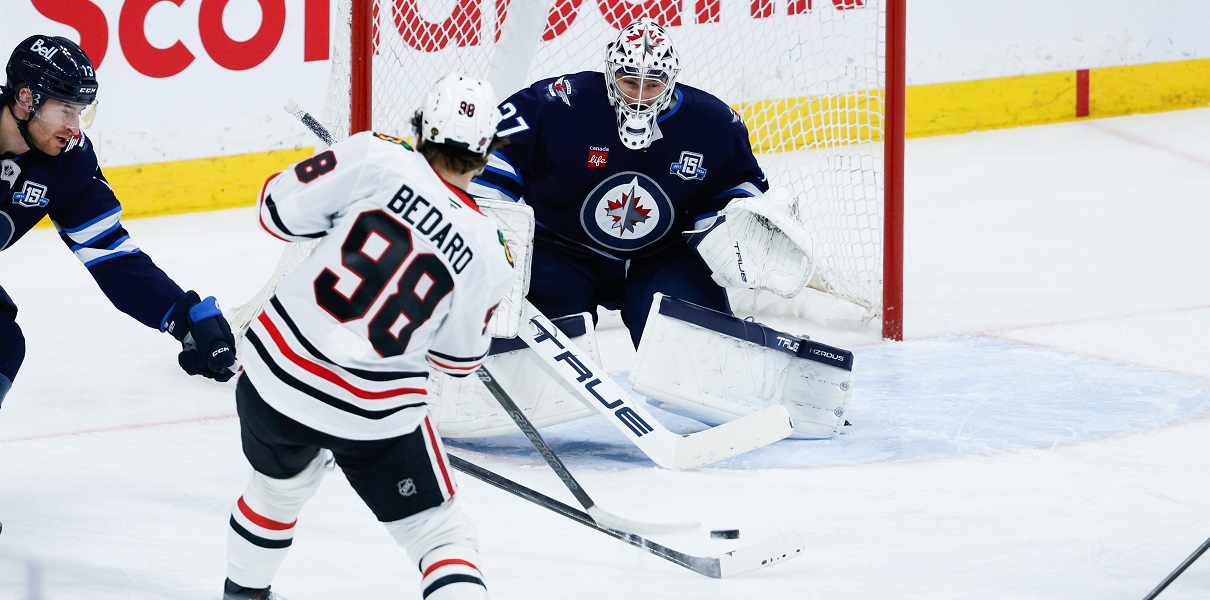
I’ll start by pointing out that the Blackhawks were one of four teams to get at least 150 points from players age 21 or younger this past season (with Montreal, San Jose and Anaheim). If we’re hoping to see continued development from the young Blackhawks, increased production from those guys will certainly help.
But a lot of the young Blackhawks didn’t play a full season, or were skating in a limited role. Consider the number of goals scored and games played by these skaters:
Connor Bedard — 69 games played, 30 goals (0.44 goals/gm)
Frank Nazar — 66 GP, 15 goals (0.23 goals/gm)
Nick Lardis — 41 GP, 10 goals (0.24 goals/gm)
Oliver Moore — 51 GP, 5 goals (0.10 goals/gm)
Anton Frondell — 12 GP, 3 goals (0.25 goals/gm)
If we simply project those scoring paces over 75 games (we won’t even assume all 82), those guys would score roughly 30 more goals next season. However — and this should be painfully obvious to anyone who watched the Blackhawks this season — it would be naive to simply assume that all things were equal throughout this past season.
When Bedard and Nazar got hurt, it took them time to get back to where they were before the injuries. Bedard scored 19 goals in 31 games before the shoulder injury (0.61 goals/game). From March 1 to the end of the season, Nazar scored 8 goals in 23 games (0.35 goals/game).
The most frequent players to record an assist on a Bedard goal at 5-on-5 this season were Ryan Greene (5) and André Burakovsky (4). Bedard spent 580:54 on the ice at 5-on-5 with Burakovsky this past season. Bedard had five assists — all primary — on Burakovsky goals at 5-on-5 this past season.
For the sake of comparison, Bedard assisted on three of Lardis’ eight goals at 5-on-5. Bedard and Lardis spent a total of 131:52 on the ice together at 5-on-5 this season.
Better finishing from Greene could help as well. Even with missed opportunities, Greene scored 12 goals in 81 games in his first full professional season — and spent the entire season in the NHL. He certainly benefitted from spending a significant amount of time on a line with Bedard, but generated scoring chances even while skating away from the Blackhawks’ best offensive threat.
Simply put: more skilled players playing together can lead to more goals. And more games played by skilled players will lead to an increase in goal scoring.
But can the Blackhawks assume at least 40 more goals next season just by banking on experience paying dividends from their young players? No.
Keep in mind, they’ll have to replace 17 goals from Ilya Mikheyev if he leaves as a free agent. And we can’t bank on the same production from veterans from one year to the next; Ryan Donato went from a career-best 31 goals in 2024-25 to 15 — more in line with his career average — this past season.
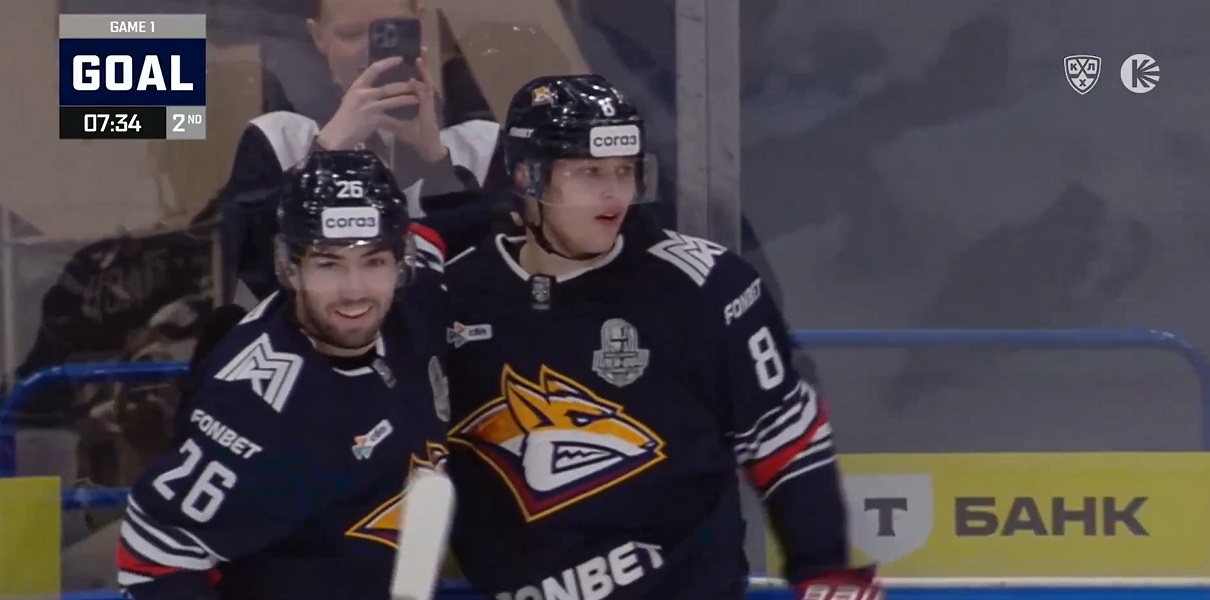
The great unknown(s) in this equation are who might be added to the Blackhawks’ offensive mix before next season begins. If/When he signs, what will Roman Kantserov add to the offense? He put up numbers in the KHL this season that have drawn comparisons to Kirill Kaprizov. Kaprizov has been a pretty safe bet to score at a 40-goal pace since arriving in Minnesota at age 23; Kantserov will turn 22 in September. (No, I’m not penciling him in for 40 goals. But he’s good.)
If the Blackhawks remain with one of the top two picks in the 2026 NHL Draft, they’ll have the opportunity to select one of Gavin McKenna or Ivar Stenberg — both extremely skilled forwards who could both be in the NHL from the start of the regular season. Adding one of those two and Kantserov would give the Blackhawks’ top-six a completely different feel. It would also add length to the Blackhawks’ scoring, with one of Lardis or Tyler Bertuzzi likely being bumped to a third line role.
Considering those options is exciting. But neither is set in stone — yet. And there are always going to be variables that come into play, like losing in the draft lottery or (heaven forbid) more injuries.
The great news is the Blackhawks have plenty of draft assets at their disposal to be aggressive in the trade market this summer. If the right player — yes, I have heard all of the rumors about Matthew Knies, too — becomes available, that’s another factor that could change the complexion of the Blackhawks’ offense next year.
There should be an increase in offense from the young Blackhawks. They should sign Kantserov and add him to the lineup. And more experience playing together should help the team produce more effectively.