
(Credits: Far Out / Alamy / Sun Records)
Thu 23 April 2026 16:00, UK
Rock stars can’t be found on any old street corner, and even during a rock and roll age as productive as the early 1970s, truly gifted frontmen were in desperately short supply. Nevertheless, it is difficult to imagine anybody – regardless of their credentials – turning down job offers from groups as iconic as The Doors or Deep Purple, never mind both.
Both groups, after all, were firmly on the upper echelon of the rock and roll pyramid during the early 1970s. Although the ‘peace and love age’ had largely subsided, The Doors were still riding high off their anarchic blend of jazz and psychedelia, with their frontman and rockstar archetype Jim Morrison typifying the counterculture spirit in every fibre of his being. Deep Purple, meanwhile, were at the forefront of the hard rock realm, and their ‘Mark II’ line-up saw them come into their own, spurred on by domineering heavy riffs.
Yet, despite all of that success, both bands were in the market for a new frontman during that period. The Doors, in the tragic context of Jim Morrison’s untimely death in 1971, needed somebody to fill his inherently irreplaceable shoes, although most audiences would have surely understood if the rest of the band had dissolved entirely – you can’t have The Doors without Morrison. Meanwhile, Deep Purple’s ‘Mark II’ line-up had come crashing down in 1973, with the clouded departure of Ian Gillan following years of rising tensions and rock and roll fatigue.
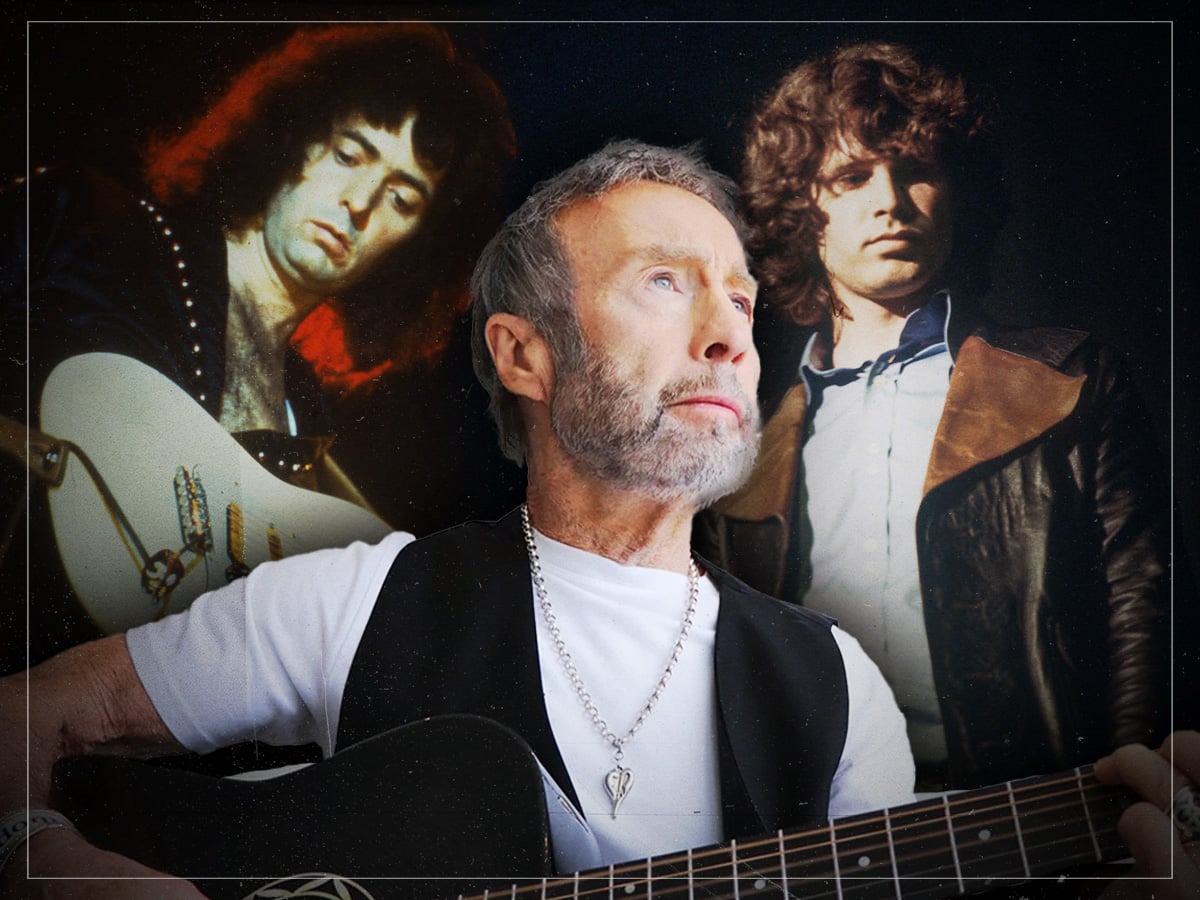
Bizarrely, both groups saw their salvation in the talents of the same man: Paul Rodgers. A defining rock and roll frontman, then of the cult hard rock outfit Free, the Middlesbrough-born vocalist certainly had the credentials to fit with either The Doors or Deep Purple, with Free having rivalled even Led Zeppelin during their early years both in terms of quality and commercial prowess.
 (Credits: Sun Records)
Free disbanded for the first, though not the last, time in 1971, around the same time that The Doors were recruiting for a new frontman, and the hippie heroes were so serious about getting Rodgers on board that they sent Robby Krieger across the Atlantic to recruit the vocalist in person. “At that time, I had buried myself in the country, working on things,” Rodgers told Uncut in 2011, “And they couldn’t get a hold of me.”
As for whether he even considered the possibility of joining the Doors, the frontman continued, “I dunno. It’s hard to say, looking back. But I think not.”
He explained, “I tend to form bands, that’s what I do. Although it’s always flattering to be asked.”
In the end, Krieger and Ray Manzarek ended up taking on vocal duties themselves, with varying degrees of success, which culminated in the band’s disbanding two years later, in 1973.
That was the same year that Free disbanded once again, having gotten back together the year prior. This time, it was the recently Gillan-less Deep Purple who came knocking on Rodgers’ door. “Free had played with Deep Purple in Australia and it was our very last show,” he once told the Houston Press. “I got along really well with [Purple] keyboardist Jon Lord and we exchanged numbers.”
Once again, though, Rodgers had other plans: “Later, I got a call to [join], but I was forming Bad Company at the time, so it wasn’t possible,” he said. That explanation certainly tracks with his reasoning for rejecting The Doors two years prior, preferring to start completely afresh rather than join a pre-existing band with a pre-existing sonic manifesto.
Nevertheless, the idea of a Paul Rodgers-fronted version of either The Doors or Deep Purple remains one of the great ‘what-ifs’ of the 1970s rock realm, though admittedly it’s easier to imagine his performance style fitting in with Purple than the American counterculture heroes.
