
String of acquisitions reveals ŌURA’s bigger play: turning fragmented health data into real-time, AI-driven guidance for everyday longevity.
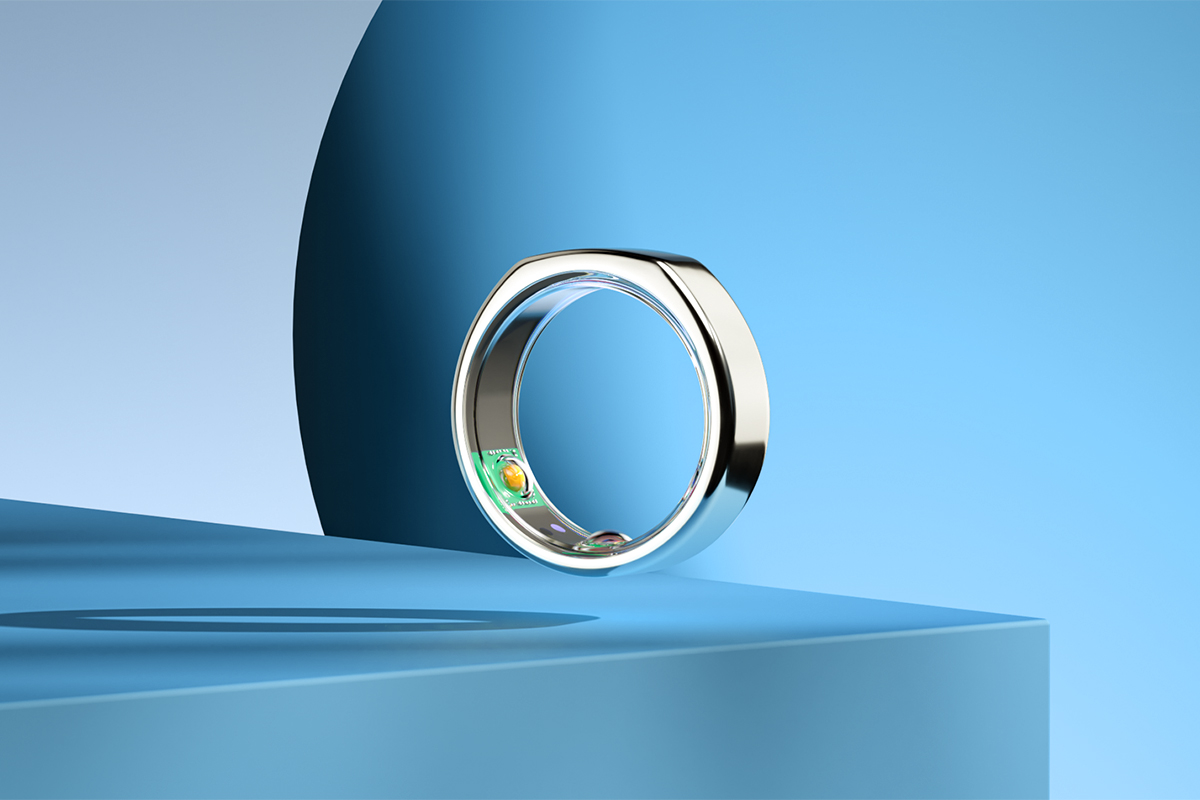
What’s happening at ŌURA right now is huge. On the surface, the company is still what most people know it for: a sleek smart ring that tracks sleep, recovery and daily activity. But underneath that familiar product, a different story is taking shape, one that looks like a builder of health infrastructure.
ŌURA’s latest move, acquiring Galen AI, makes that shift harder to ignore [1]. Founded in 2025 by Stanford computer science graduates, it is designed as a kind of personal health interpreter. It pulls together medical records, lab results, medications and wearable data into one place.
“As we shape the next era of Oura, we’re investing in world-class talent to help us push the boundaries of what AI can do for personal health,” said Tom Hale, CEO of ŌURA. “Galen AI’s founders bring a rare combination of health domain knowledge, AI expertise, and product vision, strengthening our ability to deliver more personalized, more meaningful health insights to more people.”
Why your health data still doesn’t make sense
Most people already have access to a surprising amount of health data. The problem isn’t access, but interpretation.
Your blood test might tell you something is off. Your wearable might show poor sleep. Your prescriptions hint at a longer-term issue. However, these signals rarely communicate with one another since they sit in separate apps and systems, like conversations happening in different rooms.
What Galen AI tries to do is bring those conversations into one space and, more importantly, make sense of them.
“We started Galen AI to help people make sense of fragmented health data and turn it into meaningful, everyday action,” said Viraj Mehta, co-founder of Galen AI.
“Joining Oura allows us to bring that work to scale with a team that shares our commitment to clinical rigor and privacy,” added Priyanka Shrestha, co-founder of Galen AI.
Meaningful, everyday action is important. For all the progress in digital health, that’s still the missing link. Data is abundant; clarity is not.
 Not just one deal – an emerging pattern
If this were ŌURA’s only acquisition, it might read as opportunistic. It isn’t. The company has been steadily assembling pieces of a larger system:
Doublepoint, bringing gesture-based interaction – small, almost invisible ways to control technology [2]. Veri, focused on metabolic health and how food impacts the body in real time [3]. Sparta Science, adding performance and injury-risk analytics, particularly at scale [4].
Individually, these look like different bets, but they actually feel coordinated. ŌURA now sits atop multiple layers: sensors (the ring), metabolic inputs, performance data and, increasingly, clinical information. Add AI, and the company isn’t just collecting signals; it’s trying to translate them into decisions.
With more than 5.5 million rings sold and a valuation hovering around $11 billion, it has the reach to test whether that translation actually works in the real world.
From tracking to guidance
For years, wearables have lived in the “tracking” phase. Steps counted, sleep scored, heart rates logged. It’s useful, but often passive. ŌURA seems to be pushing toward guidance, something more active. Think of it this way: tracking tells you what happened, while guidance tries to explain why it happened and what to do next.
That’s where this stack of acquisitions starts to make sense. A ring alone can’t tell the full story. Neither can a lab result, a glucose spike, nor a performance metric. However, when stacked together, they start to form a narrative. AI, in theory, becomes the storyteller.
The risk, of course, is that the story becomes overwhelming or overly prescriptive. Health is messy, personal and often unpredictable. Reducing it to neat recommendations can be helpful (or misleading) depending on how it’s done.
ŌURA’s emphasis on “clinical rigor” suggests it’s aware of that tension. Whether it can maintain that balance at scale is another question.
The rise of ambient health
Interaction is another layer to this strategy that’s easy to miss. With Doublepoint’s gesture technology, ŌURA is hinting at a future where you don’t actively “use” your health tech; it simply exists around you. Small movements, subtle prompts, quiet insights. It’s a move away from dashboards and notifications, toward something more ambient.
If we look at it, the biggest barrier to long-term health tracking is fatigue. People stop engaging when systems demand too much attention. If ŌURA can make health guidance feel less like a task and more like a background process, it could extend how long people stay engaged. That’s where real impact happens.
What this means for longevity
In longevity, there’s a tendency to focus on new drugs, new therapies and new science. But the challenge has always been integration. We need tools to work together.
ŌURA’s acquisition spree is, at its core, a bet on integration as infrastructure. A system where everyday behaviors, biological signals and clinical data are part of the same loop. That loop is relevant because longevity isn’t built on one decision, but on thousands of small ones, made consistently over time.
If those decisions become easier to understand – if people can see, in near real time, how their habits shape their health – then longevity becomes something you can actually navigate. That’s the promise ŌURA is chasing. Whether it delivers will depend on execution. But the direction is clear: from devices to systems, from data to meaning and from passive tracking to something closer to partnership.
Photographs courtesy of ŌURA
[1] https://ouraring.com/blog/oura-acquires-galen-ai/
[2] https://ouraring.com/blog/oura-acquires-doublepoint/
[3] https://ouraring.com/blog/welcoming-veri-and-furthering-our-metabolic-health-ambitions/
[4] https://ouraring.com/blog/oura-acquires-sparta-science-to-expand-enterprise-capabilities/