
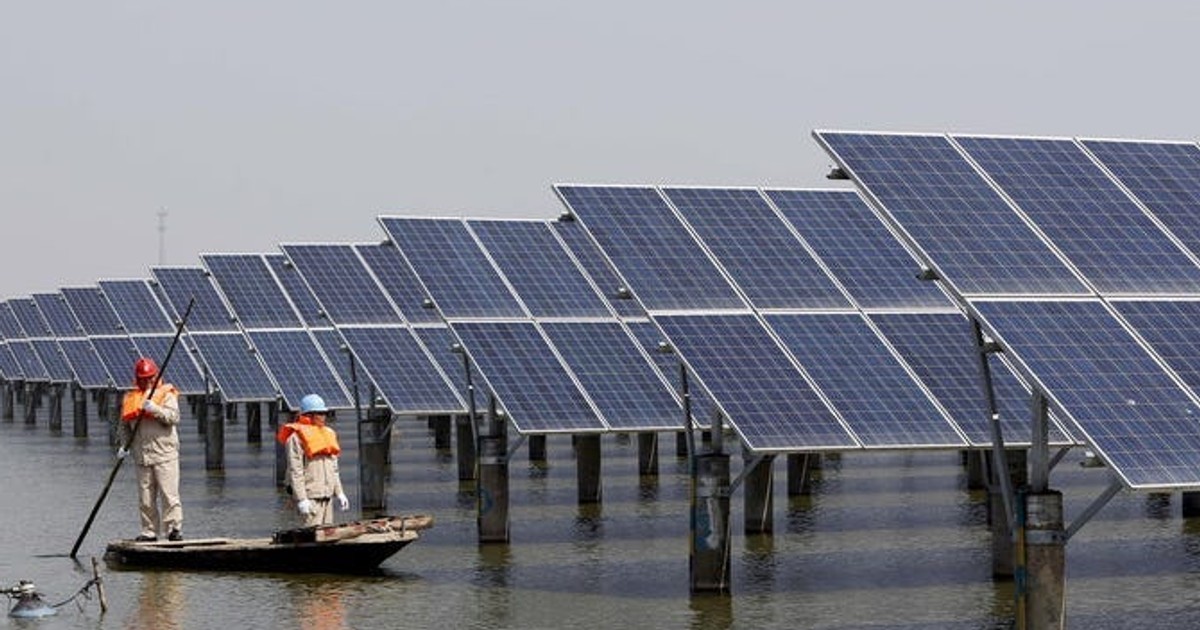
According to the Global Electricity Review 2026 by Ember, African countries imported 18.8 gigawatts (GW) of Chinese solar panels last year, up from 12.7 GW in 2024, a 48% increase.
The volume is equivalent to more than three times the capacity of Ethiopia’s Grand Ethiopian Renaissance Dam, the largest hydropower project in Africa.
The surge shows a broader shift in global trade. As tariffs rise in the United States and Europe, Chinese manufacturers are sending more solar exports to emerging markets, with Africa becoming a key destination.
North Africa is leading the expansion. Egypt imported 2.3 GW of Chinese panels in 2025, more than doubling its purchases from a year earlier.
Algeria recorded one of the fastest growth rates on the continent, increasing imports sixfold to 2.1 GW.
The trend is widespread. Egypt, Algeria, South Africa, Nigeria and the Democratic Republic of Congo each imported more than 1 GW of panels last year, while countries including Morocco, Kenya and Tanzania also posted significant volumes.
Price remains the main driver. Chinese solar panels are typically 20% to 30% cheaper than comparable products from other Asian suppliers, making them especially attractive in markets where financing remains tight and currencies are under pressure.
The impact is already visible in Africa’s power mix. Rapid solar deployment, alongside increased hydropower output from Ethiopia, helped push renewable energy ahead of coal in 2025, according to the report.
However, reliance on fossil fuels remains high in some regions. South Africa still generates about 81% of its electricity from coal, underscoring the uneven pace of the transition.
Globally, solar power is now the fastest-growing source of electricity. Generation rose nearly 30% in 2025 to 2,778 terawatt-hours, accounting for about three-quarters of the increase in global electricity demand. Solar also overtook wind, supplying 8.7% of global electricity.
For Africa, the surge in imports highlights a turning point. Cheaper solar is accelerating electrification and reducing dependence on fossil fuels, but it also deepens reliance on imported technology, raising longer-term questions about local manufacturing and energy security.