
Miles Howard is a Boston-based author and journalist. His Substack is Mind the Moss.
You know the situation. It’s been a bad few weeks at work, your family is going through a tough time, or perhaps you’ve just read one too many social media posts about the deteriorating state of the world. Someone suggests going for a walk to lower your cortisol a bit. It’s an invitation that many of us are used to hearing from friends, relatives, and colleagues. But what if that same advice came from your doctor? And not just as an antidote to your doomscrolling but as a prescription, in effect, to help address a range of health issues.
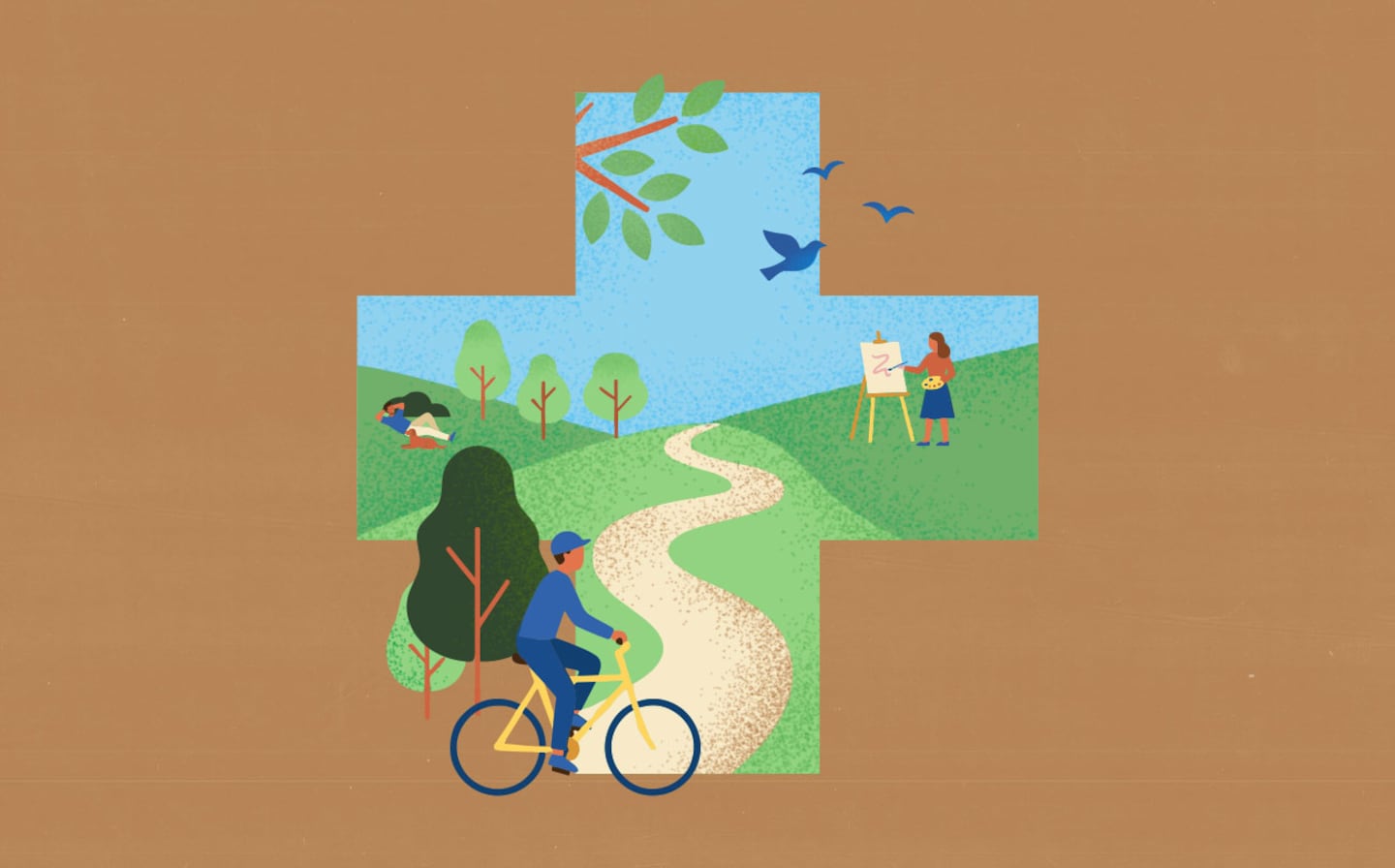
A number of health care providers have actually started doing just that: writing “prescriptions” for patients to get outdoors. (Many providers simply refer their patients to partner organizations for free programming, rather than actually write a prescription that is paid for by health insurance.) The concept of “social prescribing” has been kicked around public health circles for decades, but it started to gain mainstream traction about a decade ago, notably in the United Kingdom. Since then, social prescribing initiatives have popped up all over the world, including in the United States. The idea behind social prescribing is that health care providers can play a role in helping people harness the benefits of getting out and about and being social and active. The programs connect people to a wide variety of activities, from hiking groups to art classes.
Get The Gavel
A weekly SCOTUS explainer newsletter by columnist Kimberly Atkins Stohr.
The benefits of connecting to nature in particular are more than cardiovascular. In 2014, a study from Frontiers in Psychology found that exposure to green spaces leads to lower stress levels and alleviates depression symptoms.
I spend a lot of time outdoors and know taking a stroll through forests or parks can improve my mood — and I’m far from the only one who feels that way. But getting the health care system involved has the potential to help more people benefit.
Consider Malden, home to acres of green space for outdoor recreation, including the Middlesex Fells. Malden resident Darren Josey has partnered with the city government to launch The Great Malden Outdoors Rx, or simply Outdoor Rx, to take patients referred by health care providers at Cambridge Health Alliance and Molina Healthcare out into the woods. The $45,000 pilot program launched on April 18 and will run for four weeks. Once it receives a referral, patients can sign up for forest bathing (spending time in nature mindfully), birding, adaptive hiking, and outdoor art-making, all within the city of Malden. They also will be asked to fill out a World Health Organization survey on mental well-being after they participate in Outdoor Rx activities. If all goes well by the end of the pilot, Josey hopes the city will consider expanding the program. As Josey sees it, Outdoor Rx makes it far easier for people who might benefit most to get outside. “People of color, low-income people, immigrant communities, and people with disabilities are getting outside less than the national average,” Josey says. That discrepancy is what some researchers call the “nature gap.” Connecting with nature isn’t always as simple or painless as it might sound, especially for folks living with a disability or those who might not have the means to drive to an old-growth forest. This is a piece of the social prescribing puzzle that’s often overlooked: Health care providers may want their patients to spend more time outside, but they’re not always able to help with the specifics. That’s where initiatives like Outdoor Rx come in. A $7.6 million study on social prescriptions by researchers at the UK’s University of Sheffield found that small outdoor recreation organizations run by local volunteers are usually the best gateway to nature for people who aren’t already intimately acquainted with forests and bogs.
Still, one might ask — do you really need a doctor’s referral to get outside more? After all, taking a walk in Middlesex Fells is free, and it’s right in Malden residents’ backyard. Social prescriptions offer two things: guidance for those who truly need it, and perhaps even more important, people to hike with. I’d guess that for many people, it’s not the trees that are intimidating, but rather the prospect of going into the woods alone. These prescriptions are “social,” after all.