
In springtime, when we talk about the United States’ relationship with Japan, our thoughts turn to cherry blossoms. In today’s Deep Dive, we look back at the very first Japanese delegation to visit America in 1860, only months before our Civil War, and the 17-year-old samurai who quickly became an American obsession.
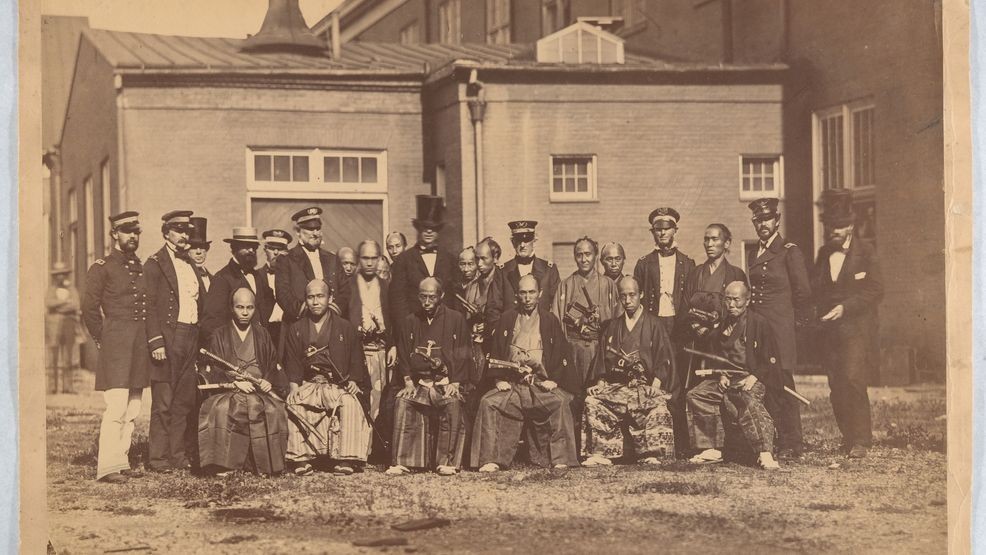 Matthew B. Brady, Japanese Embassy, Navy Yard, Washington, DC, 1860, Photo courtesy Metropolitan Museum of Art.
The above photograph, taken in 1860, shows the first Japanese diplomatic mission to the United States; a group that included a witty and warm 17-year-old named Tateishi Onojiro. The American press nicknamed the samurai “Tommy”.
“It’s just an incredible story,” said University of Tennessee historian Dr. Natalia Doan who we interviewed via Zoom.
In her book, Civil War Samurai, Doan reveals the surprising influence Tommy had on our culture during a time of great upheaval.
It shows us a story of samurai becoming celebrities, of inspiring different American people in ways that no government could have predicted or controlled,” Doan said.
The 77-man Japanese delegation documented their trip around the globe on a map, stops including Boston, Philadelphia and New York City, where, according to Doan, they were treated like rock stars – complete with parties and parades. The papers called them ‘distinguished strangers from across the seas.’
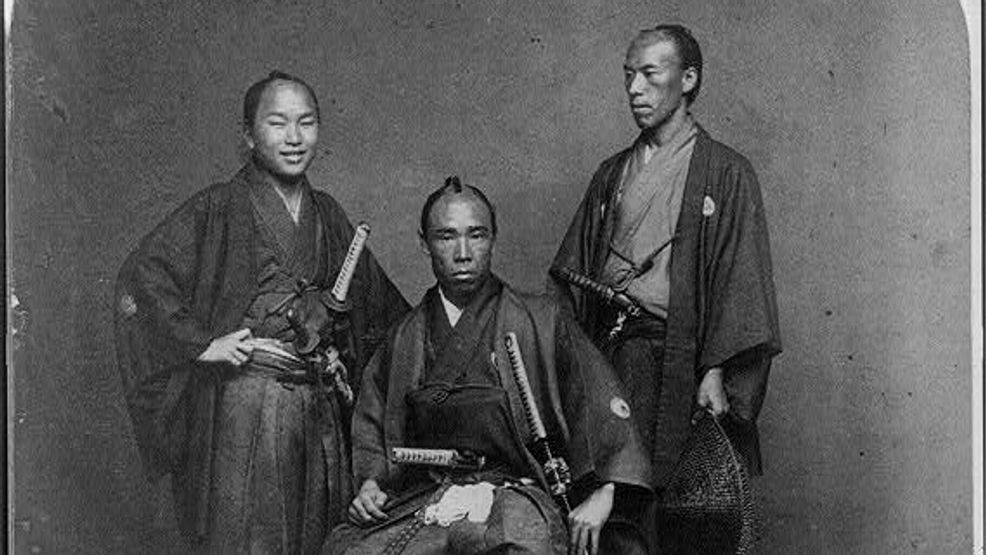 Tateishi Onojiro standing on the far left. Photo courtesy Library of Congress.
The delegation’s primary goal here in D.C. was to sign a trade agreement, but this “embassy” included samurai. Not the sword-wielding warriors of Japan’s feudal period, but a modern samurai, educated and dignified civil servants like doctors and accountants. In the case of one assistant interpreter, young Tommy enchanted the nation with his friendly and flirtatious personality.
“This was a time period in which it was very rare to smile in photographs and yet we can see 17-year-old Tateishi, hand on his hip, beaming at the camera and so excited for this American journey,” Doan said.
Doan said that, since most Americans had never even seen a Japanese person, they viewed these men, especially Tommy, with frenzied interest.
Newspapers reported American women sending Tateishi portraits and love letters, boasting that he was receiving over a foot high pile of love letters a day,” added Doan.
Onojiro was so beloved that prolific composer Charles Grove wrote a song in his honor – a song that people still dance to today – called the “Tommy Polka.”
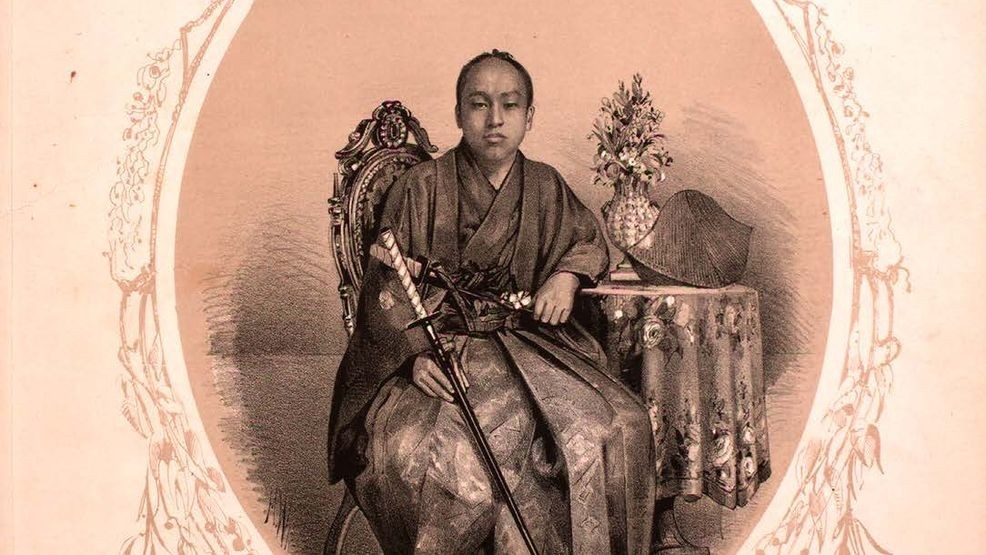 Tateishi Onojiro. Photo courtesy The Library Company of Philadelphia.
The above photo, provided by The Library Company of Philadelphia, is the front cover for the song Tommy Polka.
While in Washington, Tommy and the delegation visited the Smithsonian Castle, Congress, the Willard Hotel and, of course, the White House.
President James Buchanan hosted the visitors in an East Room so crowded that women were standing on chairs to catch a glimpse of Tommy and his compatriots.
“And the Japanese wrote in their journals with great shock about the presence of women at political events. This was not something that could be imagined during Japan at this time,” said Doan.
Doan said while these diplomats were here to talk business, the cultural ramifications of their visit proved far more influential. Especially in a nation plunging headlong toward civil war.
“Inspiring people to rethink some of the key values of culture, of civilization, of race during a time when all of these concepts are up in the air but deeply important to American people,” said Doan.
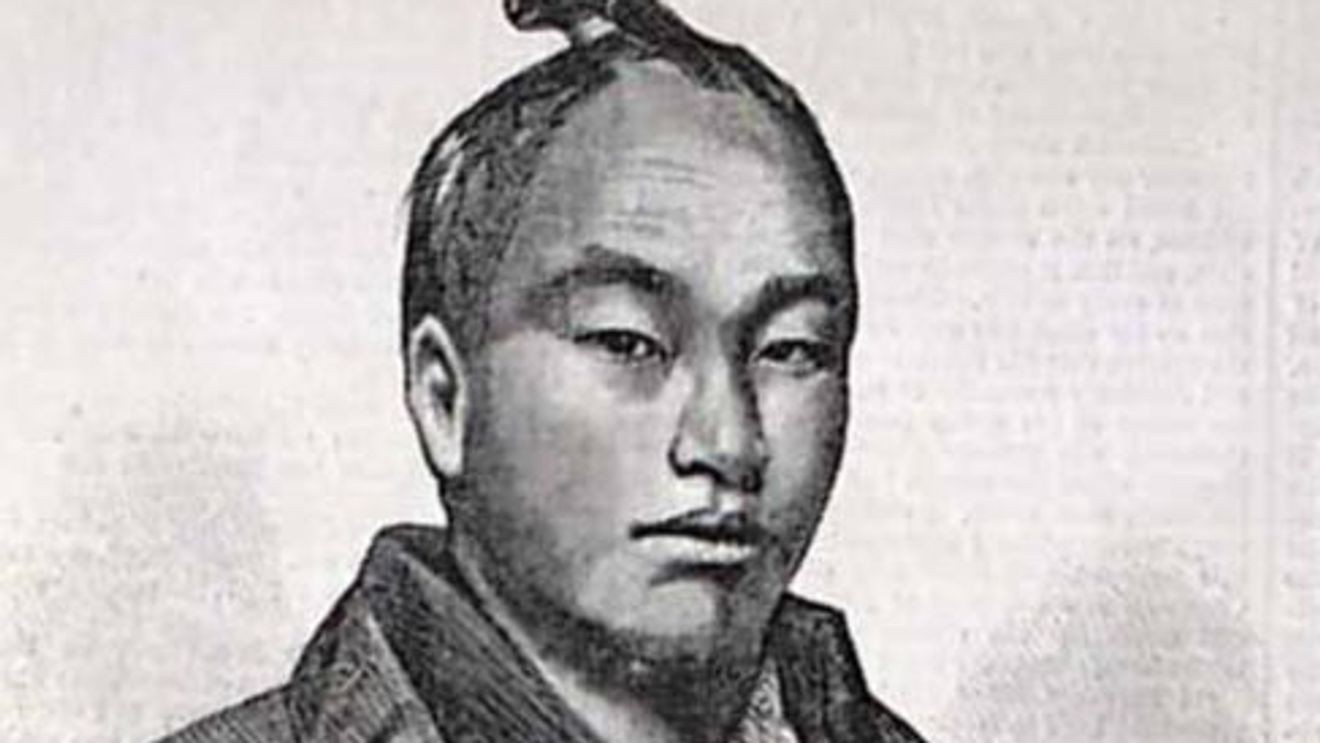
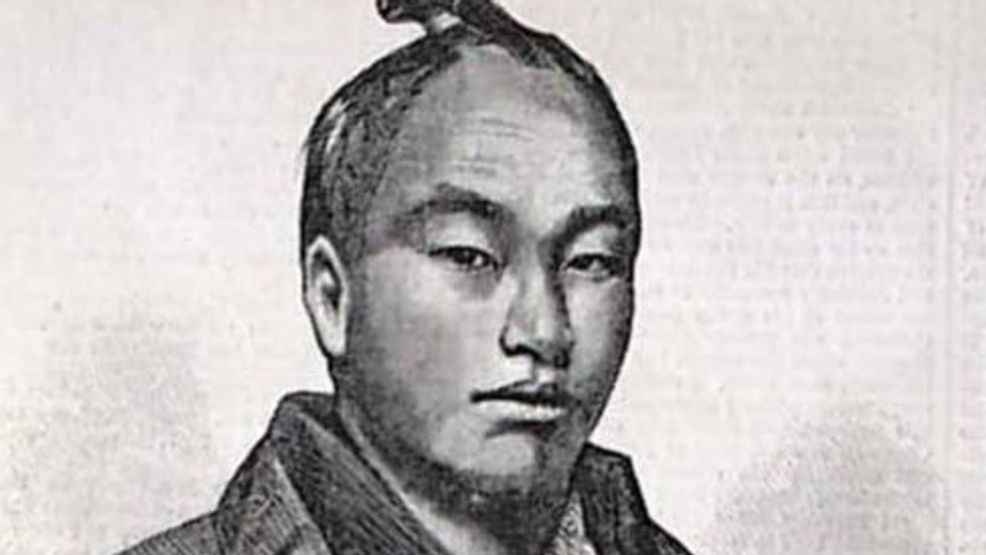 Tateishi Onojiro. Photo courtesy Harper’s Weekly.
Doan told us that Onojiro returned to Japan and would fight in his nation’s civil war, losing his brother in battle. He continued to serve as an interpreter for years afterward, passing away at 73.
“Even though Tateishi is almost unheard of today, both in the U.S. and in Japan, in the year 1860, he was arguably the most famous Japanese person in the world,” Doan said.