
By Weng Ching-yu and William Hetherington / Staff reporter, with staff writer
A court has ruled that a deceased physician’s estate worth several billion New Taiwan dollars must be redistributed among all heirs after invalidating a handwritten will that left the assets to his spouse.
The ruling handed down by the High Court on April 8 found procedural defects in the will prepared by a 90-year-old physician surnamed Chen (陳), which had allocated the estate to his wife, surnamed Tseng (曾), and a grandchild.
The court said one witness to the will had severe hearing impairment and testified that he was unaware of key details, including the identity of the will’s executor. A second witness said he had been asked by a law firm to act as a witness and was not aware he needed to verify the document’s contents.
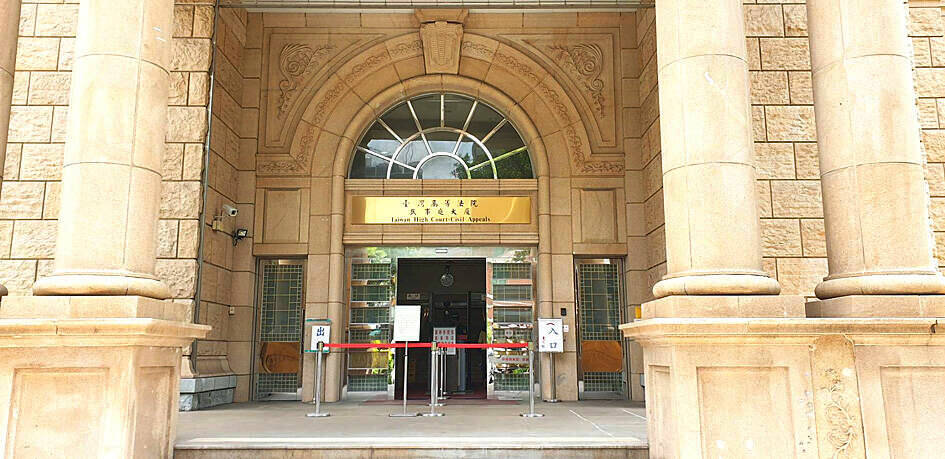
Photo: Yang Kuo-wen, Taipei Times
The judges ruled that witnesses must do more than provide a signature, and must substantively confirm that a will reflects the testator’s true intent. As neither witness met the standard, the will was declared invalid.
Chen married Tseng — his younger son’s mother-in-law — in April 2021 and died in September of the same year. His eldest son challenged the marriage, alleging Tseng sought control of an estate that includes multiple properties in Taipei, Taichung and Taoyuan, and argued that Chen, who has suspected cognitive decline due to age, lacked genuine intent.
The elder son said the marriage was not publicly announced or accompanied by a wedding banquet.
However, the court reviewed video footage from Chen’s birthday celebration and found he was able to interact normally with family members, concluding there was no evidence he lacked capacity at the time of the marriage registration. It ruled that the absence of public notification or a banquet did not affect marital intent, and upheld the marriage as valid, confirming Tseng as a legal heir.
While Tseng remains a statutory heir, the invalidated will means nine properties transferred under its terms must be restored to joint ownership among all heirs. The ruling can be appealed.
Lawyer Yang Kuei-chih (楊貴智) — not related to the case — said most inheritance disputes arise not from the substance of a will, but from procedural errors.
In this case, he said, the will was invalidated because witnesses included a relative of a lawyer and a driver who failed to meet legal requirements.
He recommended notarized wills, proper vetting of witnesses, and full video recording of the signing process to prevent disputes.