
The post “Contender” the 1,600-Pound Great White Shark Was Pinged Off the Outer Banks appeared first on A-Z Animals.
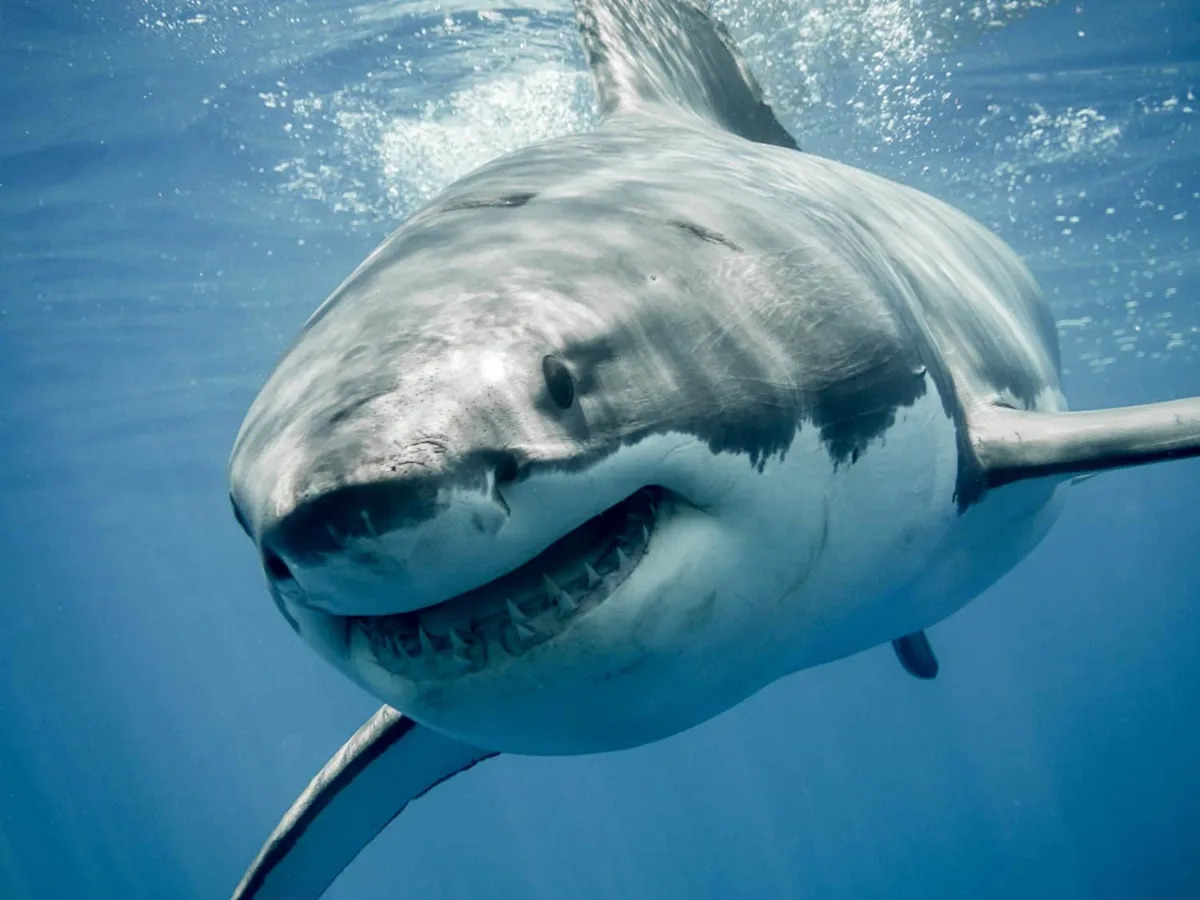
Contender, a massive great white shark tracked by OCEARCH, was recently detected off the Outer Banks in North Carolina via a tracking tag attached to his dorsal fin. The “ping” serves as a timely reminder that great whites regularly travel along the East Coast of the United States. It also raises the question of what attracts these massive predators to these waters. Keep reading to find out!
Why Great Whites Appear Off the Outer Banks
Contender’s appearance off the Outer Banks isn’t entirely unusual, as the Outer Banks sit along a stretch of coastline that is part of a regular migratory route for great white sharks. Rather than appearing randomly, Contender’s presence follows a typical seasonal pattern influenced by water temperatures and food availability.
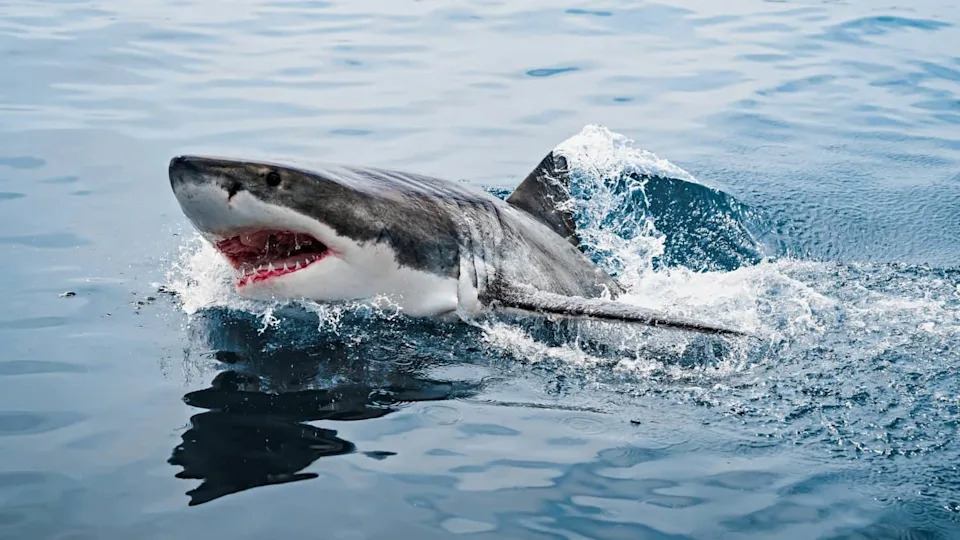
The waters around North Carolina are part of a migratory route for great white sharks.
©NNER/Shutterstock.com
The waters off North Carolina, including the Outer Banks, are part of a transition area where the warm Gulf Stream water meets cooler currents. This mixing creates a productive habitat with high numbers of fish and marine mammals. In the spring and early summer, great whites typically begin moving north as the water temperatures change. This migration allows them to reach more productive northern waters where prey is more abundant, making these areas prime hunting grounds.
How Big Is Contender for a Great White?
Contender is approximately 13 ft 9 in long and weighs an estimated 1,600 pounds. The largest great whites can reach up to 20 feet long and weigh as much as 4,000 pounds, so he’s not one of the largest ever recorded. Great whites exhibit sexual dimorphism, where females are the larger sex. Male great whites typically reach 11 to 13 feet, while females average 15 to 16 feet. This means that Contender is actually quite large for a male. Male great whites are sexually mature at 11 to 13 feet but take around 26 years to reach this size. Therefore, Contender is fully mature and is likely to be at least 30 years old.
Contender was originally tagged in January 2025 by OCEARCH while swimming 45 miles off the Florida-Georgia coast. He is reported to be the largest male great white shark ever tagged by OCEARCH. The tag only provides location data when the shark breaks the surface of the water. When Contender is at the surface, he and other sharks can be tracked in real time using the tracking system on OCEARCH’s website.
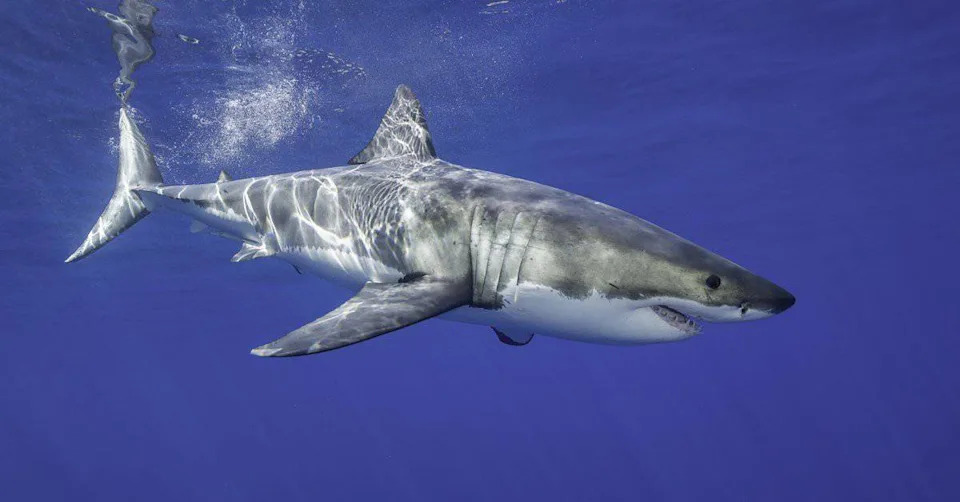
Male great whites are typically 11 to 13 feet long.
©wildestanimal/Shutterstock.com
Beach Safety Tips
Although the evidence of a great white shark just off the North Carolina coast is going to understandably worry beachgoers, it’s important to put the risk into perspective. Sharks have always been present in these waters, and the chance of a shark attack on humans remains extremely low. However, there are a few things that we can do to reduce that risk even further while still being able to enjoy the water.
First, avoid swimming near areas where people are fishing or where schools of fish are present, as sharks may be attracted to bait or prey. Stay close to the shore and avoid swimming alone whenever possible. Additionally, you should avoid wearing shiny jewelry in the water. Jewelry can reflect light and resemble fish scales, which may attract sharks. Avoid entering the water at dawn, dusk, or after dark, when visibility is lower, and some shark species are more active.
Despite the common misconception, sharks don’t actively hunt people. Many shark attacks are actually cases of mistaken identity, occurring when a shark mistakes a human for prey. By avoiding situations like these, you can minimize the risk of a shark encounter.
The post “Contender” the 1,600-Pound Great White Shark Was Pinged Off the Outer Banks appeared first on A-Z Animals.