
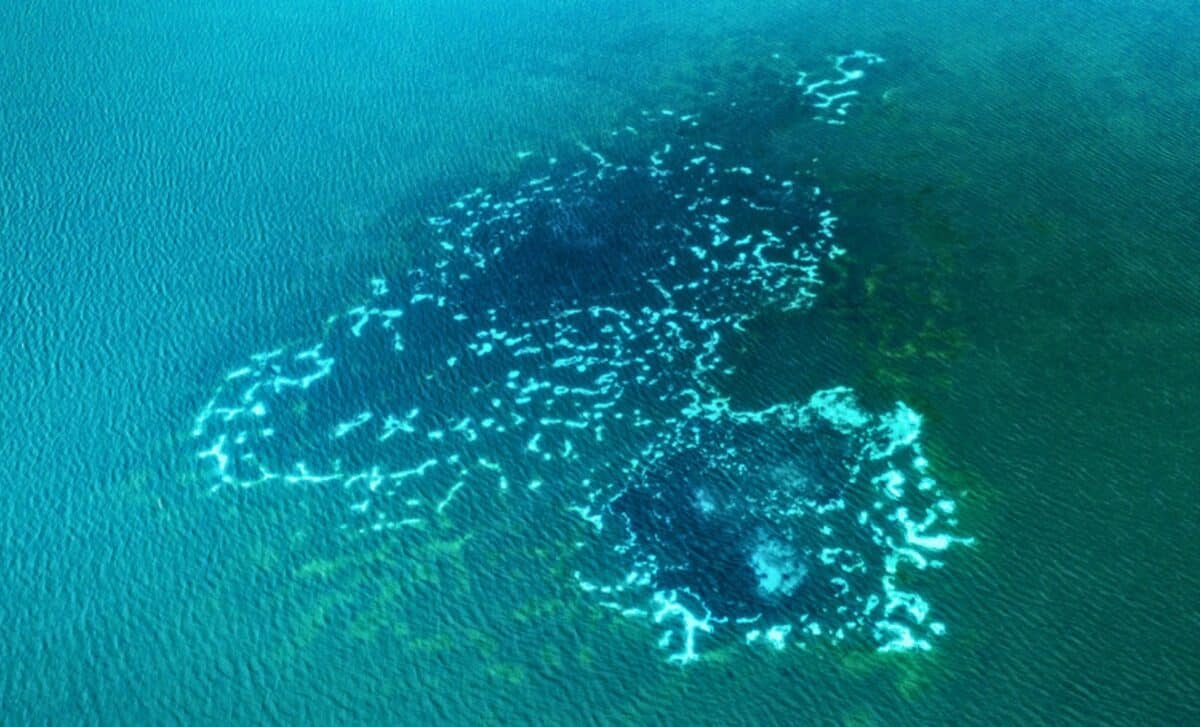
The ocean has been keeping a secret. For decades, ships and sensors have detected methane rising from sunlit surface waters, where oxygen should make such emissions impossible. The gas is there. Scientists just could not explain where it came from. Until now.
University of Rochester researchers have cracked the puzzle, and the answer is unsettling. Across huge swaths of the open sea, marine bacteria produce methane whenever they run low on a single nutrient. Phosphate. The discovery, published in April 16, does more than tidy up a scientific loose end. It reveals a mechanism that could pump more methane into the atmosphere as the planet warms.
That mechanism is already in motion, the researchers warn, and it points toward a feedback loop missing from today’s most advanced climate projections. A microbial process operating invisibly beneath the waves could accelerate the very warming that feeds it.
Phosphate Scarcity Flips the Switch
Methane and oxygen do not typically mix. The microbes that make the gas thrive in airless places, buried in wetland muck or deep-sea sediment. Surface ocean water practically fizzes with oxygen. So the persistent methane readings left oceanographers stuck.
Thomas Weber, an associate professor at Rochester, led a team that took a different approach. They assembled a global dataset spanning years of ocean measurements and fed it into computer models capable of simulating marine chemistry at scale. The goal was not to guess but to isolate which environmental condition reliably triggered production.
 A single missing nutrient flips a microbial switch, turning vast stretches of the sea into hidden methane sources no one tracked until now. Credit: Canva
One factor dominated the results. Weber and his colleagues, graduate student Shengyu Wang and postdoctoral researcher Hairong Xu, found that marine bacteria start generating methane specifically when phosphate, an essential nutrient, drops below a critical threshold. In nutrient-rich water, the microbes behave differently. Starve them of phosphate, and the methane spigot opens.
“This means that phosphate scarcity is the primary control knob for methane production and emissions in the open ocean,” Weber told his university’s news center. Large regions of the sea already sit in a phosphate-poor state. Those waters have been emitting methane all along, hiding in plain sight.
Heat Traps Nutrients Below
Naming phosphate as the control knob also tells a story about the future. The ocean is not a static bathtub. It moves in great vertical loops, with cold water climbing from the depths and carrying nutrients toward the surface. That delivery system keeps the upper ocean productive.
Warming disrupts it. As greenhouse gases trap heat, the ocean absorbs the bulk of it, and the warming concentrates at the top. Warm water is lighter than cold water, so the surface layer grows increasingly buoyant and resistant to mixing. Scientists call the result ocean stratification. A thermal barrier settles in, cutting off the deep sea from the atmosphere above.
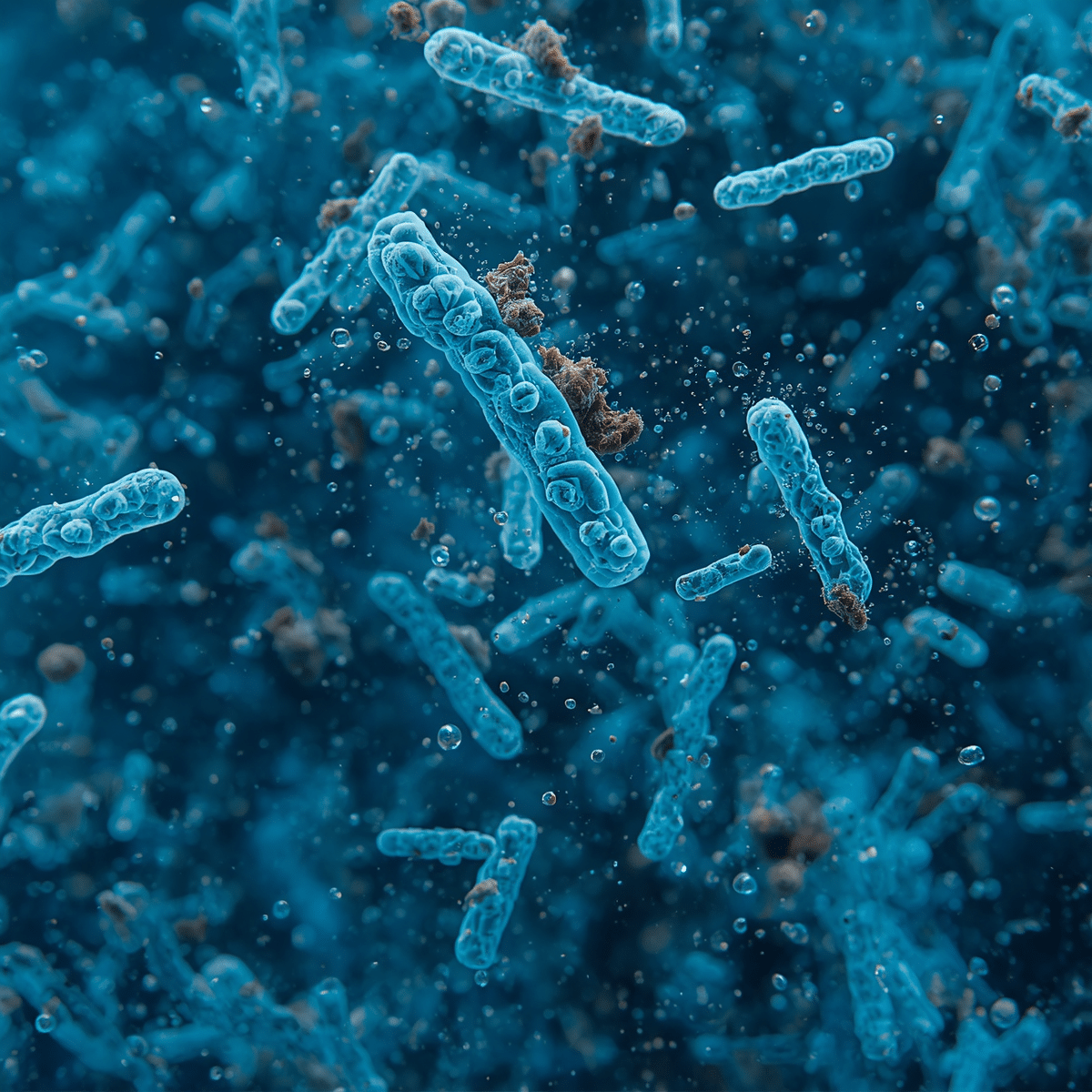 Heat builds a thermal wall across the ocean surface, cutting off the deep supply of nutrients that keeps methane-producing microbes in check. Credit: Canva
Weber described the consequence plainly. “This is expected to slow the vertical mixing that carries nutrients like phosphate up from depth.” Less mixing means fewer nutrients reach sunlit water. Over time, surface phosphate levels thin out further. The conditions that flip the microbial methane switch grow more widespread.
A Loop Models Overlook
That sequence draws a direct line from a warming atmosphere to a biochemical reaction in seawater. Heat strengthens stratification. Stratification starves the surface of phosphate. Phosphate-starved bacteria produce methane. Methane escapes into the air and traps more heat, strengthening the stratification that began the cycle.
It is a self-reinforcing loop, and methane’s potency makes each turn sharper. Over a 20-year span, methane warms the planet more than 80 times as effectively as carbon dioxide. Even a modest rise in marine methane emissions could shift the near-term warming trajectory.
Yet the interaction does not appear in most climate simulations. Weber noted that the work “will help fill a key gap in climate predictions, which often overlook interactions between the changing environment and natural greenhouse gas sources to the atmosphere.” The Rochester team built their findings from direct observations tied to microbial activity across the global ocean, linking physical oceanography to biochemistry in a chain that models have largely omitted.
What the Paper Does and Does Not Say
The research does not calculate a precise volume of additional methane likely to emerge under future warming scenarios. That number depends on variables the team did not attempt to resolve in this study. Instead, the paper establishes the underlying pathway, the chemical and biological wiring that makes such an increase possible.
That matters because without a confirmed mechanism, any forecast of ocean methane would amount to extrapolation without a foundation. As Oceanographic Magazine noted in its coverage, the newly identified source could fuel a warming loop absent from current forecasts.
The study, published in the Proceedings of the National Academy of Sciences, hands modelers the physical basis they need to begin closing the gap.